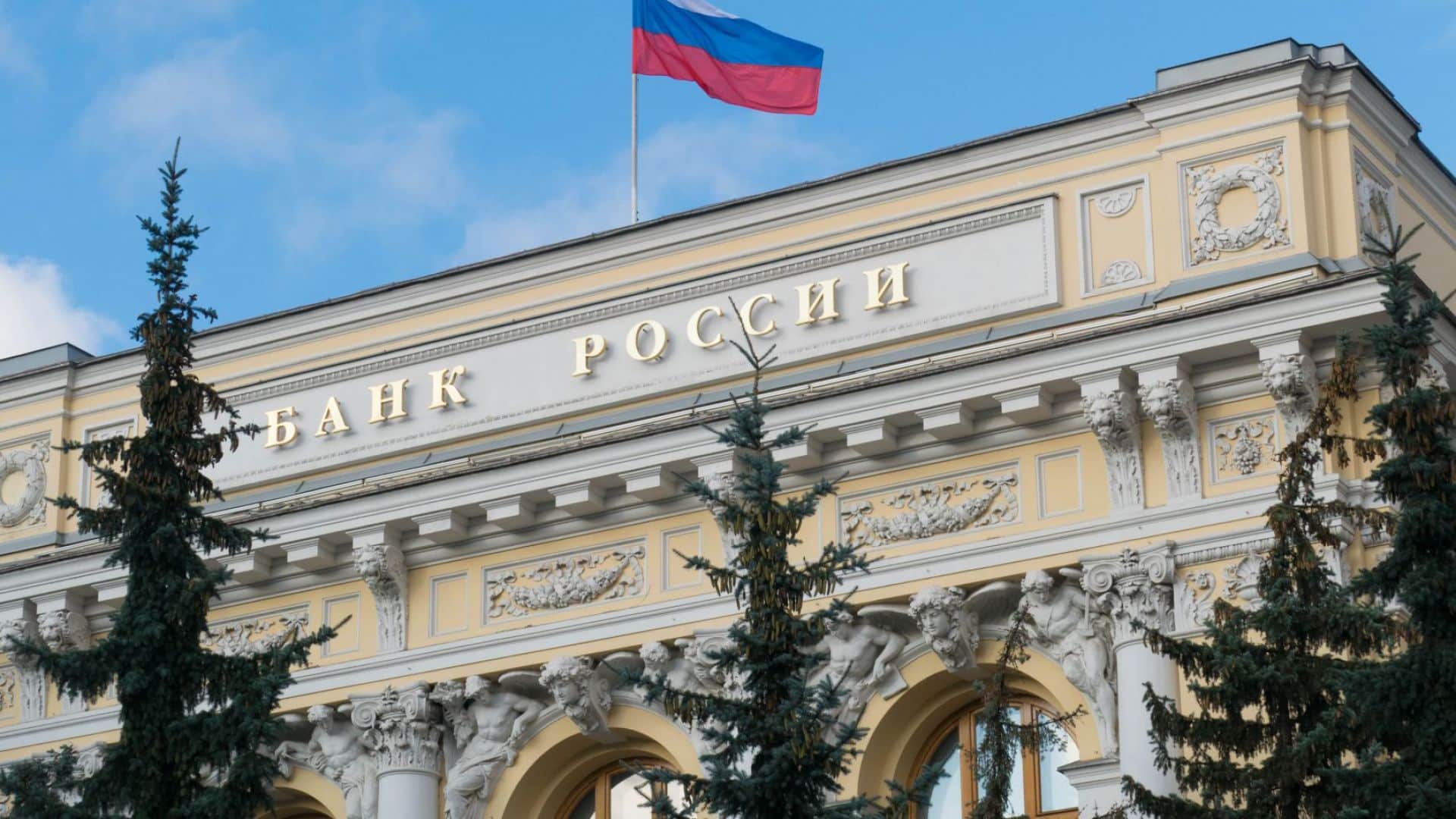
Then all credit institutions will have to be connected to a new ruble platform.
Many central banks around the world are considering introducing digital currencies. But while the US Federal Reserve Board and the European Central Bank (ECB) are still investigating whether this is possible, the Russian Central Bank (RCB) is pursuing a more ambitious plan, Investing.com reports. called BTA.
The CBR has published a document indicating what the priorities of monetary policy will be between 2023 and 2025. It is clear from it that in just two years the digital ruble will already be available.
From 2024, all credit institutions will have to be connected to the new ruble platform. Thus, a wider range of payment options will be available, and the speed of transactions will increase significantly. In 2025, it is planned to include exchanges and non-banking organizations, as well as offline mode.
However, the central bank has now announced that the use of the digital ruble may be subject to restrictions in some circumstances. This may mean setting an upper limit on the rubles that can be deposited in only one portfolio. Transaction caps may also be introduced depending on the circumstances.
From the RCB’s point of view, the digital ruble should encourage already established banks to open bank accounts based on interest payments and bonus programs. However, according to critics, the stability of the banking system will be threatened, but the Central Bank does not expect a large outflow of capital.
The development of the system is already so advanced that a test stage with real transactions and users is scheduled for April.
Written by archimandrite assoc. prof. Pavel Stefanov, Shumen University “Bishop Konstantin Preslavski” – Bulgaria
The sight of Jerusalem bathed in a dazzling spiritual light is exciting and unique. Situated among higher mountains on the banks of a deep gorge, the city radiates a constant imperishable glow. Even if it had no particular historical significance, it would still arouse strong feelings with its unusual appearance. Seen from the peaks of Skopos and Eleon, the horizon is littered with medieval fortifications and towers, gilded domes, battlements, crumbling remains from Roman and Arab times. Around it are valleys and slopes, transformed into spacious, green lawns that change even the properties of light. The view is fascinating.
According to the traditions of King David, he is called Jebus. In Hebrew, Yerushalayim means “city of peace” (this etymology is not quite specified – p. r.), which is a paradox, because in its thousand-year history it has known very few periods of peace. In Arabic, its name is al-Quds, which means “holy”. It is an ancient Middle Eastern city on the watershed between the Mediterranean and the Dead Sea at an altitude of 650-840 m. It represents an incredible mixture of monuments of history, culture and peoples with a huge amount of sights. From ancient times, this small provincial city was called the “navel” or “center” of the world because of its exceptional religious significance (so it is also called in the prophet Ezekiel 5:5 – b. r). [i] At different times, Jerusalem was a possession of the Kingdom of Judea, the State of Alexander the Great, Seleucid Syria, the Roman Empire, Byzantium, the Arab Caliphate, the Crusaders, the Ayyubid State, the Tatar-Mongols, the Mamluks, the Ottoman Empire, and the British Empire.[ii]
The age of Jerusalem exceeds 3500 years.[1] Archaeological research of this city, which occupies an exceptional place in the world’s spiritual history, began in 1864 and continues to this day.[2] The name Shalem (Salem) was first mentioned in 2300 BC. in the documents of Ebla (Syria) and in the inscriptions of the XII Egyptian dynasty. According to one version, it is a probable predecessor of Jerusalem.[3] In the 19th century BC mention is made of Melchizedek, king of Salem. According to the Bible, he met Abraham and the king of Sodom after a victorious battle and presented him with bread and wine, taking a tithe of them (Gen. 14:18-20). In the New Testament epistle to the Hebrews (5:6, 10; 6:20; 7:1, 10-11, 15, 17, 21) St. Apostle Paul proves the priestly dignity of Jesus Christ in the order of Melchizedek.
In the XIV century BC. during excavations by the Franciscan Fathers around the “Dominus Flevit” (“Lament of the Lord”) chapel, ceramic and earthenware items dating back to the 16th century BC, as well as an ornament in the form of a scarab beetle from Egypt, were discovered. A chance find, a set of cuneiform tablets from Tell el-Amarna in Upper Egypt (ca. 1350 BC), sheds light on the royal archive of Amenhotep III and his son Akhenaten. Among some 400 notices on clay of princes and chiefs in Palestine, Phoenicia and southern Syria are eight by one Abdu Heba, ruler of Jerusalem and vassal of Egypt. In his anxious letters to the pharaoh, Abdu Heba begs for reinforcements, which he does not receive, and loses the pharaoh’s land “from habiru”. Who were these “habiru” tribes? The connection between them and the ancient Jews remains a matter of conjecture.
The history of Jerusalem begins with the proto-urban period, to which several burials refer. With its first settlement in the Late Bronze Age, it became a city of the Jebusites, a Canaanite tribe. It is located on Mount Ophel (on the southeastern outskirts of present-day Jerusalem). “But the sons of Judah could not drive out the Jebusites, residents of Jerusalem, and therefore the Jebusites live with the sons of Judah in Jerusalem even to this day” (Isa. Nav. 15:63).[4]
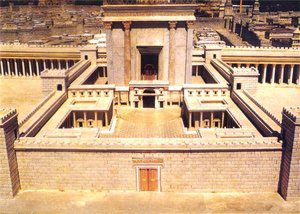
From 922 to 586 BC. Jerusalem is the capital of the Jewish kingdom. The city was captured by the Jews, led by King David (in the last decade, the opinion prevailed that the city was not captured by force – b. r.). David found an ancient sanctuary existing here and renamed the city Zion.[5] He built a palace (2 Kings 5:11), but its foundations have not yet been discovered. The king renovated the city and the walls, including the so-called Milo (1 Chronicles 11:8). The meaning of this term is unclear, but it is thought to refer to the terraces and foundations of the acropolis. Solomon turns Jerusalem into a lavish capital. He doubled the size of the city and built a temple complex on Mount Moriah (2 Chronicles 3:1).[6] The pious king Hezekiah (727-698) rebuilt the fortress walls and dug a water supply tunnel.[7] The Assyrian king Sennacherib besieged Jerusalem in 701, but an angel of the Lord killed 185,000 of his soldiers and the invaders retreated.
In 598 BC. the Babylonian king Nebuchadnezzar besieges Jerusalem, which falls, and the Judean king Jeconiah is taken captive to Babylon. Zedekiah was placed on the throne as a vassal. He rebelled, hoping for help from Egypt. In 587, the Babylonian army returned and destroyed Jerusalem. Almost all the inhabitants were taken as captives to Babylon. In 539 BC the Persian king Cyrus the Great defeated the Babylonians and issued a decree allowing the Jews to return to Jerusalem and rebuild the temple.[8]
The year is 332 BC. The inhabitants of Jerusalem surrendered without resistance to Alexander the Great, who confirmed the privileges given to the city by the Persian rulers.[9]
Under the leadership of the Maccabee brothers, a revolt of the Jews broke out, which lasted from 167 to 164 BC. The Syrian occupiers of Antiochus IV Epiphanes, who were imposing paganism, were driven out.[10]
Roman troops under the leadership of Pompey captured Jerusalem in 63 BC. The city became the administrative center of the Roman protectorate of Judea.[11] The modern plan of Jerusalem dates from the time of Herod the Great (37-34 BC).[12] This satrap is the greatest builder in the history of the city. He rebuilt the Hasmonean walls and added three large towers, built a palace-administrative complex on the western hill, later called the “praetorium”, and rebuilt the temple. Diaspora Jews long for the city, led by eminent intellectuals such as Philo of Alexandria.[13]
Roman oppression fueled the secret liberation movement of the Zealots. Christ’s apostle Judas Iscariot probably belongs to them.[14] In 66-70, the Jews led a revolt against the Romans. After a long siege, Jerusalem falls. The failed uprising goes down in history as the Jewish War. Despite the order of the Roman general Titus to preserve the temple, it was burned and destroyed on 9 Aug 70.[15] Later, by order of the emperor Hadrian, the construction of a city called Elia Capitolina in honor of the emperor (Elius Hadrian) and the Capitoline triad (Jupiter, Juno and Minerva) began on the ruins of Jerusalem. The city was built on the model of a Roman military camp – a square in which the streets intersect at right angles. A sanctuary of Jupiter was built on the site of the Jewish temple.
Outraged by the imposition of the pagan cult, the Jews raised a second revolt against the Roman conquerors. From 131 to 135, Jerusalem was in the hands of the Jewish rebels of Shimon bar Kochba, who even minted his own coins. But in 135 the Roman troops recaptured the city. Emperor Hadrian issued a decree banning all circumcised persons from entering the city. After the collapse of the Roman Empire, the Byzantine period began and the city gradually took on a Christian appearance.[16]
On the site of Golgotha, the Romans erected a temple to Aphrodite. In 326, St. Helena and Bishop Macarius led the construction of the Church of the Holy Sepulchre. Millions of pilgrims from all over the world began to flock here over the centuries.
In 1894, a famous mosaic depicting St. George was discovered in the Orthodox Church of St. George in Madaba (now Jordan). Earth and Jerusalem. It dates from the 6th century and today measures 16 x 5 m. The largest and most detailed image in the center of the work is of Jerusalem and its landmarks.[17]
In 614, the city was captured and looted by the Persian Shah Khozroi, and the Church of the Holy Sepulcher was burned. After 24 years, St. Patriarch Sophronius opened the city’s doors to a new conqueror – the Arab caliph Omar ibn al-Khattab, and Jerusalem gradually began to acquire a Muslim appearance. A little later, Mu’af I, founder of the Umayyad dynasty, was proclaimed caliph in Jerusalem. A mosque was built on the site of the destroyed Jewish temple, which for Muslims is the third holiest after those in Mecca and Medina.
In 1009, the insane caliph al-Hakim ordered the complete destruction of the Church of the Holy Sepulchre. This sacrilege causes a wave of protest in the West and prepares the age of the Crusades. In 1099, the participants in the first campaign under the leadership of Count Gottfried of Boulogne captured Jerusalem, massacred all Muslims and Jews and turned the city into the capital of the Kingdom of Jerusalem headed by King Baldwin I. In 1187, after a long siege, the troops of the Egyptian Sultan Salah-at -din (Saladin, 1138-1193) conquered Jerusalem. All the churches in the city except the Ascension Church were converted into mosques. [18]
But Western Christians did not despair and in 1189-1192 organized the Second Crusade under the leadership of the English king Richard the Lionheart. The city again falls into the hands of the Crusaders. In 1229, Friedrich II Hohenstaufen became king of the Kingdom of Jerusalem, who managed to temporarily restore the power of the Crusaders in Jerusalem by taking advantage of the contradictions between the Muslim states. However, in 1244, the Mongol-Tatars conquered the city. In 1247, Jerusalem was captured by an Egyptian sultan of the Ayyubid dynasty. The Mamluks came to power – bodyguards of the Egyptian sultans, whose army was recruited from slaves of Turkic and Caucasian (mainly Circassian) origin. In 1517, the army of the Ottoman Empire, after a victory in Syria over the Mamluks, conquered the land of Eretz-Israel (the territory of Palestine) without bloodshed.
During World War I, Britain established control over Palestine .[19] From 1920 to 1947, Jerusalem was the administrative center of the British mandated territory of Palestine. During this period the Jewish population increased by 1/3 mainly due to migration from Europe. UN General Assembly Resolution No. 181 of November 29, 1947, known as the Resolution on the Partition of Palestine, assumed that the international community would take control of the future of Jerusalem after the end of the British Mandate (May 15, 1948). ).[20] In 1950, Israel declared Jerusalem as its capital and all branches of the Israeli government were located there, although this decision was not accepted by the world community. The eastern part of the city became part of Jordan. [21]
After its victory in the Six-Day War in 1967, Israel gained control of the entire territory of the city, legally separated East Jerusalem from the West Bank and declared its sovereignty over Jerusalem. With a special law of July 30, 1980, Israel declared Jerusalem to be its single and indivisible capital. All state and government offices of Israel are located in Jerusalem. [22] The UN and all its members do not recognize the unilateral annexation of East Jerusalem. Almost all countries have their embassies in the Tel Aviv area, with the exception of several Latin American countries, whose embassies are located in the Jerusalem suburb of Mevaseret-Zion. As early as 2000, the US Congress passed a decision to move the embassy to Jerusalem, but the American government constantly postponed the implementation of this decision. In 2006, the Latin American embassies moved to Tel Aviv, and now there are no foreign embassies in Jerusalem. East Jerusalem houses the consulates of the United States and some other countries that have contact with the Palestinian Authority.
The status of Jerusalem remains a hotly contested topic. Both Israel and the Palestinian Authority officially claim Jerusalem as their capital and do not recognize that right to any other country, although Israeli sovereignty over part of the city is not recognized by the UN or most countries, and the Palestinian Authority’s authorities have never they were not in Jerusalem. The Arabs even completely deny the Jewish period of Jerusalem’s history, thereby disputing the Bible, accepted as revelation in their Koran. After the victory of the Islamic revolution in Iran, Ayatollah Khomeini established a new holiday on October 5 – the day of al-Quds (Jerusalem). Every year on this date, Muslims pray for the city to be freed from the Israeli military presence.[23]
According to the latest figures, the inhabitants of Jerusalem number 763,800, while in 1948 they were only 84,000. There are 96 Christian, 43 Islamic and 36 Jewish shrines located on the territory of the old city, which covers only 1 square km. He is associated with peace through his name. It is a medium-sized, provincial, in many ways modest and yet irresistibly attractive city that inspires awe and wonder. Two world religions were founded in Jerusalem, and the third, Islam, adopted its various traditions in its creed. But instead of being like its name “city of peace”, Jerusalem turns out to be an arena of confrontation.
The violence continues as acts in an endless ancient drama, but in which there is no catharsis. From the same walls climbed by the Romans in AD 70 and the Crusaders in 1099, Palestinian youths armed like David with slings pelt passing armored police cars with stones. Helicopters circle above, dropping tear gas canisters. Nearby, in the narrow streets, the sounds of the three faiths that hold the city sacred rise incessantly – the voice of the muezzin calling the Muslim faithful to prayer; the ringing of church bells; the chant of Jews praying at the Western Wall – the only preserved part of the ancient Jewish temple.
Some call Jerusalem a “necrocracy” – the only city where the deciding vote is given to the dead. Everywhere here one feels the heavy burden of the past weighing on the present. For Jews, it is always the capital of memory. For Muslims it is al-Quds, ie. The sanctuary, from the emergence of Islam in the 7th century to today. For Christians, it is the epicenter of their faith, associated with the preaching, death and resurrection of the God-man.[24]
Jerusalem is a city where the spirit of history is daily relentlessly and superstitiously invoked by rival countries. Jerusalem is the embodiment of the influence of memory on the minds of men. It is a city of monuments that have their own language. They awaken mutually contradictory memories and build its image as a city dear to more than one people, sacred to more than one faith. In Jerusalem, religion mixes with politics. He lives too deeply engrossed in the fascination of powerful religious beliefs and religions.[25] The reverence and fanaticism of the religions and nationalities coexisting here interact. There was never a single religious truth in Jerusalem. There have always been many truths and mutually contradictory images of the city. These images reflect or distort each other and the past flows into the present.
In our time, men have set foot on the moon in search of new promised lands and new Jerusalems, but so far the old Jerusalem has not yet been replaced. He retains an extraordinary hold over the imagination, holding for three faiths at once near and far a fear and hope of an Apocalypse expressed in entirely interchangeable phrases.[26] Here, the religious struggle to conquer territories is an ancient form of worship. Nationalism and religion have always been intertwined in Jerusalem, where the idea of a promised land and a chosen people was first revealed to the Jews 3,000 years ago.
The Jerusalem scribes and prophets challenged the prevailing ancient notion that history necessarily moves in circles, repeating itself over and over again. They express the overarching hope for irreversible progress toward a better and more valuable life. Varieties of the Pentateuch and the books of Joshua, Samuel, and Kings circulated in Jerusalem as oral traditions in the early 7th or 9th century BC. Archaeological and epigraphic evidence repeatedly confirms with remarkable accuracy the factual details of the biblical sources. Here King David composed the poems of the Psalms, and Solomon built the temple and enjoyed his hundreds of wives. Here Isaiah cries out in the wilderness, and Jesus wears the crown of thorns and is crucified with the robbers. Christians gathered after His death in this city and in the name of hope conquered the Roman Empire and the entire Mediterranean world. Here, according to Islamic legend, Muhammad comes on a mysterious winged white horse and ascends to heaven on a ladder of light. Since the 12th century, Jews have been praying at the Western Wall three times a day, so that they can “return by mercy to Your city of Jerusalem and live in it, as You promised.”
Four thousand years of history, countless wars and extremely strong earthquakes, some of which caused the complete destruction of buildings and walls, have left their mark on the topography of the city. It has experienced 20 devastating sieges, two periods of complete desolation, 18 restorations and at least 11 conversions from one religion to another. Jerusalem remains holy to Jews, Christians and Muslims, to all people of the world. “Ask for peace for Jerusalem” (Ps. 121:6)!
Notes:
[i] Wolf, B. Jerusalem und Rom: Mitte, Nabel – Zentrum, Haupt. Die Metaphern «Umbilicus mundi» und «Caput mundi» in den Weltbildern der Antike und des Abendlands bis in die Zeit der Ebstorfer Weltkarte. Bern u.a., 2010.
[ii] Encyclopedic dictionary. Christianity. T. I. M. 1997, p. 586. Cf. Otto, E. Das antike Jerusalem. Archaeologie und Geschichte. München, 2008 (Beck’sche Reihe, 2418).
[1] Elon, A. Jerusalem: City of Mirrors. London, 1996, p. 30.
[2] Whiting, C. Geographical Imaginations of the “Holy Land”: Biblical Topography and Archaeological Practice. – Nineteenth-Century Contexts, 29, 2007, Nos. 2 & 3, 237-250.
[3] Elon, A. Op. cit., p. 54.
[4] For the ancient history of the city, see Harold Mare, W. The Archeology of the Jerusalem Area. Grand Rapids (MI), 1987; Jerusalem in Ancient History and Tradition. Ed. by T. L. Thompson. London, 2004 (Copenhagen International Seminar).
[5] Cogan, M. David’s Jerusalem: Notes and Reflections. – In: Tehillah le-Moshe: Biblical and Judaic Studies in Honor of Moshe Greenberg. Edited by M. Cogan, B. L. Eichler, and J. H. Tigay. Winona Lake (IN), 1997.
[6] Goldhill, S. The Temple in Jerusalem. S., 2007.
[7] The book Jerusalem in Bible and Archeology: The First Temple Period is devoted to the biblical history of Jerusalem. Ed. by A.G. Vaughn and A.E. Killebrew. Atlanta (GA), 2003 (Symposium Series, 18)
[8] Encyclopedic dictionary. Christianity. T. I. M., 1997, 587. Cf. Ritmeyer, L. Jerusalem in the time of Nehemiah. Chicago, 2008.
[9] Ameling, W. Jerusalem als hellenistische Polis: 2 Makk 4, 9-12 und eine neue Inschrift. – Biblische Zeitschrift, 47, 2003, 117-122.
[10] Tromp, J. The Religious Significance of Jerusalem for Jews in the Greco-Roman Period. – In: À la recherche des villes saintes. Actes du colloque franco-néerlandais “Les Villes Saintes”. Ed. A. Le Boulluec. Turnhout, 2004 (Bibliothèque de l’École des hautes études. Sciences religieuses, 122), 51-61.
[11] Mirasto, I. Christ is Risen (In God’s Land during Holy Week). S., 1999, p. 9.
[12] Julia Wilker, Fuer Rom und Jerusalem. Die herodianische Dynastie im 1. Jahrhundert n.Chr. Frankfurt am Main, 2007 (Studien zur Alten Geschichte, 5)
[13] Pearce, S. Jerusalem as “Mother-City” in the writings of Philo of Alexandria. – In: Negotiating Diaspora: Jewish Strategies in the Roman Empire. Ed. by J.M.G. Barclay. London and New York, 2004, 19-37. (Library of Second Temple Studies, 45).
[14] Hengel, M. The Zealots: Investigations into the Jewish Freedom Movement in tho Period from Herod I until 70 AD. London, 1989.
[15] Rives, J.B. Flavian Religious Policy and the Destruction of the Jerusalem Temple. – In: Flavius Josephus and Flavian Rome. Eds. J. Edmondson, S. Mason, and J. Rives. Oxford, 2005, 145-166.
[16] Belayche, N. Déclin ou reconstruction? La Palaestina romaine après la révolte de ‘Bar Kokhba’. – Revue des études juives, 163, 2004, 25-48. Cf. Colbi, P. A Short History of Christianity in the Holy Land. Jerusalem, 1965; Wilken, R. The Land Called Holy: Palestine in Christian History and Thought. New York, 1992.
[17] Damyanova, E. Jerusalem as the topographical and spiritual center of the Madaba mosaic. – In: Theological Reflections. Collection of materials. S., 2005, 29-33.
[18] Shamdor, A. Saladin. A noble hero of Islam. St. Petersburg, 2004. Cf. L’Orient au temps des croisades. Textes arabes presented et traduit par A.-M. Eddé et F. Micheau. Paris, 2002.
[19] Grainger, J. The Battle for Palestine, 1917. Woodbridge, 2006.
[20] The Christian Heritage in the Holy Land. Ed. By A. O’Mahony with G. Gunner and K. Hintlian. London, 1995, p. 18.
[21] Keay, J. Sowing the Wind: The Seeds of Conflict in the Middle East. New York, 2003.
[22] Tessler, M. History of the Israeli-Palestinian Conflict. Bloomington (IN), 1994. Cf. Kailani, W. Reinventing Jerusalem: Israeli’s Reconstruction of the Jewish Quarter After 1967. – Middle Eastern Studies, 44, 2008, No. 4, 633-637.
[23] Emelyanov, V. What to do with the problem of al-Quds – Jerusalem? In Moscow, they celebrated a memorial date established 27 years ago by Imam Khomeini. – https://web.archive.org/web/20071011224101/https://portal-credo.ru:80/site/?act=news&id=57418&cf=, October 8, 2007.
[24] The Christian Heritage.., p. 39.
[25] Kalian, M., S. Catinari, U. Heresco-Levi, E. Witztum. “Spiritual Starvation” in a Holy Space: a Form of “Jerusalem Syndrome”. – Mental Health, Religion & Culture, 11, 2008, No. 2, 161-172.
[26] Elon, A. Op. cit., p. 71.
Short address of this publication: https://dveri.bg/uwx
From the letter of Saint Dionysius († 264), Bishop of Alexandria, about the times of persecution and the epidemic of the so-called Cyprian Plague. The disease, which struck the Roman Empire in the 3rd century, remains in history with the name of St. Cyprian of Carthage, who described its symptoms. About five thousand people died daily in Rome from this contagious disease. St. Dionysius wrote that there were no residents left in Alexandria over forty years of age. In this harsh time, the Bishop of Alexandria described the behavior of Christians and their attitude towards death: not frivolously and self-confidently, but imitating Christ – as the bitter cup that they drink out of love for their suffering neighbors.
“… After a short intermission, this disease fell upon us; to them (the Gentiles) it was the most dreadful of all dreadful things, the cruelest of all calamities, and, as their own writer says, an extraordinary event which no one could have expected. For us it was not like that; as in other cases, the Lord tried and hardened us. The disease did not surround us, but it struck the Gentiles more.
Many of our brothers, out of abundant charity and moved by brotherly love, without pitying themselves, supported each other, without fear, visited the sick, served them unfailingly, cared for them for Christ’s sake, joyfully died with them; they filled themselves with the suffering of others, became infected by their neighbors and readily took upon themselves their sufferings. Many, caring for the sick and supporting others, died themselves, accepting death for them…
This is how the best of our brothers passed away: priests, deacons, laymen. They showered them with praise, because such a death, possible only because of great piety and strong faith, was considered equal to martyrdom.
Source: Eusebius of Caesarea, “Church History”, vol. 7
To help those wishing to make a pilgrimage to the Holy Mountain
In recent years, there are more and more Orthodox Christians who wish to make a pilgrimage to various holy places around the world. To help those who wish to make their pilgrimage, as well as to answer our readers’ questions related to such trips, the “Doors” team will expand its “Pilgrimage” column with practical guides and materials for popular destinations of the so-called “pilgrimage tourism”. Undoubtedly, among the most preferred places of worship is Mount Athos – Athos.
This is the name of a community of 20 monasteries (17 Greek and 3 Slavic) and smaller monastic settlements, inhabiting the eastern arm of the Halkidiki peninsula, bearing the geographical name Athos since ancient times. Its length is approx. 60 km, and the width – from 6 to 12 km. The territory is divided unevenly into the 20 patriarchal and imperial monasteries, which include another 20 or so hermitages and hundreds of cells (separate monastic houses in which from 1 to several monks live). Skits are called either monastery complexes, sometimes as big as the largest Bulgarian monasteries, but without an independent status, or settlements of several to tens of cells (houses in the above sense).
The Athenian monastic “republic” is under the omophorus (ie supreme authority) of the Ecumenical Patriarchate. St. Mountain has complete administrative independence from Constantinople, but canonically the Ecumenical Patriarch has the supervision of spiritual life. The Patriarchate also has one of its own bishops there – Bishop Chrysostom of Rhodes, former rector of the Athos Seminary. However, he does not have ecclesiastical-administrative authority, but can only ordain hierodeacons and hieromonks by decision of a given monastery. His contact address is: Megisti Laura, 63086, Karyes, Mount Athos.
Since Mount Athos is part of the territory of the Republic of Greece, the state also has its representative there with the status of regional governor, who has his headquarters in the administrative center of Ato – Kareia. The supreme body of Mount Athos government is the Holy Kinotis (community), which consists of representatives (antiprosopi) of all twenty monasteries of Mount Athos. Each monastery elects its representative annually and the term of office of the kinotis starts from the new year (January 14 new style).
The executive power of Aten is carried out by the Sacred Epistasia (lit. “headship”, “oversight”), whose composition also changes every year, but the mandate begins on June 1 (14 AD). Since 1972, the Esphygmen monastery did not participate in the general events and did not send its representative to the general governing bodies (Holy Kinotis and Holy Epistasia), and did not allow the decisions of the Kinotis to be implemented in relation to the monastery. Therefore, a few years ago a new brotherhood was created, loyal to St. Gora, but it could not enter the monastery and now lives in another place near Kareia.
The monasteries of St. Gora are divided into five groups, each of which includes four monasteries. The groups are arranged as follows:
First group: Great Lavra, Dochiar, Xenophon, Sphygmenus.
Second group: Vatoped, Kutlumush, Caracal, Stavronikita.
Third group: Iver, Pantokrator, Philoteus, Simonopetra.
Fourth group: Hilendar, Xiropotam, St. Pavel, Grigoriat.
Fifth group: Dionysiatus, Zograph, St. Panteleimon, Constamonite.
Each year one of the five groups forms a Candle. epistasia, with the representative of the first monastery from each group being the chairman of the epistasia.
Short list of monasteries (ordered by seniority):
1. The Great Lavra. The monastery was founded in 963. It celebrates its feast on 5/18 (the second number here and below is in the old style – b. r.) July on the day of St. Athanasius of Athens. The abbot is Archimandrite Prodrome. Tel. +30 23770 23761. Fax: +30 23770 23013.
2. Vatoped. The monastery was founded in 972. Its feast day is March 25/April 7, Annunciation. Abbot is Archimandrite Ephrem. Tel. +30 23770 41488. Fax +30 23770 41462.
3. Sliver. Founded in 972. The feast of the monastery is on August 15/28, the day of the Assumption. The abbot is Archimandrite Nathanael. Tel. +30 23770 23643. Fax +30 23770 23248.
4. Hillendar. Founded in 1197. The feast of the monastery is November 21/December 4, the day of the Presentation of the Virgin. The abbot is Archimandrite Methodius. Tel. +30 23770 23797, 23760. Fax: +30 23770 23494.
5. Dionysiatus. Founded in 1375. The feast of the monastery is June 24/July 7, the day of the Nativity of St. John the Forerunner. Archimandrite Peter is the abbot. Tel. +30 23770 23687. Fax +30 23770 23686.
6. Kutlumush. Founded at the end of the 13th century. The feast of the monastery is August 6/19, the day of the Transfiguration. The abbot is Archimandrite Christodul. Tel. +30 23770 23226. Fax: +30 23770 23731.
7. Pantocrator. Founded in 1363. The feast of the monastery is August 6/19, the day of the Transfiguration. Abbot is Archimandrite Gabriel. Tel. +30 23770 23253. Fax +30 23770 23685.
8. Xyropotamus. Founded in the 10th century. The feast of the monastery is March 9/22, the day of St. Forty Sevastian Martyrs, as well as September 14/27, the day of the Exaltation of the Holy Cross of God (Krastovden). The abbot of the monastery is Archimandrite Joseph. Tel. +30 23770 23251. Fax +30 23770 23733.
9. Painter. Founded in the 10th century (before 980). The feast of the monastery is May 6, the day of St. George the Victorious. The abbot of the monastery is Archimandrite Amvrosius. Tel. +30 23770 23604. Fax +30 23770 23247.
10. Dochiar. It was founded in the 10th century. The festival of the monastery is November 8/21, on the day of St. Archangel Michael, and also on October 1/14, in honor of the icon of St. Mother of God Soon-obedient. The abbot is Archimandrite Gregory. Tel. +30 23770 23245.
11. Caracal. It was founded at the end of the 10th century. The festival of the monastery is June 29/July 12, the day of the holy apostles Peter and Paul. The abbot of the monastery is Archimandrite Filotei. Tel. +30 23770 23225. Fax: +30 23770 23746.
12. Philotheus. Founded in 990. The feast of the monastery is March 25/April 7, the day of the Annunciation, and August 24/September 6, the day of St. Cosmas of Aetoli. The abbot is Archimandrite Nicodemus. Tel. +30 23770 23256. Fax: +30 23770 23674.
13. Simonopetra. Founded in 1257. The feast of the monastery is December 25/January 7, the day of the Nativity of Christ, and July 22/August 4, the day of St. Mary Magdalene. The abbot is Archimandrite Eliseus. Tel. +30 23770 23254. Fax: +30 23770 23707.
14. St. Pavel. Founded in the 10th century. The feast of the monastery is February 2/15, the day of the Epiphany, and July 28/August 10, the day of St. Paul of Xiropotamski. The abbot is Archimandrite Parthenius. Tel. +30 23770 23250, 23609. Fax: +30 23770 23355.
15. Stavronikita. It was founded in 1541. The feast of the monastery is December 6/19, the day of St. Nicholas the Wonderworker. The abbot of the monastery is Archimandrite Tikhon. Telephone and fax +30 23770 23255.
16. Xenophon. Founded in the 11th century. The festival of the monastery is May 6, the day of St. George the Victorious. The abbot of the monastery is Archimandrite Alexius. Tel. +30 23770 23249. Fax +30 23770 23631.
17. Gregoriat. Founded in 1345. The feast of the monastery is December 6/19, the day of St. Nicholas the Wonderworker. The abbot of the monastery is Archimandrite Georgi. Tel. +30 23770 23218, 23669, 23670. Fax +30 23770 23671.
18. Sphygmenus. It was founded in the 11th century. The festival of the monastery is on the day of the Ascension of the Lord. Tel. +30 23770 23796. The old monastic brotherhood does not mention the name of the Ecumenical Patriarch and has no canonical communion with the other monasteries of St. Forest. The new brotherhood, which has not yet entered the monastery, has an arch abbot. Chrysostom and phone +30 23770 23229. Fax + 30 23770 23653.
19. St. Panteleimon. Founded at the beginning of the 10th century. The feast of the monastery is July 27/August 9, the day of St. Panteleimon. The abbot of the monastery is Archimandrite Jeremiah. Tel. +30 23770 23252.
20. Constamonite. It was founded in the 11th century. The feast of the monastery is December 27/January 9, the day of the holy first martyr and archdeacon Stephen. Abbot of the monastery is Archimandrite Agathon. Tel. +30 23770 23228.
All monasteries of St. Forests are communal (this is the usual form of monastic coexistence today; the other is the idioritmena, lit. “in their own rhythm”, in which the monks live in one monastery, have a common worship service, but do not have a common table, i.e. they do not eat together ; they do not have an abbot, but a council of elders-epitropes – b. r.). At the moment of St. Gora has about 1,500 monks, including the cellists (keliots – from the Greek) and the inhabitants of the sketes.
If a senior Orthodox cleric decides to go on pilgrimage to H. Mountain, he is obliged for the purpose to receive a blessing from the Ecumenical Patriarch. This is done in order to prevent non-canonical ordinations of clerics of Aton. All others who wish to visit Mount Athos, are required to obtain a permit from the Pilgrimage Office in Thessaloniki, which is located on Karamanlis Blvd., and respectively in Ouranoupolis – the port from where you enter (only by water!) Athos. The phone numbers of the office are: +30 2310 833733, 861611. You can get there by buses 38, 173, 546. Since the rules for issuing a permit to enter Athos change frequently, it is good for those interested to call the office first and ask what exactly is needed for the permit. In recent years, it has become more common for pilgrims to call the office in Ouranoupolis, make requests for permits there, and receive them from there immediately before entering Mount Athos. This avoids going to Thessaloniki, which requires 1 extra day. In Ouranoupolis the office has telephones +30 2310 252575 and 252578, fax +30 2310 222424.
Likewise, before going to St. It is a good idea to call one of the monasteries and make an arrangement with the person in charge of the pilgrims to receive you. This is especially recommended in the period around the Nativity of Christ and Easter, when many people go to St. A forest of pilgrimage. This contract is necessary because there are not always enough places in the monasteries for the accommodation of guests.
The permit or the so-called “diamonitirio” costs 25 euros. It gives the right to stay on Athos for four days. If necessary, the diamonitirio can be continued in Kareia. Sometimes this document can be requested from you in a monastery, although this is rare. It is good to know that if the permit is not collected on the day you were told to collect it, it will not be issued to you. This document is required when boarding the ship that transports the pilgrims to the monastery docks (quays), called “arsana”. The ship stops at the quay of Hilendar, Zograf, Dohiar, Konstamonit, St. Panteleimon and reaches Daphne, the main port of St. Forest. From here there is a bus that will take you to Kareia. All the monasteries can be reached from Kareia. Often the cars of some of the monasteries are waiting here. Transport prices vary and depend on the number of passengers, but initially these domestic transports are too expensive.
Those who wish to continue their journey by sea can take a boat from Daphni to the monasteries of Simonopetra, Grigoriat, Dionysiat, St. Paul and the hermit St. Ana. If the weather is calm and fine, the boat will take you to the hermitage of Kavsokalit. However, if the sea is not completely calm, his last stop will be the hermitage of St. Ana.
On St. Gora, in addition to the monasteries, cells and hermitages, you can also see the theological school, the so-called “Atoniada”, which was founded by Evgeniy Voulgaris in 1749. The school since 1953 is located in Kareia.
The Athonian monasteries have several courtyards outside the boundaries of Mount Athos. The most famous of them is the women’s monastery of Ormilia, which is the courtyard of Simonopetra. There are about 100 nuns in Ormilia. The abbess of the monastery is nun Nicodima. The contact phone is: +30 23710 41278 and the address is: 63071, Ormylia Chalkidikis
Author: St. Luka, archbishop of Simferopollis and Crimea
From the letters of St. Archbishop Luka Voyno-Yasenetsky to the priests of the Diocese of Simferopol and Crimea (June 6, 1952)
Be firm in your zeal for God’s justice, for the canons and decrees of the Church.
It has come to my knowledge that recipients (godparents) in the baptism of babies often become people who do not know any prayers and do not even know how to cross themselves, women who have unbaptized children, and people who do not even know if they have been baptized.
The baptism of infants in the Orthodox Church is carried out according to the faith of their parents and guardians, whose duty it is to teach the children God’s Law, prayers and piety. This, of course, cannot be done by recipients who themselves do not know even the simplest prayers, do not know how to be baptized, and during the sacrament of baptism laugh at the prayers-incantations over Satan uttered by the priest.
Thus the role of recipients in baptism becomes completely formal. I strictly forbid the baptism of infants with such receivers. Receivers can only be true Christians who know God’s Law and prayers.
If it should prove impossible to find such receivers, infant baptism must be postponed until it becomes possible, or we may even have to go back to the apostolic and early Christian times, when people were baptized only when they were of conscious age and not they needed receivers.
I also remind you of my long-standing prohibition to baptize with sprinkling, but necessarily with triple immersion.
Priests who do not obey this requirement will be banned by me from priestly ministry for half a year.
It’s not easy being born, and when you come into the world sooner than you should, you need extra help, including painful jabs and pokes with various unfriendly medical devices. Fortunately, new research has found that one simple and inexhaustible thing can limit this pain and discomfort: the mother’s voice.
The research, published in the journal Scientific Reports, was carried out by a team from the University of Geneva (UNIGE), in collaboration with Parini Hospital in Italy and the University of Valle d’Aosta. They report that their findings demonstrate how important it is for parents to have access to babies during newborn care, especially given that even just hearing a parent’s voice can significantly improve a premature baby’s experience during treatment.
Premature infants are all newborn infants who are born at a gestational age of less than 260 days or earlier than 37 weeks and weigh less than 2,500 kg. As a result, their organs have not developed properly and this can cause a number of complications. Thanks to modern medicine, these babies can survive through intubation, feeding tubes and regular monitoring. However, the system is imperfect because these tiny bodies cannot tolerate painkillers well. That is why specialists in neonatology departments resort to alternative methods of pain relief, such as wrapping, sugar solutions and giving a pacifier (without any nutritional value for the child).
Past research has already shown that the presence of the mother or father can have a calming effect on their babies (especially if they are spoken to in a soothing tone). This inspired Didier Grandjean, a professor at the Faculty of Psychology and Educational Sciences (FPSE) as well as the Swiss Center for Affective Sciences (CISA) of UNIGE and their team to further investigate the influence of the mother’s voice on the premature baby.
For this purpose, the specialists decided to follow the development of 20 premature babies at the Parini Hospital in Italy. They encourage their mothers to be present during the daily blood tests (blood is drawn by pricking the heel, not the arm). The scientists then compared the babies’ reactions to the injections in three different conditions – only in the presence of the mother, when the mother spoke to them and when the mother sang to them.
“For the purpose of the study, the mother starts talking or singing five minutes before the injection, during the injection and after the procedure – says Prof. Grandjean. – We also measured the intensity of the voice – ie. its ability to drown out the noise around us, as intensive care units are often quite noisy due to ventilators and other medical devices.”
Thanks to the Preterm Infant Pain Profile (PIPP), which assesses facial expressions and psychological signs of pain (heart rate, oxygenation), scientists have found that the mother’s presence has a strong influence. When she is not there, PIPP is around 4.5, but drops to 3 when she is talking to her child. Value drops 3.8 when singing to him. According to the researchers, this is because in “baby talk” the mother changes her voice more often specifically for her baby than when singing.
Oxytocin is also affected, rising from 0.8 picograms per milliliter to 1.4 when the mother is talking, a significant change for the hormone often called the “love drug.”
“We demonstrate the importance of parent-child reunification especially in the delicate context of intensive care,” says Manuela Filipa, one of the lead authors.
“Furthermore, in this situation, parents fulfill a protective role and may feel more involved in trying to make their child feel as good as possible, which strengthens the basic attachment bonds that are generally taken for granted in completely worn-out children.” , concluded Grandjean.
When a person is hungry, a number of negative emotions invade him. This also found support in a study by European scientists. Modern technologies are used to capture the connection between the feeling of hunger and the emotional state of people. This, in turn, can subconsciously influence human behavior as well.
Scientists from Great Britain and Austria are engaged in the research. The results show that, in reality, hunger does lead to irritability, dissatisfaction and anger. They are published in PLOS ONE.
121 people participated in the study, and only 64 of them completed the experiment. They ranged in age from 18 to 60 years old. Most of the participants are women. Certain questionnaires are filled out several times a day. It is monitored for the appearance of feelings of hunger, also pleasure, anger, irritability and excitement. Changes were reported in the values of almost all states, except for arousal, where no specific relationship with hunger was observed.
Scientists hope that knowing that certain emotions are triggered by the onset of hunger can help people avoid unpleasant situations in everyday life. When a person is aware that a negative emotion has arisen not because the people around us have irritated us with something through words, behavior or deeds, but because there is another reason, he can better establish control over it. In this case, the reason is the physical discomfort caused by the feeling of hunger. That is, we must look for the cause within ourselves, and therefore it is in our hands to remove it. Thus, quarrels and quarrels over trivial matters could be avoided. At least you can refrain from arguments when you are hungry and thus avoid them. Because once you’ve eaten, it’s possible that the world and the people in it will look a lot better to you.
Researchers have found that hunger does not automatically lead to negative emotions. They usually occur unconsciously, and the hungry do not necessarily feel angry or irritable. This is how the question arises because some people experience negative emotions, while others do not. Unfortunately, scientists do not give such an answer, but it can be assumed that the fact how much a person can control his emotional state is important. If you want to learn, you might do yoga or another health-recovery system.
Therefore, greater awareness of being ‘hangry’ could reduce the likelihood that hunger results in negative emotions and behaviours in individuals.” The fieldwork was carried out by Stefan Stieger, Professor of Psychology at Karl Landsteiner University of Health Sciences.
Professor Stieger said: “This ‘hangry’ effect hasn’t been analysed in detail, so we chose a field-based approach where participants were invited to respond to prompts to complete brief surveys on an app. They were sent these prompts five times a day on semi-random occasions over a three-week period. “This allowed us to generate intensive longitudinal data in a manner not possible with traditional laboratory-based research.
Let’s face it: we don’t exactly live in carefree times. In a world where so much is beyond our control, taking care of ourselves in the little things can make a huge difference. For example, eating things that nourish both our body and soul.
In addition to giving yourself the freedom to listen to your hunger cues and eat what you want and when you want, a great way to invest in your mental health is to add a few foods to your plate that increase your body’s production of the happy hormone.
Dopamine is precisely this feel-good hormone that plays a key role in your brain health.
It acts as a neurotransmitter (a chemical released by neurons to send signals to other nerve cells). Certain foods can increase dopamine levels, and eating dopamine foods benefits your health in many ways.
Find out what to eat to improve your mood:
Dairy products
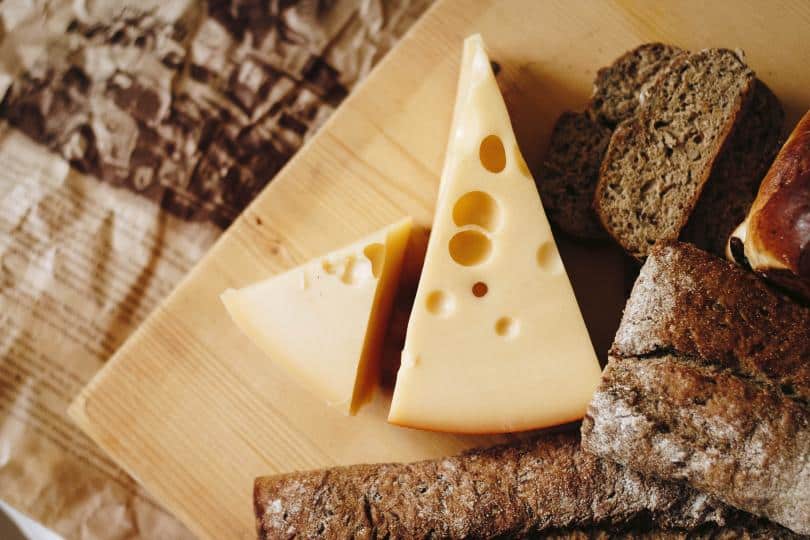
These include everyday foods like cheese, milk and yogurt. Cheese contains tyramine, which is converted into dopamine in the human body. Foods containing probiotics, such as yogurt, also increase dopamine levels.
Nuts
Nuts rich in vitamin B6 help because this vitamin helps the brain produce dopamine. Walnuts and hazelnuts are good sources of vitamin B6. Walnuts also contain DHA, an omega-3 fatty acid that is responsible for modulating the concentration of dopamine. Walnuts and almonds are good sources of folate, which also helps produce dopamine.
Dark chocolate
Studies show that chocolate can interact with a number of neurotransmitters, including dopamine. Dopamine is released after consuming dark chocolate and causes a pleasant sensory experience.
Coffee
High-quality coffee in moderation can also increase dopamine levels, as caffeine can signal our body to produce additional dopamine.
You can get the same benefits from other sources of caffeine, such as matcha, chocolate, green tea, and other forms of caffeinated tea.
Omega-3 fatty acids
In studies on rats, omega-3 fatty acids have been found to normalize dopamine levels and reduce the development of anxious behavior.
Another study found that oral fish oil treatment restored dopamine release after traumatic brain injury.
You can get them from nuts, beans, fish, poultry and many other sources. (Just make sure you’re extra careful about getting B6, which can be found in non-citrus fruits, starchy vegetables, fish, fortified grains)
“It is natural for any country to pay tribute to those who have given their lives for the motherland,” commented the Chief Secretary of the Government
Japanese Prime Minister Fumio Kishida sent a donation to Tokyo’s controversial Yasukuni Shrine, which is often seen as a symbol of Japan’s former militarism, Reuters reported.
Kishida himself did not visit the shrine, but members of his government were there Monday on the 77th anniversary of Japan’s surrender in World War II. This is expected to anger China and South Korea, which were particularly hard hit by Japanese occupation during the war.
Japan’s relationship with China has already been particularly strained this year after Beijing conducted unprecedented military exercises off Taiwan following a visit there by US House Speaker Nancy Pelosi earlier this month. During the exercises, several missiles fell into the waters of Japan’s exclusive economic zone.
In Yasukuni, among the others who fell in the service of Japan, 14 Japanese war criminals convicted by the special tribunal of the Allies after the war are also honored.
A representative of the peace-loving wing of the conservative Liberal Democratic Party, Kishida must avoid angering his neighbors and international partners while also appeasing his party’s right wing, especially after the assassination of its strongman Shinzo Abe last month.
Kishida himself sent a donation without visiting the temple, the Kyodo news agency reported. He made donations during festivals last year and this spring. Early Monday, however, the Japan Broadcasting Corporation showed several ministers at the temple, including Economic Security Minister Sanae Takaichi. Koichi Hagiuda, head of the Liberal Democratic Party’s political research council and a key ally of slain former prime minister Shinzo Abe, was also there earlier.
Chief Cabinet Secretary Hirokazu Matsuno said he did not know if the prime minister would visit the temple, but believed he would make an appropriate decision. “It is natural for any country to pay tribute to those who gave their lives for the motherland,” Matsuno said, adding that Japan would continue to strengthen relations with its neighbors, including China and South Korea.
Later today, Kishida, as well as Emperor Naruhito, will attend a separate secular ceremony to mark the anniversary of the World War II surrender.
Why pay attention to these features anyway? I share with you brief thoughts and guidelines on the subject.
Bitterness in a vegetable or drink often provokes a grimace and unconsciously brings us back to those unpleasant childhood memories of cough syrup. And quite naturally we avoid such products because they are not particularly tasty to us. On the other hand, remember those chefs who indulge us foodies with spicy arugula paired with bitter gorgonzola? Or for the rich taste of bitter cocoa in dark chocolate with raspberries? If they are harmoniously combined, it is the sensations of moderate bitterness and expressive pepperiness that make the food come alive. What is captured here is not the peppery arugula or the scorching cocoa, but their appropriate combination with other ingredients, so that there is both harmony and delight.
Vegetables and plants with bitters are a reference to the beneficial polyphenols with antioxidant action that are given to us without making any effort. It is the same with olive oil: the more expressive the Bitterness and Spicy, the healthier the olive oil. These two characteristics are a sign of a quality and good extra virgin, and if they are absent at all, then this is a sure signal of a defect, mixing of oils – not necessarily olive or even overripe olives and lack of any character of the oil.
I have two pieces of good news here, even for the more skeptical of you.
First, good producers know how to balance them so that they are elegant and pleasant with food. Such olive oil cannot be forced upon you and you exclaim “Tomato salad is very sour”. If the feeling of bitterness is rough and very aggressive, then this definitely does not speak of high quality, craftsmanship and purity of the product. Origin and manufacturer really matter, pay more attention to them.
Fortunately, in the last years even the generic category “Olive Oil” has started to make small but confident steps towards more specific preferences such as “I buy olive oil from Crete because it is very aromatic”, “I like early harvests because of their greenness” “, “I liked the picual variety of hundred-year-old trees, because it is multi-layered”, etc.
Second, there is something for everyone: nature has given us over 1,200 varieties of olives with different flavors and intensities of bitter and peppery, so our choice of spicy olive oil depends on us and what we are cooking. Just like with wine or coffee – we like them more lively or with more moderate acidity, and depending on the food and our preferences we choose fruitier, more floral, more mineral, sweeter, etc. guilt.
To the already known varieties from Italy, Spain and Greece, I will add a few from Turkey and Croatia in the small guide below. It comes to support your choice in a store, at an exhibition, a festival or at a manufacturer:
Medium olives – peranzana, charolea, nocellara del bellice, cazaliva, cornicabra, ohiblanca, mansania, coroneiki, chondrolea, amphisis, macri, patrini, trillie, bouja
Intense Olive Oils – Moraiolo, Frantoio, Intoso, Itrana, Coratina, Picual, Early Harvest Koroneiki, Early Harvest Tsunatti, Memecik, Istrian Bielica
As a rule, the early harvests are one idea more pronounced Spicy and Fruitiness than the standard ones, and the blends are balanced by the blending of oils.
Finally, I will provoke you: when you are on the road among olive trees, try a green olive.
Your face will contort into a grimace of bitter, astringent, acrid, and your tongue will begin to steam. These are the precious polyphenols, it is they that distinguish olive oil from any other – you have hardly had such a feeling from chewed sunflower or grape seeds. When you taste a good and harmonious olive oil, however, there is no trace of this grimace, those unpleasant sensations have been transformed into a noble and elegant bitterness and spiciness. In character. Choose these olive oils because you and your food deserve the best.