A UN-chartered vessel should soon arrive at the Ukrainian port of Yuzhny, also known as Pivdennyi, to collect wheat that will help feed millions of hungry people in the Horn of Africa, the World Food Programme (WFP) reported on Friday.
This will be the first shipment of humanitarian food assistance under the Black Sea Grain Initiative signed last month by Ukraine, Russia and Türkiye.
WFP said the development marks “another important step in efforts to reintegrate Ukrainian food into global markets and get it to countries worst affected by the global food crisis through both commercial and humanitarian avenues.”
The MV Brave Commander is expected to berth shortly at Yuzhny, located on the Black Sea.
Supporting drought response
The ship departed the Turkish capital, Istanbul, on Wednesday after clearing inspection by the Joint Coordination Centre (JCC), the mechanism that supports implementation of the UN-brokered agreement on resuming grain exports from Ukraine.
The JCC will monitor the movement of commercial vessels transporting grain, foodstuffs and fertilizer from Yuzhny and two other key Ukrainian ports: Odesa and Chornomorsk.
WFP has purchased the wheat for its operations in Ethiopia, supporting drought response in the Horn of Africa where the threat of famine looms.
The UN agency recently warned of the dire food security situation across the region, following four consecutive failed rainy seasons.
The Horn of Africa is just one of many areas around the world where the near complete halt of Ukrainian grain and food on the global market has made life even harder for the families already struggling with rising hunger.
A record 345 million people in 82 countries are now facing acute food insecurity, WFP said. Up to 50 million in 45 countries are at risk of being pushed into famine without humanitarian support.
UNOCHA/Levent Kulu – The M/V Fulmar S, the first commercial emtpy grain vessel from Istanbul to Ukraine under the Black Sea Grain Initiative, awaits JCC authorized movement, pending inspection.
Off to a good start
The Brave Commander will discharge the wheat in Djibouti after clearing the JCC protocols in Istanbul on the outbound trip.
The Black Sea Grain Initiative was signed on 22 July and so far, 12 vessels have been authorized to depart the Ukrainian ports, the senior UN official at the JCC told journalists this week.
Frederick Kenney, UN Interim Coordinator, said while there is still much work ahead, “we are off with a very good start”.
The current humanitarian crisis stemming from Russia’s invasion of Ukraine is having “a disproportionate impact” on persons with disabilities, especially children with disabilities in institutions there, four UN-appointed independent human rights experts said on Thursday.
“The terrible tragedy of war highlights historic policy choices made in the past that badly affect children with disabilities,” the Special Rapporteurs said.
The independent experts flagged that “Ukraine faces the daunting task of reinventing many of its social and economic systems when this war is finally brought to an end”.
The experts raised the alarm over inadequate services for children with disabilities and the impact that the armed conflict is having on key services, both within Ukraine as well as the immediate region.
Highlighting that thousands of children with disabilities have been sent back to their places of origin without first determining whether the environments are safe, they warned that this practice may endanger the youth, including by instances of abuse and trafficking.
Moreover, mass returns have left many children untreated for physical and mental health conditions.
“We fully understand the exigencies of war and the immediacy of the hard choices to be made. But this is not a situation that can be allowed indefinitely,” they upheld.
Children who stayed
Citing their displacement from one facility to another, the experts observed that the chilcren who had remained in institutions are experiencing a decline in their health and well-being.
And adding to the already known problems of neglect, abuse, physical restrictions, and access to basic services – including education and healthcare – a lack of information on their whereabouts is preventing families from restoring contact.
“Cross institutionalization cannot be a strategy for the future,” warned the Special Rapporteurs.
Third country recipients
Another concern raised by the experts is that Ukraine seems to require third countries receiving children with disabilities to place them in facilities – even States that have successfully moved away from institutionalization for their own citizens.
“Third countries have a heavy responsibility to assist Ukraine imagine a better future for its citizens with disabilities which include its children,” they said.
Building forward
It is our earnest hope that Ukraine will commit itself to a better future for persons with disabilities — UN Special Rapporteurs
The UN experts expressed hope that when reconstruction and future development for Ukraine is being funded, investments will be made to build community support that will enable children with disabilities to flourish with their families and in family-like situations as opposed to institutions.
“It is our earnest hope that Ukraine will commit itself to a better future for persons with disabilities, especially children,” the experts said.
“For our part, we stand ready to provide our advice, solidarity and support to Ukraine on this matter”.
In closing the experts strongly reiterated their “many previous calls” on Russia to “immediately end its aggression against Ukraine” and pledged to assist Ukraine “build a better future for its citizens with disabilities”.
The experts
Click here for the names of those who participated in the statement.
Special Rapporteurs and independent experts are appointed by the Geneva-based UN Human Rights Council to examine and report back on a specific human rights theme or a country situation. The positions are honorary and the experts are not paid for their work.
The Swiss army has stepped in to transport water to thousands of thirsty farm animals across alpine meadows. Lower rainfall this year has forced farmers to call in the army to help refresh thirsty animals. A two-week operation is underway with three Super Puma helicopters flying in to fill the near-empty tanks used by farmers for their cows, pigs and goats.
Farmer Jacques Ruffeau, whose herd of 130 cattle needs 10,000 liters of water a day, said it had been a painful year marked by a lack of rain.
Six helicopters were mobilized in an attempt to help farmers who are expecting a tough autumn with a lack of fodder. The work of the Swiss military will continue until August 19. About 400,000 liters of water will be delivered during the operation. A similar action was held during the droughts in 2015 and 2018.
The ‘Har Ghar Tiranga’ event is being marked by Buddhist organisations and institutions across the Himalayan belt, including Ladakh with enthusiasm and high spirits. Some of the monasteries in Ladakh have been planning and working on the modalities to have large Tirangas placed at vantage locations.
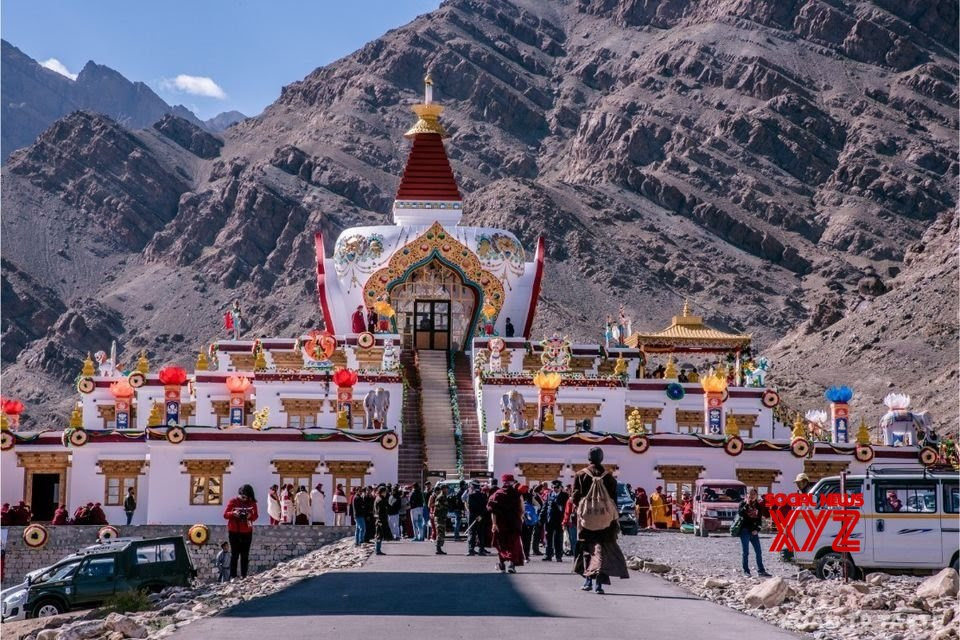
The Spituk monastery, which is located around 8 km from Leh is a remarkable structure which forms part of the tourist circuit in the city. Built in the 11th century, and founded as a Red Hat institution, the monastery was taken over by the Yellow Hat sect in the 15th century.
It has more than 100 monks and a giant statue of Kali which is highly revered by the locals. The monastery celebrated the ‘Har Ghar Tiranga’ event by hoisting the national flag on August 6 at the monastery. The junior monks also formed part of the larger celebration during the day.
The Stakna monastery, which is another beautiful landmark 25 kms from Leh belongs to the Drugpa sect. The monastery is located along the banks of the Indus river. It was founded in the late 16th century by a Bhutanese scholar and saint, Chosje Modzin. The monastery is built on a hill shaped like a tiger’s nose.
Stakna has a residence for approximately 30 monks who celebrated the occasion hoisting the national flag on August 5 at a vantage location with the monastery in the backdrop. The gathered monks proudly sang the national anthem while waving the flag. A group of monks walked across the ramparts of the monastery as if to mark the presence of the Tiranga in all parts of the monastery.
The famous Hemis Monastery which belongs to the Drupka Lineage, and situated 45 km from Leh, also marked the occasion with flags being hoisted by young monks living in the monastery. The celebrations were marked by chanting by the monks while many of them held the flag firmly in the high windy condition. The monastery is famously known for the annual Hemis festival honouring Padmasambhava which is held in the month of June each year.
The Hemis festival takes place in the rectangular courtyard in front of the main door of the monastery. Large number of tourists who visited the monastery during the event also participated in the ‘Har Ghar Jhanda’ activity.
Another famous monastery — the Thiksey monastery also witnessed large scale celebrations of the ‘Har Ghar Tiranga’ utsav on August 6 when a group of young monks living in this beautiful monastery emerged from the ramparts of the monastery waving large national flags.
The monastery, delicately perched on a mountain and spread over different levels, wore a mood of excitement and celebration with the junior monks having a field day portraying the relevance of the Tiranga.
The tourists and visitors were impressed by the solemn event and formed part of the activity.
The Thiksey monastery belongs to the Gelug sect and is located around 19 kms from Leh. It is known to resemble the Potala Palace in Lhasa, Tibet, and is the largest Gompa in central Ladakh.
The monastery is a twelve storey structure and hosts the Maitreya temple installed to commemorate the visit of His Holiness the 14th Dalai Lama to the monastery in 1970.
The event was marked by a number of other smaller monasteries in the region while some monasteries intend to host the event between August 13 and 15.
With the prominent monasteries in Ladakh celebrating the occasion, a strong message has gone across among the community of monks about the deep essence and significance of the Tiranga.
Soon after the events were held in the above mentioned monasteries the city of Leh also witnessed a spread of the Tiranga among the smaller Buddhist institutions and organisations besides the local market.
There are plans for the event to be held in some of the gompas located far from Leh where small groups of monks plan to travel through remote villages carrying the Tiranga and encouraging the locals to be part of the activity.
The International Buddhist Confederation has been supporting these activities and a representative of the IBC was present at the events held in all the above monasteries.
The situation at Ukraine’s Zaporizhzhia nuclear power plant has deteriorated rapidly to the point of becoming “very alarming,” Director General of the International Atomic Energy Agency (IAEA) Rafael Mariano Grossi warned the Security Council on Thursday afternoon.
“These military actions near such a large nuclear facility could lead to very serious consequences,” Mr. Grossi said at the meeting requested by Russia, which was marked by resounding calls to allow the Agency’s technical experts to visit the area amid mounting safety concerns.
IAEA has been in frequent contact with both Ukraine and Russia to ensure that it has the clearest picture possible of the evolving circumstances.
.@rafaelmgrossi at #UNSC: "Since 24 Feb IAEA has closely monitored the situation at nuclear facilities as well as activities involving radioactive sources & nuclear material in #Ukraine, focusing on implications for nuclear safety, security & safeguards." https://t.co/fmm6Li3dVQ
— IAEA – International Atomic Energy Agency ⚛️ (@iaeaorg) August 11, 2022
Europe’s largest nuclear plant shelled
Providing an overview, the IAEA chief said that on 5 August, the Zaporizhzhia plant – Europe’s largest – was subjected to shelling, which caused several explosions near the electrical switchboard and a power shutdown.
One reactor unit was disconnected from the electrical grid, triggering its emergency protection system and setting generators into operation to ensure power supply.
The senior UN official said that there was also shelling at a nitrogen oxygen station. While firefighters had extinguished the blaze, repairs must still be examined and evaluated.
No immediate threat
He said that the preliminary assessment of IAEA experts indicate that there is no immediate threat to nuclear safety as a result of the shelling or other military actions.
However, “this could change at any moment,” Mr. Grossi cautioned.
Overarching goal
He recalled his recent address to the ongoing Tenth Review Conference of the Parties to the Nuclear Non-Proliferation Treaty, where he outlined seven indispensable pillars that are critical for nuclear safety and security.
These included aspects dealing with the physical integrity of the plant, off-site power supply, cooling systems, and emergency preparedness measures.
“All these pillars have been compromised if not entirely violated at one point or another during this crisis,” flagged the IAEA chief.
“Any nuclear catastrophe would be unacceptable and thus preventing it should be our overarching goal”.
He asked both sides to cooperate with the UN atomic agency.
“This is a serious hour, a grave hour, and the IAEA must be allowed to conduct its mission in Zaporizhzhia as soon as possible”.
Trading Blame
Presenting his case, the Russian delegate said Ukrainian forces used heavy artillery against Zaporizhzhia on 5 August, shelling the plant during a shift change to intimidate staff – their own citizens.
He upheld that on 6 August, those forces attacked with cluster munitions, and on 7 August, a power surge occurred, blaming.
The Russian Ambassador blamed Kyiv for refusing to sign a trilateral document issued by IAEA, stressing that Moscow strictly complies with the IAEA Director General’s seven principles.
In turn, Ukraine’s representative said that the withdrawal of Russian troops and return of the station to the legitimate control of Ukraine is the only way to remove the nuclear threat at Zaporizhzhia.
The Ukrainian Ambassador insisted on the need to send a mission to the site and has negotiated modalities with the Agency.
“Despite their public declarations, the occupiers have resorted to manipulations and unjustified conditions for the site visit,” he said.
Given the militarization of the site by Russian armed forces, such a mission must include qualified experts in military aspects.
To increase the EU’s security of energy supply, the Council today adopted a regulation on a voluntary reduction of gas demand by 15% this winter. The regulation foresees the possibility for the Council to trigger a ‘Union alert’ on security of supply, in which case the gas demand reduction would become mandatory.
The purpose of the gas demand reduction is to make savings for this winter, in order to prepare for possible disruptions of gas supplies from Russia, which is continuously using energy supplies as a weapon.
Member states agreed to reduce their gas demand by 15% compared to their average consumption in the past five years, between 1 August 2022 and 31 March 2023, with measures of their own choice.
Whereas all member states will deploy their best efforts to meet the reductions, the Council specified some exemptions and possibilities to apply a partial or in some cases a full derogation from the mandatory reduction target, in order to reflect the particular situations of member states and to ensure that the gas reductions are effective in increasing security of supply in the EU.
The Council agreed that member states that are not interconnected to other member states’ gas networks are exempted of mandatory gas reductions as they would not be able to free up significant volumes of gas to the benefit of other member states. Member states whose electricity grids are not synchronised with the European electricity system and are more reliant on gas for electricity production will also be exempted in case they are desynchronised from a third country’s grid, in order to avoid the risk of an electricity supply crisis.
Member states can limit their reduction target to adapt their demand reduction obligations if they have limited interconnections to other member states and they can show that their export capacities and their domestic LNG infrastructure are used to re-direct gas to other member states to the fullest.
Member states can also limit their reduction target if they have overshot their gas storage filling targets, if they are heavily dependent on gas as a feedstock for critical industries or they can use different calculation method if their gas consumption has increased by at least 8% in the past year compared to the average of the past five years.
Member states agreed to strengthen the role of the Council in triggering the ‘Union alert’. The alert would be activated by a Council implementing decision, acting on a proposal from the Commission. The Commission shall present a proposal to trigger a ‘Union alert’ in case of a substantial risk of a severe gas shortage or an exceptionally high gas demand, or if five or more member states that have declared an alert at national level request the Commission to do so.
When choosing demand reduction measures, member states agreed that they shall consider prioritising measures that do not affect protected customers such as households and essential services for the functioning of society like critical entities, healthcare and defence. Possible measures include reducing gas consumed in the electricity sector, measures to encourage fuel switch in industry, national awareness raising campaigns, targeted obligations to reduce heating and cooling and market-based measures such as auctioning between companies.
Member states will update their national emergency plans that set out the demand reduction measures they are planning, and will regularly report to the Commission on the advancement of their plans.
The regulation was formally adopted through a written procedure. The adoption follows a political agreement reached by ministers at the Extraordinary Energy Council on 26 July. The regulation will now be published in the Official Journal and enter into force on the next day.
The regulation is an exceptional and extraordinary measure, foreseen for a limited time. It will apply for one year and the Commission will carry out a review to consider its extension in light of the general EU gas supply situation, by May 2023.
Background
The EU is facing a potential security of supply crisis with significantly reduced gas deliveries from Russia and a serious risk of a complete halt, for which member states need to prepare immediately in a coordinated fashion and a spirit of solidarity. Although not all member states are currently facing a significant risk of security of supply, severe disruptions on certain member states are bound to affect the EU’s economy as a whole.
It complements existing EU initiatives and legislation, which ensure that citizens can benefit from secure gas supplies and that customers are protected against major supply disruptions, notably Regulation (EU) 2017/1938 on the security of gas supply.
This regulation follows other initiatives already in progress to improve the EU’s resilience and security of gas supply including a gas storage regulation, the creation of an EU Energy Platform for joint purchases and initiatives listed in the REPowerEU plan.
International Youth Day celebrates “the power of partnerships across generations,” the UN chief said in his message for the day.
Commemorated annually on 12 August, Secretary-General António Guterres noted that this year’s theme – “Intergenerational Solidarity: Creating a World for All Ages” – reminds us of “a basic truth” that “we need people of all ages, young and old alike, to join forces to build a better world for all”.
Happy International #YouthDay to all young people everywhere ?
Today & every day, let’s celebrate young people’s role as powerful advocates for fundamental transformation & as active agents of change ?
Too often, ageism, bias and discrimination prevent this essential collaboration, the top UN official observed.
“When young people are shut out of the decisions being made about their lives, or when older people are denied a chance to be heard, we all lose,” he spelled out.
Mr. Guterres upheld that as the world faces a series of challenges threatening our collective future, “solidarity and collaboration are more essential than ever”.
From COVID-19 to climate change and conflicts to poverty, inequality and discrimination, “we need all hands on deck” to achieve the Sustainable Development Goals (SDGs) and build the better, more peaceful future that everyone seeks.
Bolster youth
We need to support young people with massive investments in education and skills-building — “including through next month’s Transforming Education Summit,” said the Secretary-General.
“We also need to support gender equality and expanded opportunities for young people to participate in civic and political life”.
The UN chief maintained that it is not enough to just listen to young people, “we need to integrate them into decision-making mechanisms at the local, national and international levels”.
This is at the heart of the UN’s proposal to establish a new Youth Office at the Organization.
Joining hands
At the same time, he pointed to the importance of ensuring that older generations have access to social protection and opportunities to give back to their communities as well as the ability to share the decades of accumulated experience that they have lived.
“On this important day, let’s join hands across generations to break down barriers, and work as one to achieve a more equitable, just and inclusive world for all people,” concluded the Secretary-General.
‘Youthful drive’ needed
Meanwhile, in his lecture to the students of Nazarbayev University in Kazakhstan, General Assembly President Abdulla Shahid reflected on the importance of intergenerational collaboration, conceding that “it is often young people who hold us accountable when we fall short on any issue, whether it be conservation, peace, or human rights”.
As we face a full-fledged planetary crisis with countries locking themselves into “unreasonable positions” during negotiations, he reminded, “it is the young that are stepping up through their activism”.
“It is young people that kept the 1.5-degree goal alive”, he said. “It is young people who refuse our excuses when we, even in the face of overwhelming evidence, delay and dither on taking action to curb emissions and protect the environment”.
Mr. Shahid confirmed that the world needs “that youthful drive and energy” today.
The factory in Belgium, billed as the world’s largest chocolate factory, said it had resumed operations after being closed for six weeks to deal with a salmonella contamination. Three of the 24 production lines at the plant in the town of Wiese have been restarted and the first delivery has been made, the Swiss company Barry Callebaut, which runs the factory, said.
The plant, which supplies industry giants such as Hershey, Nestle and Unilever but not directly to consumers, was shut down in late June after salmonella bacteria was found in one of the batches. We remind you that at the beginning of April chocolate eggs and Kinder candies were also withdrawn from the Bulgarian market. A warning has been issued about possible salmonella contamination of certain lots.
Zurich-based Barry Callebaut said it halted supplies and informed customers in time to prevent the contaminated chocolate from reaching stores. The source of the contamination was lecithin, which is added to smooth the texture of food, and required weeks of extensive cleanup.
“We remain cautious as this operation is unprecedented and the cleaning and disinfection process takes a long time,” said Barry Callebaut spokesman Cornell Warlop.
He said that while the factory is currently only producing a “fairly small volume”, it plans to reactivate more production lines “in the coming weeks”.
Belgium’s food health agency said it was continuing to monitor production at the plant.
The Barry Callebaut plant employs around 600 people and is a key link in the company’s total output, which in the 2020-2021 financial year was 2.2 million tonnes, produced at more than 60 sites worldwide. The company claims its Vieze factory is “the largest chocolate factory in the world” and claims it’s made in Belgium, which has an international reputation for high-quality chocolate.
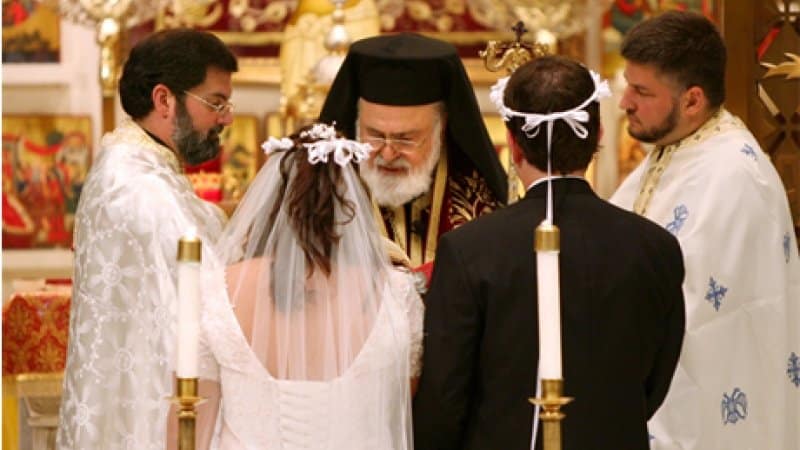
Marriage is the union of a man and a woman established by God in Paradise (Gen. 2:18-24; Matt. 19:6). Church marriage is performed and sanctified by the sacrament of Marriage. According to the apostle Paul, marriage is like the union of Christ and the Church: “The husband is the head of the wife, just as Christ is the head of the Church. <…> Therefore a man will leave his father and mother and cleave to his wife, and the two will become one flesh. This mystery is great; I speak in relation to Christ and to the Church. So let each of you love his wife as himself; but let the wife be afraid of her husband” (Eph. 5:22-33).
The goal of Christian marriage is the joint achievement of an indestructible unity with Christ in His Never-Evening Kingdom. The Christian life of spouses involves cultivating in love the gift of grace received in the sacrament of Marriage, which is manifested, among other things, in childbearing and the joint labor of raising children.
I. Preparation for the wedding and its completion
Marriage implies an open will of a man and a woman, as a result of which rights and obligations arise in relation to each other, as well as to children. “Marriage is the union of a man and a woman, the community of all life, participation in divine and human law,” says the principle of Roman law, which is also included in Slavic church legal sources (Kormchaya, ch. 49). In this regard, church marriage in those countries where it does not have civil legal consequences takes place after the state registration of marriage. This practice has a basis in the life of the ancient Church. In the era of persecution, Christians did not allow compromises with the state pagan religion and preferred martyrdom to participation in pagan rituals. However, even in this historical period, they married in the same way as the rest of the subjects of the Roman state. “They (i.e., Christians) marry like everyone else,” says a 2nd-century Christian writer (Epistle to Diognetus, V). At the same time, Christian marriages, like all other important matters, were performed with the blessing of the bishop: “It is necessary, as you do, to do nothing without the bishop” (St. Ignatius the God-bearer. Epistle to the Trallians, II).
In modern practice, a wedding before the state registration of marriage is possible as an exception with the blessing of the diocesan bishop – for example, in cases of upcoming participation in hostilities, a serious illness or a long separation of future spouses. In situations that require an urgent decision on the wedding prior to state registration, the priest can independently make such a decision, with a subsequent report to the diocesan bishop.
Cohabitation, not consecrated by the Church and at the same time also not registered in the manner prescribed by state law, is not recognized by the Church as a marriage.
It is not recognized as possible to marry marriages registered in accordance with state legislation, but not corresponding to canonical norms (for example, if the number of marriages allowed by church rules is exceeded by one of those wishing to get married or if they are in unacceptable degrees of kinship).
The Church blesses the marriages of those persons who consciously approach this sacrament. In modern church documents, it is prescribed: “Due to the lack of churchness of the majority of those entering into a church marriage, it seems necessary to establish mandatory preparatory conversations before the sacrament of Marriage, during which the clergyman or lay catechist must explain to those entering into marriage the importance and responsibility of the step they are taking, to reveal the Christian understanding of love between man and woman, to explain the meaning and meaning of family life in the light of Holy Scripture and the Orthodox teaching about salvation.
One should strive to ensure that the wedding of Orthodox Christians takes place in the parish to which they belong.
The Sacrament of Marriage, as well as the Sacrament of Baptism, cannot be performed on a person who denies the fundamental truths of the Orthodox faith and Christian morality. Those who wish to receive them for superstitious reasons cannot be admitted to participate in these ordinances. In this case, it is recommended to postpone the wedding until the person realizes the true meaning of the sacrament of Marriage.
The Church also does not allow the following persons to be married:
a) who are in another civil or church marriage that has not ended;
b) on the basis of the 54th canon of the Trullo Council and the church legislation of the Russian Orthodox Church (decree of the Most Holy Governing Synod of January 19, 1810) – those who are related to each other in a direct line in all degrees, and in the side line up to the seventh degree inclusive; marriages in the fifth, sixth and seventh degree of lateral consanguinity may be performed with the blessing of the diocesan bishop;
c) on the basis of the same rule and the synodal decree – being among themselves in property from two genera to the fourth degree inclusive, or property from three genera in the first degree;
d) those who are spiritually related: the recipient and the recipient received in Holy Baptism, the recipient and the recipient; the recipient and mother, as well as the recipient and father of the perceived or perceived;
e) previously married three times; marriages are taken into account, both married and not married, but received state registration, in which the person wishing to enter into a new marriage was after his acceptance of Holy Baptism;
f) those who are in the clergy (starting with those initiated into the subdeacon rank) and monasticism;
g) not belonging to Christianity;
h) who have not reached the minimum age limit in accordance with the current civil legislation;
i) who have reached the maximum age limit according to the rules of St. Basil the Great – 60 years for women (rule 24) and 70 years for men (rule 88); this restriction excludes married couples who have lived together and for one reason or another – for example, in connection with the acquisition of faith – who decided to proceed to the sacrament of the Wedding only in advanced years;
j) recognized as legally incompetent in accordance with the procedure established by law in connection with a mental disorder.
It is unacceptable to perform a wedding without the free consent of both parties.
In cases where the priest finds it difficult to determine the presence or absence of obstacles to the celebration of the Sacrament of Marriage, the priest must either independently turn to the diocesan bishop, or invite those wishing to get married to turn to the diocesan authorities for resolution of the perplexity that has arisen and permission to perform the wedding.
The consecration of marriage, committed – by mistake or maliciously – in the presence of obstacles established by church legislation, is recognized as invalid. The exception is weddings performed in the presence of such obstacles that can be ignored with the blessing of the bishop (see item b of the list above), or if one of the wedding persons does not meet the age limit, if by the time the violation was discovered the legal age had already been reached or if in such a marriage already had a baby. At the same time, if the marriage is recognized as invalid due to violation of the age requirement, the wedding may be performed when the parties reach the legal age.
A marriage may be declared invalid upon the application of one of the spouses in the event of the incapacity of the other spouse for marital cohabitation due to natural reasons, if such inability began before the marriage and is not due to advanced age. In accordance with the definition of the All-Russian Church Council of 1917-1918. an appeal on this occasion to the diocesan authorities can be accepted for consideration no earlier than two years from the date of the marriage, and “the indicated period is not obligatory in cases where the inability of the spouse is undoubted and is due to the absence or abnormal anatomical structure of organs” .
With regard to Orthodox Christians, whose marriage, entered into by them in a lawful manner, is not consecrated by the sacrament of Marriage, parish priests should be guided by the decision of the Holy Synod of the Russian Orthodox Church of December 28, 1998, on the inadmissibility of the practice of depriving Communion of persons living in an unmarried marriage, and identifying such a marriage with fornication. You should have special pastoral care for such people, explaining to them the need for grace-filled help requested in the sacrament of Marriage, and also that for Orthodox Christians the practice of living in a civil marriage without a wedding is unacceptable.
With the blessing of spouses who have lived together for many years and have not been married in the Church, one should use the “Chinese of the wedding of spouses who have been for many years”.
II. Marriage with non-Orthodox and non-Orthodox
The difference in the religion of the bride and groom makes it canonically impossible to consecrate marriages between Orthodox and non-Christians (IV BC 14; Laod. 10, 31; Carth. 30; VI BC 72). The Council of Trulli (canon 72), under the threat of excommunication, forbids Orthodox Christians from marrying not only pagans, but also heretics.
This is connected with the care of the Church for the Christian growth of those who marry: “The common faith of spouses who are members of the body of Christ is the most important condition for a truly Christian and church marriage. Only a family that is united in faith can become a “domestic church” (Rom. 16:5; Philm. 1:2), in which the husband and wife, together with their children, grow in spiritual perfection and the knowledge of God. Lack of unanimity poses a serious threat to the integrity of the marital union. That is why the Church considers it her duty to call on believers to marry “only in the Lord” (1 Cor. 7:39), that is, with those who share their Christian convictions.
At the same time, the Church can show pastoral indulgence towards persons married to non-Christians, making sure that they maintain contact with the Orthodox community and are able to raise their children in Orthodoxy. The priest, considering each individual case, should remember the words of the Apostle Paul: “If any brother has an unbelieving wife, and she agrees to live with him, then he should not leave her; and a wife who has an unbelieving husband, and he agrees to live with her, must not leave him. For the unbelieving husband is sanctified by the believing wife, and the unbelieving wife is sanctified by the believing husband” (1 Corinthians 7:12-14).
The question of the possibility of blessing the marriages of Orthodox Christians with non-Orthodox Christians must be decided in accordance with the current definitions of the highest church authority. Thus, in the Fundamentals of the Social Concept of the Russian Orthodox Church, it is stated: “Based on considerations of pastoral economy, the Russian Orthodox Church, both in the past and today, finds it possible for Orthodox Christians to marry Catholics, members of the Ancient Eastern Churches and Protestants who profess faith in the Triune God, subject to the blessing of marriage in the Orthodox Church and the upbringing of children in the Orthodox faith. The same practice has been followed in most of the Orthodox Churches over the past centuries.
III. Termination of marriage
The marital union must be indestructible according to the word of the Savior: “What God has joined together, let no man separate” (Matt. 19:6).
At the same time, based on the gospel teaching, the Church recognizes the possibility of ending a marriage during the lifetime of both spouses in the event of adultery by one of them (Matthew 5:32; 19:9). Divorce is also possible in cases that affect the marriage union as destructively as adultery. In addition, the Church considered acceptable a number of reasons for divorce, which can be likened to the natural death of one of the spouses, ending the marriage.
At present, the Russian Orthodox Church, on the basis of the sacred canons, the definition of the Holy Council of the Orthodox Russian Church of 1917-1918 “On the reasons for the termination of the marriage union, sanctified by the Church” and the Fundamentals of the social concept of the Russian Orthodox Church, considers the following reasons acceptable for considering the issue of recognizing a marriage as broken :
a) the falling away of one of the spouses from Orthodoxy;
b) adultery of one of the spouses (Matt. 19:9) and unnatural vices;
c) the entry of one of the spouses into a new marriage in accordance with civil law;
d) monastic vows of one of the spouses, performed on the condition of mutual consent and the fulfillment of all moral obligations in relation to family members; tonsure performed without observing these conditions cannot be considered valid, and its consequences must be regulated by the Regulations on Monasteries and Monasticism;
e) the inability of one of the spouses to marital cohabitation, which was the result of intentional self-mutilation;
f) illness of one of the spouses with leprosy, syphilis, AIDS, as well as medically certified chronic alcoholism or drug addiction of the spouse;
g) the unknown absence of one of the spouses, if it lasts for at least three years in the presence of an official certificate of the authorized state body; the specified period is reduced to two years after the end of hostilities for the spouses of persons missing in connection with such, and to two years for the spouses of persons missing in connection with other disasters and emergencies;
h) malicious abandonment of one spouse by another;
i) the wife performing an abortion with the husband’s disagreement or the husband forcing his wife to have an abortion;
j) an encroachment by one of the spouses on the life or health of the other or children, established by a court order;
k) an incurable severe mental illness of one of the spouses that occurred during the marriage, confirmed by a medical certificate.
If one of the spouses has one of the listed grounds, the second may apply to the diocesan authorities with a request to consider the issue of terminating the marriage. At the same time, the presence of a decision of secular authorities on the dissolution of a marriage does not negate the need for an independent judgment and its own decision for the church authorities according to the reason of Holy Scripture, according to church canons and according to the duty of pastoral care.
Before contacting the diocesan bishop, those intending to divorce should meet with their parish priest, who is called upon to study the situation and, if possible, exhort the spouses to reconcile. In the event that such an exhortation fails or it is impossible to carry it out, the priest issues an appropriate conclusion to them for submission to the diocesan administration, or sends such an opinion to the diocesan administration independently.
After examining the issue, the diocesan bishop issues a certificate recognizing this church marriage as broken and about the possibility for the innocent party to marry a second or third marriage. The guilty party may be provided with such an opportunity after repentance and the execution of penance, about which the guilty spouse may also be issued a certificate if he applies.
The actual consideration of cases and the issuance of the said certificates may be carried out, with the blessing of the diocesan bishop, by a commission consisting of presbyters and, if possible, headed by a vicar bishop, if there is one in the diocese. Cases are considered by the commission collegially, and if necessary – with hearing of the parties. The decision on the dissolution of marriage is made in the diocese at the place of actual residence of the spouses. If the spouses live in different dioceses, the marriage can be dissolved in one or another diocese.
APPENDIX
About consanguinity and property
The collateral blood relationship, in degrees in which marriage is prohibited without the possibility of exception, consists of:
• in the second degree – brothers and sisters, including consanguineous and consanguineous (hereinafter);
• in the third degree – uncles and aunts with nephews and nieces;
• in the fourth degree —
cousins among themselves;
great aunts and grandparents with great nieces and nieces (that is, with the grandchildren or granddaughters of their brothers or sisters).
The degrees of blood relationship along the lateral line, in the presence of which a marriage can be performed with the blessing of a bishop, consist (in this and in the following lists all possible family ties of each degree are given, despite the fact that marriages in some cases are impossible even theoretically, given the difference in generations):
• in the fifth degree —
this person with the children of his cousins or sisters;
this person with great-grandchildren and great-grandchildren of his brothers or sisters;
• in the sixth degree —
second cousins among themselves;
this person with grandchildren and granddaughters of his cousins or sisters;
this person with the great-great-grandchildren and great-great-grandchildren of his brothers or sisters;
• in the seventh degree —
this person with the children of his second cousins or sisters;
this person with great-grandchildren and great-granddaughters of his cousins or sisters;
– this person with the great-great-great-grandchildren and great-great-great-grandchildren of his brothers or sisters.
In property from two genera (two-kind property) in the case of monogamy of both spouses, there are:
• in the first degree – the spouse and parents of the other spouse;
• in the second degree —
spouse and grandparents, brothers and sisters of the other spouse;
husband’s parents and wife’s parents among themselves;
• in the third degree —
spouse and great-grandfathers, great-grandmothers, uncles, aunts, nephews, nieces of the other spouse;
parents of one spouse and grandparents, brothers and sisters of the other spouse;
• in the fourth degree —
spouse and great-great-grandparents, great-great-grandmothers, cousins, cousins, grand-nephews and nieces of the other spouse;
parents of one spouse and great-grandfathers, great-grandmothers, uncles, aunts, nephews, nieces of the other spouse.
In property from two genera (two-kind property) in case of bigamy of one or both spouses, there are:
• in the first degree – stepfather and stepmother with stepsons and stepdaughters;
• in the second degree —
this person with stepsons and stepdaughters of a son or daughter;
– stepbrothers and sisters;
• in the third degree —
this person with stepsons and stepdaughters of grandsons or granddaughters;
this person with the children of his half-brothers and sisters;
• in the fourth degree —
this person with stepchildren and stepdaughters of great-grandchildren or great-granddaughters;
– this person with the grandchildren of his half-brothers and sisters;
children of stepbrothers and sisters among themselves.
In a property from three genera (three-kind property) in the first degree are:
• stepfather and wife of his stepson; stepmother and husband of her stepdaughter;
• the husband and mother-in-law of his wife from her other marriage; wife and father-in-law of her husband from his other marriage.
Randy Bryan releases a brilliant version of Kate Bush’s Hounds of Love
“Hounds of Love” is a song from the eponymous album by Kate Bush, released in 1986. The album was the one of Kate’s consecration album, a “concept album” which showed to the world that Bush was not only the most popular female singer of the UK pop scene, but a crazy lady capable of pushing the boundaries beyond reasonableness. When released, it was accompanied with a video clip that Bush realized herself, a video that smells the 80’s but has also a weird flavor of its own which transpires through the ages:
Randy Bryan is a singer songwriter from Richmond, Virginia, who was diagnosed with late-in-life autism spectrum disorder. But who cares about his diagnosis, as what we want is good music, by good musicians? Of course, he might care about it as he says that it came down right before he started this track, and that he now navigates this new territory of that issue. But as far as we are concerned, let’s have a look at his project, which took 8 months before it be released: re-create “Hounds of Love” into a modern version, cinematic and passing it from the Fairlight CMI (The first popular synthesizer/sampler that had its glory in the early 80s, and was used profusely by Kate Bush) to more modern sounds and arrangement.
The project, the song is a real success. It adds a long dramatic intro, that owes a lot to his co-producer e-flamingo, dealing with bass, beat and drum mixing. And then the song comes, with strong and rich electronic orchestral arrangement. Randy’s voice is great, rich and profound, and brings its own universe to a song that in its original version was made around Kate’s Anglo-Irish soprano voice.
It’s a beautiful track, pretty well produced, which in no way degrades the beauty of the original song, but gives it a second-life. I was a fan of “Hounds of Love” by Kate Bush. So it’s impossible for me to say that this new version is better. But honestly, to my 2022 ears, passed through decades of new sounds and mixing progresses, it is… richer. I hope I won’t attract the wrath of Kate’s fans by saying that, as in no way I believe there is anything to change/add to “Hounds of Love” original song, but I wanted to pay tribute to the Randy’s project, which I believe deserve full attention and recognition.