Wednesday, March 25, 2026
Home Blog Page 96

Sudan crisis deepens with communities trapped in ‘siege conditions’

0

Communities in Dilling and Kadugli in the south are trapped in “siege conditions”. according to the children’s agency UNICEF. Additionally, sustained attacks have been reported in West Kordofan in recent days.

Meanwhile, the situation in and around El Fasher – which UN relief chief Tom Fletcher described as “potential crime scene” after his capture by militia fighters during his visit last month – remains dire. Civilians trying to escape continue to face grave risks along dangerous routes.

We cannot emphasize enough that civilians wishing to flee must be able to pass safely and be able to access humanitarian assistance.“, declared UN spokesperson Stéphane Dujarric during the daily press briefing.

Hospitals are not spared

The World Health Organization (WHO) warned that attacks on health care in Sudan continue. Most of Al-Nhud Hospital in West Kordofan was overrun, depriving communities of essential medical care.

The UN agency has verified 198 attacks on health care since the conflict began in April 2023, killing more than 1,700 health workers and patients and injuring more than 400.

The children bear the brunt

In Tawila, North Darfur, where many displaced people have sought refuge, the arrival of people who fled El Fasher continues to put a strain on services.

The sites are overcrowded and malnutrition and disease are on the rise. UNICEF recorded nearly 950 separated or unaccompanied children in Tawila and other parts of the region.

According to the UN, its partners and state health authorities, the level of child malnutrition in White Nile State is “alarming”. More than 30 percent of children are underweight and one in three are stunted in El Jabalain, while limited access to clean water, low vaccination coverage and poor dietary practices fuel an acute malnutrition rate of 13 percent in Tendelti.

The response remains underfunded

“Despite all this, we continue to do everything we can to provide assistance», underlined Mr. Dujarric.

Over the past month, UNICEF and its partners have provided water to tens of thousands of people, delivering 132,000 liters per day.

They also treated acute malnutrition and provided psychosocial support to more than 3,000 young people.

However, with just weeks until the end of the year, the humanitarian response plan for Sudan is only 35 percent funded.

“We urge donors to step up their efforts and remain committed to supporting the millions of people in dire need across Sudan,” Dujarric said.

Originally published at Almouwatin.com

True inclusion of people with disabilities is a victory for us all, says António Guterres

0

“When inclusion is real, everyone benefits,” UN Secretary-General António Guterres said in his message to mark THE International Day of Persons with Disabilities.

He emphasized that people with disabilities are driving progress that benefits all, highlighting how their leaders have improved disaster preparedness, expanded inclusive education and employment, and ensured that humanitarian responses reach those most at risk.

“Structural failures” persist

The head of the UN Department of Economic and Social Affairs (DESA), Li Jinhua, recalled that at the Second World Summit for Social Development held last month in Doha, the international community reaffirmed that real social progress can only be achieved when everyone is included.

Yet people with disabilities continue to face barriers to integration, including higher multidimensional poverty. They are also twice as likely to be unemployed, in addition to being excluded from an increasingly connected world.

“These are not just statistics. These are structural failures that undermine our collective potential,” he said in a recorded message during a virtual event to commemorate the Day.

Young deaf people at the head of the UN

Participants included representatives from the Deaf Leaders of Tomorrow Foundation (DLTF), an international non-profit organization leading a youth-led pilot initiative on sign language rights at the UN.

This involves training at DTLF, Gallaudet University – the world’s premier institution for deaf and hard of hearing students – and the United Nations Headquarters in New York, so that deaf youth gain a foundation in human rights frameworks, disability rights principles, diplomacy and global advocacy.

The initiative does more than just train young leaders, but it also “strengthens global development, moving from the disability framework to the human rights framework,” Yana Hadjihristova of the DLTF said in sign language.

She urged Member States and UN agencies to integrate sign language rights into all youth settings, adopt a global sign language equity strategy, and ensure that deaf youth play a greater role in decision-making.

“The message we send is simple and powerful,” she said. “Sign language creates leaders. Deaf leaders create inclusion. And when the United Nations promotes equity in sign language, the entire human rights system becomes stronger..”

From commitment to action

In Doha, countries adopted a declaration which sets out “a clear plan” towards the full inclusion and participation of people with disabilities, Li said.

Actions include social policies and integration programs, responding to needs and ensuring inclusive, accessible and equitable health services, housing, education, universal social protection and employment opportunities.

He said UNDESA is fully committed to supporting Member States in transforming their commitments into national policies.

“As we move forward, let us remember that societies that work for people with disabilities are resilient, equitable and prosperous for all, and leave no one behind. »

Advocacy rather than inspiration

In New York, the outgoing United Nations global advocate for people with disabilities in conflict and peacebuilding said he felt he had failed in the role, noting that the situation for this population had not changed.

Photojournalist Gilles Duley, who lost three limbs in Afghanistan, said his job as an advocate is to report stories from the front lines. Yet, as a disabled person, he is often asked to give inspiring talks.

“I am not here to be an inspiration to people. My job is to share stories because the reality on the ground for people with disabilities has not changed,” he said.

“So I feel like I’ve failed in my position here. I feel like it’s gotten very little because I haven’t had the opportunity to truly be an advocate.”

Mr Duley said that too often people with disabilities are presented as inspiring and resilient people, which they are, “but that means the stories of those who are truly vulnerable and left behind are often ignored or forgotten. We cannot idealize the idea of ​​disability.”

Originally published at Almouwatin.com

Genuine inclusion of persons with disabilities is a win for us all: Guterres

0
Genuine inclusion of persons with disabilities is a win for us all: Guterres

“When inclusion is real, everyone benefits,” UN Secretary-General António Guterres said in his message to mark the International Day of Persons with Disabilities. 

He stressed that people with disabilities drive progress that benefits everyone, highlighting how their leadership has improved disaster preparedness, expanded inclusive education and employment, and ensured that humanitarian responses reach those most at risk.

‘Structural failures’ persist

The head of the UN Department of Economic and Social Affairs (DESA), Li Jinhua, recalled that at the Second World Summit for Social Development held last month in Doha, the international community reaffirmed that real social progress is only achieved when everyone is included.

Yet persons with disabilities continue to face obstacles to integration, including higher multi-dimensional poverty. They are also twice as likely to be unemployed, in addition to being excluded from a world moving increasingly online.

“These are not just statistics. They are structural failures that undermine our collective potential,” he said in a recorded message at a virtual event to commemorate the Day.

Deaf youth lead at the UN

Participants included representatives from Deaf Leaders of Tomorrow Foundation (DLTF), an international non-profit that is spearheading a youth-led pilot initiative on sign language rights at the UN.

It involves training at DTLF, Gallaudet University – the world’s first such institution for deaf and hard of hearing students – and at UN Headquarters in New York, so that deaf youth gain a foundation in human rights frameworks, disability rights principles, diplomacy and global advocacy.

The initiative does more than just train young leaders, but also “strengthens global development, departing from the disability framework to the human rights framework,” DLTF’s Yana Hadjihristova said in sign language.

She urged Member States and UN agencies to integrate sign language rights into all youth frameworks, adopt a global sign language equity strategy, and ensure that deaf youth play a bigger role in decision-making.

“The message we bring is simple and powerful,” she said.  “Sign language creates leaders. Deaf leaders create inclusion. And when the United Nations promotes sign language equity, the entire human rights system becomes stronger.”

From commitment to action

In Doha, countries adopted a declaration that outlined “a clear blueprint” towards full inclusion and participation of persons with disabilities, said Mr. Li.

Actions include social policies and programmes on integration, addressing needs as well as ensuring inclusive, accessible and equitable health services, housing, education, universal social protection and employment opportunities.

He said UNDESA is fully committed to supporting Member States in turning the commitments into national policy.

“As we move forward, let us remember societies that work for persons with disabilities are resilient, equitable and prosperous for all, leaving no one behind.” 

Advocacy over inspiration

In New York, the outgoing UN Global Advocate for Persons with Disabilities in Conflict and Peacebuilding Situations said he felt that he had failed in the position, noting that the situation for this population has not changed.

Photojournalist Gilles Duley, who lost three limbs in Afghanistan, said that his job as an advocate is to bring stories from the frontline. Yet, as a person with a disability, he is often asked to deliver inspiring talks.

“I’m not here as an advocate to be an inspiration for people. My job is to share stories, because the reality on the ground for people with disability has not changed,” he said.

“So, I feel I failed in my position here. I feel it has achieved very little because I have not had that opportunity to truly be an advocate.”

Mr. Duley said that too often, persons with disabilities are presented as inspirational and resilient, which they are, “but that means the stories of those left behind who are truly vulnerable are often ignored or forgotten.  We can’t romanticize the idea of disability.”

Source link

Crackdown on Palestinian civil society is reaching alarming levels, warns UN human rights office

0
Crackdown on Palestinian civil society is reaching alarming levels, warns UN human rights office

Israeli security forces raided the organisation’s offices in Ramallah and Hebron on 1 December, vandalising property and detaining staff. 

According to OHCHR, people present in the buildings were blindfolded, handcuffed and made to kneel or lie on the floor for several hours. Eight men were detained.

The union (UAWC) is licensed under Palestinian law and has supported farmers and rural communities for decades – particularly those facing settler violence or the threat of forced displacement. 

The group is one of six Palestinian NGOs labelled “terrorist” by Israeli authorities in 2021 under legislation the UN says is overly broad and allows for sweeping, unjustified restrictions on civil society. The rights office stressed that Israel has not presented evidence to back up the allegations.

Most violent olive harvest on record

The raid followed several weeks of harassment and public incitement by Israeli settlers and settler leaders who targeted UAWC during the peak of the olive harvest. This year’s harvest has been the most violent on record: by mid-November, OHCHR had documented 167 settler attacks affecting 87 Palestinian communities.

Violence has increasingly extended beyond farmers themselves. Since 1 October, the UN office has recorded 81 violations by settlers and Israeli security forces against human rights defenders, volunteers providing protective presence, and NGOs supporting communities targeted by settler violence or threatened by settlement expansion. These include 48 arrests or detentions, and 22 physical assaults.

OHCHR said unnecessary or disproportionate force, arbitrary detention, and ill-treatment remain common features of Israeli security operations in the West Bank. 

‘Unlawful annexation’

The cumulative effect, it warned, is a rapid shrinking of both physical and civic space for Palestinians, as settlement expansion and what the UN describes as Israel’s “unlawful annexation” of the territory continue.

Ajith Sunghay, head of OHCHR in the Occupied Palestinian Territory, said the international legal position is unequivocal: “Israel must end its unlawful presence in the Occupied Palestinian Territory and remove all settlers in accordance with the conclusions of the International Court of Justice.”

“As an occupying power, Israel has clear duties under international law,” he added, including respecting and protecting Palestinians’ rights to earn a living and to exercise freedom of expression and association. 

Source link

Syria: Hope emerges amid persistent human rights challenges

0

Coinciding with the anniversary of the fall of the old regime, “things are improving,” said Mohammad Al Nsour, head of the Middle East and North Africa section at OHCHR said UN News.

“Every time we go to Damascus, we can see the change. »

The OHCHR – prevented from operating in Syria for many years – now has a team permanently deployed in Damascus. For Mr Al Nsour, this marks an important turning point after a long period spent monitoring the human rights situation remotely from Beirut.

“The former government refused access to OHCHR,” he recalled from Geneva. “We have tried several times,” but now, “it is a great advantage to be on the ground,” he added.

© Wikimedia Commons/Bernard Gagnon

Umayyad Mosque in Damascus, Syria.

Signs of progress

Syria remains faced with a number of urgent priorities: the need to rebuild a war-damaged country, address the many remaining grievances, and seek justice for past and present violations.

The senior official noted that insecurity also remains an alarming concern – from the northeast to Soueida – following massacres earlier this year in coastal areas, notably by members of the government security forces.

He nevertheless insisted that the general direction is “very constructive and positive”.

“There is a political will for improvement on the part of the government,” he said, highlighting the daily engagement between OHCHR and the authorities. The government received technical assistance from UN officials aimed at reforming legislation, strengthening human rights within law enforcement institutions, and improving public administration.

These measures, he said, demonstrate a commitment to a rights-based future.

He stressed that one of the main advantages of having an office inside the country is that it functions “as an advisor to the authorities”.

“We monitor, report and use advocacy to alert authorities of violations in order to prevent them. Our main goal and objective is not to shame or blame any government, but rather to prevent violations.”

Symbolic change

Preparations are underway for Syria’s first-ever Human Rights Day celebration on December 10, just two days after the first anniversary of the fall of the Assad regime.

The event is co-organized by OHCHR and the Syrian Ministry of Foreign Affairs on the theme: A human rights-based approach to reconstruction.

Mr Al Nsour said the celebration would mark “a new chapter in our relationship with the Syrian government” and that discussions would focus on “how to advance the human rights agenda in the new Syria”.

Responsibility and justice

For many Syrians, responsibility remains central.

After violent incidents in the coastal region last March, authorities established a national commission of inquiry – which received important technical advice from OHCHR – and some perpetrators are now being tried in a national court.

Mr. Al Nsour noted that the government also accepted the renewal of the mandate of the United Nations Commission of Inquiry, allowing the continuation of independent international investigations, not only into violations committed under the Assad regime, but also since its fall.

Looking ahead, transitional justice is the priority for 2026.

“There is a need not only for accountability,” he said, “but also for truth-telling, reparations and national reconciliation.”

Women’s voices

OHCHR also supports women-led civil society organizations and promotes greater representation of women in political institutions, particularly following parliamentary elections – a request to which Mr Al Nsour said authorities are increasingly receptive.

At the same time, it also empowers these organizations by training them to use advocacy to promote their cause and connecting them with international human rights mechanisms.

© ONUCHA/Ali Haj Suleiman

OCHA cross-border mission to Ma’arrat An Nu’man.

The OHCHR official stressed that the greatest source of hope for Syria lies in the Syrians themselves.

“What is amazing about Syria is the resilience of the Syrian people,” he said. “What gives you hope is this extraordinary and educated young generation, ready to engage in a very positive way in the new Syria. »

Across the country, he noted that young people have launched local initiatives, from cleaning public parks to supporting local services – small acts that rebuild a sense of community after conflict.

“They have seen what has happened in other countries – post-conflict situations in the region and beyond – and they are doing their best to move in the right direction. »

A long way to go

Financial pressures are increasing, but donors have shown “very positive indications” of increased funding for Syria, according to Al Nsour.

“There is great interest from major donors in promoting human rights in the new Syria,” he explained, both inside and outside the region.

Despite numerous obstacles, he underlined the determination of Syrians to rebuild their country on the basis of human rights.

As Syrians mark Human Rights Day this year, perhaps the most important message is clear: progress, fragile as it is, is finally visible – and hope grows with it.

Originally published at Almouwatin.com
Mozambique: ‘Civilians were killed, some were even beheaded’

0
Mozambique: ‘Civilians were killed, some were even beheaded’

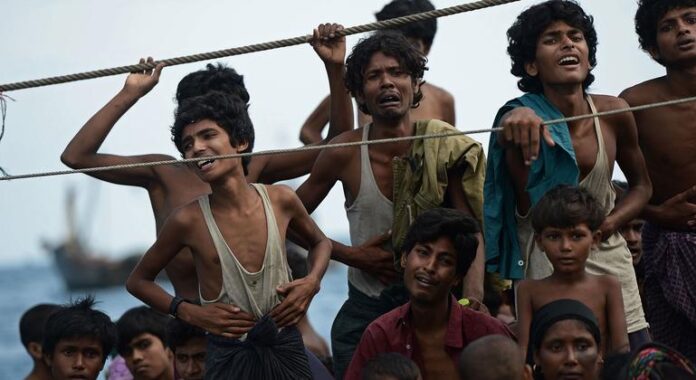
The agency reports that close to 100,000 have been newly displaced in the past two weeks alone, following intensified attacks on villages and a rapid spillover of violence into previously safe districts.

Speaking from conflict-ridden Erati in northern Mozambique, Xavier Creach expressed concern over the attacks and inability to sufficiently respond.  

“These simultaneous attacks in several districts are generating a huge challenge for humanitarian actors who have to multiply emergency response in different zones of the country,” he said.

Regretfully, we lack resources,” he added.

Homes burned, villages attacked  

The violence, which began in 2017 in the country’s northernmost province, Cabo Delgado, has already displaced over 1.3 million people.  

It spread this year beyond the province and into Nampula, threatening communities that had previously hosted displaced families, according to the UN refugee agency.  

People reaching safety say they escaped in fear as armed groups stormed their villages – often at night – burning homes, attacking civilians, and forcing families to flee without their belongings or documents.

“Civilians were killed, some were even beheaded,” said Mr. Creach. “People had to flee at night in the most chaotic manner.”

The sudden influx of displaced people into Nampula Province is putting pressure on already fragile host communities, who also face insecurity. Schools, churches and open spaces are crowded with newly arrived families.  

Running out of resources  

It’s the fourth massive influx that Northern Mozambique has faced in recent months, Mr. Creach stressed.

“The response is insufficient,” he said. “People need assistance. They need food, they need shelter, they need water, they need support, and they arrive traumatised.”  

UNHCR will require $38.2 million in 2026 to meet rising needs across northern Mozambique. This comes at a deeply concerning time, with 2025 funding standing at only 50 per cent of the required amount.

Mr. Creach said that on Tuesday morning, agency staffers witnessed people returning to what are very unsafe areas – not to restart their lives, but due to the lack of response and overcrowded shelters.

They felt they couldn’t stay any longer and they had no option but to return.” 

Source link

Repression against Palestinian civil society reaches alarming levels, UN human rights office warns

0

Israeli security forces raided the organization’s offices in Ramallah and Hebron on December 1, vandalizing property and arresting staff.

According to OHCHRpeople in the buildings were blindfolded, handcuffed and forced to kneel or lie on the ground for several hours. Eight men were arrested.

The union (UAWC) is licensed under Palestinian law and has supported farmers and rural communities for decades – particularly those facing settler violence or the threat of forced displacement.

The group is one of six Palestinian NGOs labeled “terrorist” by Israeli authorities in 2021 under legislation that the UN considers overly broad and allows for sweeping and unjustified restrictions on civil society. The human rights office stressed that Israel had not presented any evidence to support the allegations.

The most violent olive harvest ever recorded

The raid followed several weeks of harassment and public incitement by Israeli settlers and their leaders who targeted the UAWC at the height of the olive harvest. This year’s harvest was the most violent on record: as of mid-November, OHCHR had recorded 167 settler attacks affecting 87 Palestinian communities.

The violence increasingly extends beyond the farmers themselves. Since October 1, the UN office has recorded 81 violations committed by settlers and Israeli security forces against human rights defenders, volunteers providing a protective presence and NGOs supporting communities targeted by settler violence or threatened by settlement expansion. These include 48 arrests or detentions and 22 physical attacks.

OHCHR said the use of unnecessary or disproportionate force, arbitrary detention and ill-treatment remain common features of Israeli security operations in the West Bank.

“Illegal annexation”

The cumulative effect, he warns, is a rapid shrinking of physical and civic space for Palestinians, as settlement expansion and what the UN describes as Israel’s “illegal annexation” of territory continues.

Ajith Sunghay, head of OHCHR in the Occupied Palestinian Territory, said the international legal position is unequivocal: “Israel must end its illegal presence in the occupied Palestinian territory and expel all settlers in accordance with the findings of the International Court of Justice.”

“As an occupying power, Israel has clear duties under international law,” he added, including respecting and protecting the rights of Palestinians to earn a living and exercise their freedom of expression and association.

Originally published at Almouwatin.com

EU will phase out Russian gas imports

0
EU will phase out Russian gas imports

A deal has been struck on rules to phase out Russian gas imports to ensure an independent EU energy market. The rules introduce a gradual ban on both liquefied natural gas and pipeline gas imports from Russia, with a full ban from the end of 2026 and autumn 2027 respectively.

Source link

Package travels: new rules on traveller protection | News

0
Package travels: new rules on traveller protection | News

The draft law informally agreed by Parliament and Council negotiators clarifies the definition of a travel package, conditions for cancelling a trip, and travellers’ rights to information, help and refund in various situations, including when their travel organiser goes bankrupt or extraordinary circumstances cause travel disruptions.

Definition of a travel package

New rules should make it easier to know which combinations of travel services constitute a package and therefore fall under the protection provided by this law. The existing category of linked travel arrangements will be removed, so there will be one uniform definition and criteria linked to when and how the combination of services are booked. When the travel organiser invites the client to book additional services that would not form a package with previously booked services, the client has to be informed of this.

Online purchases, where linked booking processes enable easy combinations of services offered by separate traders, will be considered a package if the first trader transmits the traveller’s personal data to the other traders, and the contract is concluded within 24 hours.

Vouchers

The updated directive also includes detailed provisions about the use of vouchers, which became widespread during the Covid-19 lockdowns. Consumers are given the right to refuse vouchers and request a refund within 14 days if they prefer. The vouchers should be valid for a maximum of 12 months and clients must be refunded – without a proactive request – for any fully or partly unused vouchers when they expire.

When choosing travel services, voucher holders must be free to spend the voucher on any travel service offered by the organiser, either in one go or in parts. Vouchers must be covered by insolvency guarantees and extendable or transferable once. Their value will have to correspond at least to the amount of the refund they would have been entitled to.

Trip cancellation and refund rights

If their trip organiser goes bankrupt, clients must receive a refund for cancelled services from the insolvency guarantee funds within 6 months. In exceptional cases of high workload, this deadline can be extended to 9 months.

If unavoidable and extraordinary circumstances arise at the travel destination or departure point before a trip, or affect the journey, travellers have the right to cancel their trip without a penalty, with a full refund. Such cases should be assessed individually and official travel recommendations will be important elements to be taken into account when considering whether a termination of the contract due to unavoidable and extraordinary circumstances is justified or not. However, an official travel warning alone will not be considered sufficient grounds for a refund following trip cancellation, as EU countries do not use travel warnings in a coordinated manner.

If travellers are aware of a risk at the time of the booking but decide to purchase a trip nevertheless, they can not request cancellation without a termination fee.

Penalties, pre-payments and complaint handling mechanism

The co-legislators decided not to harmonise the level of penalties for infringements in the updated rules. They also decided not to cap the level of pre-payments, but member states who wish to may do so.

The negotiators also agreed that travel operators must establish a clear complaint-handling arrangement, to ensure that reported issues are dealt with reasonably quickly. They must acknowledge receipt of a complaint within 7 days and give the client a reasoned reply within 60 days.

Quote

After the successful trilogue, Parliament’s rapporteur for the file Alex Agius Saliba (S&D, MT) said: “Today’s agreement reinforced the rights of travellers in the EU. We introduced a complaint handling mechanism with mandatory deadlines, making sure people get a timely, reasoned reply from the travel organiser if something goes wrong and they have to file a complaint. We set new rules on vouchers to make sure they are voluntary, and refunded if not used. We shielded travellers better against the trip organiser insolvency and gave them the right to cancel their travel with a full refund in extraordinary circumstances, such as a pandemic. This is a good deal that will help both consumers and businesses in all Europe.”

Next steps

The deal must now be formally approved by both the European Parliament and the Council early next year before entering into force. EU countries will then have 28 months to adapt their laws to the new rules and a further 6 months to start applying the new provisions.

Source link

Debunking the Myths Around Ask Center and Understanding the Real Reasons Behind Mixed Reviews

0
Debunking the Myths Around Ask Center and Understanding the Real Reasons Behind Mixed Reviews


Online services often face a familiar cycle of assumptions, speculation, and fragmented commentary. The same is the case with Ask Center. Just like any other digital platform which sustains expert-driven services with subscriptions; the internet holds praise, criticism, curiosity, and confusion regarding what the platform offers and how it operates. Some users describe Ask Center as a source one can trust for real-time expert guidance, while others share hesitation based on misunderstandings about the subscription model, billing expectations, or how refunds are processed. In turn, this lays the groundwork for mixed reviews, not always reflective of the real structure of the service.

In order to understand the reality, one needs to take a closer look at where these perceptions originate and how the most common myths develop. Many online discussions in which user experiences are discussed give little or no context. Others originate from a single negative interaction that gets amplified and repeated without any kind of verification. Whatever the source, the most common myths can be traced back to a set of assumptions about billing, support timelines, and what users bring with them into the platform. Looked at closely, the misunderstandings have predictable patterns with clear explanations.

One of the most frequent misunderstandings is related to the subscription model. Users often subscribe, expecting immediate assistance from an expert in a certain category for a one-time fee. However, Ask Center uses a recurring subscription model designed to support ongoing access; thus, the user remains connected with a pool of experts until the subscription is manually canceled. Many digital subscription-based services operate like this because ongoing expert availability requires ongoing resource allocation. When users forget they subscribed or don’t realize that plans automatically renew, they assume a charge was made in error. Actually, this process follows the same rules as most online subscription services: disclosed terms, a clear renewal schedule, and the capability to cancel at any time.

It is here that the confusion starts: when one expects something different from what they agreed to. A large percentage of the mixed reviews come from users who thought they were buying a single interaction with an expert, but they found themselves enrolled in some kind of recurring plan. When the next billing cycle comes, the charge feels unexpected. This leads to complaints about how the platform is not transparent, even though the renewal structure is clearly shown at the point of sign-up. Any service which offers continued access has similar issues where users miss or misunderstand renewal mechanics. Ask Center is not an outlier for this, and the expectation mismatch is what creates most of the negative reviews.

Another myth arises with concerns over financial safety. Because users see recurring charges on bank statements, some wonder if Ask Center is a safe platform. Usually, the concern develops when a user has forgotten about the subscription or does not recognize the charge description in their bank account. Nonetheless, these charges occur through standard payment gateways that follow established security protocols. They are processed just like subscriptions to streaming services, digital learning platforms, or productivity tool providers. The question of whether Ask Center is safe regularly reflects misunderstandings about subscription labeling rather than problems with safety. Once the users review the transaction history and trace it to their date of registration, the charge coincides with the renewal of the Ask Center subscription they started earlier.

Other mixed feedback involves the refund process for Ask Center. Different users have varying expectations about refunds because each one approaches customer support with a different assumption. Some feel they should get an immediate refund, no matter what their usage or timing; and others think the act of calling support automatically qualifies them for a refund. In practice, Ask Center refunds follow policies similar to many online services. Users may get a refund if they reach out promptly, if the billing cycle just started, or if there is misunderstanding on their part. In other cases, it may not be an automatic refund if the subscription was active for some time or multiple interactions with experts have taken place before cancellation. It is this range of possibilities that leads to inconsistent reviews. A user getting a timely Ask Center refund might say that the service was helpful, but another user contacting support weeks after their renewal might think the outcome unfair. The divergence does not result from unpredictability but from different situations judged under the same policy.

Much of this confusion comes from expectations set by fast-moving online ecosystems. Users are used to instant responses, instant cancellations, and real-time financial adjustments. With companies using expert-driven support models, the same action may have varying outcomes. One user would instantly cancel from their dashboard, but another might have to wait for confirmation from a support representative. In instances where stress or urgency has hit users, they may misinterpret delays as evidence of unresponsiveness when it is part of the normal support queue. This underpins much of the emotional tone that leads to negative reviews.

The fragmented nature of online commentary also contributes to these mixed perceptions. Most reviewers only leave a review when something has gone wrong. Those who receive fast, helpful guidance do not always feel compelled to share their experience. This creates an imbalance whereby any negative reviews appear more often than positive reviews, even when the latter represent the majority. Someone searching for information may be put off by isolated complaints, which overshadow the wider pool of satisfied users. Out of context, it can be difficult to identify the root causes of dissatisfaction.

An important detail these myth-based reviews fail to notice is that Ask Center has always been clear about how to cancel. Users can easily cancel directly through their dashboards at any time, and renewal cycles are announced via automated messages. Yet browser autofill errors, unopened emails, and the common habit of skimming signup pages can lead to situations where users claim cancellation was difficult when the tools were readily available. This is not unique to Ask Center. Any digital service reliant on subscriptions experiences the same pattern. The challenge is not with the process of cancellation but the expectations users bring when signing up quickly during a stressful moment.

Diverse reviews also seem to surface as the categories that Ask Center covers are many. Users arrive seeking answers regarding electronics, pet health, home appliances, legal documents, car issues, and much more. Often, an expectation of outcomes providing a situation just matching to perfection is seen. While experts provide guidance across these categories, some users tend to consider answers as incomplete if they recommend further follow-up action. If an expert makes a comment that a situation might have to be professionally evaluated in person, some feel that the platform has not provided enough. Basically, in reality, it’s supposed to be the first step whereby the possibilities narrow down, and users avoid risky or wrong assumptions. This very thought that every answer will solve all issues seems to raise misunderstandings about the platform’s scope. There is also a psychological component behind mixed reviews. People are more vulnerable at 2 AM when many issues arise unexpectedly. A pet behaves strangely late at night, an appliance stops working, or a legal document raises concerns after business hours. In these heightened moments, emotions from being in such a state can affect how the user interprets their interactions. If the answer they receive is not exactly as they had hoped for, frustration may turn into a negative review. It is in this respect that the emotional state of the user becomes part of the review itself, confusing objective evaluation with subjective experience. With all that said, the overall structure of  Ask Center remains intact, transparent, and consistent: charges reflect active subscriptions, refunds are issued according to very predictable policies, and experts answer questions to the best of their training and available knowledge. 

The platform also remains safe on financial and technical levels. The expectations, timing, and interpretation create the differences in public perception, not in the core operations themselves. Deconstructing the myths around Ask Center reveals that most complaints arise from misunderstandings over how recurring subscriptions work, how refunds are processed, or what expert advice can reasonably be expected. Users who understand these mechanics find the platform works as it should. The Ask Center subscription provides ongoing access to experts, the refund process has clear guidelines, and bank charges that users see relate to their original voluntary enrollment. In the end, mixed reviews about Ask Center say less about its safety or legitimacy than about varied ways people interpret digital services. With clearer expectations during sign-up and more awareness of how subscription cycles operate, many negative assumptions lose their foundation. What remains is a platform designed for real-time support, based on standard billing practices and grounded in consistent user policies. To those who understand the mechanics, the service continues to operate reliably and safely.


Source link