Colombia, Spain and a Bolivian tribe dispute whose galleon and its riches sunk in the Caribbean sea
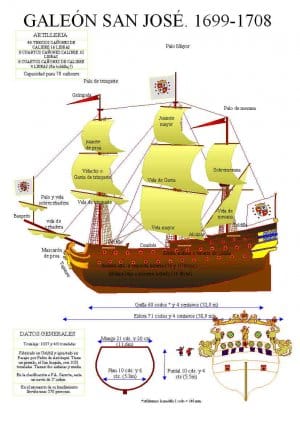
At the end of May 1708, the Spanish galleon “San Jose” set sail from Panama for the homeland. There is a huge treasure on board – the holds are filled with over 200 tons of gold, silver, coins, emeralds, etc., collected from the colonies in the Caribbean. King Philip V relied on these resources to finance the War of the Spanish Succession. However, on June 8, “San Jose” encountered enemy British ships. In the midst of the battle, a fire breaks out and after hours the ship takes its last journey – to the bottom of the sea, dragging the 600 crew and the treasure. The Spanish galleon and its countless riches became a legend that never ceases to intrigue archaeologists and treasure hunters.
The galleon had 64 cannons, the barrels of which were decorated with unique engravings of dolphins. In 2015, the government of Colombia sensationally announced that the galleon had been discovered. “This treasure is the most valuable ever discovered in human history,” exulted the then president of Colombia, Juan Manuel Santos. But the great depth makes exploration difficult and slow. It was only on November 27, 2018 that the REMUS 6000 robotic submarine of the US-based Woods Hole Oceanographic Institution approached the ship and managed to take photos of the wreckage, including the unique bronze cannons engraved with dolphins. Some of the underwater photos were shown only days ago. They show coins, ornaments, porcelain, ceramics, etc. artifacts. Also visible are the bow of the galleon and parts of its hull covered with seaweed and shells.
Authorities in Bogotá are keeping the location secret, but the San Jose is believed to be lying on the bottom about 40km from the port city of Cartagena de Indias. Its cargo is said to be worth between $1 billion and $2 billion at today’s prices. Everything is still in the research phase and estimates of the value of the treasure are quite conditional – the finds and their fate are shrouded in secrecy, and their extraction will be an extremely difficult and expensive operation.
Whose treasure is it?
This has been debated for many years. Colombia thinks it has all the rights, since the “San Jose” was discovered in its waters. But Spain also has claims – after all, the crashed ship was part of its fleet. The Indians of the Khara-Khara tribe of Bolivia also believe that part of the treasure belongs to them, since it comes from the bowels of their lands and was mined by their ancestors (Bolivia is home to the largest silver mine in the world).
The authorities in Bogotá are also arguing with private companies, who are even trying to prove in courts and arbitrations that they are entitled to a share of the valuable finds lying at the bottom. The American company Sea Search Armada (SSA) claims to have located the ship back in the early 1980s and as the first finder they are entitled to 50% percent of the assets. The SSA did have an agreement with former Colombian President Juan Manuel Santos to share the treasures, the Supreme Court in Bogotá confirms. But the American company fails to prove that it is the first discoverer, because the coordinates indicated by it do not match the true location of the galleon.
Another dispute arises – with Maritime Archeology Consultants (MAC), who want a 45% share, because they got a concession and participated in the successful search works. The court ruled that the 45% in question does not refer to everything discovered, but only to the unimportant assets – everything valuable in “San Jose” is part of the national cultural and historical heritage of Bolivia and is not subject to “division”. The dispute reached a state court – the private company filed a lawsuit for 17 billion dollars, insisting that Colombia owes it the colossal amount for costs of organizing the underwater expeditions and for non-fulfillment of the contract… But the claim was rejected as untenable.
Authorities in Bogotá have plans to make a museum in Cartagena to display the treasures and other exhibits from the wreck of the legendary ship. And not only from him – near “San Jose” the divers came across two more sunken ships, as well as 13 other objects that are yet to be studied. It is believed that there are hundreds of ancient and old vessels on the seabed around, which are also waiting to be discovered.
The 8-storey hotel will be located in the Paphos area, on beach plots owned by the Archdiocese
The Church of Cyprus will invest 100 million euros in a luxury 5-star hotel on the beach on the west coast of the island. The building permits were issued after heated disputes related to archaeological finds.
The developer of the Diamond Essence Hotel, the Holy Archdiocese of Cyprus, received an environmental permit from the Department of Environment for its construction. The approval from the state authority was granted 5 years after the initial application and paves the way for the final building permit to be issued.
The 8-storey hotel will be located in the Paphos area, on the west coast of the island, on beach plots owned by the Archdiocese.
The luxury complex will have nearly 500 beds, a restaurant, shops, a wellness center, a wine cellar and other premises. The construction of the facility will last two and a half years.
Along with the start of construction work for it, the construction of two 12-story residential towers will also begin on the adjacent plot, also belonging to the Archdiocese.
Giving the “green light” for the church investment project was delayed due to the discovery of a number of archaeological finds during excavations on the plot – remains of ancient facilities, buildings from the Hellenistic era, ancient water pipes. After prolonged and heated disputes between the Holy Archdiocese and the Department of Antiquities, plans for the hotel were revised.
Group petition of 50 gas stations lodged with the European Court of Human Rights (Strasbourg) in response to the Hungarian Government’s illegal capping of petrol prices
The Hungarian Government capped the price of petrol and gasoline at a price of HUF 480 (~ 1.2 EUR) in mid-November 2021. Since then, the cap has been extended until November 2022 without any consultation with stakeholders. The price cap is barely half of the actual free-market price.
Consequently, the gas stations suffer serious financial damage every day now by selling fuel. However, they cannot stop or suspend their activity since the Hungarian Government enacted a decree that forces the gas stations to operate at all costs.
In this situation, 50 gas stations submitted a joint constitutional complaint with the Constitutional Court of Hungary and now lodged their case in Strasbourg. The gas station owners are represented by Dániel Karsai, an attorney-at-law based in Budapest with a human rights portfolio.
The Strasbourg Court has already ruled in favour of analogue applications where the profit margin was cut down to practically zero, finding that such a piece of legislation is contrary to the right to property. The gas stations are of the view that their case shall have a similar outcome, for the following reasons.
In the gas stations’ view, it can be reasonably argued that the Hungarian government misused its legislative power delegated to it by the Fundamental Law of Hungary. The Government framed the price-capping using the emergency situation of COVID-19 and the war in Ukraine. These emergency situations enable the Government to pass emergency decrees without effective parliamentary control.
Moreover, the Government disregarded even the domestic law which provides that for any price cap introduced the Government must provide the means of sufficient profitability for the affected enterprises. It shall be underlined that gas stations were forced to comply overnight with the change of legislation. Non-compliance could result in an administrative fine of 15.500 EUR to 38.500 EUR.
The most extreme form of interference in the applicants’ proprietary rights is the obligation to hand over the operations of their gas station to another registered competitor without any compensation. The de facto expropriation can take place as a form of punishment for non-compliance with the emergency decrees of the Government.
With no safeguards provided for the affected persons to regain control of their lost businesses, and with no terms prescribed to compensate them for their de facto expropriated land and business, the Hungarian legislation is in serious contradiction with the right to property.
“We expect the ECtHR to look beyond appearances; to find that the Hungarian legislation deprived the applicants of making full use of their business licences and that it resulted in the unprecedented loss of their professional clientele, some of them left by the Government on the edge of bankruptcy” – says Mr Karsai.
“We believe, that in light of the severity of the Government’s restrictions, the case of Hungarian gas station owners will be processed with priority and will be a landmark case leading to Hungary’s violation of the Convention.”
Retailers sometimes use the decoy effect to maximize the sales of a particular product or option.
Every retailer is interested in increasing their turnover or maximizing the sales of a particular product at some point or other, and one way of doing this is by using decoy products. A decoy product is an option that, when added to a choice set, alters the relative attractiveness of the other alternatives in the set and causes the customer to switch their choice from one option to a more expensive or profitable one. It’s not intended to sell, just to nudge customers toward a certain item by showing them a slightly worse alternative.
What is the decoy effect?
When people talk about the “decoy effect,” they are referring to asymmetric decoys. These work by being “asymmetrically dominated.” This means the decoy is totally dominated by the target option, the item you would like the customer to choose, in terms of perceived value, but only partially dominated by the other, “competitor” item. This is why the decoy effect is sometimes called the “asymmetric dominance effect.” It’s also called the “attraction effect” because it causes a shift in preference from itself to a similar but superior alternative.
One of the most well-known examples was described by psychologist Dan Ariely, who noticed something odd about The Economist magazine’s subscription options:
an internet-only subscription for $59
a print-and-internet subscription for $125
a print-only subscription for $125
He wondered why the magazine would offer a print-only option for the same price as a print-and-internet one, so he asked 100 of his students to pick one of the three options; 16 chose the internet-only subscription and the other 84, the print-and-internet option. Then he took away the print-only subscription, which no one had picked anyway, and asked the students to choose again. This time, 68 of them chose the cheaper internet-only option and 32, the print-and-internet option. The print-only decoy had made 52 people buy the most expensive option and netted a hypothetical profit of $3,432.[1]
When deciding between multiple choices of products or services, being aware of the decoy effect could help you make better choices.
The decoy effect was first described by academics Joel Huber, John Payne, and Christopher Puto,[2] who demonstrated that the presence of decoys could increase the sales of things like beer, cars, restaurants, films, and TV sets. Their results were revolutionary because they challenged the established thinking that introducing a new product could only take market share away from an existing one.
They found that decoys were most effective when they extended the target’s weakest dimension, making its deficit in that dimension seem less important. Say you are selling beer. You have two different beers on offer:
Beer A, which costs $1.80 and has a quality rating of 50
Beer B, which costs $2.60 and has a quality rating of 70
Right now, there is a trade-off between price and quality, and each of your customers chooses according to which attribute they find most important.
But you would like to sell more of Beer A, so you add a third choice, the decoy:
Beer C, which costs $1.80 and has a quality rating of 40
Now Beer A’s quality rating is in the middle rather than the bottom of the set. Additionally, the decoy has increased the range of the quality attribute from 20 (50 to 70) to 30 (40 to 70), making the 20-point advantage of Beer B over Beer A seem smaller. In Huber, Payne, and Puto’s study, this resulted in a 20 percent increase in demand for Beer A.
There is also a special type of asymmetric decoy — the phantom decoy — which dominates the target product but is unavailable at the time of choice. These tend to work best when they are more attractive than the target on its best dimension, and just as good on the other dimension. Using our beer example, should we want to sell more of the superior craft beer, Beer B, we would use:
Beer D, which costs $2.60 and has a quality rating of 80 but is “out of stock”
Now that the most attractive option is unavailable — maybe because it’s so popular — many customers will feel compelled to get the next best thing.
Phantom decoys can be divided into two sub-groups; those whose unavailability is known from the beginning (“known phantoms,” as in the example above), and those whose unavailability is revealed only after a customer tries to purchase them (“unknown phantoms”). Phantom decoys should be used with care. Whereas known phantoms generally exert a positive effect, unknown phantoms tend to create stress and anger, and they can scare customers away. Those who decide to choose again from the more restricted choice set generally feel dissatisfied and unfairly treated, and they are less likely to buy from the retailer again.[3]
If one option seems much better than the others, it could be the decoy effect at work.
Why decoys work
The decoy effect is considered “a violation of rationality.” A person is presented with two items and thinks that Item A is better than Item B, until they are presented with a third option and suddenly they decide that Item B is better than Item A. That makes no sense. So, why do decoys work?
Making decisions between two items is a stressful business.[4] There are all those different attributes to evaluate, values to remember, combinations to consider, importance to weigh. The decoy takes the stress away by highlighting which attributes the customer should focus on and making it easier for them to justify the choice of the dominating option — the target — because it is so obviously better than the dominated option — the decoy. In fact, having to justify one’s choice increases the decoy effect, as the focus of the decision is shifted from a choice of good options to a choice of good reasons for selecting that option.[5]
Decoys are also said to capitalize on loss aversion, a term that describes how our losses tend to be more unpleasant than equivalent gains are pleasant. But the very definition of “loss” is subjective; losses and gains are defined relative to some reference point. In a three-choice set, the decoy serves as the reference point from which the consumer compares advantages and disadvantages. From the viewpoint of the asymmetrically-dominated decoy, the target is better in every way, and the competitor option is better in some ways but less good in others. Loss aversion causes the consumer to direct more focus toward disadvantages when making their decision, making them more likely to pick the target product.
Research has also determined that people are more averse to lower quality than they are to higher prices, another psychological quality exploited by decoys that are designed to push customers toward targets of higher quality and higher price.[6]
That said, decoy effects have been found in humming birds[7] and amoebas[8] so we could just be hard-wired to make choices using comparative, context-dependent criteria.
Nonetheless, decoys work for all kinds of products, from paper towels and tissues[3] to vacations[9] and diamonds[10]. The decoy effect doesn’t just affect people’s product choices; it affects a whole range of decisions, including personnel assessments,[11] mortgage repayment choices,[12] and social policy judgments.[13]
Moreover, decoys have even been shown to work when they are in a different product domain and cannot be directly compared with the target product. This is as long as consumers form an initial impression of each product separately before making a choice, and products all vary along a common attribute dimension. For example, in a choice set that includes a (target) fridge with a fast freezing time but moderately high operating cost and a (competitor) fridge with a slow freezing time but low operating cost, a (decoy) dishwasher with a higher operating cost than both fridges and an artificial intelligence feature nudges the consumer toward choosing the target fridge.[14] Since consumers often encounter products successively rather than simultaneously, and information about a product’s attributes is not always conveyed in a way that makes feature-by-feature comparisons easy, this type of decoy may be more useful than you think.
To be really effective, however, decoys need the right conditions.
The decoy effect is often used when setting the sizes and prices for things like coffee, soft drinks, and popcorn.
The right customers
The decoy effect works best on people who are unfamiliar with the product.[15] For example, it’s reasonable to prefer a restaurant with a 5-star rating over one with a 4-star rating, and to prefer paying $200 rather than $250 for dinner. However, for the decoy effect to occur, a person needs to be unsure whether a 1-star difference in ratings is worth the $50 price difference. The people most susceptible to decoys are those who tend to rely on intuitive reasoning.[16] These people often will be men.[17]
Decoys are not as effective when people are more interested in the choice at hand, perhaps because they are buying a big-ticket item; they pay more attention to the information that’s available and are prepared to make the effort to process it more accurately. This is not the same as looking for reasons to justify a choice, because a choice best supported by reasons is not necessarily the same as the most optimal choice. For example, a consumer who normally never shops may select the same brand of pasta sauce as their spouse because this choice is more easily explained to the spouse, but it doesn’t mean they actually think that it’s a good trade-off between price and quality.
Decoys are much less likely to work when a customer has strong prior preferences — for instance, they always prioritize quality over price, or they are loyal to a particular brand.[18] Decoys are almost totally ineffective when it comes to influencing people over the age of 65. This is either because the experience that they have built up over the years in the marketplace has made them better able to ignore decoys, or because they are simply more cautious in their purchases.[19]
Finally, decoys can be undesirable to a certain segment of the population; for example, high-price/high-quality decoys tend to have a greater impact among people who desire and can afford such products, whereas low-price/low-quality decoy works better for those with limited financial resources.[20]
The right position
For a decoy to be effective, it must be positioned properly. When a decoy is very similar to the target product but not clearly inferior, it can reduce the preference for the target via a “similarity effect,” a term that describes the fact that the introduction of a new, similar product tends to hurt similar alternatives more than dissimilar ones.[21]
On the other hand, when the decoy’s inferiority is obvious, it increases the attractiveness of a similar target by drawing the consumer’s attention toward the attributes on which the target is superior.[22] However, the decoy should not be too inferior; decoys that are similar yet very inferior to a target product are said to “taint” the comparable target product with their bad properties and produce a “repulsion effect,” which leads consumers to choose the competitor item.[23] For example, if you are selling two TVs, one of which (the competitor) is of high quality but also expensive, and the other of which (the target) is cheaper but of lower quality, a decoy which is also cheap and of much worse quality may prompt consumers to think “You get what you pay for” and make them choose quality over price.
Decoys with skewed attributes should also be avoided. When two products are rated as exceptional on one of two attributes and mediocre on the other — for example, MP3 player A, rated 10/10 on features but 4/10 on ease of use, versus MP3 player B, rated 9/10 on features but 5/10 on ease of use — the addition of a decoy with attributes favoring player A — MP3 player C, rated 10/10 on features but 2/10 on ease of use, also results in a repulsion effect. Because comparison of the superior attributes is essentially meaningless, the consumer focuses on the second attribute, resulting in the decoy being dropped and the target and competitor items being grouped together to form a category based on their perceived similarity. The consumer then chooses the competitor item because of its superior value on the second attribute.[24]
The right information
For the decoy to work, the dominance relationship between it and the target product needs to be obvious. As such, the decoy effect tends to work best with products or services for which precise attribute values are typically described, such as product price, product features, or length of warranty. Decoys that include pictures — for instance, differently priced hotel rooms whose quality is depicted with a photo — generally do not work. Neither are decoys effective when they are inferior in a qualitative rather than a quantitative sense — for example, the brand and flavor of microwave popcorn — or when the consumer is able to experience at least one of the attributes directly — such as drinks that can be consumed, or facial tissues that can be touched.[25]
Decoys work better when the information provided is not particularly meaningful. For example, if a consumer has a choice between two types of frozen concentrated orange juice and they are comparing the price with quality ratings given by a consumer report, a standard decoy listing those two attributes will do the job. However, if they are given more elaborate — that is, meaningful — information about the alternatives, for instance, they are told more about the flavor, aroma, and nutritional values of the juices, this may prompt the consumer to think about their own experiences and rely less on the information provided. This significantly reduces the decoy effect.[26]
The decoy effect is also severely limited when attributes are expressed as losses. For example, framing a returns policy as “Returns denied after 15 days” rather than “Returns permitted within 15 days” can be enough to eliminate the decoy effect.[27] When people are forced to choose between undesirable options, their attention is drawn to the fact that they are being forced to make trade-offs with no way of avoiding a bad outcome. They become more vigilant; even if the decoy initially points toward the asymmetrically dominating target, they soon realize that the target is also undesirable and start evaluating the remaining options.
Decoys that are perceived as popular tend to increase the decoy effect because people have a tendency to value the opinions of others. If the decoy is of a popular brand, consumers are more likely to take it into consideration instead of dismissing it out of hand and to compare it to the nearest — target — brand. In most cases, they will decide that the target has superior attributes.[15]
Finally, decoy effects are driven by forces that make two-product contrasts work; in larger choice sets (4, 5, 6, etc.), it becomes more difficult for customers to keep track of which attributes of which products are better than others. They are also ineffective when the customer is unable to identify the dominance relationship quickly and unambiguously, for instance, because the decoy and target items have been placed too far apart on a menu or the customer is in a hurry. It takes time for consumers to detect the relationships between the dominated decoy, the target product, and the competitor.[28] Consumers can’t act on a relationship that they don’t perceive.
References:
Ariely, D. (2009). Predictably Irrational: The Hidden Forces That Shape Our Decisions. HarperCollins, New York, NY, USA.
Huber, J., Payne, J. W., & Puto, C. (1982). Adding asymmetrically dominated alternatives: Violations of regularity and the similarity hypothesis. Journal of Consumer Research, 9(1), 90-98. DOI: 10.1086/208899
Scarpi, D., & Pizzi, G. (2013). The impact of phantom decoys on choices and perceptions. Journal of Behavioral Decision Making, 26(5), 451-461. DOI: 10.1002/bdm.1778
Hedgcock, W., & Rao, A. R. (2009). Trade-Off Aversion as an Explanation for the Attraction Effect: A Functional Magnetic Resonance Imaging Study. Journal of Marketing Research, 46(1), 1-13. DOI: 10.1509%2Fjmkr.46.1.1
Simonson, I., & Tversky, A. (1992). Choice in Context: Tradeoff Contrast and Extremeness Aversion. Journal of Marketing Research, 29(3), 281-295. DOI: 10.2307/3172740
Bruce, G. S. Hardie, Johnson, E. J., & Fader, P. S. (1993). Modeling Loss Aversion and Reference Dependence Effects on Brand Choice. Marketing Science, 12(4), 378-394. DOI: 10.1287/mksc.12.4.378
Bateson, M., Healy, S. D., & Hurly, T. A. (2003). Context-dependent foraging decisions in rufous hummingbirds. Proceedings of the Royal Society B 270: 1271-1276. DOI: 10.1098/rspb.2003.2365
Latty, T., & Beekman, M. (2011). Irrational decision-making in an amoeboid organism: transitivity and context-dependent preferences. Proceedings of the Royal Society of London B, 278: 307-312. DOI: 10.1098/rspb.2010.1045
Josiam, B. M., & Hobson, J. S. P. (1995). Consumer Choice in Context: The Decoy Effect in Travel and Tourism. Journal of Travel Research, 34(1), 45-50. DOI: 10.1177/004728759503400106
Wu, C., & Cosguner, K. (2018). Profiting from the Decoy Effect: A Case Study of the Online Diamond Marketplace. Marketing Science, 39(5), 974-995. DOI: 10.1287/mksc.2020.1231
Slaughter, J. E., Sinar, E. F., & Highhouse, S. (1999). Decoy effects and attribute-level inferences. Journal of Applied Psychology, 84(5), 823-828. DOI: 10.1037/0021-9010.84.5.823
Seiler, M.J. (2018). Asymmetric Dominance and Its Impact on Mortgage Default Deficiency Collection Efforts. Real Estate Economics, American Real Estate and Urban Economics Association, 46(4), 971-990. DOI: 10.1111/1540-6229.12176
Herne, K. (1997). Decoy Alternatives in Policy Choices: Asymmetric Domination and Compromise Effects. European Journal of Political Economy, 13(3), 575-89. DOI: 10.1016/S0176-2680(97)00020-7
Park, J., & Kim, J. (2005). The effects of decoys on preference shifts: The role of attractiveness and providing justification. Journal of Consumer Psychology, 15(2), 94-107. DOI: 10.1207/s15327663jcp1502_2
Mishra, S., Umesh, U. N., & Stem, D. E. (1993). Antecedents of the Attraction Effect: An Information-Processing Approach. Journal of Marketing Research, 30(3), 331-349. DOI: 10.1177/002224379303000305
Mao, W., & Oppewal, H. (2011). The attraction effect is more pronounced for consumers who rely on intuitive reasoning. Marketing Letters, 23(1), 339-351. DOI: 10.1007/s11002-011-9157-y
Liao, J., Zhang, Y., Li, Y., Li, H., Zilioli, S., & Wu, Y. (2018). Exogenous Testosterone Increases Decoy Effect in Healthy Males. Frontiers in psychology, 9, 2188. DOI: 10.3389/fpsyg.2018.02188
Huber, J., Payne, J. W., & Puto, C. P. (2014). Let’s be Honest about the Attraction Effect. Journal of Marketing Research, 51(4), 520-525. DOI: 10.1509/jmr.14.0208
Kim, S., & Hasher, L. (2005). The attraction effect in decision making: Superior performance by older adults. The Quarterly Journal of Experimental Psychology A: Human Experimental Psychology, 58A(1), 120-133. DOI: 10.1080/02724980443000160
Heath, T. B., & Chatterjee, S. (1995). Asymmetric decoy effects on lower-quality versus higher-quality brands: Meta-analytic and experimental evidence. Journal of Consumer Research, 22(3), 268-284. DOI: 10.1086/209449
Tversky, A. (1972). Elimination by aspects: A theory of choice. Psychological Review, 79(4), 281-299. DOI: 10.1037/h0032955
Król, M., & Król, M. (2019). Inferiority, not similarity of the decoy to target, is what drives the transfer of attention underlying the attraction effect: Evidence from an eye-tracking study with real choices. Journal of Neuroscience, Psychology, and Economics, 12(2), 88-104. DOI: 10.1037/npe0000104
Spektor, M. S., Kellen, D., & Hotaling, J. M. (2018). When the Good Looks Bad: An Experimental Exploration of the Repulsion Effect. Psychological science, 29(8), 1309-1320. DOI: 10.1177/0956797618779041
Banerjee, P., Chatterjee, P., Masters, T., Mishra, S. (2020). Repulsion Effect: When an Asymmetrically Dominated Decoy Increases the Competitor’s Choice Share. Paper presented at the Seventeenth AIMS International Conference on Management.
Frederick, S., Lee, L., & Baskin, E. (2014). The limits of attraction. Journal of Marketing Research, 51(4), 487-507. DOI: 10.1509/jmr.12.0061
Ratneshwar, S., Shocker, A. D., & Stewart, D. W. (1987). Toward understanding the attraction effect: The implications of product stimulus meaningfulness and familiarity. Journal of Consumer Research, 13(4), 520-533. DOI: 10.1086/209085
Malkoc, S. A., Hedgcock, W., & Hoeffler, S. (2013). Between a rock and a hard place: The failure of the attraction effect among unattractive alternatives. Journal of Consumer Psychology, 23(3), 317-329. DOI: 10.1016/j.jcps.2012.10.008
Pettibone, J. C. (2012). Testing the effect of time pressure on asymmetric dominance and compromise decoys in choice. Judgment and Decision Making, 7(4), 513-523.
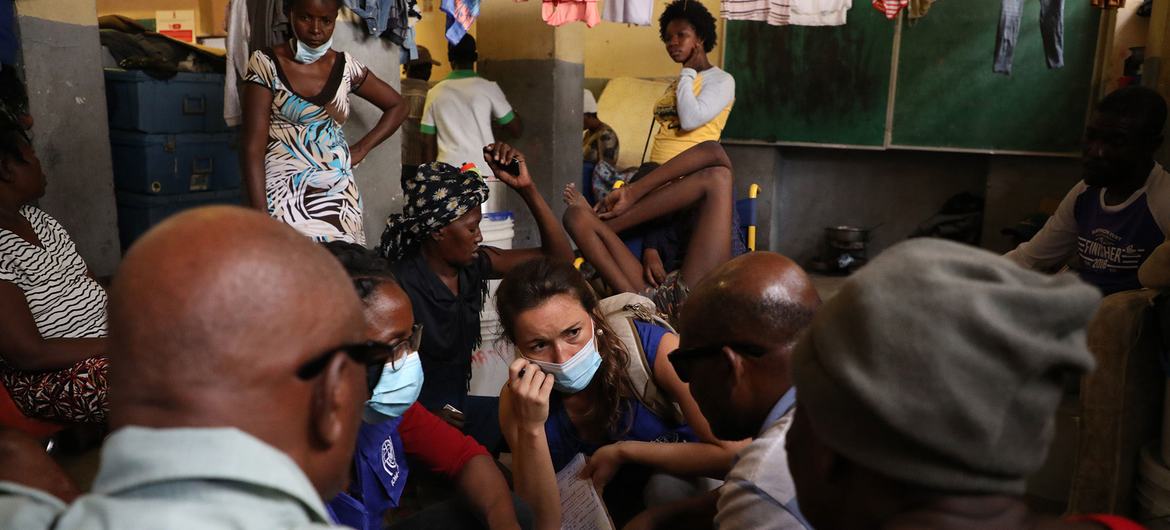
Haiti: worsening gang violence across Port-au-Prince, the UN human rights office said on Saturday it was deeply concerned by worsening violence in and around the Haitian capital and rising abuse at the hands of heavily armed gangs, against vulnerable local communities.
The alert comes just hours after UN humanitarians said they were ready to provide all the assistance they could to communities caught in the crossfire of gang violence, once they can gain safe access to those impacted.
A recent upsurge in fighting between rival gangs in the Cité Soleil neighbourhood of the capital, has led to the deaths of 99 people with 135 injured according to data reported by the UN humanitarian affairs coordination office (OCHA) in Haiti.
On Friday night, the Security Council provided a boost to UN operations in the crisis-wracked Caribbean island nation by extending the mandate of the UN Integrated Office in Haiti, for a further year, through resolution 2645.
Strengthen rights monitoring
Jeremy Laurence, Spokesperson for OHCHR, urged the authorities in Haiti to ensure fundamental rights are protected, and “placed at the front and centre of their responses to the crisis. The fight against impunity and sexual violence, along with the strengthening of human rights monitoring and reporting, must remain a priority”, he said.
“We have so far documented, from January to the end of June, 934 killings, 684 injuries and 680 kidnappings across the capital. Over a five-day period, from 8-12 July, at least 234 more people were killed or injured in gang-related violence in the Cité Soleil area of the city.”
“Most of the victims were not directly involved in gangs and were directly targeted by gang elements. We have also received new reports of sexual violence.”
OHCHR is calling on gang members and those supporting the violence, to immediately cease their activities, which are impacting many of the most vulnerable citizens, living in extreme poverty.
“The heavily armed gangs are becoming increasingly sophisticated in their actions, conducting simultaneous, coordinated and organized attacks in different areas”, said Mr. Laurence. “The right to life is the supreme right under international human rights law, and the State has a duty to protect that right, including from threats emanating from private individuals and entities.”
Denied food and water
Some gangs are resorting to extreme tactics to control locals such as denying them access to drinking water and food. This has simply made malnutrition worse.
The violence has also exacerbated fuel shortages, as the main fuel depot is located in Cité Soleil, and transportation costs have risen sharply.
For months now, the desperate socioeconomic situation coupled with political gridlock, has sparked street protests, adding to the deteriorating security situation, and many residents and businesses have shuttered themselves indoors out of fear, said OHCHR.
OHCHR welcomed the extension of BINUH’s mandate, “which will further buoy the collective international response to the human rights crisis unfolding in the country and assist with flow of humanitarian assistance.”
Daily suffering
In less than one week and according to a report released by OCHA, at least 2,500 people have also been forced to flee their homes because of the fighting. Twenty people have been reported missing. Every day, with continued fighting, more people will suffer and be forced to flee, often risking their lives, the agency said in a news release on Friday.
Cité Soleil, with a population of around 300,000 is one of the poorest neighbourhoods in the Haitian capital, where gangs have gained more influence over the past several years.
OCHA said that “a large proportion of the population are trapped in Cité Soleil as gangs attempt to exert their influence,” adding that “the people in some areas have not had access to food or water since July 8.” One child in five is suffering from severe malnutrition “a rate well above emergency thresholds.”
“As people continue to suffer in Cité Soleil, insecurity is preventing humanitarian agencies from entering the area,” said Ulrika Richardson, the UN Humanitarian Coordinator, the organization’s most senior humanitarian official in Haiti.
“The UN is ready to provide assistance to the many children, women and men caught in the crossfire of gang violence as soon as humanitarian partners can gain access to the affected zones.”
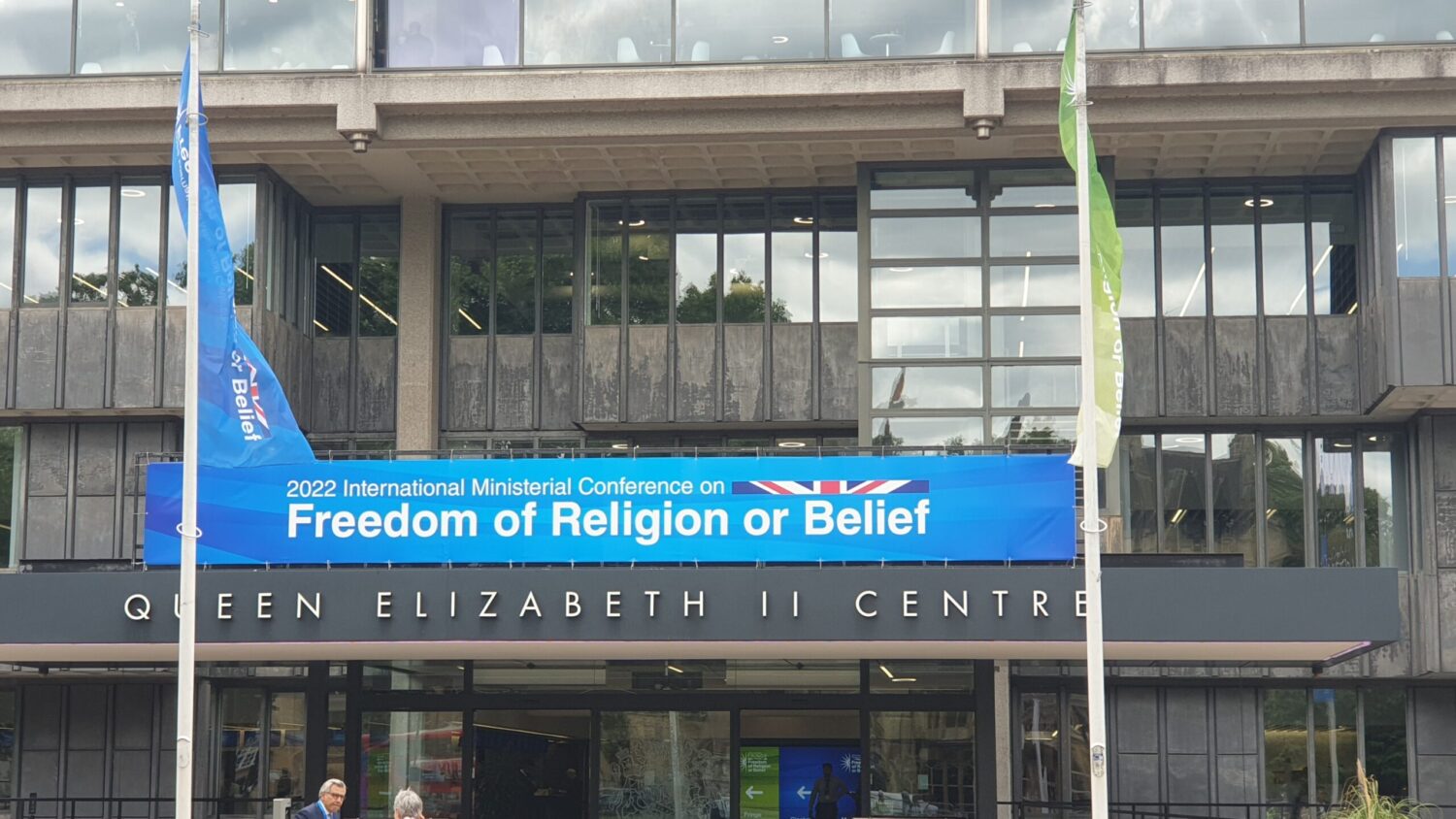
UK FoRB Ministerial at Queen Elisabeth II Conference Center - Photo by The European Times https://european.express
The fourth annual Ministerial conference on Freedom of Religion or Belief (FoRB) was held in London following a strong impetus to bring awareness of, and action to, the many transgressions against FoRB around the world.
This initiative was first held in Washington DC and the instigation of the US government in 2018, and then again in Washington DC in 2019. Lockdowns cancelled the 2020 conference whilst the 2021 conference, hosted by Poland, was virtual.
One of the most notable aspects of this initiative is that it seeks to go against the current of political interests driven primarily by economic factors – which certainly puts these deliberations on a higher ethical ground.
That the UK administration has embraced this initiative and held such a major conference – taking over the entire QE II Conference Centre in London for two days – is clearly a commitment to FoRB. Today, the state of religious freedom in many parts of the world is in a pretty poor state.
From China to Russia, from Nigeria to India and Pakistan, we find human rights abuses founded in religious discrimination ranging from rape and murder to organ harvesting and banning of innocent religious groups.
The two days of the conference along with many other additional ‘side events’ in Parliament, government buildings, and others around London and the UK were held with the intention to bring focus on the often egregious violations and suppression of this essential human right.
Will this bring about improved conditions for those believers – be it religious or non-religious – remains to be seen? But the signs are promising. A multi-country juggernaut is being built to highlight these issues rather than turn a blind eye.
A number of conference declarations were signed by governments – certainly not enough as we can see, the key declaration was signed by only 30 countries. Led by the United States and the United Kingdom, the remainder were mostly European – though notable omissions were France, Germany and Spain. Whilst outside of Europe, Australia, Canada, Brazil, Columbia, Israel and Japan were also signatories.
Overall statments
The Broad Conference Statement of Freedom of Religion or Belief can be found on the government site (here). It commits governments:
to protect “freedom of thought, conscience, religion, or belief and ensure individuals can freely change their beliefs, or not believe, without penalty or fear of violence”;
to “raise awareness of the current challenges to FoRB across the world, the relevance of FoRB to other human rights, and best practice in preventing violations and abuses and protecting and promoting FoRB for all”;
to “speak out bilaterally, as well as through multilateral institutions, against violations and abuses of the right to freedom of religion or belief” whilst working “more closely together with international partners, civil society actors, human rights experts, academia and faith and belief actors to implement practical solutions to address FoRB challenges, exchange best practice, and build shared commitments” whilst
strengthening “the voices and build the capacity of defenders of FoRB, including religious or belief actors, inspiring future leaders and young people, and building and reinforcing global coalitions for collective action”.
Words versus actions
We know that words are cheap whilst action and commitment can be expensive – but the simple fact that these governments have made such a move in the face of growing intolerance in some parts of the world is a positive sign.
Some actions taken, in particular by the US administration have shown their teeth by declaring the actions taken in Myanmar against Rohingya Moslems as genocide – something the UK government should emulate.
It goes without saying that civil society played a significant role in encouraging and moving this whole process along.
The creation of FoRB Round Tables or Forums are entirely civil society innovations open to any individual or belief group where issues of religious discrimination can be aired and actions taken to urge government or other sectors of civil society to take a stand on different issues.
These processes play an important role in keeping governments both informed and on their toes with regard to abuses occurring in the world. Most notable ones are in the US, UK and in Brussels (convening groups from around Europe) whilst one about to start in Mexico was announced during the conference.
Constructive Criticism
The conference organisation was not without criticism, however.
Many NGOs and even governments complained about the extremely late notification of seat availability and corresponding access passes for attendees which generated a lot of difficulties for attendees.
Quite a number of NGOs complained about the ‘discrimination’ between civil society and official government delegates as civil society did not have access to any of the main proceedings.
A floor had been assigned to civil society with 12 booths and this was relatively empty most of the time.
Those with limited civil society passes were consigned to stay in isolation whilst the main conference went on without them, with room for many more attendees.
This differentiation was seemingly at odds with the spirit of the whole conference and was not a credit to the organisers. Unfortunately, the successful model used by the Organisation for Security and Cooperation in Europe’s Human Dimension Meetings, where all attendees are able to meet each other and attend all meetings was not adopted –creating discontent amongst civil society groups.
Conclusion
Still, whatever the thinking behind excluding sections of civil society, these things are mainly organisational issues which can be easily corrected for future conferences.
Overall, the initiative driven by the UK and US governments to ensure that the vital human right of freedom of religion or belief is raised, exposed, protected and nurtured was an extremely important step in moving the political momentum in the right direction.
Buddhists celebrate Vassa around the world, the beginning of the three-month Rains Retreat on July 13.
The Vassa (Pali: vassa-, Sanskrit: varṣa-, both “rain”) the Buddhist monastic retreat observed primarily in Buddhist communities in Southeast Asia during the three-month monsoon period each year.
The tradition that monks—who ordinarily would be mendicant wanderers—gather in monasteries during the rainy season for a time of study and religious discourse may derive from the ancient custom among South Asian ascetics of retreating to a forest grove, usually near a village, during the monsoon when travel was difficult. Residing in their retreat during the rains, they continued to pursue their meditative quest and begged alms from local townspeople. The practice was well known in India by the time of the Buddha (6th century BCE), who, after his enlightenment, is said to have spent the rainy season in a sheltered spot in the forest near Banaras (Varanasi).
The Buddha’s followers assumed the same practice and after his death continued to gather during the monsoon to recite the rules of Buddhist discipline and to reaffirm their commitment to the Buddha’s vision of dharma. As the monastic community (the sangha) became wealthier by virtue of larger and more frequent contributions from the laity, more permanent centres, or viharas, were constructed to house the members of the monastic groups during their annual retreats. With the ascendency of the powerful Mauryan king Ashoka (3rd century BCE), who admired and followed the Buddha’s teachings, these viharas flourished throughout northeast India. The viharas are the institutional precursors of both the great Buddhist monastic centres, or Mahaviharas, of South and Southeast Asia and of the custom of the annual religious retreat still practiced in Theravada Buddhist countries today. The vassa has been largely forgotten by Mahayana Buddhists, especially those in China and Japan.
The three-month rains retreat for monks and nuns begins on the day after the full moon of the eighth lunar month, and is one of the most important festivals in the Theravada Buddhist calendar. The retreat continues until the full moon of the 11th lunar month, which this year falls on 9 October.
According to Buddhist lore, it was on this day that the historical Buddha, Shakyamuni, famously gave his first teaching at Sarnath after attaining enlightenment. The Buddha gave his first discourse on the Middle Way to five ascetics, former companions during his search for wisdom, who became his first disciples.
“It’s a day that is supposed to commemorate the first sermon preached by the Buddha after he became awakened,” said Dr. Stephen C. Berkwitz, department head of religious studies at Missouri State University. “Because of that, it’s also colloquially called Dharma Day, the day of the Buddha’s teaching. It certainly has special resonance with the exposition of what the Buddha discovered and then taught to his followers. It’s a significant day in the Buddhist calendar.” (Woman’s Day)
From theravadacouncil.wordpress.comWhile all monks and nuns are expected to observe the rains retreat, dispensation of up to seven days can be granted under certain circumstances, such as attending to sangha business, giving a Dhamma teaching, or visiting a sick relative.
In the present day, the rains-retreat practice is not limited to the monastic sangha; lay Buddhists can also be found observing the period in Bangladesh, Myanmar, Sri Lanka, Thailand, and elsewhere. During rains retreat, lay followers undertake to observe certain vows and the eight precepts rigorously, engaging in activities such as providing alms to monastics, giving up smoking and intoxicants, practicing meditation, chanting Buddhist suttas, and listening to Dhamma talks.
The end of the rains retreat is marked by the Pavarana ceremony, during which monastic members have an opportunity to admonish one another for any misdeeds during the retreat. This is followed by the Kathina or robe-offering festival, which continues for a further month.
Rains retreat and Pavarana are the most significant religious festivals in Thailand. Both are national holidays, during which it is against the law to sell alcoholic beverages. Bars and entertainment places are therefore closed.
Nigeria: New UN resilience project paves ‘pathway to peace and sustainable development’
Over 500,000 conflict-affected people in northeast Nigeria will be tossed “a lifeline,” thanks to a new UN humanitarian and development package, launched on Thursday.
The Resilience and Social Cohesion project, launched by the UN Children’s Fund (UNICEF) and World Food Programme (WFP), will enhance peace, increase livelihood opportunities, and provide education, health, nutrition, child protection, and sanitation support to vulnerable populations in Borno and Yobe states.
“This is a pathway to peace and sustainable development,’’ said the UNICEF Representative in Nigeria, Peter Hawkins.
Targeting the vulnerable
Funded to the tune of €40 million from the German Government, the three-year humanitarian package targets children from birth up to two years of age, pregnant women, school-age children, adolescent girls, female-headed households, and people with disabilities.
Over 500,000 conflict-affected people will benefit from a new humanitarian and development package aimed at strengthening the resilience of vulnerable populations in Borno & Yobe States.
While leveraging ongoing humanitarian support in Bade Local Government Area (LGA) of Yobe state and Shani LGA of Borno state, the UN lead agencies will also provide interventions to address drivers of conflict and fragility throughout various sectors.
The project will help to strengthen local governance, promote community-based social cohesion and build government partnerships.
“Children and other vulnerable groups will have a lifeline, and an opportunity to survive and thrive in communities where livelihood and peace building activities are present,” the UNICEF Representative spelled out.
Conflict prevails
Now in its thirteenth year, armed conflict in the volatile northeast Nigeria – where the extremist militant group Boko Haram first surfaced – has levelled communities, destroyed livelihoods, and disrupted essential services for children and adults.
And protracted insecurity, high food prices and COVID-19 lockdowns have left more than four million people in need of food assistance.
The accompanying impact of violence and unrest has fuelled mental health, nutrition, education and child protection concerns.
According to the UN agencies, 1.14 million children across the region are acutely malnourished, on a scale not seen since 2018.
“Conflict in any region is potential instability in the rest of the world,’’ said Mr. Hawkins. “UNICEF is grateful to the German Government for supporting pathways to child survival and peace in northeast Nigeria”.
Bolstering the global goals
The programme will also contribute to seven of Sustainable Development Goals (SDGs), namely, poverty eradication (SDG-1), zero hunger (SDG-2), good health and wellbeing (SDG-3), access to quality education (SDG-4), gender equality (SDG-5), climate action (SDG-13), peace, justice and strong institutions (SDG-16) as well as partnership for the goals (SDG-17).
With a focus on building peace, strengthening governance, restoring infrastructures, and providing life-saving services, it is hoped that close to 157,000 people will benefit directly and over 362,000 indirectly, across both LGAs.
German support
Giving thanks for the “timely and generous support” from Germany, the WFP Deputy Country Director in Nigeria, Simone Parchment, hailed the value of the project for those “facing the peril of conflict and hunger in northeast Nigeria”.
“In these affected states, persistent conflict, climate shocks, high food prices and reduced household purchasing power undermine people’s ability to feed themselves and sustain their livelihoods,” she said.
Against this backdrop, Germany’s contribution will “go a long way in building resilience, social cohesion and peace in the affected communities”.
Shinzo Abe’s assassination – Former Japan Prime Minister Shinzo Abe was murdered because he had links with the Unification Church. The killer cited this as a motive for his fatal shooting. Yamagami, 41, has told investigators that he killed Abe because the latter was promoting the religious movement. Yamagami’s mother was a member of the Unification Church, and the killer was blaming the movement for a “huge donation” she made to the church more than 20 years ago that had crippled the family’s finances, per his statement.
When a radicalized Muslim kills a Christian for being a Christian, we are prompt to call it a terrorist attack. What’s different here? A radicalized “anti-cult” killed a person for his links to the Church of Unification. What’s similar? A radicalized person killed another for his religious affiliation. In fact, Abe was not at all a member of the Church of Unification. But he had participated to some of their events and praised their work for world peace. His killing sends a terror message: don’t acquaint with the Moonies (the Church of Unification has been founded by the Korean Reverend Sun Yung Moon, and its followers are derogatorily called “Moonies” by its opponents), or you’ll be killed. That’s terrorism.
In Japan, a lawyer’s consortium has been created years ago to fight against the Church of Unification in the country. They have been described by the Magazine Bitter Winter as “greedy lawyers who tried to persuade relatives of those who had donated to the Unification Church to sue asking to recover the money”. One of these Japanese attorneys, Yasuo Kawai, declared after the murder occurred: “I obviously don’t approve of the killer’s gesture, but I can understand his resentment”. It could be said that such a justification of the murder borders on the apology of violence. It’s condoning terrorism.
Exactly as unstable minds can be influenced by hate-speech by Muslim extremists against other denominations (or even other Muslims), anti-cult propaganda as it exists in Japan, but also in Europe (see here about the influence of the FECRIS, an “anti-cult” umbrella organization from Europe, on the war in Ukraine), can influence unsound mind as the one of Yamagami Tetsuya, Abe’s killer.
We should never minimize the influence of hate speech on people. And definitely, we should not apply double standard based on which religious affiliation are the killer and the victim. Terrorism is terrorism. Abe’s murder has a terrorist component and the hate speech directed for years at the Unification Church by some anti-cult groups may certainly be somewhat responsible for what happened, whatever personal grievance the killer would have had.
Young people must be recognized around the world as “drivers of change” and empowered to become “fully engaged in decisions affecting their future,” said Secretary-General António Guterres on Friday, World Youth Skills Day.
From climate change to conflicts to persistent poverty, young people are “disproportionately impacted by interlinked global crises,” his Youth Envoy, Jayathma Wickramanayake, told a commemorative event in New York, speaking on behalf of the UN chief.
“Today, we highlight the importance of transforming youth skills for the future of work,” she said, delivering his message from the top.
Youth at risk
The COVID-19 pandemic has exacerbated fragilities, leaving 24 million young people today, at risk of not returning to school and accelerated the labour market’s transformation, “adding uncertainty and widening the digital divide”.
“We must ensure the right of young people to effective and inclusive education, training, and lifelong learning…[by] ramping up youth skills development, while investing in technical vocational education and training (TVET), broadband connectivity, and digital skills,” the message continued.
Countering learning disruption
To this end, top politicians, and leaders from youth and education non-governmental organisations, will meet in September during a Transforming Education Summit at UN Headquarters in New York.
Guided by the UN Youth 2030 strategy, the UN chief urged everyone to “act for youth skills development as a priority, at the Summit and beyond”.
“Together, let us build a more just and thriving workforce, rescue the Sustainable Development Goals (SDGs) and leave no one behind,” his message concluded.
Build skills
As it stands, millions of young people, especially those most vulnerable and marginalized – such as young women and girls – continue to bear the brunt of social, political, economic, and cultural upheaval, General Assembly President Abdulla Shahid said in his video address.
Reminding that these challenges “eliminate jobs and opportunities, reduce access to education, and impede the reskilling and upskilling of young women and men,” he spelled out: “More must be done”.
As “a proud champion of young people,” he upheld that youth must be empowered to build skills through policy making, education, technical and vocational training.
“Let us explore how to increase youth employment opportunities while sustainably reducing the number of uneducated and untrained young people…[and] act collectively to ensure an inclusive and brighter future led by skilful, educated, and well-trained youths, while leaving no one behind,” he said.
‘Be the change’
Speaking via videoconference from Geneva, Martha Newton, Deputy Director-General for Policy at the International Labour Organization (ILO) stressed the importance of fostering digital transformation skills to reach the scale of today’s unmet labour market needs.
To help young people “quickly adapt” to these “rapidly changing demands,” she advocated for quality apprenticeships and internships that would equip them with “skills for life”.
Investing in a world where decent work is the reality of every young person requires scaling up action for youth employment while also protecting the rights of young people. This in in turn, will spark healthy lives and equality for all.
“Be the change you want to be, be relentless, be bold…we can’t transform efforts without you,” she encouraged young people around the world.
Speaking on behalf of Audrey Azoulay, Director-General of the UN Educational, Scientific and Cultural Organization (UNESCO), Maki Katsuno-Hayashikawa, Division Director for Education 2030 Support and Coordination, highlighted that skills for the future of work must be identified to empower today’s youth.
She cited innovation in entrepreneurship; promoting flexible pathways to foster lifelong learning; bridging the digital technology gap; and promoting open education resources.
“Encourage youth to think of themselves as agents for change and understand the complexity of sustainable development,” the UNESCO chief’s message said.
During the Education Summit, “we must use all of our power” to provide an opportunity for youth to develop skills for the future and give them “a centre place” at the decision-making table.
Youth: Greatest treasure
Co-chair Peter Mohan Maithri Pieris, Sri Lanka’s Permanent UN Representative, described youth as “the greatest treasure we have on this planet,” adding that if the right decisions are taken at the right time, young people could have a “meaningful” impact around the globe.
In his video message, co-chair, João Gomes Cravinho, Foreign Minister of Portugal, underscored that youth must have a say in their own future and shared his country’s “guiding principle” of “nothing about youth without youth”.