He was in town for the Tenth Forum of Social Economy, reports TrafficNews.
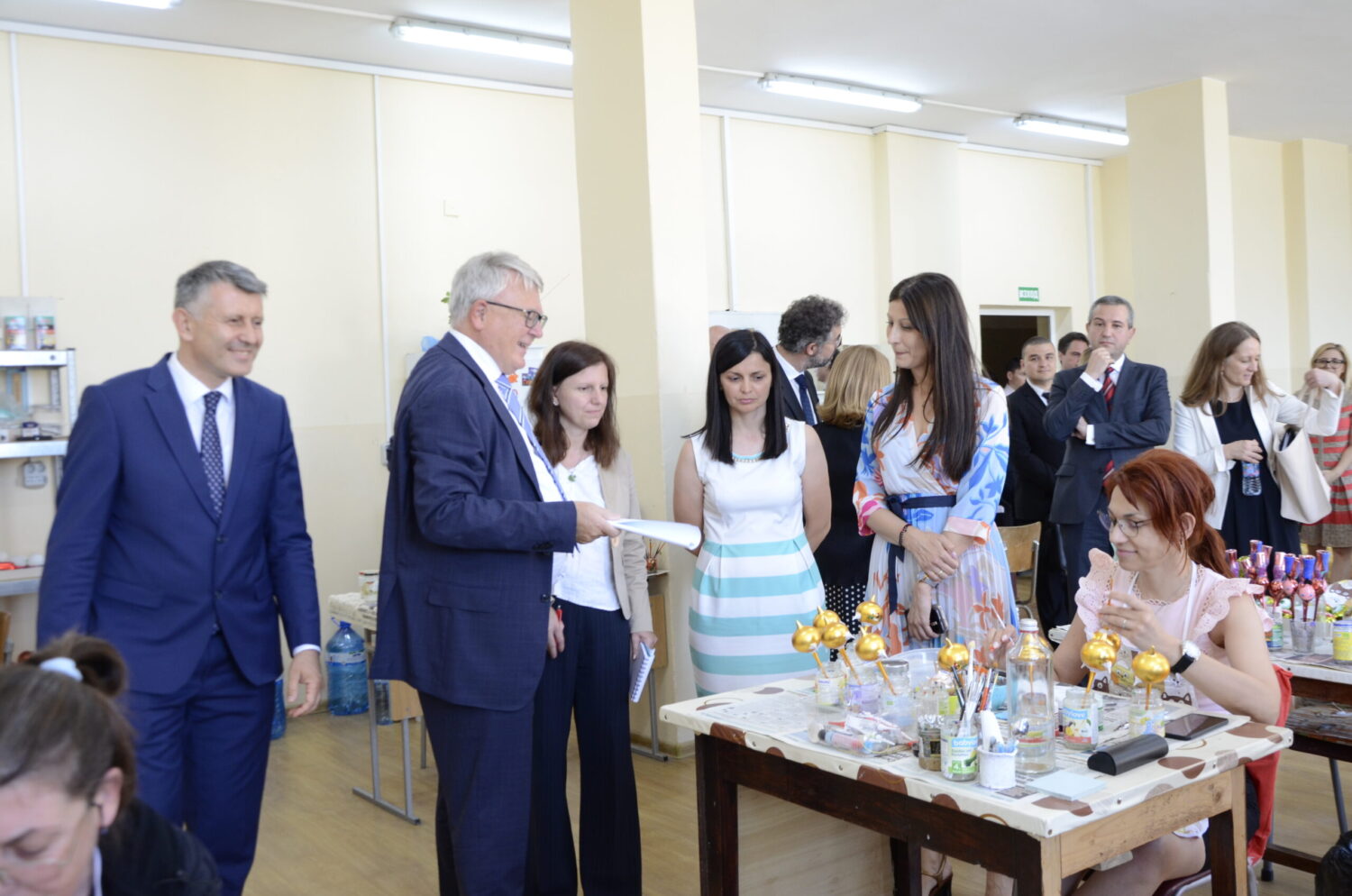
The European Commissioner for Jobs and Social Rights Nikola Schmidt visited on the 20th of June the Refugee Center in Plovdiv and praised the established base and the provided conditions for accommodation of Ukrainian citizens. He was in the city on the hills for the Tenth Forum of Social Economy Entities, during which he visited the Social Enterprise for People with Disabilities and the Community Center for Children and Families. During the tour he received an invitation from Deputy Mayor Georgi Tityukov to go to the former Lung Hospital, where the center is located. On the spot, they were greeted by Natalia Ellis, a Ukrainian woman who has lived in Plovdiv for years and who is a volunteer and helps her compatriots who sought refuge from the military conflict here.
“Europe supports the people of Ukraine, understands their suffering. “Everyone (local government and the EU) will make an effort to make you feel at home,” said Schmidt, who spoke to Ukrainian refugees housed in the center. The European Commissioner and his team commented that Plovdiv is one of the few cities with similar refugee centers. For her part, Natalia Ellis stressed the great support received by the refugees accommodated in the former medical institution from both the Municipality of Plovdiv and the district administration.
On the spot in the OP “Social Enterprise for People with Disabilities” EU Commissioner Nikola Schmidt saw how people with various problems make unique souvenirs in the three studios – textiles, ceramics and glass blowing, in the Social Enterprise.
At the Community Center he was greeted with a short program – children, users of social services, sang the national anthem and folk songs.
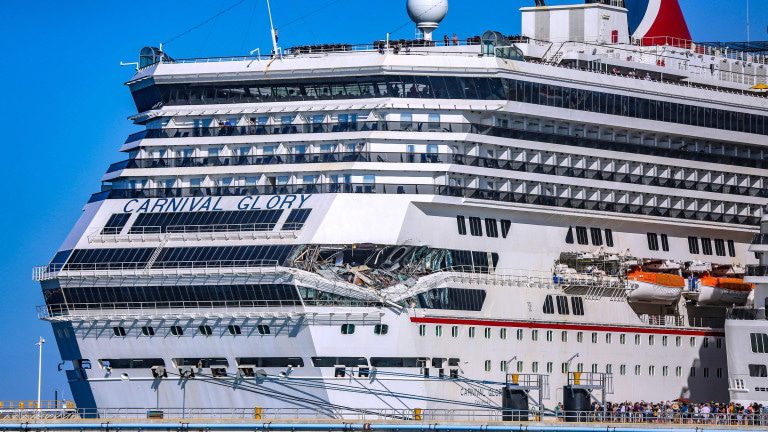
epa08084243 General view of the damage to the Carnival Glory cruise ship after the collision with the Oasis of the seas cruise ship, while performing maneuvers to dock at the Puerta Maya pier on the island of Cozumel, in the state of Quintana Roo, Mexico, 20 December 2019. There were no major injuries. EPA/Heyder Castillo
A huge unfinished commercial will probably be sold for sale, after which the manufacturer declares bankruptcy, because no one wants it. This is a general German report on the recognized An Word industry.
Attempts are being made to sell part of the equipment and engines from Global Dream II, according to An Word. The used contract will be sold for sale.
The German company WWerften, which is a company, is a member of the holding company Genting Nong Kong. Both announcements of incompetence in January. Изpoizvoditelyat na ĸopabi ctpoi ĸopaba za Dream Сruіѕеѕ, една от тpите ĸpyизни lini, coбcтвeноcт нa Gentіng.
Global Dream is located on the dock of MV Werften in Bicmap, Germany, An Word reports. This month, the ship was handed over to a manufacturer of military ships, which plans to build 24 boats, 24 boats.
If no special offers are made for the company in the coming weeks, Global Dream will be submitted to the market, where it will be paid.
It is not yet clear whether Global Dream will be sold.
The work on Global Dream started in March 2018 and it is believed that the debut will be in the beginning of 2021, as one of the biggest pubs. The 340-meter-long ship is designed to accommodate more than 9,000 passengers in 2,500 cabins, as well as 2,200 crew members.
Dreams announced that the cabins will be about 15% larger than those available on other vessels and will include recognition and recognition software. The digger will also include a thematic paper.
Before MV Werften was active in January, she had close to 2,000 employees, according to The Maritime Exercise.
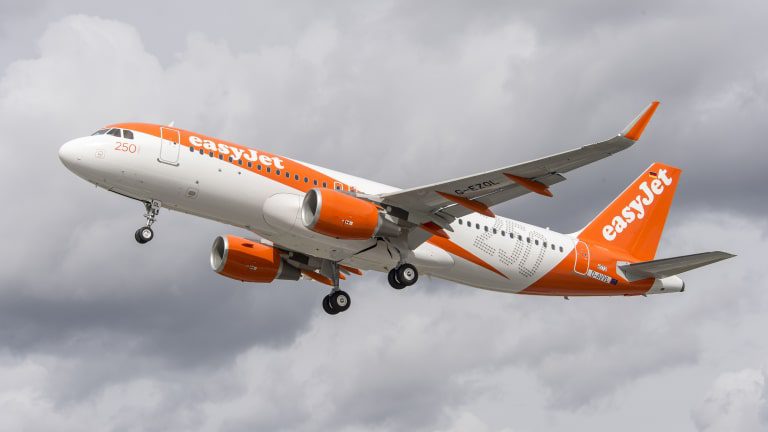
British low-cost airline EаѕуЈеt announced, that will procure 56 airplanes Аіrbuѕ, model “A320 Neo” и and in the same time shall transform another order from 2013 г. for 188 more airplanes “A321 Neo”, Reuters reports.
The aircraft will be delivered from the financial year 2026 to the financial year 2029 and will replace the previous models A319 and A320.
The airline announced that it will pay significantly less than the official price of the aircraft, thanks to the prices agreed in 2013.
In December 2020, the EU signed a deal with Europe to postpone supplies for the pandemic, which triggered a major crackdown. He expects the shareholders to be asked to finance some part of the current deal, according to Izidjet.
A year ago, EasyJet announced that the company’s total revenue had fallen by 90% in the last six months. The total loss of the airline was 701 million British pounds.
The strongest team in the region has put its reputation at risk.
There is a pause in European football now. The leagues are over, the Nations League matches have been played, so all that is left for clubs to attract the attention of fans is talk of transfers and the presentation of new kits. Classic off season.
Holstein Kiel from the second German Bundesliga followed the same path. However, an ordinary announcement in the club’s social networks suddenly turned into an information bomb. The fans saw on the new T-shirts of the “storks” … the Nazi flag.
Management urgently had to make excuses to the fans!
Pride of the region
Holstein Kiel have been playing in the German second division for the last five seasons. The team has not yet been able to break into the elite, although recently it was really close to this. In the 2020/21 season, the “storks” finished in third place, but lost in the “junctions” for a place in the first Bundesliga to “Cologne”. In the last campaign, the club experienced a slight decline (9th place), but does not plan to give up its goal.
Despite modest results, “storks” are considered the pride of their region. In ancient times, Kiel was the strongest club in the entire north of Germany and even regularly took trophies. The team still remains the strongest in Schleswig-Holstein, although in the modern era it has never made it to the first Bundesliga.
In preparation for the next season, the team introduced a new kit. And if in the away version, which is very similar to the colors of Stuttgart from the time of Pavel Pogrebnyak, the fans did not find anything remarkable, then the home kit surprised everyone.
The blue T-shirt on the upper part of the front side is decorated with a tricolor: a dark blue color, followed by a white and red stripe. At first glance, a fairly popular coloring for sports equipment, but the German fans saw something different in it.
Third Reich
On the same day, the social networks of the club instantly flooded with messages like this:
– Do you really think that the Reich flag on a home jersey is appropriate?
The home jersey is definitely not to be worn. Can I somehow add a small warning that it can be confused with a flag?
The audience did not understand everything the way they wanted in the club. The thing is that the image on the home kit of the club from Schleswig-Holstein is very much like the tricolor of the Third Reich. The intimidating flag contained black, white and red colors.
If you do not peer into the Holstein Kiel jersey, then the dark blue shade can really seem black, and in combination with the subsequent two colors, it really resembles the infamous flag.
An accident that can cost a reputation
Some fans still remain on the side of the club and urge their compatriots not to build stupid speculations:
The comments here are German clichés. People are just trying to see something negative everywhere. Even if you intentionally interpret dark blue as black. Anyone who sees the Reich war flag here must get out of their bubble.
There are also extremely positive assessments:
Cool T-shirt – decided by the user @christi79364674.
God, how gorgeous,” wrote @michiksv.
But such subscribers are in the minority. The Germans reacted extremely sharply to this situation, so the club even had to urgently come up with explanations:
“At this stage, we would like to make it clear that we distance ourselves from any form of racism or right-wing ideas. The colors of our T-shirt are blue, white and red: the colors of Schleswig-Holstein. This is also clearly visible in the original, ”the official message on the team’s social network says.
Of course, few can doubt that the club simply wanted to emphasize its belonging to its native region. However, due diligence, unfortunately, the designers and their bosses did not show. So now the team from the north of Germany will have to seriously think about the next steps: if the discussion does not subside, then they will probably have to change their home kit. Otherwise, the reputation of the club may suffer greatly.
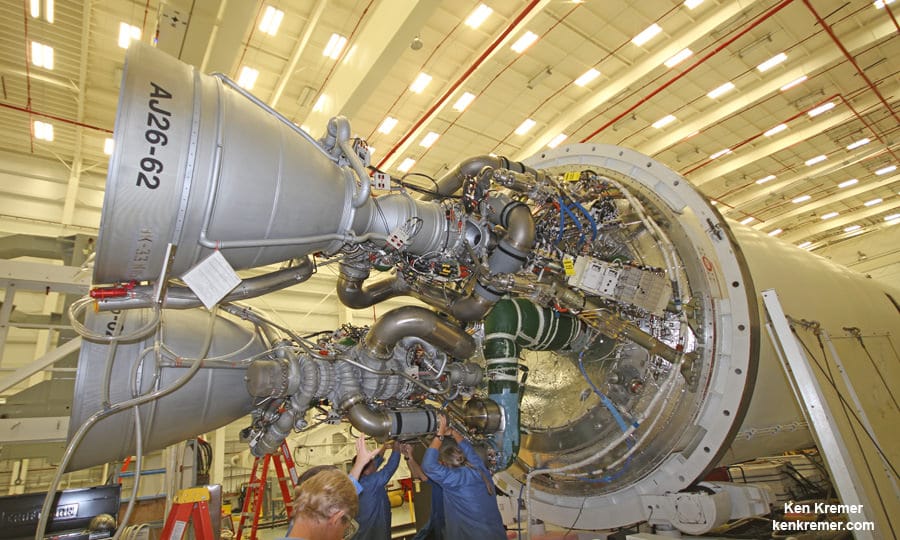
Flights of the American cargo ships Cygnus to the ISS may be interrupted for an indefinite period due to the US running out of stocks of Russian RD-181 rocket engines. These engines are used on Antares rockets, which are the regular carriers of Cygnus cargo ships.
According to the head of Roscosmos Dmitry Rogozin, the United States has only four RD-181 engines left, enough for two launches of Antares rockets. What they intend to do next in the United States is unknown; deliveries of Russian rocket engines to the Americans have been stopped as part of retaliatory sanctions. This was announced at the beginning of March this year. In addition to stopping deliveries, Russia also stopped servicing engines already delivered. We are talking about the RD-180 used on the American Atlas-5 and RD-181 missiles used in the first stage of the Antares missiles.
As a result of our retaliatory sanctions, the United States has only 4 RD-181 engines left. They are enough for two Cygnus launches, Rogozin said.
The press service of Roscosmos clarified that the United States has a way out of this situation, they just need to adapt the Cygnus cargo ship to another carrier. After a few years and large financial costs, this issue will be resolved. Another option is to try to negotiate with Russia on the supply of engines.
Earlier it was reported that the United States was unable to correct the height of the ISS orbit using the engines of the Cygnus cargo ship docked to the station. NASA has not yet given a reason. The correction of the ISS orbit, carried out by the US cargo ship Cygnus on Monday, June 20, was interrupted for an unspecified reason. Whether attempts to raise the station will continue is still unknown, the American “truck” should leave the ISS on Thursday, June 23.
An astronomical team has discovered a strange object in the center of the Milky Way, resembling a miniature spiral galaxy orbiting a massive star, ScienceAlert reports, citing a publication in the journal Nature Astronomy.
The discovery was made with the help of the ALMA microwave telescope (ALMA – Atacama Large Millimeter / submillimeter Array) in the Chilean Atacama Desert.
The star is 26,000 light-years from Earth and is about 32 times more massive than the Sun. It is located in a huge disk of rotating gas, called a “protostar disk”. The disk is about 4,000 astronomical units wide (1 astronomical unit equals the distance between the Earth and the Sun).
Such discs are widespread in the universe. They “feed” the stars by helping young luminaries gain mass.
However, the object observed in the Milky Way is quite unusual. It looks like “a tiny galaxy that orbits dangerously close to the center of our galaxy,” astronomers said.
Observations show that the movement of the disk hardly gave it its natural spiral shape. According to researchers, he rather survived a collision with another space object.
Scientists have made computer simulations and found that this cataclysm probably occurred about 12,000 years ago. The large object has changed the shape of the dust cloud to such an extent that clearly visible spiral “sleeves” have appeared in it.
“Because there are millions of times more stars in the center of the Milky Way than in our part of the galaxy, such events probably occur there quite regularly,” said Lu Xing, co-author of the study at the Shanghai Astronomical Observatory in China.
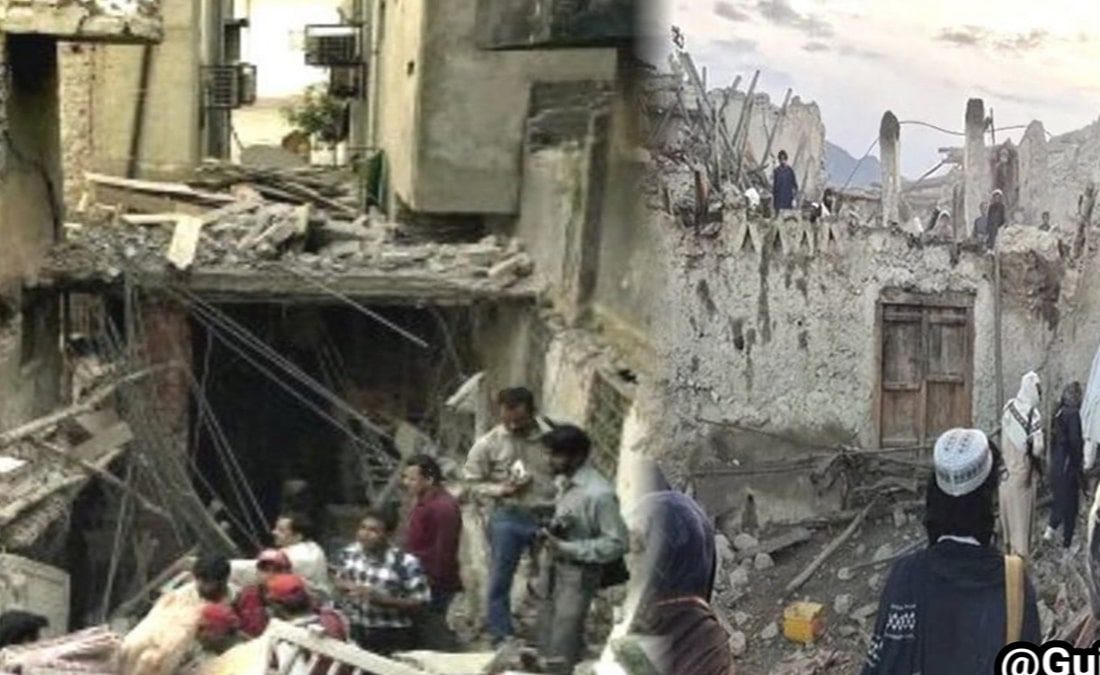
The 6.1 magnitude earthquake struck overnight in Paktika and Khost provinces on the border with Pakistan in southeastern Afghanistan. More than a thousand people were killed and 1500 others injured.
The earthquake was felt in several provinces in the region, and also in the Afghan capital, Kabul, located about 200 km north of the epicenter of the earthquake. It was also felt in neighboring Pakistan, but no damage or casualties have been reported yet.
The quake is arrived at night when many people were asleep. Families could be still believed to be trapped under the rubble. we can fear that the toll could rise further.
“People are digging grave after grave,” said the head of the Information and Culture Department of Paktika province, Mohammad Amin Huzaifa, in a message to the press. “It is also raining and all the houses are destroyed. There are no tents or food. People are still trapped under the rubble (…) We need immediate help,” he added.
More than 2,000 houses were reportedly destroyed. In the villages, unfortunately, people don’t always have the income, the ressources and the ability to build proper housing that’s why as many houses were destroyed, if no more have already been destroyed.
This is the first natural disaster since the Taliban takeover. The government is trying to send helicopters to aid people but the issue is that the aid economic here has been devastated. They are trying to rely as much on local aid agencies, but those are the ones that have felt the greatest impact from the sanctions, from the cutback. In this poor and difficult to access rural areaGetting aid to people in need has always been extremely difficult and they will very struggle to deal with this issue until international aid agencies cans pump money in more support because at the moment they’re really under resources and founded.
Afghanistan is plunged into a serious financial and humanitarian crisis caused by the freezing of billions of assets held abroad and the sudden halt of international aid which had been carrying the country at arm’s length for 20 years and which is now returning in dribs and drabs.
Frequent earthquakes
Afghanistan is frequently hit by earthquakes, especially in the Hindu Kush mountain range, which lies at the junction of the Eurasian and Indian tectonic plates. These disasters can be particularly destructive because of the low resistance of rural Afghan houses.
The deadliest earthquake in Afghanistan’s recent history (5,000 deaths) occurred in May 1998 in the northeastern provinces of Takhar and Badakhshan.
Eurobarometer surveys are the official polling instrument used by the European Parliament, the European Commission and other EU institutions and agencies to regularly monitor the state of public opinion in Europe on issues related to the European Union, as well as attitudes on subjects of political or social nature.
Russia’s war against Ukraine has strengthened public support for the EU, the EP Spring Eurobarometer survey published today finds.
Almost two thirds (65%) of Europeans see EU membership as a good thing. This is the highest result since 2007, when it was at 58%. EU membership is seen as ‘a good thing’ by a relative majority of citizens in all countries except Greece and Slovakia, where more respondents view it as ‘neither a good nor a bad thing’. Compared to Parliament’s last Parlemeter survey conducted at the end of 2021, results have increased significantly in most countries, particularly in Lithuania (+20 pp), Malta (+12 pp) and Estonia (+9 pp).
52% of Europeans today have a positive image of the EU, against 12% negative. This result is an increase of 3 points for positive image since November-December 2021 and, at the same time equals the best result measured by European Parliament’s surveys since 2007. National results for a positive EU image range from 76% in Ireland to 32% in Greece.
European Parliament President Roberta Metsola, welcoming the results of the survey, said: “With war returning to our continent, Europeans feel reassured to be part of the European Union. European citizens are deeply attached to freedom, are ready to defend our values, and are increasingly realising that democracy can no longer be taken for granted.”
Recent events have also shaped the image Europeans have of other major actors on the international scene.Russia is seen positively only by 10% of respondents, down from 30% in 2018 when this question was last asked. China returns the second lowest ranking with 22% (-14 pp). By contrast, Europeans have a more positive image of the UK (65%, +1 pp) followed by the USA with 58% (+13 pp).
Most citizens perceive the war in Ukraine as fundamental change: 61% of Europeans are not confident that their life will continue unchanged. Only around a third of respondents (37%) believe it would. A survey published last week by the European Commission shows eight in ten respondents (80%) agreeing with imposing economic sanctions on the Russian government as well as Russian companies and individuals. A majority of citizens in 22 Member States is satisfied with the EU’s response to the Russian invasion of Ukraine.
Inflation and the cost of living were already rising since long before Russia invaded Ukraine, further magnifying the problem, and now four in ten Europeans say they are already experiencing an impact on their standard of living (40%). As clear sign of European resilience and unity, 59% of Europeans see the defence of common European values such as freedom and democracy as a priority – even if that were to affect prices and the cost of living.
The increasing economic worries are also reflected in the political priorities citizens want the European Parliament to focus on: The fight against poverty and social exclusion is mentioned first (38%), followed by public health (35%), which has dropped significantly by 7 pp over the past six months, and democracy and rule of law (32%), which in turn was subject to a significant increase by 7 pp.
The perception of the war and what it means for the European Union becomes also visible in the citizens’ core values they want the European Parliament to defend as a matter of priority: Democracy again tops the list, with an increase of six points compared to autumn 2021 (38%, +6pp). The protection of human rights in the EU and worldwide as well as the freedom of speech and thought both follow on 27%.
Background
The European Parliament’s spring 2022 Eurobarometer was carried out between 19 April and 16 May 2022 among 26.578 respondents in the 27 EU Member States. The survey was conducted face-to-face and completed with online interviews where necessary. EU results were weighted according to the size of the population in each country.
The overarching topic of the Conference was Religion and Diversity.
CEC Executive Secretary Katerina Pekridou spoke about self-understanding of the Orthodox Church in relation to ecclesial plurality based on a series of consultations held from 2002-2008 between CEC and the Community of Protestant Churches in Europe (CPCE).
These consultations initiated a dialogue about a possible church model of “unity in reconciled diversity” as founded on the Leuenberg Agreement.
The panel was part of a larger project “The Theologies and Practices of Religious Pluralism” organised by Reset Dialogues on Civilizations, Milano, the University of Birmingham, the Berkley Center at Georgetown University, and the Foundation for Religious Sciences, Bologna.
The project will further investigate current debates and issues on pluralism within and across religious traditions and how some of these debates are reshaping the status of religion in different public spaces.
The UN Special Adviser on the Prevention of Genocide briefed the Security Council on Tuesday, reinforcing concerns already voiced by other senior UN officials in the chamber, over “the heightened risks” of sexual violence, and trafficking, which are “significantly impacting women and children”, following the Russian invasion of 24 February.
Beginning her briefing with a wider perspective, Wairimu Nderitu said that hateful and contentious narratives that form in the wake of growing hostility, violence and discrimination, could have a “devastating impact” on societies at large.
“We saw it in the lead up to the Holocaust, in Rwanda in 1994” and also in the ethnically-charged Bosnia conflict between Muslims, Serbs and Croats in the mid-1990s, she said, reminding that “ending wars require sustained actions”, including countering acrimonious rhetoric, hate speech online and offline, and rights violations that impact lives and livelihoods.
Countering hate
The senior UN official recounted that the Convention on the Prevention and Punishment of the Crime of Genocide, which in 1948, “emerged out of the shadows of the Holocaust,” identifies as punishable offences, conspiracy to commit genocide, direct and public incitement to commit genocide, attempt to commit genocide and complicity in genocide.
“This is done in full respect to the essential right of freedom of expression as provided under international human rights law,” she said.
Ukraine in focus
Turning specially to Ukraine, Ms. Nderitu highlighted the important role regional and international in addressing the ongoing humanitarian crisis and stressed the importance for all States to adhere to international human rights and international humanitarian law and principles.
The special Adviser recalled the Secretary-General’s visit to the region, his call for a cessation of hostilities and her office’s work in supporting inter-communal dialogue efforts with the UN Country Team there.
Meanwhile, “the continued deterioration of the situation,” has prompted the Special Adviser to urge all in a position of influence to “redouble their efforts to contribute to the restoration of peace”.
She called on religious leaders to use their influence to support efforts to solve the ongoing conflict, not to inflame it further and reminded that advocacy of national, racial, or religious hatred that constitutes incitement to discrimination, hostility or violence, is prohibited under international law.
Solution is possible with commitment on the part of everyone – UN Special Adviser
‘We must work harder’
In terms of allegations that could constitute the possible commission of genocide and war crimes in Ukraine, she said that could only be decided “by a court of competent jurisdiction”, adding that her office “does not carry out criminal investigations on specific incidents, present or past”.
While the Special Adviser role is for prevention, not adjudication, she again called for “an end to this war, to ensure the protection of civilians and to accelerate diplomatic efforts to make both possible”.
“Prevention focuses on the future, and on the past too, and the outpouring of hostility in response to this war means we must work harder to protect everyone,” she said.
She urged the Council and concerned parties to “articulate an inclusive vision, propose a roadmap…that is not indifferent to injustice”.
While a “solution is possible with commitment on the part of everyone,” she reminded however, that with every continued delay “the escalation of human suffering continues”.
Dehumanizing Ukrainians
Liubov Tsybulska, Head of the Centre for Strategic Communication and Information Security, a Ukrainian Government-established think-tank, said that “thousands” of pieces of evidence were now pointing to Russian war crimes.
She also cited “genocidal rhetoric” gleaned from Russian media that refers to Ukraine as a “fake nation” that does not “deserve to exist”.
Recalling Soviet-era tactics to starve the enemy, she accused Russia of “bringing famine”, and said that some Russian troops were expressing “pride and approval” over abuses being committed.
Ms. Tsybulska highlighted what she said were efforts to destroy Ukrainian culture and wondered: “Why do the Russians hate us?”.
Cyber front
Jared Cohen, CEO of Jigsaw and Adjunct Senior Fellow at the US Council of Foreign Relations, spoke in depth about cyber warfare and how it has been waged during the Ukraine war.
“Like air, land and sea, the internet has become a critical domain to occupy during war,” he said, describing what Ukraine has experienced thus far, as “a crystal ball of what is likely to come” in the future.
He zeroed in on “vectors of attack,” including on critical infrastructure, via “traditional hacking”; distributed denial-of-service (DDoS) attacks, or malicious attempts to disrupt normal website traffic; and midsized and large attacks – or “microfloods” – that can significantly ramp-up the complexity of attacks.
Mr. Cohen pointed to the online effort to undermine Ukraine’s Government and leadership.
As an example, “deep fakes of alleged cocaine addiction were used to cede and feed a harassment campaign against President [Volodymyr] Zelenskyy” to undermine his credibility, in a bid to tip support toward Russia, he said.