The Conference of European Churches (CEC), together with the Orthodox Church of Finland held a briefing and training for the church leaders and the church staff on the protection of the worship places on 8 June. The event was held as part of the project Safer and Stronger Communities in Europe (SASCE) funded by the European Commission Internal Police Fund, and the training was conducted by CEC Executive Secretary for Human Rights Dr Elizabeta Kitanovic.
The event was also attended by the representatives of the Evangelical Lutheran Church in Finland and Muslim community in Finland.
The participants discussed new legislative proposals related to the ban on ritual slaughtering and circumcision, which may affect aspects of freedom of religion and belief in Finland. Among other topics discussed were reports of the Finnish security intelligence service (SUPO) and potential risks to Finnish society by terrorists or far-right extremists. The participants also exchanged on issues related to attacks on ethnic and religious minorities, and links of some groups to the Siege culture supporting white supremacy, which incite violence towards to social collapse.
“Security contributes to the well-being of both the individual and the community,” said Bishop Sergei of Hamina, from the Helsinki Orthodox Diocese.
“We note that both minority and majority groups in any country may experience threats – such as feelings of fear or anger – but for different reasons. For example, a majority group may fear that its dominant role or security may be threatened, while a minority group may experience a threat to its very existence,” added Bishop Sergei.
He went on to say “the sense of a church building as a safe place historically was so essential that this right was carved on the altar stone or a pillar that served as a border for the area, where the asylum seeker could have stayed. This can be found in the epigraphic inscriptions in the ruins of churches dating back to the fifth century, including in Asia Minor and present-day Syria.”
“Church buildings have functioned as places of safety for an extended period. Unfortunately, we are also reminded that this is not always the case. Today we are watching with heavy hearts how Russia’s war has destroyed almost two hundred churches of various denominations in Ukraine, causing suffering and death to those seeking refuge there,” said Bishop Sergei.
At the training, SASCE materials were delivered to the participants in Finnish, and resources related to crisis management for religious communities were shared with the audience.
Bodies have been found in the search for a UK journalist and an Indigenous guide in the Brazilian Amazon where they went missing eight days ago.
By James Blears
Veteran British Journalist Dom Phillips and indigenous rights specialist Bruno Pereira went missing after having last been seen were last seen over a week ago while traveling by boat on the Itaquaí River in the western Amazon.
Indigenous leaders have been expressing anger and frustration for what they call lack of coordination in the search for the two men. Now the focus is to find what happened and the circumstances by which it occurred.
Disappeared
The two men were returning from the Sao Rafael Community to the town of Atalia do Norte, which skirts the Amazon River, when they vanished. The boat in which they were travelling was new and fully fuelled.
Both experienced, able navigators and familiar with the area, the two men did not venture into the indigenous area, which is off limits to outsiders.
The human remains from the river are still being forensically examined. A fisherman who was seen brandishing a rifle and pointing it at them the day before they went missing, has been arrested and is being questioned. His relatives claim he has been tortured and that traces of blood found on his boat, are from the slaughtering of a pig.
Under intense pressure to find answers and to resolve the case, Army, Navy, Civil Defence, Police and indigenous volunteers have been scouring the area for clues and the missing two.
Plundering of natural resources
Illegal fishing, illicit logging, excessive rubber tapping, are plundering the natural resources and elements of the Amazon, plus drug trafficking. These are dangerous life-threatening factors which those intent on conservation face in their daily work.
Now the relatives of the men and the community in this beautiful and remote area of Brazil, wait with trepidation to discover the outcome of a meandering investigation linked to the tragedy of its stolen resources. Where will its current lead, and what will finally surface?
On May 30 1989, the EU Court of Justice(CJEU) delivered its sentence in a reference for preliminary ruling case taken by Spanish national Pilar Allué.
Employed as a foreign language lecturer(lettore) at the Università Degli studi di Venezia, Allué had challenged an Italian law under whose terms she and her Lettori colleagues could be employed on one-year contracts with the possibility for up to 5 renewals. In that, no such restriction to the duration of employment applied to Italian nationals the Court found the limit to be discriminatory. It was a simple, open-and-shut case whose implementation merely required Italy to convert the annual Lettori contracts into indefinite-term ones, with remuneration linked as before to the pay scale of counterpart Italian teaching staff.
Rather than being celebrated as the milestone day on which the right to parity of treatment with Italian colleagues was won, May 30 1989 is historic for the non-national Lettori teaching staff for altogether different reasons. It marks the starting point from which to measure the duration of Italy’s non-compliance with the Lettori discrimination sentences of the CJEU. The non-compliance persists to the present day despite 3 subsequent favourable rulings in a line of litigation which stems directly from the seminal 1989 ruling. As such, it is the longest-running breach of the freedom of movement provision of the Treaty on record.
Italy interpreted the 1989 Allué ruling as condoning annual contracts while rendering illegal the limit on the number of renewals. Through recourse to the CJEU takes time and money, Allué contested Italy’s restrictive reading. The subsequent 1993 ruling clarified beyond all ambiguity that the import of the earlier ruling was that non-national teaching staff had a right to the open-ended contracts enjoyed by Italian nationals.
A follow-on 1995 Italian law conceded the open-ended contracts. However, to cut the cost of the ruling to the universities the law simultaneously reclassified the Lettori as non-teaching, technical and administrative staff and crucially removed the parameter of Italian teaching faculty as a basis for determining salaries and the financial settlements for the backdated reconstruction of careers due under Allué.
It fell to the European Commission now as Guardian of the Treaties and the attendant case law of the CJEU to pursue Italy for non-implementation of Allué. In infringement case Commission v Italy the Court found for the Commission in 2001. For non-implementation of that ruling the Commission subsequently took an enforcement case on which the Court ruled in 2006.
The enforcement action was particularly high profile for easily understandable reasons. In a demonstration of how seriously it viewed the persistent discrimination against Lettori the Commission asked the Court to impose a daily fine of €309,750 on Italy.
Italy enacted a last-minute law which provided for the reconstruction of Lettori careers with reference to the minimum parameter of part-time researcher or better parameters previously won. Though it found Italy guilty at the deadline given for compliance, the Court took the view that the provisions of the law could remedy the discrimination and waived the recommended daily fine.
The threat of fines removed, Italy subsequently failed to implement the law. Under the guise of a token compliance the universities continued to withhold the settlements and contractual conditions that the Court had deemed satisfactory.
It galled with the Lettori that the long line of litigation had ultimately failed to deliver justice. A feeling took hold that Italy would outwit the rule of EU law whatever the measures taken to obtain redress. May 30 1989 became synonymous with Pilar Allué day, a benchmark from which to measure just how long an intransigent member state could evade its Treaty obligations.
When it became apparent that the 2006 ruling was not being implemented, the Commission took further action. A pilot procedure (a mechanism introduced to resolve disputes amicably with member states and prevent recourse to infringement proceedings) was opened in 2011. Over the following 10 years it markedly failed to achieve its purpose. The Commission opened infringement proceedings proper in September 2021.
A nationwide Census of Lettori, spanning universities from Trieste to Catania, had documented to the Commission’s satisfaction the non-implementation of the CJEU rulings. A parliamentary question to the Commission signed by 8 MEPs was clearly influential too. Noting that Italian universities received generous funding from Europe and that Italy had received the biggest share of the Covid Recovery Fund. the MEPs pointedly queried why Italy would not reciprocate and honour its obligations under EU law to the Lettori.
In response to the infringement proceedings, provision was made in Italy’s end-of-year Finance Act for the release of funds of €43 million to the universities to co-finance the settlements due to Lettori for reconstruction of career. A recent letter from the Ministry of Higher Education gave university rectors until May 31 to quantify and communicate the monies due.
For the Lettori commemorating Pilar Allué Day this year the co-incidence of the May 31 deadline and the May 30 1989 CJEU ruling encapsulated the 33-year history of battling for rights which should be automatic under the Treaty. Never a celebration, Pilar Allué Day has instead over the years become the measure of the resilience of the Lettori in their marathon quest for justice.
This resilience will be still further tested. Ominously, the blueprint for the calculation of settlements legitimises the methods prescribed in the controversial Gelmini law of 2010, a law which effectively undoes the 2006 enforcement ruling and greatly reduces Italy’s liability to the Lettori.
Infringement proceedings serve to enforce EU law. To end the longest breach of the parity of treatment provision on record, the Commission should recall to Italy that domestic legislation cannot undo the binding case law of the Court of Justice.
2022 International Ministerial Conference on Freedom of Religion or Belief
2022 Ministerial Conference on FoRB (Freedom of Religion or Belief): London, July 5-6 – Is there a meaningful role for civil society? – Reportedly, no invitations were received by them at this writing.
In today’s world where communication and information are easily exchangeable, we can witness many examples of religious discrimination throughout the world. The Ministerial is an excellent opportunity to bring these issues to the forefront and address them in an open forum.
The fight of religionists throughout the ages has been a long and complex one where rights and privileges have long been afforded or denied according to the culture of the predominant peoples of an area. Sometimes this has been tolerant and sometimes brutally violent for those of different minority religious persuasions.
Boy and Girl Sitting on Doorway – Photo by Pixabay
Why is it that a religion is so closely guarded by the heart, that a man will fight to the death for it; for the principle of practising one’s own religion; for not being subjected to the interpretation of another’s concept of godliness? And logically, why should we even fight over it, yet man does, often quite catastrophically so.
If we are beings that have existence beyond a body, then that clearly relegates the body to a lesser importance. It goes to the very identity of an individual, the core of self and what greater ultimate purpose and relationship one has in this universe. If one feels beholden to a greater agency more than the governments of man then is it justified for governments to impose that vision on others who do not behold it?
Most of us who have a genuine sense of God have one that is an all-encompassing vision that could not exclude others, regardless of their faith or none. Yet clearly not all have such a vision and others have a vision that leads to hate, discrimination and exclusion of those not of the same persuasion.
After thousands of years of society we have only relatively recently constructed a comprehensive quasi-legal frameworks in which to live and those frameworks are today embodied in the Universal Declaration of Human Rights, the European Convention on Human rights and the African Charter on Human and People’s Rights (the latter often ignored and not mentioned by more Westernised sources and likely a blind spot for the West’s imposition of it’s own culture through slavery and colonialism of the African continent).
The principles embodied in these Declarations and Conventions are undoubtedly the broadest that have been produced amongst all earlier civilisations. Certainly, many aspects of what we can call ‘humanity’ or care and respect for one another have been reflected and embodied in a great many cultures and religions but none have produced such an overview nor had the broad general agreement of most countries of the world, nor had the independence of reflecting a non-religious view of things yet upholding standards common to all.
Photo by LOGAN WEAVER | @LGNWVR
But there is a long way to go from words to deeds and this is why this initiative called the Ministerial on Freedom of Religion or Belief is being held in London with Ministers, government representatives and civil society should be of great significance and importance to show that governments really mean business when it comes to ensuring religious equality for all. We have never had before, in our civilisations, such a determined and consistent (this being the 3rd conference) attempt to bring together government representatives responsible for religion together with the purpose of achieving parity for all religions.
Let us hope this is not wasted. With less than a month to go before the opening of the Ministerial the program is still quite vague on the “official part”, and the civil society aspect of the conference is somewhat in confusion. Nothing has been made public about who will be able to hold events in what is called the ‘Fringe floor’ – an area of the conference centre which is expected to be given to civil society.
Who has been granted the ‘right’ to exhibit and hold events there is a closely guarded secret, if indeed any final determinations have been made at all about it. For it is likely only a small part of civil society will be granted access to this area, and reportedly, nobody from civil society has still received the needed formal invitation, having as a consequence that some of those who will be invited, will not manage to find flights or hotels that they can book, or will book them ahead of time and lose their money because no invitation was received.
no invitations received […] some of those who will be invited, will not manage to find flights or hotels that they can book, or will book them ahead of time and lose their money because no invitation was received
Of course, groups are able to, and encouraged to hold events anywhere around the UK which would support their aims in achieving freedom or religion or belief, and this will certainly be done. But it is hardly likely that it will reach far into the members of the conference itself. The concern by many is that those ‘allowed in’ to the conference centre will be restricted to a ‘chosen few’ and whilst there are clearly security concerns to be taken into consideration it may lead to something of an Insiders Club excluding many who have views considered less correct or informative (though by what criteria this is to be determined is unknown) and so inhibit the reach towards the many government delegates who will be present, in order to not make it too uncomfortable for them.
This Ministerial is an excellent opportunity for open discussion and to develop ways in which to address the multitude of issues relating to religious freedom. Let us hope that the UK government will ensure that we do have an inclusive and open discussion about FORB and that all sectors of civil society are able to participate meaningfully.
UN High Commissioner for Refugees, Filippo Grandi, on Monday dismissed the British Government’s proposal to process United Kingdom-bound asylum seekers in Rwanda, describing the offshore deal between the two countries announced in April, as “all wrong”.
The development comes as senior judges in the UK ruled that the Government’s first flight taking asylum seekers to the African nation, could go ahead.
A High Court judge refused a temporary injunction on Friday to halt the first flight, due to take place on Tuesday, and on Monday, according to news reports, the Court of Appeal upheld that decision.
A full legal hearing on the controversial policy is reportedly due to take place next month.
“On Rwanda, I think we’ve been so clear over the last few weeks that we believe that this is all wrong, for so many different reasons,” UNHCR chief Mr. Grandi continued.
International convention
Underscoring that the UK is a signatory to the International Convention on Refugees, the High Commissioner maintained that trying to “export” the responsibilities that this entailed, “runs contrary to any notion of responsibility and international responsibility-sharing”.
Rwanda had a strong history in welcoming and processing tens of thousands of Congolese and Burundian refugees in the past, Mr. Grandi continued, insisting that the country did not have the capacity or infrastructure to carry out the refugee status assessments that were required on a case-by-case basis.
Irresponsible
“If it were the other way around, maybe we could discuss, but here, we are talking about a country (the UK) with structures that is exporting its responsibility to another country, Rwanda.”
Speaking in Geneva, the High Commissioner also dismissed the UK Government’s assertion that the policy’s aim was “to save people” from dangerous boat journeys across the English Channel, from the coast of mainland Europe.
“I mean, saving people from dangerous journeys is great, is absolutely great,” Mr. Grandi said, “but is that the right way to do it? Is that the real motivation for this deal to happen? I don’t think so.”
Urging greater communication between the UK and French governments on the issue, since the majority of refugees likely to be impacted came via France, the High Commissioner noted that France also had the structures in place, to help asylum-seekers.
When the policy was announced, Prime Minister Boris Johnson said that the $160 million scheme would “save countless lives” of migrants who often put themselves in the hands of illegal people traffickers.
Legal avenues
Mr. Grandi conceded that although the situation was complicated, many legal avenues nonetheless exist for refugees and asylum-seekers to join family members already in the UK and EU countries.
“All of this needs to be looked at bilaterally between the UK and respective EU countries; we have made ourselves available many times to provide advice; that’s the way to do it,” Mr. Grandi said.
A study of breeding pairs of Redshank – a threatened native wading bird species – whose population is recovering in the Avon Valley in Hampshire, has shown one intrepid individual travel more than 100km to Wales for the winter. Its epic journey is helping scientists from the Game & Wildlife Conservation Trust (GWCT) to understand more about the movement and habits of this ‘amber-listed’ bird species, to help better protect it in future.
The bird was spotted in Wales after being colour ringed in Hampshire as part of research by the GWCT’s Wetlands research team. Across the UK, redshank breeding pairs and breeding success has been steeply declining since around 2000. But this key breeding ground in Hampshire is bucking the trend with an increasing population of breeding redshank, highlighting the benefits of targeted management, and suggesting there is a chance to reduce the decline of redshank elsewhere in the UK.
“We need better knowledge of redshank habitat use and site fidelity within the breeding season and between seasons,” said Lizzie Grayshon, wetlands ecologist with the GWCT. “We also need to know about the movement of birds in the valley – where they feed and where they go to in winter. This information helps us to improve land management recommendations for redshank, by understanding the specific habitats they need for nest and chick-rearing, and the areas of habitat required by each pair.”
In the summer of 2021 Lizzie fitted 12 individual redshank with colour rings. Highly unusually, all 12 of these colour ringed individuals have since been resighted: nine of them outside of the Avon Valley and one as far away as Newport, Wales.
Of the 12 birds successfully ringed, one family in particular showed some interesting results. Lizzie colour ringed an adult female and her four chicks in late April 2021. Since then, the adult female has been resighted five times, mostly at Stanpit Marsh near the mouth of the Avon. One of her fledged chicks was also spotted there. Two of the other fledged chicks were resighted in Hampshire: at Langstone near Chichester Harbour, and Keyhaven near Lymington. The fourth, by contrast, turned up over 100 km away at the Gwent Levels Wetland Reserve in Wales.
Lizzie said: “We were not expecting any of the birds to travel this far, and it will be particularly interesting to see if this bird comes back to breed in the Avon Valley in the future.
“By colour ringing just a small number of redshank in 2021, we have learnt a huge amount about their movements post-fledging and breeding. We have now resighted 6 out of the 12 birds breeding back in the Avon Valley this spring”
The GWCT Wetlands team carries out colour ringing under licence as part of monitoring the redshank population in the Avon Valley, between Salisbury and Christchurch, following the successful LIFE Waders for Real project. Between 2015 and 2019, GWCT ecologists worked with over 40 local land managers to protect threatened bird species from predators and restore habitats in the valley, which is a key breeding ground for redshank, lapwing and other wet meadow bird species. The project succeeded in reversing the decline of lapwing and redshank, redshank pairs went from 19 pairs when the project began in 2015, to 35 pairs in 2019, and this has been maintained since the project ended.
“The success of redshank breeding in the Valley really reflects the effort of the farmers and gamekeepers who have made positive changes to create ideal habitat for breeding waders with reduced predation pressure,” commented Lizzie.
Bird ringing involves fitting a bird with a lightweight, uniquely numbered metal ring which allows the bird to be identified when recaptured by another ringer or found dead. Ringing can provide data on a species’ survival and movements. Colour ringing involves fitting a unique combination of coloured rings to a bird’s leg, enabling identification of an individual bird in the field, without the need to recapture it to read the metal ring number. Ringing of all kinds is only performed under strict licence.
“The farmers and keepers in the Avon Valley have been fully engaged with the colour ringing project and enjoy hearing the reports of where the birds are travelling, especially when they return to the valley to breed in the spring,” concluded Lizzie.
Avon Valley gamekeeper Rupert Brewer, with a brood of redshank chicks
Bird ringing in the Avon Valley is performed under strict license and colour-ringing projects must obtain approval from a central co-ordinator that considers both bird welfare and the viability of the study.
The Game & Wildlife Conservation Trustwww.gwct.org.uk is an independent wildlife conservation charity which carries out scientific research into Britain’s game and wildlife. We advise farmers and landowners on improving wildlife habitats. We employ 23 post-doctoral scientists and 50 other research staff with expertise in areas such as birds, insects, mammals, farming, fish and statistics. We undertake our own research as well as projects funded by contract and grant-aid from Government and private bodies.
Press release distributed by Pressat on behalf of Game & Wildlife Conservation Trust, on Monday 13 June, 2022. For more information subscribe and follow https://pressat.co.uk/
White Supremacists // A swastika. A crossed-out Star of David inside a circle. An image of Black people or Muslims or Asian-Americans captioned “Go back where you came from.” All familiar symbols of hate, all instantly recognizable and all set off social media alarm bells to remove posts and posters alike.
Obvious dog whistles such as “white genocide” and “white power” are now passé. The modern extremist greets his or her fellow haters online with a cheery “1488”—the “14” for the 14-word slogan “We must secure the existence of our people and a future for white children”—the “88” for “Heil Hitler,” the letter h being the 8th letter of the alphabet.
A Christian cross emoji in their profile (who can censor that?) or the word “anglo” used strategically in a username are deft ways to avoid detection, as is the innocuous-seeming number “109” representing the lie that Jews have been expelled from 109 countries. Used as a greeting, “109” may be answered with “110” as a jovial reminder that the next country to expel Jews should be our own.
These symbols and others—obvious and subtle—were on display during the January 6th insurrection, indicating the strong presence of far-right extremism on that dark day.
Other codes for hate—and they are plentiful—can be found on the Anti-Defamation League’s hate symbol database. But be warned, these symbols do not thrive in the light, and are swiftly replaced like others, making the job of social media moderators more a game of high-tech Whack-A-Mole.
As David Tessler, the head of dangerous organizations and individuals policy for Meta, said in a statement, “We know these groups are determined to find new ways to try to evade our policies, and that’s why we invest in people and technology and work with outside experts to constantly update and improve our enforcement efforts.”
Mr. Tessler and his colleagues have their work cut out for them as nothing succeeds like success, and as extremist ranks continue to rise there’s no reason to believe the tactics will change anytime soon.
It seems that with every new breakthrough in communication technology we as a species get a chance to show ourselves not just at our best but also at our worst.
MACAU, June 13 – The Global Centre of Tourism Education and Training of the Macao Institute for Tourism Studies (IFTM), in collaboration with United Nations World Tourism Organisation (UNWTO), successfully held virtually its thirteenth training programme on 24-26 May 2022 on “Capacity Building for Sustainable Tourism through Festivals and Events”.
This training programme was specifically designed for decision makers in ministries and administrations of UNWTO Member States in Asia and the Pacific, together with participants from the Guangdong-Hong-Kong-Macao Greater Bay Area. Forty-one participants from sixteen member states participated, namely Bangladesh, Brunei, D.P.R. Korea, Fiji, Indonesia, Iran, Maldives, Mongolia, Myanmar, Nepal, Pakistan, Papua New Guinea, Philippines, Sri Lanka, Vietnam and Macao SAR, as well as thirteen participants from the Guangdong-Hong Kong-Macao Greater Bay Area participated in the programme. The training had also attracted views from observer audience from Australia, Bangladesh, Spain, Thailand, Chinese Mainland and Macao SAR.
Given the diverse nature of festivals and events, many authorities around the world have turned these as innate resources that enrich and diversify a destination’s tourism portfolio, thereby creating a unique destination proposition. These events offer an invaluable alternative to tourists, and as importantly, as catalysts for economic, social and environmental development, potentially contributing to the United Nations Sustainable Development Goals (UNSDG). For the first time in IFTM-UNWTO collaboration, the three-day webinars focused on themes such as: events and communities; encompassing cultural festivals to sport meets; and tourist events to community celebrations.
On Day 1, Professor Greg Richards from Tilburg University, the Netherlands, opened the three-day training with an overview of using festivals and events as innate resources in destinations. Ms Maria Helena de Senna Fernandes, Director of Macao Government Tourism Office introduced to participants Macao’s efforts in using festivals and events as part of Macao’s tourism portfolio. On Day 2, Professor Richard Shipway from the Bournemouth University, United Kingdom, discussed the variety of sports events and their role in communities and on the world stage. Mr Jairo Calañgi from MR.J Sports and Entertainment Events Planning Company, a local business in Macao, shared with participants his ongoing effort in developing Macao’s sports culture and how to use sports events targeted at communities as viable revenue sources. On Day 3, Professor Judith Mair from the University of Queensland delivered an insightful overview of sustainability in events, particularly on how events contribute to the UNSDGs. Dr Ubaldino Couto from the Macao Institute for Tourism Studies discussed the drivers and barriers to greening events, along with UNWTO programme officer, Mr Julian Michel, who shared some interesting insights to conclude the three-day training.
In the opening remarks, Mr Harry Hwang, Director of Regional Department of Asia and the Pacific, UNWTO, and Dr Fanny Vong, President of the Macao Institute for Tourism Studies, highlighted the importance of festivals and events in a destination’s tourism product offering, and their potential to be developed as tourism products and drivers for sustainable development. Professor John Ap, Director of the Global Centre for Tourism Education and Training of Macao Institute for Tourism Studies added that this theme provides an important angle of sustainable tourism development and its relevance in building human capital, which is an important purpose for the collaboration between IFTM and UNWTO.
The lively discussions between the speakers and the participants over the three days of activities created an invaluable learning platform for all, filled with many insightful and thought-provoking comments and questions. The feedback received from participants were very positive, many commented the training provided an invaluable insight into festivals and events, leading to their careful consideration sustainable development in the planning of tourism resources in their destinations. Mr Seyed Sajad Mokhtari Hosseini from Iran commended that “the content of this training course has had a beneficial effect on my mentality regarding the relationship between events and the sustainability of tourism destinations”. Mr Abid Hussain from Pakistan added that “the main takeaway for me regarding this programme is to engage local communities in different activities, showcasing of unique culture during events, protection and preservation of indigenous cultures”. Sophie Yu from China appreciated the speakers on their insightful presentations and said the training programme, “very inspiring, deeply impressed by the knowledge shared by all the experienced presenters”.
The Global Centre of Tourism Education and Training Centre was set up in 2016 following a memorandum of understanding signed between the Macao SAR Government and UNWTO. The agreement covered topics including the enhancement of human capital for the tourism industry and the promotion of sustainable tourism. The Centre has hosted more than 37 programmes, including 13 with collaboration with UNWTO, 20 for the Portuguese-Speaking Countries, and 4 Executive Development Programmes and other training activities, with around 578 participants from 37 countries and regions who have been involved in the Centre’s training activities.
Dushanbe (Tajikistan), 13 June 2022 – border control threats – Illicit drug trafficking and other forms of organized crime channelled through Afghanistan continue to cause major challenges for its neighbouring countries in Central Asia and the Southern Caucasus, as well as Pakistan. Organized crime poses a major threat to nations’ economic development and to the safety and security of the international trade supply chain.
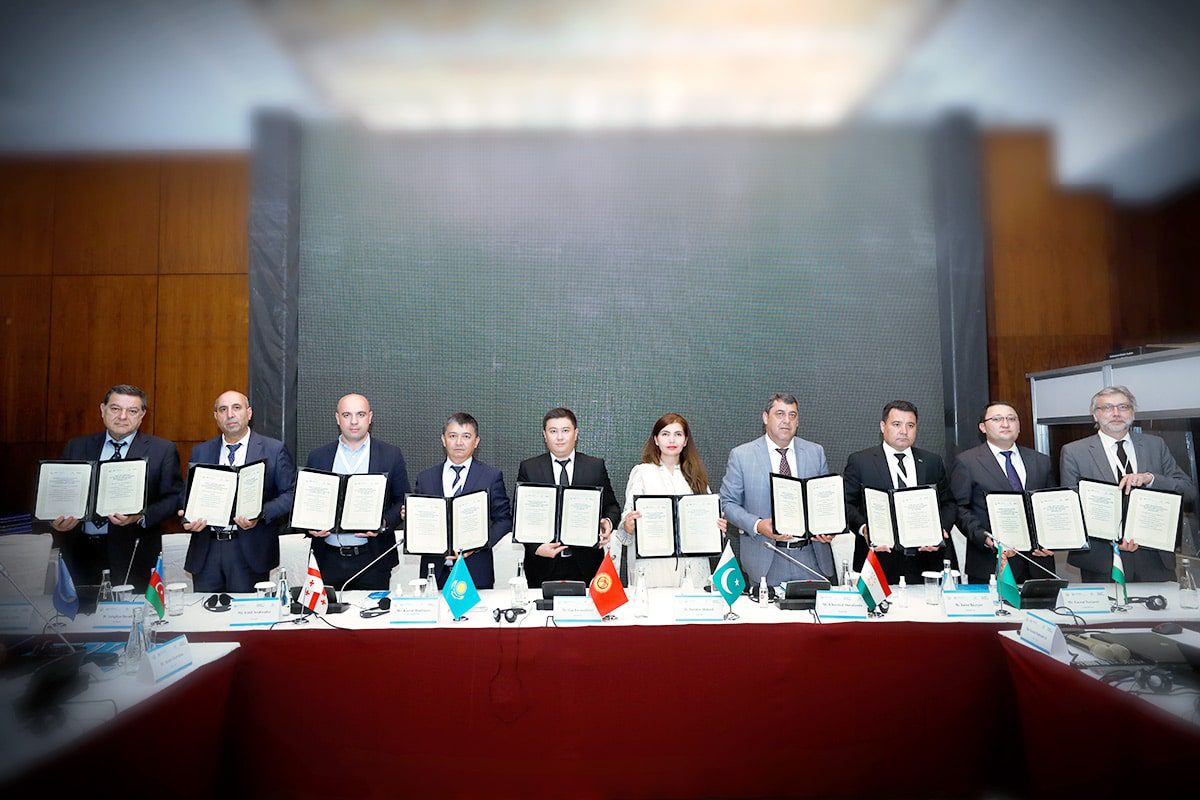
To effectively address illicit drug trafficking in the region, on 22 May 2019 the heads of customs authorities of nine nations1 agreed to set up regular information exchange on high-risk consignments via a memorandum of understanding. The agreement was sealed in Tashkent and was named the Inter-Regional Network of Customs Authorities and Port Control Units (IREN Network). In 2021, Azerbaijan became the Network’s tenth participating country.
The launch of the IREN Network has led to seizures of 587 kg of drugs (580 kg of heroin); 127,344 pills of anticonvulsant Regapen; 55 tons of ferrosilicon; 550,000 pieces of tobacco products; and 237 tons of consumer goods. It has prompted revenue collection cases and detention of members of organized crime groups.
Customs authorities from eight2 of the ten IREN Network members convened on 25-26 May 2022 in Dushanbe, Tajikistan, under the United Nations Office on Drugs and Crime (UNODC) and World Customs Organization-led Global Container Control Programme (CCP).
CCP works closely with the Customs administrations and other competent authorities in the region to strengthen the operation, and expand the number, of port and air cargo control units at key transit corridors to prevent the trafficking of illicit goods, organized crime, and terrorism, and to strengthen trade facilitation. It promotes a practical regional cooperation framework for information exchange among Customs and border control agencies that can identify and suppress high-risk consignments. In the Southern Caucasus and Central Asia, as well as in Pakistan, training officials in dedicated container profiling is at the heart of the programme.
At their seventh annual interregional meeting, the Customs authorities stressed the importance of strengthening cooperation in suppressing high-risk consignments in the context of suspected increases in drug smuggling from Afghanistan, along with facilitation of legal trade.
Opening the meeting, UNODC’s representative in Central Asia Ashita Mittal remarked: “Recent developments require law enforcement agencies across the region to pay greater attention to border security, cargo control and fostering collaboration to prevent and counter transnational organized crime. The CCP is an important element of UNODC’s comprehensive strategic approach to doing this throughout the region.”
As an outcome of the meeting, Customs officials adopted a declaration which will pave the way for institutionalizing further the role and functions of the IREN Network, establishing and maintaining more port and air cargo control units, and creating targeted national training centres. The network will place a dedicated CCP regional trainer in the region, establish pre-arrival data exchange between control units, enhance cooperation between Customs and the private sector, and survey existing anti-corruption legislation and strategies in CCP participating countries.
“Interagency cooperation and information exchange are effective ways to increase the capacity of Customs authorities to identify high-risk containers. Together, we will create a more effective container control mechanism among Customs administrations,” stated Mr. Azim Tursunzoda, First Deputy Head of the Customs Service of Tajikistan. “It will significantly enhance the effectiveness of our work preventing drug trafficking and the economic development of CCP-participating countries,” he added.
UNODC’s Tofik Murshudlu noted that “CCP has established more than 30 port and air cargo control units in the region. Under the terms of this declaration, the programme will continue to add sea, dry and airports, which will bring clear results in terms of seizures of drugs and other illicit goods.”
The European Union is committed to an open and rules-based multilateral trading system, with a modernised WTO at its core. The EU supports an ambitious and realistic package for the 12th World Trade Organization Ministerial Conference (MC12), and expects all WTO members to make a constructive contribution, according to their needs and capacities.
The Council recalls its previous joint statements regarding the war of aggression by the Russian Federation with the support of Belarus against Ukraine. It recalls that it stands in solidarity with the people of Ukraine. Russia is directing attacks against the civilian population and is targeting civilian objects, including hospitals, medical facilities, schools and shelters. These war crimes must stop immediately. Those responsible, and their accomplices, will be held to account in accordance with international law. Russia must immediately stop its military aggression in the territory of Ukraine, immediately and unconditionally withdraw all forces and military equipment from the entire territory of Ukraine, and fully respect Ukraine’s territorial integrity, sovereignty and independence within its internationally recognised borders.
The Council recalls the priority it places on WTO reform and the intention of the EU to play a leading role in this regard. It underlines the importance of reforming the WTO in its core functions so that it can continue to deliver effectively on its objectives and tackle the challenges of the 21st Century, including by ensuring a level-playing field. The Council underlines in this regard the importance of anchoring climate and sustainability on the WTO agenda as well as more firmly establishing competitive neutrality within the WTO. The Council highlights, as a priority, the need for a meaningful reform in order to restore a fully functioning WTO dispute settlement system with its core features kept intact, the need to reform the WTO’s monitoring and deliberating function, as well as the WTO’s role as a negotiating forum to develop new and updated rules. The Council supports the launch of a comprehensive review through a structured process under the auspices of the General Council, of the operation of the WTO with the view to making the necessary reforms to improve its functions by the next Ministerial Conference. Regarding the dispute settlement system and the Appellate Body, the EU underlines the importance of conducting discussions with the view to having a fully and well-functioning dispute settlement system accessible to all members by MC13.
The exacerbating food security challenges resulting from the impact of the Russian war of aggression against Ukraine are critical. The Council will support efforts at MC12 to address the food security crisis. The Council supports balanced outcomes in the area of agriculture, notably improvements to transparency, including in relation to export restrictions, and multilateral decisions to exempt humanitarian purchases by the World Food Programme from export restrictions, and, more generally, to avoid export restrictions on agricultural products. Finally, the Council supports the launch of work programmes, with key elements that would guide the future negotiations, in areas such as trade-distorting domestic support and a permanent solution for public stockholding for food security, among others.
The WTO response to the pandemic is one of the most important issues for the forthcoming Ministerial Conference. This response should contribute to a satisfactory solution to increase the availability of COVID-19 vaccines in developing countries. The Council supports an outcome on Trade and Health that enhances the trading system’s responsiveness to the challenges raised by the pandemic, covering inter alia the reduction of export restrictions, trade facilitating measures, enhanced transparency, cooperation with international organisations and other relevant elements. This response should also include enhancing and simplifying the use of flexibilities available under the TRIPS agreement.
In view of MC12, the Council stresses the need to conclude the fisheries subsidies negotiations with a substantive outcome, in line with the United Nations’ sustainable development goal 14.6, which calls on WTO members to prohibit certain forms of fisheries subsidies which contribute to overcapacity and overfishing, and eliminate subsidies that contribute to Illegal, Unreported and Unregulated (IUU) fishing, and refrain from introducing new such subsidies. The Council underlines the importance of reaching an ambitious and coherent agreement that contributes to the global sustainability of fisheries resources, in line with relevant EU policies ensuring environmentally sustainable fisheries and consistent with the objective of achieving economic and social benefits.
The Council recalls the proposals co-sponsored by the EU concerning notifications and trade concerns and calls for progress on these issues at MC12.
The Council also looks forward to the renewal of the multilateral e-commerce and TRIPS moratoria.
The Council welcomes the conclusion of the negotiations on services domestic regulation on 2 December 2021 and the subsequent finalisation of members’ schedules of commitments.
The Council supports the ongoing efforts of WTO members towards plurilateral cooperation through Joint Statement Initiatives, notably on e-commerce, investment facilitation for development and in the area of trade and the environment, which allow members to work together more closely on pressing issues.
The Council approves the draft Declarations and Statements on:
Ministerial Declaration on Trade and Food Security
Sanitary and Phytosanitary Measures (“Sanitary and Phytosanitary declaration for the Twelfth WTO Ministerial Conference: Responding to modern SPS challenges”)
Ottawa Group Ministerial statement on WTO reform
The Council supports the Commission in its efforts to make MC12 a success and looks forward to good coordination between member states and the Commission in this regard. The Council will assess the progress made with a view to reaching a balanced outcome in line with the conditions set out above. To this end, the Council looks forward to the Commission’s proposals in relation to the texts of the draft Declarations and Statements discussed within the WTO.