Migrants who risk their lives to cross the Mediterranean to Europe on flimsy boats often piloted by people-smugglers, are at greater risk of dying now than for years, the UN refugee agency (UNHCR) said on Friday.
Latest data visualisation figures from UNHCR, shows that there were 3,231 dead or missing at sea last year, a sharp rise from 2020.
We are concerned by a rising death toll at sea related to refugees and migrants crossing the Mediterranean to Europe.https://t.co/8SzbYb7qea
— UNHCR, the UN Refugee Agency (@Refugees) June 10, 2022
Last year’s shipwreck death toll is on a par with 2014, even though almost twice as many people crossed the sea to Europe eight years ago, when the exodus of those fleeing war in Syria, war was at its height.
The situation is a “widespread, longstanding and largely overlooked tragedy”, said UNHCR.
The UN agency noted that although some of those crossing the Mediterranean want a better life and better jobs, many are fleeing conflict, violence or persecution.
Out of Africa
The most common countries of origin for people moving along Mediterranean routes include those affected by years of conflict and displacement, particularly in the East and Horn of Africa regions.
UNHCR Spokesperson Shabia Mantoo, told journalists in Geneva that in addition to the rising death toll at sea, the agency is concerned that “deaths and abuses are also widespread along land routes, most commonly in and through the countries of origin and transit, including Eritrea, Somalia, Djibouti, Ethiopia, Sudan, and Libya – where the overwhelming majority of risks and incidents are reported.”
Source:
UNHCR Data Portal
The No End in Sight visualization, shows that in 2014, more than 200,000 refugees and migrants moved from East and West Africa, to North Africa, an onwards to Europe, peaking in 2015, when more than a million reaches European countries.
Numbers gradually decreased in the following years, and ebbed further during the COVID-19 lockdown period. Despite measures implemented in 2020, smuggers have quickly adapted to find alternative routes to bypass official controls, said UNHCR. The flow has been increasing since 2021, suggesting a continuing upward trend.
Prevention and protection
Calling for more action to prevent deaths and protect refugees and asylum seekers who are embarking on these journeys, UNHCR released an updated protection and solutions strategy – and new funding appeal – earlier in April.
The appeal calls for increased humanitarian assistance, support and solutions for people in need of international protection and survivors of gross human rights abuses, said the agency’s Ms. Mantoo.
It covers around 25 countries across three different regions connected by the same land and sea routes which are used by migrants, asylum seekers and refugees.
“At the same time, UNHCR is urging States to ensure safe alternatives to dangerous crossings and to commit to strengthened humanitarian, development and peace action to address protection and solutions challenges”, the Spokesperson added.
UNHCR has joined other UN agencies to urge States to adopt measures ensuring that refugees and migrants retrieved at sea are disembarked in places where their lives and human rights are safeguarded.
Maritime students send special SOS to upcoming UN Ocean Conference
At first, they look like bright spots of white casting shadows on a lush green lawn. As the drone camera swoops into the sky, it becomes clear that these are people – more than 200 students from half a dozen different countries – lining up to spell out a clear message to the world: SAVE OUR OCEANS.
These future maritime leaders, studying at the Arab Academy for Science, Technology & Maritime Transport, based in the Egyptian coastal city of Alexandria, also used two powerful symbols in their video: an anchor, immediately recognizable in any language, and Semaphore, another universal way to communicate on the high seas, using flags.
Spelling it out
Arms moving in sharp patterns, the students spell, with flags, the same urgent text they form with their bodies as seen from above.
The message is not a matter of theory for these future seafarers; it is central to their personal journeys starting at an institution committed to helping the world realize the Sustainable Development Goals (SDGs) especially on climate action (Goal 13) and life below water (Goal 14).
Hailing from Egypt, Djibouti, Sudan, Saudi Arabia, Libya and Mauritania, the students created their video message to the UN Ocean Conference, which will put the issue at the top of the international agenda when it convenes in Lisbon from 27 June to 1 July.
‘Blue world’
“We live in a blue world,” explains Dr. Kareem Mahmoud Tonbol, an Associate Professor of Physical Oceanography and Climatology and Vice Dean for Postgraduate Studies and Scientific Research, pointing out that oceans and seas cover more than 70 per cent of the Earth’s surface.
“Oceans are the heart and lungs of our planet, supplying most of the oxygen we breathe,” says Dr. Tonbol, who also serves as Head of Meteorology and the Hydrographic Survey Programme and organized the initiative to create a video in response to a request from the UN’s Department of Global Communications.
Concern for the future
He explains that the hundreds of students who contributed to the video, were motivated to send their “Save our Ocean” SOS, out of concern for humanity’s future.
“Oceans are the heart and lungs of our planet, supplying most of the oxygen we breathe,” he says. “They are also a vital element of the ecosystem and a key source of food and medicine.”
According to Dr. Tonbol, more than three billion people worldwide rely on marine and coastal biodiversity to survive, while oceans absorb over 30 per cent of carbon dioxide created by humans, helping mitigate the effects of warming on the planet.
“Oceans also sustain the world’s marine and coastal resources and industries,” he points out. “In every way, we are directly related to our seas.”
Oceans are the heart and lungs of our planet –Kareem Mahmoud Tonbol
It took a week of preparations, a team of video experts, and the choreographing of scores of students in maritime uniforms, but the Academy felt the investment was worth sending a strong signal from their Abu-Qir campus to the Conference.
“Our message is to mobilize and unify the world’s efforts to support the sustainable management of the world’s oceans by fostering a global movement of citizens to protect ocean resources and the marine environment,” says Dr. Tonbol.
Their decision to send a video message to the United Nations is consistent with the Academy’s longstanding cooperation with the world organization.
And the Academy has incorporated into its strategic plan a commitment “to fulfilling its social responsibility and aligning itself to the SDGs, significantly increasing the extent to which its research and teaching support the aim of achieving a healthy and sustainable planet.”
For Dr. Tonbol, this is more than a question of plans on paper; it is a legacy to bequeath to future generations. “Our role is to shape future leaders by investing in young minds as we embark upon the intergenerational transition to help them join the sustainable development revolution and create a momentum to deliver the SDGs,” he says.
“Sustainable development is very much about the business of ensuring that our children and future generations inherit an earth that is no worse off than the one we have inherited, so we dedicate our research to advancing innovative solutions for the interest of humanity.”
Aiden Aslin, 28, and Shaun Pinner, 48, were captured fighting with the Ukrainian army before being tried as mercenaries and sentenced to death by a pro-Russian court.
Their trial occurred in the so-called Donetsk People’s Republic, a breakaway region in eastern Ukraine captured by Moscow-backed separatists.
Families of the two British men and Moroccan national Saaudun Brahim, who was also sentenced to death, have expressed concern about their plight.
Brahim’s father said his son was not a mercenary but a Ukrainian student when Russia launched its invasion. British officials also said that the Britons already lived in Ukraine and served in its armed forces for several years.
They were captured in April while defending the besieged city of Mariupol.
Robert Jenrick, a legislator for Newark, where Aslin’s family lives, said the men were sentenced by a “kangaroo court” that breached the Geneva Conventions. “This really has been a fraudulent show trial. We should not give it any credibility whatsoever. There is no evidence to back up these charges. And now we have two British citizens being subjected potentially to the death penalty,” he said.
No mercenaries
“They are not mercenaries. They are British citizens who chose to join the Ukrainian army for personal reasons before [Russian President Vladimir] Putin’s illegal invasion of Ukraine, the legislator explained. He added: “They were captured by Russian forces in Mariupol and should be treated in accordance with international law.”
All men want to appeal their sentences, and Kyiv said it works for their release. The trial came as fighting escalated in the region. Ukrainian President Zelensky noted the fate of the strategic city of Severodonetsk could decide the future of the eastern Donbas region, which includes Donetsk and other areas.
Intense street fighting reportedly continued in Severodonetsk, a small industrial eastern city under heavy Russian artillery barrages, endangering troops on both sides.
A senior adviser to Zelensky said Ukrainian military casualties are now between 100 and 200 a day – the highest estimated total to have been made public.
Western energy sanctions appeared to have done little to end the fighting as a U.S. official admitted that Russia may be making more profit from energy now than it did before the war.
The European Union has pledged to reduce its dependency on Russian oil by 90 percent by the end of 2022. However, the 27-nation bloc buys about 40 percent of its natural gas from Russia and has not yet made similar commitments on Russian gas supplies.
Algeria: Statement by the High Representative/Vice-President, Josep Borrell, and Executive Vice President, Valdis Dombrovskis, on Algeria’s latest measures regarding Spain
The decision taken by Algeria to suspend the Treaty of friendship and good neighbourly relations signed with Spain in 2002 is of utmost concern. We are assessing the implications of the Algerian actions, including the instruction given to the financial institutions to stop transactions between the two countries, which upfront appear to be in violation of the EU-Algeria Association Agreement, in particular in the area of trade and investment. This would lead to a discriminatory treatment of an EU Member State and adversely affect the exercise of the Union’s rights under the Agreement.
We are in close contact with the Spanish Government and reaching out to the Algerian authorities to rapidly clarify the situation.
Bilateral relations of third countries with individual EU Member States are part of their relations with the EU. Unity and solidarity within the EU remain key to uphold our interests and values in our relations with all countries. Moreover, trade policy is an exclusive EU competence, and the EU is ready to stand up against any type of coercive measures applied against an EU Member State. However, the EU continues to favour dialogue first to solve controversies.
Algeria is an important partner for the EU in the Mediterranean and a key actor for regional stability. We trust that, in the name of our strong and long-term partnership, a swift solution will be found to fully re-establish commercial and investment relations.
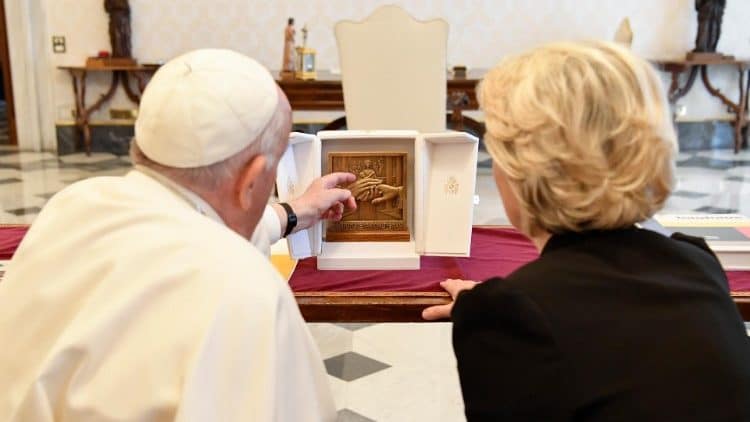
The Holy See Press Office said Friday that the Pope met with Ms. Von der Leyen in the Secretariat of State and that their talks were “cordial”.
The Pope and the European Commission President “focused on the good bilateral relations and common commitment to work to bring the war in Ukraine to an end, dedicating particular attention to the humanitarian aspects and the food consequences of the continuation of the conflict.”
They also spoke about the “conclusions of the Conference on the future of Europe and on the consequences for the future structure of the Union.”
Responding to reporters’ questions, Matteo Bruni, Director of the Holy See Press Office, said the two spoke about “the war in Ukraine, the climate, and sustainable architecture.”
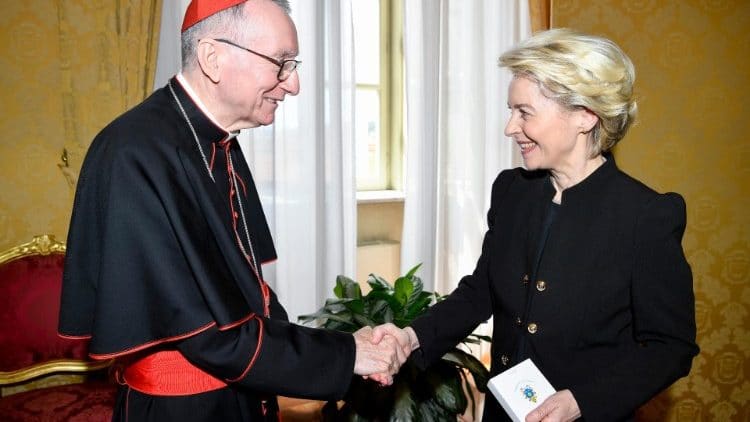
Ms. Von der Leyen met afterwards with Cardinal Secretary of State Pietro Parolin and Archbishop Paul Richard Gallagher, Secretary for Relations with States and International Organizations.
Pope Francis shows Ms. Von der Leyen a gift
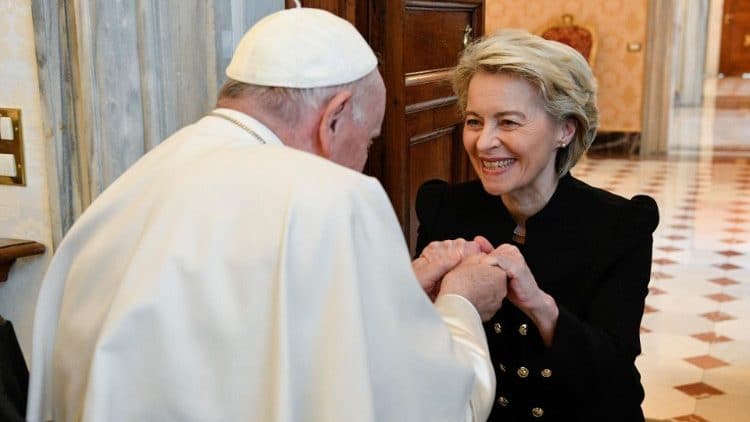
Ms. Von der Leyen greets the Pope
Ms. Von der Leyen met afterwards with Cardinal Parolin
Gravitational microlensing turns up When massive stars come to the end of their lives and explode in a supernova, they leave behind a black hole. It is estimated that about one in a thousand stars is massive enough to give birth to a black hole. With the galaxy.
Article by University of California – Berkeley
Yet black holes by their very nature can be very hard to detect, especially if they are isolated. After all, a black hole has such powerful gravity that light doesn’t escape, so we generally detect them by their gravitational influence on other objects or by radiation created by the surrounding matter they are devouring. Without nearby objects or accreting matter, there could be hundreds of millions of black holes throughout our galaxy that are essentially invisible to astronomers.
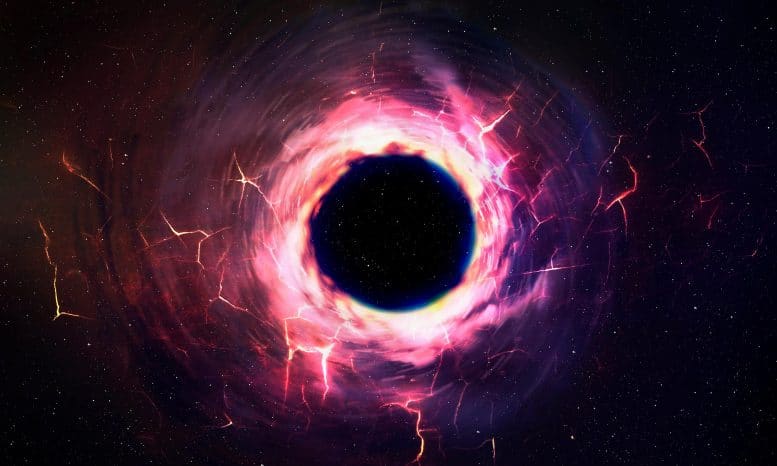
If, as astronomers believe, the death of large stars leaves behind black holes, there should be hundreds of millions of them scattered throughout the Milky Way galaxy. The problem is, isolated black holes are invisible.
Now, a team led by gravitational microlensing.
The team, led by graduate student Casey Lam and Jessica Lu, a UC Berkeley associate professor of astronomy, estimates that the mass of the invisible compact object is between 1.6 and 4.4 times that of the sun. Because astronomers think that the leftover remnant of a dead star must be heavier than 2.2 solar masses in order to collapse to a black hole, the UC Berkeley researchers caution that the object could be a Whether a black hole or a neutron star, the object is the first dark stellar remnant — a stellar “ghost” — discovered wandering through the galaxy unpaired with another star.
Hubble Space Telescope image of a distant star that was brightened and distorted by an invisible but very compact and heavy object between it and Earth. The compact object — estimated by UC Berkeley astronomers to be between 1.6 and 4.4 times the mass of our sun — could be a free-floating black hole, one of perhaps 200 million in the Milky Way galaxy. Credit: Image courtesy of STScI/NASA/ESA
“This is the first free-floating black hole or neutron star discovered with gravitational microlensing,” Lu said. “With microlensing, we’re able to probe these lonely, compact objects and weigh them. I think we have opened a new window onto these dark objects, which can’t be seen any other way.”
Determining how many of these compact objects populate the Milky Way galaxy will help astronomers understand the evolution of stars — in particular, how they die — and of our galaxy, and perhaps reveal whether any of the unseen black holes are primordial black holes, which some cosmologists think were produced in large quantities during the The analysis by Lam, Lu and their international team has been accepted for publication in The Astrophysical Journal Letters. The analysis includes four other microlensing events that the team concluded were not caused by a black hole, though two were likely caused by a Same data, different conclusions
Notably, a competing team from the Space Telescope Science Institute (STScI) in Baltimore analyzed the same microlensing event and claims that the mass of the compact object is closer to 7.1 solar masses and indisputably a black hole. A paper describing the analysis by the STScI team, led by Kailash Sahu, has been accepted for publication in The Astrophysical Journal.
Both teams used the same data: photometric measurements of the distant star’s brightening as its light was distorted or “lensed” by the super-compact object, and astrometric measurements of the shifting of the distant star’s location in the sky as a result of the gravitational distortion by the lensing object. The photometric data came from two microlensing surveys: the Optical Gravitational Lensing Experiment (OGLE), which employs a 1.3-meter telescope in Chile operated by Warsaw University, and the Microlensing Observations in Astrophysics (MOA) experiment, which is mounted on a 1.8-meter telescope in New Zealand operated by Osaka University. The astrometric data came from
Because both microlensing surveys caught the same object, it has two names: MOA-2011-BLG-191 and OGLE-2011-BLG-0462, or OB110462, for short.
While surveys like these discover about 2,000 stars brightened by microlensing each year in the Milky Way galaxy, the addition of astrometric data is what allowed the two teams to determine the mass of the compact object and its distance from Earth. The UC Berkeley-led team estimated that it lies between 2,280 and 6,260 light years (700-1920 parsecs) away, in the direction of the center of the Milky Way Galaxy and near the large bulge that surrounds the galaxy’s central massive black hole.
The STScI group estimated that it lies about 5,153 light years (1,580 parsecs) away.
Looking for a needle in a haystack
Lu and Lam first became interested in the object in 2020 after the STScI team tentatively concluded that five microlensing events observed by Hubble — all of which lasted for more than 100 days, and thus could have been black holes — might not be caused by compact objects after all.
Lu, who has been looking for free-floating black holes since 2008, thought the data would help her better estimate their abundance in the galaxy, which has been roughly estimated at between 10 million and 1 billion. To date, star-sized black holes have been found only as part of binary star systems. Black holes in binaries are seen either in X-rays, produced when material from the star falls onto the black hole, or by recent gravitational wave detectors, which are sensitive to mergers of two or more black holes. But these events are rare.
“Casey and I saw the data and we got really interested. We said, ‘Wow, no black holes. That’s amazing,’ even though there should have been,” Lu said. “And so, we started looking at the data. If there were really no black holes in the data, then this wouldn’t match our model for how many black holes there should be in the Milky Way. Something would have to change in our understanding of black holes — either their number or how fast they move or their masses.”
When Lam analyzed the photometry and astrometry for the five microlensing events, she was surprised that one, OB110462, had the characteristics of a compact object: The lensing object seemed dark, and thus not a star; the stellar brightening lasted a long time, nearly 300 days; and the distortion of the background star’s position also was long-lasting.
The length of the lensing event was the main tipoff, Lam said. In 2020, she showed that the best way to search for black hole microlenses was to look for very long events. Only 1% of detectable microlensing events are likely to be from black holes, she said, so looking at all events would be like searching for a needle in a haystack. But, Lam calculated, about 40% of microlensing events that last more than 120 days are likely to be black holes.
“How long the brightening event lasts is a hint of how massive the foreground lens bending the light of the background star is,” Lam said. “Long events are more likely due to black holes. It’s not a guarantee, though, because the duration of the brightening episode not only depends on how massive the foreground lens is, but also on how fast the foreground lens and background star are moving relative to each other. However, by also getting measurements of the apparent position of the background star, we can confirm whether the foreground lens really is a black hole.”
According to Lu, the gravitational influence of OB110462 on the light of the background star was amazingly long. It took about one year for the star to brighten to its peak in 2011, then about a year to dim back to normal.
More data will distinguish black hole from neutron star
To confirm that OB110462 was caused by a super-compact object, Lu and Lam asked for more astrometric data from Hubble, some of which arrived last October. That new data showed that the change in position of the star as a result of the gravitational field of the lens is still observable 10 years after the event. Further Hubble observations of the microlens are tentatively scheduled for fall 2022.
Analysis of the new data confirmed that OB110462 was likely a black hole or neutron star.
Lu and Lam suspect that the differing conclusions of the two teams are due to the fact that the astrometric and photometric data give different measures of the relative motions of the foreground and background objects. The astrometric analysis also differs between the two teams. The UC Berkeley-led team argues that it is not yet possible to distinguish whether the object is a black hole or a neutron star, but they hope to resolve the discrepancy with more Hubble data and improved analysis in the future.
“As much as we would like to say it is definitively a black hole, we must report all allowed solutions. This includes both lower mass black holes and possibly even a neutron star,” Lu said.
“If you can’t believe the light curve, the brightness, then that says something important. If you don’t believe the position versus time, that tells you something important,” Lam said. “So, if one of them is wrong, we have to understand why. Or the other possibility is that what we measure in both data sets is correct, but our model is incorrect. The photometry and astrometry data arise from the same physical process, which means the brightness and position must be consistent with each other. So, there’s something missing there. ”
Both teams also estimated the velocity of the super-compact lensing object. The Lu/Lam team found a relatively sedate speed, less than 30 kilometers per second. The STScI team found an unusually large velocity, 45 km/s, which it interpreted as the result of an extra kick that the purported black hole got from the supernova that generated it.
Lu interprets her team’s low velocity estimate as potentially supporting a new theory that black holes are not the result of supernovas — the reigning assumption today — but instead come from failed supernovas that don’t make a bright splash in the universe or give the resulting black hole a kick.
Reference: “An isolated mass gap black hole or neutron star detected with astrometric microlensing” by Casey Y. Lam, Jessica R. Lu, Andrzej Udalski, Ian Bond, David P. Bennett, Jan Skowron, Przemek Mroz, Radek Poleski, Takahiro Sumi, Michal K. Szymanski, Szymon Kozlowski, Pawel Pietrukowicz, Igor Soszynski, Krzysztof Ulaczyk, Lukasz Wyrzykowski, Shota Miyazaki, Daisuke Suzuki, Naoki Koshimoto, Nicholas J. Rattenbury, Matthew W. Hosek Jr., Fumio Abe, Richard Barry, Aparna Bhattacharya, Akihiko Fukui, Hirosane Fujii, Yuki Hirao, Yoshitaka Itow, Rintaro Kirikawa, Iona Kondo, Yutaka Matsubara, Sho Matsumoto, Yasushi Muraki, Greg Olmschenk, Clement Ranc, Arisa Okamura, Yuki Satoh, Stela Ishitani Silva, Taiga Toda, Paul J. Tristram, Aikaterini Vandorou, Hibiki Yama, Natasha S. Abrams, Shrihan Agarwal, Sam Rose and Sean K. Terry, Accepted, The Astrophysical Journal Letters. arXiv:2202.01903
The work of Lu and Lam is supported by the National Science Foundation (1909641) and the National Aeronautics and Space Administration (NNG16PJ26C, NASA FINESST 80NSSC21K2043).
LITHUANIA, June 10 – Prime Minister Ingrida Šimonytė has met with Prime Minister of Denmark Mette Frederiksen, and President of the European Parliament Roberta Metsola.
The Lithuanian and Danish colleagues have talked about support for Ukraine, the security situation in Europe, and the need to take joint decisions at the forthcoming NATO summit.
‘We are particularly grateful to Denmark for its long-term commitment to strengthening security in the Baltic region, which has gained special importance for us and for the entire NATO bloc since Russia’s invasion of Ukraine. ‘Immediate support for Ukrainians, and NATO’S deterrence posture and reinforcement of the Eastern Flank of the alliance must top our agenda today, if we want to secure a long-term and lasting peace in Europe,’ said Prime Minister Šimonytė.
In her meeting with EP President Metsola, Prime Minister Šimonytė has discussed several issues of EU relevance, and the effects of the war caused by Russia. Prime Minister Šimonytė has thanked the European Parliament for its support in granting Ukraine an EU candidate status.
According to the Prime Minister, the solidarity of the international community is needed today for the unblocking of Ukraine’s ports.
The Roman Space Observer Game is a retro 8-bit style video game to promote the Nancy Grace Roman Space Telescope. Credit: GMG World Media/NALA Comm Development Team
Despite their low-resolution pixelated graphics, retro 8-bit style games are quite popular. Not just with older generations enjoying the nostalgia of the games they played in their childhood either; younger generations also enjoy these games.
With the ever-revolving loop of popular trends, retro 8-bit style games have made a big comeback in the gaming industry. Younger generations are now loving games that older generations still enjoy. This game is intended to entertain players across a wide variety of interests and skillsets, all while spreading the word of the Nancy Grace Roman Telescope and the fantastic science it will uncover.
Our goal for this game is to inform and inspire players about the amazing cosmic objects in our universe and what Roman may be able to see in a fun and engaging way.
Quo Vadis, Aida? won the hearts and votes of European audiences and MEPs to take the 2022 LUX Audience Award.
The film recounts the story of the 1995 Srebrenica genocide through the eyes of Aida, a teacher turned translator for the UN peacekeeping forces.
The other two nominees in 2022 were Flee by Danish director Jonas Poher Rasmussen and Great Freedom by Austrian director Sebastian Meise.
Organised by the European Parliament and the European Film Academy in partnership with the European Commission and Europa Cinema, the award combines the votes of the public with those of MEPs witheach group weighing 50%.
Talking about the main character Aida, the film’s director said: “I was inspired by the women of Srebrenica, like Munira. They have organisations who are changing Bosnian society. They are women who lost their sons and members of their families, and husbands, but they are still fighting for truth, fighting for reconciliation in our area, they are calling for peace and never spreading any words of hatred.”
As a survivor of the massacre, Subašić explained the importance of remembering what happened: “Unless we talk, things will be forgotten. In order for this not to be repeated with my grandchildren we have to speak the truth at all times and we have to wait for justice to be done. (…) Many children are being killed, many mothers are crying now in Ukraine.”
The sad similarities with the Ukraine war also struck Žbanić: “I was very shocked with news about the war. It triggered lots of sadness in Bosnia, people are really traumatised by the reappearance of war in Europe.” The same justifications are being used, she said. There are “a lot of lies, a lot of false justifications”.
The conversation ended on a hopeful note, with the director talking about young people who connected to the film, although they were not even born at the time of the events. “What I learned from reactions is that people want to see these films. Luckily we live in Europe where there are funds who support this kind of film…Tthrough arts and through films we can tell difficult stories that maybe will not take us to popcorn on Saturday night, but will give us other values.”
Poet Gloria Muñoz hosts a discussion and signing by “Little God” author Avni Vyas and illustrator Mimi Cirbusova, along with poet Emily Carr (”Name Your Bird Without a Gun”), at 7 p.m. June 15 at Tombolo Books, 2153 First Ave. S, St. Petersburg. Free; RSVP at /tombolobooks.com/events.
Tombolo Books and Chelsea Catherine present a Pride Writers Panel, moderated by Silk Jazmyne Hindus and featuring fiction writers Sheree L. Greer (”Let the Lover Be”), Tenea D. Johnson (”Smoketown”), Maria Ingrande Mora (”Fragile Remedy”)at 7 p.m. June 16 at Tombolo Books, 2153 First Ave. S, St. Petersburg. Free; RSVP at /tombolobooks.com/events.
Bestselling thriller writer Steve Berry will discuss and sign his latest novel, “The Omega Factor,” at 6:30 p.m. June 17 at the Oxford Exchange, 420 W Kennedy Blvd., Tampa. Tickets $5 for admission or $31.16 for admission plus a signed copy of the book at oxfordexchange.com/pages/calendar.
Book Talk is a listing of in-person author appearances in the Tampa Bay area in the coming week. To place an item in Book Talk, send author’s name, book title, appearance time, date, venue name and address, admission cost (if any) and a contact phone number tocbancroft@tampabay.com, with “Book Talk” in the subject line. Deadline is 14 days before publication.



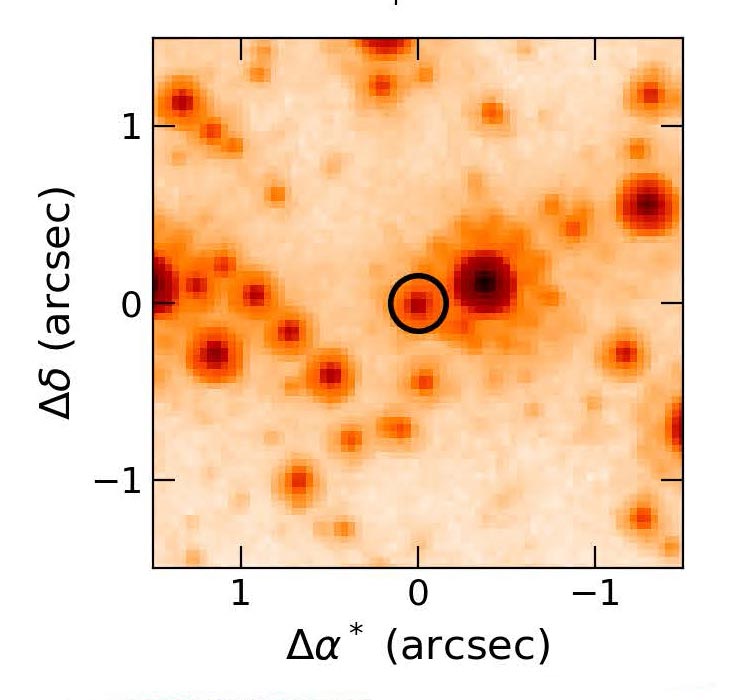 ” sizes=”(max-width: 777px) 100vw, 777px” alt=”Microlensing by Compact Object” width=”777″ height=”731″ aria-describedby=”caption-attachment-176455″ data-ezsrcset=”https://european.express/wp-content/uploads/2022/06/Microlensing-by-Compact-Object.jpg 744w,https://scitechdaily.com/images/Microlensing-by-Compact-Object-400×376.jpg 400w” data-ezsrc=”https://european.express/wp-content/uploads/2022/06/Microlensing-by-Compact-Object.jpg” />


/cloudfront-us-east-1.images.arcpublishing.com/tbt/K744AWADAJF3FPIQ77XIHE6DMI.jpeg?w=696&resize=696,0&ssl=1 "Book Talk: Avni Vyas, Emily Carr at Tombolo Books")
