
Manufacturing next-generation solar panels could cut global carbon emissions by up to 8.2 billion tonnes by 2035, finds
Cleaner solar manufacturing could cut global emissions by eight billion tonnes
Iconography of Christ represented as “King of kings and Lord of lords”
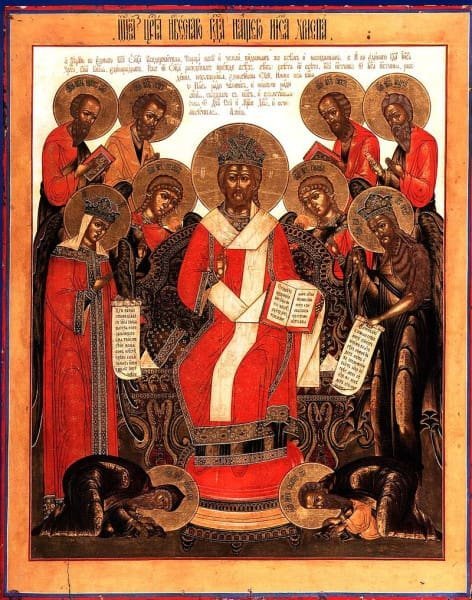
 King of kings, the queen stands at your right – a special variation of the Deesis composition, where Christ is depicted as “King of kings and Lord of lords” (1 Tim. 6:15). It originally appeared to illustrate one of the verses from Psalm 44 – “The queen stood […]
Originally published at Almouwatin.com
Iconography of Christ depicted as “King of Kings and Lord of lords”
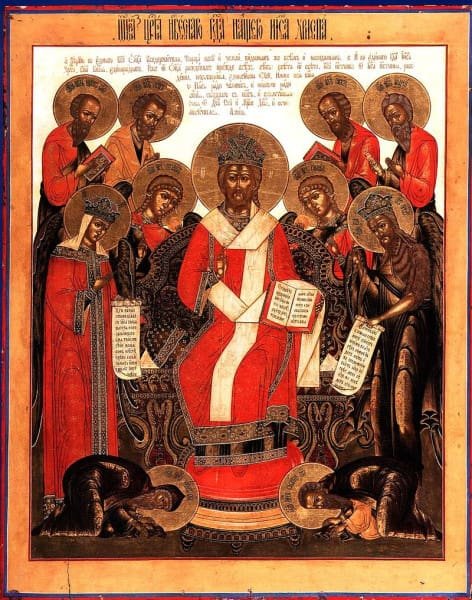
King of Kings, The Queen Stands at Your Right Hand – a special variant of the Deesis composition, where Christ is depicted as “King of kings and Lord of lords” (1 Tim. 6:15). It originally appeared as an illustration of one of the verses of Psalm 44 – “The queen stood at Your right hand, […]
Originally published at Almouwatin.com
Costa calls for a more sovereign Europe in Hamburg

At the historic Matthiae Mahl in Hamburg, European Council President António Costa set out a vision of a stronger European Union that can defend itself, compete economically and act independently in an increasingly unstable world. Speaking before an audience that included former German Chancellor Angela Merkel, Costa argued that Europe must respond to war, coercion […]
Originally published at Almouwatin.com
Women’s representation in Parliament shows slow progress
 The report, Women in Parliament 2025, released ahead of International Women’s Day on March 8, also found that women’s leadership in Parliament had declined, with women occupying 12 of the 75 newly appointed speaker positions. At the same time, quotas have been identified as playing a “role […]
Originally published at Almouwatin.com
On day seven of Middle East war, no let-up in suffering
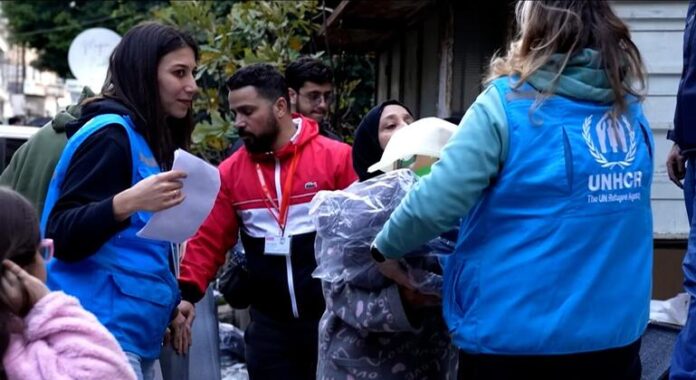
Seven days since Israeli and US bombing in Iran prompted ongoing counter-strikes across the Middle East, humanitarians confirmed massive upheaval in Lebanon, with hundreds of shelters now full, as whole suburbs of Beirut have emptied.
“Israel’s military ground incursions into southern Lebanon, blanket displacement orders for the population in Beirut’s southern suburbs, the Bekka region and the full area to the south of the Latani River, and its continued airstrikes on different parts of the country are bringing more misery, more suffering to an already weary civilian population,” said Ravina Shamdasani, spokesperson for the UN human rights office, OHCHR.
Israeli strikes intensify in Lebanon
From the UN migration agency, IOM, Chief of Mission Lebanon Mathieu Luciano described the dramatic deterioration in the country on Thursday evening as the Israeli army carried out “multiple air strikes on the southern suburb of Beirut overnight”.
He added that many collective shelters are at full capacity, especially in Beirut and Mount Lebanon, “so, people are just redirected to other shelters, especially in the north, in Al Qaa, in safe places in the Bekka as well.”
The UN refugee agency, UNHCR, has declared the escalating crisis a major humanitarian emergency requiring an immediate regional response.
UNHCR Director for Emergencies Ayaki Ito told journalists in Geneva that the conflict is triggering significant population movements across the region and into Southwest Asia.
Nearly 25 million people in the affected areas are already refugees, internally displaced or recent returnees, placing additional strain on fragile host countries.
Hormuz bottleneck
The major commercial shipping crisis caused by the war which has practically halted all vessel movement in the Strait of Hormuz south of Iran is already impacting UN agencies and partners seeking to dispatch lifesaving relief to Gaza and Sudan, among other emergencies.
The narrow channel carries nearly one-fifth of global oil along with large volumes of commercial goods.
“All traffic via sea has significantly slowed down,” said Anne Schaefer, IOM Deputy Director for humanitarian response and recovery. “This is the case in Port Sudan, but also in other ports of the continent.”
Gaza aid constricted
For Gaza, shelter items, tarps, tents and lamps “are all stuck in different stages, unable to now arrive”, she said, before warning of “a significant deterioration of the supply chain very, very quickly”.
The impact on relief missions to Sudan is also of particular concern as the humanitarian situation “is deteriorating very, very quickly”, the IOM official continued.
“And of course, the rainy season is just around the corner, coming up, so, if we do not get the supplies in the next six weeks to eight weeks, it’s going to be very, very difficult to reach populations, especially in Darfur.”
Echoing those concerns, the UN health agency’s Dr. Hanan Balkhy, Regional Director for the Eastern Mediterranean, confirmed that much-needed supplies are not transiting through the Strait of Hormuz. But she noted that flights were now resuming from Dubai, which is a major logistics hub for the entire humanitarian system.
Emergency healthcare stymied
“We have more than 50 emergency supply requests across 25 countries that have been affected by that current pause,” Dr. Balkhy noted, including Lebanon, Yemen and Somalia.
Back in Geneva, OHCHR’s Ms. Shamdasani highlighted the plight of people in Afghanistan, where a reported 66,000 people have been displaced there as a result of the latest fighting with Pakistan.
“In Pakistan as well, shelling and other fire has forced people to flee their homes and civilians on both sides of this border are now having to flee from airstrikes, heavy artillery fire, mortar shelling and gunfire,” she said.
European Parliament event explores Muslim Brotherhood goals in Europe and beyond
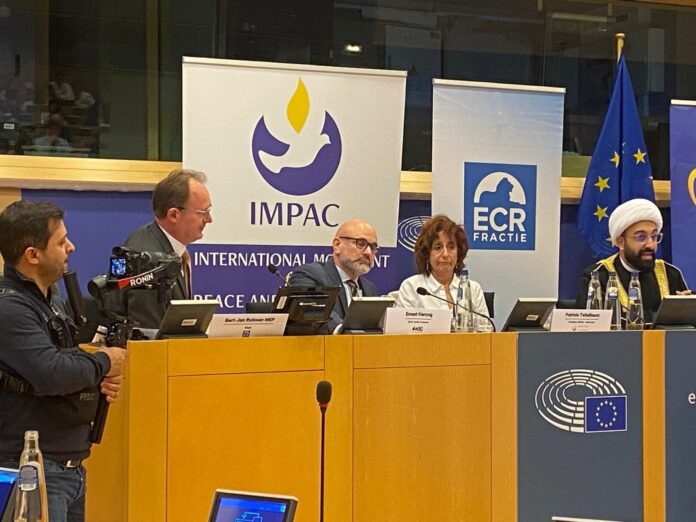
 An event took place today at the European Parliament, organized by IMPAC Belgium, the ECR Group in the European Parliament and the European People’s Party. Titled “Safeguarding Europe,” the event brought together policymakers, experts and stakeholders in Brussels to examine the goals of the Muslim Brotherhood and its affiliates in the […]
Originally published at Almouwatin.com
European Parliament event explores the aims of the Muslim Brotherhood in Europe and beyond
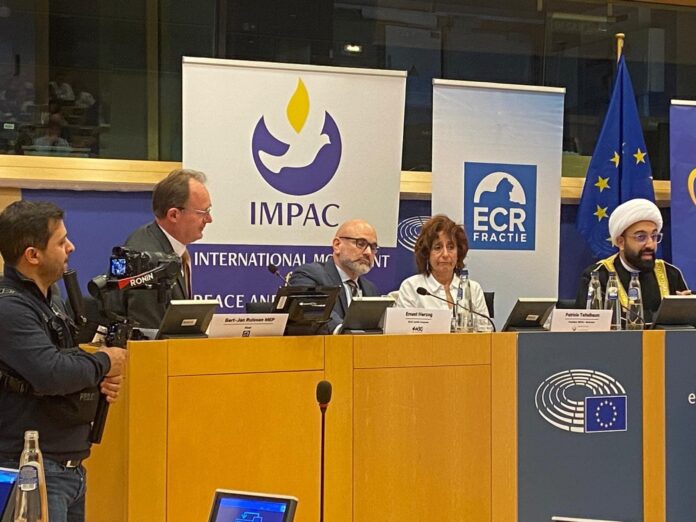
An event took place inside the European Parliament today arranged by IMPAC Belgium, the ECR Group in the European Parliament, and the European People’s Party. Entitled ‘Safeguarding Europe’, the event gathered policymakers, experts, and stakeholders in Brussels to examine the aims of the Muslim Brotherhood and its affiliates across European societies, democratic institutions, and the implications for security. The discussion inside the European Parliament highlighted the Brotherhood’s ideological infiltration, strategies of influence, and […]
Originally published at Almouwatin.com
Russians Have Launched a Snowmobile Attack and Failed
Due to a severe shortage of actual military equipment, Russian forces have been attacking Ukrainian positions with basic
Oil Prices Surge Amid Strait of Hormuz Disruption, Raising Inflation Concerns

The recent conflict involving Iran has led to significant disruptions in the Strait of Hormuz, causing a substantial increase in oil prices. This rise, the largest in over a year, is fuelling fears of heightened inflation and a potential resurgence of the global cost of living crisis.
Oil prices have experienced a dramatic increase this week, marking the largest weekly gain since early 2022. This surge is attributed to escalating tensions in the Middle East, particularly affecting the Strait of Hormuz, a crucial route for global oil transport. The conflict involving Iran has disrupted shipping activities through this key passage, leading Brent crude prices to rise by 17.65% to over $85 a barrel.
Strait of Hormuz Disruption
The Strait of Hormuz is one of the world’s most strategically important maritime passages. Recent military activities and threats have significantly reduced shipping traffic. According to the Joint Maritime Information Center (JMIC), only two commercial vessels have transited the strait in the past 24 hours, compared to an average of 138 vessels per day under normal conditions.
This disruption is largely due to heightened military tensions following attacks on regional refineries and ships. The JMIC has rated the security threat in the area as “CRITICAL,” indicating that further attacks are almost certain. Many vessels remain anchored or adrift in Arabian Gulf ports as a result.
Economic Implications
The sharp increase in oil prices is sparking fears of renewed inflation ary pressures worldwide. As energy costs rise, there is concern that this could exacerbate the existing cost-of-living crisis. Economists warn that if oil prices remain elevated due to ongoing conflicts, it could lead to broader economic impacts.
Central banks globally may need to reassess their strategies if disruptions continue and inflation pressures mount, balancing efforts to curb inflation without hindering economic growth.
Global Reactions and Future Outlook
The international community is closely monitoring developments in the region. Analysts suggest that while immediate energy price shocks may be temporary if tensions de-escalate quickly, prolonged instability could have significant consequences for global economic stability. Diplomatic solutions are being urged to prevent further escalation and ensure the security of critical supply chains.
The current situation highlights the vulnerability of global energy markets to geopolitical tensions. As nations navigate these challenges, there is an urgent need for collaborative efforts to address both immediate security concerns and longer-term energy resilience strategies.
In conclusion, while oil prices are on track for a record-breaking weekly gain amidst these disruptions, stakeholders must remain vigilant and proactive in managing both economic and security risks associated with this volatile environment.
