Belarus – Some 100,000 desperate people have already entered Hungary, fleeing a nation in turmoil. Across the border, Ukraine is experiencing a barrage of attacks by the Russian army.
Authorities say at least 70 Ukrainian soldiers have been killed in a Russian artillery strike on Ukraine’s north-eastern city of Okhtyrka.
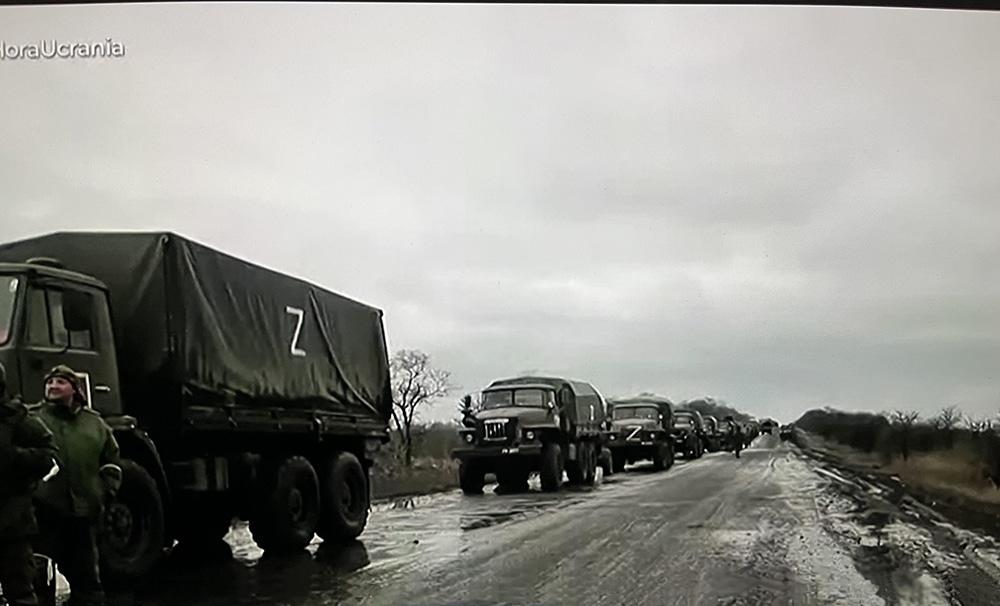
It comes as a massive convoy of Russian armor, stretching about 40 miles (64 kilometers), advancing Ukraine’s capital Kyiv.
Air raid sirens once again were heard in Kyiv with reports of Russian strikes on the outskirts and inside the city.
And dozens of civilians were reportedly killed since Monday in Russian missile strikes on Ukraine’s second city, Kharkiv.
The President of Ukraine, Volodymyr Zelensky, has called the missile attack an act of “state terrorism” and accuses Russia of war crimes as residential areas are also attacked. Authorities say civilians, including allegedly 16 children, were killed.
In an address to a special session of the European Union’s parliament, President Zelensky appealed for membership of the bloc, saying it would be stronger with Ukraine in it.
As the internationally condemned Russian invasion of Ukraine continued, the International Criminal Court’s prosecutor announced he wanted to investigate Russia for possible war crimes.
There were no signs of Moscow halting its operations, with local journalists in Kherson saying Russian troops almost surround the city.
Russia’s foreign minister, Sergei Lavrov, even offered a new justification for Russia’s invasion – telling a United Nations conference to prevent Ukraine from acquiring nuclear weapons.
But Britain’s prime minister Boris Johnson accuses Russia of “barbaric and indiscriminate” attacks and says he is ready to intensify economic sanctions on Russia for as long as it takes.
The fighting escalated after Kyiv and Moscow held initial ceasefire talks in Belarus, which failed to end Europe’s most significant conflict since World War Two.
People fleeing
And that is why people here continue to flee towards Hungary as well as to other neighboring nations.
Some have spoken about leaving behind everything they worked for as they cross this border with the last personal belongings they could grab.
Many women and children are among the refugees as all Ukrainian men aged 18 to 60 have been mobilized to face an army of as many as 200,000 troops.
Hungary says it will continue to welcome refugees here and participate in humanitarian aid.
However, the government, which long maintained good ties with the Kremlin, says it will not send troops or arms to Ukraine, and Hungary won’t allow lethal weapons to transit its territory.
On Thursday 3 March, millions of adults and children around the country will mark the 25th annual World Book Day, celebrating books, authors, illustrators and the power of the written word, with a series of book-themed events.
Each year, children show their love of reading by going to school dressed up as their favourite fictional character. World Book Day is important because it’s also the day that parents around the country receive a text at 8.35am reminding them that they have in fact forgotten to make a World Book Day costume and now have seven minutes to demonstrate the power of the written word by texting swears to everyone they know on the group chat.
What kind of parent, you might ask – what kind of anti-intellectual monster – would say that a kids’-book costume makes their book-loving soul leave their body? Well, brace yourselves, because I am that monster, and I hate to tell you this, but so is every parent I know – yes, even the nice ones.
Obviously not ALL parents. I have huge love for those who really do enjoy crafting clever and joyful literary costumes for their children and always remember to do so. My only rule for raising children (apart from “check if it’s chocolate before you lick it”) is “just do what you like, babes”. This ancient mantra has steered me safely through every parenting choice.
But what’s always overlooked is that dressing up children either requires time or it requires money – and if you have a child who has an eye for negotiation then it’s definitely going to require both. And inevitably, that cost is not felt equally by all parents.
I’m a working parent of primary school-aged children, and I’m enormously fortunate. I only need one job to pay the bills, and I have a partner who will actually organise World Book Day while I just write about World Book Day. Yet still, every year I have a small meltdown about making costumes, then feel guilty about it afterwards.
I’ve seen my own children move from happiness about dressing up as their favourite character, to a low-level hum of anxiety about having a shop-bought outfit, and one that has to be from a “real book” rather than the cartoons they actually love reading.
Watching my timelines fill up every year with the obligatory #WBD outfits, I can’t shake the feeling that this part of the day is creepingly performative. Look, I’m not saying social media is fetishising the act of reading as a nostalgic, middle class pursuit regardless of the child’s actual interests, but what I am saying is there are an awful lot of Pippi Longstocking outfits on Instagram.
Maybe if we saw fewer pictures of finished costumes, and more of women (and it is mostly women) frantically hunting for sellotape in a 4pm Teams meeting with the camera off, then we might get a better idea of how many hurdles there are for those with caring responsibilities to access the arts themselves.
What’s better than reading? That’s right, it’s looking for teal face paint and a bow and arrow in Sainsburys at 5.30pm, or rage-buying a dragon onesie off Amazon Prime at one in the morning. Let’s not forget the year I made a mammoth out of a potato at 8pm on a Wednesday, with kebab stick limbs that kept falling off (book fact: that’s how Ernest Hemingway wrote A Farewell To Arms).
To keep up to speed with all the latest opinions and comment, sign up to our free weekly Voices Dispatches newsletter byclicking here
And at least I have the option to dash out and buy things because our family income places us above the poverty line. After a decade of austerity, a pandemic and now the cost of living squeeze, 31 per cent of children (or 9 in a class of 30), live below it. These are the inequalities that World Book Day sets out to tackle, including with book tokens for every child. But something about frantically buying disposable merch at a time when 40 per cent of primary schools don’t have library budgets, and a record 1.7 million children claim free school meals, feels like it goes against the spirit of the day.
Let’s ditch compulsory costumes. There are a million other ways for us to find joy in reading, and you can find just some of them here. Teachers already work tirelessly to make this a wonderful day for children, and they do it, as they do everything, in the face of chronic underfunding and obstructive policies.
If we’re going to imagine a future full of opportunities for all children, then we are going to have to imagine very hard. Books lie at the heart of that – children’s books most of all. It’s here that we learn the value of kindness, courage, the telling of difficult truths. What light, devastating sedition this is – no wonder I have the feeling it’s being repackaged and sold back to us.
If you have cash to spare on Thursday, give it to charities, schools, authors or parents in your communities – not supermarkets. And if you’re worrying about getting a costume sorted, well you really don’t have to. I don’t want to get too literary, but just do what you like, babes.
CANADA, February 28 – Today, Prime Minister Justin Trudeau participated in a teleconference meeting with the President of the United States of America, Joe Biden, and the leaders of the European Commission, the European Council, France, Germany, Italy, Japan, the North Atlantic Treaty Organization (NATO), Poland, Romania, and the United Kingdom to discuss Russia’s invasion of Ukraine.
The leaders strongly condemned the large-scale military aggression by Russia against the territorial integrity, sovereignty, and independence of Ukraine. They expressed grave concerns regarding reports of Russian attacks on civilian areas in a number of Ukrainian cities. The leaders stressed that Russia’s actions threaten peace and stability in Europe and around the world. The actions also threaten democracy, and are blatant violations of international law that will not be tolerated. They called on Russia to halt its invasion and withdraw its forces from Ukrainian territory immediately.
The leaders noted the critical importance of strong collective action to support the Ukrainian government and people, and of demonstrating to Russia that it will pay an enormous cost for its unprovoked war. To this end, the leaders discussed the heavy, punitive sanctions against President Putin and others in Russia who are directly responsible for this tragedy, and their intention to continue to expand these measures should Russia’s aggression continue. They also condemned the role of Belarus in facilitating the Russian invasion.
The leaders discussed the emerging humanitarian crisis in Ukraine and neighbouring countries, and commended Poland, Romania and other countries for their support for Ukrainians fleeing violence. They agreed to enhance efforts to strengthen the security of neighbouring countries, and the need to increase humanitarian support.
The leaders noted that Russia’s senseless war had brought peaceful, democratic countries together in support of Ukraine, as demonstrated by the highly coordinated actions by the international community, including the G7, the European Union, and NATO. They called on all countries to join the effort to demonstrate to Russia that illegal wars of aggression have no place in the 21st century.
The leaders agreed to continue coordinating closely.
Moscow is certainly gathering its forces to launch an assault on Kiev and other major cities while international economic and financial measures against Russia continue.
This Tuesday, March 1 at 9:30 am, the Russian army is deploying near Kiev: a military convoy of more than sixty kilometers, identified by U.S. satellite images, is stationed less than than 25 kilometers from the center of the Ukrainian capital. Missiles have been fired at Kiev in
The second city of the country, Kharkiv, is bombed despite the deployment of Ukrainian forces facing the Russian army. on residential areas that have killed at least eleven civilians and injured half a hundred. According to the Ukrainian emergency services, the missiles have destroyed several buildings including the regional state administration, the opera house and the philharmonic.
The main government building in Kharkiv, on the square. Ukrainians are fighting back heroically, they are holding back tanks
Other bombings hit Chernihiv, in the north of the country, affecting a residential building and a kindergarten. In Kherson, in the south of the country, enemy soldiers are setting up checkpoints around the city still under Ukrainian control.
Mariupol, is currently without electricity after a Russian offesive, said the governor. The city is surrounded by troops arriving from Donbass in the east and Crimea in the west. In Kherson, in the south of the country, enemy soldiers are setting up checkpoints around the city still under Ukrainian control. Since 9:00 am, electricity and heating are still cut off by the Russians in Mariupol. Battles are raging between Ukrainian forces and Russian troops according to the mayor of the city, Vadym Boychenko. Despite these difficulties, “we are fighting to the last bullet, our armed forces are at the border,” he told TSN, a Ukrainian television news program.
In the late morning, Belarusian soldiers entered the Chernihiv region which is 75 kilometers from the Belarusian border. The information was confirmed by Vitaliy Kyrylov, the spokesman of the Northern Territory Defense Forces.
According to the Ukrainian army chief, the Russian army has launched one hundred and thirteen tactical missiles against Ukrainian towns and villages since the invasion began.
Russia will continue its offensive in Ukraine until its objectives are achieved, announced Defense Minister Sergei Shoigu, once again accusing the Ukrainian army of using civilians as “human shields.
Quoted by Russian news agencies, Russian Foreign Minister Sergei Lavrov said Tuesday “Western countries should not have military facilities in the former republics of the Soviet Union. Russia finds it unacceptable that some European countries accept U.S. nuclear weapons on their soil and is taking steps to prevent Ukraine from acquiring such weapons, he added.
Le thème« L’amour du Christ mène le monde à la réconciliation et à l’unité » qui a rassemblé 150 participants d’Églises européennes, les 25 et 26 février, a fortement résonné avec l’actualité du continent, au lendemain de l’invasion russe de l’Ukraine.
La Conférence des Églises européennes (CEC) organisait une pré-Assemblée à l’échelle européenne préparant à la 11e Assemblée du Conseil œcuménique des Églises qui se tiendra à Karlsruhe du 31 août au 8 septembre prochain.
L’actualité ukrainienne a fortement imprégné les échanges des deux jours entre les participants. Le programme avait été intentionnellement modifié dans les heures précédentes pour laisser place aux échanges de nouvelles en provenance d’Ukraine. « Hier matin, la nouvelle de l’entrée de l’armée russe en Ukraine menant l’offensive sur Kiev nous a submergés, consternés, révoltés, dépités », a souligné le pasteur Christian Krieger, président de la CEC.
Dès son message d’ouverture, il a tenu à rappeler que « l’Évangile de Jésus-Christ véhicule un message de paix pour toute l’humanité qui appelle à un profond respect de la dignité de chaque être humain. »
Invitant les chrétiens « à se rassembler dans la prière pour la paix, pour l’issue de cette guerre, pour ses victimes et pour tous ceux qui travaillent à une issue pacifique », Christian Krieger a également lancé un fort appel : « à l’échelle de l’Union européenne, les responsables politiques et la communauté internationale, ne doivent pas économiser leurs efforts pour limiter l’hémorragie du sang innocent et retrouver le chemin du dialogue diplomatique et l’ordre international. »
Pour les 150 participants des Églises orthodoxes, anglicanes et protestantes, cette rencontre au lendemain de l’entrée de l’armée russe en Ukraine était un « moment véritablement apocalyptique, selon les mots de Pavlo Smytsnyuk, dans le sens étymologique du terme : l’apokalypsis est un dévoilement, une révélation. Les Églises se révèlent. Ainsi que les organisations œcuméniques. » Pavlo Smytsnyuk, directeur de l’Institut d’Études œcuméniques à Lviv (Ukraine), avait été invité à partager ses réflexions sur la situation ukrainienne et sur les toutes premières réactions des Églises.
Au-delà de l’Ukraine, les participants ont, pour beaucoup, insisté sur les questions de justice et de repentance pour faire écho au thème de la 11e Assemblée du COE, afin que puissent véritablement se vivre la réconciliation et l’unité. Ainsi, Michel Charbonnier, pasteur de l’Union des Églises méthodistes et vaudoises (Italie), a-t-il appelé à reconnaître que « certes, l’Europe est un lieu de réconciliation, si l’on parle de la France et de l’Allemagne. Mais, c’est également le lieu de l’exportation de conflits ailleurs dans le monde. Aujourd’hui, beaucoup de causes aux migrations trouvent leur origine en Europe, alors que celle-ci se transforme en forteresse. Il nous faudrait parler plus de justice. »
Les participants ont également approfondi leur réflexion sur leur rôle en tant qu’Églises au sein de sociétés européennes où la sécularisation et le pluralisme sont en constante progression. Ils ont entre autres questionné la sécularisation, non seulement comme un défi pour la foi, mais aussi comme offrant des possibilités de travail en partenariat. Les intervenants des deux jours de cet événement ont croisé leurs regards sur la réponse que les Églises peuvent donner à l’appel du Christ à devenir ses disciples, dans la promotion d’un amour transformateur, de communautés inclusives et d’une espérance durable.
Moved by Christ’s love, European churches affirm their contribution toward reconciliation and unity. Speaking in the context of secular and plural European societies, over 150 participants of the European Regional Pre-Assembly of the Conference of European Churches (CEC) gathered online, addressing crucial topics, including the war in Ukraine, and preparing for the 11th Assembly of the World Council of Churches (WCC), which will be held later this year in Karlsruhe, Germany.
Organised together with the Polish Ecumenical Council, CEC’s European Regional Pre-Assembly was held from 25 to 26 February, under the theme “Christ’s love moves the world to reconciliation and unity”.
“War is probably as far from Christ’s love as one gets,” stressed Dr Pavlo Smytsnyuk, director of the Institute of Ecumenical Studies at the Ukrainian Catholic University, when speaking at the event. “However, the war shows in a very radical way the context in which unity and reconciliation occur.”
“I hope churches in Europe, spiritually united with Ukrainian Orthodox, Protestant, and Catholic sisters and brothers may feel the compassion and active solidarity as a body, one member of which is suffering—and not let Ukraine suffer alone. This can involve reaching out to churches, governments and businesses, asking them to put pressure on Russia to stop the war, and support Ukraine,” added Smytsnyuk.
“The pre-assembly is dedicated to demonstrating to the world how churches and Christian communities throughout Europe manage to bring about hope and reconciliation,” said CEC General Secretary Dr Jørgen Skov Sørensen. He called the pre-assembly a valuable opportunity for CEC members to meet together as distinctly European churches, addressing European challenges, seeking European solutions and moving toward a diverse global ecumenical event: the WCC assembly.
“I honour your courage in facing the situation and challenges of our times together and stepping forth with ideas, commitments and witness to meet the day, advancing the cause of reconciliation and unity, and informing the full fellowship of churches in Europe and beyond,” said WCC Acting General Secretary Rev. Prof. Dr Ioan Sauca in his message to the pre-assembly. “Christian churches united in fellowship can also contribute a distinctive, even decisive, voice to Europe’s future,” he added.
The pre-assembly invoked in-depth reflections on how churches can continue to be reconciling communities in increasingly secular and plural European societies.
The participants discussed Christ’s call to discipleship, transforming love, inclusive community, and perpetual hope. The topic of reconciliation was approached in the context of Brexit and churches’ work in Northern Ireland and the Republic of Ireland, Christian Muslim relations in Cyprus, inter-communion work of the Lutheran Church in Poland in particular, and Sámi people and the Church of Norway.
The participants prepared for their active engagement at the WCC assembly in Karlsruhe.
A detailed report from the European Pre-Assembly will be available in due time.
For more information or an interview, please contact:
The 3rd edition of the European Catholic Social Days will be held on 17-20 March 2022 in Bratislava. The event aims to promote dialogue on social justice within the Church and among Europeans in a context marked by demographic imbalances, technological disruption and ecological injustices. Journalists can now request accreditation.
The initiative will gather 200 delegates from every corner of Europe. Participants will include Church representatives, EU and national politicians, academics, young people and members of Catholic social movements and organisations.
Participants will discuss some of the most pressuring challenges in European societies. Three main sessions are planned: a) demographic transition and family life; b) technological and digital transition; c) ecological transition.
Speakers will include Dubravka Šuica, Vice-President of the European Commission and Commissioner for Democracy and Demography, H. Em. Cardinal Michael Czerny SJ, Prefect of the Dicastery for Promoting Integral Human Development, H. E. Mgr. Paul Tighe, Secretary for Pontifical Council for Culture, H.E. Mgr. Vincenzo Paglia, President of the Pontifical Academy for Life, and Mr. Milan Krajniak, Minister of Labour, Social Affairs and Family of the Slovak Republic.
During these 3rd European Catholic Social Days special attention will also be paid to the situation in Ukraine and the Eastern border of the EU and moments of prayer will be organised to ask for peace and the conversion of the hearts.
Keynote speeches and panel debates will be accessible to everyone via streaming on the official website of the event: www.catholicsocialdays.eu
Due to the current COVID-19 pandemic, the physical presence has been limited to 200 persons. The rest of the participants will join via livestreaming, with interactive settings.
Journalists and media operators who would like to attend and cover the event can now request their accreditation. The event organisers may limit the number of participants according to anti-COVID-19 measures taken by the local authorities. Confirmed participants will receive an e-mail by the event organisers. Click here to request your accredidation.
The setting of the event will respect the anti-COVID-19 measures taken by the local authorities: limits in physical participation, social distance, facial masks, ventilation of the rooms.
The initiative is co-organised by the Commission of the Bishops’ Conferences of the European Union (COMECE), the Council of the Bishops’ Conferences of Europe (CCEE), and the Slovak Episcopal Conference, in collaboration with the Dicastery for Promoting Integral Human Development.
HR/VP Borrell and Commissioner Várhelyi travel to the Republic of Moldova on 2 and 3 March
High Representative/ Vice-President Josep Borrell will, together with Commissioner for Neighbourhood and Enlargement, Oliver Várhelyi,travel to the Republic of Moldova on 2 and 3 March to underscore the European Union’s full support to the country in the context of the Russian invasion of Ukraine. HR/VP Borrell and Commissioner Várhelyi will meet with President Maia Sandu, with Prime Minister Natalia Gavrilița and Deputy Prime Minister/Minister of Foreign Affairs and European Integration, Nicu Popescu. They will also visit a refugee centre hosting Ukrainian refugees. The meeting with President Sandu will be followed by a joint press conference that will be broadcast live on EbS. (For more information: Nabila Massrali – Tel.: +32 229 88093; Ana Pisonero – Tel.: +32 229 54320)
NextGenerationEU: First annual report on the Recovery and Resilience Facility finds implementation is well underway
The European Commission has today adopted its first annual report on the implementation of the Recovery and Resilience Facility (RRF), the centrepiece of NextGenerationEU. One year on from its introduction, the report takes stock of the progress made in the implementation of the Facility, from the adoption of the RRF Regulation in February 2021 to the disbursement of the first regular payment in December 2021. The report shows that major headway has been made and confirms that the implementation of the RRF is well underway. The report details numerous examples of the investments and reforms financed by the RRF in the 22 recovery and resilience plans that have been adopted so far. These examples present concrete measures that are contributing to the six policy pillars defined in the RRF Regulation, including the green transition and the digital transformation. The report therefore provides an important insight into the unprecedented scale and impact of the measures that are being implemented across the EU as a result of the RRF. Progress in the implementation of recovery and resilience plans can be followed on the Recovery and Resilience Scoreboard, an online portal set up by the Commission in December 2021. More information is available in a press release online. (For more information: Veerle Nuyts – Tel.: +32 229 96302; Andrea Masini – Tel.: +32 229 91519)
European Innovation Council opens funding opportunities for innovators to scale up
Today, the Commission opened funding opportunities worth over €1.7 billion under the European Innovation Council (EIC). This opening follows the adoption of the EIC Work Programme 2022. Mariya Gabriel, Commissioner for Innovation, Research, Culture, Education and Youth, said: “The European Innovation Council has already supported 4 unicorns and more than 90 centaurs. The work programme for this year is backed by the biggest ever annual funding for visionary entrepreneurs and researchers, as well as new measures to support female innovators and scale-ups. Europe is committed to supporting innovation and new technologies and we are on track to meet our ambition to make the EIC Europe’s unicorn factory.” Calls opened today offer funding opportunities for multi-disciplinary research teams to undertake visionary research with the potential to lead to technology breakthroughs in any field (grants up to €3 million under EIC Pathfinder). Besides, there are funding opportunities for turning research results into innovation opportunities. Focussing on results generated by EIC Pathfinder projects and European Research Council Proof of Concept projects, the objective is to mature the technologies and build a business case for specific applications (grants up to €2.5 million under EIC Transition). €60.5 million is allocated to tackle three Transition Challenges: Green digital devices for the future; process and system integration of clean energy technologies as well as RNA-based therapies and diagnostics for complex or rare genetic diseases. SMEs and start-ups can apply anytime for EIC Accelerator grants and equity investments. Check the EIC website for details (For more information: Johannes Bahrke – Tel.: +32 229 58615; Marietta Grammenou – Tel.: +32 229 83583)
Commission selects first 50 women-led companies to boost deep-tech innovation in Europe
The Commission announced today the results of the first call under the new Women TechEU pilot programme, supporting deep-tech start-ups led by women. The call is funded under the European Innovation Ecosystems work programme of Horizon Europe, the EU research and innovation programme.
Mariya Gabriel, Commissioner for Innovation, Research, Culture, Education and Youth said: “I am particularly proud of the successful outcome of the first Women TechEU call. The high number of outstanding applications confirms there is a need for women in deep-tech to get support for their companies at the early, riskiest stage. We will assist these 50 women-led companies with funding, mentoring and networking opportunities and we will scale up this programme in 2022.”
Women TechEU is a brand new initiative of the European Union. The scheme offers grants, worth €75,000 each, to support the initial steps in the innovation process, and the growth of the company. It also offers mentoring and coaching under the European Innovation Council (EIC) Women Leadership Programme, and EU-wide networking opportunities.
Following the evaluation by independent experts, the Commission will be supporting a first cohort of 50 women-led companies from 15 different countries. Over 40 companies are based in EU Member States, including one fifth from Horizon Europe widening countries. Also, roughly one fifth are based in countries associated to Horizon Europe.
The companies proposed for funding have developed cutting-edge and disruptive innovations, across a range of areas, from early cancer diagnosis and treatments, all the way to reducing the negative impact of methane emissions. They address sustainable development goals (SDGs), like tackling climate change, reducing food waste, as well as widening access to education and empowering women.
Projects will start in spring 2022 and are expected to run for 6 to 12 months. The women leaders will be enrolled onto the European Innovation Council’s Women Leadership Programme for tailored coaching and mentoring activities.
Following the very encouraging response to this first pilot, the Commission will renew the Women TechEU programme in 2022. The budget for the next call will be increased to €10 million, which will fund roughly 130 companies (up from 50 this year). The call will be launched in 2022.
Fight against Antimicrobial Resistance: Commission welcomes EMA’s scientific advice on antimicrobials reserved for treating humans
Today, the European Medicines Agency (EMA) published a crucial scientific advice in the fight against Antimicrobial Resistance (AMR). It contains the experts’ recommendations on antimicrobials and groups of antimicrobials, that are to be reserved exclusively for treating infections in people, since the use of antimicrobials in animals contributes to the development of AMR. This science-based analysis, the first of its kind in the world, has systematically assessed all types of antimicrobials. It paves the way for the upcoming adoption of a legislation listing the antimicrobials, which will be reserved for humans. EMA’s advice comes at the request of the Commission and has been put together by a panel of leading experts comprising medical doctors, microbiologists and veterinarians. It has already been endorsed by the Agency’s Committee for Veterinary Medicinal Products (CVMP) which is composed of representatives from the Member States’ competent authorities. Discussions with the Member States on the timely adoption of the antimicrobials list will start soon. You can find more information on the Veterinary Medicinal Products Regulation in our Q&A, as well as on our dedicated AMR webpage. (For more information: Stefan De Keersmaecker – Tel.: +32 229 84680; Anna Wartberger – Tel.: +32 229 82054)
High-Level Group on post-COVID-19 economic and social challenges concludes its work on how Europe can recover sustainably and promote global stability
The High-Level Group on post-COVID economic and social challenges convened last year by Commissioner Gentiloni has today published its report. The mandate of the group was to reflect on, among others, the implications of the pandemic for the real economy and society, and on how to promote a resilient and sustainable economy. The document puts forth a series of recommendations in five areas to set the Union on a path toward growth and prosperity after the pandemic: enabling the triple transition; fair and effective taxation for the triple transition, moving towards a Health Union, strengthening Europe’s role in the world, and making the governance of the Union fit for purpose. The authors outline a number of measures to enable the green, digital and social transitions, as well as possible actions to mobilise public and private funding for this purpose. The report also highlights the importance of fair and effective taxation and recommends moving towards a Health Union by investing in health system resilience and in boosting preparedness at the EU level and globally. In addition, the document examines how to strengthen Europe’s role in the world and make the governance of the Union fit for purpose, in order to move the EU forward in a more strategic direction. Paolo Gentiloni, Commissioner for Economy, said: “I convened this high-level group because I was convinced that the immense challenges Europe faces as it emerges from the COVID-19 crisis are also opportunities that we must seize, to build a more sustainable, more inclusive growth model and to strengthen Europe’s ability to act as a force for good in the world. I want to thank the authors for this tremendous work, which is both inspirational and aspirational. It will greatly enrich our policy discussions in the coming months and years.” The report of the High-Level Group will inform the Commission’s work on the post-pandemic recovery and is available here. (For more information: Veerle Nuyts – Tel.: +32 229 96302; Andrea Masini – Tel.: +32 229 91519)
Commission appoints three new members to the European Research Council’s governing body
Today, the Commission appointed three new members to the Scientific Council, the governing body of the European Research Council (ERC). The new members are: Chryssa Kouveliotou, professor at the George Washington University, Washington D.C., US; László Lovász, professor emeritus at Eötvös Loránd University, Budapest, Hungary; and Giovanni Sartor, professor at the University of Bologna and at the European University Institute, Florence, Italy. These scientists are appointed for an initial period of four years, replacing three members whose mandate expired. Mariya Gabriel, Commissioner for Innovation, Research, Culture, Education and Youth, said: “The ERC Scientific Council is composed of some of the most eminent European scientists and scholars to govern Europe’s premier frontier research funding organisation.I warmly welcome the three new members who bring outstanding scientific competence that will complement the expertise of the sitting members.” Maria Leptin, President of the ERC, said: “We very much look forward to welcoming the new members. This addition will ensure that the independent ERC Scientific Council with its leading researchers from all disciplines continues to represent the scientific community in Europe across the full breadth of research domains. The ERC’s winning formula remains – for scientists, by scientists.” The Scientific Council defines the ERC’s scientific funding strategy and methodologies. It is composed of 22 members who represent the scientific community in Europe. The Commission appoints the members, following recommendations by an independent Identification Committee. More information online are available here and here. (For more information: Johannes Bahrke – Tel.: +32 229 58615; Marietta Grammenou – Tel.: +32 229 83583)
Agriculture: The Commission approves two new geographical indications from Lithuania and Spain
The Commission has approved the addition of two geographical indications: ‘Nijolės Šakočienės šakotis‘ from Lithuania as a protected geographical indication (PGI) and ‘Dehesa Peñalba‘ from Spain as a protected designation of origin (PDO). ‘Nijolės Šakočienės šakotis’ is a festive bakery product in the shape of a tall, hollow-centred, truncated cone with spiky ‘branches’ of various sizes which is made in a special oven by ladling layers of batter onto a slowly rotating spindle over a hot fire using a special wooden spoon. The entire process takes place at home using a traditional method. ‘Dehesa Peñalba’ refer to the wines produced in the Spanish municipality of Villabáñez (Valladolid). Its location in a river basin has a unique soil. Together with the surrounding high plains and the presence of a pine forest, the area is shielded from adverse weather conditions, creating micro-climatic features. ‘Dehesa Peñalba’ wines show a deep, sustained colour, highly aromatic with a predominance of ripe red and black fruits. ‘Nijolės Šakočienės šakotis’ will be added to the list of existing 1,573 agricultural products and foodstuffs, while ‘Dehesa Peñalba’ will be added to the list of existing 1,623 wines from the EU and from non-EU countries which are already protected. All protected geographical indications can be found in the eAmbrosia database. More information online on quality schemes and in our GIView portal. (For more information: Miriam Garcia Ferrer – Tel.: +32 229 99075; Thérèse Lerebours – Tel.: +32 229 63303)
Future of Europe: final set of European Citizens’ Panel recommendations
The final meeting of the Panel on ‘A stronger economy, social justice and jobs / Education, culture, youth and sport / Digital transformation’ took place in Dublin over the weekend.
The participants also expressed their solidarity with the citizens of Ukraine on several occasions through their interventions at the weekend and during the ‘family photo’.
Watch recordings of the Panel’s plenary meetings from Friday and Sunday.
Next steps
Eighty Panel representatives (20 from each of the four Panels, of which at least one-third is aged between 16 and 25 years) have been tasked with representing the Panels at the Conference Plenary, where the Conference’s final proposals will be shaped.
All four Panels have now finalised their recommendations. The three preceding ones were:
Antitrust: Commission invites comments on draft revised rules on horizontal cooperation agreements between companies
The European Commission has launched today a public consultation inviting all interested parties to comment on two draft revised Horizontal Block Exemption Regulations on Research & Development (‘R&D’) and Specialisation agreements (‘R&D BER’ and ‘Specialisation BER’ respectively, together ‘HBERs’) and the draft revised Horizontal Guidelines. The draft revised HBERs and Horizontal Guidelines follow a review and evaluation process launched in September 2019. As set out in more detail in the explanatory note accompanying the draft revised HBERs and Horizontal Guidelines, the proposed changes aim to (a) make it easier for companies to cooperate in areas such as R&D and production, (b) ensure a continued effective protection of competition, (c) include a new chapter on the assessment of horizontal agreements pursuing sustainability objectives as well as new guidance on data sharing, mobile infrastructure sharing agreements and bidding consortia and (d) simplify the administrative supervision by the European Commission and National Competition Authorities by streamlining and updating the general framework of assessment of horizontal cooperation agreements. Interested parties are invited to submit their comments on the draft rules by 26 April 2022. Executive Vice-President Margrethe Vestager, in charge of competition policy, said: “The revision of the Horizontal Block Exemption Regulations and Guidelines is an important policy project as it clarifies for businesses when they can cooperate with rivals. Horizontal cooperation maylead to substantial economic and sustainability benefits, including support for the digital and green transition. The proposed revised rules aim to keep up with developments so that beneficial cooperation can take place, for example when it comes to sustainability or data sharing. We now invite interested parties to provide comments on our draft revised rules, which will help us finalise the new rules to enter into force on 1 January 2023.” A press release is available online. (For more information: Arianna Podesta – Tel.: +32 229 87024; Maria Tsoni – Tel.: +32 229 90526)
State aid: Commission approves €5.7 million Cypriot scheme to support certain farmers active in the livestock sector affected by the coronavirus pandemic
The European Commission has approved a €5.7 million Cypriot scheme to support certain farmers active in the livestock sector affected by the coronavirus pandemic and the restrictive measures that the Cypriot government had to implement to limit the spread of the virus. The scheme was approved under the State Aid Temporary Framework. Under the scheme, the public support will take the form of direct grants. The measure will be open to pig, poultry, cow and rabbit farmers. The aim of the scheme is to help the beneficiaries address their liquidity needs and to help them continue their activities during and after the pandemic. The Commission found that the Cypriot scheme is in line with the conditions of the Temporary Framework. In particular, the aid (i) will not exceed €290,000 per beneficiary; and (ii) will be granted no later than 30 June 2022. The Commission concluded that the measure is necessary, appropriate and proportionate to remedy a serious disturbance in the economy of a Member State, in line with Article 107(3)(b) TFEU and the conditions set out in the Temporary Framework. On this basis, the Commission approved the scheme under EU State aid rules. More information on the Temporary Framework and other actions taken by the Commission to address the economic impact of the coronavirus pandemic can be found here. The non-confidential version of the decision will be made available under the case number SA.101098 in the State aid register on the Commission’s competition website once any confidentiality issues have been resolved. (For more information: Arianna Podesta – Tel.: +32 229 87024; Nina Ferreira – Tel.: +32 229 98163; Maria Tsoni – Tel.: +32 229 90526)
Mergers: Commission clears acquisition of 105 VSTREET by Welput, PSPIB and Alecta
The European Commission has approved, under the EU Merger Regulation, the acquisition of joint control of 105VS Holdings Units Trust (‘105 VSTREET’) of Jersey, by West End of London Property Unit Trust (‘Welput’), of the UK, the Public Sector Pension Investment Board (‘PSPIB’) of Canada and Alecta Tjänstpension Ömsedigt (‘Alecta’) of Sweden. 105 VSTREET is a holding company whose only asset is a real estate property located at 105 Victoria Street, London. Welput is a property unit trust acting as a collective investment scheme. PSPIB and Alecta are both pension funds and manage diversified, global portfolios on behalf of individuals, public bodies and companies in Canada and Sweden respectively. The Commission concluded that the proposed acquisition would not raise competition concerns, because the activities of 105 VSTREET are entirely limited to the UK and the transaction will not lead to any horizontal overlaps or vertical relationships. The transaction was examined under the simplified merger review procedure. More information is available on the Commission’s competition website, in the public case register under the case number M.10621. (For more information: Arianna Podesta – Tel.: +32 229 87024; Maria Tsoni – Tel.: +32 229 90526)
ANNOUNCEMENTS
Circular Economy: Executive Vice-President Timmermans, Commissioners Reynders and Sinkevičius at flagship Stakeholder Conference to help make sustainable products the norm
Today and tomorrow, the fifth edition of the annual Circular Economy Stakeholder Conference is taking place with the participation of Executive Vice-President for the European Green Deal, Frans Timmermans, Commissioner for Justice, Didier Reynders, and Commissioner for the Environment, Oceans and Fisheries, Virginijus Sinkevičius. The event will gather Europe’s largest network of stakeholders in circular economy. It will allow decision-makers, civil society and business leaders to consider practical ways to make sustainable products a reality in various key sectors. In addition, it will focus on upcoming milestones in the implementation of the EU’s Circular Economy Action Plan, in particular the future sustainable products initiative, the sustainable textiles strategy, and initiatives to empower consumers for the green transition. The Commission is co-organising the event with the European Economic and Social Committee and the French Presidency of the Council. More information is in the news item. Executive Vice-President Timmermans‘ speech will be available here. (For more information: Adalbert Jahnz – Tel.: +32 229 53156; Daniela Stoycheva – Tel.: +32 229 53664)
Le commissaire Wojciechowski à Paris pour le Salon International de l’Agriculture
Le commissaire Janusz Wojciechowski est à Paris aujourd’hui pour visiter le Salon International de l’Agriculture. Il rencontrera le ministre de l’Agriculture français, Julien Denormandie, ainsi que des représentants des différents secteurs agricoles, pour discuter de la sécurité alimentaire. Il participera au Débat sur l’avenir de l’agriculture européenne, organisé par l’interprofession des semences et plants (SEMAE). Il visitera aussi différents stands, dont celui de la Commission européenne. Enfin il échangera sur le sujet du développement rural et du pacte rural avec Thibault Guignard, président de LEADER, la Fédération nationale des territoires ruraux, ainsi qu’avec Patrice Joly, président de l’Association nationale nouvelles ruralités, et Cédric Szabo, président de l’Association des maires ruraux.
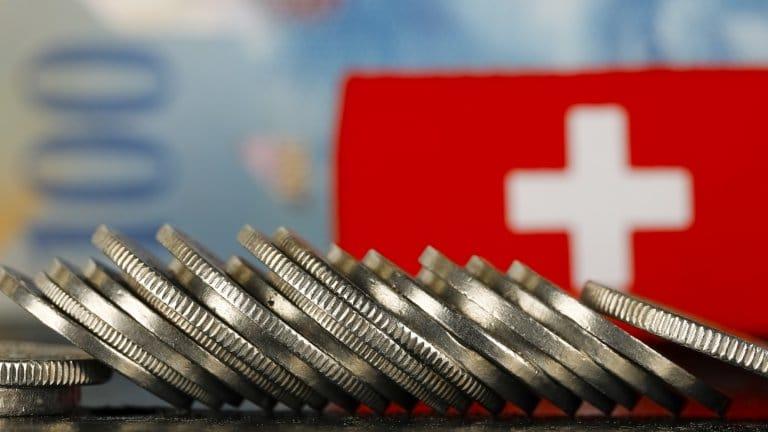
Switzerland will impose sanctions on Russia similar to those already imposed by the European Union, Reuters reported.
“In view of Russia’s ongoing military intervention in Ukraine, the Federal Council decided on 28 February to adopt the packages of sanctions imposed by the EU on 23 and 25 February,” the government said in a statement.
This means that Switzerland will also freeze the assets of Russian companies and businessmen, including Russian President Vladimir Putin, Prime Minister Mikhail Mishustin and Foreign Minister Sergei Lavrov, which will take effect immediately.
The government adds that Switzerland will also provide humanitarian aid to Ukrainian refugees in Poland.
Thus, traditionally neutral Switzerland has nevertheless taken criminal sanctions.
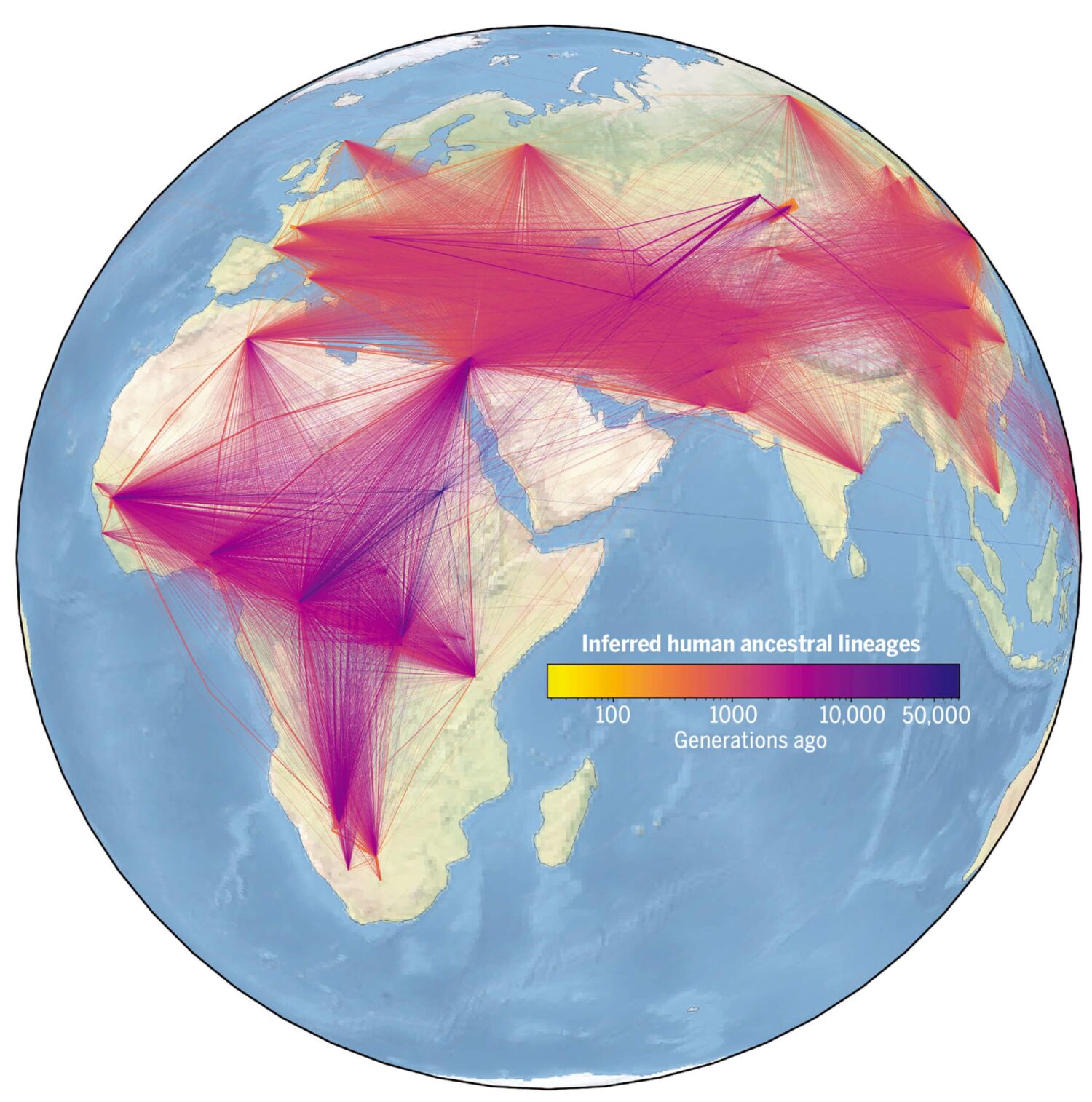
In the new study, scientists used thousands of human genome sequences. The results are published in the journal Science.
Scientists have created a family tree for all of humanity to summarize how all people living today relate to each other and to our ancient ancestors. To build it, the researchers sifted through thousands of genome sequences collected from both modern and ancient humans. They also used data from ancient human relatives. All genomes are descended from 215 populations scattered around the world.
Using a computer algorithm, the scientists identified different patterns of genetic variation in the sequences, highlighting where they overlap and differ. Based on patterns, researchers have drawn theoretical lines of descent between genomes.
To build a unified human genealogy, the researchers first combined data from several large public datasets, including the 1000 Genomes Project, the Human Genome Diversity Project, and the Simons Genome Diversity Project. Obtaining data on ancient humans has been more difficult, but scientists have found 8 high-quality ancient hominin genomes. Among them are three Neanderthal genomes, one of which is over 100,000 years old; Denisovan genome, 74,000 to 82,000 years old; and four genomes from a nuclear family that lived in the Altai Mountains in Russia about 4,600 years ago.
After collecting a family tree, scientists conducted a geographical analysis. They confirmed human migration out of Africa and also found potential evidence for interactions between Homo sapiens and now-extinct hominins.
Note: Each line in this figure represents ancestor-descendant relationships in a new genealogy of modern and ancient genomes. Image: Unified genealogy of modern and ancient genomes, Science (2022). Doi: 10.1126/science.abi8264





 Dicastery for Promoting Integral Human Development, H. E. Mgr. Paul Tighe, Secretary for Pontifical Council for Culture, H.E. Mgr. Vincenzo Paglia, President of the Pontifical Academy for Life, and Mr. Milan Krajniak, Minister of Labour, Social Affairs and Family of the Slovak Republic.
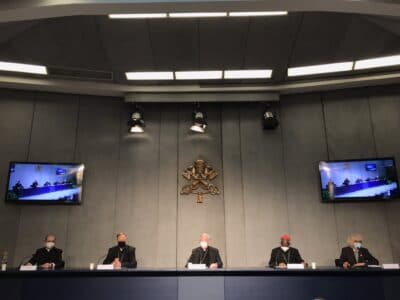 The setting of the event will respect the anti-COVID-19 measures taken by the local authorities: limits in physical participation, social distance, facial masks, ventilation of the rooms.