Wednesday, September 30, 2026
Home Blog Page 1167

Chloé Zhao and ‘Nomadland’ win a pandemic Oscars: a ceremony in a train station crowns an outsider’s year

0
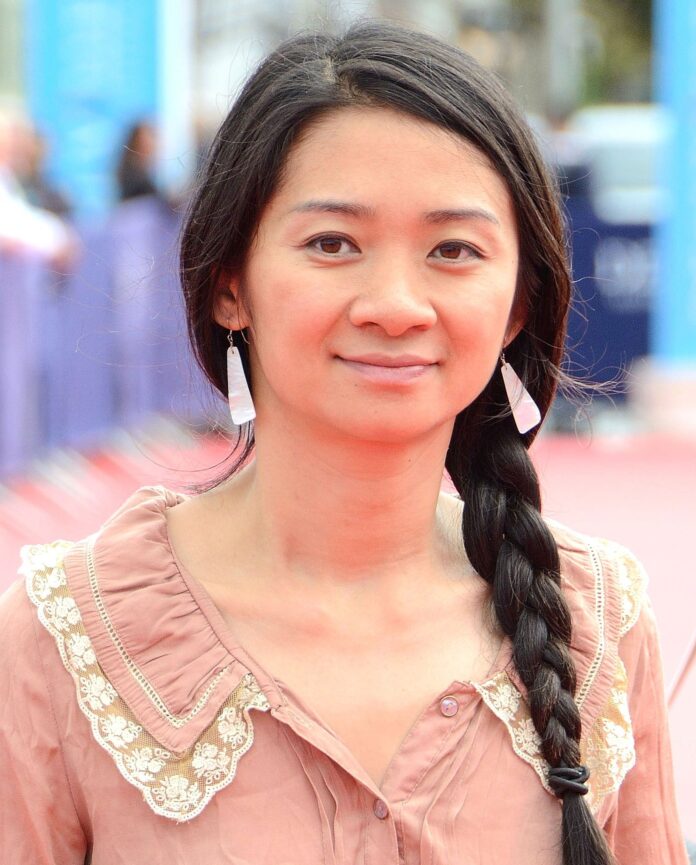
Director Chloe Zhao

LOS ANGELES — The 93rd Academy Awards were held in a train station, at tables, before a masked audience the size of a wedding — and they ended with a film about people who live in vans taking the biggest prize in cinema. “Nomadland” won Best Picture on Sunday night, and its director Chloé Zhao became the first woman of colour, and only the second woman ever, to win Best Director.

The film, made with real-life nomads playing versions of themselves alongside Frances McDormand — who won her third Best Actress award — had dominated the season from Venice, where it won the Golden Lion, onwards. Its portrait of Americans living on the road after the Great Recession landed, in a pandemic year, with new force.

The ceremony at Union Station was the industry’s most deliberate break with its own tradition: no host, a cinematic shooting style, acceptance speeches without an orchestra playing winners off. It produced a striking list of winners: Daniel Kaluuya took Best Supporting Actor for “Judas and the Black Messiah”, and Yuh-jung Youn, 73, became the first Korean performer to win an acting Oscar, honoured for “Minari”.

But the night closed awkwardly. Producers had rearranged the order so Best Actor would come last, expecting a posthumous win for Chadwick Boseman. Instead the award went to Anthony Hopkins, who was not present, for “The Father” — and the show simply ended.

Even so, the headline belongs to Zhao, a Beijing-born filmmaker working with tiny budgets and non-actors, now holding the job’s highest honour. Hollywood’s door, on this evidence, has opened a little wider.


Media-Society.com is a press network association based in Spain, founded in 2020. More at www.media-society.com.

The Super League collapses in 72 hours: England’s rebels withdraw after fan revolt

0
Stamford Bridge stadium in London

LONDON — It was announced with twelve founding clubs, a midweek format and the promise of a new era. Less than 72 hours later, the European Super League is in ruins. All six English clubs — Manchester United, Manchester City, Liverpool, Arsenal, Chelsea and Tottenham Hotspur — confirmed within a frantic Tuesday evening that they were pulling out, after two days of protest unlike anything English football has seen.

The plan, revealed late on Sunday, would have created a largely closed midweek competition of fifteen permanent members, immune from the relegation that governs the rest of the European game. The backlash was instant and came from every direction: supporters gathered outside stadiums, the government threatened legislation, broadcasters distanced themselves, and players and managers from the rebel clubs voiced public discomfort.

The first cracks appeared on Tuesday afternoon, when Manchester City and Chelsea signalled their intention to withdraw. By nightfall the rest had followed, most with apologies to their fans. Chelsea supporters had earlier blocked the team bus outside Stamford Bridge in protest.

UEFA president Aleksander Čeferin, who had spent Monday promising sanctions against the breakaway, welcomed the English retreat. The remaining clubs — Real Madrid, Barcelona and Juventus among them — have so far insisted the project is merely suspended.

Whatever its legal afterlife, the episode has shifted something. The idea that the biggest clubs could simply walk away has been tested and found unsellable, at least for now. The questions it raised — about money, power and who football belongs to — remain unanswered.


Media-Society.com is a press network association based in Spain, founded in 2020. More at www.media-society.com.

Tirana Ministerial: OSCE fills its empty chairs at last, and names a 2023 chair

0
Tirana Ministerial: OSCE fills its empty chairs at last, and names a 2023 chair
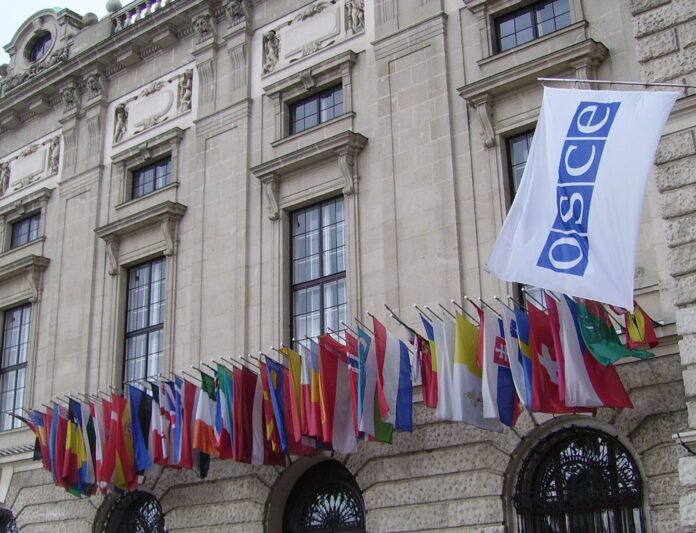
Flags of OSCE participating states outside the organisation's Vienna headquarters.

Tirana — The OSCE closed its twenty-seventh Ministerial Council on Friday with the appointment it had been unable to make for months: new leadership for the organisation’s four top posts, ending a vacancy crisis that had left the institution rudderless through one of the most turbulent years in its history.

Meeting online under Albania’s chairmanship because of the pandemic, the fifty-seven participating states confirmed Helga Maria Schmid, a senior German diplomat and former deputy EU foreign policy chief, as the new Secretary General. Matteo Mecacci, an Italian former parliamentarian and UN official, takes over ODIHR, the Warsaw-based election and human rights office; Kairat Abdrakhmanov of Kazakhstan becomes High Commissioner on National Minorities; and Teresa Ribeiro of Portugal becomes Representative on Freedom of the Media.

The four posts had been empty since July, when the mandates of the previous office-holders expired and a handful of states blocked their renewal. The standoff paralysed the organisation’s senior management through the Belarus crisis, the Nagorno-Karabakh war and a contested American election — precisely the moment, as more than one minister noted, when the OSCE could least afford it.

Ministers also settled the longer-term question of who steers the body next: Sweden takes the chair in 2021 as planned, followed by Poland in 2022 and — in a decision taken this week — North Macedonia in 2023. Chairmanships are usually agreed years in advance; the Skopje appointment restores a pipeline that had begun to fray under the same consensus disputes that emptied the top jobs.

What Tirana could not produce was much else. The meeting, Albania’s only ministerial as chair, ended without consensus on the major political files — Ukraine, the arms control vacuum, the frozen conflicts — and with the organisation’s budget still hostage to linked disputes. A leadership team, at least, now exists to inherit them.

Schmid takes office this month facing a familiar paradox: an organisation whose field missions, election observers and mediators are trusted precisely because its political decision-making is weak, and whose 57 states include several that would rather it did less. Her first job will be internal — persuading all of them that the OSCE is still worth paying for.


Media-Society.com is a press network association based in Spain, founded in 2020. More at www.media-society.com.

Diego Maradona dies at 60: Argentina begins three days of mourning for its most loved and divisive son

0
Diego Maradona holding the 1986 World Cup trophy

BUENOS AIRES — Diego Armando Maradona, the footballer who lifted Argentina to a World Cup and Napoli to heights it has never reached again, died on Wednesday at his home outside Buenos Aires. He was 60. Authorities said the cause was a heart attack; he had undergone surgery for a blood clot on the brain earlier this month.

President Alberto Fernández declared three days of national mourning, and within hours crowds were gathering at the Obelisco in Buenos Aires and outside the stadium that bears his name in Naples — two cities, 11,000 kilometres apart, that claimed him as their own.

Maradona’s career compressed more brilliance and more chaos into one life than seems possible. At the 1986 World Cup in Mexico he scored both the most infamous goal in the tournament’s history, the “Hand of God” against England, and minutes later its most celebrated, slaloming past half the England team in what was later voted the goal of the century. Argentina won the trophy, and Maradona won the Golden Ball.

At Napoli, a club that had never won the Italian league, he delivered two championships, in 1987 and 1990, and a UEFA Cup. The city adored him with an intensity that outlasted his departure; tributes there continued long after midnight.

The later years were harder: cocaine addiction, expulsion from the 1994 World Cup, health crises and public scandals. But the mourning on Wednesday was for the player — the small, left-footed genius from the Villa Fiorito shantytown who, for many, remains simply the greatest who ever played.


Media-Society.com is a press network association based in Spain, founded in 2020. More at www.media-society.com.

Douglas Stuart wins the Booker Prize: ‘Shuggie Bain’, rejected 30 times, takes fiction’s biggest award

0
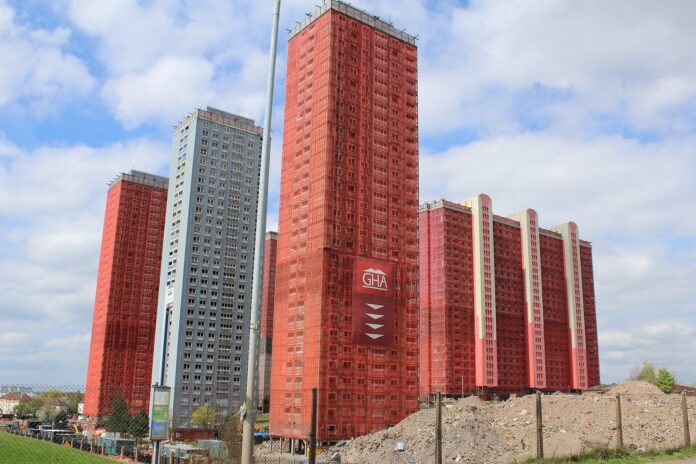
Red Road flats in Glasgow

LONDON — The Booker Prize has gone to a debut novel that thirty publishers turned down. Douglas Stuart, a 44-year-old Scottish-American fashion designer, won the 2020 prize on Thursday night for “Shuggie Bain”, his autobiographically inspired story of a boy growing up in 1980s Glasgow with an alcoholic mother.

The novel, a decade in the writing, follows young Hugh “Shuggie” Bain through the housing schemes and the miners’ strike of Thatcher-era Glasgow, caring for his mother Agnes as her drinking destroys the family. Stuart has said Agnes is drawn from his own mother, who died of alcoholism when he was 16.

He is only the second Scottish writer to win the prize, after James Kelman in 1994 — a win that itself caused uproar over Kelman’s Glaswegian vernacular. Stuart thanked Kelman in his speech, saying the earlier novel had changed his life by showing him that people like him could exist in literature.

The ceremony, like everything this year, was virtual: the announcement came from a near-empty Roundhouse in London, with the shortlisted authors on screens. Margaret Busby, chair of the judges, praised a novel that she said would be read for decades.

The win completes a publishing fairytale. Stuart wrote the book in his spare time while working in New York fashion; the rejections piled up before a small American publisher took it. On Friday morning, “Shuggie Bain” was the most talked-about novel in Britain.


Media-Society.com is a press network association based in Spain, founded in 2020. More at www.media-society.com.

Moscow Mechanism on Belarus: a 90-page catalogue of torture, and a demand for new elections

0
Moscow Mechanism on Belarus: a 90-page catalogue of torture, and a demand for new elections
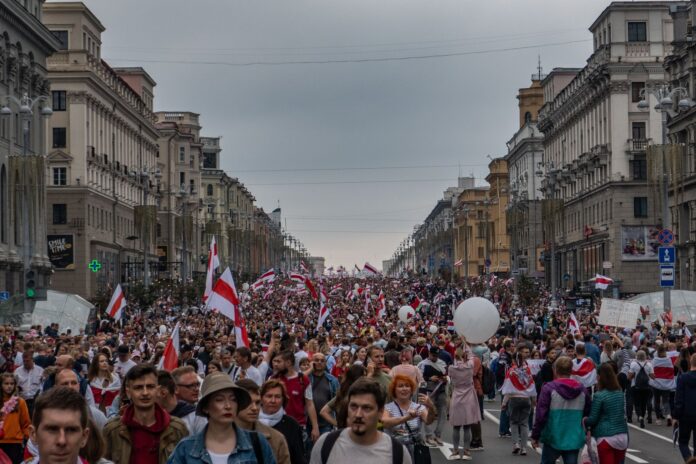
Mass protests in Minsk in August 2020 after the disputed presidential election.

Vienna — An independent expert report commissioned under the OSCE’s Moscow Mechanism has concluded that Belarus committed massive and systematic human rights violations around its disputed presidential election, and recommended that the vote be annulled and new elections held under international supervision.

The report, published on 5 November, was written by Professor Wolfgang Benedek of the University of Graz after seventeen OSCE participating states invoked the mechanism in September. It documents torture and ill-treatment in detention on a scale, the author writes, that has not been seen in Europe in decades — including at the notorious Okrestina detention centre in Minsk, where thousands were held after the 9 August vote.

Benedek’s findings are blunt. The election itself was neither transparent nor impartial; the official result giving Alexander Lukashenko eighty per cent of the vote is not credible; and the state’s response to the peaceful protests that followed — mass arrests, beatings, torture, enforced disappearances and at least several deaths — amounts to a systematic attack on the population.

The Moscow Mechanism is one of the OSCE’s sharpest instruments: it allows a group of states to appoint an expert rapporteur to investigate human rights in another participating state even without that state’s consent. Minsk refused to cooperate with the mission and has rejected its conclusions as politically motivated interference.

Among the report’s recommendations are new elections, an end to violence against protesters, the release of political prisoners, investigations into torture, and international monitoring of the human rights situation. Benedek also urges OSCE states to use universal jurisdiction to prosecute those responsible for the gravest abuses.

Whether any of this reaches the people still being detained in Minsk each weekend is another matter. The report lands as Belarus enters its thirteenth consecutive week of protests, with the authorities escalating from mass arrests to stun grenades and live ammunition warnings. A catalogue of crimes, however thorough, is not yet accountability — but in the OSCE’s architecture, it is the strongest paper instrument that exists.


Media-Society.com is a press network association based in Spain, founded in 2020. More at www.media-society.com.

OSCE observers on the US vote: ‘baseless allegations’ of fraud are harming public trust

0
OSCE observers on the US vote: ‘baseless allegations’ of fraud are harming public trust
The west front of the United States Capitol in Washington.

Washington — The head of the international observation mission to the United States election has delivered an unusual rebuke to a sitting American president, saying that baseless allegations of systematic fraud — in particular by the incumbent — are damaging public trust in democratic institutions.

Michael Georg Link, the German diplomat leading the OSCE Office for Democratic Institutions and Human Rights mission, presented preliminary findings on Wednesday as counting continued in several states. The vote itself, he said, was competitive and well managed despite the enormous challenges of the COVID-19 pandemic and an unprecedented volume of postal ballots.

“Baseless allegations of systematic deficiencies, notably by the incumbent president, including on election night, harm public trust in democratic institutions,” Link told reporters in Washington — a statement without real precedent in three decades of OSCE observation of American elections.

The mission, which deployed observers across some thirty states, noted the election came amid deep polarisation, a raging pandemic and protests over racial justice. It praised election officials for administering the vote under extreme pressure, while repeating long-standing recommendations on campaign finance, voting rights for felons and residents of Washington D.C. and the territories, and the politicisation of election administration.

The observers also recorded the scale of legal challenges launched around the vote, and the campaign rhetoric questioning the integrity of mail-in ballots months before election day. Their report carefully separates administrative problems — real, and listed — from claims of systematic fraud, for which it found no evidence.

For an organisation more accustomed to monitoring elections in Chișinău or Bishkek, the Washington assignment has become its most-watched in years. The irony was not lost on diplomats in Vienna: the country that pushed hardest to create OSCE election observation is now receiving the kind of language it once helped write for others.


Media-Society.com is a press network association based in Spain, founded in 2020. More at www.media-society.com.

Louise Glück wins the Nobel Prize in Literature: the Swedish Academy honours an American poet of ‘austere beauty’

0
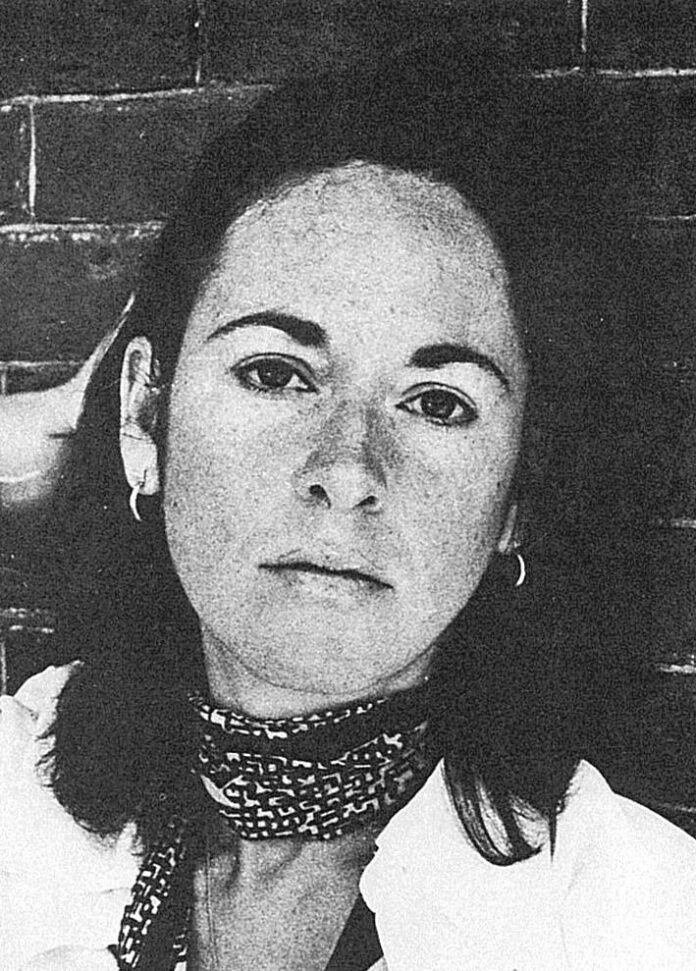
Poet Louise Gluck circa 1977

STOCKHOLM — The Nobel Prize in Literature 2020 has been awarded to Louise Glück, the American poet, for what the Swedish Academy called her unmistakable poetic voice that, with austere beauty, makes individual existence universal.

Glück, 77, is one of the most decorated poets in the United States: a former poet laureate, winner of the Pulitzer Prize for “The Wild Iris” and the National Book Award for “Faithful and Virtuous Night”. She is the sixteenth woman to win the literature Nobel, and the first American to take it since Bob Dylan in 2016.

The choice is being read as a deliberate reset. The Academy is still recovering from the crisis that engulfed it in 2018 — a sexual assault scandal involving the husband of a member, which forced the postponement of that year’s prize — and from the furious reaction to the 2019 award to Peter Handke, a defender of the Milošević regime. This year it has chosen an uncontroversial laureate of unarguable literary standing.

Glück’s work is spare, classical and often dark: poems of family, myth, marriage and survival, written across six decades. The Academy singled out “Averno”, her 2006 collection built on the Persephone myth.

In Cambridge, Massachusetts, the laureate gave her first reaction from home, saying she was flabbergasted. In a year when gatherings are cancelled and bookshops shuttered, the world’s largest literary prize has gone to the quietest of forms: the lyric poem.


Media-Society.com is a press network association based in Spain, founded in 2020. More at www.media-society.com.

Innovation helps to ensure European foods don’t cost the earth

0
Innovation helps to ensure European foods don’t cost the earth

Europe’s agri-food systems need to evolve in a world that is being transformed by technological innovation. At the same time, these vital sectors are faced with local and global challenges arising from climate change, environmental decline and a scarcity of resources. 

“These trends are challenging for all value chain actors, but particularly for farmers, as they are constrained by low margins, geography and weak bargaining power,” says Inés Echeverría, CO-FRESH project coordinator and R&D&I director at CNTA in Spain.

In the CO-FRESH project, Echeverría coordinated a broad consortium of partners across the EU with the goal of adapting Europe’s agri-food systems to become more socially, economically and environmentally sustainable and better prepared for the future.

In seven case studies, CO-FRESH redesigned and piloted new systemic approaches to agri-food production by developing new techniques, tools and insights, and aimed to take these innovations Europe-wide. 

Specifically, the project explored more efficient use of resources across fruit and vegetable (F&V) value chains, along with cutting the amount of plastic and food waste, while also aiming to increase the shelf life of minimally processed foods such as bagged salads.

“The success of CO-FRESH is based on the holistic approach to F&V value chains, helping actors along the chain to work together more effectively,” adds Echeverría. “The seven pilot cases remain a living example of how to apply innovations.” 

Transforming challenges into opportunities 

CO-FRESH brought about better cooperation between many partners in Europe’s F&V value chain, and held a series of meetings which brought together industry professionals to harness a broad range of knowledge and ideas. 

Through these workshops, the potential impact, feasibility and level of innovation of over 200 proposed innovations were discussed, before a shortlist of 19 were selected to be used across the 7 pilot cases. 

“The co-creation methodology allowed the active participation of representatives from the entire supply chain of each of the seven pilot cases,” explains Echeverría. These pilot cases were run in France, Hungary, Italy, the Netherlands, Poland and Spain, covering a range of farms producing fruit, salads, mushrooms, legumes and pork. 

Implementing innovation

Innovative approaches that the project successfully implemented include:

  • using intelligent internet of things systems to reduce water consumption in small farms by optimising irrigation;
  • developing low-processed plant-based foods from local crops;
  • reducing plastic waste through the use of compostable bioplastics for food packaging. 

The team developed a new certification scheme to raise awareness and reduce the production of microplastics in the F&V supply chain, as well as a governance tool to integrate and coordinate stakeholders along short value chains. 

To spread their findings across Europe’s agri-food sector, CO-FRESH created over 20 videos available on YouTube, along with a final project video shown at an event in Brussels. The team gave presentations at over 120 fairs, conferences, workshops and meetings, and reached a broad spectrum of agri-food stakeholders.

Alongside this, the project led to over 100 published articles, CO-FRESH newsletters and short communications. Results from the project were also presented at several scientific conferences and meetings, with 10 open access scientific articles currently published and 4 more under review. 

Continued evolution 

The pilot studies will continue to implement the most successful innovations, some of which are already undergoing test phases with large markets to validate their real-world feasibility. The work will also continue through the strong community built by those working in the agri-food industry. 

CO-FRESH was also invited to participate in the 10th edition of the European Commission’s prestigious Innovation Radar Prize.

“Networking with sister projects (Ploutos, FAIRCHAIN, LOWINFOOD and FOODRUS) and participating in several joint events with decision makers and public authorities has strengthened our message, learnings and conclusions,” says Echeverría. “This collaboration will continue after the project by means of CO-FRESH partners participating in networks, projects and dissemination events.” 

Source link

Karabakh in flames: Trump, Putin and Macron issue joint plea as fighting enters fifth day

0
Karabakh in flames: Trump, Putin and Macron issue joint plea as fighting enters fifth day
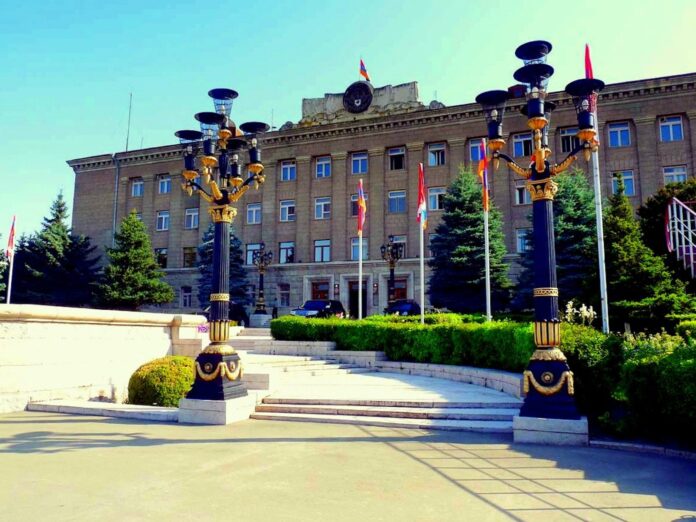
Stepanakert, the main city of Nagorno-Karabakh.

Geneva — The presidents of the United States, Russia and France issued a rare joint statement on Thursday calling for an immediate ceasefire in Nagorno-Karabakh, as the heaviest fighting between Armenian and Azerbaijani forces in a quarter of a century stretched into a fifth day with no sign of abating.

Donald Trump, Vladimir Putin and Emmanuel Macron — leaders of the three countries that co-chair the OSCE Minsk Group, the body’s long-dormant format for settling the conflict — condemned in the strongest terms the escalation of violence along the line of contact and beyond, and called on the sides to resume substantive negotiations without preconditions.

The statement is notable less for what it demands than for who signed it. Washington, Moscow and Paris agree on little these days, and their ability to produce a common text within days of the outbreak testifies to how seriously the three capitals take the risk of a wider war between Armenia and Azerbaijan — one that could pull in Turkey, which has openly backed Baku, and Russia, which has a defence pact with Yerevan.

The fighting, which erupted on 27 September, is the worst since the 1994 ceasefire that froze the conflict without resolving it. Both sides claim to have inflicted heavy casualties; both accuse the other of shelling civilian areas, including Stepanakert and towns well outside the disputed territory. Confirmed figures are scarce, but each capital already speaks of hundreds of dead.

The OSCE itself is largely a spectator in its own process. Its small monitoring presence on the ground ended years ago, and the Minsk Group co-chairs have not held a meeting of the parties in over a year. The joint statement urges the foreign ministers of Armenia and Azerbaijan to come to the table — but offers no new mechanism, no deadline and no consequences.

What the statement does restore is the principle that this conflict belongs to a multilateral format, not to whichever regional power moves fastest. Whether Ankara and Moscow honour that principle, and whether Baku — sensing a rare military opportunity — will pause while it is winning, are questions the three presidents left politely unanswered.


Media-Society.com is a press network association based in Spain, founded in 2020. More at www.media-society.com.