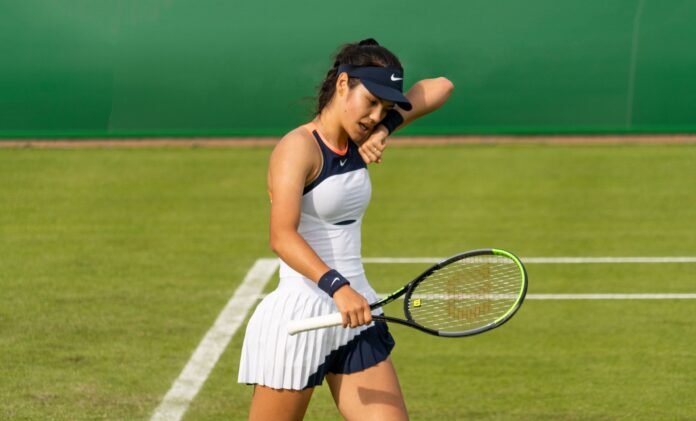
NEW YORK — In the end it took ten matches, twenty sets and not one of them lost. Emma Raducanu, an 18-year-old from Kent ranked 150th in the world, completed one of the most astonishing runs in tennis history on Saturday, beating Canada’s Leylah Fernandez 6-4, 6-3 to win the US Open.
The numbers still resist belief. Raducanu is the first qualifier — man or woman — ever to win a Grand Slam title. She did not drop a set in three qualifying rounds and seven main-draw matches. She was playing in only her second major tournament, two months after a Wimbledon run that ended when she retired mid-match with breathing difficulties, and three months after sitting her school exams.
Saturday’s final, between two teenagers of immigrant families — Fernandez is 19, with Filipino and Ecuadorian roots; Raducanu was born in Toronto to a Romanian father and a Chinese mother — was a showcase of fearless returning and nerve. It also carried a poignant setting: played on the 20th anniversary of the September 11 attacks, it began with a ceremony of remembrance.
Raducanu is the first British woman to win a Grand Slam singles title since Virginia Wade in 1977. The Queen sent a message of congratulations; in Britain, the final drew a peak television audience of more than nine million.
What happens next will be scrutinised like few careers before it. But nothing that follows can take away the fortnight itself: a qualifier who came to New York with a booking home after the first week, and left as champion.
Media-Society.com is a press network association based in Spain, founded in 2020. More at www.media-society.com.
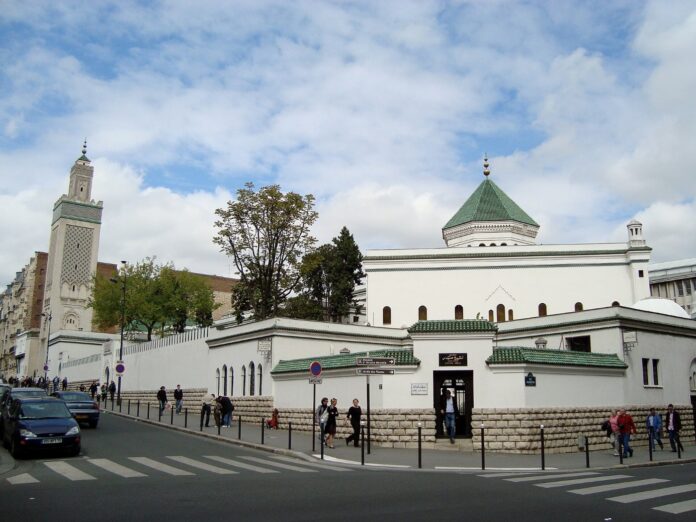
The Grande Mosquée de Paris, in the 5th arrondissement. LPLT / Wikimedia Commons (CC BY-SA 3.0)
PARIS — Religious associations in France woke up this week to a thicker rulebook. The law of 24 August 2021, published in the Journal officiel, is meant to reinforce respect for what the government calls the principles of the Republic. The text ranges well beyond religion, but a large share of it rewrites the rules for associations involved in worship and widens the administration’s powers to look over their shoulder.
The political argument around the law has been loud. For the thousands of congregations that will actually live under it, the consequences are quieter and, quite possibly, longer-lasting: statutes, accounts, declarations, governance charts.
To see why, it helps to remember how French religious life is organised. The system rests on laïcité and, for most of the country, on the 1905 law separating churches and the State, which created the specific legal vehicle known as the association cultuelle. The new legislation rewrites several of the rules around these structures. Deliberative bodies must exist and take the important decisions. Financial and administrative management has to be laid before members at regular intervals. Groups that want the advantages attached to cultuelle status must now declare that status to the representative of the State in the department, and the administration gets a bigger role in checking that the conditions for it are still being met. The detail is in the official legislation.
What makes this more than a technical adjustment is the shape of religious France: thousands of small local bodies rather than a few large national institutions. For a neighbourhood mosque, an evangelical church, a Buddhist centre, compliance will mean sitting down with the statutes, working out who is actually allowed to sign what, keeping cleaner accounts and learning which declarations go to the prefecture and when.
Money gets particular attention, especially money from abroad. Some of the procedures still depend on implementing regulations, but the direction is unmistakable: the State wants to see how organisations that carry on religious activity are run and financed.
Not every religious body will feel the law in the same way. Much depends on the legal form a group has chosen, on regional exceptions, and on the line French law draws between cultural, charitable and strictly religious activity. That line is where smaller organisations will have to be careful. A single community may run worship services, language classes, food aid and youth work — sometimes inside one association, sometimes through several. Sorting those activities out without confusing categories the law treats differently will be one of the reform’s real tests.
The political framing — separatism, radicalisation, the place of Islam in French society — is absent from the operative text, which works through general categories of association and religious activity rather than naming any faith.
A worshipper attending Friday prayers or Sunday mass may notice nothing at all. The people who will notice are the treasurers, trustees, religious ministers and association presidents, who are about to discover a considerably more demanding administrative environment.
That, in the end, may be the reform’s most tangible legacy: a national argument about republican principles, translated into statutes and account books at thousands of local places of worship across France.
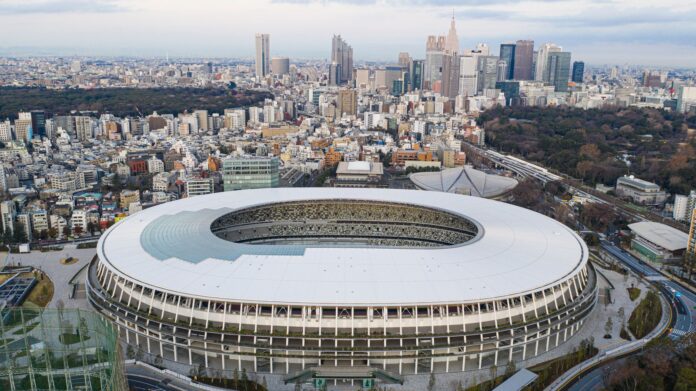
TOKYO — The Olympics that were postponed, protested and pronounced impossible ended on Sunday night with a closing ceremony in an almost empty National Stadium. After seventeen days of competition, the flame went out in Tokyo and the flag passed to Paris, which will host in 2024.
These were the first Games held without spectators, and the strangeness never fully wore off: medal ceremonies in silence, roars piped through loudspeakers, families watching from other continents. Yet the sport itself, when it finally came, delivered. Italy’s Lamont Marcell Jacobs took the 100 metres in a European record; two high jumpers agreed to share gold; skateboarding and surfing made their Olympic debuts.
The host country had its own consolations. Japan won 27 gold medals, a national record, including a baseball title that mattered deeply at home. Public opinion, hostile before the opening ceremony with polls showing most Japanese opposed to holding the Games amid a coronavirus surge, softened noticeably once the competition began.
The bill, however, is real. Tokyo 2020 cost at least 13 billion euros by official accounting — roughly double the original bid estimate — and the pandemic added a year of expense and a state of emergency during the event itself. The long argument over whether it was worth it will outlast the athletes’ departure.
Sunday’s ceremony made room for a look ahead: Paris staged its handover partly from the Trocadéro, promising in 2024 an opening ceremony on the Seine. After the Games of closed doors, the promise of crowds has rarely sounded so sweet.
Media-Society.com is a press network association based in Spain, founded in 2020. More at www.media-society.com.
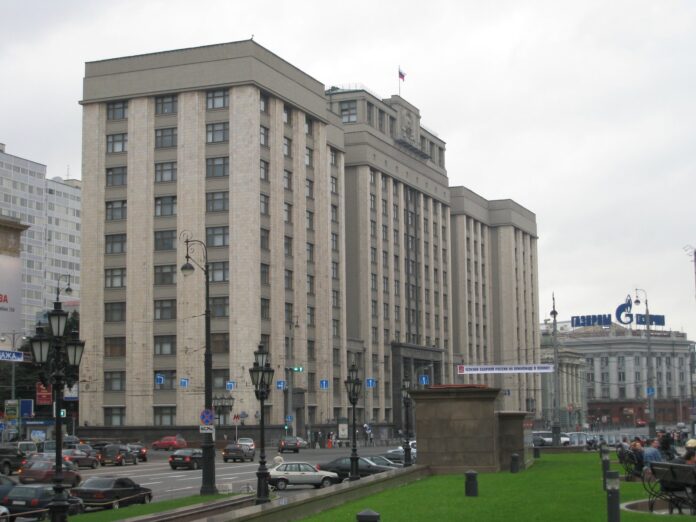
Warsaw — The OSCE’s election observation office has cancelled its mission to Russia’s parliamentary elections next month, after Moscow imposed restrictions on the number of observers and the length of their stay that the office says make meaningful monitoring impossible.
ODIHR had planned to send a full mission for the 17–19 September State Duma vote, as it has for Russian elections for two decades. But the Russian foreign ministry informed the office that, citing pandemic rules, it would accept no more than 60 observers — a fraction of the several hundred ODIHR considered necessary for a country of Russia’s size — and would limit how long they could remain in the country.
“It has become clear that the Russian authorities are not willing to receive an election observation mission in line with the usual requirements,” said Matteo Mecacci, ODIHR’s director. He added that the conditions imposed would not allow observers to work independently or to cover the country adequately, and that sending a shrunken mission under those terms would only lend undeserved credibility to the process.
Moscow rejected the criticism, insisting the limits reflect sanitary requirements rather than politics, and noting that observers from other international organisations and bilateral partners remain welcome. The OSCE Parliamentary Assembly has also indicated its delegation cannot participate under the conditions set.
The cancellation leaves September’s vote without international observation from the body Russia itself helped build — the first Duma election since 1999, barring a 2008 dispute with a similar ending, that ODIHR will not watch. It comes as the Russian authorities designate independent media and monitoring groups as ‘foreign agents’, including the country’s best-known domestic election watchdog.
For ODIHR, the principle at stake is that governments do not get to choose how closely they are watched. For Moscow, observers suggested in Vienna this week, the calculation may be simpler: a mission it cannot control is worth less to it than a mission it does not have.
Media-Society.com is a press network association based in Spain, founded in 2020. More at www.media-society.com.
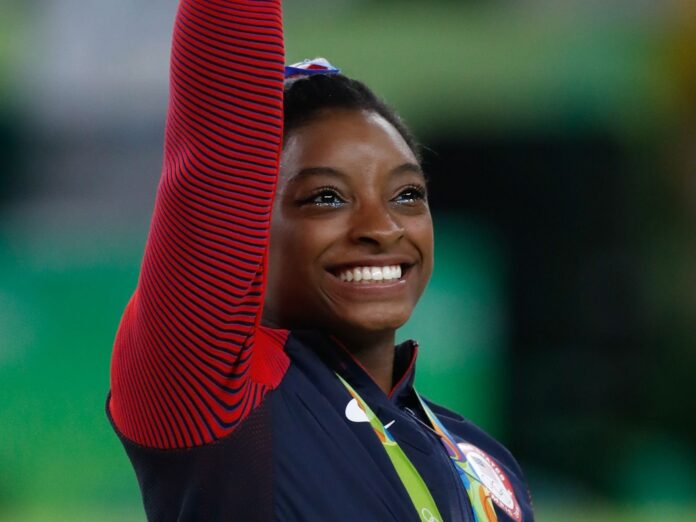
TOKYO — The biggest star of these Olympics came to the Ariake arena on Tuesday to compete, and left having done something no one expected: she stopped. Simone Biles, winner of four gold medals in Rio and the most decorated gymnast in the sport’s history, withdrew from the team final after a single vault, saying later that she had to protect her mental health.
Biles had planned an Amanar — two and a half twists — but completed only one and a half, landing low and stepping forward. She left the floor with a trainer, returned, and told her teammates she was done. The United States, without her, took silver behind the Russian team.
Speaking afterwards, the 24-year-old was candid about the weight she carries. She spoke of the pressure of being the face of the Games, of feeling that she was competing for other people rather than herself, and of wanting to take things day by day. Her participation in the rest of the Olympic programme, including the all-around final she has dominated for eight years, is now uncertain.
The decision lands in a sport still reckoning with its treatment of athletes. Biles is one of the survivors of the abuse of the former team doctor Larry Nassar, and has spoken before about the toll of remaining in a system that failed to protect her.
Reaction on Tuesday night was overwhelming in one direction: support. Athletes across sports praised the choice as courage, not weakness. Whether or not she competes again in Tokyo, Biles has already changed what these Games will be remembered for.
Media-Society.com is a press network association based in Spain, founded in 2020. More at www.media-society.com.
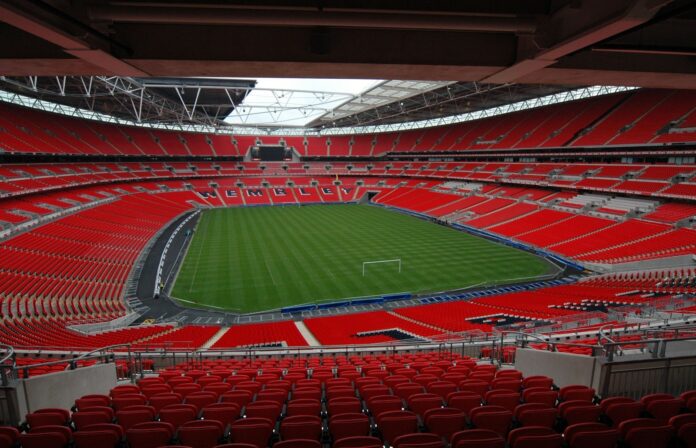
LONDON — The final of Euro 2020 had everything the occasion promised and an ending English football knows too well. Italy beat England 3-2 on penalties at Wembley on Sunday night, after a 1-1 draw, to win their second European Championship — and to extend England’s wait for a first major trophy since 1966 into a 56th year.
It had begun like a dream for the hosts. Luke Shaw scored after less than two minutes, the fastest goal in a European Championship final, and for an hour Wembley believed. But Roberto Mancini’s Italy, unbeaten now in 34 matches, grew into the game, and Leonardo Bonucci equalised midway through the second half.
The shootout turned on England’s young substitutes. Marcus Rashford hit the post, and Italy’s goalkeeper Gianluigi Donnarumma — named player of the tournament at 22 — saved from Jadon Sancho and then, decisively, from 19-year-old Bukayo Saka. Within minutes, the three players who missed were being subjected to racist abuse online, a sequel that has overshadowed the morning after.
For Italy the triumph completes a resurrection. Four years ago the four-time world champions failed even to qualify for the World Cup; under Mancini they have rebuilt around midfield craft and an old defensive partnership, and they were the best side in the tournament from the first night in Rome.
England leave with regret but also with a young squad, a first major final in 55 years, and a manager in Gareth Southgate who has changed how the country relates to its team. The World Cup is seventeen months away.
Media-Society.com is a press network association based in Spain, founded in 2020. More at www.media-society.com.
Emergencies can unfold quickly in unpredictable, high-pressure environments. For first responders such as firefighters, paramedics and rescue teams, every second counts – with each decision potentially meaning the difference between life and death.
Coordinated by researchers at the Technical University of Madrid (UPM) and led by Federico Alvarez, the RESCUER team worked closely with partners across Europe, including emergency services and technical departments from nine countries. The goal was to boost both the safety and operational speed of first responders – and make cutting-edge tech such as artificial intelligence (AI) and the internet of things (IoT) more accessible to those on the front lines.
Smarter tools, faster rescues
Among RESCUER’s most striking innovations is a smart helmet that gives first responders augmented vision. Equipped with thermal imaging and AI-driven object recognition, the helmet allows rescuers to navigate smoke-filled or structurally unstable environments and locate survivors in real time.
“With thermal cameras and AI, responders can distinguish between animals, inanimate objects and human victims even when visibility is near zero,” explains Alvarez. Unlike traditional thermal displays, the helmet’s system identifies and classifies targets, helping responders make quicker, better-informed decisions.
The smart helmet also integrates bio-signal monitoring, tracking stress and cognitive load to help manage first responder safety. If a rescuer’s stress levels spike dangerously or cognitive overload is detected, the system can alert other teams before it escalates into a critical situation. Augmented hearing capabilities further cut through environmental noise, amplifying critical sounds such as cries for help or structural warnings – potentially buying crucial minutes for those in danger.
A second device, the Sign of Life radar, detects minute movements such as human breathing behind walls or debris. Compact enough to attach to a belt, the sensor increases the odds of locating survivors in collapsed structures. Early field trials suggest the radar could dramatically speed up rescue operations in earthquake-hit areas, forests and urban disaster zones.
No network, no problem
Disaster zones often lack the communication infrastructure that modern technology depends on. Recognising this, RESCUER also prioritised infrastructure-free operation. The smart helmet, radar and other tools work without relying on mobile networks – an essential advantage in mountains, tunnels or remote areas where connectivity is minimal or non-existent.
RESCUER’s methodology also sets it apart. Rather than engineering technologies in isolation, the team collaborated closely with first responders across nine countries. Exercises such as ‘Live My Life’ put the entire research team in real-world rescue scenarios, wearing full gear and undergoing the same training as their end users, giving them a first-hand insight into the physical and mental demands of emergency work.
This approach helped refine the tools into practical, lightweight devices able to withstand the physical and psychological stresses of an emergency response. “We moved away from a traditional technology-push model,” says Alvarez, “toward one driven by actual field use and user needs.”
Path to market
Several of RESCUER’s technologies, including the smart helmet, are now moving towards commercialisation, with interest from industries beyond emergency services, such as mining, construction and defence. Theon International, one of the project’s partners, is guiding the development for wider applications, with first products expected to reach the market within the year.
A number of first responder organisations across Europe are already evaluating prototypes in the field. The feedback will shape final refinements before full-scale deployment.
RESCUER has yielded tangible, real-world tools likely to save lives and reduce risks for the people who put themselves in danger to help others. As Alvarez puts it: “It’s about applying taxpayer-funded technology for when it matters most.”
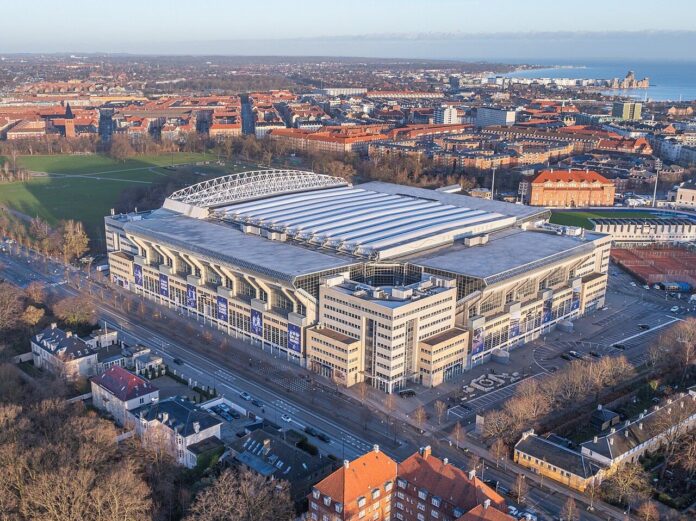
COPENHAGEN — The European Championship match between Denmark and Finland was suspended on Saturday evening after Christian Eriksen, Denmark’s best player and the creative heart of its team, collapsed on the pitch shortly before half-time with what the Danish football federation later confirmed was a cardiac arrest.
What followed, in front of a stunned Parken Stadium and a television audience across the continent, was a rescue. Medics reached Eriksen within seconds, performed CPR on the field, and used a defibrillator. The Danish players formed a circle around their teammate to shield him from the cameras; several were in tears. Finnish fans began chanting “Christian”, and the Danes answered: “Eriksen”.
Eriksen, 29, was taken to hospital conscious. The Danish federation said he was awake and undergoing further examinations. Photographs of him sitting up as he was carried off on a stretcher brought the first relief of a terrible evening.
In a decision that will be debated, UEFA and the two federations agreed to resume the match later the same night, at the players’ request, once news came through that Eriksen was stable. Finland won 1-0. Nobody will remember the result.
Eriksen plays his club football for Inter Milan, with whom he won the Italian title last month, and has 108 caps for Denmark. Saturday’s scenes — the speed of the medics, the wall of red shirts, the chanting strangers — have already become the defining image of this tournament, whatever happens in the four weeks to come.
Media-Society.com is a press network association based in Spain, founded in 2020. More at www.media-society.com.
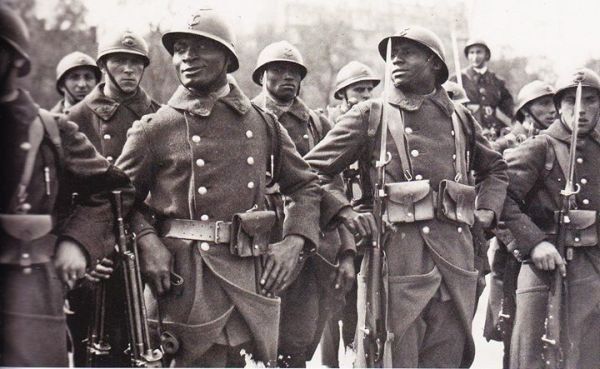
LONDON — The International Booker Prize has its first French winner. David Diop’s “At Night All Blood Is Black”, translated from the French by Anna Moschovakis, won the 2021 award on Wednesday night — a hallucinatory short novel about a Senegalese soldier fighting for France in the trenches of the First World War.
Diop, born in Paris and raised in Senegal, is a professor of 18th-century literature. His novel follows Alfa Ndiaye, one of the colonial troops France deployed on the Western Front, whose mind unravels after the death of his childhood friend. The judges called it a work of extraordinary power.
The prize, worth £50,000 and split equally between author and translator, honours fiction translated into English — a corner of the market long marginal in Britain but growing fast. Sales of translated fiction have risen steadily, and the award has become its biggest amplifier.
Diop’s win also crowns a remarkable year for a book published in French in 2018 to modest expectations, which went on to win prizes across Europe before its English translation caught fire. It is the first win for a French-language book in the prize’s history.
The shortlist this year ranged from Russian science fiction to Chilean family saga. That the trophy went to a novel about the soldiers Europe forgot — the tirailleurs sénégalais, barely honoured for a century — gives the award a resonance beyond literature.
Media-Society.com is a press network association based in Spain, founded in 2020. More at www.media-society.com.
ROTTERDAM — After a year of silence, the Eurovision Song Contest returned on Saturday night with 3,500 fans in the arena, 26 songs, and a winner few bookmakers had backed at the start of the week. Måneskin, four young Romans in leather and eyeliner, won for Italy with the rock song “Zitti e buoni” — the country’s first victory since 1990.
The result was a genuine nail-biter. Switzerland and France led the jury vote; Italy needed a huge public score and got it, finishing on 524 points ahead of France’s Barbara Pravi and Switzerland’s Gjon’s Tears. The United Kingdom received nul points — from juries and public alike.
The win continues a remarkable trajectory. Måneskin, formed by teenagers busking on Rome’s Via del Corso, came second on the Italian X Factor in 2017, won Sanremo in March, and have now taken Eurovision with a song in Italian whose title translates roughly as “shut up and behave”. Italy will host the 2022 contest.
The night was not without incident: the lead singer, Damiano David, was filmed leaning over a table in the green room in a way that set social media speculating about drugs. He denied using cocaine and volunteered for a drug test, which the EBU said it would arrange. The controversy has done nothing to dent the band’s reception at home, where they returned to a hero’s welcome.
After 2020’s cancellation, Rotterdam’s stripped-down edition — daily testing, limited crowds, delegations kept in bubbles — proved the contest can be staged in a pandemic. Next May, the circus moves to Italy.
Media-Society.com is a press network association based in Spain, founded in 2020. More at www.media-society.com.