Saturday, March 28, 2026
Home Blog Page 134

Famine declared in two Sudanese cities cut off by war, fragile gains elsewhere

0
Famine declared in two Sudanese cities cut off by war, fragile gains elsewhere

Although food security has begun to improve in areas where fighting has subsided, famine has taken hold in conflict-hit locations that have been cut off from aid or under siege, according to the latest UN-backed IPC food security analysis

Famine conditions have been confirmed in Darfur’s El Fasher and Kadugli, where “people have endured months without reliable access to food or medical care,” the Food and Agriculture Organization (FAO), the World Food Programme (WFP) and child rights agency UNICEF said in a joint release.

Ceasefire call

UN chief António Guterres called for an immediate ceasefire in Sudan on Tuesday as disturbing images of apparent mass killings in El Fasher and elsewhere continue to circulate online.

In a tweet, Mr. Guterres appealed to the Sudanese Armed Forces and the rebel paramilitary Rapid Support Forces “to come to the negotiating table to bring an end to this nightmare of violence”.

Heavy fighting erupted in Sudan in April 2023 between the rival armies which has created a massive humanitarian disaster.

Last week saw the fall of government held El Fasher after more than 500 days of siege by rebels.

Hundreds of civilians – including humanitarian workers – are believed to have been killed, and many others are trapped behind barricades.

Millions still going hungry

The IPC analysis confirmed that roughly 21.2 million people in Sudan – 45 per cent of the population – are facing high levels of acute food insecurity, representing a slight improvement.

Furthermore, an estimated 3.4 million people are no longer facing crisis levels of hunger.

The improvements follow a gradual stabilisation since May in three states – Khartoum, Al Jazirah and Sennar – where conflict has eased and families are returning, among other developments.

“But these gains are limited,” the UN agencies said.  “The wider crisis has shattered the economy and vital services, and much of the infrastructure people rely on has been damaged or destroyed.”

‘Fragile improvements’

Favourable crop growing conditions are also expected after the harvest and into next year, with crisis levels of hunger improving to 19.3 million through January.

They warned, however, that “these fragile improvements are highly localised” as many returning families in Khartoum and Al Jazirah have lost everything and will struggle to benefit from the harvest.  

At the same time, active conflict persists in western regions, notably North and South Darfur as well as West and South Kordofan.

Meanwhile, hunger is expected to worsen starting in February as food stocks run out and fighting continues. 

Famine in besieged areas

The IPC’s Famine Review Committee (FRC) found that famine conditions are occurring in El Fasher, capital of North Darfur state, and Kadugli in South Kordofan, which have been largely cut off due to conflict. 

The UN agencies noted that conditions in Dilling, South Kordofan, “are likely similar to Kadugli, but cannot be classified due to insufficient reliable data – a result of restricted humanitarian access and ongoing hostilities.”

In the Western Nuba Mountains, conditions have shown marginal improvement, but famine remains high unless humanitarian access improves.

The FRC projects a risk of famine in 20 additional areas across Greater Darfur and Greater Kordofan, including rural localities, displacement camps and several new locations in East Darfur and South Kordofan.

Additionally, Global Acute Malnutrition (GAM) rates are alarmingly high, ranging from 38 to 75 per cent in El Fasher and reaching nearly 30 per cent in Kadugli.

This is happening as outbreaks of cholera, malaria and measles continue to rise in areas where health, water and sanitation systems have collapsed. 

Source link

Mind over machine: UN urges ethical guardrails for brain tech revolution

0
Mind over machine: UN urges ethical guardrails for brain tech revolution

It seems like science fiction, or even magic: the ability to communicate, control a computer or move a robotic limb via the power of thought.

However, it’s not only possible, it’s already transforming the lives of patients with severe disabilities.

In 2024, an audience at a UN conference in Geneva sat astounded as a young man in Portugal with “locked in syndrome” – a neurological disorder that left him unable to move any part of his body – was able to “speak” to them, using a brain-computer interface (BCI) that translated his thoughts into words, spoken in his voice, and answer their questions.

This is a striking example of the growing field of neurotechnology, which holds out great hope for those living with disabilities and mental disorder such as Parkinson’s disease, epilepsy and treatment-resistant depression.

Mental privacy: A lost battle?

But while the use of neurotechnology for the medical sector is strictly regulated, its use in other areas is raising concerns.

Products such as headbands, watches and ear pods that monitor heart rate, sleeping patterns and other health indicators are increasingly popular. The data they collect can provide deep insights into our private thoughts, reactions and emotions, improving quality of life.

This poses ethical and human rights challenges, because manufacturers are currently free to sell or pass it on without restriction. Individuals face the possibility of having their most intimate mental privacy intruded upon, their thoughts exposed, monetised and even controlled.

“It’s about freedom of thought, agency and mental privacy,” says Dafna Feinholz, acting head of Research, Ethics and Inclusion at UNESCO.

She worries that the battle for mental privacy is being lost in an age of social media, with users willingly uploading their private lives to platforms owned by a handful of giant tech companies.

“People say ‘I have nothing to hide,’ but they don’t understand what they’re giving away,” she adds.

Assistive technologies can allow a person to write or move objects in space using their brain waves.

“We are already being profiled by AI, but now there is this possibility of entering thoughts, directly measuring the activity of the brain and inferring mental states. These technologies could even modify the structure of your nervous systems, allowing you to be manipulated. People need to know that these tools are safe and that, if they wish, they can stop using them.”

People need to know that these tools are safe and that, if they wish, they can stop using them

The UN official insists that, while we have to accept that we need to live with technology, we can ensure that humans remain in charge.

“The more we surrender to the power and superiority of these tools, the more we are going to be taken over. We need to control what they do and what we want them to achieve, because we are the ones who are producing them. This is our responsibility for all the technology we create.”

Time for an ethical approach

Ms. Feinholz spoke to UN News from the ancient Uzbek city of Samarkand where, on Wednesday, delegates from the Member States of UNESCO – the UN agency for education, science and culture – formally adopted a “Recommendation” (non-binding guidance on principles and best practices than can form the basis of national policies) on the ethics of neurotechnology, with an emphasis on the protection of human dignity, rights, and freedoms.

The guidance advocates for the promotion of well-being and an avoidance of harm associated with the technology, freedom of thought (ensuring that individuals retain control over their mind and body) and for developers, researcher and users to uphold ethical standards and be accountable for their actions.

Member States are being advised to put several measures in place, including implementing legal and ethical frameworks to monitor the use of neurotechnology, protect personal data and assess the impact on human rights and privacy.

“Humans have to be in the loop,” declares Ms. Feinholz. “There needs to be transparency, redress and compensation, as there is in other sectors. Take restaurants as an example. If you eat out you don’t have to know how to cook. But if you order a spaghetti carbonara and it makes you sick, you can complain to the owner. There is accountability. The same should apply to neurotechnology: even if you don’t understand how it works, there has to be chain of accountability.”

Source link

Catch-up vaccination campaign is “a lifeline” for children in Gaza

0

Estimates indicate that one in five children under the age of three have not received any doses or been vaccinated because of the war, putting them at risk of outbreaks of vaccine-preventable diseases.

The catch-up campaign aims to vaccinate these children against measles, mumps and rubella, diphtheria, tetanus, whooping cough, hepatitis B, tuberculosis, polio, rotavirus and pneumonia.

It will be carried out by the United Nations Children’s Fund (UNICEF), the United Nations agency for Palestinian refugees, UNRWAthe World Health Organization (WHO) and partners, in collaboration with the Gaza Ministry of Health.

“A moral imperative”

To help address the devastating impacts of the conflict on children’s health and nutrition, UNICEF and its partners will also screen children for malnutrition and ensure that those who suffer from it receive treatment and continued monitoring.

“After two years of relentless violence that has claimed the lives of more than 20,000 children in the Gaza Strip, we finally have the opportunity to protect those who survived,” said Jonathan Veitch, UNICEF Special Representative in the State of Palestine.

“Vaccinating every child and supporting their health and nutrition is not just a humanitarian intervention; it is a moral imperative. It is how we safeguard the futures of children born in disaster and begin to rebuild hope in the midst of devastation.”

Hundreds of workers trained

The campaign will be implemented in three cycles, from November 9 to 18.

More than 450 health workers and support staff have been trained to support vaccination efforts.

In addition, 149 doctors have been trained to recognize, report and investigate any post-vaccination health problems – although such cases are extremely rare.

“We need a lot more”

“This vaccination campaign is a lifeline, protecting the health of children and restoring hope for the future,” said Dr Richard Peeperkorn, WHO Representative in the Occupied Palestinian Territory.

However, he stressed that “there is still much to do, and WHO is working to rebuild Gaza’s fragile health system so that every child, every community, can access the care they deserve.”

Before the conflict, Gaza had 54 vaccination centers. It is also among the world leaders in terms of childhood immunization coverage, with a rate of 98 percent.

Today, 31 vaccination centers are no longer operational, having been damaged or destroyed during indiscriminate attacks, while routine vaccination coverage is now below 70 percent.

The final two phases of the campaign, which aim to provide children with their second and third doses of vaccines, are planned for December and January.

In 2024, the UN and its partners launched a mass campaign across the Gaza Strip to vaccinate children against polio.

Originally published at Almouwatin.com

Mind over machine: UN calls for ethical safeguards for brain technology revolution

0

It sounds like science fiction, even magic: the ability to communicate, control a computer, or move a robotic limb through the power of thought.

However, not only is it possible, it is already transforming the lives of severely disabled patients.

In 2024an audience at a UN conference in Geneva, I was amazed to find that a young Portuguese man with “locked-in syndrome” – a neurological disorder that left him unable to move any part of his body – was able to “talk” with them, using a brain-computer interface (BCI) that translated his thoughts into words, expressed with his voice, and answered their questions.

This is a striking example of the growing field of neurotechnology, which represents great hope for people living with disabilities and mental disorders such as Parkinson’s disease, epilepsy and treatment-resistant depression.

Mental privacy: a losing battle?

But while the use of neurotechnology in the medical sector is strictly regulated, there are concerns about its use in other areas.

Products such as headbands, watches and headphones that monitor heart rate, sleep patterns and other health indicators are becoming increasingly popular. The data they collect can provide deep insights into our private thoughts, reactions, and emotions, thereby improving quality of life.

This poses ethical and human rights issues, as manufacturers are currently free to sell or pass it on without restriction. Individuals risk seeing their most intimate mental privacy invaded, their thoughts exposed, monetized and even controlled.

“It’s about freedom of thought, action and mental privacy,” says Dafna Feinholz, interim head of research, ethics and inclusion at UNESCO.

She worries that the battle for mental privacy is being lost in the age of social media, where users happily upload their private lives to platforms owned by a handful of giant tech companies.

“People say, ‘I have nothing to hide,’ but they don’t understand what they are revealing,” she adds.

Assistive technologies can allow a person to write or move objects in space using their brain waves.

“We are already profiled by AI, but now there is this possibility of entering thoughts, directly measuring brain activity and inferring mental states. These technologies could even change the structure of your nervous system, allowing it to be manipulated. People need to know that these tools are safe and that, if they want, they can stop using them.”

People need to know that these tools are safe and that if they want, they can stop using them.

The UN official insists that while we must accept that we have to live with technology, we can ensure that humans remain in charge.

“The more we submit to the power and superiority of these tools, the more we’re going to be taken over. We have to control what they do and what we want them to do, because we’re the ones producing them. It’s our responsibility for all the technology we create.”

It’s time to take an ethical approach

Ms. Feinholz spoke to UN News from the ancient Uzbek city of Samarkand where, on Wednesday, delegates from member states of UNESCO – the United Nations agency for education, science and culture – officially adopted a “Recommendation» (non-binding guidance on principles and best practices that can form the basis of national policies) on the ethics of neurotechnology, with an emphasis on the protection of human dignity, rights and freedoms.

The guidelines advocate the promotion of well-being and prevention of harm associated with technology, freedom of thought (ensuring that individuals retain control of their minds and bodies), and respect for ethical standards by developers, researchers and users and accountability for their actions.

Member States are advised to put in place several measures, including the implementation of legal and ethical frameworks to monitor the use of neurotechnologies, protect personal data and assess the impact on human rights and privacy.

“Humans need to know,” Feinholz says. “There needs to be transparency, redress and compensation, as there is in other industries. Let’s take restaurants for example. If you eat out, you don’t need to know how to cook. But if you order spaghetti carbonara and it makes you sick, you can complain to the owner. There is accountability. The same should apply to neurotechnology: even if you don’t understand how it works, there needs to be a chain of custody.”

Originally published at Almouwatin.com

EU to advance global clean transition at UN’s COP30

0
EU to advance global clean transition at UN’s COP30

At the COP30 UN Climate Change Conference in Belém, Brazil, from 10-21 November, the EU will reaffirm its strong commitment to climate action. The EU will continue to lead efforts to meet the Paris Agreement climate goals and push forward on a global transition that is clean, resilient and fair.

Source link

Potential Gaza stabilization force must have Security Council approval: Guterres

0
Potential Gaza stabilization force must have Security Council approval: Guterres

António Guterres was speaking at a press conference during the Second World Summit for Social Development in the Qatari capital.

He was asked about coordination with Israel and US President Donald Trump’s 20-point plan for Gaza which includes deploying a temporary international stabilization force to the enclave, developed by the US, Arab and international partners.

Aid scale-up critical

The Secretary-General said the UN is “actively engaged in making sure that humanitarian aid increases dramatically” in Gaza and reaches the entire population.

He added that the US “has been helpful in making Israel at least progressively remove some of the obstacles and difficulties that are still in place” in this regard.

“On the other hand, we have been very actively supporting the principle that the ceasefire must hold, that all parties must abide by the ceasefire, that there must be a link between Gaza and the West Bank in the way the next stage is put in place,” he continued.

“And that this needs to lead to a two-State solution and to the recognition of an independent Palestinian State.”

The Secretary-General stressed that the UN’s positions “have been very clear” and are not dependent “on cooperating with this or that country.”

US draft resolution

He noted that the US is drafting a Security Council resolution on Gaza in consultation with other serving members, however the UN Secretariat is not involved in the discussions.

“What we believe is that whatever entity that is created in Gaza should have the legitimacy of a mandate from the Security Council,” he said.

Asked if this includes the international force, he responded that “it is one of the things that has been discussed” and “it would be important to have the training and the formation of a Palestinian police force.”

He said: “This transition needs to lead to a situation in which the two sides [Gaza and the West Bank] are united and that the Palestinian Authority exerts its full authority.” 

Humanitarian efforts continue

Meanwhile, humanitarians continue to scale up operations across the Gaza Strip, in line with the 60-day response plan, UN Deputy Spokesperson Farhan Haq told journalists in New York. 

He said the UN and partners picked up 80 truckloads of supplies on Sunday, including food, animal fodder, shelter materials, winter clothing and hygiene items.  This total does not include bilateral and commercial deliveries. 

“Our partners report that, based on preliminary data, they collected nearly 750 pallets of relief items yesterday from Kerem Shalom/Karem Abu Salem and transported them to Gaza City,” he said.

“Another four trucks delivered medicine and medical supplies. Congestion and heavy traffic continue to hamper collection efforts.”

Nearly one million fed

Since the resumption of general food distributions on 13 October, nearly one million people – half the population –have received assistance through 46 distribution points run by aid partners. 

“We continue to try to expand this so that this month, families can receive two monthly food parcels, up from one in October,” he said.  

Between mid-October and this past Sunday, the UN and partners collected more than 210 metric tonnes of animal fodder from the crossings, and distribution to some 1,700 herders in Deir al-Balah is almost complete.  

Partners providing nutrition services have also collected more than 120,000 packs of fortified cereal, used to prevent acute malnutrition in children. This amount is enough to support large numbers of children for one month.

Mr. Haq reported that other partners providing water and sanitation services continue to scale up their responses. 

Humanitarians have also supported local authorities with rehabilitating three wells supplying neighbourhoods in Gaza City.  

Source link

Connecting Europe through high-speed rail

0
Connecting Europe through high-speed rail


Whether it’s visiting family over the holidays, spending a weekend away with friends, or attending a work conference abroad, travelling across Europe should be easy, fast, and sustainable. That’s why the Commission has adopted a set of new proposals to accelerate the roll-out of Europe’s high-speed rail network and boost investment in renewable and low-carbon fuels. Their goal is to make the EU transport system more efficient, interconnected and accessible, guided by the principles of competitiveness and sustainability.

Building on the Trans-European Transport Network (TEN-T), the new high-speed rail action plan aims to cut journey times and make rail a more attractive alternative to short-haul flights. With trains reaching speeds of 200 km/h and above, travel times between EU capitals will drop significantly 

📍 Copenhagen – Berlin: from 7h to 4h

📍 Paris – Rome: from 10h50 to 8h45

📍 Sofia – Athens: from 13h40 to 6h

📍 Vienna – Ljubljana: from 6h05 to 4h30

New cross-border links will also enable faster and simpler journeys, such as 

🛤️ Lisbon – Madrid – Paris

🛤️ Tallinn – Riga – Vilnius – Warsaw 

To make this vision a reality, the plan sets out concrete actions, such as

  • removing cross-border bottlenecks, with options for speeds above 250 km/h when economically viable
  • developing a coordinated financing strategy to mobilise the required investment
  • improving the conditions for the rail industry and rail operators to invest, innovate and operate competitively (e.g. enhancing cross-border ticketing and booking systems)
  • strengthening EU-level governance, including harmonised standards and authorisation processes

Apart from faster travel, easier booking, and more affordable prices, the plan will also ease congestion and free up capacity on conventional rail lines, boosting regional economies and tourism.

The second part of the package, the sustainable transport investment plan, sets out a common approach to boost investment in renewable and low-carbon fuels, focusing on aviation and waterborne transport. To meet the RefuelEU Aviation and FuelEU Maritime targets, around 20 million tonnes of sustainable fuels will be needed by 2035, requiring an estimated €100 billion in investment.

For more information

Press release – high-speed rail and sustainable transport

Factsheet – high-speed rail

Q&A – high-speed rail

Factsheet – sustainable transport

Q&A – sustainable transport

Competitiveness

High-speed rail plan

Sustainable transport investment plan

Source link

Mitochondrial secrets revealed: Team discovers physics of how cell’s powerhouse splits to reproduce

0


Nearly every cell in your body depends on mitochondria to survive and function properly. Mitochondria earned the nickname

Source link

Half of Jamaica’s population reeling from Hurricane Melissa

0
Half of Jamaica’s population reeling from Hurricane Melissa

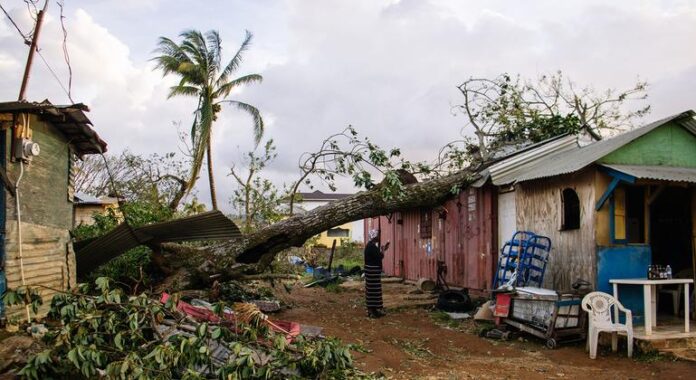
More than 130 roads were blocked, power and communication networks disrupted, while health services remain under heavy strain, according to the UN aid coordination office (OCHA). 

“Up to 360,000 people may require food assistance”, underscored the World Food Programme (WFP). Access to some western parishes continue to be difficult due to debris and fuel shortages, OCHA said.

WFP has been “working around the clock”, developing joint plans and strategies with the Government, said Brian Bogart, Country Director for WFP Multi-Country Caribbean Office, briefing journalists in New York via video link.

Jamaican resilience

“The Jamaican people are resilient”, he said, “but they need urgent support to maintain that resilience. 

Mr. Bogart reiterated that urgent needs remain food, water, shelter, and medicine for communities which have been hardest hit.

In the past two days, both a French and a Dutch navy vessel loaded with relief items have made landfall in Kingston’s harbour. 

In the days ahead, WFP is planning to assist up to 200,000 people across the country with food assistance and cash transfers, which is critical as the country moves from an immediate humanitarian response to a longer-term recovery strategy. 

Cuba and Haiti

Food distribution in Cuba has already reached 180,000 in protection centres across the provinces of Granma, Santiago de Cuba, and Guantanamo, reported WFP Country Director there, Etienne Labande. 

Highlighting the UN food agencies’ deep understanding of the local context and their ability to coordinate with authorities and communities, M. Labande emphasised that having WFP on the ground was “critical” for ensuring a fast and effective response.

Meanwhile, in Haiti, at least 30 people died during the extreme weather generated by Melissa, according to the authorities. 

A boy receives support from a UNICEF worker in St. Elizabeth, Jamaica.

“An estimated 1.25 million people have been affected by the hurricane”, said the Cuba country director. 

To make matters worse, relief efforts and the delivery of ongoing aid are further complicated by the continuing humanitarian crisis and security vacuum created by armed groups who control the vast majority of the capital, Port au Prince.

“Recovery is a marathon, not a sprint”, underscored M Labande. 

Despite severe funding shortages, access challenges and logistical constraints, the UN and partners are continuing to assess damage and ramping up efforts to reach people in need.

$74 million is urgently needed to deliver life-saving assistance to up to 1.1 million people across the Caribbean in the wake of Melissa, and coordinate emergency logistics and telecommunications.
 

Source link

Remarks by HR/VP Kaja Kallas to open the exhibition "Celebrating 25 Years of Women, Peace and Security" with UN Women

0
Remarks by HR/VP Kaja Kallas to open the exhibition "Celebrating 25 Years of Women, Peace and Security" with UN Women

Remarks by HR/VP Kaja Kallas to open the exhibition "Celebrating 25 Years of Women, Peace and Security" with UN Women

Source link