The EU is funding 61 cutting-edge net zero technology projects to help decarbonise Europe and reduce greenhouse gas emissions. A total of €2.9 billion will be invested in the projects that cover 19 industrial sectors across 18 countries. Their work will strengthen Europe’s technological leadership.
Environmental factors, such as air pollution, extreme temperatures, and exposure to harmful chemicals, cause around one in five cardiovascular deaths in the European Union (EU) — yet, these risks can be prevented. A European Environment Agency (EEA) briefing published today shows that environmental policies can protect millions of Europeans from heart disease and save lives.
Cardiovascular disease is the main killer in the EU: over 1.7 million people died from it in 2022 — one third of all deaths that year. Of these, key environmental factors are estimated to cause at least 18%. Also, more than 6 million new cases of cardiovascular diseases are diagnosed every year, costing Europe about EUR 282 billion, according to the EEA briefing ‘Preventing cardiovascular disease through a healthy environment’, published today.
Although the individual factors that cause cardiovascular disease, such as genetics and old age, are more difficult to modify, others, such as environmental and behavioural ones, can be addressed through targeted policies. The EU’s history of reducing air pollution shows that such policies work: the Union is already on track to meet the zero pollution action plan objective of reducing premature deaths attributable to air pollution by more than 55%, until 2030, compared to 2005.
The European Commission’s plan for EU cardiovascular health — currently in development — offers an opportunity to better integrate environmental factors of health into policy.
The key environmental factors that contribute to cardiovascular disease deaths are air pollution, extreme temperatures and extreme weather events, transport noise, chemical exposure to toxic substances (including heavy metals and endocrine-disrupting chemicals ). Across Europe, environmental drivers differ by region.
Please select a resource that has a preview image available.
Reducing environmental risks
Effective implementation of already existing policies is the first crucial step. For example, the Ambient Air Quality Directive will help lower pollution to levels in line with WHO recommendations, directly reducing cardiovascular risks.
Environmental cardiovascular risk factors can be further reduced through policies and interventions such as:
Reducing transport noise
Enforcing chemical regulations, accelerating the phase-out of cardiotoxic substances and promoting safer alternatives to them.
Preparing the health systems for climatic impacts on cardiovascular health through early warning systems, public health campaigns and targeted support for vulnerable groups (e.g. within heat-health action plans).
Facilitating the engagement of the health workforce by increasing the availability of environmental contents in the medical and nursing curricula.
Promoting the One Health approach: Protecting human, animal, and ecosystem health together leads to broader benefits for all.
Raising public awareness and education about cardiovascular risks from environmental stressors and promote lifestyle changes.
Introducing nature-based solutions: urban greening, parks, green corridors and blue spaces reduce cardiovascular risk by improving air quality, reducing noise pollution and encouraging physical activity.
Opening the Solutions Forum, UN General Assembly President Annalena Baerbock said the event marked a deliberate shift from “admiration of the problem” to action using proven approaches.
“Too often we are faced with situations in which we have no clear solution, no answers to the suffering we see, and it breaks our hearts.” she said.
“Or we have the solution [but] We either can’t or don’t want to do what needs to be done, which is frustrating.»
“Today it’s different: we are here to avoid falling into these traps,”, she added, “to learn from each other; benefit from good ideas; join forces; and live up to our common principles.
Partnerships enable
Organized by the State of Qatar in collaboration with France and supported by the United Nations Department of Economic and Social Affairs (DESA), the Forum brought together government officials, private sector representatives and a range of stakeholders who highlighted policies and projects that have had an impact in areas such as poverty eradication, decent work and social inclusion.
For her part, Ms. Baerbock cited examples from around the world, including a program in Sierra Leone supporting people with disabilities through training, job placements and microcredits.
Video speech by Deputy Secretary-General Amina Mohammed at the Solutions Forum.
In Sri Lanka, a civil society innovation hub trains young people for jobs and reinvests revenues into skills development, while in India, a national digital identity system has opened more than 300 million bank accounts and expanded access to social services.
These initiatives show what is possible when innovation, partnership and resources come together, she said, urging delegates to seize the opportunities.
Scale solutions that work
UN Deputy Secretary-General Amina Mohamed echoes the urgency of moving from commitment to implementation.
She highlighted the importance of the Doha Political Declaration which will be adopted at the World Summit.
“This calls for social contracts that work for people – fair, inclusive and built for today’s realities,” she said.
“To achieve this, we must evolve the solutions that work,» she urged participants to learn lessons from the solutions put forward during the Solutions Forum.
“Use these stories. Let them fuel your determination. Bring them back to your communities and turn them into bold actions – today and for generations to come.»
A health worker measures a child for signs of malnutrition in Khartoum, Sudan. Across the world, climate-related conflicts and shocks are leading to increased hunger, leaving families struggling to access food, care and stability.
With more than 670 million people going hungry and 2.3 billion facing moderate or severe food insecurity, President of the General Assembly Baerbock stressed that the current food crisis is not due to lack of food, but “to inequalities, conflicts and political choices.”
“That’s billions of people wondering where their next meal will come from,” she said. “Parents need to see their children go to bed hungry…the hunger crisis is not the lack of food. This is entirely avoidable.»
General Assembly Chairman Baerbock addresses the leadership meeting.
As the planet warms, insecurity spreads
She particularly highlighted climate change as a rapidly accelerating factor in food insecurity.
Describing the Sahel’s farmlands turned to dust, she called it “the new frontline of food insecurity”, warning that unchecked global warming could plunge up to 1.8 billion more people into hunger.
The Global Alliance – launched under Brazil’s G20 presidency in 2024 – now has nearly 200 members, including national governments, regional bodies, international organizations and civil society groups.
Monday’s meeting aimed to strengthen coordinated action, including expanding social protection, supporting rural livelihoods and investing in climate-resilient agriculture.
“In a world of abundance – where there should be more than enough for everyone – it is entirely possible to ensure that everyone, everywhere has enough to eat,” Baerbock said. “A world free of hunger and poverty is not a distant aspiration. It is within our reach, if we achieve it together.”
UN Info on the ground
UN News is on the ground in Doha, providing ongoing coverage throughout the week, including live updates, interviews and analysis from the Summit. Follow our cover here.
Head of the World Health Organization (WHO) Dr Tedros Adhanom Ghebreyesus announced that first responders from the UN agency were already “on the ground” to support care for the injured.
The UN World Food Programme (WFP) also highlighted its support for affected communities and the emergency response as needs appraisals began.
Reports indicate that the earthquake struck near the city of Mazar-i-Sharif at around 1am local time, causing buildings to collapse on those sleeping inside.
Footage posted on social media from the city’s Shrine of Hazrat Ali – also known as the Blue Mosque – showed people stepping around rubble on the ground of the site revered by Shiah Muslims.
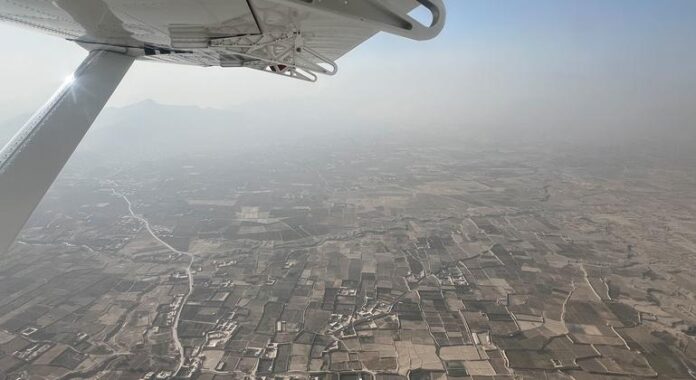
Although people have been reported killed in the worst-hit mountainous province of Samangan, initial assessments carried out from the air indicated fewer signs of damage than at first feared.
The UN flyover, conducted with the help of the Swiss authorities, also showed no signs of mass displacement that might have been expected had the earthquake been more destructive.
“We went over the main populated areas where the most settlements are in the earthquake affected area.
“Thankfully, we saw very little widespread devastation…compared to the devastating scenes we saw in Kunar just a few weeks ago,” said Richard Trenchard, the UN’s acting Humanitarian Coordinator in Afghanistan.
Still reeling from Kunar quake
The new crisis follows a magnitude 6.0 earthquake on 31 August that swept away thousands of houses and vital infrastructure in eastern Afghanistan’s Kunar province. The disaster uprooted hundreds of thousands of people and left half a million requiring urgent medical assistance.
UNAMA/Nazifullah Salarzai
The Shrine of Hazrat Ali in Mazar-i-Sharif reportedly sustained damage.
“What began as an acute emergency has now evolved into a displacement crisis, where families endure extended stays in temporary settlements amid escalating health risks,” WHO said.
In addition to a lack of access to safe drinking water for displaced families, the UN agency warned of widespread open defecation and poor access to health services for women in particular, owing to “the absence of female staff and the lack of privacy”.
Maternal and newborn health needs remain critical for those impacted by the August quake amid deep funding cuts for aid work, WHO noted, in addition to immunization, noncommunicable disease case management and mental health and psychosocial support.
On the ground in Afghanistan, UN agencies and partners say that collaboration and local leadership will be crucial to boost the recovery response.
Efforts are underway to pre-position supplies, mobilize surveillance teams to prevent disease outbreaks and prepare damaged hospitals to resume operations.
Entrepreneurship is one of the eight key competences for lifelong learning defined at European level. It empowers young individuals to navigate the complexities of an ever-evolving world, fostering innovation and equipping them with the skills necessary to tackle economic, social, and environmental challenges.
The report explores policy frameworks, curriculum integration, teacher training, and practical entrepreneurial experiences.
In addition, the publication offers an information annex as well with tables providing complementary information on the integration of entrepreneurship education in the curriculum and the teacher competences frameworks.
The report covers the European education systems of the Eurydice network which includes the 27 Member States of the EU, plus Albania, Bosnia and Herzegovina, Switzerland, Iceland, Liechtenstein, Montenegro, Norway, Serbia, and Türkiye.
Guterres spoke by phone with Jamaican Prime Minister Andrew Holness earlier today, later emphasizing in a statement that “international support is crucial” as the country deals with the effects of the Category 5 storm that brought rain, storm surge and catastrophic flooding.
“It calls for the mobilization of massive resources to deal with the losses and damage caused by the hurricane.“, declared the UN deputy spokesperson.
The United Nations Emergency Relief Coordinator, Tom Fletcher, has allocated $4 million from Central Emergency Response Fund (DEER) so that agencies and their partners can quickly scale up their humanitarian operations in Jamaica.
Five days after the most powerful storm in the island’s history made landfall in the west, many residents are still waiting for help to arrive, according to local media, while many roads remain inaccessible and communities are without electricity and running water.
The government reported Saturday that the death toll stood at at least 28. The top U.N. official on the island, Dennis Zulu, said UN News Friday that around 13 UN agencies were working as quickly as possible alongside authorities to clear roads and carry out essential repairs.
“My team here remains committed… to ensuring that Jamaica gets back on its feet,” he said.
Support for vulnerable children
United Nations Children’s Agency, UNICEFsaid Saturday that more than 700,000 children across the Caribbean had been affected by the hurricane, which also made landfall in Cuba and caused chaos in western Haiti.
UNICEF is helping the Government of Jamaica reach more than 284,000 children to meet urgent nutritional needs, access to clean water, sanitation and hygiene, including mental health support.
In Haiti, UNICEF is deploying emergency hygiene and health kits, cash to at-risk households and engaging communities.
United Nations Aid Coordination Office, OCHAaccompanied UNICEF to Cuba’s José Martí Airport on Saturday to unload supplies for more than 90,000 people affected by Melissa – alongside national authorities – working as one team, leading the emergency response.
International solidarity, a lifeline
UN relief chief Tom Fletcher said on Friday: “In times like these, international solidarity is not just a principle: it is a lifeline.”
An OCHA team has been deployed to Jamaica to strengthen coordination and information management.
UN agencies and NGOs are helping to restore access, provide emergency health and water services and support communities whose homes, schools and hospitals have been hit hard.
Well prepared in Cuba
A $4 million allocation from the OCHA-managed CERF for Cuba enabled UN agencies to put life-saving aid in place before the storm hit.
The World Food Program (WFP) provided food to 180,000 people;
UNICEF has deployed mobile water treatment units and hygiene kits for thousands of people;
the Pan American Health Organization (PAHO) flew in medical supplies and generators;
the Food and Agriculture Organization (FAO) and the United Nations Development Program (UNDP) moved seeds and tarpaulins to protect livelihoods and homes;
and the reproductive health agency, UNFPA, distributed health and dignity kits.
The Cuban Red Cross provided assistance by organizing preventive evacuations, early warning messages and psychosocial support, in coordination with the International Federation of the Red Cross (IFRC).
Early warnings across Haiti
In Haiti, a country grappling with a massive humanitarian crisis and deadly armed violence, humanitarian teams are working alongside national authorities to respond to urgent needs. Days before the hurricane hit, a $4 million allocation from CERF helped preposition aid.
Additionally, more than 3.5 million alerts were sent to vulnerable populations, saving lives. UN agencies and partners are now supporting temporary shelters and providing food, shelter, non-food items and cash assistance.
“Local leadership, global solidarity and early action are saving lives across the region,” Mr Fletcher said. “This is the humanitarian reset at work – acting together with greater impact.”
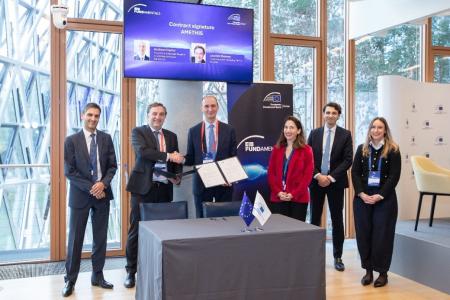
EIB invests in a new fund connecting European and African economies, helping European SMEs expand their activities on the continent.
€20 million investment from the EIB alongside European partners to boost job creation and sustainable growth.
A renewed partnership with Amethis, marking the fifth EIB investment with this leading impact-oriented private equity firm.
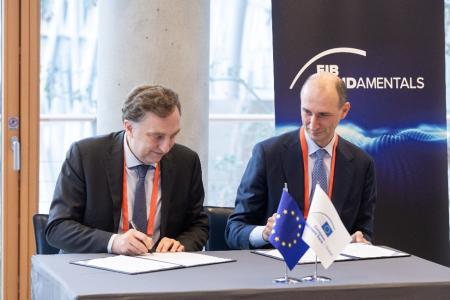
The European Investment Bank (EIB) signed a €20 million investment in the Amethis Europe Expansion Fund, a new private equity vehicle designed to support European small and medium-sized enterprises (SMEs) expanding their business in Africa, as well as in Europe and the Middle East. The initiative aims to strengthen economic ties between Europe and Africa, foster private sector development and promote sustainable and inclusive growth.
Amethis Europe Expansion will provide both growth capital and strategic support to help European companies establish in particular a local presence in Africa, through exports, partnerships, acquisitions, or direct investment. With a final fund size of €143 million, the fund benefits from strong European backing, including prominent private institutional investors and family offices as well as Bpifrance and COFIDES, under the Team Europe framework.
The operation is aligned with the European Union’s Global Gateway strategy, which promotes sustainable, high-impact investment cooperation between Europe and Africa.
“This new investment in Amethis Europe Expansion Fund reflects our commitment to fostering sustainable economic ties between Europe and Africa” said EIB Vice-President Ambroise Fayolle. He added: “By supporting European SMEs seeking to grow on the African continent, we are helping to unlock new opportunities for innovation, quality jobs and shared prosperity”.
Laurent Demey, Co-founder and Managing Partner of Amethis, said: “We are delighted to have our long-standing partner, the EIB, as a significant subscriber to this new innovative European strategy. The EIB’s commitment to this new Amethis strategy demonstrates the relationship of trust that has been built up over more than 10 years. The EIB’s support for this new strategy provides significant resources to support French and European SMEs in their international expansion, particularly in Africa, and create win-win partnership between the two continents”.
This marks the fifth EIB investment in an Amethis-managed fund, confirming a long-standing partnership between the two institutions. Since its creation in 2011, Amethis has become a key private equity player in Africa, backing local businesses to scale and thrive. With this new fund, Amethis now extends its impact by helping European companies take root and grow across African markets.
Background information
EIB
The European Investment Bank (ElB) is the long-term lending institution of the European Union, owned by its Member States. Built around eight core priorities, we finance investments that contribute to EU policy objectives by bolstering climate action and the environment, digitalisation and technological innovation, security and defence, cohesion, agriculture and bioeconomy, social infrastructure, the capital markets union, and a stronger Europe in a more peaceful and prosperous world.
The EIB Group, which also includes the European Investment Fund (EIF), signed nearly €89 billion in new financing for over 900 high-impact projects in 2024, boosting Europe’s competitiveness and security.
All projects financed by the EIB Group are in line with the Paris Climate Agreement, as pledged in our Climate Bank Roadmap. Almost 60% of the EIB Group’s annual financing supports projects directly contributing to climate change mitigation, adaptation, and a healthier environment.
Fostering market integration and mobilising investment, the Group supported a record of over €100 billion in new investment for Europe’s energy security in 2024 and mobilised €110 billion in growth capital for startups, scale-ups and European pioneers. Approximately half of the EIB’s financing within the European Union is directed towards cohesion regions, where per capita income is lower than the EU average.
High-quality, up-to-date photos of our headquarters for media use are available here.
Amethis
Founded by Luc Rigouzzo and Laurent Demey, and a partner member of Edmond de Rothschild Private Equity, Amethis is an investment fund manager focused on the African and European continent. With assets under management exceeding 1.4 billion EUR and over thirty investments to date, Amethis provides growth capital to promising mid-sized champions across many sectors, offering growth support through its international network covering Europe and Africa. With seven offices in Paris, Abidjan, Casablanca, Nairobi, Cairo, cape Town and Luxembourg, the Amethis team comprises over 45 experienced professionals with strong regional and sectoral expertise.