Friday, June 26, 2026
Home Blog Page 139

World News in Brief: Gaza aid restrictions, Syria humanitarian needs, lawyer reprisals in Burundi

0
World News in Brief: Gaza aid restrictions, Syria humanitarian needs, lawyer reprisals in Burundi

However, the humanitarian response has not been able to keep pace with needs due to ongoing restrictions imposed by the Israeli authorities, the UN aid coordination office OCHA said on Tuesday. 

This includes restrictions on the entry of supplies, such as new materials needed to maintain and repair sewage networks. 

Meanwhile, efforts are underway to improve water purification capacity at the Al Bassa desalination plant in Deir Al-Balah by transferring specialized equipment to the facility according to aid partners, while installation of the Al Manshia desalination plant in Gaza City has begun.    

West Bank violence and displacement 

OCHA also updated on the situation in the West Bank, where ongoing operations by Israeli forces and settler violence continue to put Palestinians at risk and deepen humanitarian needs. 

Six Palestinians – four of them children – were killed over the past two weeks, including five by Israeli forces and one by an Israeli settler. Three Israelis were injured by Palestinians during the same period. 

At the same time, OCHA also voiced deep concern over ongoing displacement across the West Bank, with more than 100 Palestinians uprooted due to demolitions.  

This includes 50 people – among them 21 children – displaced in a single Israeli demolition of a four-story building in the Silwan neighbourhood on Monday for lacking an Israeli-issued building permit, which is nearly impossible for Palestinians to obtain.  

Mothers in Aleppo, Syria, wait to have their children tested for malnutrition.

Millions in Syria require humanitarian assistance 

Humanitarian needs remain severe across Syria, with 16.5 million people – or nearly two thirds of the population – still needing aid, according to OCHA. 

The country continues along a path of political transition following the overthrow of the Assad regime last December. 

Explosive ordnance contamination remains a major threat, OCHA said. Last month, 21 people were killed and more than 60 injured, half of them children. 

Furthermore, some 2.5 million children remain out of school, and 40 per cent of schools are non-operational. 

Since January, the UN and partners have reached more than three million people each month with humanitarian assistance. 

OCHA and partners continue to coordinate with authorities and monitor developments in Aleppo City, where a ceasefire agreement was reached on Monday night following recent hostilities. 

The fighting was related to tensions around incorporating the mostly Kurdish Syrian Democratic Forces (SDF) into the armed forces. 

The fighting resulted in the shelling of multiple neighbourhoods, triggering new displacement. Two civilians were killed and several others injured, according to the health authorities

Burundi: Lawyers penalised for cooperating with UN, committee finds   

A UN committee warns that Burundi has acted in violation of the Convention against Torture.  

The UN Committee Against Torture (CAT) announced its decision on Tuesday after reviewing the petition case of four lawyers who were punished for engaging with the Committee in 2016 during its evaluation of the country’s compliance with the Convention.  

They had contributed to a joint civil society report submitted to the Committee, and three of them travelled to Geneva for the review process.  

The lawyers said they had participated in peaceful demonstrations in 2015 opposing then President Pierre Nkurunziza’s decision to seek a third term in office, which they considered unconstitutional.   

The demonstrations were violently suppressed by the authorities, with security forces targeting protesters and political dissidents. The lawyers publicly condemned the violent suppression and, amid repression, fled Burundi and went into exile for fear of their safety.  

In violation of international law  

The Committee said the State party declined to participate in the second half of a scheduled two-day session to object to the Committee’s use of information submitted by civil society. On the same day, the Public Prosecutor of the Court of Appeal in Burundi’s capital, Bujumbura, formally sought the disbarment of the lawyers.  

The experts found that Burundi’s actions were in violation of the Convention against Torture, and in particular, of article 13 which stipulates that complainants are protected against intimidation.  

“The Committee reiterated that all States have an obligation to refrain from intimidation or retaliation against individuals who seek to cooperate with the Committee,” said Todd Buchwald, a member.   

The 10 independent experts who serve on the Committee monitor implementation of the Convention Against Torture and were elected by the States Parties.  

Source link

World’s smallest programmable robots perform tasks

0
World’s smallest programmable robots perform tasks


Microscale swimming bots developed by U-M and Penn take in sensory information, process it and carry out tasks, opening new possibilities in manufacturing and medicine.

Complete robot next to the year on a penny for scale. Image credit: Kyle Skelil, University of Pennsylvania

Complete robot next to the year on a penny for scale. Image credit: Kyle Skelil, University of Pennsylvania

The world’s smallest fully programmable, autonomous robots have debuted at the University of Pennsylvania, sporting a brain developed at the University of Michigan.

These microscopic swimming machines can independently sense and respond to their surroundings, operate for months and cost just a penny each.

Barely visible to the naked eye, each robot measures about 0.2 by 0.3 by 0.05 millimeters, operating at the scale of many microorganisms. They can be programmed to move in complex patterns, sense local temperatures and adjust their paths in response.

These light-powered robots, developed with primary support from the National Science Foundation, could advance medicine by monitoring the health of individual cells and aid manufacturing by helping construct microscale devices, the researchers say.

“We’ve made autonomous robots 10,000 times smaller,” said Marc Miskin, assistant professor in electrical and systems engineering at Penn and senior author of a pair of studies published in Science Robotics and the Proceedings of the National Academy of Sciences. “That opens up an entirely new scale for programmable robots.”

The robots can move in complex patterns and even travel in coordinated groups, much like a school of fish. And because their propulsion system has no moving parts, the robots are extremely durable—easy to transfer with a micropipette and capable of swimming for months.

For decades, electronics have gotten smaller and smaller, epitomized by the record-setting sub-millimeter computers developed in the lab of David Blaauw and Dennis Sylvester, professors of electrical and computer engineering at U-M. Yet robots have struggled to keep pace, in part because independent motion is exceptionally difficult for microscale devices—a problem Miskin says has stalled the field for 40 years, until now.

“We saw that Penn Engineering’s propulsion system and our tiny computers were just made for each other,” said Blaauw, a senior author of the Science Robotics study.

Operating at the microscale in water, drag and viscosity are so large that Miskin says it’s like moving the robot through tar. His team’s propulsion design gets around this by turning the problem around. Instead of trying to move themselves, these robots move the water. They generate an electrical field that nudges ions in the surrounding liquid. Those ions, in turn, push on nearby water molecules, generating force to move the robot. This mechanism is described in PNAS.

On the computing side, Blaauw’s team needed to run the robot’s program on 75 nanowatts of power, which he says is 100,000 times less than a smart watch requires. To get even that tiny amount of power, the solar panels take up most of the robot.

The microbots are produced in a sheet (top left) roughly the area of a fingertip (bottom left). Each bot contains solar cells for harvesting energy, some of which also double as optical receivers, a temperature sensor on each side of the microbot for detecting differences, a processor for taking in information and making decisions, four actuator panels that drive its motion. Four of the receivers allow the robot to identify whether an incoming program is addressed to it. Image credit: Maya Lassiter, University of PennsylvaniaThe microbots are produced in a sheet (top left) roughly the area of a fingertip (bottom left). Each bot contains solar cells for harvesting energy, some of which also double as optical receivers, a temperature sensor on each side of the microbot for detecting differences, a processor for taking in information and making decisions, four actuator panels that drive its motion. Four of the receivers allow the robot to identify whether an incoming program is addressed to it. Image credit: Maya Lassiter, University of Pennsylvania

The microbots are produced in a sheet (top left) roughly the area of a fingertip (bottom left). Each bot contains solar cells for harvesting energy, some of which also double as optical receivers, a temperature sensor on each side of the microbot for detecting differences, a processor for taking in information and making decisions, four actuator panels that drive its motion. Four of the receivers allow the robot to identify whether an incoming program is addressed to it. Image credit: Maya Lassiter, University of Pennsylvania

“We had to totally rethink the computer program instructions, condensing what conventionally would require many instructions for propulsion control into a single, special instruction to help us shrink the program’s length to fit in the robot’s tiny memory,” Blaauw said.

The robots are both powered and programmed by light pulses, and each has their own unique identifier for individualized programming. This capability could enable a team of robots to each take a different part of a group task.

The batch of robots described in Science Robotics is equipped with sensors that detect temperature to within a third of a degree Celsius. They could move toward areas of increasing temperature or report temperature as a proxy for cellular activity—allowing them to monitor the health of individual cells. They reported these temperatures by wiggling, much like the “waggle dance” honeybees use to communicate, Blaauw noted. Future versions of the robots could store more complex programs, move faster, integrate new sensors or operate in more challenging environments.

“This is really just the first chapter,” Miskin said. “We’ve shown that you can put a brain, a sensor and a motor into something almost too small to see, and have it survive and work for months. Once you have that foundation, you can layer on all kinds of intelligence and functionality. It opens the door to a whole new future for robotics at the microscale.”

Source: University of Michigan


Source link

Extreme Siberian cold snap hits Hungary with temperatures of minus 15 degrees Celsius

0
closeup photo of snow near trees at daytime
Photo by sydney Rae on Unsplash

The mild weather is over, with extreme Arctic cold arriving this week and daytime temperatures dropping to minus 10 degrees Celsius.

Original reporting from Karpatmedence. Extreme Arctic cold will put an end to the mild weather this week, with temperatures dropping to minus 15 degrees at night and minus 10 degrees during the day. An Arctic cold wave is expected in Central Europe this week, replacing the unusually mild weather we have seen recently. The strongest cooling may begin around December 23, and a prolonged cold spell can be expected. So much so that daytime highs are expected to range between minus 10 and 0 degrees Celsius. At night, lows between minus 5 and minus 15 degrees Celsius may develop.

The main reasons for the change in weather are the high-pressure system developing over Northern Europe and the polar vortex disturbance in the Atlantic Ocean, according to blikkruzs. A white Christmas is unlikely because, although it will be cold, current forecasts do not predict any precipitation.

Siberian cold brings sudden drop in temperatures

A significant change in the weather is on the horizon, with Arctic cold expected to reach our region within days. After an unusually mild December, we must prepare for a sudden cold snap. This could affect everyday life and holiday preparations. According to the latest forecasts, the change will come earlier than previously expected.

The beginning of the month has been characterized by mild, autumnal weather, with temperatures above 10 degrees Celsius in some places. However, the latest meteorological models already show that a cold air mass is moving in from the east. It will also reach Central Europe. This process fundamentally rewrites previous expectations.

According to calculations, the cooling could begin around December 23. Both American and European forecasts confirm that a significant cooling is expected during the holidays. However, there is still uncertainty about the extent of this cooling.

Nighttime temperatures in Hungary could reach minus 15 degrees Celsius

Weather models are not entirely consistent in predicting whether it will simply be colder or whether there will be a real, severe Arctic cold spell. This would be accompanied by easterly winds and very low temperatures. According to some scenarios, there could even be days of ice, when the daytime high temperature would be between -10 and 0 degrees Celsius.

It may be even colder at night, with minimum temperatures between minus 5 and minus 15 degrees expected in some areas. This is especially true around the holidays. The cooling is caused by another polar vortex developing in the Atlantic Ocean. This allows the frosty air to reach further south.

The influx of cold air is aided by a high-pressure system developing over Northern Europe, which can carry the freezing air masses further south with easterly winds. This atmospheric situation is conducive to a prolonged cold spell, even if it is not accompanied by precipitation.

Overnight strikes leave death, destruction and power outages in Ukraine

0
Overnight strikes leave death, destruction and power outages in Ukraine

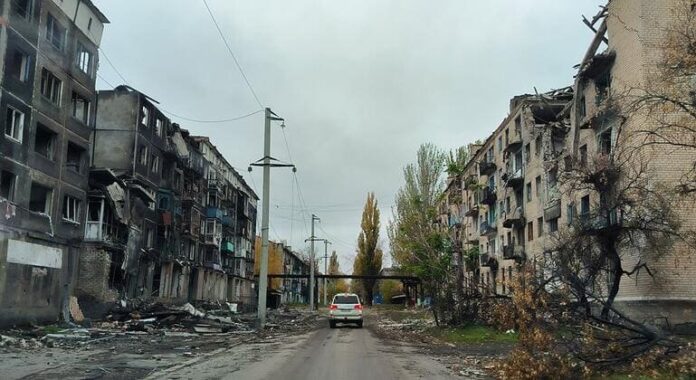
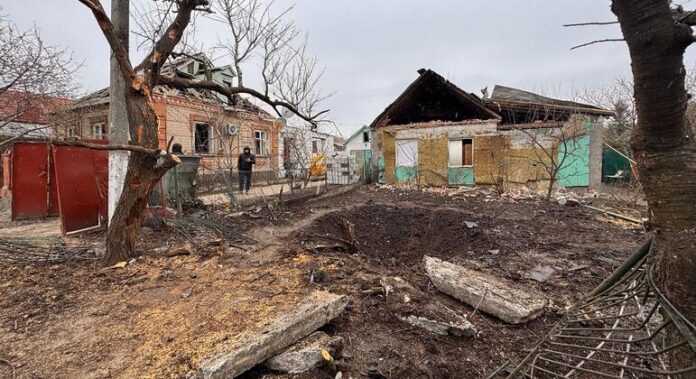
Several civilians were killed and nearly 30 injured, including children, according to local authorities. Homes in seven regions, as well as the capital Kyiv, were damaged.

The UN Children’s Fund (UNICEF) noted “tragic reports” of one child killed and three injured in Kyiv, Vyshhorod and Zhytomyr.

“Children facing another difficult, terrifying winter: Young lives threatened. Heating, power and water disrupted,” UNICEF tweeted, calling for an end to attacks.

Critical infrastructure hit

Drone strikes damaged more than 120 residential buildings in the Odesa region, OCHA said.  Key energy, port and transport infrastructure, particularly in the port town of Reni, near the border with Romania, were also hit.

The strikes left more than 10,000 customers without electricity, while critical facilities are operating on backup power.

Farther north, strikes damaged energy facilities in Novhorod-Siverskyi, a town in the Chernihiv region, and in Shostka town in the Sumy region.

Parts of Shostka that were already heavily affected by previous attacks were without electricity and heating once again.

Power outages amid winter weather

Ukraine’s Ministry of Energy also reported large-scale power outages in the Khmelnytskyi, Rivne and Ternopil regions, with disruptions recorded in six additional regions.

“With the start of the cold season, the most vulnerable need support most. This violence must stop. Civilians must be protected,” OCHA said separately in a tweet.

 Nearly four years have passed since Russia launched its full-scale invasion of Ukraine.

Humanitarian support for thousands

Over the past 11 months, the UN and humanitarian partners have reached more than 430,000 people across the country with emergency assistance following strikes. 

This support includes essential medical supplies, healthcare services, and cash assistance – and mostly in front-line regions. Meanwhile, needs are rising in previously less-affected areas as attacks expand.

OCHA reported that an inter-agency convoy delivered eight metric tonnes of humanitarian aid to the community of Novoraiske in the Kherson region on Tuesday.

Items provided included medical and hygiene supplies, charging stations, children’s clothing and mattresses.

Novoraiske is home to some 1,900 people, more than 200 of them children.  Several locations there have no access to water, gas or electricity due to the continued hostilities, OCHA said.

Source link

Myanmar elections marked by fear as UN warns civilians are coerced from all sides

0
Myanmar elections marked by fear as UN warns civilians are coerced from all sides

By Vibhu Mishra UN –  Peace and Security

As Myanmar approaches elections scheduled for 28 December, the UN’s top human rights official has said that civilians are being coerced from all sides – forced by the military to vote and threatened by armed opposition groups to boycott – in a climate of fear, violence and mass repression.

UN High Commissioner for Human Rights Volker Türk warned that the military-controlled ballot is unfolding amid intensified violence, intimidation and arbitrary arrests, leaving no space for free or meaningful participation.

These elections are clearly taking place in an environment of violence and repression,” Mr. Türk said in a news release. “There are no conditions for the exercise of the rights of freedom of expression, association or peaceful assembly.

The first phase of the vote, scheduled for 28 December, is being organised by Myanmar’s military authorities more than four years after they seized power in a 2021 coup, dissolved major political parties and jailed thousands of opponents. Key figures, including former State Counsellor Aung San Suu Kyi, remain imprisoned.

The crisis has since spiralled into widespread armed conflict, mass displacement and economic collapse, further compounded by devastating earthquakes in March 2025 that deepened humanitarian suffering across large parts of the country.

Dissent criminalised

According to the UN human rights office, OHCHR, dozens of people have recently been detained under a new “election protection law” for expressing dissent. Some have received extremely harsh sentences, including three young people in Yangon’s Hlaingthaya Township who were jailed for between 42 and 49 years for hanging anti-election posters.

Prominent cultural figures have also been targeted. Film director Mike Tee, actor Kyaw Win Htut and comedian Ohn Daing were each sentenced to seven years in prison for “undermining public trust” after criticising a pro-election propaganda film.

For displaced communities, the pressure is even more acute. The UN rights office has received reports from internally displaced people in areas including Mandalay region who said they were warned that their homes would be seized – or that airstrikes would continue – if they did not return to vote.

Forcing displaced people to undertake unsafe and involuntary returns is a human rights violation,” Mr. Türk said.

Threats from armed groups

At the same time, armed groups opposing the military have issued their own threats.

In mid-November, nine women teachers travelling to attend ballot training in the Mon region were reportedly abducted and later released with warnings not to participate. In Yangon, the self-declared “Yangon Army” bombed local administration offices involved in election preparations, injuring election staff and vowing to continue attacking election organisers.

The UN has also raised concerns over the introduction of electronic-only voting combined with expanded surveillance, including artificial intelligence and biometric tracking, warning that such measures could further erode trust in the process and enable repression.

© UNOCHA/Siegfried Modola

An IDP camp in Kayah state, eastern Myanmar. (file photo)

Pressing for peace

Speaking separately at UN Headquarters, Spokesperson Stéphane Dujarric said UN Special Envoy Julie Bishop recently completed her third visit to Myanmar, where she met again with Senior General Min Aung Hlaing.

Mr. Dujarric said Ms. Bishop continues to stress the urgent need for a cessation of violence to enable humanitarian response and recovery, and to keep Myanmar on the global agenda while working toward a Myanmar-led, inclusive and peaceful solution.

Ms. Bishop also briefed the Security Council in a closed-door meeting on Monday on the situation.

Fears of more instability

UN officials have repeatedly cautioned that the vote risks entrenching instability rather than restoring democracy.

In October, the Secretary-General warned that elections held under current conditions risk “further exclusion and instability.”

Nighttime strikes cause death, destruction and power outages in Ukraine

0

Several civilians were killed and nearly 30 injured, including children, according to local authorities. Houses in seven regions, as well as in the capital kyiv, were damaged.

The United Nations Children’s Fund (UNICEF) noted “tragic reports” of one child killed and three children injured in kyiv, Vyshhorod and Zhytomyr.

“Children face another difficult and terrifying winter: young people’s lives are threatened. Heating, electricity and water are interrupted”, UNICEF tweeted, calling for an end to the attacks.

Critical infrastructure affected

Drone strikes damaged more than 120 residential buildings in the Odessa region, OCHA said. Key infrastructure in energy, ports and transport, notably in the port city of Reni, near the border with Romania, was also affected.

The strikes have left more than 10,000 customers without power, while critical facilities are operating on backup power.

Further north, the strikes damaged energy facilities in Novhorod-Siverskyi, a town in the Chernihiv region, and Shostka, in the Sumy region.

Parts of Shostka, already badly hit by previous attacks, found themselves once again without electricity or heating.

Power outages during winter

Ukraine’s Energy Ministry also reported large-scale power outages in Khmelnytskyi, Rivne and Ternopil regions, with disruptions recorded in six additional regions.

“With the onset of the cold season, it is the most vulnerable who need support the most. This violence must stop. Civilians must be protected,” OCHA said separately in a tweet.

Nearly four years have passed since Russia launched its full-scale invasion of Ukraine.

Humanitarian support for thousands of people

Over the past 11 months, the UN and its humanitarian partners have provided emergency assistance to more than 430,000 people across the country following the strikes.

This support includes essential medical supplies, health services and cash assistance – primarily in frontline areas. At the same time, needs are increasing in previously less affected areas as attacks increase.

OCHA reported that an inter-agency convoy delivered eight tonnes of humanitarian aid to the community of Novoraiske in the Kherson region on Tuesday.

Items provided included medical and hygiene supplies, charging stations, children’s clothing and mattresses.

Novoraiske is home to some 1,900 people, including more than 200 children. Several places do not have access to water, gas or electricity due to continued hostilities, OCHA said.

Originally published at Almouwatin.com

ESMA publishes latest Spotlight on Markets newsletter featuring updates on market integration and transparency

0
text
Photo by Markus Spiske on Unsplash

The European Securities and Markets Authority (ESMA), the EU’s financial markets regulator and supervisor, has today published the latest edition of its Spotlight on Markets newsletter.

This edition opens with ESMA welcoming the European Commission’s ambitious proposal on market integration, underlining the importance of deeper, more integrated and efficient EU capital markets and the role of robust governance and market infrastructure in supporting these objectives.

Another highlight is the announcement of the selected applicant for the equity consolidated tape provider (CTP), a significant milestone towards a more transparent and integrated equity markets landscape in the EU. The newsletter also features ESMA’s final report on Regulatory Technical Standards (RTS) for non-equity transparency, as well as references to the five-year review of tiering and recognition, the report on cross-border investment activity of firms, and a TRV risk article on the application of the fund names guidelines.

ESMA will also launch a Common Supervisory Action focusing on MiFID II conflicts of interest requirements, reinforcing supervisory convergence and sound governance practices across Member States.

In parallel, the European Supervisory Authorities (ESAs) have designated critical ICT third-party providers under the Digital Operational Resilience Act (DORA). This represents an important step in strengthening governance and oversight of critical service providers in the EU financial system.

The newsletter also highlights ESMA’s findings on UCITS distribution costs, contributing to ongoing work on transparency and investor protection.

Other key topics:

For updates, follow us on LinkedIn and X.

Source link

Security Council remains divided on Iran’s nuclear program, sanctions remain in force

0

“Despite the intensification of diplomatic efforts during the second half of 2025, there has been no agreement on the path forward regarding Iran’s nuclear program,” concluded the head of UN diplomacy, Rosemary DiCarlo.

Ms. DiCarlo – the UN Under-Secretary-General for Political Affairs and Peacebuilding – reminded the Council that the best option for the international community is a negotiated settlement that would ensure a peaceful Iranian nuclear program and provide sanctions relief.

At the heart of the divide between Security Council Members disagree over the legitimacy of holding meetings related to the 2015 Iran nuclear deal, officially the Joint Comprehensive Plan of Action (JCPOA), an agreement to limit Iran’s nuclear program in exchange for sanctions relief.

Iran signed the agreement alongside the five permanent members of the Council – China, France, Russia, the United Kingdom, the United States – as well as Germany and the European Union (EU).

First post-snapback meeting

Tuesday’s meeting was the first to take place since France, Germany and the United Kingdom triggered the so-called “snapback mechanism” (reimposition of sanctions against Iran), citing “significant non-fulfillment” of their commitments under the plan.

UN Security Council meeting on non-proliferation (December 23, 2025)

The United States, the United Kingdom, France and other members of the Security Council have argued that the resolution that led to the nuclear deal remains in force and that the Council should therefore continue to meet to discuss the issue of nuclear nonproliferation.

“Iran’s failure to comply with its international obligations related to its nuclear program constitutes a serious threat to international peace and security,” said Jay Dharmadhikari, France’s deputy permanent representative to the UN. He added that, if increased to military enrichment levels, the Iranian stockpile “would be sufficient to produce 10 nuclear explosive devices.”

Iran: “No mandate” for discussions on non-proliferation at the Security Council

Russia’s delegate, Permanent Representative Vassily Nebenzia, took aim at the Slovenian presidency of the Council, regretting that it had not “found the courage to impartially respect your obligation not to act at the request of those who insisted on holding a Security Council meeting on a non-existent agenda item.”

“The JCPOA committee no longer exists,” he added. “Therefore, the EU is no longer the coordinator and therefore should not be allowed to inform the UN Security Council.”

Speaking on behalf of Iran, Ambassador Amir-Saeid Iravani insisted that Resolution 2231 (2015) expired on October 18, 2025 and therefore “ceased to have any legal effect or operational mandate.” It concluded that there was “no mandate for the Secretary-General to submit a report and no mandate for the Council to discuss it.”

Today, he said, the Council is witnessing a “calculated distortion” of the resolution and a “deliberate spread of disinformation” about Iran’s nuclear program.

European Union representative, deputy head of delegation Hedda Samson, speaking as an observer, took a different view. “The return of sanctions and nuclear restrictions should not mean the end of diplomacy, quite the contrary,” she stressed, calling on Iran to provide the International Atomic Energy Agency (IAEA) withIAEA) with up-to-date and verifiable declarations on the quantity and location of nuclear materials and related activities.

Originally published at Almouwatin.com

World news in brief: Aid restrictions in Gaza, humanitarian needs in Syria, lawyer reprisals in Burundi

0
a woman sitting at a table with a tray of food
Photo by Renaud Confavreux on Unsplash

However, the humanitarian response has been unable to meet needs due to continued restrictions imposed by Israeli authorities, the UN aid coordination office said. OCHA said Tuesday.

This includes restrictions on the entry of supplies, such as new materials needed for the maintenance and repair of sewer systems.

Meanwhile, efforts are underway to improve water purification capacity at the Al Bassa desalination plant in Deir Al-Balah by transferring specialized equipment to the facility, according to humanitarian partners, while the installation of the Al Manshia desalination plant in Gaza City has begun.

Violence and displacement in the West Bank

OCHA also provided an update on the situation in the West Bank, where ongoing operations by Israeli forces and settler violence continue to put Palestinians at risk and increase humanitarian needs.

Six Palestinians – including four children – have been killed in the past two weeks, five of them by Israeli forces and one by an Israeli settler. Three Israelis were injured by Palestinians during the same period.

At the same time, OCHA also expressed deep concern over the ongoing population displacements across the West Bank, with more than 100 Palestinians uprooted due to demolitions.

This includes 50 people – including 21 children – displaced Monday in a single Israeli demolition of a four-story building in the Silwan neighborhood due to lack of Israeli-issued building permits, which are almost impossible for Palestinians to obtain.

In Aleppo, Syria, mothers wait for their children to be tested for malnutrition.

Millions of people in Syria need humanitarian aid

Humanitarian needs remain severe across Syria, with 16.5 million people – almost two-thirds of the population – still in need of assistance, according to OCHA.

The country continues its political transition after the overthrow of the Assad regime last December.

Contamination from explosive ordnance remains a major threat, OCHA said. Last month, 21 people were killed and more than 60 injured, half of them children.

In addition, some 2.5 million children are still out of school and 40 percent of schools are not functioning.

Since January, the UN and its partners have provided humanitarian assistance to more than three million people every month.

OCHA and its partners continue to coordinate with authorities and monitor developments in the city of Aleppo, where a ceasefire agreement was reached Monday evening following recent hostilities.

The fighting was linked to tensions linked to the integration of the Syrian Democratic Forces (SDF), mainly Kurds, into the armed forces.

The fighting led to the bombing of several neighborhoods, causing further displacement. Two civilians were killed and several others injured, according to health authorities

Burundi: Lawyers penalized for cooperating with the UN, according to a committee

A committee appointed by the UN Human Rights Council warned that Burundi had acted in violation of the Convention against Torture.

THE United Nations Committee Against Torture (CAR) announced his decision Tuesday after reviewing the case of four lawyers who were sanctioned for collaborating with the Committee in 2016 during its assessment of the country’s compliance with the Convention.

They had contributed to a joint civil society report submitted to the Committee, and three of them traveled to Geneva for the review process.

The lawyers said they participated in peaceful protests in 2015 to oppose then-President Pierre Nkurunziza’s decision to seek a third term, which they considered unconstitutional.

The protests were violently repressed by authorities, with security forces targeting demonstrators and political dissidents. The lawyers publicly condemned the violent crackdown and, amid the crackdown, fled Burundi and went into exile out of fear for their safety.

In violation of international law

The Committee said the State party had refused to participate in the second half of a planned two-day session to object to the Committee’s use of information submitted by civil society. The same day, the Attorney General at the Court of Appeal in Bujumbura, the capital of Burundi, officially requested the lawyers’ disbarment.

The experts considered that Burundi’s actions constituted a violation of the Convention against Torture, and in particular Article 13 which states that complainants are protected against intimidation.

“The Committee reiterated that all States have an obligation to refrain from intimidation or retaliation against individuals who seek to cooperate with the Committee,” said Member Todd Buchwald.

Ten experts sit on the Committee, which receives its mandate from the Human Rights Council.

They are not UN staff and are not paid for their work.

Originally published at Almouwatin.com

Myanmar elections marked by fear as UN warns civilians are being coerced on all sides

0

Volker Türk, United Nations High Commissioner for Human Rights warned that the military-controlled vote takes place against a backdrop of intensifying violence, intimidation and arbitrary arrests, leaving no space for free or meaningful participation.

These elections are clearly taking place in an environment of violence and repression,“, Mr. Türk said in a statement.There are no conditions for the exercise of the rights to freedom of expression, association or peaceful assembly.»

The first phase of voting, scheduled for December 28, is organized by Myanmar’s military authorities, more than four years after their takeover in a 2021 coupdissolved the main political parties and imprisoned thousands of opponents. Key figures, including former State Counselor Aung San Suu Kyi, remain imprisoned.

The crisis has since degenerated into widespread armed conflict, mass displacement and economic collapse, further aggravated by devastating earthquakes in March 2025 which has worsened humanitarian suffering in large parts of the country.

Criminalized dissent

According to at the UN human rights office, OHCHRdozens of people have recently been arrested under a new “election protection law” for expressing dissent. Some received extremely harsh sentences, including three young people from Hlaingthaya township in Yangon who were jailed for between 42 and 49 years for hanging anti-election posters.

Prominent cultural figures have also been targeted. Director Mike Tee, actor Kyaw Win Htut and comedian Ohn Daing were each sentenced to seven years in prison for “undermining public trust” after criticizing a pro-election propaganda film.

For displaced communities, the pressure is even more acute. The Office of the United Nations High Commissioner for Human Rights received reports from displaced people in some areas, including the Mandalay region, who said they had been warned that their homes would be seized – or that airstrikes would continue – if they did not return to vote.

Forcing displaced people to undertake dangerous and involuntary returns is a violation of human rights,“, said Mr. Türk.

Threats from armed groups

At the same time, armed groups opposed to the army have made their own threats.

In mid-November, nine female teachers traveling for electoral training in the Mon region were reportedly kidnapped and released with warnings not to participate. In Yangon, the self-proclaimed “Yangon Army” bombed local government offices involved in election preparations, injuring election workers and vowing to continue attacking election organizers.

The UN also raised concerns about the introduction of electronic-only voting combined with extensive surveillance, including artificial intelligence and biometric tracking, warning that such measures could further erode trust in the process and enable repression.

Myanmar elections marked by fear as UN warns civilians are coerced from all sides

© ONUCHA/Siegfried Modola

A camp for displaced people in Kayah State, eastern Myanmar. (archive photo)

Pressing for peace

Speaking separately at UN headquarters, spokesperson Stéphane Dujarric said UN Special Envoy Julie Bishop recently completed her third visit to Myanmar, where she met again with General Min Aung Hlaing.

Mr. Dujarric said Ms. Bishop continues to highlight the urgent need to end the violence to enable humanitarian response and recoveryand to keep Myanmar on the global agenda while working towards an inclusive and peaceful Myanmar-led solution.

Ms. Bishop also informed the Security Council during a closed-door meeting Monday about the situation.

Fears of greater instability

U.N. officials have repeatedly warned that the vote risks further instability rather than restoring democracy.

In October, the Secretary-General warned that elections organized under current conditions risk “further exclusion and instability”.

Originally published at Almouwatin.com