
Weekly schedule of President António Costa, 2 November 2025 – 9 November 2025
UN aid push continues across Gaza despite Israeli airstrikes
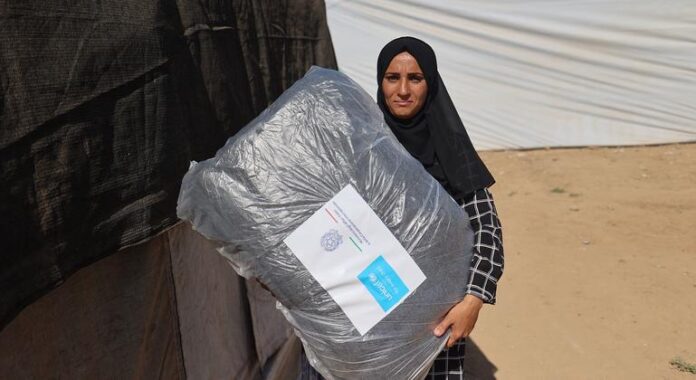
“Our humanitarian colleagues tell us that their partners continue their scale-up efforts, despite reported Israeli airstrikes across the Strip,” he said, noting that some strikes hit areas near the so-called ‘Yellow Line’ – a buffer zone marked by the Israeli military inside Gaza as part of the ceasefire agreement.
“We stress again that all parties must refrain from any activities that put civilians, including aid workers, at risk.”
Despite the insecurity, UN operations have managed to move significant volumes of relief into the enclave. According to the UN’s so-called 2720 delivery mechanism authorised by the Security Council, more than 24,000 metric tonnes of aid – including food, medicine, nutritional supplements and shelter materials – have been collected from Gaza’s crossings since the truce began several weeks ago.
Looting subsides
Encouragingly, looting and interception of aid have sharply declined. Between 10 and 28 October, only five per cent of supplies were intercepted, compared with around 80 per cent in the months before the ceasefire.
The World Health Organization (WHO) has also delivered over 840 pallets of life-saving medical supplies, including insulin, surgical kits and essential medicines, and is supporting nutrition services to treat some 2,500 children.
But Mr. Dujarric warned that Gaza’s health system remains “under immense strain”, with the local Ministry of Health reporting that more than 1,700 health workers have been killed since the start of the war.
On education, agencies are working to restore “minimum teaching and learning conditions” for over 630,000 school-aged children who have missed more than two years of classes.
Over 90 classrooms have been rehabilitated, though Israeli restrictions on educational materials continue to hamper efforts.
“We continue to call for all crossing points to be open and more UN agencies and organizations authorized to bring in aid supplies into Gaza,” Mr. Dujarric said.
Fragile window to resume food production
Despite catastrophic destruction across Gaza’s farmlands, the current ceasefire has created a fragile but vital window to revive food production, the UN Food and Agriculture Organization (FAO) and satellite agency UNOSAT said on Thursday.
New satellite analysis shows nearly 87 per cent of cropland, 80 per cent of greenhouses and almost 87 per cent of irrigation wells have been damaged since the start of the conflict. But the pause in fighting has opened access to 37 per cent of affected farmland – some 600 hectares of which remain undamaged – allowing farmers to begin rehabilitating their land.
“The ceasefire has opened a window of opportunity,” said FAO Deputy Director-General Beth Bechdol. “Urgent support is needed to restore agricultural land and infrastructure, enable farmers to resume fresh food production, and rebuild fisheries and livestock so families can feed themselves again.”
FAO stressed that rebuilding food systems now could help stabilise livelihoods and prevent deeper hunger in Gaza.
However, its $75 million appeal to support recovery remains only 10 per cent funded, highlighting the need for swift international backing to seize this brief moment of hope amid widespread devastation.
Frontex rolls out fully-fledged operation in Bosnia and Herzegovina

Frontex has launched its first full operation in Bosnia and Herzegovina, with over 100 officers working alongside national border guards. The joint teams will support border management, tackle cross-border crime, and strengthen cooperation across the Western Balkans.
UN Envoy hails Colombia’s peace process as global model, calls for more funding

Following the signing of Colombia’s 2016 Peace Agreement, more than 13,000 former FARC combatants laid down their arms within a year, surrendering nearly 9,000 weapons, 38,000 tons of explosives, and millions of rounds of ammunition.
Mr. Jenča noted that despite ongoing challenges, the implementation of the agreement has significantly improved security and trust among communities. Around 11,000 former combatants are now engaged in development projects and other implementation activities.
“They’re building a new, peaceful, and productive future — constructing durable homes, solving problems together, and moving forward,” he told UN News.
He highlighted the Special Jurisdiction for Peace’s first convictions for crimes committed during the conflict, which have been described as a “crucial milestone toward accountability” by the UN Human Rights Chief Volker Türk.
Support and scrutiny
At a recent UN Security Council session, the United States questioned the Mission’s expanded mandate, saying it reflected “excessive political priorities,” and vowed to “carefully review” its continued support.
Mr. Jenča responded that such evaluations were “normal,” but stressed that the other 14 Council members had expressed clear support for renewing the Mission’s mandate, a vote scheduled for the end of this week.
The newly appointed Head of the UN Verification Mission in Colombia, Miroslav Jenča, visits some of the projects of implementation of the Peace Agreement.
On the ground, the Mission enjoys broad backing from the Colombian government and across the political spectrum.
“I spoke with opposition members and government representatives alike — all supported the Mission’s continuation, though some suggested adjustments,” Mr. Jenča said.
He acknowledged that sustaining operations would require additional funding and noted hopes for closer cooperation as Colombia joins the Security Council in 2026 as a non-permanent Member.
A global example of peacebuilding
At a time when multilateralism faces scepticism, Mr. Jenča said Colombia’s peace process stands out as “a shining example of negotiation and collaboration,” benefiting not just the country but the world.
Looking ahead to Colombia’s next electoral period, Mr. Jenča reaffirmed the Mission’s commitment to ensuring a safe and peaceful campaign.
“Our goal is to promote understanding among political actors and guarantee an environment of peace, security, and respect for human rights,” he concluded.
UN aid continues in Gaza despite Israeli airstrikes

“Our humanitarian colleagues tell us that their partners are continuing their intensifying efforts, despite reported Israeli airstrikes across the Gaza Strip,” he said, noting that some strikes have hit areas near the so-called “Yellow Line” – a buffer zone marked by the Israeli military inside Gaza as part of the ceasefire agreement.
“We once again emphasize that all parties must refrain from any activities that endanger civilians, including humanitarian workers..”
Despite the insecurity, UN operations managed to transport large volumes of relief supplies to the enclave. According to the so-called UN 2720 delivery mechanism authorized by the Security CouncilMore than 24,000 tonnes of aid – including food, medicine, nutritional supplements and shelter building materials – have been collected at Gaza crossings since the truce began several weeks ago.
Looting decreases
Encouragingly, looting and aid interceptions have declined sharply. Between October 10 and 28, only 5 percent of supplies were intercepted, compared to around 80 percent in the months before the ceasefire..
The World Health Organization (WHO) has also delivered more than 840 pallets of life-saving medical supplies, including insulin, surgical kits and essential medicines, and is supporting nutrition services to care for some 2,500 children.
But Mr. Dujarric warned that Gaza’s health system remains ‘under immense pressure’with the local Ministry of Health reporting that more than 1,700 health workers have been killed since the start of the war.
In education, agencies are working to restore “minimum teaching and learning conditions” for more than 630,000 school-aged children who have missed more than two years of classes.
More than 90 classrooms have been rehabilitated, although Israeli restrictions on teaching materials continue to hamper efforts.
“We continue to call for all crossing points to be open and more United Nations agencies and organizations authorized to bring humanitarian supplies to Gaza,” Mr. Dujarric said.
Fragile window to resume food production
Despite the catastrophic destruction of Gaza’s agricultural land, the current ceasefire has created a fragile but vital window to restart food production, according to the Food and Agriculture Organization of the United Nations (FAO) and satellite agency UNOSAT said Thursday.
New satellite analysis shows almost 87 percent of cultivated land, 80 percent of greenhouses and almost 87 percent of irrigation wells were damaged since the start of the conflict. But the pause in fighting has opened access to 37 percent of affected agricultural land – of which some 600 hectares remain intact – allowing farmers to begin rehabilitating their land.
“The ceasefire has opened a window of opportunity,” said Beth Bechdol, FAO Deputy Director-General. “Urgent support is needed to restore land and agricultural infrastructure, enable farmers to resume fresh food production, and rebuild fishing and livestock farming so families can put food on the table again. »
FAO stressed that rebuilding food systems now could help stabilize livelihoods and prevent more severe famine in Gaza.
However, its appeal for $75 million to support reconstruction is only 10 percent funded, underscoring the need for rapid international support to seize this brief moment of hope amid widespread devastation.
Originally published at Almouwatin.com
Tens of thousands of people flee on foot following atrocities in El Fasher, Sudan
Since the powerful paramilitary group made a major incursion into the city last week, the UN human rights office has received “Horrific accounts of summary executions, massacres, rapes, attacks on aid workers, looting, kidnappings and forced displacement“, said Seif Magango, spokesperson for the UN human rights office (OHCHR).
Speaking from Nairobi to journalists in Geneva, Mr. Magango said many testimonies had been received from residents who fled in terror as the city fell and then “survived the menacing journey to Tawila, about 70 kilometers away” – a journey that takes three to four days on foot.
Overcrowded camps in Tawila
More than 36,000 people have fled since Saturdaymainly on foot, to Tawila – a town west of El Fasher which already shelters more than 652,000 displaced people people, according to the International Organization for Migration (IOM).
The RSF militia, born from the genocidal violence of the Darfur conflict 20 years ago, has been engaged in a brutal conflict with the Sudanese Armed Forces (SAF) since April 2023.
Sudan has become the scene of the world’s largest humanitarian and displacement crisis on record, with around 14 million people displaced out of a population of 51 million. Famine is widespread and epidemics of cholera and other deadly diseases are increasing.
The RSF took control of El Fasher, the capital of North Darfur state, after more than 500 days of siege, having forced the Sudanese army to withdraw earlier this week.
There are alarming reports of killings of the sick and injured inside the Saudi maternity ward and in buildings in the Dara Jawila and Al-Matar neighborhoods, which served as temporary medical centers.
The World Health Organization (WHO) estimates that 460 patients and attendants were killed in the alleged massacre.
“These extremely serious allegations raise urgent questions about the circumstances of these killings in what should be safe locations,” Mr Magango said.
He called for an independent, transparent and prompt investigation to ensure justice is served.
OHCHR has also received alarming reports of sexual violence from humanitarian partners on the ground. “At least 25 women were gang raped when RSF forces entered a shelter for displaced people near El Fasher University.. Witnesses confirm that RSF personnel selected women and girls and raped them at gunpoint,” Mr. Magango said.
This violence has also targeted humanitarian workers and local volunteers who support vulnerable communities in El Fasher.
Attacks on doctors
The World Health Organization (WHO) has corroborated reports of attacks on health facilities and personnel, condemning the kidnapping of six health workers – four doctors, a nurse and a pharmacist. Saudi maternity hospital attacked five times in October alone.
Following the fall of El Fasher, the UN health agency is currently “unable to provide assistance to those affected by injuries caused by multiple attacks on civilians”, explained Dr Teresa Zakaria, head of the WHO’s humanitarian operations unit.
The WHO has confirmed that 189 attacks have been verified in Sudan this year, leaving 1,670 people dead and 419 injured. “Eighty-six percent of all these attack-related deaths have occurred this year alone, indicating that attacks are becoming more deadly,” Dr. Zakaria said.
Massive lack of funding
“To date, the Sudan Humanitarian Response Plan is only 27.4 percent funded – a very, very significant gap,” added Dr Zakaria. “For the health sector itself, funding is 37 percent, so we have a lot of difficulty finding resources. That’s why we call on the international community not to abandon the Sudanese people, because the main actors are our Sudanese organizations, which continue to be present and provide aid“.
With the capture of El Fasher, the RSF’s territorial control now extends to all of Darfur and parts of southern Sudan, while the Sudanese Armed Forces (SAF) controls the capital, Khartoum, as well as much of the north and center of the country.
Originally published at Almouwatin.com
US strikes in Caribbean and Pacific violate international law, says UN human rights chief

More than 60 people have been killed in the series of attacks which have continued since the beginning of September “in circumstances which find no justification in international law“, Volker Türk said in a statement.
He urged the United States to stop its “unacceptable” operations and take steps to prevent “extrajudicial execution of people on board these boats, regardless of the criminal behavior with which they are accused.”
Beyond the law
The United States defended the operations as part of its ongoing efforts to combat drug trafficking and terrorism, saying they were within the framework of international humanitarian law.
Mr Türk rejected this argument, emphasizing that combating illicit drug trafficking is a matter of law enforcement, governed by prudent limits on lethal force set out in international human rights law.
He stressed that the intentional use of deadly force is lawful. only as a last resort when individuals pose an imminent threat to life.
Call for surveys
“Based on the very scant information publicly provided by U.S. authorities, none of the individuals on board the targeted vessels appeared to pose an imminent threat to the lives of others or in any way justified the use of lethal armed force against them under international law,” Mr. Türk said.
The High Commissioner called for prompt, independent and transparent investigations into the reported attacks.
While recognizing the serious challenges posed by drug trafficking, Mr. Türk urged the United States to ensure that all counter-narcotics operations respect international law, including the treaties to which it is a party.
“The United States should investigate and, if necessary, prosecute and punish individuals accused of serious crimes, consistent with the fundamental rule of law principles of due process and fair trial, which the United States has long upheld,” he concluded.
Originally published at Almouwatin.com
Caribbean countries receive lifesaving aid after Hurricane Melissa devastation

Torrential rains, storm surges and landslides caused by the hurricane left a trail of destruction across the region, with homes razed, roads and bridges washed away, and large areas still without power, internet access and other telecommunications.
The UN Office of Humanitarian Affairs (OCHA) said aid supplies were on the way and emergency teams were supporting government responses in Jamaica, Cuba and Haiti.
Jamaica, food support
In Jamaica, the World Food Program (PAM) helped the government with logistics, communications and cash support, delivering 5,000 food kits, enough to feed 15,000 people for a week.
The situation in the south of the country remains “apocalyptic”with homes submerged, roads blocked and people sleeping in the streets, said Brian Bogart, WFP country director.
Despite this, Mr. Bogart noted that advance preparation efforts had helped speed up the response, but stressed that Jamaica’s resilience “must now be supported”.
The UN deploys emergency medical teams, supports water, sanitation and hygiene (WASH) efforts, provides psychological care and contributes to disease surveillance.
The Pan American Health Organization (PAHO) is preparing to send 5.5 tons of humanitarian aid, including health and trauma kits, medical backpacks, tents, water supplies, mosquito nets and personal protective equipment.
More than 284,000 Jamaican children now urgently need help in health, education, nutrition and protection, the local UN children’s agency said (UNICEF) team.
“Yesterday we were on our way to Black River in St Elizabeth, one of the hardest hit areas, but the roads were blocked by fallen trees and power lines, preventing us from reaching the most affected communities.“, said Olga Isaza, the most senior UNICEF official on the island.
The agency is responding quickly to help the government and other partners assess needs and deliver prepositioned supplies, including food, clean water, medicine and emergency hygiene kits. Additional humanitarian aid is ready to be flown in.
Cuba, health aid
At the same time, from its regional strategic stockpile in Panama, PAHO shipped 2.6 tons of humanitarian aid to Cuba.
The shipment includes emergency kits containing medicines, medical and surgical equipment sufficient to treat 5,000 people for three months. It also includes chlorine tablets to treat millions of liters of water, as well as essential medical supplies and shelter.
UN spokesperson Stéphane Dujarric said that in eastern Cuba, “preliminary assessments indicate serious damage in Santiago, Holguín, Granma and Guantanamo, including to homes, roads and health facilities,” adding that “hundreds of communities remain isolated and access continues to be hampered by damaged road, rail and air infrastructure.”
Once ground communications are restored, supplies will be delivered to the worst-affected areas of eastern Cuba.
Mr Dujarric said the UN “together with our partners is supporting national authorities with assessments and early recovery plans”.
UN News interviewed Dennis Zulu, UN Resident Coordinator and highest official in Jamaica, about the immediate priorities on the ground:
Originally published at Almouwatin.com
US strikes in Caribbean and Pacific breach international law, says UN rights chief

More than 60 people have reportedly been killed in the continuing series of attacks since early September “in circumstances that find no justification in international law,” Volker Türk said in a statement.
He urged the US to halt its “unacceptable” operations and take measures to prevent the “extrajudicial killing of people aboard these boats, whatever the criminal conduct alleged against them.”
Beyond the law
The United States has defended the operations as part of its ongoing efforts to combat drug trafficking and terrorism, asserting that they fall within the framework of international humanitarian law.
Mr. Türk rejected that argument, stressing that countering illicit drug trafficking is a law-enforcement matter, governed by careful limits on lethal force set out in international human rights law.
He emphasised that the intentional use of lethal force is lawful only as a last resort when individuals pose an imminent threat to life.
Call for investigations
“Based on the very sparse information provided publicly by the US authorities, none of the individuals on the targeted boats appeared to pose an imminent threat to the lives of others or otherwise justified the use of lethal armed force against them under international law,” Mr. Türk said.
The High Commissioner called for prompt, independent and transparent investigations into the reported attacks.
While acknowledging the serious challenges posed by drug trafficking, Mr. Türk urged the US to ensure that all counter-narcotics operations respect international law, including the treaties to which it is party.
“The United States should investigate and, if necessary, prosecute and punish individuals accused of serious crimes in accordance with the fundamental rule-of-law principles of due process and fair trial, for which the US has long stood,” he concluded.
