Sunday, March 29, 2026
Home Blog Page 149

High stakes and high flavors: an indigenous chef brings Amazonian soul to COP30

0

Indigenous chef and activist Tainá Marajoara will serve dishes rooted in ancestral Amazonian traditions, showcasing the biodiversity and spirituality of Brazil’s indigenous peoples.

Between rounds of negotiations, delegates will be treated to flavors such as maniçoba, açaí and pirarucu, all made with more than 10 tonnes of agroecological ingredients sourced from fair and sustainable food systems.

A taste of ancient wisdom

“Our kitchen will feature canhapira, an indigenous Marajoara dish that is still part of the local cuisine today,” Ms. Marajoara explained.

The dish comes from the Marajoara people, an indigenous group native to the island of Marajó, a vast river island where the Amazon meets the Atlantic.

“There will be a lot of açaí. We managed to get its inclusion despite previous controversy.

“We will also serve maniçoba, a dish made from cassava leaves cooked for seven days with pork, as well as tucupi, jambu, tacacá and the Amazon’s iconic fish, pirarucu. We plan to buy at least two tonnes of these alone.”

Tainá is the founder of Iacitatá Food Culture Bridgethe cultural and culinary collective selected to oversee the COP30 kitchen, which will serve all attendees – from presidents to porters.

© Courtesy of Tainá Marajoara

Activist and indigenous leader Tainá Marajoara, from Brazil, at the Museum and Network of Food and Agriculture in Rome.

Meal of peace

More than just a meal, the ancestral cook considers this culinary effort as an affirmation. “We want to show that it is possible to live in peace. We must live in peace,” she said.

“Throughout COP30, we are building a space of ancestral diplomacy, making clear that there is an urgent need to recognize the connection between indigenous and local communities and food sovereignty.

“As long as ancestral lands are violated and violence spreads across forests, rivers and fields, our people and our culture will be killed. »

Speaking from Rome, where she was attending the World Food Forum at the Food and Agriculture Organization of the United Nations (FAO), Ms. Marajoara stressed that the COP30 cuisine will embody the values ​​of sustainability, justice and respect for life.

UN Info/Felipe de Carvalho

Tucupi is a yellow broth extracted from wild cassava, traditional in Amazonian cuisine.

Rooted in climate justice

For the chef, indigenous food systems are more than subsistence, they are a living form of environmental stewardship and spiritual connection.

“This knowledge has been invisible for too long,” she said. “Running the COP30 kitchens is an act of cultural and ancestral diplomacy. »

She hopes this initiative will become a model for future international events. “This will be the first COP to feature community cuisine based on family farming. This proves that it can be done, and it should not stop there. May COP30 become a historic milestone, inspiring similar initiatives across the world.”

Food and storage

Ms. Marajoara stressed that food sovereignty and environmental conservation are inseparable.

“The world is falling apart,” she warned. “The time is no longer for endless negotiations. Protecting the territories of indigenous and local communities is a concrete and effective way to safeguard the planet’s climate.”

Originally published at Almouwatin.com
Giving birth in the shadow of war in Sudan

0

In the heart of Sudan’s White Nile State, south of the country’s capital Khartoum, Kosti Maternity Hospital treats thousands of deliveries a year, but the ongoing war, the destruction of regional infrastructure and the displacement of millions of people, including many women, have strained its services.

An evolving healthcare landscape

Midwife Fatma Aldoma has been a mainstay of the Kosti maternity ward since 1974 and has recently seen a flood of patients affected by the country’s insecurity.

Many of her clients have been displaced by the war, and Ms. Aldoma has also seen patients suffer the economic consequences of the conflict.

“Some women come without money. We pay out of our own pockets to help them cover the costs of childbirth,” revealed Ms. Aldoma.

Her wish is that the hospital receive more support with supplies and resources to help women get tested and receive treatment.

The care Ms. Aldoma provides makes a huge difference.

“I am happy with the services provided here and the care given by the midwives,” said Faj, 25, a mother of five from Tawila in the troubled Darfur region in the west of the country.

All of her children were born healthy at the Kosti maternity ward, including one with serious complications. “My biggest problem was the bleeding, but thanks to the medical care at the hospital, they helped me.”

Fatma Aldoma, midwife, has worked at the Kosti maternity ward for five decades.

Strained systems, urgent needs

The UN estimates that 11.7 million people have been displaced due to the outbreak of conflict in Sudan in April 2023, and more than four million have fled to neighboring countries.

Tens of thousands of people are believed to have died. Hundreds of thousands of people face starvation.

Before this new emergency, Sudan was already hosting large populations of displaced people who were providing them with water, food, shelter, health care and basic necessities.

Increased demand for services due to the influx of families fleeing conflict, persistent power outages, particularly during critical surgeries like cesarean sections, and severe shortages of medical equipment and supplies threaten to destroy the fragile fabric of care offered in places like Kosti Maternity Hospital.

UNFPA stepped in to support the hospital with essential medical supplies, including an anesthesia machine, incubators, oxygen concentrators, manual breathing equipment and an ultrasound unit.

Faj was assisted during her five deliveries at the Kosti maternity ward.

Capacity increase

These supplies have strengthened the hospital’s capacity to provide vital maternal and newborn health services, including reducing delays in emergency surgeries and saving the lives of babies born prematurely.

UNFPA’s installation of a solar energy system at the hospital also provided a much-needed alternative energy source, enabling essential services to operate.

Yet the hospital relies on generators to bridge the gap, underscoring the urgent need to invest in stronger infrastructure and resources.

Despite the challenges, humanitarian agencies face serious humanitarian funding gaps. With only three months left until 2025, UNFPA’s 2025 appeal for $145.7 million for Sudan is only 33% funded.

UNFPA and partners provided essential services to more than 586,000 people in Sudan, including emergency maternal and obstetric care, between January and August 2025. However, the scale of need far exceeds available resources.

Originally published at Almouwatin.com

Sustainable generative AI: UCLA develops novel light-based system

0


Today’s popular chatbots and image generators have a severe downside for the environment. These examples of generative artificial

Source link

Paraguay: Joint Committee with the EU takes place in Brussels

0
Paraguay: Joint Committee with the EU takes place in Brussels

Paraguay: Joint Committee with the EU takes place in Brussels

Source link

President Costa to attend the 47th ASEAN Summit in Malaysia and to travel to Abu Dhabi

0
Paraguay: Joint Committee with the EU takes place in Brussels

The President of the European Council, António Costa, will travel to Kuala Lumpur, Malaysia on 26 and 27 October to attend the 47th ASEAN Summit, and to Abu Dhabi where he will meet the President of the United Arab Emirates, HH Sheikh Mohammed bin Zayed Al Nahyann on 28 October.

Source link

Sixty-five countries sign first UN treaty to fight cybercrime, an important step for digital cooperation

0

Adopted by the General Assembly in December 2024 after five years of negotiationsTHE Convention against cybercrime establishes the first universal framework for investigating and prosecuting crimes committed online – from ransomware and financial fraud to non-consensual sharing of intimate images.

“The United Nations Convention on Cybercrime is a powerful and legally binding instrument for strengthen our collective defenses against cybercrime“, said Mr. Guterres during the signing ceremony on Saturday.

“This demonstrates the continued capacity of multilateralism to provide solutions. a vow that no country, regardless of its level of development, will be left defenseless in the face of cybercrime.”

THE signing ceremony was hosted by Viet Nam in collaboration with the United Nations Office on Drugs and Crime (UNODC), bringing together senior officials, diplomats and experts from all regions.

A global cooperation framework

The new treaty criminalizes a range of cyber-enabled and cyber-enabled offenses, facilitates the sharing of electronic evidence across borders, and establishes a 24/7 cooperation network between states.

It also makes history as the first international treaty to recognize the non-consensual distribution of intimate images as a crime – a significant victory for victims of online abuse.

It will enter into force 90 days after the filing of ratification by the 40th State.

Learn more about the Congress here.

Secretary-General António Guterres addresses delegates during the signing ceremony.

Collective defense in the digital age

In his remarks, Mr. Guterres warned that while technology has brought “extraordinary advances,” it has also created new vulnerabilities.

“Every day, sophisticated scams defraud families, steal their livelihoods and drain billions of dollars from our savings,” he said. “In cyberspace, no one is safe until everyone is safe. A vulnerability anywhere can expose people and institutions everywhere.»

The Secretary-General stressed that the Convention represents “a victory for victims of online abuse” and “a clear path for investigators and prosecutors” to overcome obstacles to justice when crimes and evidence cross multiple borders.

By providing a global standard for electronic evidence, the treaty aims to improve cooperation between law enforcement agencies while preserving privacy, dignity and fundamental human rights.

Secretary-General António Guterres (left) and Vietnamese Prime Minister Pham Minh Chinh during the joint press conference.

UN chief visits Vietnam

The signing ceremony was part of Mr. Guterres’ official visit to Vietnam, where he also met with President Lương Cường, Prime Minister Pham Minh Chinh and other senior officials.

In a joint press conference with Prime Minister Guterres highlighted Viet Nam’s vital role in the global digital supply chain.

“It is normal that [the signing ceremony] is happening here – in a country that has embraced technology, propelled innovation and become an essential part of global digital supply chains,” he said, urging states to quickly ratify and implement the treaty.

“Now we need to turn signatures into actions,” he said. “The Convention must be ratified quickly, fully implemented and supported with finance, training and technology – particularly for developing countries. »

A safer cyberspace for all

The new convention is expected to reshape how countries fight cybercrime at a time when digital threats are sharply increasing. Global costs of cybercrime are expected to reach $10.5 trillion per year by 2025, according to industry experts.

For many governments, particularly in the Global South, the treaty represents an opportunity to access real-time channels of training, technical assistance and cooperation.

“Let us seize this moment,” Mr. Guterres said. “Let’s build a cyberspace that respects the dignity and human rights of everyone – and ensure that the digital age brings peace, security and prosperity for all.»

Broadcast of the signing ceremony.

Originally published at Almouwatin.com

United Nations Day: Statement by the Spokesperson

0
Paraguay: Joint Committee with the EU takes place in Brussels

United Nations Day: Statement by the Spokesperson

Source link

Global efficiency record for large triple-junction perovskite solar cell

0


A University of Sydney-led team has set a record for solar technology, creating the largest and most efficient

Source link

UN warns Gaza’s displaced face freezing nights and food shortages

0
UN warns Gaza’s displaced face freezing nights and food shortages

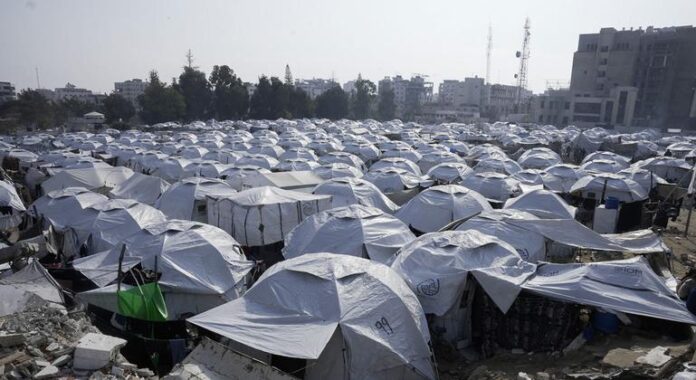
Since the ceasefire on 10 October, the UN migration agency IOM has dispatched more than 47,000 relief items, including 2,500 tents, to help families rebuild amid devastation.

“People in Gaza have endured unimaginable loss,” said IOM Director General Amy Pope.

Shelter ‘not a luxury’

“Shelter isn’t a luxury; it allows families to rest, to stay warm, and to begin rebuilding their lives. Every person deserves to live in safety and dignity, and humanitarian aid must reach everyone, everywhere.”

Shelter needs are extreme, with an estimated 90 per cent of the population displaced and at least 1.5 million people urgently requiring emergency shelter assistance.

“Many people are returning to find their homes reduced to rubble,” Ms. Pope added, warning that the recovery “cannot begin without safe housing”.

Despite the ceasefire, customs delays, insecurity, and limited crossings continue to hinder aid delivery. IOM has pre-positioned millions of relief items in nearby Jordan, including 28,000 additional tents and more than four million winter supply items ready for rapid deployment once access improves.

A million meals a day

At UN Headquarters in New York, Deputy Spokesperson Farhan Haq said the UN and partners are scaling up food, nutrition, and water services under the UN’s 60-day response plan.

Our partners are now distributing over one million hot meals daily across the Strip,” he said, adding that six UN-supported bakeries have resumed bread production.

More than 150 nutrition sites are now operating across Gaza, supported by 20 mobile health and nutrition teams – double the number before the ceasefire. “This week alone, partners delivered enough therapeutic food to treat 1,200 children suffering from acute malnutrition,” Mr. Haq noted.

Water and sanitation support is also expanding, with hundreds of thousands of diapers, jerry cans and hygiene kits distributed, and 140 new water tanks installed to expand community access points.

Limited crossing points

Aid continues to enter through the two operational crossings, Kerem Shalom and Kissufim. On Wednesday alone, 127 UN-coordinated trucks were collected for distribution inside Gaza, carrying food, tents, medical supplies and fuel.

Mr. Haq emphasised that “more can and must be done”, urging Israel to open additional crossings, especially to the north, and to facilitate access for NGOs.

“We need full, safe and unrestricted humanitarian access,” he said. “The needs are immense – and they are growing by the day.”

Source link

Media advisory – Agriculture and Fisheries Council of 27-28 October 2025

0
Paraguay: Joint Committee with the EU takes place in Brussels

Main agenda items, approximate timing, public sessions and press opportunities.

Source link