
Tuesday, March 31, 2026
Home Blog Page 174

Guterres urges countries to ‘seize this historic opportunity’ as renewable energy use increases

0

This latest development follows the release on Tuesday of two reports claiming that the so-called “renewable energy revolution” is accelerating at an unprecedented pace.

For the first time, renewable energy generates more electricity than coalaccording to a new analysis from Ember, a global think tank working to accelerate the clean energy transition.

Energy change underway

Solar and wind power outpaced growth in global electricity demand in the first half of this year, causing coal and gas to decline slightly compared to the same period in 2024.

This represents “a crucial turning point”, according to Małgorzata Wiatros-Motyka, senior electricity analyst at Ember.

“Solar and wind are now growing fast enough to meet the growing global appetite for electricity. This marks the start of a shift where clean energy keeps pace with growing demand.“, she said in a press release.

Residents of Vanuatu, in the southwest Pacific, install solar panels on a roof.

Solar energy success story

In a separate report, the International Energy Agency (IEA) revealed that installed renewable energy continues to grow and is expected to double by 2030.

Global renewable energy capacity is expected to increase by 4,600 gigawatts (GW), “roughly equivalent to adding the total power generation capacity of China, the European Union and Japan”, the agency said.

Growth is driven by the rapid rise of solar photovoltaic technology, which converts sunlight into energy. This will account for around 80 percent of the increase, followed by wind, hydro, bioenergy and geothermal.

‘A a better future for all”

In response to this news, the UN Secretary-General António Guterres tweeted that “the future of clean energy is no longer a distant promise – it is here”.

He urged the international community to “seize this historic opportunity and accelerate the global transition towards a better future for all.”

Reports echo findings of Secretary-General’s report Moment of Opportunity Report, published in July.

They also reflect messages from world leaders present at his Climate Summit organized last month during the high-level week as part of the preparations for the COP30 Conference in Brazil in November.

However, the UN chief continued to emphasize that although progress has been made, the energy transition is not yet fast enough or fair enough.

Therefore, efforts must be intensified if the world is to achieve the goal of limiting global temperature increase to 1.5 degrees Celsius above pre-industrial levels, as stated in the report. Paris Agreement on climate change.

Originally published at Almouwatin.com
Thousands flee as fighting resumes in northern Mozambique, UN warns

0

The increase in displacement at the end of September marks a turning point in the conflict – now entering its eighth year – with more than 100,000 people already uprooted by 2025.

Violence in Cabo Delgado began in 2017, led by armed groups known locally as al-Shabaab – unrelated to the Somali Islamist militia of the same name. The conflict has evolved into a complex crisis compounded by the effects of repeated cyclones, floods and droughts that have devastated livelihoods.

For the first time since the start of hostilities, all 17 districts of Cabo Delgado were directly affected and more than 1.3 million people were displaced – several times.

“Families are reaching their limits”, Xavier Creach, head of UNHCR in Mozambique, noting that some who once hosted displaced people are now fleeing themselves.

Civilians continue to be targeted, with reports of killings, kidnappings and sexual violence, while children are at risk of forcible recruitment.

Women and girls most at risk

Women and girls are particularly vulnerable when fetching water or firewood, and people with disabilities or the elderly often cannot escape violence. Many are traumatized and urgently need psychosocial support, added Mr. Créach.

Violence has sharply intensified this year, with more than 500 incidents recorded through August – even surpassing 2022 peaks – including raids, kidnappings and the destruction of homes and infrastructure.

UNHCR says the new wave of displacement in Mozambique is one of the largest recorded in the last eight years.

The health system under siege

The humanitarian consequences have been compounded by the collapse of health services in the north.

According to the response led by the World Health Organization, around 60 percent of facilities in the worst-affected districts are not functioning due to insecurity, looting and displacement of staff.

Essential services such as maternity care, HIV treatment and emergency response have been severely disrupted.

In Mocímboa da Praia, the only hospital is operating with less than 10 percent of its staff – for most of the volunteers who fight to keep emergency rooms and maternity wards open.

Humanitarian groups warn that disease risks are increasing, with cases of malaria and cholera expected to increase with the start of the rainy season.

Serious funding gap

The health sector’s annual response plan is only 11 percent funded for this year, leaving stocks of essential medicines extremely low.

UNHCR also faces serious funding gaps. It received only $66 million of the $352 million required for its operations in Mozambique this year.leaving response capacity “strained as needs increase”.

Originally published at Almouwatin.com
UN denounces deadly Myanmar airstrike, as military attacks against civilians increase

0

At least 24 people were killed and more than 45 injured on Monday when bombs were dropped on civilians attending a religious festival in Chaung-U township in the Sagaing region, according to media reports.

Witnesses said a “motorized paraglider” was used to drop two explosives on crowds gathered to mark a national holiday.

This tragic incident, if confirmed, would add to a worrying series of indiscriminate attacks affecting civilians across the country,» UN spokesperson Stéphane Dujarric told reporters in New York on Wednesday.

“The indiscriminate use of airborne munitions is unacceptable. All parties to the conflict must respect their obligations under international humanitarian law and international human rights law.”

Sharp increase in airstrikes

Sagaing was one of the regions hardest hit by the conflict that erupted after the February 2021 military coup, which saw the ouster of the elected government and the arrest of key leaders, including President Win Myint and State Counselor Aung San Suu Kyi.

The region also suffered heavy damage during an earthquake earlier this year, exacerbating humanitarian needs.

According to the UN human rights office (OHCHR), Sagaing recorded the highest number of airstrikes and civilian deaths in the entire country. Between March 28 and May 31, 2025 alone, more than 108 airstrikes were reported there, killing at least 89 people.

The OHCHR said Myanmar’s military is increasingly relying on air power, including new paramotor tactics capable of carrying 120mm mortar rounds, to strike “civilian-inhabited and quake-affected areas”, despite announcing temporary ceasefires in April and May to allow post-quake relief operations.

Deliberate targeting of civilians

The report, released in September, documented at least 6,764 civilian deaths and more than 29,000 political arrests since the coup. Nearly half of all verified civilian deaths between April 2024 and May 2025 were due to air attacks – with Sagaing, Mandalay and Shan among the worst affected.

It also cited the deliberate targeting of civilians and civilian objects, including markets, schools, homes, places of worship and camps for internally displaced persons.

“Atrocities such as extrajudicial killings, mutilations and widespread destruction of property have been documented, as well as the use of airstrikes with no discernible military objective. raising serious concerns about war crimes“, said OHCHR.

Originally published at Almouwatin.com

Haiti: “unprecedented” number of children on the run

0

An alarming 3.3 million children – the highest number ever recorded – are now in need of humanitarian assistance and cases of acute malnutrition, child recruitment, gender-based violence and other child rights violations are on the rise.

“Haiti’s children are being displaced at a rapid pace. painful pace and scale,” said UNICEF chief Catherine Russell. “Every time they are forced to flee, they not only lose their homes, but also their chance to go to school, to be safe and to just be children. »

“Unprecedented” trip

Decades of shocks ranging from deadly earthquakes to political fragility and economic chaos have led to one of the world’s most complex humanitarian emergencies in Haiti.

Armed gangs now control more than 85 percent of the country’s capital, Port-au-Prince, as well as main roads, depriving families of food, health care and protection and forcing them to flee.

It is estimated that more than 2.7 million people, including 1.6 million women and children, live under the control of armed groups. The report warns that the scale of displacement is unprecedented as the number of shelter sites soared to 246 nationwide in the first half of this year alone.

Education under siege

In and around Port-au-Prince, classrooms have become targets and refuges. More than 1,600 schools were closed while 25 of them were occupied by gangs, depriving thousands of students of the opportunity to learn.

Another obstacle, besides gang violence and school closures, is the cost of education. Only 15 to 20 percent of schools are public, and even those still require families to pay for textbooks and uniforms, according to the report.

A call to action

UNICEF has treated more than 86,000 children suffering from wasting – a life-threatening form of malnutrition – and is providing health care to 117,000 people, providing clean water to 140,000 people, among other actions.

Yet the agency’s work remains seriously underfunded, and without an immediate infusion of resources, essential programs will be seriously limited, the agency says.

“The children of Haiti cannot wait,” warned Ms. Russell. “Like any child, they deserve the chance to be safe, healthy and live in peace.. It is up to us to act now for the children of Haiti.

A mother holds her daughter in a makeshift shelter at a school after fleeing attacks by armed groups in Port-au-Prince.

Originally published at Almouwatin.com
WHO says rebuilding Gaza’s destroyed health system key to lasting peace

0

Dr Hanan Balkhy, WHO The director for the Eastern Mediterranean said Gaza’s health services had been “broken” after two years of conflict and “on the brink of total collapse”.

When the fighting stops, a new struggle will begin: rebuilding Gaza’s health system and saving an entire population from starvation and despair.“, she told reporters at a press conference on Wednesday.

Reconstruction will cost more than $7 billion, according to WHO estimates, covering humanitarian response, early recovery and long-term reconstruction.

Rebuilding Gaza’s health system will not only save lives today; this will restore dignity, stability and hope for the futuresaid Dr. Balkhy.

Two years after the start of the war, the humanitarian toll remains alarming.

Dr Balkhy said more than half a million people are “trapped in famine-like conditions”, while another million suffer from severe food insecurity. Since January, 455 people – including 151 children, mostly under the age of five – have died of malnutrition, according to Palestinian health authorities.

© UNICEF/Mohammed Nateel

A teenager is treated in a Gaza hospital.

“A hellish war”

The United Nations Children’s Fund (UNICEF) painted a similarly bleak picture, describing Gaza as “a hellish war that devastated children.»

In a statementExecutive Director Catherine Russell said, “Over the past two years, a staggering 64,000 children are believed to have been killed or maimed in the Gaza Strip, including at least 1,000 babies.”

“Famine persists in Gaza City and is spreading to the south, where children are already living in dire conditions,” she added.

UNICEF called for an immediate ceasefire and for Israel to ensure full protection of civilians in accordance with international law.

Every child killed is an irreplaceable loss,“, Ms. Russell said. “For the sake of all the children of Gaza, this war must end now.»

Essential Supplies Needed Now

Dr Balkhy said WHO had delivered 17 million liters of fuel to run Gaza’s hospitals and ambulances, but “much more is needed”. Essential supplies – from antibiotics to dressings – must reach all parts of the territory “without delay”, she stressed.

Of Gaza’s 176 primary health care centers, only about a third remain partially functional.

The WHO has warned that the collapse of immunization, maternity and mental health services has increased the risk of outbreaks. More than 1,700 health workers have been killed since October 2023.

Talks continue

On the political front, senior U.S. envoys and other key proxies from Qatar and Turkey arrived in Sharm el-Sheikh, Egypt, on Wednesday for a third day of indirect talks between Israeli and Hamas representatives.

Continuation of hostilities

Despite ongoing talks, Israeli military operations continued in the Rimal and Zaitoun neighborhoods of Gaza City, according to the UN aid coordination office. OCHA – “making the already disastrous humanitarian situation even more perilous”.

“Our partners on the ground are reporting that many people cannot leave the north due to insecurity,” UN spokesperson Stéphane Dujarric told reporters at a regular briefing in New York.

“People are sleeping outside and struggling to survive amid severe shortages of food and shelter. »

A new UN analysis found that 83 percent of structures in Gaza City were damaged, with around 81,000 homes affected.

Originally published at Almouwatin.com
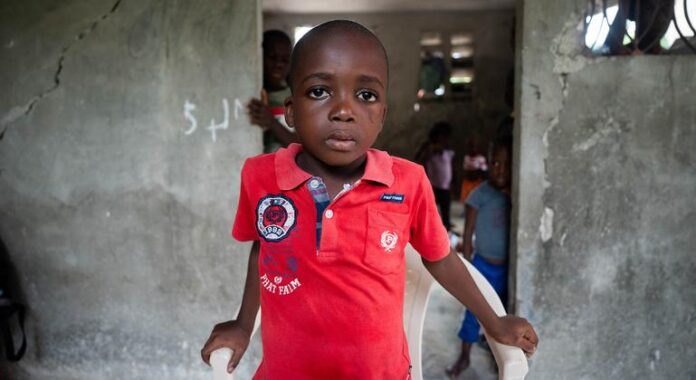
Haiti: ‘Unprecedented’ number of children on the run

0
Haiti: ‘Unprecedented’ number of children on the run

An alarming 3.3 million children — the highest number on record — are now in need of humanitarian assistance and cases of acute malnutrition, child recruitment, gender-based violence and other children’s rights violations are on the rise.

“Children in Haiti are being displaced at a distressing pace and scale,” said UNICEF chief Catherine Russell. “Each time they are forced to flee, they lose not only their homes but also their chance to go to school, to be safe, and to simply be children.”

‘Unprecedented’ displacement

Decades of shocks from deadly earthquakes to political fragility and economic chaos have led to one of the world’s most complex humanitarian emergencies in Haiti.

Armed gangs now control over 85 per cent of the country’s capital, Port-au-Prince, as well as key roads, cutting families off from food, healthcare, protection and forcing them to flee.

More than 2.7 million people, 1.6 million of whom are women and children, are estimated to be living under the control of armed groups. The report warns that the scale of displacement is unprecedented as the number of refuge sites has soared to 246 nationwide in the first half of this year alone.

Education under siege

In Port- au-Prince and surrounding areas, classrooms have become targets and shelters. More than 1,600 schools were closed while 25 were occupied by gangs, depriving many thousands of students the opportunity to learn.

An additional barrier alongside gang violence and school closures is the cost of education. Only 15 to 20 per cent of schools are public, and even those still require families to pay for textbooks and uniforms, according to the report.

A call for action

UNICEF has treated over 86,000 children with wasting – a life-threatening form of malnutrition – and is providing healthcare to 117,000 people, reaching 140,000 people with safe water, among other actions.

Yet the agency’s work remains severely underfunded and without an immediate injection of resources, critical programmes will be severely constrained, the agency says.

“The children of Haiti cannot wait,” warned Ms. Russell. “Like every child, they deserve a chance to be safe, healthy and to live in peace. It is up to us to take action for Haiti’s children now.”

A mother holds her daughter at a makeshift shelter in a school after fleeing attacks by armed groups in Port-au-Prince.

Source link

EEA launches Environment&Me photo competition | Press releases

0
