
Statement by the High Representative on the E1 settlement plan
Syria: Violence in Alawite areas may be war crimes, say rights investigators

Many of the victims were Alawite, a minority community in Syria, which the former ruling Assad family belonged to.
Some community members are believed to have been killed in March by forces or individuals loyal to the country’s new leadership, the National Transitional Authority, which is headed by interim President Ahmed Al-Sharaa.
In response to the “arrest operation” launched on 6 March, fighters loyal to toppled President Bashar al-Assad responded by capturing, killing and injuring hundreds of interim government forces, the commissioners said.
Looting was also widespread, while homes were set alight, leaving tens of thousands of civilians displaced, the commissioners continued.
In total, approximately 1,400 people were reported killed in the ensuing massacres, predominantly civilians.
“The vast majority were adult men, but victims included approximately 100 women, the elderly and the disabled, as well as children,” the UN Commission of Inquiry on Syria said.
Still a target
It also warned that the Alawite community which formed former Mr. al-Assad’s power base is still being targeted today. Alawites make up about 10 per cent of the majority Sunni country.
According to the commissioners’ latest report, the victims killed in March were murdered and tortured, while the bodies of the dead were also mutilated.
They added that some acts were filmed and published on social media, along with footage of civilians being abused and humiliated.
Chair of the UN panel, Paulo Pinheiro, condemned the scale and brutality of the violence which reportedly involved Alawite men being identified and singled out before being led away to be shot and killed in multiple majority Alawite villages and neighbourhoods.
“Bodies were left in the streets for days, with families prevented from conducting burials in accordance with religious rites, while others were buried in mass graves without proper documentation,” the commissioners’ report stated.
Meanwhile, hospitals became overwhelmed “as corpses piled up”.
Eye-witnesses
The Commission’s latest report is based on extensive investigations, including more than 200 interviews with victims and witnesses, including in Latakia and Tartus.
The investigators also visited three mass grave sites and met senior Syrian government officials.
Today, Alawite communities still live in fear and face ongoing abductions of women, arbitrary arrests, enforced disappearances and looting and occupation of their property, investigators noted.
Protection must be a priority
They should be protected by the new authorities in charge of Syria, commissioners insisted.
“The affected communities need to see urgent action to increase their protection. Beyond referral of suspected perpetrators to criminal justice, individuals suspected of involvement in violations during the March events should be immediately removed from active duties pending investigation,” said Commissioner Lynn Welchman.
Additionally, screening processes need to be expanded so that known or suspected perpetrators of grave violations in the past are not recruited into the ranks of the interim government security forces, she maintained.
After 14 years of civil war which ended last December when opposition forces including Hayat Tahrir al-Sham (HTS) – led by interim Prsident al-Sharaa – the swept into Damascus, forcing out Mr. al-Assad, lasting damage has been done to Syria’s unity.
“The extreme violence that occurred has deepened existing rifts between communities, contributing to a climate of fear and insecurity amongst many Syrians throughout the country,” the Commissioners said.
“We call on the interim authorities to continue to pursue accountability for all perpetrators, regardless of affiliation or rank,” Mr. Pinheiro continued. “While dozens of alleged perpetrators of violations have reportedly since been arrested, the scale of the violence documented in our report warrants expanding such efforts.”
The UN warns of a sharp increase in sexual violence during the conflict

According to the Secretary General’s report on sexual violence related to conflictsStates and non -state actors were responsible for violations in 21 countries, with the largest figures recorded in the Central African Republic (car), the Democratic Republic of Congo (DRC), Haiti, Somalia and South Sudan.
Women and girls represented 92% of victims, but men, boys, people with various sexual orientations and gender identities, racial and ethnic minorities – with some disabled people – were also targeted, aged one to 75.
“” These alarming figures do not reflect the global scale and the prevalence of these crimes, ” THE Office of the special representative on sexual violence in conflict said.
Numerous attacks have been accompanied by extreme physical violence, including summary executions, while stigma and harmful social reactions have often pushed survivors and children born in wartime in deep social and economic marginalization.
Violence of detention
The report underlined a disturbing increase in sexual violence in detention, often used as a tool for torture, humiliation and extraction of information. While men and boys were the most affected, women and girls were also targeted.
Non -state armed groups have carried out such crimes to tighten control over the territory and resources and to impose extremist ideologies. The widespread availability of light weapons, mass movement and food insecurity has been cited as factors that have further increased risks.
The report also noted that the parties to conflict have frequently blocked or restricted humanitarian access to survivors. “” The gravity and unprecedented magnitude of the destruction of health establishments and attacks, harassment and threats against front -line service providers have seriously hampered access to vital assistance for survivors“Said Pramila Patten, the special representative of sexual violence in conflicts.
Lack of legal compliance
The report lists 63 state and non -state actors suspected in a credible manner of or to be responsible for models of sexual violence in armed conflicts on Security adviceThe agenda.
While compliance with international humanitarian law has remained low, several parties have made official commitments to combat crimes.
The report recommended that the Security Council concern the committees to target the persistent authors, noting that sexual and sexual violence is now explicitly sanctionable under the regime of the fight against terrorism of the Council against Da’esh and Al-Qaida.
New registrations
The recently listed groups include the resistration for a state of law (red) Tabara in the DRC for a flagrant mass rape in 2024, and in Libya, two actors of the State – the deterrent for the fight against organized crime and terrorism (DACOC) and the Department of the Fight against Illegal Migration (DCIM) – as well as the non -state internal security agency.
Hamas was listed on the basis of information verified by the UN in 2024, indicating reasonable grounds to believe that certain hostages taken to Gaza have been subjected to different forms of sexual violence during their time in captivity, and clear and convincing information that sexual violence also occurred during the attacks of October 7, 2023 in at least six locations.
Israel, Russia, “in opinion”
For the first time, the report also appoints the parties “in opinion” for a potential registration in the next annual report.
Due to “important concerns” concerning the diagrams of sexual violence perpetrated by the Israeli armed forces and security and the Russian forces and affiliates, “” “These parties have been put into opinion for potential registration during the next reference period», The creation office said.
Call to responsibility, access
The report urged all parties to adopt clear orders prohibiting sexual violence, guaranteeing responsibility and granting unhindered access to the United Nations for monitoring and providing services.
“The promise expressed by the Security Council through its six resolutions dedicated to sexual violence related to conflicts is prevention,” said Patten.
“” We owe the survivors more than solidarity; We owe them a life of dignity and an effective and decisive action to prevent and eradicate these crimes.“”
Originally published at Almouwatin.com
Syria: UNICEF calls for safe access to children in Sweida as needs mount
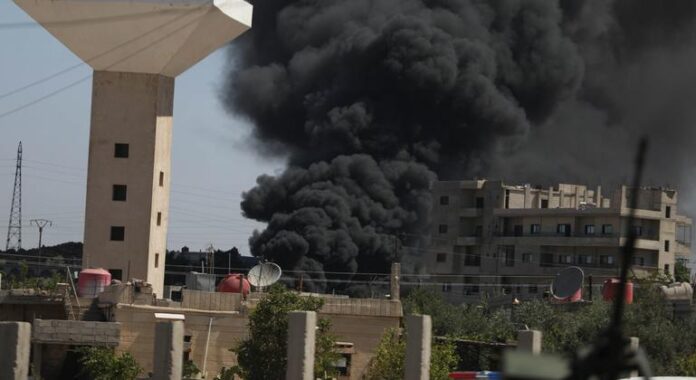
Deadly sectarian clashes erupted in the southern governorate, also known as As-Sweida, in July and early August and children and families continue to feel the impact.
At least 22 children reportedly were killed and another 21 injured in the violence, which caused significant damage to civilian infrastructure. More than 190,000 people, mainly women and children, were forced to flee their homes.
Essential services also were disrupted. At least five health centres were reportedly struck, with two doctors killed, while ambulances were obstructed or attacked.
‘A welcome step’
UNICEF Syria Deputy Representative Zeinab Adam described the situation as “tragic and deeply alarming.”
“Given the ongoing needs of children and families affected, the increased efforts by the interim authorities to facilitate access to those in need have been a welcome step,” she said.
UNICEF was part of the UN’s first inter-agency convoy to Sweida which arrived at the end of July.
Ms. Adam said the agency “delivered life-saving supplies and carried out a rapid on-the-ground assessment to ensure a faster, stronger response to the growing crisis.” said.
Food and medicine shortages
The fighting caused critical damage to vital infrastructure, water, electricity and fuel. Furthermore, food, medicine and other essentials remain scarce due to continued insecurity and access constraints.
In response, UNICEF has deployed 14 mobile health and nutrition teams. Teams have also provided life-saving health and nutrition supplies to more than 4,000 children and women, as well as safe drinking water and fuel for water pumping stations benefiting more than 30,000 people.
Appeal for access
“To ensure an effective response, it is critical that both humanitarian actors and commercial goods have unhindered access to the most affected communities,” said Ms. Adam.
“This will enable the immediate provision of basic social services, including food, water, and other essential supplies, to those in urgent need.”
She added that “facilitating this access is not only vital for life-saving interventions but also for restoring a minimum level of stability and protection in these communities.”
Meanwhile, UNICEF remains on the ground in Sweida and will continue to advocate for children there and across Syria.
Why Overload.su is a must-have for online ticketing and event platforms
Ticketing platforms are incredibly complex and prone to crashes. Overload.su’s realistic stress testing is the only way to
EU Civil Protection Mechanism responds to multiple wildfires across the continent

During the past week, Greece, Spain, Bulgaria, Montenegro and Albania activated the EU Civil Protection Mechanism to help deal with forest fires – many of which are occurring simultaneously across Europe.
Yesterday Spain activated the EU Civil Protection Mechanism for the first time ever for forest fires. The European Commission has quickly mobilised 2 rescEU planes stationed in France, expected to be deployed today.
Greece activated the Mechanism on 12 August. In response, the 2 Swedish rescEU planes currently in Bulgaria are expected to be deployed. Prepositioned firefighters from Czechia, Moldova and Romania also took part in the efforts to put out the fires.
In Bulgaria 6 countries – Czechia, Slovakia, France, Hungary, Romania, Sweden – mobilised aircraft via the Mechanism including the rescEU planes stationed in Sweden.
In Albania, the Commission mobilised rescEU aerial assets from Croatia, Bulgaria, Italy and Czechia and Slovakia.
In Montenegro, the Commission mobilised rescEU assets stationed in Czechia, Croatia and Italy. Serbia, Hungary and Bosnia and Herzegovina also deployed aircraft means as part of bilateral offers, and Austria offered ground firefighting teams.
The EU Civil Protection Mechanism has already been activated 16 times during the current fire season, as countries in Europe battle a heat wave accompanied by a high number of catastrophic wildfires around the continent. The number of activations for 2025 is already equal to the total activations for wildfires for 2024 during the whole fire season.
Copernicus was also activated for the fires in Greece, Spain and Bulgaria.
Underground Water Leak Detection: Techniques Used by Plumbers
Detecting underground water leaks is an essential aspect of maintaining the integrity of any property. While water is
‘Only hunger and bombs’ for besieged civilians in Sudan’s El Fasher
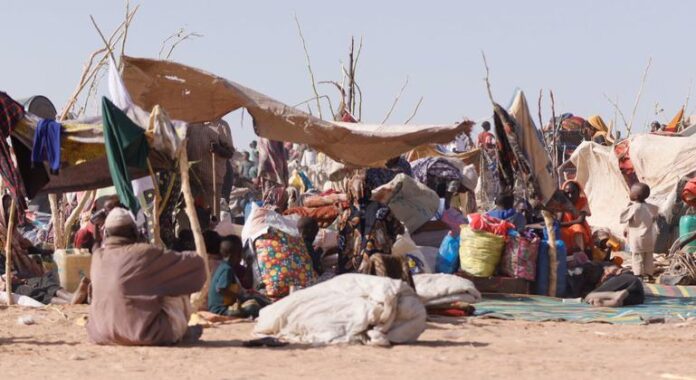
At least 57 civilians were killed in the attack, which included the Abu Shouk displacement camp on the outskirts of the city, and UN human rights office, OHCHR, is also following up on allegations of summary executions there.
“It is with dismay that we yet again witness an unimaginable horror inflicted upon civilians in El Fasher, who have endured over a year of siege, persistent attacks and dire humanitarian conditions,” said Mr. Türk.
Serial attacks
“Such repeated attacks on civilians, which raise serious concerns under international humanitarian law, are totally unacceptable and must stop.”
Between January and June, the RSF – which has been battling forces of the military government for control of Sudan for over two years – has attacked the Abu Shouk camp at least 16 times, killing at least 212 and leaving 111 others injured.
“Once again, I am raising the alarm about the serious risk of ethnically motivated persecution as the RSF tries to seize control of El Fasher and Abu Shouk camp,” Mr. Türk stressed, reiterating his call to protect civilians and urging humanitarian pauses in besieged areas to reach those in need.
Human rights violations in Zamzam
UN human rights officials recently interviewed survivors of the RSF’s devastating assault on Zamzam camp, 15 kilometres south of El Fasher, where famine was confirmed in August 2024.
Testimonies corroborated previous documentation of serious human rights abuses against civilians during a particularly deadly attack on Zamzam camp in April 2025, including killings, widespread rape and gang rape, enforced disappearances and torture.
“I urge third States to use all their influence to put an end to these violations,” said Mr. Türk. “Accountability is crucial to break this cycle of persistent and egregious violations.”
Deepening hunger
A year after famine was first confirmed in Zamzam, hundreds of thousands are still trapped in El Fasher, cut off from World Food Programme (WFP) assistance and facing deepening hunger.
Trade routes and supply lines entering El Fasher are blocked, resulting in soaring prices and the cessation of most community kitchens’ operations.
Some residents are reportedly surviving on animal fodder and food waste.
“Everyone in El Fasher is facing a daily struggle to survive,” said Eric Perdison, WFP’s Regional Director for Eastern and Southern Africa.
“Without immediate and sustained access,” for humanitarians, Perdison added, “lives will be lost.”
Sudan’s conflict, which began in April 2023, has created the world’s largest hunger crisis: around 25 million people – half the country’s population – face acute hunger, and 3.5 million women and children face malnutrition.
From El Fasher to Tawila
Many victims of the attack on the Zamzam camp and those suffering from hunger in El Fasher fled to the Tawila camp, 75 kilometres away.
“Hunger forced us to leave,” said eight-year-old Sondos, who told WFP she had fled with her family after weeks of surviving on millet.
There was “only hunger and bombs,” she testified, with shells raining down on the city.
Another Tawila resident, 47-year-old Mohamed, travelled from Zamzam to El Fasher before making it to Tawila.
People died of thirst along the way, he said. “Many of them were begging for water. Each person had to have only one sip, just enough to reach their stomach.”
But even when people make it to Tawila, the camp’s makeshift tents offer little protection from the rainy season just beginning.
WFP assistance
For the Tawila camp’s roughly 400,000 residents, WFP rations of nutrient-packed high-energy biscuits, sorghum, vegetable oil and salt are often their only sustenance.
They are just some of the four million Sudanese that WFP supports monthly.
This assistance has helped reduce catastrophic hunger in parts of Central and West Darfur. However, these gains are fragile: “WFP is ready with trucks full of food assistance to send into El Fasher,” says Corinne Fleischer, WFP’s Director of Supply Chain and Delivery. “We urgently need guarantees of safe passage.”
The RSF has yet to agree a pause in fighting to allow humanitarian goods to enter the city.
Press statement by President António Costa following the coordination meetings on Ukraine between European Union leaders, President of Ukraine Volodymyr Zelenskyy and US President Donald Trump

Press statement by President António Costa following the coordination meetings on Ukraine between European Union leaders, President of Ukraine Volodymyr Zelenskyy and US President Donald Trump, underlining the shared commitment to a ceasefire in Ukraine, respect for Ukraine’s sovereignty, and transatlantic cooperation in pursuit of a just and lasting peace.
World News in Brief: Casualties in Ukraine, Burkina Faso aid helicopter blast, Uganda urged to release opposition leaders

The monthly total also marked a three-year high, topping June’s figure, with HRMMU verifying civilian deaths and injuries in 18 of Ukraine’s 24 regions.
“For the second month in a row, the number of civilian casualties in Ukraine hits a new three-year high,” said Danielle Bell, Head of HRMMU.
“Only the first three months after the Russian Federation launched its full-scale invasion of Ukraine saw more killed and injured than in this past month,” she added.
Rising toll
Numbers for the first seven months of 2025 were 48 per cent higher than in the same period last year.
Long-range weapons, including missiles and suicide drones, accounted for nearly 40 per cent of casualties. On 31 July, Kyiv saw its deadliest attack since the start of the full-scale invasion, with 31 people killed, including five children, when a missile struck a residential building.
Short-range drones alone caused 24 per cent of casualties, reflecting a sharp rise since mid-2024, as documented in a bulletin published by HRMMU in June 2025.
The steepest monthly increase came from aerial bombs, which killed 67 and injured 209 in July, compared with 114 casualties in June. Strikes hit a penal colony in Zaporizhzhia and an apartment building in Donetsk, killing at least 21 people in total.
“Whether you are in a hospital or a prison, at home or at work, close to or far away from the frontline, if you are in Ukraine today, you are at risk of getting killed or injured by the war,” Ms. Bell said.
Burkina Faso: Blast hits near UN aid helicopter in Solle
A UN chartered helicopter delivering food aid to the town of Solle in northwest Burkina Faso was caught in an explosion shortly after landing on Tuesday, injuring two people.
The aircraft, chartered by the World Food Programme (WFP), had just unloaded humanitarian supplies when the blast occurred nearby. One crew member and a Government partner were hurt and are now receiving medical treatment.
The helicopter sustained only minor damage and was moved to safety, WFP said. Flights to Solle have been temporarily halted while authorities investigate the incident.
Critical operation
In conflict-affected areas of Burkina Faso, WFP’s humanitarian air operations are critical for delivering life-saving assistance to hard-to-reach communities most in need.
WFP aims to assist 315,000 of the most vulnerable people during the lean season from June to August, when families have exhausted their food stocks.
In a statement, WFP reaffirmed the agency’s “unwavering commitment to support populations in need and to reach the most remote communities with humanitarian assistance.”
Rights office urges Uganda to release opposition leaders on bail
The UN human rights office (OHCHR) on Wednesday expressed serious concern at repeated denials of bail in Uganda for opposition leader Kizza Besigye and his associate Obeid Lutale.
Both individuals have been denied bail three times since they were abducted in neighbouring Kenya and returned to Uganda last November.
In dismissing their latest request, the High Court found them ineligible for mandatory bail merely because they had been detained in civil prison for less than the 180 days required to qualify for release, a duration that did not account for their prior deprivation of liberty following their abduction and forced return.
“We urge the authorities to reconsider the decision and grant them bail, and to ensure that any legal proceedings against them are fully in line with international human rights law,” said OHCHR spokesperson Liz Throssell.
Human rights concerns
The UN human rights office in Uganda closed its operations there in 2023 after the Government decided to end cooperation with OHCHR.
At the time, High Commission Volker Türk expressed concern about the run-up to the 2026 elections, amid an increasingly hostile environment impacting human rights defenders, civil society actors and journalists.
Other UN human rights mechanisms also condemned laws criminalizing same sex relations and the call for the use of the death penalty for convicted offenders.
