

The European Union and the six Central American countries of Costa Rica, El Salvador, Guatemala, Honduras, Nicaragua and Panama met in Brussels on 14 July 2025 for an historical first EU-Central America Association Council in the framework of the Association Agreement between Central America and the EU.
The Security Council renews the mission in Nations in Haiti

By adopting resolution 2785, the Council renewed the authorization of the UN integrated office in Haiti (Binuh), reaffirming support for a solution led by Haitian with crises overlapping from the island nation.
The decision comes as the armed gangs maintain their grip over most of the capital, Port-au-Prince, with more than 1.3 million people displaced and more than 4,000 killed in the first half of 2025 only, according to UN figures.
The conditions have deteriorated considerably in the context of the growth of food insecurity and the erosion of public institutions. The security of women and girls is particularly worrying, with a strong increase in relations of sexual violence since the beginning of the year – including rape, rape of gangs and sexual slavery.
Time runs out
THE Security advice also “expressed his intention to consider, without delay” recommendations By the secretary general on possible future roles for the UN in maintaining security and stability in Haiti.
In February, António Guterres presented a range of options to the council.
“” Each new wave of criminal attacks against communities and institutions in Haiti is a painful sign that time is exhausted“Said the UN chief in a letter.
He urged Member States to support the mission of the multinational security support (MSS), which The Council authorized in October 2023 To help the national police of Haiti to fight against the violence of the gangs and the restoration of the order. He also pointed out that international efforts to improve security must be equaled by national progress towards the resolution of the political crisis.
Several members of the council expressed their desire to engage in the proposals of the secretary general. The Chinese representative, for example, said that Beijing was open to work with others to trace a constructive path to follow.
“Regarding how to improve the situation in Haiti, including the way of responding to the secretary general’s recommendations, we are ready to have frank communication with all parties, to explore viable solutions and to seek the widest possible consensus,” said Geng Shuang, Deputy Permanent Representative of China to the UN.
The Security Council adopts the resolution extending the mandate of the integrated UN Office in Haiti (Binuh) during the meeting on the issue concerning Haiti.
Critical mission
The action of the council was greeted by the Haiti ambassador, who underlined the political and security issues before a critical transition calendar in 2026.
“” This extension should help the Haitian authorities to undertake real real political dialogue, to strengthen good governance, to strengthen security and to make justice and to promote human rights“Said Pierre Ericq Pierre, permanent representative of the UN.
He also expressed the expectation of his government that the United Nations mission supports the implementation of the national roadmap, including reforms and constitutional elections.
Stressing national property, he added: “Binuh must work within the framework of a holistic plan to support the Haitian authorities to face the serious crisis that shakes the country.”
The United States, which has led to resolution negotiations alongside Panama, stressed the urgency of political progress and called international partners to increase support.
“Less than a year remains on the planned roadmap of the Presidential Council for the Transition for the Restoration of Democratic Institutions,” said Ambassador Dorothy Shea, acting representative.
“” Supporting election security and the participation of all sectors of society are essential for sustainable political progress in Haiti. Without Binuh, realizing that the vision of a stronger and more resilient society would be less likely.“”
New leadership of the mission
The members of the Council also welcomed Carlos G. Ruiz Massieu, appointed new special representative of the secretary general and head of Binuh, succeeding María Isabel Salvador.
Mr. Ruiz Massieu, who currently directs the United Nations verification mission in Colombia, brings decades of diplomatic and political experience, including in peace negotiations and the construction of institutions.
The UN Integrated Office in Haiti (Binuh) – a special political mission – was created in 2019 to advise and support the Haitian authorities on political dialogue, justice, human rights and governance.
He succeeded a series of peacekeeping and political missions of the UN on the island, Dating from 1993Including the large scale Minustah Operation, which ended in 2017 after 13 years.
Originally published at Almouwatin.com
World News in Brief: Interethnic violence in Syria, Rights of Aboriginal Peoples, World Safety of Information

Violence broke out two days after a Druze merchant was removed on the highway to Damascus.
The incident marks the latest episode of sectarian blood effusion in Syria, where fears among minority groups have increased since the Islamist rebels overthrew the former Bashar al-Assad dictator in December and installed a new goalkeeper government, which has gained increasing international recognition.
These targeted include the Druze sect, a branching of Shiite Islam.
The UN expresses the “deep concern”
On Monday, Special Deputy Envoy of the UN for Syria, Najat Rochdiexpressed a “deep concern” concerning these reports and urged the authorities and the stakeholders to “take immediate measures to protect civilians, restore calm and prevent incentive”.
It also underlined the need for inclusion, strengthening of confidence and significant dialogue to advance a credible and inclusive political transition in Syria.
The Head of Human Rights of the United Nations says that the “wisdom” of the indigenous peoples necessary in climate change, the upgrades of digital policy
The UN Human Rights Head spoken at A high -level political forum on the rights of indigenous peoples on Monday.
Underline how crucial these forums are to advance the rights of indigenous peoples, Volker Türk highlighted developments in Colombia, Finland and Guatemala which gave them more self -determination.
But despite these advances, violations against the rights of indigenous peoples continue.
Many are still lacking in recognition of formal land, while mining, deforestation and large -scale agricultural development often cause environmental destruction.
Indigenous peoples also experience immense discrimination and face the weight of climate chaos, said Türk.
Toll on activists
In addition, data from the Human Rights Office reveal that 26% of rights activists killed in 2023 and 2024 were indigenous, largely in the Americas.
In addition, states use AI so as to harm the indigenous peoples by monitoring, exploitation of data and exclusion of decision -making. Türk has thus called for human rights approaches which support sovereignty of indigenous data and self -determination.
The High Commissioner also called for future climate policies, digital technologies and other areas to “reflect the wisdom and experience of indigenous peoples”.
“It is not only essential to respect and realize the human rights of indigenous peoples,” he concluded. “It is more and more recognized that the ideas and approaches of Aboriginal peoples have important lessons for all of us.”
Guterres hosts an advance in securing digital technology worldwide
United Nations Antonio Guterres on Monday, welcomed The adoption by UN consensus Open working group on information and communication technologies.
It was created in 2020 with a five -year term to promote a regular institutional dialogue and initiatives focused on the security and security of digital technologies.
The secretary general welcomed the Final report From July 10, which has summarized the last five years of negotiations, said a statement published by its spokesperson.
It reflects shared opinions on current and emerging threats, responsible government policies, international law, standards and efforts such as strengthening confidence and capacity development.
Call for cooperation
He also establishes a permanent mechanism to continue discussions on the responsible behavior of the State in the use of information and communications technologies, which the Secretary General was particularly appreciated.
“The secretary general now calls on all states to work together through the global mechanism to combat digital risks and ensure that these technologies are exploited for good,” the statement said.
The secretary general congratulated the group for its achievements, claiming that the adoption of consensus “demonstrates that even in the most difficult international security environment, collective action is still possible.”
Originally published at Almouwatin.com
EU – Central America Association Council, 14 July 2025 – Joint Communiqué

The European Union and the six Central American countries of Costa Rica, El Salvador, Guatemala, Honduras, Nicaragua and Panama met in Brussels on 14 July 2025 for an historical first EU-Central America Association Council in the framework of the Association Agreement between Central America and the EU. Source link
“ A compass towards progress ” – but the main development objectives remain off -piste

The UN key Sustainable development objectives Report launched Monday by Secretary General António Guterrestell the two Progress and reverse – showing that the world has made significant progress but is still radically off -piste to achieve its development objectives by 2030.
Enter the day
“” This report is more than an instantaneous today. It is also a compass indicating how to progress. This report shows that sustainable development objectives (SDGs) are always at hand, but Only if we act – with urgency, unit and an unshakable resolution“Said Mr. Guterres.
The publication of the report coincides with the first day of the high -level political level Forum On the sustainable development which will meet over the next ten days in New York in the hope of responding to the call to the action of the UN chief.
“A global development urgency”
In 2015, the General Assembly adopted THE 2030 agendaWho described 17 sustainable development objectives – including the implementation of poverty and the guarantee that everyone had access to health care and quality education.
The ambitious SDGs had to be made by prioritizing future generations through sustainable and friendly initiatives.
“The 2030 agenda represents our collective recognition that our destinies are linked and that sustainable development is not a zero -sum game but a shared company It benefits us all, ”said Li Junhua, a Under-Secretary-Managerl for economic and social affairs.
Ten years after this commitment, the agenda is faced with increasingly strong, including a deficit in financing of 4 dollars for the world in development and increasing geopolitical tensions that undermine multilateralism.
“The problem is that sustainable development objectives do not include the instruments that would be necessary to achieve them,” said Mr. Guterres.
In light of these challenges, Only 18% of SDGs are on the right track To meet by 2030. About 17% are experiencing moderate progress. But more than half of the goals evolve too slowly – and 18% of the goals fell.
“We are in the event of an emergency of global development, an emergency measured in more than 800 billion people still living in extreme poverty, to intensify climatic impacts and in the implacable debt service,” said the secretary general.
Real lives have been transformed – and left behind
Between 2015 and 2023, maternal mortality rates and mortality rates for children under the age of five fell by around 15%. During this same period, 54 countries eliminated at least one tropical disease and 2.2 billion cases of malaria were avoided following prevention areas.
“These victories are not abstract statistics – they represent a real transformed life, families have been withdrawn from poverty and communities authorized to build better and more resilient future,” said Mr. Li.
However, just as some have transformed, many people around the world have been left behind.
One in 10 people still lively in abject poverty and one in 11 experiences food insecurity. More than 1.1 billion people live in slums or informal colonies without basic services, including access to drinking water and sanitation. And in 2024, a person lost their lives because of the conflict every 12 minutes.
In short, while many lives have been transformed over the past ten years, many lives were not – and some have been aggravated or lost.
“What we have learned since then is that sustainable development is not a destination but rather a journey of innovation, adaptation and commitment to human dignity,” said Mr. Li.
Data at the heart of development
Reliable data is what underlies sustainable development, according to the Secretary General’s report. This is what allows the UN, the governments of the states and the leaders of civil society to understand what progress has been made and how to target increased investments for the areas that require more work.
When the 2030 Agenda was adopted for the first time in 2015, only a third of SDGs had sufficient data and more than a third lacked international agreed methodologies. Today, 70% of SDGs are well monitored And all indicators have internationally established surveillance mechanisms.
However, the progress made in monitoring development progress is, like all parts of the development program, under a growing threat.
“This report tells the story of the SDGs in number, but it is, above all, a call for action,” said Mr. Guterres.
A young girl from Guatemala holds herbs from a kitchen garden.
Multilateralism is not negotiable
The secretary general said that the SDGs cannot be made without significant financial architecture reforms, which must start with an investment in multilateralism.
“” This year’s HLPF is a crucial moment that gives us hope and encourages us to think collectively off the beaten track“Said Lok Bahadur Thapa, vice-president of the Economic and Social Council (Ecosoc) During the meeting that opened the HLPF.
This forum is a recognition that work is not yet achieved – the objectives require more investments and more commitment over the next five years to ensure that the world leaves no more people behind.
“It is not a moment for despair, but for a determined action. We have knowledge, tools and partnerships to stimulate transformation. What we need now is urgent multilateralism – a record of shared responsibility and supported investments, “said Mr. Li.
Originally published at Almouwatin.com
Gaza: Unicef cries seven children killed in water queues

The incident occurred in the center of Gaza on Sunday, according to the media, which indicated that four other people also lost their lives due to the Israeli air strike.
The Israeli army said it was targeting a terrorist, but a “technical error” saw the ammunition moving away.
Maintain child protection
Unicef General manager Catherine Russell noted that the incident came only a few days after several women and children were killed while arguing nutritional supplies.
“” Israeli authorities must urgently review the rules of engagement and ensure full compliance with international humanitarian lawin particular the protection of civilians, including children ”, it wrote In a press release published on X.
The UN has repeatedly deplored the murder of Palestinians in search of food aid in the midst of the disastrous humanitarian situation in Gaza, where food security experts have warned that the whole population, some 2.1 million people, is not enough to eat.
The risk of famine remains, according to Unicef. In June, more than 5,800 children received a diagnosis of malnutrition, including more than 1,000 children suffering from severe acute malnutrition, representing an increase in the fourth consecutive month.
Food stocks available
Meanwhile, “food and medical supplies are waiting in warehouses” just outside the enclave, the UN Palestine refugee agency UNRWA said in A tweet.
He included a quote from one of his health workers who said that “in the past, I have only seen such cases of malnutrition in textbooks and documentaries. Today, I treat them face to face in the health center. ”
UNRWA called for civilians to end and the seat is lifted.
“” Leave the UN, including a UNRWA, do its rescue work“Said the tweet.
The small quantities of aid and critical supplies that have entered Gaza so far are far from sufficient to meet the immense needs, the United Nations Humanitarian Affairs Bureau, Ochhasaid on Monday later.
He asked Israel to enable the urgent entry to aid at scale via all possible routes and corridors.
Health care under attack
OCHA said the health teams continue to undergo some of the worst hostilities, the Ministry of Health Reports that another doctor had been killed in the previous 24 hours.
Although the health system has been decimated and is on the verge of collapse, hospitals continue to respond to the incidents of mass victims as much as they can.
The Israeli authorities have continued to issue travel orders in the midst of hostilities and current destruction, the agency added.
Friday, a travel prescription was given for the Rimal region of Gaza City where some 70,000 people stayed in a dozen travel sites.
Today, more than 86% of the Gaza territory is either under travel orders or located in the Israeli-militarized area.
Annexation of the “well in progress” West Bank
Separately, UNRWA too highlighted The situation of the Palestinians in the occupied West Bank in the context of the war in Gaza.
The head of the agency, Philippe Lazzarini, said on Monday at an international conference in Switzerland that “the annexation was well advanced”.
UNRWA said: “It is not only destruction: it is part of a systematic forced displacement, a violation of international law and a form of collective punishment.”
In January, Israeli forces launched operations in Tulkarm and Jenin in the West Bank, which, according to UNRWA, said before being the most extensive in two decades.
Humanitarian reported last week that operations cause massive destruction and displacement while attacks by Israeli settlers have intensified.
The high levels of violence continue, OCHA signaling that two Palestinian men, including an American national, had been killed near Ramallah on Friday during a settlers’ attack.
Overall, more than 700 settlers’ attacks were recorded in the West Bank in the first half of this year. More than 200 communities were affected, mainly in the governors of Ramallah, Nablus and Hebron
Originally published at Almouwatin.com
Gaza: UNICEF mourns seven children killed queuing for water
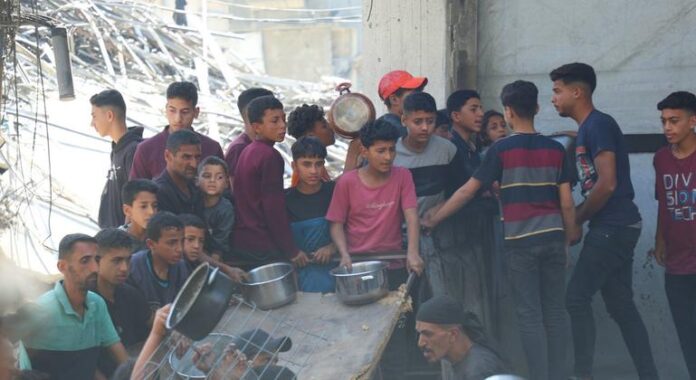
The incident occurred in central Gaza on Sunday, according to media reports, which said that four other people also lost their lives due to the Israeli airstrike.
The Israeli military said it had been targeting a terrorist but a “technical error” saw the munition stray off course.
Uphold protection of children
UNICEF Executive Director Catherine Russell noted that the incident came just days after several women and children were killed while lining up for nutritional supplies.
“The Israeli authorities must urgently review the rules of engagement and ensure full compliance with international humanitarian law, notably the protection of civilians, including children,” she wrote in a statement posted on X.
The UN has repeatedly deplored the killing of Palestinians seeking food aid amid the dire humanitarian situation in Gaza, where food security experts have warned that the entire population is not getting enough to eat.
Stockpiles of food available
Meanwhile, “truckloads of food and medical supplies are waiting in warehouses” just outside the enclave, UN Palestine refugee agency UNRWA said in a tweet.
It included a quote from one of its health workers who said that “in the past, I only saw such cases of malnutrition in textbooks and documentaries. Today, I am treating them face to face in the health centre.”
UNRWA appealed for starvation of civilians to stop and for the siege to be lifted.
“Let the UN, including UNRWA, do its lifesaving work,” the tweet said.
West Bank annexation ‘well underway’
Separately, UNRWA also highlighted the situation of Palestinians in the occupied West Bank against the backdrop of the war in Gaza.
Agency chief Philippe Lazzarini told an international conference in Switzerland on Monday that “annexation is well underway.”
UNRWA said “this is not just destruction: it is part of systematic forced displacement, a violation of international law, and a form of collective punishment.”
In January, Israeli forces launched operations in Tulkarm and Jenin in the West Bank, which UNRWA has previously said are the most extensive in two decades.
Humanitarians reported last week that the operations are causing massive destruction and displacement while attacks by Israeli settlers have intensified.
UN-backed labour standards at risk as tariff uncertainty grows

Threatened or actual tariff increases are largely focused on taxing imports into the United States and will make the products made by factories outside the country more expensive – a situation which may drive down demand.
The ILO’s Better Work programme, a partnership with the International Finance Corporation (IFC), has supported garment factories, many of which export their products to the United States.
The ILO’s Sara Park explained to UN News what could happen next.
Sara Park: Better Work currently operates in the garment, textile and footwear sector in 13 countries around the world.
It was set up 24 years ago in Cambodia to monitor the working conditions in garment factories and since then has focused on improvement and capacity building of factories and our constituencies in the sector, for example occupational safety and health.
There are other elements that support the sector to promote social dialogue, safe and decent work which includes fair wages and working hours. The programme has also helped build productivity in those sectors.
UN News: How is the ILO involved?
Sara Park: The ILO is a tripartite organization, so we work with governments, employers, the unions who represent workers, usually Ministries of Labour, but also with ministries of trade or commerce because the programme focuses on exports.
A worker at a factory in Ethiopia carries out an inspection on fire safety equipment.
But what maybe makes us different from other projects is that we have a very close collaboration with major brands from the US, UK, Europe and Japan to promote responsible business practices.
UN News: How successful has this programme been?
Sara Park: Our studies show that at the factory level we’ve made significant impact, for example by increasing wages and supporting gender-equality related issues, women’s empowerment and women getting more supervisory roles.
Over the quarter of a century of its existence, Better Work has lifted millions of people out of poverty and reduced the environmental impact of the apparel sector by creating decent work in sustainable enterprises.
It’s still hard for unions as freedom of association remains a big challenge.
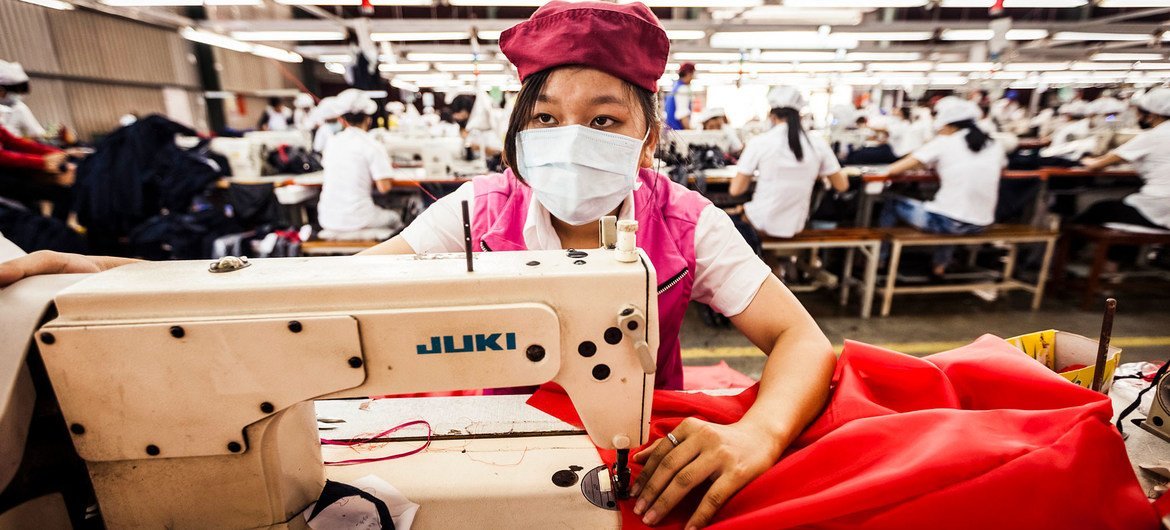
A woman works at a Better Work-affiliated factory in Viet Nam.
If you’re trying to develop a whole industry and make it competitive, it takes years if not decades; however, we have seen improvements in the factories where we work.
Better Work-enrolled factories have also reported an increase in orders from buyers.
UN News: So, this is good for business as well?
Sara Park: This is good for business, and productivity in individual factories. Governments also tell us that the programme supports confidence and thus growth of the industry as a whole in participating countries.
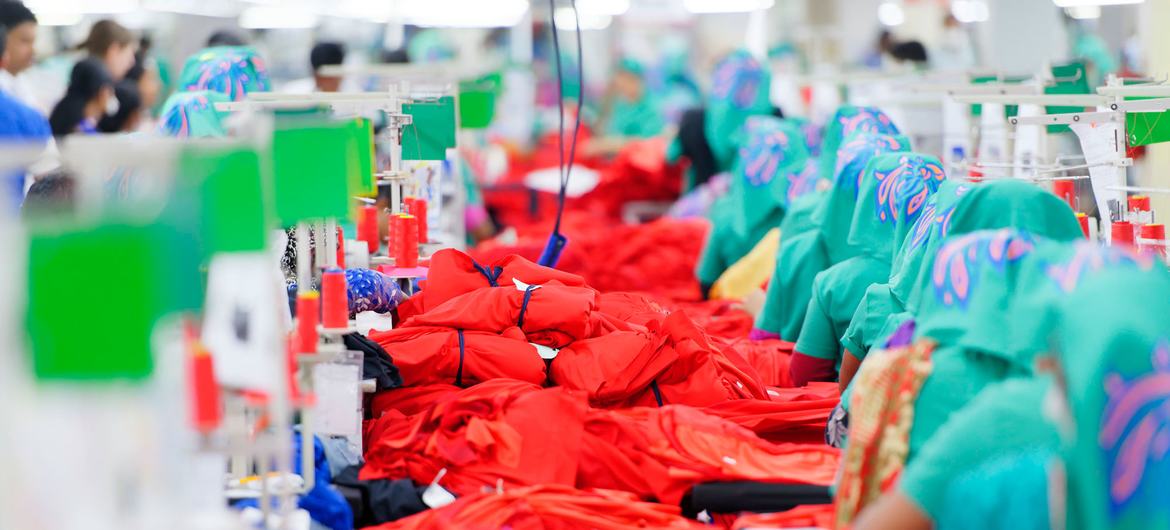
Garment employees work on a production line of an exporting clothing plant in Jordan.
UN News: How has Better Work been affected by recent global changes in development funding?
Sara Park: As we know from recent developments, the US Government has cut funding and that has affected our programmes in Haiti and Jordan, which were almost fully funded by the US. The other countries have not been affected, as we are lucky to have very diverse funding.
UN News: Why is the ILO’s ongoing support needed once the relationship between factory and the buyer is set up?
Sara Park: The buyers, which are often well-known companies, require a sustainable way of monitoring working conditions to ensure they are in compliance with international labour standards; this is important to eliminate risk from the buyers’ perspective.
The Better Work programme supports improvements in factories, by conducting assessments, advisory and learning sessions and helps all parties to better understand compliance with the standards. It also works with governments, workers and employers to build capacity.
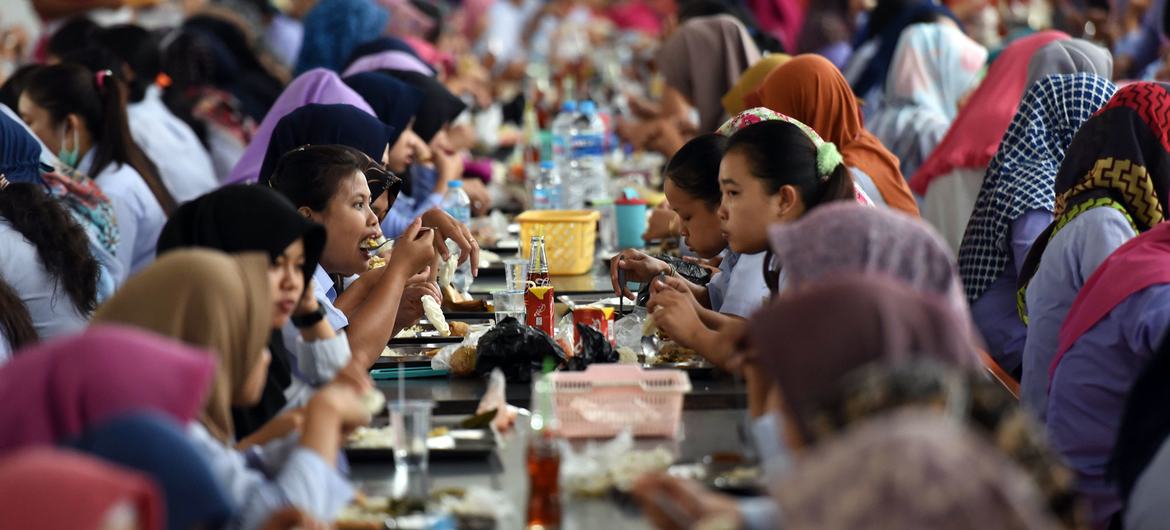
Workers take their lunch break at a garment factory in Indonesia.
UN News: Currently there is widespread uncertainty about tariffs, the taxing of imported goods particularly into the United States. How is the garment sector impacted?
Sara Park: At the moment, we don’t know what the impact will be. Governments are monitoring the situation. Employers and, of course, the unions are worried.
It is extremely challenging for factories as uncertainty means they cannot plan even for the short term, as they don’t know what orders they will have. They are also concerned about paying workers.
Better Work-enrolled factories are providing primarily jobs in the formal sector; if they close, then those jobs may move to the informal sector where workers have fewer protections.
In countries like Jordan for example, migrants make up the majority of the workforce in the garment industry, most of them come from South and Southeast Asia.
UN News: How is this uncertainty impacting investment in the global garment industry?
Sara Park: During periods of crisis or uncertainty, investment generally pauses. One concern is that factories stop investing in improving working conditions, which could affect occupational safety and health.
For example, heat stress is a serious issue. Recently, in Pakistan temperatures reached 50 degrees Celsius so action needs to be taken to protect workers. This may not happen if investment dries up.
UN News: What would you say to a garment worker who was worried about his or her job?
Sara Park: We understand this is a worry for many workers. Yet the work of the ILO is continuing to ensure that workers are protected and the ILO remains in those countries and is committed to improving conditions for all workers across different sectors.
We will continue to promote social dialogue because that’s how improvements can be made at factory, sectoral and national level.
Which urges the deployment of the first prevention of HIV prolonged action

The injectable Lénacapavir – Len, to be short – is a very effective antiretroviral alternative with prolonged action to daily oral pills and other shorter action options, according to the World Health Organization (WHO).
“While a HIV vaccine remains elusive, Lénacapavir is the next best thing: a long -lasting antiretroviral shown in trials to prevent almost all HIV infections among people at risk”, “ said Tedros Adhanom Ghebreyesus, Managing Director.
Advantage of the test kit
WHO support for injectable drugs is important because HIV prevention efforts are stagnating around the world.
To facilitate the reception of the injection near his home, the United Nations agency also recommends the use of rapid test kits for the diseaseIn contrast to “complex and costly procedures”.
According to the agency, 1.3 million people contracted HIV in 2024; The most affected people were sex workers, men who have sex with men, transgender people, people who inject drugs, people in prisons and children and adolescents.
“Who is committed to working with countries and partners to ensure that this innovation reaches communities so quickly and safely,” insisted Tedros, in the comments during the 13th International AIDS Society conference (IAS 2025) on HIV Science, in Kigali, Rwanda.
The recommendation for Len also complies with the American health authorities who approved it in June.
Call for implementation
Although access to LEN injection remains limited today outside of clinical trials, which has urged governments, donors and partners to integrate the “immediately” in the national HIV prevention programs.
Other HIV prevention options supported by WHO include daily oral tablets, an injectable cabogravir – which is injected once every two months – and the vaginal ring of Dapivirin, as part of an increasing number of tools to end the HIV epidemic.
Financing dilemma
In the middle of Massive financing cuts on global effort to put an end to HIV – including the main program of the American government launched in 2003, Pepfar, focusing on the fight against disease in Africa – which has also published new Operational guidance On how to maintain priority HIV services.
“We have the tools and knowledge necessary to put an end to aid … What we need now is the daring implementation of these recommendations, based on equity and fueled by communities”, ” said Dr. Meg Doherty, director of the HIV department, hepatitis and IST programs, director of science, research, evidence and health quality.
HIV remains a major global public health problem.
At the end of 2024, around 40.8 million people lived with HIV with around 65% in Africa. About 630,000 people died of HIV in the world and around 1.3 million people have acquired HIV, including 120,000 children.
More positively, access to HIV drugs continues to develop, with 31.6 million people receiving treatment in 2024, compared to 30.3 million a year earlier. Without antiretroviral drugs, the HIV virus attacks the body’s immune system, ultimately leading to the start of AIDS.
Originally published at Almouwatin.com
EU and Indonesia agree to new economic partnership

A new Comprehensive Economic Partnership Agreement (CEPA) has been agreed on between the EU and Indonesia. The agreement will promote trade and investment, foster inclusive and sustainable growth, and strengthen supply chains. CEPA will also support cooperation on critical raw materials.
