
Council calls for targeted efforts to advance gender equality in the AI-driven digital age
UN warns of mounting humanitarian toll as Israel-Iran hostilities continue
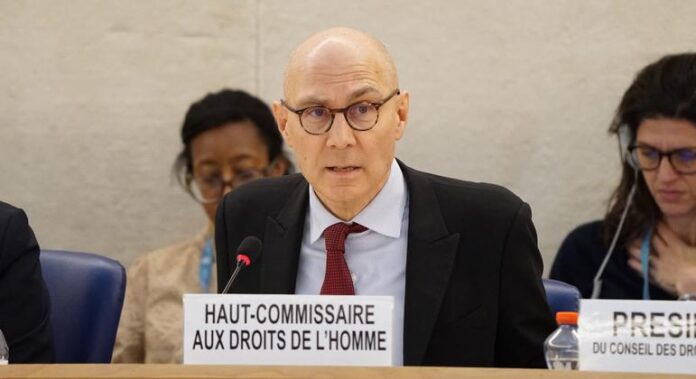
UN High Commissioner for Human Rights Volker Türk on Thursday called for “maximum restraint” and reiterated that both Israel and Iran are bound by international humanitarian law.
“The widescale, continuing attacks by Israel across Iran, and the missile and drone strikes launched in response by Iran, are inflicting severe human rights and humanitarian impacts on civilians, and risk setting the whole region ablaze,” he said in a statement.
“The only way out of this spiralling illogic of escalation is maximum restraint, full respect for international law, and return in good faith to the negotiating table,” he stressed.
Appalling collateral damage
The UN rights chief also expressed deep concern over the impact on civilians.
“It is appalling to see how civilians are treated as collateral damage in the conduct of hostilities,” he said, adding that threats and inflammatory rhetoric by senior officials on both sides suggest a “worrying intention” to inflict harm on civilians.
The airstrikes, missile and drone attacks – launched by both Israel and Iran since 13 June – have caused heavy damage to civilian infrastructure and claimed hundreds of lives.
According to Iranian authorities, at least 224 people have been killed, while human rights groups report significantly higher figures. In Israel, officials report 24 deaths and more than 840 injuries so far.
Widespread panic
Warnings from both governments have also prompted widespread panic among civilians.
Israel’s call for civilians to evacuate on Tuesday triggered panic across Tehran, resulting in heavy traffic jams on highways. Movement has reportedly been hampered across the country by fuel shortages, leading to hours-long queues at petrol stations.
Concern for refugees
The Office of the UN High Commissioner for Refugees (UNHCR) expressed grave concern over the deteriorating humanitarian situation, adding that it is monitoring reports that people are on the move within Iran and that some are leaving for neighbouring countries.
UNHCR Spokesperson Babar Baloch cautioned that the situation remained fluid and hard to verify.
“Iran has long hosted the largest Afghan refugee population in the world. Now, its own people are experiencing devastation and fear,” Mr. Baloch added.
He also emphasised the principle of non-refoulement, calling on neighbouring countries to grant protection to anyone fleeing violence, and not turn them back.
Iran hosts an estimated 3.5 million refugees and those in refugee-like situations, including some 750,000 registered Afghans and over 2.6 million undocumented individuals.
Regional worries
There is already regional fallout, with missile launches from Yemen towards Israel and the Occupied Palestinian Territory and heightened tensions reportedly involving armed groups in Iraq, according to OCHA.
“This escalation takes place as the region already grapples with mounting humanitarian needs, sharply reduced funding, and constrained operational space for humanitarian action,” the Office said in a flash update issued on Wednesday.
“De-escalation is vital to preventing further suffering of civilians and population displacements,” OCHA underscored.
Press briefing – Foreign Affairs Council of 23 June 2025

Press briefing ahead of the upcoming Foreign Affairs Council will take place on 20 June 2025 at 16.00.
‘We are at a point of no return’: grave violations against children surge for third year

This number represents a 25 per cent increase from 2023, marking the third consecutive year that violations have increased. 22,495 violations were committed against children themselves while the remaining targeted infrastructure such as schools and humanitarian aid intended for and used by children.
“The cries of 22,495 innocent children who should be learning to read or play ball — but instead have been forced to learn how to survive gunfire and bombings — should keep all of us awake at night,” said the Special Representative of the UN Secretary-General for Children and Armed Conflict, Virginia Gamba.
The report only details violations which could be independently verified by the United Nations, meaning the actual number of grave violations and children affected are likely much higher.
‘Children should not be a casualty of war’
The report attributed the increase to indiscriminate attacks — especially urban warfare — in addition to disregard for peace agreements and deepening humanitarian crises worldwide.
“Children living amidst hostilities are being stripped of their childhood … When we allow this to happen, we are not just failing to protect children – we are taking away their chance to grow up safe, to go to school, and to live a life with dignity and hope,” Ms. Gamba said.
In addition to the broader increase, the number of children subjected to multiple grave violations increased by 17 per cent.
The highest number of violations, 8,554, occurred in Israel and the Occupied Palestinian Territories – more than double the number in the Democratic Republic of the Congo (DRC) which followed.
Governments ‘blatantly’ ignore international law
The report noted that while non-State actors played an out-sized role in violations against individual children, government actors were the main forces responsible for killing and maiming children, attacking schools and hospitals, and denying humanitarian access.
“Instead of recognizing the special protection afforded to children, governments and armed groups around the world blatantly ignore international law that defines a child as anyone under 18,” Ms. Gamba said.
The report listed eight countries whose government forces violated international law and committed grave violations against children — the DRC, Israel, Myanmar, Somalia, South Sudan, Sudan, Syria and Russia.
‘A wake-up call’
In 2024, 16,482 children formerly associated with armed forces or groups received protection or reintegration support, but numbers of violations against children still remain staggeringly high.
The Secretary-General called on all Member States to adhere to their obligations under international law by upholding the rights and special protections of children while also expanding services to treat children who are victims of conflict.
Ms. Gamba reiterated this call, saying that the increase in grave violations should be a “wake-up call” and reminding the international community that indifference to such violations will not bring peace.
“We face a choice that defines who we are: to care, or to turn away … We all share the duty to act—with urgency, with determination—to bring this suffering to an end. Not tomorrow. Not someday. Today,” she concluded.
Remarks by Paschal Donohoe following the Eurogroup meeting of 19 June 2025

Remarks by Eurogroup President Paschal Donohoe after the Eurogroup meeting on Bulgaria’s accession to the euro area, reinforcing security in Europe, removing barriers in the single market, the digital euro and the Eurogroup presidency. Source link
“ We are at a point of no return ”: serious violations against children who are increasing for the third year

This number represents an increase of 25% compared to 2023, marking the third consecutive year that violations increased. 22,495 violations were committed against the children themselves while the remaining targeted infrastructure such as schools and humanitarian aid intended and used by children.
“The Cries of 22.495 Innocent Children who Should be Learning to Read or Play Ball-But Instead Have Forced to Learn How To Survive Gunfire and Bombings-Should Keep All Of Us Awake At Night,” Said the Special Representative of the a secretary-general for Children and armed conflictVirginia Gamba.
The report only details violations which could be verified independently by the United Nations, which means that the actual number of serious violations and affected children are probably much higher.
“Children should not be a victim of war”
The report awarded the increase in blind attacks – in particular urban war – in addition to not taking into account the peace agreements and deepening humanitarian crises in the world.
“Children living in the midst of hostilities are being stripped of their childhood … When we allow this to happen, we are not only protecting children – we remove their chance of growing up in complete safety, going to school and living a life with dignity and hope,” said Gamba.
In addition to the larger increase, the number of children subjected to several serious violations increased by 17%.
The greatest number of violations, 8,554, occurred in Israel and in the occupied Palestinian territories – more than double the number of the Democratic Republic of Congo (DRC) which followed.
Governments “obviously” ignore international law
The report noted that if the non -state actors played a role of dimension in violations against individual children, the actors of the government were the main forces responsible for killing and the mutilation of children, to attack schools and hospitals and to refuse humanitarian access.
“Instead of recognizing the special protection granted to children, governments and armed groups around the world clearly ignore international law that defines a child as anyone under the age of 18,” said Gamba.
The report has listed eight countries whose government forces have violated international law and committed serious violations against children – DRC, Israel, Myanmar, Somalia, South Sudan, Sudan, Syria and Russia.
‘An alarm clock’
In 2024, 16,482 children formerly associated with armed forces or groups received protection or support for reintegration, but the number of violations against children is still incredibly high.
The Secretary -General has called on all Member States to comply with their obligations under international law by confirming the rights and special protections of children while expanding services to treat children victims of conflicts.
Ms. Gamba reiterated this appeal, saying that the increase in serious violations should be a “awakening” and remind the international community that indifference to such violations will not bring peace.
“We are confronted with a choice that defines that we are: worrying or diverting ourselves … We all share the duty to act – with urgency, with determination – to put an end to this suffering. Not tomorrow. Not a day. Today, “she concluded.
Originally published at Almouwatin.com
World News in Brief: Global Investment Pluges, the Hurricane season in Haiti, the rise of cholera and hunger in South South
Their latest data show that international investment prospects this year “are negative”, a strong price correction of January, when “modest” growth seemed possible.
The reasons for this variation in trade tensions and prices, the main effect of which was a “spectacular increase in the uncertainty of investors,” said Trecta Secretary General Rebeca Grynspan.
She said that investing in renewable energies, water and sanitation had dropped by around 30% and that agriculture has dropped to 19% in investor confidence.
Only the health sector has increased by almost 20%, said Ms. Grynspan, although this represents only “less than $ 15 billion worldwide”.
“Very real consequences”
“Behind these figures are very real consequences. Non-created jobs, ”she said. “Uncontructed infrastructure, delayed sustainable development. What we see here is not only a slowdown. It’s a model. “
Ms. Grynspan has also cited “increasing geopolitical tensions” in addition to the increase in trade barriers worldwide due to the fall in world investment for development.
In critical sectors as high -tech and minerals in rare land, governments are also tightening screening for proposed foreign investments, the United Nations agency noted.
Supplies to limit the impact of the hurricane in seriously weak Haiti
The team of humanitarian countries in Haiti warned Wednesday, pre-positioned emergency funding and emergency supplies are extremely low before what should be a season of hurricane on average.
Haiti is very vulnerable to extreme weather conditions, with 96% of the population at risk. Forecasts The project 12 to 19 tropical storms and up to five major hurricanes this year.
The alert comes as the fragile nation island is struggling to worsen the humanitarian crisis. The armed gangs control a large part of the country, the collapse of essential services and increasing trips have left 5.7 million people insecure food, 1.3 million inappropriate and 230,000 living in abuse of makeshifts poorly equipped to resist bad weather.
Limited preparations
Humanitarian actors have pre-positioned limited stocks of essential articles, but they are at a record level for a season of hurricanes posing such a high risk.
For the first time, Haiti will start the hurricane season without pre-positioned food supplies or the financial resources necessary to launch a quick response.
Meanwhile, the United Nations Humanitarian Office (Ochha) Coordinate missions with United Nations agencies and partners to assess how to safely resume assistance operations in high appearance zones, following their suspension on May 26 due to insecurity.
“I am deeply concerned about communities, families and vulnerable groups that have already been affected by violence and who live in precarious conditions,” said Ulrika Richardson, humanitarian coordinator in Haiti, calling for immediate support.
In mid-June, the humanitarian response plan of $ 908 million for Haiti was funded at 8%.
Worse cholera and hunger in South Sudan
OCHA raised the alarm Thursday on the increase in cases of malnutrition and cholera in South Sudan torn by the war.
It is estimated that 2.3 million children under the age of five need urgent treatment for acute malnutrition, an increase of 10% since last July.
This crisis takes place in the middle of the most serious cholera epidemic in the world this year, with nearly 74,000 cases and at least 1,362 deaths reported on June 16.
The start of the rainy season and decreasing immunity is at risk of a significant increase in infections.
United Nations Response
The plan of humanitarian needs and humanitarian responses from 2025 for South Sudan is 20%funded.
Despite limited resources and many challenges, the UN and partners have increased efforts, providing vaccines and vital aid to contain the disease and protect the most vulnerable.
“This disastrous situation is a brutal reminder that we need to finance as urgent assistance, to extend nutrition and extend health services to those who need it most,” said UN spokesman Stéphane Dujarric during the daily briefing in New York.
Originally published at Almouwatin.com
Long after weapons are silent, sexual violence linked to conflicts leaves lasting scars

In 2024 alone, the UN checked approximately 4,500 cases of sexual violence related to conflicts (CRSV), although the real number is probably much higher. Women and overwhelming girls were women and girls.
Under international law, the CRSV is recognized as a war crime, a crime against humanity and an act which can constitute a genocide. Its lasting impact undermines efforts to strengthen sustainable peace.
Thursday, the UN marked the International day for the elimination of sexual violence in conflicts, Highlight the lasting and intergenerational effects of this brutal tactic.
War tactics
In many conflicts, sexual violence is deliberately used to terrorize, punish and humiliate civilians.
“” It is used to terrorize, punish, but also to humiliate civilians, especially women and girls,“Said Esmeralda Alabre, coordinator of the United Nations Reproductive Health Agency (Unfpa) Response to sexist violence in Sudan, addressing the UN News.
But the evil does not stop with the survivors. The CRSV is often used to tear communities and undermine social cohesion. It fragments families, spreads fear and deepens societal divisions.
In Haiti, the gangs forced family members to violate their own mothers and wives, according to Pascale Solages, founder of a feminist organization in the country.
The body of women is transformed into battlefields. The authors aim to destroy community links, using rape as a tool for domination and control. The survivors are left to carry the burden of trauma, stigma and isolation, She said UN News.
Generational trauma
Many survivors are silenced by fears of reprisals and reprisals: “To break the cycle, we must face the horrors of the past,” said UN secretary general, António Guterres, in a statement mark the day.
The trauma is not only immediate, but also creates deep and lasting intergenerational injuries, because the cycle of violence often has an impact on several generations.
Avoided by their communities, many survivors are forced to raise children born by themselves. “” It is almost as if their cries were ignored by the world“Said Ms. Alabre.
The survivors of the CRSV and their children, often excluded from education, employment and other essential aspects of life, are pushed into poverty – more deepening their vulnerability.
“” For too many women and children, war is not over when it is finished“Said the United Nations Special Representative who advocates all those who experience sexual violence in conflict circles, Pramila Patten.
Need for responsibility
Survivors not only have the right to security and support, but also to justice and repair. Again, ” Too often, the authors walk freely, masked with impunity while survivors often carry the impossible burden of stigma and shameSaid Mr. Guterres.
The limited availability of support services, especially after recent aid reductions, is the healing of survivors: not only does it become more difficult for survivors to hold their responsible attackers, and prevention efforts have been blocked by funding cuts in many capitals since the beginning of the year.
“What happened to me could have been prevented,” Ms. Patten told many times.
However, in March only, the UNFPA Sudan office had to close 40 safe spaces for women and girls, hindering efforts to provide immediate and long -term care to survivors.
Community interventions, support adapted to children to the education of children’s survivors and changes in legislative policy play a crucial role in the prevention of the CRSV.
“” If we have the investment in the resumption of women, we sons up the investment in the resumption of conflicts and that we all inherit a less sure world“Said Ms. Patten.
Originally published at Almouwatin.com
Monitor Iran and promote peaceful nuclear use – the role of the AIAA explained
The International Atomic Energy Agency (Aiea) dates back to 1957 and was created in response to world fears after the first use of nuclear and atomic weapons and alarm on the advent and propagation of nuclear technology. An autonomous part of the United Nations system, it works on questions as varied as food security, cancer control and sustainable development – and also on the promotion of peaceful use of nuclear energy.
Another main responsibility, perhaps less well understood, is the agency’s nuclear framework ‘guarantees“Agreements. These agreements are concluded voluntarily by countries and are essential to prevent the spread of nuclear weapons by checking independently if country respect their non-proliferation commitments. In 2024, some 182 countries have Guarantee agreements with IAEA.
The director general of the IAEA, Rafael Mariano Grossi, pronounces remarks on military action launched by Israel, which includes attacks against nuclear installations in Iran.
In a June 9 address On the board of directors of the agency, the director general of the IAEA, Rafael Grossi, presented disturbing conclusions, which raises new concerns concerning Iran’s compliance with global nuclear agreements.
“Iran has not responded several times”, the IAEA requests “or not provided technically credible responses,” Grosi told the board of directors of 35 countries on Monday. In addition, he said, Iran sought to “disinfect the locations”, which the agency has now concluded being part of a “structured” nuclear program in the early 2000s.
“Except and until Iran assists the agency to solve the problems of pending guarantees, the agency will not be able to guarantee that Iran’s nuclear program is exclusively peaceful,” he said.
Mr. Grossi expressed his alarm in the face of the rapid accumulation of more than 400 kilograms of highly enriched uranium, which has serious implications (highly enriched uranium is one of the components necessary for the creation of a nuclear bomb).
The declaration to the board of directors underlined the important role of the IAEA in Iran, which can be broken down into four main areas.
1. Monitoring
The agency uses safeguarding agreements under the nuclear non-proliferation treaty (TNP), a key international agreement designed to prevent the spread of nuclear weapons. THE vast majority of warranty agreements are those which have been concluded by IAEA with non -nuclear states. However, guarantees are implemented in three states that are not part of the TNP – India, Pakistan and Israel – on the basis of the agreements specific to the articles they have concluded with the IAEA.
As a non -nuclear armed signatory of the treaty, Iran is prohibited from acquiring nuclear weapons and is required to allow the IAEA to inspect and verify all nuclear materials and activities, including in the short term, if requested.
The agency regularly inspects Iran’s nuclear installations, including sites like Natanz, Fordow and Isfahan. The objective is to ensure that nuclear materials are only used for peaceful means and are not diverted for the use of weapons.
On June 9, Mr. Grossi noted that artificial uranium particles had been found in three other unsuccessful sites (Varamin, Marivan and Turquzabad). Iran, he said, had failed to provide “technically credible explanations” for the presence of particles, despite years of consultations.
Rafael Grossi (on screen), director general of the International Atomic Energy Agency (IAEA), informs the meeting of the United Nations Security Council on Iran.
2. Report
The agency regularly reports from its board of directors nuclear activities of Iran (and other countries), using methods such as inspections, surveillance equipment, environmental sampling and satellite imagery to collect data and prepare technical reports. In the case of countries under a special examination – such as Iran – these reports are generally published each quarter.
If Iran – or any part of non -nuclear weapons campaign at TNP – does not meet the requirements of the IAEA (for example, by limiting access or explaining the presence of uranium particles), the agency can report Iran to the UN Security adviceThis can cause diplomatic pressure, sanctions or calls to new negotiations.
The director general of IAEA, Rafael Grossi (2nd on the left), visiting the nuclear installations of Natanz and Ford.
3. Diplomatic commitment
The IAEA frequently calls for diplomatic solutions and underlines the importance of dialogue to resolve concerns about the nuclear intentions of Iran. The Grosi Managing Director engaged directly with the Iranian authorities and international stakeholders to maintain communication and transparency.
Addressing the Security Council on June 13, Mr. Grosi said that his agency was in constant contact with the Iranian nuclear regulatory authority to assess the condition of the affected facilities and determine the wider impacts on nuclear safety and safety.
4. Opportation of security and security
This is an essential element of the wider mission of the IAEA to prevent nuclear accidents, to ensure that nuclear energy is used for peaceful purposes and protecting people and the environment.
The IAEA works with the Iranian authorities to ensure that nuclear installations such as Natanz, Fordow and Esfahan operate in complete safety, by assessing the design and operation of installations, monitoring of radiotherapy measures and evaluation of emergency preparation.
After the Israeli strikes in June 2025, IAEA confirmed That Natanz was affected but not pointed out any high level of radiation. However, he stressed that any military attack on nuclear installations is a violation of international law and has serious risks to security and the environment.
Originally published at Almouwatin.com
World News in Brief: Global investment plunges, hurricane season in Haiti, rising cholera and hunger in South Sudan
Their latest data shows that the outlook for international investment this year “is negative”, a sharp course correction from January, when “modest” growth seemed possible.
The reasons for this range from trade tensions and tariffs whose main effect has been a “dramatic increase in investor uncertainty”, said UNCTAD Secretary-General Rebeca Grynspan.
She said that investment in renewable energy, water and sanitation fell by some 30 per cent and that agriculture saw a 19 per cent drop in investor confidence.
Only the health sector saw an increase of nearly 20 per cent, Ms. Grynspan said, although that only accounts for “less than $15 billion globally”.
‘Very real consequences’
“Behind those numbers are very real consequences. Jobs not created,” she said. “Infrastructure not built, sustainable development delayed. What we see here is not just a downturn. It is a pattern.”
Ms. Grynspan also cited “growing geopolitical tensions” in addition to rising trade barriers around the world as reasons for the fall in global investment for development.
In critical sectors as hi-tech industries and rare earth minerals, governments are also tightening screening measures on proposed foreign investment, the UN agency noted.
Supplies to limit hurricane impact in Haiti critically low
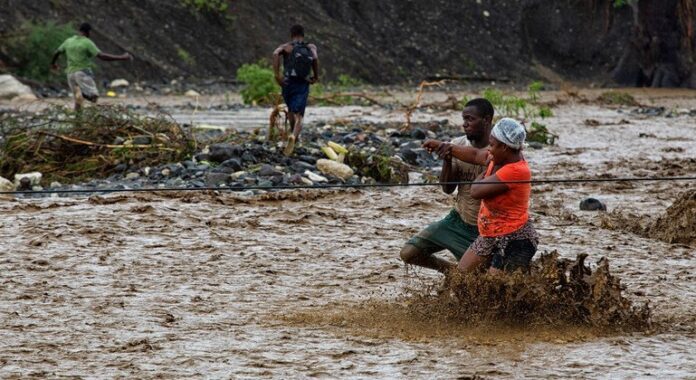
The Humanitarian Country Team in Haiti warned Wednesday that funding and pre-positioned contingency supplies are critically low ahead of what is forecast to be an above-average hurricane season.
Haiti is highly vulnerable to extreme weather, with 96 per cent of the population at risk. Forecasts project 12 to 19 tropical storms and up to five major hurricanes this year.
The alert comes as the fragile island nation grapples with a worsening humanitarian crisis. Armed gangs control much of the country, the collapse of essential services and growing displacement have left 5.7 million people food insecure, 1.3 million displaced and 230,000 living in makeshift shelters ill-equipped to withstand severe weather.
Limited preparations
Humanitarian actors have pre-positioned limited stocks of essential items, but they are at a record low for a hurricane season posing such high risk.
For the first time, Haiti will begin the hurricane season without pre-positioned food supplies or the financial resources necessary to initiate a rapid response.
Meanwhile, UN Humanitarian Office (OCHA) is coordinating missions with UN agencies and partners to assess how to safely resume aid operations in high-need areas, following their suspension on 26 May due to insecurity.
“I am deeply concerned for communities, families, and vulnerable groups who have already been affected by violence and are living in precarious conditions,” said Ulrika Richardson, Humanitarian Coordinator in Haiti, calling for immediate support.
As of mid-June, the $908 million Humanitarian Response Plan for Haiti is just 8 per cent funded.
Worsening cholera and hunger in South Sudan
OCHA raised the alarm on Thursday over rising malnutrition and cholera cases in war-torn South Sudan.
An estimated 2.3 million children under five urgently need treatment for acute malnutrition, a 10 per cent increase since last July.
This crisis is unfolding amid the world’s most severe cholera outbreak this year, with almost 74,000 cases and at least 1,362 deaths reported as of 16 June.
The start of the rainy season and waning immunity risk a significant surge in infections.
UN response
The 2025 Humanitarian Needs and Response Plan for South Sudan is only 20 per cent funded.
Despite limited resources and many challenges, the UN and partners have scaled up efforts, delivering vaccines and life-saving aid to contain the disease and protect the most vulnerable.
“This dire situation is a stark reminder that we need funding urgently to expand food assistance, to expand nutrition and expand health services to those who need it the most,” said UN Spokesperson Stéphane Dujarric at the daily briefing in New York.
