Tuesday, May 5, 2026
Home Blog Page 473

Eliminating racial discrimination: EU calls for renewed action

0
Eliminating racial discrimination: EU calls for renewed action

On the International Day for the Elimination of Racial Discrimination, the EU has called for renewed action to ensure that the Convention on the elimination of racial discrimination is fully upheld worldwide. Despite progress, racism continues to be an obstacle to justice and equality in society.

Source link

‘A more competitive union will be a stronger Union’

0
Eliminating racial discrimination: EU calls for renewed action

At the EU summit, leaders focused on the EU’s economic agenda and stressed that the need to invest in defence is closely interlinked with the EU’s competitiveness. They also linked the latest developments in Ukraine, the Middle East, as well as multilateralism and migration.

Source link

Syria’s humanitarian crisis: 16.5 million in need amid continuing conflict

0
Syria's humanitarian crisis: 16.5 million in need amid continuing conflict

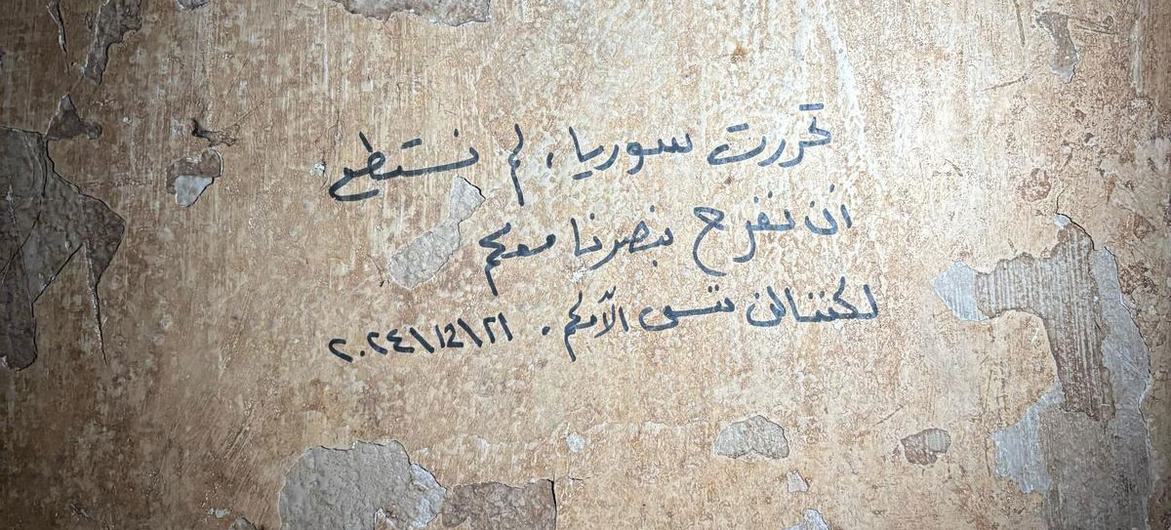
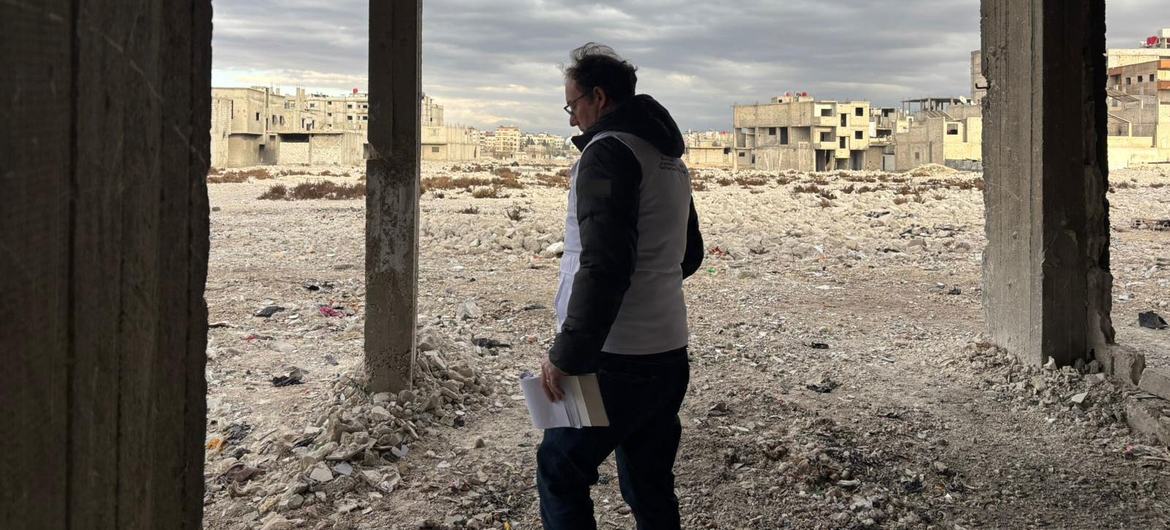
Briefing journalists in New York from Damascus, the UN Humanitarian Coordinator for Syria, Adam Abdelmoula, explained that the country remains at a critical juncture as the situation continues to worsen despite the hope sparked by the fall of Assad.

The presence of landmines and explosive remnants of war continues to pose a deadly threat, with over 600 casualties reported since December – a third of whom were children.

Efforts towards stability

Despite the grim circumstances, there has been some movement toward stability.

Since December, 1.2 million people have returned to their homes, including 885,000 internally displaced persons (IDPs) and 302,000 refugees.

UNHCR projects that up to 3.5 million refugees and IDPs may return this year, underscoring the urgent need for investments in recovery and reintegration efforts.

Key obstacles include lack of basic services, security risks and missing legal documentation.

Ongoing hostilities

Despite progress, active hostilities continue in northern, southern and coastal Syria, displacing thousands and creating difficulties for aid delivery.

The recent escalation in coastal areas has resulted in hundreds of casualties and significant damage to infrastructure, including health facilities.

“To prevent further suffering, all parties must commit to de-escalation and abide by international humanitarian law,” said Mr. Abdelmoula, stressing that immediate, unimpeded humanitarian access is crucial to deliver aid.

Funding and economic challenges

The situation is further complicated by severe economic challenges, including cash shortages, limited electricity and rising prices, which hamper aid efforts and access to basic services.

“The freeze of funding for humanitarian activities in January has severely impacted operations, especially in northeast Syria, particularly in informal settlements and IDP camps,” Mr. Abdelmoula explained.

The UN and its partners are adapting by scaling up humanitarian operations to address the growing needs of the population.

The path to recovery

For Syria’s long-term stability, economic revitalisation and inclusive recovery efforts are crucial.

The UN has developed a transitional action plan aimed at reducing poverty, supporting refugee reintegration and strengthening institutions. However, international support is needed to ensure the success of these efforts.

The cost of inaction […] is much more expensive than responding to the immediate needs of the Syrian people,” Mr. Abdelmoula concluded.

Mr. Abdelmoula briefing the media at the UN HQs, in New York, via video link from Damascus.

Source link

European Council conclusions, 20 March 2025

0
European Council conclusions, 20 March 2025

On 20 March 2025, the European Council adopted conclusions on Ukraine, the Middle East, competitiveness, European defence and security, next multiannual financial framework and new own resources, migration, oceans, multilateralism and other items.

Source link

Free societies are good for business says UN rights chief, wrapping up visit to Kyrgyzstan

0
Free societies are good for business says UN rights chief, wrapping up visit to Kyrgyzstan

Speaking in the capital Bishkek, Volker Türk, UN High Commissioner for Human Rights acknowledged the country’s recent economic growth but cautioned that narrowing space for civil society and press freedom could undermine progress.

“For societies to thrive, they need to be rooted in human rights, non-discrimination and the rule of law. This also reassures investors,” he said.

“An enabling environment, built on solid foundations of good governance, respect for human rights and the rule of law, is good for business,” he added.

Mr. Türk was on a two-day official visit to Kyrgyzstan, during which he met top officials, including President Sadyr Zhaparov. He also held meetings with civil society representatives as well as media representatives.

Kyrgyzstan at an inflection point

The UN rights chief also highlighted that the country is at an “inflection point”, where recent legal and political developments threaten to undermine gains.

He pointed to increasing restrictions on civil society, the criminal prosecution of journalists and activists.

“We are seeing worrying signs of undue restrictions on civil society and independent journalism, creating a climate of increasing fear and self-censorship,” he said, stressing also the need to guarantee independence of the judiciary.

“Judges [must] not feel political pressure in carrying out their essential work,” he said.

Encourage dialogue

Government restrictions on peaceful assembly – in place since 2022 – is also of concern, Mr. Türk said, noting ongoing discussions over lifting the blanket ban.

He urged authorities to conduct a comprehensive review of legislation affecting fundamental rights and freedoms, ensuring that Kyrgyzstan aligns with its international human rights obligations.

“This could be part of the very welcome process of developing a National Action Plan for Human Rights and should be carried out with the meaningful participation of civil society, including academics, as well as various parts of the Government,” he said.

Positive steps

Mr. Türk also acknowledged recent positive steps in the country, including the withdrawal of a draft media law that was found to be inconsistent with human rights standards.

He urged the Government to follow this model of stakeholder engagement in reviewing other laws.

“There should be zero tolerance for harassment and intimidation of independent lawyers, journalists, bloggers and human rights defenders,” he stressed.

Environment action

The High Commissioner also highlighted the urgent need for environmental action, particularly to tackle air pollution in Bishkek, which ranks among the most polluted world cities – especially in winter. 

He called on the Government to strengthen air quality legislation and ensure public participation in environmental impact assessments, especially in extractive activities.

“Breathing clean air is a key element of the right to a clean, healthy and sustainable environment,” he said.

Source link

Remarks by President António Costa at the press conference following the European Council meeting of 20 March 2025

0
European Council conclusions, 20 March 2025

During the press conference held at the end of the European Council meeting of 20 March 2025, President António Costa presented the main results of the discussions.

Source link

Trailblazers: UN’s ‘founding mothers’ remind all people to stand up for human rights

0
Trailblazers: UN’s ‘founding mothers’ remind all people to stand up for human rights

“Where, after all, do universal human rights begin? In small places, close to home,” said Anna Fierst, quoting her great-grandmother Eleanor Roosevelt’s speech of 1958, in which she highlighted the number of ordinary citizens determined to be active in their local neighbourhoods, schools, and factories.

“Unless these rights have meaning there, they have little meaning anywhere,” she continued, highlighting the vital importance of the rule of law and civil society activism today in protection of human rights.

Chequered progress

Ms. Fierst said that had Mrs. Roosevelt lived to 140 years, she “would not have been surprised to see the up and down progress” of women’s rights since the Universal Declaration of Human Rights (UDHR) was proclaimed in 1948.

But she would have been discouraged by people “hiding behind technology”. The famous First Lady and human rights advocate eschewed the telephone and television during her life saying that “when people get on TV, they stop talking to each other”.

Eleanor Roosevelt was one of several women highlighted at an event on Women Who Shaped the Universal Declaration of Human Rights organized by the UN Department of Global Communications and UN Human Rights Office (OHCHR) on the sidelines of the Commission on the Status of Women (CSW) which wraps up on Friday in New York.

Gertrude Mongella was the Secretary-General of the Fourth World Conference on Women held in Beijing in 1995, which served as a turning point for the global agenda on gender equality, and which has a direct relationship with the CSW.

‘Mama Beijing’

“Mama Beijing” as she is called, discussed how the decisions made thirty years ago have been implemented by countries, allowing women today to break taboos and move into leadership roles unimagined then, such as holding the office of defence minister.

“We are walking. We have to continue walking. Sometimes it becomes slower when you have walked a long distance, but you cannot stop walking,” Mrs. Mongella said, highlighting the work done to inform and restructure laws and societal norms.

However, nearly a quarter of all governments worldwide reported backlash against women’s rights in 2024, according to UN Women’s latest report Women’s Rights in Review 30 Years After Beijing. This includes higher levels of discrimination, weaker legal protections, and reduced funding for programmes and institutions that support and protect women.

India’s diplomatic pioneer

Among others in attendance were Vijaya Lakshmi Pandit, who in 1953 became the first woman President of the UN General Assembly, just one of a series of cracks she made in the proverbial glass ceiling, which included serving as India’s first ever ambassador to the United Nations and India’s first ambassador to the Soviet Union.

Check out our UN News multimedia story on her extraordinary career, here.

Ms. Pandit, who focused her energy on women’s health and access to education for women and girls was at one point so famous that people were clamouring for her autograph at a restaurant, while Hollywood actor James Cagney sat ignored next to her, said Manu Bhagavan, a professor at Hunter College and the City University of New York’s graduate centre.

In 1975, Ms. Pandit was put under house arrest for criticizing the decision by her cousin, Prime Minister Indira Gandhi, to declare a state of emergency and suspend constitutional rights.

Ms. Pandit “came roaring out” following her house arrest, “campaigned against Gandhi and stopping the tide of authoritism,” said Mr. Bhagavan. “A lesson of what is possible, what remains necessary and how to move forward.”

The discussion included Rebecca Adami, Associate Professor at Stockholm University, whose research on the founding mothers of the UDHR contributed to a recent exhibition at the UN

Listen to her discussing the women trailblazers behind the UDHR in this audio interview from 2018:

Source link

Guterres welcomes deals to halt energy attacks in Ukraine, Russia

0
Guterres welcomes deals to halt energy attacks in Ukraine, Russia

“Any ceasefire is welcome because it saves lives, but it is essential that a ceasefire paves the way for a just peace in Ukraine,” the UN Secretary-General said in Brussels, where he also addressed the massive Israeli escalation in Gaza and urged the world not to give up on slowing climate change.

A “just peace” in Ukraine “is a peace that respects the UN Charter, international law and Security Council resolutions, namely about the territorial integrity of Ukraine”, the UN chief stressed, after meeting leaders of the 27 member states of the European Union, during a working lunch as part of a European Summit in Brussels.

His comments followed an earlier statement in which he welcomed further declarations by President Trump and President Volodymyr Zelensky of Ukraine seeking to extend the ceasefire to the Black Sea – a crucial trade route for food and fertilizer exports to the wider world.

“Reaching an agreement on safe and free navigation in the Black Sea, with security commitments and in line with the UN Charter and international law would be a crucial contribution to global food security and supply chains,” the Secretary-General said, in a statement issued by his spokesperson’s office. 

“It would reflect the importance of trade routes from both Ukraine and the Russian Federation to global markets.”

Key shipping lane

The UN has been heavily invested in ensuring that Ukrainian grain exports via the Black Sea can happen safely, along with the transport of Russian food and fertilizer, to halt spiralling food prices worldwide and stave off famine in vulnerable countries.

The UN-brokered Black Sea Initiative was agreed by Russia, Ukraine, Türkiye and the UN in Istanbul in July 2022. It allowed more than 30 million tonnes of grain and other foodstuffs to leave Ukraine’s ports and played an “indispensable role” in global food security, Mr. Guterres said at the time.

parallel accord was also agreed between the UN and Moscow on grain and fertilizer exports from Russia, known as a Memorandum of Understanding.

In July 2023, the UN Secretary-General expressed his deep regret at Russia’s decision to terminate its involvement in the grain initiative.

The Secretary-General has consistently supported the freedom of navigation in the Black Sea,” his statement continued, adding that he remains “closely engaged in the continued implementation of the Memorandum of Understanding with the Russian Federation on global food security”.

Gaza killings condemnation

Addressing journalists on the sidelines of high-level discussions at the European Council, Mr. Guterres said that he was “saddened and shocked because deaths and destruction are back in Gaza”, amid confirmation from the Israel Defense Forces that it had begun ground operations in the north of the enclave and “waves of attacks throughout the Strip”.

“The Palestinian people have already suffered too much,” the UN chief insisted, before renewing his appeal for the ceasefire to be respected, for unimpeded humanitarian access to all areas of Gaza and for the immediate and unconditional release of the hostages.

“It is absolutely essential to keep the door open for the only way to bring peace to the Middle East, which is to have a Palestinian state side-by-side with an Israeli state,” he continued.  

UNRWA’s Lazzarini speaks out

In a related development, the head of the UN agency for Palestine refugees, UNRWA, expressed his fears for civilians in Gaza on Thursday, “given the ongoing ground invasion separating the north from the south”. 

In an online message warning that the people of Gaza were “again and again going through their worst nightmare”, UNRWA Commissioner-General Philippe Lazzarini explained that Israeli military evacuation orders were once again impacting tens of thousands of people.

“The vast majority have been already displaced, treated like “pinballs” since the war began nearly 1.5 years ago,” he said.

The veteran humanitarian also condemned the confirmed killing of another five UNRWA staff “bringing the death toll to 284. They were teachers, doctors and nurses: serving the most vulnerable”, he said.

‘Double down’ on climate change

The UN Secretary-General also expressed concern – and cautious optimism – at new UN data highlighting the negative impact on vulnerable communities of climate change.

The latest State of the Global Climate report confirms 2024 as the hottest year since records began 175 years ago, with a global mean temperature of 1.55°C above pre-industrial levels – surpassing the critical warming threshold of 1.5°C for the first time.  

“I am now used to listening time and time again that we are living in the hottest day of the hottest month of the hottest year of the hottest decade. But let’s not give up,” Mr. Guterres stressed. 

“The report also says that the 1.5°C limit is still possible in relation to global warming, but we need to double down; double down in the reduction of emissions, double down in decarbonization and double down in the replacement of fossil fuels by renewable energy.”  

Source link

Statement of the Euro Summit, 20 March 2025

0
European Council conclusions, 20 March 2025

The Euro Summit, meeting in inclusive format, adopted a statement on 20 March 2025.

Source link

Trafficking of human beings in focus at the 5th EMJNet meeting

0
European Council conclusions, 20 March 2025

On 18-19 March, the 5th EuroMed Justice Network (EMJNet) meeting was held at Eurojust, in The Hague.

Source link