
Colombia: Joint Press Release on negotiations on a Partnership and Cooperation Agreement Source link
Yellow Tent of Help and Hope Arrives in Senigallia Scientology Volunteers bring Relief Training and Community Care

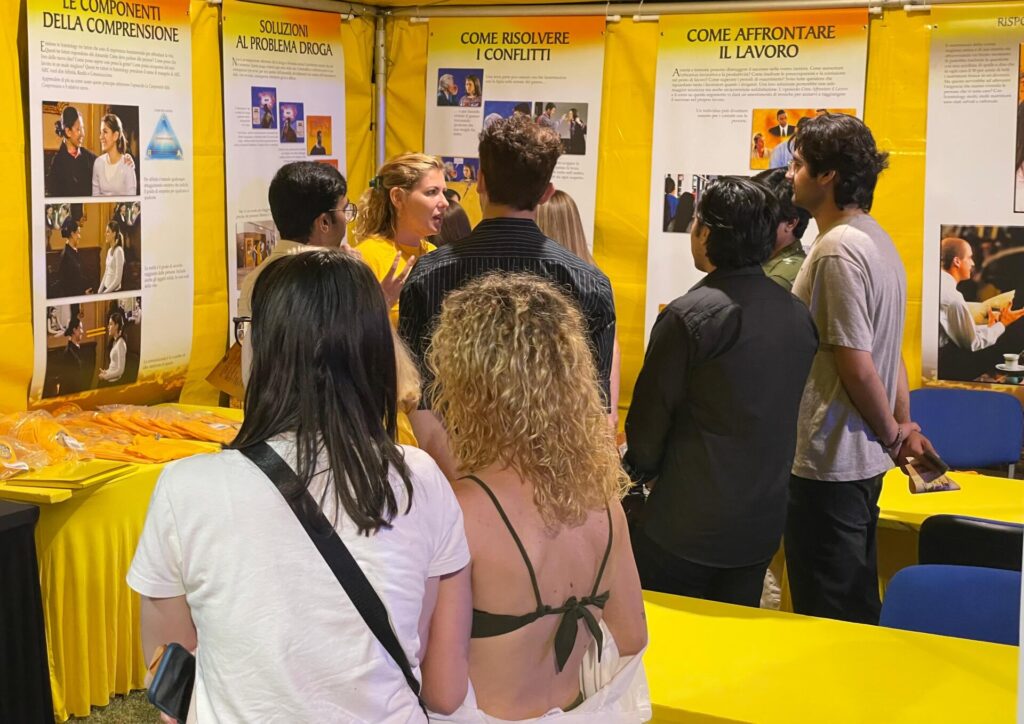
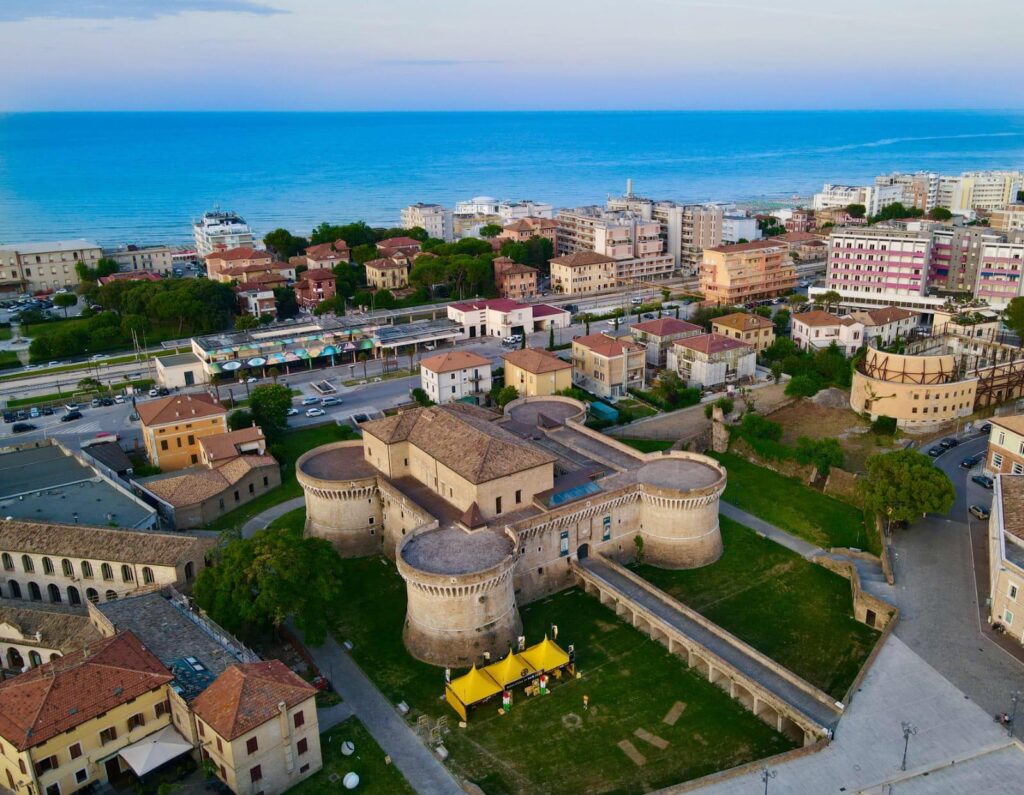
KINGNEWSWIRE / Press Release / Senigallia, Italy — June 12, 2025 — After 12 days of outreach, inspiration, and direct community support, the iconic Yellow Tent of the Scientology Volunteer Ministers has concluded its stay in Senigallia. From June 1 to 12, the tent stood prominently in the Palazzesi Gardens, welcoming citizens, sharing tools for life, and delivering a message that is both simple and powerful: something can be done about it.
Part of a global tour that spans continents, the Yellow Tent has already brought hope and practical solutions to dozens of Italian cities—from Rome to Milan, Naples to Bologna—and once again proved its impact during its stop in this beloved Adriatic town.
“We came to contribute to the well-being of the community by starting with the individual,” explained the volunteers. “We’ve listened, helped, and shown people they are not alone. Hundreds visited the tent to ask questions, receive guidance, or learn new ways to face life’s daily challenges.”
Over just 11 days, 1,681 people toured the Senigallia exhibition, with many enrolling in the Volunteer Minister Courses—practical tools that empower individuals to handle life’s difficulties more effectively. 306 new courses were started during the exhibition, demonstrating the community’s strong interest in personal development and practical aid. For comparison, during a recent stop in Modena, 1,050 people visited the tent and 176 course starts were recorded, showing the growing momentum of the movement across Italy.
Disaster Relief Meets Daily Empowerment
Volunteer Ministers (VMs) are no strangers to Senigallia. In 2022, after devastating floods, more than 50 VMs arrived from across Italy, delivering over 1,000 hours of volunteer service—from cleaning homes and streets to offering emotional support.
“Our mission is to help the society of Senigallia by starting with each individual,” said Samuel Arena, one of the team leaders. “We believe that by helping a single person, we improve the entire community.”
“Our message is that no matter what negative situation someone is facing, something can be done about it,” Arena added.

The VMs’ work is based on a practical training program founded in the late 1970s by Church of Scientology Founder L. Ron Hubbard.
Through 19 life-improving courses—on communication, ethics, conflict resolution, study skills, and more—volunteers help others overcome personal and social challenges alike.
“Being a Volunteer Minister means bringing real, effective help directly to people,” said Mario Caradonna, a seasoned responder.
“Whether it’s removing mud after a flood or teaching someone how to study, the goal is to deliver practical aid that changes lives.”
“Help is delivered person by person, even in everyday life,” Caradonna emphasized.
Beyond Emergencies: Help for Everyday Life
The Yellow Tent wasn’t just about disaster relief—it served as a community hub for empowerment and human connection.
“Our commitment doesn’t stop with emergencies,” said Gloria Forne, a Scientology Volunteer Minister. “We clean public parks, support families with personal difficulties—whatever is needed, we respond.”
“For example, if a child is struggling in school, we have a course that teaches them how to study—and that helps both the child and the family,” she added.
Institutional Recognition
Italian Senator Remigio Ceroni visited the Yellow Tent during its opening and praised the volunteers for their civic commitment:
“One of Italy’s strengths is a network of volunteers who give their time freely for the good of all,” he said. “I want to recognize the important contribution of Scientology’s Volunteer Ministers here in Senigallia during the recent emergency.”
European Impact, Global Mission
With over 200,000 Volunteer Ministers active worldwide, the movement is among the largest independent relief networks globally. In Europe—especially in Italy—their consistent presence during natural disasters and in daily community projects reflects a long-standing commitment to uplifting lives.
Iván Arjona-Pelado, Scientology’s Representative to the European Institutions and the United Nations, emphasized the broader significance of the tour:
“What these volunteers represent is a revival of humanity’s greatest strength: the will to help. In a time where many feel powerless, the Yellow Tent reminds us that action, knowledge, and compassion can light up even the darkest corners of life. It is the embodiment of our motto: Something can be done about it.”
Gang violence displaces a record 1.3 million Haitians
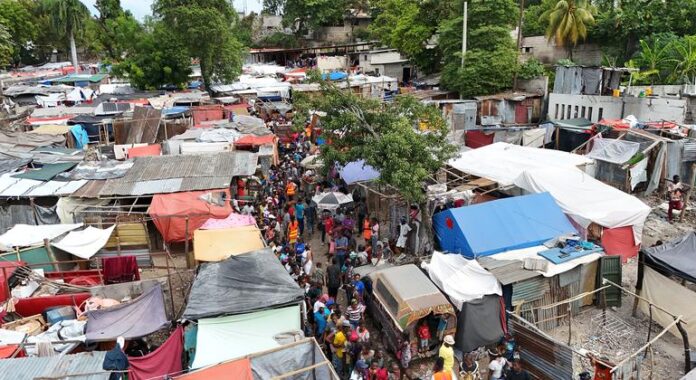
This represents a 24 per cent increase from December 2024 according to the UN agency, which also noted that this increase has produced the largest number of people displaced by violence on record there.
“Behind these numbers are so many individual people whose suffering is immeasurable; children, mothers, the elderly, many of them forced to flee their homes multiple times, often with nothing, and now living in conditions that are neither safe nor sustainable,” said Amy Pope, IOM Director General.
Existential challenges
These figures were released just ahead of a meeting on Wednesday at UN Headquarters in New York organized by the Economic and Social Council (ECOSOC) and the Peacebuilding Commission (PBC) examining how peace and stability can return to the island nation, following years of chaos and crisis.
The meeting discussed ways of consolidating peace at the local level and reducing the violence, particularly through the involvement of women and youth in local initiatives.
At a press conference prior to the meeting, ECOSOC President Bob Rae stated that the current situation in Haiti was “truly existential.”
“It’s important that we have a meaningful discussion about what we can do together to address these problems,” he said, emphasizing that it’s “not just about increasing firepower.”
Joining the briefing via videoconference, the Special Representative of the Secretary-General for Haiti, María Isabel Salvador, also stressed that this is a “multifaceted crisis” which must be addressed with similarly multifaceted and dynamic solutions.
“We believe that the international community’s response must match the scale, urgency, and complexity of the challenge. That’s why strong international security support must be accompanied by peacebuilding measures, humanitarian action and political support that could ultimately allow Haiti to make progress on the path to sustainable development.”
According to her, one way to reduce violence in Haiti is by empowering communities themselves, especially women and children, to lead bold new initiatives.
Violence spreads
Haiti has been experiencing a resurgence of violence since mid-February. According to the IOM, while Port-au-Prince remains the epicentre of the crisis with 85 per cent controlled by gangs, violence extending beyond the capital has intensified in the past few months.
Recent attacks in the Centre and Artibonite departments have forced tens of thousands of other residents to flee, many now living in precarious conditions and temporary shelters.
“Although about a quarter of all internally displaced people still live in the capital, a growing number of people are fleeing to other parts of the country in search of safety,” IOM said.
In the Artibonite department in western Haiti, over 92,000 people have been displaced – largely because of violence in Petite Rivière.
In the Centre department, the situation is even more “alarming” with a total of 147,000 displaced. This number has doubled from 68,000 in the past few months as a result of fighting in towns like Mirebalais and Saut-d’Eau.
As more and more people are forced to flee, the number of spontaneous displacement sites is also increasing. Since December, these sites have increased from 142 to 246.
Around 83 per cent of refugees are staying with host families, putting a strain on already overstretched households, particularly in rural communities.
Pay attention and act
Armed violence continues to severely disrupt access to basic services, according to UN aid coordination office, OCHA, creating a “a deepening humanitarian crisis.”
“We must act urgently. The strength of the Haitian people is impressive, but resilience cannot be their only refuge. This crisis cannot become the new normal,” added Ms. Pope.
The President of the General Assembly, Philémon Yang, spoke at the ECOSOC meeting about the importance of adjusting “not just our attention but our action” and coordinating efforts across the UN to maximize impact.
“We must do our utmost to ensure that Haiti is not abandoned to a future of fear and despair but instead is embraced by a global commitment to peace, opportunity and dignity,” he said.
Trade: Coreper endorses the Council’s negotiating position on FDI screening revision

Member States’ representatives (Coreper) endorsed the Council’s negotiating position on FDI screening revision.
Trade: Coreper endorses the Council’s negotiating position on FDI screening revision

Member States’ representatives (Coreper) endorsed the Council’s negotiating position on FDI screening revision. Source link
Cybercriminals cash in on your data

In its newly released 2025 Internet Organised Crime Threat Assessment (IOCTA) , Europol has issued a chilling warning: the digital underworld is no longer just about hacking into systems—it’s about profiting from stolen data. This underground economy, fueled by compromised identities, credentials, and sensitive information, powers everything from ransomware attacks to child exploitation, forming a sprawling criminal ecosystem that transcends borders and technologies.
The report, published today, underscores how cybercriminals have shifted their focus from isolated breaches to building a robust marketplace where stolen data is not merely an end goal—but a currency.
A Hidden Economy Built on Access
At the heart of this criminal enterprise lies access—access to corporate networks, personal devices, and individual identities. The IOCTA 2025 paints a stark picture of a world where nearly every aspect of our digital lives is under siege. From phishing campaigns to AI-generated deepfakes, cybercriminals are deploying increasingly sophisticated tools to infiltrate systems and harvest valuable data.
According to Edvardas Šileris, Head of Europol’s European Cybercrime Centre (EC3), “You can’t defend what you don’t understand.” He added that the latest assessment provides critical insights into the hidden mechanisms of cybercrime, equipping law enforcement, policymakers, and private sector stakeholders with the intelligence they need to respond effectively.
Generative AI Supercharges Social Engineering
One of the most alarming trends outlined in the report is the use of generative artificial intelligence , including large language models (LLMs), to enhance social engineering attacks. Criminals are now capable of crafting highly personalized scam messages tailored to victims’ cultural contexts, languages, and even personal habits. These AI-driven tactics allow fraudsters to mimic trusted entities—from bank representatives to government officials—with unnerving accuracy.
This evolution is particularly devastating in the realm of child sexual exploitation , where offenders are leveraging AI to automate grooming processes and increase the emotional manipulation of young victims. The report warns that these tools enable predators to scale their operations, making detection and prevention more challenging than ever before.
Data as Commodity: Crime-as-a-Service Thrives
Cybercrime has become accessible to virtually anyone willing to pay. The rise of Crime-as-a-Service (CaaS) platforms means that even those without technical expertise can purchase stolen data, rent out botnets, or follow step-by-step guides to execute complex fraud schemes. Marketplaces operating on dark web forums, encrypted messaging apps, and subscription-based services offer bulk sales of login credentials, compromised corporate systems, and even remote access to hacked infrastructure.
“Data is no longer just the target—it’s a commodity,” the report states. Every breach, leak, or phishing success feeds into a cycle where data is harvested, repackaged, and resold across layers of the criminal supply chain.
Extortion, Identity Theft, and Exploitation
Beyond financial fraud, stolen data is being weaponized for extortion, identity theft, and abuse , often targeting the most vulnerable members of society. Ransomware groups continue to exploit known software vulnerabilities and manipulate human behavior through psychological pressure and fear-based tactics. One emerging technique involves mimicking common error messages and CAPTCHA boxes—a tactic dubbed “ClickFix”—to trick users into installing malware themselves.
Meanwhile, the growing reliance on end-to-end encryption (E2EE) poses a significant challenge for law enforcement. While essential for protecting user privacy, E2EE apps like WhatsApp, Signal, and Telegram are increasingly abused by criminals to coordinate illegal activity, exchange stolen data, and evade surveillance. Europol notes that encrypted communications are now a primary channel for organizing cybercrime, with investigators facing near-total opacity into these operations.
Recommendations: A Call for Coordinated Action
To combat these evolving threats, Europol calls for a coordinated response at the EU level. Key recommendations include:
- Lawful access solutions for encrypted communications that balance security and privacy concerns.
- Harmonized data retention rules across member states to ensure consistent collection and availability of digital evidence.
- Digital literacy initiatives , especially targeted at children and teenagers, to help them recognize and resist online manipulation.
The report emphasizes that while technology evolves rapidly, many of the vulnerabilities exploited by cybercriminals are long-standing. Human factors—such as poor password hygiene, unpatched software, and susceptibility to social engineering—remain central to many successful attacks.
Behind the Report: Operational Insights from the Frontlines
The IOCTA 2025 draws on thousands of investigations supported by Europol annually, particularly through its European Cybercrime Centre (EC3) and Economic and Financial Crime Centre (EFECC) . Contributions from national police forces and private sector partners provide a comprehensive view of the current threat landscape.
It builds upon the broader EU Serious and Organised Crime Threat Assessment (SOCTA) , reinforcing the message that in today’s digital age, data is power—and everyone’s data is at risk.
Final Thoughts: A Race Against Time
As cybercriminals grow more organized, technologically advanced, and profit-driven, the stakes for cybersecurity have never been higher. The IOCTA 2025 serves not only as a diagnostic tool but also as a rallying cry for unity among governments, tech companies, educators, and citizens.
In the words of Šileris: “We must move faster than the threat. Understanding it is the first step.”
And as this report makes clear, the time to act is now.
Europol’s 2025 Internet Organised Crime Threat Assessment (IOCTA), published today, reveals how stolen data fuels the digital underworld, powering a criminal ecosystem that spans from online fraud and ransomware to child exploitation and extortion. The report paints a stark picture of a cybercrime economy built on access—access to your systems, your identity, and your most sensitive information.The Head of Europol’s…
The world pledged to end child labour by 2025: So why are 138 million kids still working?

There are 10,000 children in Madagascar who, like Tenasoa, work in the largely unregulated mica industry. The silicate is used in paints, car parts, and cosmetics – to add a “shimmer” effect.
Alongside parents and grandparents, these children toil in dangerous conditions, inhaling harmful dust particles and entering structurally unsound tunnels. Many of them have dropped out of school – if they ever went at all.
“If we don’t work, we don’t eat,” Soja, Tenasoa’s grandfather, said. “It’s very simple. Men, women and children must all work to survive.”
In 2015, the United Nations set a goal to end child labour worldwide by 2025 but progress has been slow and halting, according to the Child Labour Report released on Wednesday by the International Labour Organization (ILO) and the UN Children’s Fund (UNICEF).
The report estimates that 138 million children – a 12 million decrease from 2020 – are still engaged in child labour, leading both ILO and UNICEF to call for the rapid acceleration of progress.
“The findings of our report offer hope and show that progress is possible … But we must not be blindsided by the fact that we still have a long way to go,” ILO Director-General Gilbert F. Houngbo said.
Hazardous work
Since 2000, the number of children in child labour has been reduced by over 100 million, a promising decrease which proves that the world has a “blueprint” to end child labour. Much work remains, however.
“Far too many children continue to toil in mines, factories or fields, often doing hazardous work to survive,” said Catherine Russell, Executive Director of UNICEF.
Child labour does not refer to all work done by children. Rather, it is work which deprives children of their childhood and is often dangerous to their health and development.
“It is important to understand that [child labour] is not household chores, it is not children helping their parents around the house…We are talking about work that is oftentimes hazardous,” Benajamin Smith, an ILO child labour expert told UN News.
Of the 138 million children in child labour, 54 million work in hazardous conditions, including mines.
Honorine, aged 13, is one of these children. She works from 10am to 5pm every day in a gravel quarry in Benin. Paid by the number of buckets of gravel she collects, she is saving her wages, hoping to train to be a hairdresser one day.
A young boy in Thailand takes a break while working in intense heat as a labourer.
Behind the statistics
The report notes that child labour is intergenerational. Children in child labour systems often struggle to access education, something which in turn compromises their future opportunities and creates a cycle of poverty and deprivation.
Federico Blanco, ILO expert and lead author of the Child Labour Report, noted that it is important to think of child labour as not just statistical.
“Behind every number, let’s remind ourselves that there is a child whose right to education, protection and decent future is being denied,” Mr Blanco said.
Nur, a 13-year-old Rohingya refugee in Bangladesh, was pulled out of school by his parents in order to help support his family financially. A case worker at a nearby UNICEF-funded centre identified Nur and convinced his family to put him back into school.
“I once dreamt of becoming a teacher. I thought I would never be able to become one. But now I feel that I can learn and become a teacher like I always wanted to,” Nur said.
‘A holistic approach’
In the report, UNICEF and ILO called for integrated policy solutions which work across governmental sectors, addressing the problem from an educational, economic and social perspective.
The report also highlighted that ending child labour cannot be accomplished without also thinking about the conditions that drive families to send their children to work – namely, poverty.
Upholding parents’ rights – including the right to collectively bargain, the right to safe work – is also key for ending child labour.
“The ILO looks at [child labour] in quite a holistic way because it is just as important [for] tackling child labour to make sure that the adults have good working conditions because poverty is really at the heart of child labour,” Mr Smith said.
Taking a country-driven approach is especially important due to regional disparities in child labour – the report noted that while all regions saw decreased numbers, Sub-Saharan Africa accounts for two-thirds of child labour worldwide.
Childhood dreams – underfunded and unfulfilled
Attempts to end child labour face significant headwinds as a result of funding shortages.
“Global funding cuts threaten to roll back hard-earned gains. We must recommit to ensuring that children are in classrooms and playgrounds, not at work,” Ms. Russell said.
Adwara, aged 10, dreams of being in class. He attended school for a few years and tried to balance work and school but with eight siblings, helping support his family was non-negotiable. Eventually, his teacher told him not to return – he was missing too much school.
Now, he works in a gold mine in Ethiopia, earning approximately $35 per day: “I’d like to go to school,” he said. “I’d like to become someone.”
Myanmar on the ‘path to self-destruction’ if violence does not end

Since then, “there has been no end to the violence, even though thousands have been killed and thousands more injured,” said UN Special Envoy to Myanmar, Julie Bishop, on Tuesday, briefing the General Assembly.
“I have stressed consistently that without a ceasefire, a de-escalation of violence and a focus on the needs of the people, there can be no inclusive lasting peace,” she said.
Call for ceasefire
Having spoken with survivors among the rubble of homes, hospitals and schools, Ms. Bishop said they “wanted the fighting to end so they could live in peace,” as armed clashes continue to obstruct the aid and reconstruction effort.
Although some parties to the conflict have announced ceasefires, “they have largely not been observed,” she said.
Reiterating her call for an end to hostilities she said civilian protection “must be the priority and inclusive and sustainable peace a shared goal.”
Without and end to the violence she said Myanmar would continue on “the path to self-destruction.”
Contested elections
Ms. Bishop warned that unless there is an end to the violence and an inclusive and transparent electoral process, all that could result from any election – which the junta is planning to contest – would be “greater resistance and instability.”
“It is inconceivable how an election could be inclusive,” she said, with so many political leaders still being held by the regime.
Ms Bishop also reiterated the UN’s call for the release of all arbitrary prisoners, including democratically elected leaders Win Myint and Aung San Suu Kyi.
Rohingya’s plight
With up to 80 per cent living in poverty, the situation of the mostly Muslim Rohingya minority in both Myanmar and Bangladesh remains dire.
Caught in the crossfire between the Myanmar military and the Arakan Army, Rohingya civilians in their historic homeland of Rakhine State are being subjected to forced recruitment and other abuse.
As aid dwindles, Rohingyas living in Bangladesh’s Cox’s Bazar face real consequences, including cuts to food rations and education.
“A viable future for Myanmar must ensure safety, accountability, and opportunity for all its communities, including Rohingya, and must address the root causes of conflict, discrimination and disenfranchisement in all its forms,” said Ms. Bishop.
sustaining global cooperation in a fragmenting world

Speech by Christine Lagarde, President of the ECB, at the People’s Bank of China in Beijing
Beijing, 11 June 2025
It is a pleasure to be back here in Beijing.
Some years ago, I spoke about how a changing world was creating a new global map of economic relations.[1]
Maps have always reflected the society in which they are produced. But in rare instances, they can also capture historical moments when two societies meet at the crossroads.
This was evident in the late 1500s during the Ming Dynasty, when Matteo Ricci, a European Jesuit, travelled to China. There Ricci went on to work with Chinese scholars to create a hybrid map that integrated European geographical knowledge with Chinese cartographic tradition.[2]
The result of this cooperation – called the Kunyu Wanguo Quantu, or “Map of Ten Thousand Countries” – was historically unprecedented. And the encounter came to symbolise China’s openness to the world.
In the modern era, we saw a similar moment when China entered the World Trade Organization (WTO) in 2001. The country’s accession to the WTO signified its integration into the international economy and its openness to global trade.
China’s entry into the WTO went on to reshape the global map of economic relations at a time of rapid trade growth, bringing significant benefits to countries across the world – particularly here in China.
Since that time, the global economy has changed dramatically. In recent years, trade tensions have emerged and a geopolitically charged landscape is making international cooperation increasingly difficult.
Yet the emergence of tensions in the international economic system is a recurring pattern across modern economic history.
Over the last century, frictions have surfaced under a range of international configurations – from the inter-war gold exchange standard, to the post-war Bretton Woods system, to the subsequent era of floating exchange rates and free capital flows.
While each system was unique, two common lessons cut across this history.
First, one-sided adjustments to resolve global frictions have often fallen short, regardless of whether deficit or surplus countries carry the burden. In fact, they can bring with them either unpredictable or costly consequences.
Such adjustments can be especially problematic when trade policies are used as a substitute for macroeconomic policies in addressing the root causes.
And second, in the event that tensions do emerge, durable strategic and economic alliances have proven critical in preventing tail risks from materialising.
In contrast to eras when ties of cooperation were weak, alliances have ultimately helped to prevent a broader surge in protectionism or a systemic fragmentation of trade.
These two lessons have implications for today. Frictions are increasingly emerging between regions whose geopolitical interests may not be fully aligned. At the same time, however, these regions are more deeply economically integrated than ever before.
The upshot is that while the incentive to cooperate is reduced, the costs of not doing so are now amplified.
So the stakes are high.
If we are to avoid inferior outcomes, we all must work towards sustaining global cooperation in a fragmenting world.
Tensions across history
If we look at the history of the international economic system over the past century, we can broadly divide it into three periods.
In the first period, the inter-war years, major economies were tied together by the gold exchange standard – a regime of fixed exchange rates, with currencies linked to gold either directly or indirectly.
But unlike the pre-war era, when the United Kingdom played a dominant global role[3], there was no global hegemon. Nor were there impactful international organisations to enforce rules or coordinate policies.
The system’s flaws quickly became apparent.[4] Exchange rate misalignments caused persistent tensions between surplus and deficit countries. Yet the burden of adjustment fell overwhelmingly on the deficit side.
Facing outflows of gold, deficit countries were forced into harsh deflation. Meanwhile, surplus countries faced little pressure to reflate. By 1932, two surplus countries accounted for over 60% of the world share of gold reserves.[5]
One-sided adjustments failed to resolve the underlying problems. And without strong alliances to contain tail risks, tensions escalated. Countries turned to trade measures in an attempt to reduce imbalances in the system – but protectionism offered no sustainable solution.
In fact, if current account positions narrowed at all, it was only because of the fall-off in world trade and output. The volume of global trade fell by around one-quarter between 1929 and 1933[6], with one study attributing nearly half of this fall to higher trade barriers.[7] World output declined by almost 30% in this period.[8]
During the Second World War, leaders took the lessons to heart. They laid the groundwork for what became the Bretton Woods system in the early post-war era: a framework of fixed exchange rates and capital controls.
This marked the beginning of the second period.
The new regime was anchored by the US dollar’s convertibility into gold, with the International Monetary Fund acting as a referee. Trade flourished during this era. Between 1950 and 1973[9], world trade expanded at an average rate of over 8% per year.[10]
But again, frictions emerged.
In particular, the United States had shifted from initially running balance of payments surpluses to persistent deficits. At the heart of this shift was the role of the US dollar as the world’s reserve currency and source of liquidity for global trade.
While US deficits provided the world with vital dollar liquidity, those very same deficits strained the dollar’s gold convertibility at USD 35 per ounce, threatening confidence in the system.
By the late 1960s, foreign holdings of US dollars – amounting to almost USD 50 billion – were roughly five times the size of US gold reserves.[11]
Ultimately, these tensions proved unsustainable as the United States was unwilling to sacrifice domestic policy goals – which generated fiscal deficits – for its external commitments.
The Bretton Woods system ended abruptly in 1971, when President Nixon unilaterally suspended the US dollar’s convertibility into gold and imposed a 10% surcharge on imports.
The goal behind the surcharge was to force US trading partners to revalue their currencies against the dollar, which was perceived as being overvalued.[12] As in earlier periods, this was a one-sided adjustment – though now aimed at shifting the burden onto surplus countries.
Crucially, however, the downfall of Bretton Woods unfolded within the context of the Cold War. Countries operating under the system were not just trading partners – they were allies.
And so, everyone had a strong geopolitical incentive to pick up the pieces and forge new cooperative agreements that could facilitate trade relationships, even in moments of pronounced volatility.
We saw this several months after the “Nixon Shock”, when Western countries negotiated the Smithsonian Agreement.
This agreement was a temporary fix to maintain an international system of fixed exchange rates. It devalued the US dollar by over 12% against the currencies of its major trading partners and removed President Nixon’s surcharge.[13]
And we saw a strong geopolitical incentive at work again with the Plaza Accord in the 1980s – an era of floating exchange rates and free capital flows – when deficit and surplus countries in the Group of Five[14] sat down to try and resolve tensions.
Of course, neither agreement ultimately succeeded in addressing the root causes of tensions. But critically, the risk of a broader turn toward protectionism – which was rising at several points[15] – never materialised.
The contrast is telling.
Both the inter-war and post-war eras revealed that one-sided adjustments cannot sustainably resolve economic frictions – whether on the deficit or surplus side.
Yet the post-war system proved far more resilient, because the countries within it had deeper strategic reasons to cooperate.
Frictions threatening global trade today
In recent decades, we have been moving into a third period.
Since the end of the Cold War, we have seen the rapid expansion of truly global trade.
Trade in goods and services has risen roughly fivefold to over USD 30 trillion.[16] Trade as a share of global GDP has increased from around 38% to nearly 60%.[17] And countries have become much more integrated through global supply chains. At the end of the Cold War, these chains accounted for around two-fifths of global trade.[18] Today, they account for over two-thirds.[19]
Yet this globalisation has unfolded in a world where – increasingly – not all nations are bound by the same security guarantees or strategic alliances. In 1985 just 90 countries were party to the General Agreement on Tariffs and Trade. Today, its successor – the WTO – counts 166 members, representing 98% of global trade.[20]
There is no doubt that this new era has amplified the benefits of trade.
Some originally lower-income countries have experienced remarkable gains – none more so than China.
Since joining the WTO, China’s GDP per capita has increased roughly twelvefold.[21] The welfare impact has been equally profound: almost 800 million people in China have been lifted out of poverty, accounting for nearly three-quarters of global poverty reduction in recent decades.[22]
Advanced economies, too, have benefited, albeit unevenly. While some industries and jobs have faced pressure from heightened import competition[23], consumers have enjoyed lower prices and greater choice. And for firms able to climb the value chain, the rewards have been substantial – especially in Europe.
Today, EU exports to the rest of the world generate more than €2.5 trillion in value added – nearly one-fifth of the EU’s total – and support over 31 million jobs.[24]
But the weakening alignment between trade relationships and security alliances has left the global system more exposed – a vulnerability now playing out in real time.
According to the International Monetary Fund, trade restrictions across goods, services and investments have tripled since 2019 alone.[25] And in recent months, we have seen tariff levels imposed that would have been unimaginable just a few years ago.
This fragmentation is being driven by two forces.
The first is geopolitical realignment. As I have outlined in recent years, geopolitical tensions are playing an increasingly decisive role in reshaping the global economy.[26] Countries are reconfiguring trade relationships and supply chains to reflect national security priorities, rather than economic efficiency alone.
The second force is the growing perception of unfair trade – often linked to widening current account positions.
Current account surpluses and deficits are not inherently problematic, particularly when they reflect structural factors such as comparative advantage or demographic trends.
But these imbalances become more contentious when they do not resolve over time and create the perception that they are being sustained by policy choices – whether through the blocking of macroeconomic adjustment mechanisms or a lack of respect for global rules.
Indeed, while in recent decades the persistence of current account positions has remained fairly constant, the dispersion of those positions – that is, how widely surpluses and deficits are spread across countries – has shifted significantly.
In the mid-1990s current account deficits and surpluses were similarly dispersed within their respective groups: both were relatively evenly distributed among several countries.[27]
Today, that balance has changed. Deficits have become far more concentrated, with just a few countries accounting for the bulk of global deficits. In contrast, surpluses have become somewhat more dispersed, spread across a wider range of countries.
These developments have recently led to coercive trade policies and risk fragmenting global supply chains.
Making global trade sustainable
Given national security considerations and the experience during the pandemic, a certain degree of de-risking is here to stay. Few countries are willing to remain dependent on others for strategic industries.
But it does not follow that we must forfeit the broader benefits of trade – so long as we are willing to absorb the lessons of history. Let me draw two conclusions for the current situation.
First, coercive trade policies are not a sustainable solution to today’s trade tensions.
To the extent that protectionism addresses imbalances, it is not by resolving their root causes, but by eroding the foundations of global prosperity.
And with countries now deeply integrated through global supply chains – yet no longer as geopolitically aligned as in the past – this risk is greater than ever. Coercive trade policies are far more likely to provoke retaliation and lead to outcomes that are mutually damaging.
The shared risks we face are underscored by ECB analysis. Our staff find that if global trade were to fragment into competing blocs, world trade would contract significantly, with every major economy worse off.[28]
This leads me to the second conclusion: if we are serious about preserving our prosperity, we must pursue cooperative solutions – even in the face of geopolitical differences. And that means both surplus and deficit countries must take responsibility and play their part.
All countries should examine how their structural and fiscal policies can be adjusted to reduce their own role in fuelling trade tensions.
Indeed, both supply-side and demand-side dynamics have contributed to dispersion of current accounts positions we see today.
On the supply side, we have witnessed a sharp rise in the use of industrial policies aimed at boosting domestic capacity. Since 2014, subsidy-related interventions that distort global trade have more than tripled globally. [29]
Notably, this trend is now being driven as much by emerging markets as by advanced economies. In 2021, domestic subsidies accounted for two-thirds of all trade-related policies in the average G20 emerging market, consistently outpacing the share seen in advanced G20 economies.[30]
On the demand side, global demand generation has become more concentrated, especially in the United States. A decade ago, the United States accounted for less than 30% of demand generated by G20 countries. Today, that share has risen to nearly 35%.
This increasing imbalance in demand reflects not only excess saving in some parts of the world, but also excess dissaving in others, especially by the public sector.
Of course, none of us can determine the actions of others. But we can control our own contribution.
Doing so would not only serve the collective interest – by helping to ease pressure on the global system – but also the domestic interest, by setting our own economies on a more sustainable path.
We can also lead by example by continuing to respect global rules – or even improving on them. This helps build trust and creates the foundation for reciprocal actions.
That means upholding the multilateral framework which has so greatly benefited our economies. And it means working with like-minded partners to forge bilateral and regional agreements rooted in mutual benefit and full WTO compatibility.[31]
Central banks, in line with their respective mandates, can also play a role.
We can stand firm as pillars of international cooperation in an era when such cooperation is hard to come by. And we can continue to deliver stability-oriented policies in a world marked by rising volatility and instability.
Conclusion
Let me conclude.
In a fragmenting world, regions need to work together to sustain global trade – which has delivered prosperity in recent decades.
Of course, given the geopolitical landscape, that will be a harder challenge today than it has been in the past. But as Confucius once observed, “Virtue is not left to stand alone. He who practices it will have neighbours”.
Today, to make history, we must learn from history. We must absorb the lessons of the past – and act on them – to prevent a mutually damaging escalation of tensions.
In doing so, we all can draw a new map for global cooperation.
We have done it before. And we can do it again.
Thank you.
Ukraine/Russia: press remarks by High Representative/Vice-President Kaja Kallas at the joint press conference on the 18th package of sanctions against Russia
Ukraine/Russia: press remarks by High Representative/Vice-President Kaja Kallas at the joint press conference on the 18th package of sanctions against Russia
