Tom Fletcher, Under-Secretary-General for Humanitarian Affairs, told reporters at a briefing in New York that the current crisis was the most severe challenge to international humanitarian work since World War II.
“We were already overstretched, under resourced and literally under attack, with last year being the deadliest year on record to be a humanitarian worker. But it is far tougher for the 300 million plus people who we serve,” he said.
“The pace and scale of the funding cuts are a seismic shock to the sector … many will die because aid is drying up. Right now, programmes are shutting down, staff are being laid off, and we are being forced to choose which lives to prioritise.”
Humanitarian crises are unfolding against a backdrop of instability, rising conflicts, climate shocks and economic downturns that have left millions more in need of assistance.
However, rather than an increase in support, the UN and its partners are facing deep funding shortfalls, forcing tough decisions.
Mr. Fletcher revealed that in February alone, 10 percent of humanitarian non-governmental organization (NGO) workers were laid off due to funding gaps, while UN agencies are being forced to scale back life-saving operations across multiple countries.
“For the people we serve, these cuts are not abstract budget numbers – they are a matter of survival,” he stressed.
Regrouping will involve prioritising life-saving assistance, streamlining operations, and cutting back programmes that can no longer be sustained under current funding constraints.
Renewal will focus on reforming the humanitarian system to improve efficiency, build new partnerships, and find alternative funding sources.
Tom Fletcher, Under-Secretary-General for Humanitarian Affairs and Emergency Relief Coordinator, briefs journalists at UN Headquarters, in New York.
Strengthening local leadership
A key element of the plan is a shift toward more local leadership.
Mr. Fletcher has instructed humanitarian country teams to prioritize funding for local and national organizations, ensuring that those closest to the crises have more control over resources.
“We must shift power to our humanitarian leaders in-country and, ultimately, to the people we serve,” he emphasised.
Tough choices ahead
He acknowledged that many of the upcoming decisions will be painful, as vital programmes will inevitably be cut. He urged humanitarian organizations to be “ruthless” in eliminating inefficiencies and to focus only on the most critical interventions.
Under the plan, UN humanitarian coordinators in crisis-affected countries are required to submit revised strategies by Friday, outlining how they will prioritise urgent life-saving actions while scaling down or discontinuing activities that cannot be maintained.
At the same time new funding sources must be found and the humanitarian system will have to reimagine what it does and how.
“Our mission remains clear: to save as many lives as we can with the resources we have – not the resources we wish we had,” Mr. Fletcher said.
Under-Secretary-General Fletcher speaking to the media at the UN Headquarters, in New York.
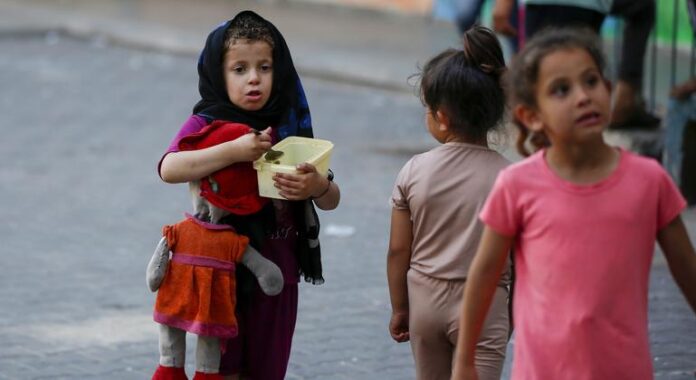
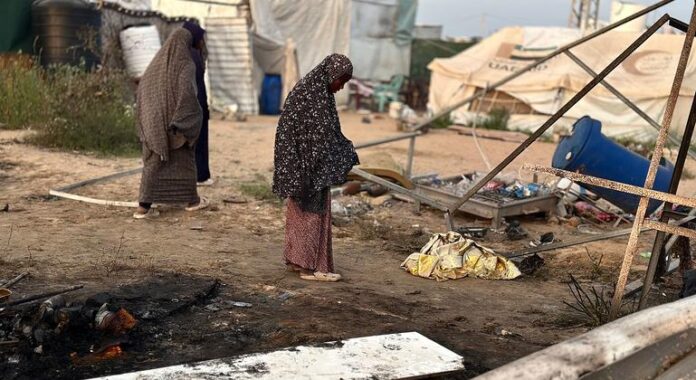
Citing reports from humanitarians in the Strip, he said it was becoming more difficult to access “decent and sufficient food, water, medical services and other vital items”.
Briefing reporters in New York, Mr. Dujarric said restoring the overall healthcare system was progressing, but progress is proving slow.
In the devastated northern areas, only 16 per cent of health service points are functioning either fully or partially.
“That includes three out of five hospitals, six out of 50 medical points and four of over two dozen primary healthcare centres,” he added.
Overflowing trash heaps are creating unsanitary living conditions for civilians who have tried to return to shattered homes, heightening public health risks.
A lack of spare parts means that 80 per cent of all waste collection vehicles and containers are damaged or destroyed.
Humanitarians have also noted a lack of adequate management of infectious medical waste while some solid waste is being mixed with debris contaminated with explosive hazards.
The danger posed by unexploded ordnance has led to at least three deaths and nearly 40 injured in 18 explosions recorded so far this year in Gaza.
“Education efforts are making some headway,” said the UN Spokesperson.
“Since the start of the ceasefire, our partners have set up more than 200 temporary learning spaces, bringing the total to over 630. These spaces support more than 170,000 children.”
As of Tuesday, around 60 per cent of all school-age children in Gaza have access to some form of learning, either in schools or in temporary spaces, he added.
Funding cuts threaten women’s rights organizations in Ukraine
Women’s rights organizations in Ukraine are facing a crisis following major funding suspensions from the US, according to a new survey by UN Women and partners.
Nearly half of the 99 surveyed organizations had either received or expected US funding when the suspension was announced in January 2025.
Around two thirds reported severe disruptions, putting emergency response, humanitarian aid and development programmes at risk.
Five organizations are set to close in the coming month while 35 more may shut down within six months if no new funding is secured.
A long time coming
Since 2022, international funding for gender equality initiatives in Ukraine has declined significantly.
The latest cuts have worsened the situation, forcing more than half of the surveyed organizations to reduce staff and struggle with unpaid rent, utilities and salaries.
Gender-based violence prevention programmes, already underfunded in humanitarian response, have been particularly affected.
UN Women Representative in Ukraine, Sabine Freizer Gunes, warned that nine out of 10 organizations have had to shut down at least one gender equality or diversity programme.
The cuts have also delayed critical projects, including support for survivors of sexual violence, restoring key infrastructure and rebuilding schools and hospitals.
As the 69th Commission on the Status of Women marks the 30th anniversary of the Beijing Declaration, UN Women is calling for direct, flexible and long-term funding to ensure women’s organizations can continue delivering lifesaving support in Ukraine.
Syria: Access to vital services still limited in coastal areas
UN humanitarians on Wednesday reported that access to vital services in coastal areas of Syria following deadly violence earlier in the week continues to be a severe challenge, with some towns still lacking electricity, including the largely Alawite city of Latakia.
What began as clashes between forces of the caretaker authorities and armed elements from the deposed Assad regime based in the coastal region, reportedly left hundreds of mostly Alawite civilians dead, including the summary execution of entire families, according to reports from the UN human rights office, OHCHR.
Some survivors told OHCHR many men had been shot dead in front of their families while hospitals also came under attack, with some patients and doctors targeted.
Aid response
Despite the lack of access, UN aid agencies and partners are mobilised and supporting the humanitarian response in coastal areas.
“Water is being distributed via the main network in Lattakia governorate, but rural areas face shortages due to issues related to the maintenance of generators,” said the UN Spokesperson, briefing journalists in New York.
“Bakeries are operational, and shops are reopening, though essential materials and fuel remain scarce.”
UNICEF has supplied 38 tonnes of water treatment supplies to Lattakia’s water authority, enough to guarantee a two-month supply. The UN Children’s Fund (UNICEF) is planning on providing five water tanks to Jableh National Hospital in Lattakia governorate to replace damaged equipment.
Health partners have delivered emergency supplies, including 64 trauma and emergency surgical kits and non-communicable disease treatments, to Tartous and Latakia, the UN Spokesperson added.
Arrest of former Philippines President Duterte is step toward accountability: Türk
UN Human Rights Chief Volker Türk on Wednesday welcomed the announcement by the International Criminal Court (ICC) that it has taken custody of former Philippines President Rodrigo Duterte.
Mr. Duterte is charged with a series of murders amounting to crimes against humanity carried out as part of his aggressive campaign against illegal drugs between 2011 and 2019, said UN rights office, OHCHR, in a press release.
“The so-called war on drugs undertaken under Duterte’s leadership – first in Davao and then across the country – has long been of concern to our Office,” said Mr. Türk.
“This is a very important step towards seeking accountability for the thousands of victims of killings and other abuses, as well as their families who have courageously pursued justice,” the High Commissioner said.
Mr. Türk also stressed the importance of protecting victims and witnesses in the Philippines and preventing reprisals and retribution of any kind against them, as the case progresses through the ICC.
Regime of impunity
A report by OHCHR in 2020 found there were credible allegations of widespread and systematic extrajudicial killings in the context of the campaign against illegal drugs, and that there had been near impunity for such violations.
“Despite some steps by the Philippines authorities to review and re-open past cases, only a handful of cases so far have resulted in convictions,” Mr. Türk said.
“Our international legal frameworks and institutions, including the ICC, are fundamental to ensuring justice and achieving accountability for the most serious crimes, preventing future violations, and making the world safer for everyone,” he emphasised.
In a new report, Dr. Najat Maalla M’jid, who’s the Special Representative of the UN Secretary-General on violence against children,said that traffickers are quick to exploit technological advancements – and people in emergencies.
She said that children – mainly girls – are increasingly vulnerable, as poverty, food insecurity, humanitarian crises and conflict lead to displacement and violence, which are among the main drivers of illegal trafficking.
“Conviction for trafficking in children remain low and perpetrator continue to enjoy impunity, corruption, stigma, fear and the lack of protection limits children’s ability to report and seek justice,” she told the Human Rights Council in Geneva.
“As a result, trafficking in children remains a low cost and low risk, yet high profits crime, generating billions of dollars annually.”
Dr. Maalla M’jid warned that trafficking networks are growing alarmingly and are increasingly well organised.
She said that criminal ringleaders now use artificial intelligence to lower their overheads and reduce the likelihood of detection.
The senior UN official also noted that the demand for exploitative services involving children is increasing, from sexual exploitation, domestic slavery, child marriage, recruitment into armed groups, forced begging and criminal activities.
The UN Special Representative for children caught up in conflict, Virginia Gamba, told the Council that more than one in six children worldwide are living in conflict zones.
She called on all states to produce policies which allow every child to be shielded from harm so they can grow up in a peaceful environment.
Call for neurotechnology regulation, to stop brain ‘hacking’
Neurotechnologies have many potential benefits but they could also be used to hack into our innermost thoughts, perceptions, emotions and even memories, a top independent rights expert told the Human Rights Council on Wednesday.
Presenting her report to the Council, Ana Nougrères, Special Rapporteur on the Right to Privacy, underscored that neurotech devices may help scientists to understand, diagnose and develop new treatments for Alzheimer’s, schizophrenia, Parkinson’s, epilepsy, depression and anxiety.
‘Urgent regulatory response’
But rapid advances in these potent devices demand an “urgent regulatory response” that includes legal and ethical protections, she told Members States in Geneva.
Among the risks of misuse are harvesting people’s neurodata – highly personal information derived directly from the nervous system – for malign causes.
And although the capacity for harm resulting from these tools is limited now, they have the potential to alter brain activity and even artificially modify human beings, making them a great threat to human rights and the fundamental values of dignity, privacy, autonomy and agency, insisted the independent expert, who reports to the Council and is not a UN staff member.
Coercion risk
“Neurotechnology has the capacity to decode brain activity, allowing access to an individual’s most intimate thoughts and emotions. Without proper safeguards, this could lead to unauthorized monitoring or even coercion,” said Ms. Nougrères, who is a practising lawyer and a Professor of Law, Privacy and Information Communication Technology from Uruguay.
“Governments, corporations, or malicious actors could exploit this access to influence personal behaviours and ideologies, fundamentally eroding personal autonomy and mental integrity,” she insisted.
The Special Rapporteur’s report also warns against “brainjacking”, urging states to introduce safeguards.
“Viruses could be introduced or internet-connected neural devices might make it possible for individuals or organizations – hackers, corporations or government agencies – to track or even manipulate an individual’s mental experience,” Ms. Nougrères warns.
“Despite the mental health benefits that neurotechnologies will bring, there is a fear that neurodata will not only allow us to know what people are thinking (which is not possible for now), but also to manipulate the human brain,” the report added.
Deep brain simulation
Deep brain stimulation (DBS) is a surgical procedure that involves implanting a brain pacemaker to send electrical impulses using electrodes to areas of the brain responsible for movement control.
The pacemaker is typically implanted under the skin, near the collarbone.
The electrical pulses then help regulate abnormal brain activity, which can alleviate symptoms of some neurological conditions and decrease the need for medication.
It is most commonly used to treat Parkinson’s Disease, essential tremor, epilepsy, OCD, treatment-resistant depression and Tourette’s syndrome.
In a resolution adopted on Wednesday, Parliament calls on the EU to act urgently and ensure its own security. This will mean, MEPs say, strengthening relationships with like-minded partners, and strongly diminishing its reliance on non-EU countries.
A so-called “White Paper” on the future of European defence, that the Commission and the High Representative are expected to present next week should put forward concrete proposals to the European Council to enable “truly ground-breaking efforts” and actions “close to those of wartime” , say MEPs, also welcoming the recently tabled ReArm plan.
The EU as a genuine security provider
To achieve peace and stability in Europe, the EU must support Ukraine and become more resilient itself, MEPs argue. The resolution states, “Europe is today facing the most profound military threat to its territorial integrity since the end of the Cold War”. It calls on member states, international partners, and NATO allies to lift all restrictions on the use of Western weapons systems delivered to Ukraine against military targets on Russian territory.
Russia – supported by its allies Belarus, China, North Korea and Iran – is “the most significant direct and indirect threat against the EU”, the resolution states. MEPs stress how recent actions and statements by the Trump administration have increased concerns about the future stance of the US towards Russia, NATO, and European security, and strongly condemn US threats against Greenland. Against this background, Parliament underlines that EU defence efforts “cannot remain limited in size, fragmented in scope, and lengthy in delivery. MEPs demand increased efforts in the military field, but also in the industrial, technological and intelligence sectors.
Ready for the most extreme military contingencies
The text says the EU must enable its administration to “move much faster through the procedures”, in case of war or other large-scale security crises. While stressing the importance of EU-NATO cooperation, MEPs also call for the development of a fully capable European pillar in NATO that is able to act autonomously whenever necessary.
MEPs believe that EU must decide on a united and clear long-term vision for the European defence industry, and call for a significant increase in common procurement of equipment from EU member states. They insist that decision-making on European defence should be less complex. They endorse the creation of a council of defence ministers, and a move from unanimity to qualified majority for EU decisions in this field, with the exception of military operations with an executive mandate.
Parliament warns that, without a substantial investment increase, EU security and defence objectives will not be reached for either military support to Ukraine, nor for the improvement of the common European security. MEPs state that “urgent needs cannot wait for the next multiannual financial framework”. They ask for “innovative solutions for finding additional funding without delay” such as a system of European defence bonds for financing large-scale military investments.
The resolution was adopted by 419 votes in favour,204 against and46 abstentions.
Following the imposition of unjustified US tariffs on EU steel and aluminium imports, the EU has responded with proportionate countermeasures on US imports into the EU. They will apply to US goods exports worth up to €26 billion, matching the economic scope of the US tariffs.
France and Germany will establish AI Factories, which operate alongside Europe’s first exascale supercomputers, Alice Recoque and JUPITER. Meanwhile, Austria, Bulgaria, Poland and Slovenia, will deploy new AI-optimised systems with AI Factories to further expand Europe’s AI infrastructure.
The AI Factory in Germany (Julich) will also include an experimental platform, which will serve as a cutting-edge infrastructure for developing and testing innovative AI models and applications, as well as promoting collaboration across Europe.
These new six AI Factories will be added to the seven AI Factories previously selected, creating an interconnected network of AI hubs ready to accommodate AI innovation across Europe. Each factory will be one-stop shop, offering AI startups, SMEs, and researchers with comprehensive support to develop their data-sets as well as to access to AI-optimised high-performance computing (HPC) resources, training, and technical expertise.
The AI Factory Austria (AI:AT) aims to support ethical, practical and sustainable AI development, helping businesses, researchers, and policymakers turn ideas into useful solutions.
It will serve as a critical enabler for the integration of AI technologies into Austria’s manufacturing industries, addressing key challenges and unlocking new opportunities for innovation and growth.
By providing access to high-quality datasets, advanced AI models, and scalable computing infrastructure, the AI Factory will empower companies to enhance and optimise production planning, and improve quality assurance.
The AI Factory will be installed at TU Wien, Vienna.
In addition, the AI Factory will also forge strong collaborations with the emerging EuroHPC AI Factories, ensuring that the different needs of the European AI communities are met.
Bulgaria (BRAIN++ [Bulgarian Robotics & AI Nexus])
The Bulgarian AI Factory BRAIN++, will be located at Sofia Tech Park, in Sofia, Bulgaria, and will comprise of two key components, which will operate in synergy: the Discoverer++, a next-generation supercomputer tailored for advanced AI workloads, and the Bulgarian AI Factory, a comprehensive AI hub offering one-stop shop governmental, education and private companies which will be able to adopt and responsibly innovate with AI.
BRAIN++ aims to position Bulgaria as a regional leader in AI innovation by fostering talent development, supporting startups/SMEs, and driving further development and deployment of Bulgarian Language LLMs, Robotics AI, Space Observation AI, product manufacturing (with an emphasis on consumer good products), Trustworthy AI Compliance Tools, Federated AI Data Lake, collaborative office and virtual AI workspaces (BulgAI Sandbox) and with AI skills and talent development and responsible AI entrepreneurship.
By integrating with other EuroHPC AI Factories across Europe, BRAIN++ will contribute to a unified European AI ecosystem while promoting ethical and responsible AI practices
France (AI2F)
The AI Factory France (AI2F) will build on an existing, decentralised AI French ecosystem, involving large companies, startups, research laboratories, data centres, universities and schools, venture capitalists and incubators as well as AI think tanks and associations.
By leveraging state-of-the-art supercomputing infrastructure and support services, the AI2F will foster the use of AI in research, innovation and public services in France and in Europe.
The AI2F relies on Alice Recoque, the second EuroHPC Exascale supercomputer, which is an AI-ready EuroHPC supercomputer. As this system will start being deployed in 2026, the AI2F is committed to provide access to the existing French national infrastructures, owned by GENCI: Jean Zay at IDRIS (CNRS), Adastra at CINES (France Universités), and Joliot-Curie at TGCC (CEA).
AI2F will be open to all sectors, welcoming industry stakeholders to collaborate and develop initiatives that drive AI adoption and innovation within their domains.
In this context, AI2F aims to support key societal and industrial sectors, including defense, energy, aerospace, edtech, agriculture, finance, humanities, robotics, health, earth science, materials science, and mobility.
As AI2F is part of a European infrastructure of AI factories within an AI Continent, it will collaborate with other AI Factories in Europe and many European stakeholders (including ALT_EDIC, BDVA, EOSC, Gaia-X, EDIHs and TEFs to name a few).
JAIF, the JUPITER AI Factory, will contribute to Europe’s AI innovation cluster by supporting the development and deployment of AI solutions using Europe’s HPC infrastructure, particularly to address growing industry needs.
The JAIF leverages the capabilities of Europe’s first exascale supercomputer JUPITER (Joint Undertaking Pioneer for Innovative and Transformative Exascale Research) to support European startups, SMEs, industries, the public sector, and the broader scientific and technological community.
Acting as a one-stop shop, it will provide a single point of contact for these stakeholders, facilitating innovation and collaboration. JAIF will also feature an experimental platform for developing and testing AI models: JARVIS (JUPITER Advanced Research Vehicle for Inference Services), an inference module designed to accelerate the execution and optimization of AI models.
With a consortium of leading institutions and an ambitious service portfolio, JAIF addresses the growing demand for AI solutions, bridges gaps in expertise, fosters collaboration across Europe, and strengthens Europe’s position as a leader in AI-driven prosperity and growth across the key sectors of healthcare, energy, climate change and the environment, education, media and culture, the public sector, finance and insurance.
In addition to its local stakeholders, JAIF will maintain a close partnership with the AI Factory France led by GENCI, where Alice Recoque, Europe’s second Exascale supercomputer, is being developed. Additionally, JAIF will establish links with key AI partners across Europe, including HammerHAI, IT4LIA, AIF Spain, MeluXina-AI, LUMI AIF, MIMER and Pharos.
The PIAST AI Factory is dedicated to advancing AI research, innovation, and application in Poland and across Europe. By bridging the gap between academia, industry, and government, the PIAST AI Factory fosters a dynamic ecosystem for knowledge exchange and AI innovation.
The PIAST AIF seeks to accelerate the adoption of AI technologies across academia and industry sectors, in particular for Health & Life sciences, IT & Cybersecurity (including Quantum), Space & Robotics, Sustainability (Energy, Agriculture and Climate Change) and the public sector.
Leveraging PSNC’s advanced HPC infrastructure and the EuroHPC quantum computer, Piast, the PIAST AI Factory promises to drive innovation, foster collaboration, and strengthen Poland’s position within the European HPC, Quantum and AI ecosystem.
The AI Factory will focus on accessibility, sustainability, and cross-border cooperation creating a platform for impactful AI applications that address pressing societal challenges while driving economic growth.
Through these efforts, the PIAST AI Factory wishes to contribute to the realisation of a technologically sovereign and globally competitive European AI ecosystem.
Slovenia (SLAIF)
SLAIF, the Slovenian AIF, will provide companies and the public sector with AI tools to enhance competitiveness, improve services, and benefit citizens.
Through extensive collaboration with entities and countries in the region, SLAIF will also contribute to the wide uptake of AI tools and services to help develop the AI ecosystem in Europe.
SLAIF will provide a dedicated AI-optimised supercomputing facility, , located at IZUM in Maribor, that will support industrial AI applications and enable training of large-scale AI models, conducting inference at scale, and supporting AI-driven scientific discovery.
Acting as a one-stop-shop, SLAIF’s mission is to foster AI-driven innovation across various sectors, engaging with industry partners to provide businesses with AI-powered solutions, technical support, and infrastructure access.
SLAIF’s roadmap aligns with both national and European AI strategies, integrating with existing infrastructures like the petascale EuroHPC system VEGA and the SLING network. By seamlessly integrating national and European AI initiatives, SLAIF will crucially contribute to positioning Slovenia as a key AI hub in Europe.
Further details about SLAIF can be found at www.slaif.si.
More Details
As a result of the second cut-off on 1 February 2025, the EuroHPC JU Governing Board has approved the selection of six new AI Factories. This number comprises two successful submissions under EUROHPC-2024-CEI-AI-01 call and four under EUROHPC-2024-CEI-AI-02 call. The next cut-off deadline for additional proposals is 2nd May 2025.
So far, 13 sites across Europe have been selected to host AI Factories. From the first cut-off of 1 November 2024, seven countries were selected to deploy the first AI Factories: Finland, Germany, Italy, Luxembourg, and Sweden, hosting brand-new AI-optimised supercomputers, Spain establishing an AI Factory by upgrading existing EuroHPC systems and Greece operating an existing AI-ready system. In addition, Spain and Finland’s AI Factories will also include experimental platforms, serving as testbeds for AI model development.
The hosting agreements with the first selected Hosting Entities have been signed, leading currently to the launch of the procurement process for the relevant systems, which is scheduled to take place in the first half of 2025. The hosting agreements are contractual documents that define the roles, rights and obligations of each party. The procurement process for the AI Factories is managed by EuroHPC JU.
By 2026, these AI Factories will be the backbone of Europe’s AI strategy, combining computing power, data, and talent to drive innovation and secure Europe’s leadership in AI.
Background
The EuroHPC JU is a legal and funding entity, created in 2018 and reviewed in 2021 by Council Regulation (EU) 2021/1173 to enable the European Union and participating countries to coordinate efforts and pool resources with the objective of making Europe a world leader in supercomputing.
In order to equip Europe with a world-leading supercomputing infrastructure, the EuroHPC JU has already procured nine supercomputers, located across Europe. Regardless of their location in Europe, European scientists and users from the public sector and industry can benefit from these EuroHPC supercomputers via the EuroHPC Access Calls. This access enables them to advance science and support the development of a wide range of applications with industrial, scientific, and societal relevance for Europe.
Recently reviewed by means of Council Regulation (EU) 2024/1732, the EuroHPC JU received a new mandate to develop and operate AI factories. These comprehensive open AI ecosystems located around EuroHPC supercomputing facilities will support the growth of a highly competitive and innovative AI ecosystem in Europe.
Speaking in Geneva, OHCHR spokesperson Thameen Al-Kheetan said that 111 people have been confirmed dead so far.
Media reports indicate the true death toll may be closer to 1,000 after security forces allied with Syria’s Caretaker Authorities allegedly targeted communities in coastal areas that represent the former regional powerbase of ousted President Bashar Al Assad.
“Many of the cases documented were of summary executions,” Mr. Al-Kheetan told journalists.“They appear to have been carried out on a sectarian basis, in Tartus, Latakia and Hama governorates – reportedly by unidentified armed individuals, members of armed groups allegedly supporting the caretaker authorities’ security forces, and by elements associated with the former government.”
According to many testimonies collected by OHCHR, attackers raided houses, asking residents whether they were Alawite or Sunni before either killing them or sparing them.
“Some survivors told us that many men were shot dead in front of their families,” Mr. Al-Kheetan said.
The OHCHR spokesperson said that hospitals had also come under attack with patients, doctors and medical students targeted.
The UN has welcomed the agreement signed by the leaderships of the Caretaker Authorities in Syria and the Kurdish-led Syrian Democratic Forces (SDF) that took place on Monday.
The SDF was a powerful part of the armed opposition to the former Assad regime, holding a large swathe of territory in Syria’s northeast. The deal will reportedly see fighting units integrated within the national army and recognises the Kurds as integral to the State.
The UN Special Envoy for Syria, Geir Pedersen, expressed hope that the deal will boost support and feed into a broader, credible and inclusive political transition process, in line with the key principles of Security Council resolution 2254, that leads to a new constitution, and free and fair elections.
Aid deliveries continue
On the humanitarian front, delivery of cross-border assistance from Türkiye into northwest Syria is continuing, said UN Spokesperson Stéphane Dujarric, briefing journalists in New York.
Around 31 trucks from the World Food Programme (WFP), the International Organization for Migration (IOM) and refugee agency, UNHCR, went through the Bab al-Hawa crossing from Türkiye into Syria, delivering more than 600 metric tons of supplies, including food, shelter repair and hygiene kits, he added.
“This very much needed aid comes as we and our partners continue to try to mobilize assistance for people in need, including for those displaced by the recent violence.”
UN rights office hails courage of relatives of Duterte’s ‘drug war’ victims
The former President of the Philippines, Rodrigo Duterte, has been arrested and taken into custody in Manila in line with a warrant issued by the International Criminal Court (ICC).
President Rodrigo Roa Duterte (on screen) of the Philippines addresses the general debate of the General Assembly’s seventy-fifth session.
The ICC is not a UN organization but has a cooperation agreement with the United Nations.
The court has been investigating the crackdown on drugs implemented by the former President, which the UN rights office, OHCHR, repeatedly condemned while he was in office, from 2016 to 2022.
One OHCHR report found credible allegations of widespread and systematic extrajudicial killings, carried out during the so-called “war on drugs”, along with arbitrary detention and almost total impunity for the violations.
Speaking in Geneva, OHCHR spokesperson Ravina Shamdasani said that it was crucial to address such impunity and to protect victims and witnesses from reprisals and retributions.
She praised the “great courage” of the families of those killed in the war on drugs in seeking justice and noted that only four cases have so far resulted in convictions following appeals.
Dire conditions continue for civilians in need of healthcare in Sudan
Humanitarian partners in Sudan’s war-ravaged North Darfur are reporting “extremely dire” conditions facing civilians in need of healthcare, particularly in the state capital of El Fasher and displacement camps in surrounding areas.
Sudan’s transitional military Government clashed with former allies the Rapid Support Forces (RSF) militia, nearly two years ago, beginning a struggle for control of the country together with allied armed groups, which has left tens of thousands dead and millions displaced.
Currently, more than 200 health facilities in El Fasher are not functioning, and there are severe shortages of medical staff and critical shortages of medical supplies, UN Spokesperson Stéphane Dujarric said.
Healthcare system overwhelmed
“Our humanitarian colleagues are telling us that the continued hostilities have caused waves of displacement, overwhelming an already fragile healthcare system that is struggling even to meet people’s basic needs,” he added.
“On top of that, the insecurity and access constraints continue to impede our partners’ attempts to provide essential medical supplies.”
Disease outbreaks are also deepening the humanitarian crisis.
Across areas impacted by fighting, the World Health Organization (WHO) reported that over 70 per cent of hospitals and health facilities are no longer operational, leaving millions without healthcare, said the UN Spokesperson.
“Sudan’s health system has also come under relentless attack. As of mid-February, WHO recorded nearly 150 attacks on health care centres in Sudan since the war there began – but the real figure is most likely be far higher.”
After his fourth visit to assess conditions on the ground, Mr. O’Neill briefed journalists at UN Headquarters in New York, describing a nation overwhelmed by pain and despair.
“I hate to sound like a broken record,” he said, “but the situation is more dire each time I go”.
Despite the efforts of the Haitian National Police (PNH) and the Multinational Security Support (MSS) Mission, the threat of the capital falling under full gang control looms larger than ever.
“These violent criminal groups are expanding beyond the capital,” he told reporters. “They kill, rape, terrorise, set fire to homes” and “infiltrate all spheres of society.”
“All this, with the utmost impunity and sometimes, as many sources point out, with the complicity of powerful actors.”
Mr. O’Neill shared harrowing testimonies from Haitians caught in the turmoil.
One child, a 16-year-old girl, survived the worst. “Seven masked gunmen broke into my home in Kenscoff, raped and beat me and my stepmother. Then they killed my father in front of me,” she told the OHCHR-appointed rights expert.
“The pain is excruciating. Sometimes I forget it, then it comes back. At night, I scream,” she shared.
Despite her trauma, she says she still likes to dance and “dreams of being a psychologist for young survivors.” But resources to support victims remain desperately inadequate, Mr. O’Neill stressed.
Another testimony came from ‘L’, a 12-year-old boy who was forcibly recruited by gangs and is now incarcerated at the Centre de Rééducation des Mineurs in Port-au-Prince, accused of gang association.
“I don’t want any more bandits in my country. Later, I’ll be a pilot,” he told Mr. O’Neill. “I just want to go back to the street.”
A nation displaced
Haiti’s spiralling violence has displaced over a million people, with thousands more, forced from their homes in recent weeks. “They have nowhere to go,” said Mr. O’Neill.
The desperation has fuelled tensions between communities.
In one incident, students threw stones at internally displaced people (IDPs) attempting to seek refuge in their school – a stark example of what Mr. O’Neill described as “the desperate turning against the more desperate.”
In makeshift camps, hunger and sexual violence are rampant, and for many, survival hangs by a thread.
A call to action
“Unity and solidarity must guide political action at all levels, in the interests of the population,” Mr. O’Neill urged.
The Haitian State must prioritise the fight against impunity and corruption, which remain the biggest barriers to dismantling gangs, he said.
The response to gang violence must uphold international human rights law, particularly the right to life. “No circumstances, however exceptional, can justify the violation of this fundamental right,” he added.
“There is not a day to lose. There is no alternative,” Mr. O’Neill concluded. “Haiti’s survival is at stake.”
“A surge in misogyny, and a furious kickback against equality threaten to slam on the brakes, and push progress into reverse,” he said.
“Let me be clear: This is unacceptable, immoral, and self-defeating. We must stop it – and we must stop it together.”
The event, marking 30 years since the Beijing Declaration and 25 years since the landmark Security CouncilResolution 1325 on women, peace and security, saw civil society leaders raise concerns about shrinking civic space, underfunding of feminist movements and rising gender-based violence.
While acknowledging progress in maternal health and education, the Secretary-General warned that hard-won gains are at risk.
“Women’s organizations and civil society played a major role in securing those gains. I applaud your efforts. Yet, women and girls still face an appalling array of wrongs,” he said.
The threats facing women’s rights defenders were a major concern. “Around the world, women’s rights defenders face harassment, threats and violence – even murder.”
“They face shrinking civil space and shrinking funds. The result: the erosion of rights and a deficit of accountability,” he warned.
Linda Sestock of the Canadian Federation of University Women asked the UN chief how civil society could be better integrated into CSW negotiations.
Mr. Guterres acknowledged the challenge, noting that “power is never given, it must be taken” and urged feminist movements to mobilise.
Power and parity
The Secretary-General emphasised the structural inequalities that persist. “We still live in a male-dominated world with a male-dominated culture,” he said.
Highlighting progress within the UN system, he stated that “the UN system has reached, and sustained, gender parity at leadership level.”
Women now hold 53 per cent of senior management positions, though he admitted challenges remain in field offices in conflict zones, where representation is lower.
Speakers also highlighted male dominance in technology and engineering.
“Clear male predominance in areas like technologies, engineering and mathematics (…) can be seen in many of the algorithms produced by the tech industry being biased against women,” he noted.
Funding gaps
A representative from the youth movement Restless Development called for dedicated funding for young feminists, particularly those living in conflict zones.
“True inclusion requires co-creation, dedicated funding and decision-making power for young people at every level,” she said.
The Secretary-General agreed, pointing to the limited resources available. “Let’s be clear, the Women’s Peace and Humanitarian Fund has raised $100 million since 2023 for this purpose, which is completely insufficient to support adequately the civil society.”
Civil society leaders pressed for concrete commitments, urging the UN and Member States to revitalise CSW by decentralising consultations and improving accessibility, and guarantee sustainable funding for feminist organizations.
A woman Secretary-General?
As the event concluded, a representative from the Sociologists for Women in Society asked the question many have long posed:
“When are we finally going to have the first woman, female UN Secretary-General?”
Mr. Guterres responded candidly. “Now, I’m not going to apologise for the fact that I’m not a woman,” he said as the Assembly responded with laughter, but he suggested he had been determined to “act decisively against the routine and to promote an effective mechanism of gender parity for the UN.”
He reaffirmed the UN’s goal of full gender parity by 2028, with steady progress already made, and expressed “hope” that those who will choose the next Secretary General “will be wise.”
“We share a common vision: a world of equality, where the human rights of women and girls are realised in full. Let’s keep working together to make that vision a reality,” he concluded.
Political Declaration adopted
Later in the day, Member States adopted by consensus a powerful Political Declaration reaffirming their commitment to advancing the rights, equality and empowerment for all women and girls.
Recognizing that 2025 presents a significant opportunity to intensify efforts toward the full implementation of the Beijing Declaration and Platform for Action, originally adopted in 1995 at the Fourth World Conference on Women, Member States reaffirmed that gender equality is essential for sustainable development and for fulfilling the pledge to leave no one behind.
Welcoming its adoption, Sima Bahous, Under Secretary-General and Executive Director of UN Women said that “at a time when hard-fought gains for gender equality are under attack the global community has come together in a show of unity for all women and girls, everywhere”.
2025, ‘a pivotal moment’
The Declarationreinforces commitments to women, peace, and security, emphasising the need to integrate women’s voices and leadership into all stages of conflict prevention, peacebuilding, and conflict resolution.
It recommits Member States to eliminating all forms of violence against women and girls, including emerging forms such as digital violence, online harassment, and cyberbullying.
“No nation has yet fully achieved gender equality”, Ms. Bahous added, stating that the Declaration “makes clear that the world’s governments recognize 2025 as a pivotal moment, where promises made 30 years ago can no longer be deferred”.