Sunday, March 22, 2026
Home Blog Page 49

UN envoy highlights ‘window to advance peace’ in Colombia

0

UN envoy highlights 'window to advance peace' in Colombia“At a time of tension both globally and regionally, it is in everyone’s interest to ensure lasting peace and security in Colombia,” Miroslav Jenča said during his quarterly briefing. He said the coming year “undoubtedly offers a window to advance peace as […]

Originally published at Almouwatin.com

World News in Brief: Iran in the Human Rights Council, Myanmar election ‘fraud’, migration chief in Cyprus, Mozambique flood update

0
World News in Brief: Iran in the Human Rights Council, Myanmar election ‘fraud’, migration chief in Cyprus, Mozambique flood update

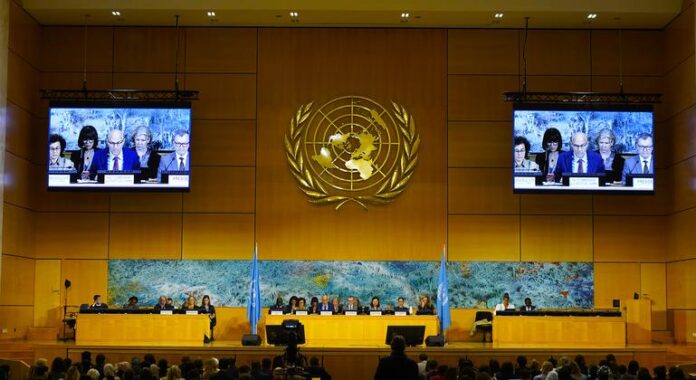
Addressing the Human Rights Council in Geneva, Mr. Türk said that although the “killing on the streets of Iran may have subsided…the brutality continues”.

He said that violent repression did not solve any of Iran’s problems but instead created conditions for further violations, instability and bloodshed.

“We have indications that the security forces made mass arrests in several cities, even pursuing injured people into hospitals, and detaining lawyers, human rights defenders, activists, and ordinary civilians,” he told diplomats.

Prosecutions ongoing

“The Tehran Prosecutor’s Office has reportedly opened criminal cases against athletes, actors, people involved in the movie industry, and the owners of cafes, on charges of supporting the protests,” Mr. Türk continued. 

Protests erupted across Iran on 28 December in response to the collapse of the national currency, soaring inflation and worsening living conditions.

Also speaking at the Council, former international prosecutor Payam Akhavan described how one protester pretended to be dead in a body-bag for three days until his parents found him. 

The civil society representative said that parents looking for their relatives usually started at hospitals, where “many of the wounded (protesters) have been abducted and killed”. 

Others have been forced to sign confessions which blame imaginary “terrorists” for the murder of their children, Mr. Akhavan maintained.

He cited a medical report circulating among Iranian doctors that 16,500 people had been killed during the demonstrations. “The number increases by the day, because the killings haven’t stopped,” he said.

Rejection of Myanmar military’s ‘fraudulent’ election must be unequivocal: UN independent expert

The international community must unequivocally reject as illegitimate the election results in Myanmar and any power arrangement that follows, said Tom Andrews, the Special Rapporteur on human rights in Myanmar on Friday.

The UN-appointed independent expert described the elections, which began in late December and are expected to be concluded this weekend, as ‘fraudulent’, urging countries not to accept the results. 

“The junta is banking on the world’s fatigue, hoping that the international community will accept military rule dressed up in civilian clothing,” he said. “Governments must not allow that to happen.”

‘Fear and coercion’

The junta’s election scheme was marked by violence, low turnout and widespread coercion, said Mr. Andrews.

Voters reported being monitored and pressured by local authorities, with threats explicit or implied. Junta officials were pushing citizens to polling stations even as military jets bombed villages throughout the country.

Mr. Andrews added that the junta banned credible opposition parties, jailed popular political figures and muzzled the press, “crushing fundamental freedoms, and using fear and coercion to drive a reluctant electorate to the polls.”

UN migration chief backs EU presidency efforts on migration

This week, the UN migration agency (IOM) Chief Amy Pope concluded a visit to Cyprus after a round of high-level talks, which focused on advancing a comprehensive migration and asylum agenda. 

“Cyprus knows what it means to be on the frontline – and that experience really matters right now,” said Ms Pope. “As the European Union (EU) moves from agreement to action, this is the moment to make sure policies really work – for migrants, for communities, and countries.

This trip marks the IOM Chief’s first visit to Cyprus in her current role, as Cyprus assumes the EU Council Presidency and the EU begins implementing the landmark Migration and Asylum Pact.

Humane returns 

With persistent instability Afghanistan, Syria, Sudan and the Sahel, Ms Pope reaffirmed IOM’s support and engagement with the EU to ensure refugee returns are humane and dignified. 

During her visit, she underscored the urgent need to address conditions along key migration routes, with IOM emphasising efforts to curb irregular migration, disrupt smuggling networks, meet humanitarian needs, and save lives.

Ms Pope also called for stronger migration data systems and evidence-based policymaking.

Nearly 600,000 people upended by Mozambique floods

Nearly 600,000 people have been affected by severe flooding across southern and central Mozambique. Weeks of heavy and sustained rainfall have caused homes to collapse and roads to wash away, displacing more than 73,000 people, according to figures from the IOM

Flooding has been reported in 10 of Mozambique’s 11 provinces, with Gaza Province “hosting significant concentrations of displaced people”. Humanitarian response partners expect reported figures to rise as access to affected communities improves.

IOM teams there have described acute shortages of shelter, constraints on food and basic services, overcrowded centres, and limited access to safe water, sanitation and hygiene – increasing the risk of waterborne diseases spreading.

Preliminary reports from the International Red Cross (IFRC) indicated between 50 and 60 deaths, a figure likely to rise as waters levels recede. 

Response ahead of cyclone season 

Following a Government request for international support on 16 January including air assets for search and rescue efforts, the IOM plans to appeal for up to $20 million to reinforce life-saving assistance and strengthen water, sanitation and hygiene. 

With this being only the start of the cyclone season and dams at near capacity, representatives from the IFRC have underscored the need for investment in early warning systems, climate‑resilient infrastructure, and locally led preparedness. 

Source link

Limited access restored to Syrian Al Hol camp due to security concerns

0

Limited access restored to Syrian Al Hol camp due to security concernsBriefing journalists in New York, Farhan Haq said the UN refugee agency UNHCR was able to access the camp on Friday along with Syrian government officials and establish contact with some residents. Essential supplies have also resumed. Al Hol is one of the largest travel sites in the region, […]
Originally published at Almouwatin.com

Human trial finds ultrasound treatment for dementia is safe

0

Scanning ultrasound to potentially treat Alzheimer’s disease has been found to be safe and well tolerated in a Source link

Source link

Human trial finds ultrasound treatment for dementia is safe

0


Scanning ultrasound to potentially treat Alzheimer’s disease has been found to be safe and well tolerated in a

Source link

Keeping people warm amid hostilities and harsh winter weather in Ukraine

0
Keeping people warm amid hostilities and harsh winter weather in Ukraine

Russian forces continue to attack Ukraine’s energy grid, leaving families without electricity and heating as temperatures plummet to -20° Celsius. 

Since 2022, the Government has established so-called “Invincibility Points” – located in tents or public buildings such as schools and libraries – where people can go to escape the cold, charge electronic devices and receive basic support.  

Additional initiatives have also been launched, including mobile heating points operated by the State Emergency Services and Ukraine Red Cross Society. Humanitarian partners have supported these efforts with equipment, hot meals and technical assistance. 

A ‘very tough’ winter 

A UN team led by the Humanitarian Coordinator in Ukraine, Matthias Schmale, recently visited various heating points and mobile kitchens in Boryspil, a town in the Kyiv region. 

They met residents, authorities, first responders, as well as aid organizations, at an Invincibility Point in a tent. 

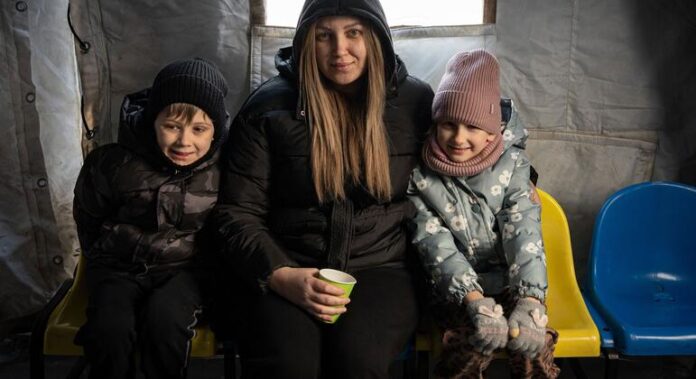
“This winter has been very tough for us,” said Kateryna, a mother of two young children who lives on the outskirts of the town.  

“We have no electricity at home. We came here to warm up, charge our phones and the children’s devices. It was very cold in our house.” 

© UNOCHA/Ximena Borrazas

UN Humanitarian Coordinator in Ukraine Matthias Schmale (left) meets with staff and volunteers of the Ukrainian Red Cross.

Food, warmth and support 

A large food truck was set up near the tent where the NGO Food Without Borders prepared hot meals in a mobile kitchen so that people affected by the cold and power outages could get something to eat.  

The group provided similar services after attacks last November in Shostka, located in the Sumy region. 

“This is one of many remarkable initiatives supporting people across Ukraine during this harsh winter,” said Mr. Schmale.  

“As attacks on energy infrastructure continue, many people face prolonged outages of electricity, heating and water, as well as limited ability to prepare hot food.” 

Falling temperatures 

Mr. Schmale also visited a heating point set up by the Ukrainian Red Cross in Boryspil town. Viktor, a volunteer at the site, described the harsh conditions many people there are facing.  

“In some apartments, the temperature drops to as low as five degrees Celsius,” he said. 

“People spend long hours in our warm tent, especially in the evenings, when temperatures fall even further at night.” 

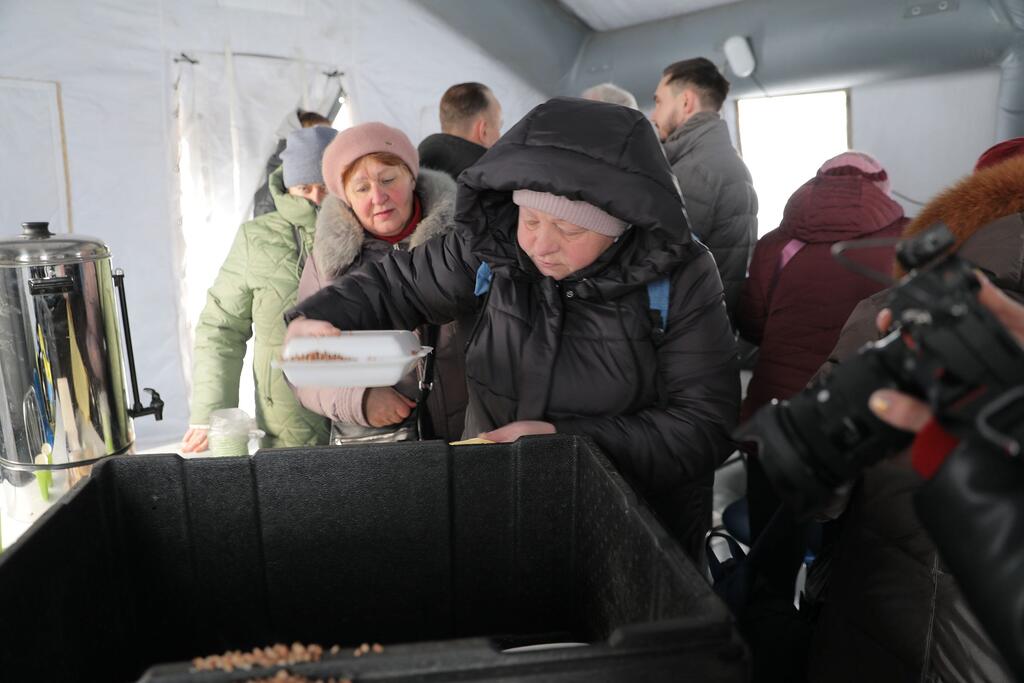
In Boryspil, Ukraine, on 14 January 2026, humanitarian workers and local authorities distribute food to vulnerable people enduring extreme winter conditions with temperatures below -10°C.

© UNOCHA/Viktoriia Andriievska

A woman helps herself to a hot meal in a heated tent in Boryspil.

Families left freezing 

Humanitarians are also carrying out activities under a winter response plan launched last year which aims to reach 1.7 million people across Ukraine between October and March.  

Despite these efforts, the rapidly evolving situation – including large-scale and sustained attacks on energy infrastructure – has caused service disruptions that far exceed the scenarios the plan anticipates. 

Frequent power disruptions leave many families in freezing conditions. Many older persons and people with disabilities are often stuck in their homes, in high-rise apartment buildings, without electricity and heating, unable to cook hot meals or recharge their devices to stay connected. 

Families with children are also left wondering how to keep them safe and healthy. 

The UN and partners are seeking $2.3 million to help 4.1 million of the most vulnerable people in Ukraine this year. 

For families contending with the harsh winter weather, having a place where you can warm up, eat a hot meal and recharge a phone can mean the difference between coping and serious health risks. 

Source link

New European Scientific Advisory Board on Climate Change appointed

0

DISCLAIMER: Information and opinions reproduced in the articles are the ones of those stating them and it is their own responsibility. Publication in The European Times does not automatically means endorsement of the view, but the right to express it.

DISCLAIMER TRANSLATIONS: All articles in this site are published in English. The translated versions are done through an automated process known as neural translations. If in doubt, always refer to the original article. Thank you for understanding.

Source link

Keeping people warm despite hostilities and harsh winters in Ukraine

0
Keeping people warm despite hostilities and harsh winters in Ukraine

Russian forces continue to attack Ukraine’s energy grid, leaving families without electricity or heat as temperatures plummet to -20° Celsius. Since 2022, the government has established “invincibility points” – located in tents or public buildings such as schools and libraries – where people […]

Originally published at Almouwatin.com

سيتم الانتهاء من أكبر مصنع للصوف في أوروبا في رومانيا

0

سيتم الانتهاء من أكبر مصنع للصوف في أوروبا في رومانياسيتم بناء أكبر مصنع لإنتاج الصوف في أوروبا في رومانيا من قبل الذين أكثر من 182 مليون ليو (36.8 مليون شخص سنويًا). المساعدات العامة، معلومات من وزارة الزراعة. سيتم استخدام المنتجات للمصنع لإنتاج الصوف والأسلاك ومنتجات العزل الحراري من الصوف. بالإضافة إلى ذلك، يتم علاج هذه […]

Originally published at Almouwatin.com

Limited access restored to Syria’s Al Hol camp amid security concerns

0

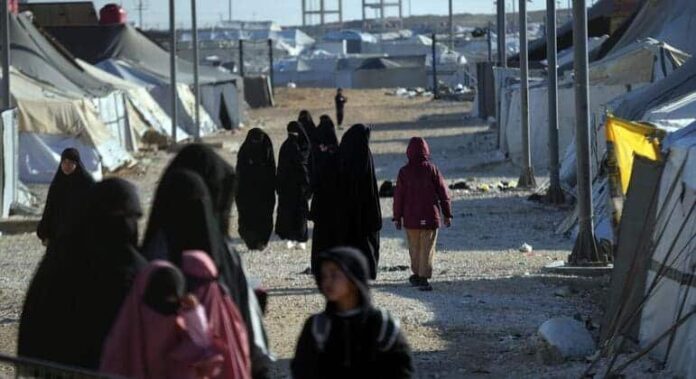
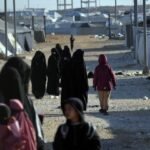
Briefing reporters in New York, Farhan Haq said the UN refugee agency, UNHCR, was able to access the camp on Friday together with Syrian Government officials and establish contact with some residents. Essential supplies have also resumed.

Al Hol is one of the region’s largest displacement sites, housing tens of thousands of people, mostly women and children, many with alleged family links to ISIL terrorist fighters.

UN agencies have long warned of dire humanitarian conditions there, including overcrowding, poor access to healthcare, water and sanitation, and persistent protection and security risks, while repeatedly urging durable solutions, including safe returns, reintegration and repatriation in line with international law.

“Trucks carrying bread entered the camp today, facilitated by UNHCR, following a three-day interruption caused by the volatile security situation inside the camp,” Mr. Haq said, adding that water trucks reached the camp on Thursday, helping to partially restore access to basic services for the camp population.

Al Hol camp, located in Syria’s northeast, hosts tens of thousands of people, including internally displaced Syrians and family members of suspected former fighters.

UN agencies have long warned that insecurity, overcrowding and limited services leave residents – many of them women and children – in extremely vulnerable conditions.

UN agencies and aid partners reaffirmed their commitment to supporting the Syrian authorities in delivering humanitarian assistance, while underscoring the critical need to ensure security inside the camp.

They also highlighted the importance of facilitating the movement of personnel and supplies between Al-Hasakeh and Qamishli.

Concerns in Aleppo

Beyond Al Hol, the situation in Kobani, in Aleppo Governorate, remains concerning.

According to the UN relief coordination office, OCHA, all roads connecting to the city are currently closed, while disruptions to electricity, water and internet services are hampering access to basic needs.

Partners have begun reporting shortages of food, essential items and medicines, although health facilities remain operational, Mr. Haq said.

Source link