Researchers at the TechMed Centre of the University of Twente have built a swallowable soft robot that samples stomach fluid and measures acidity in real time.
The robot has no battery, chip, nor any other electronics. Healthcare workers can move it with a handheld magnet, while it glides through the stomach like a penguin on its belly. The researchers published their work today in Science Advances.
Every year, millions of people worldwide are told they need an endoscopy. A doctor threads a camera on a tube down the throat to see what is wrong. It is uncomfortable and in large parts of the world, it simply is not available. The soft robot SeroTab was built to change that. A doctor steers it with a magnet held against the skin. A standard ultrasound scanner reads the result from outside the body. The whole procedure could run in under twenty minutes, at a clinic.
A stomach exam without the camera
SeroTab contains a gel that swells when it contacts stomach acid. Special discs inside the gel make that swelling measurable with a standard ultrasound scanner, from outside the body. No tube down the throat needed.
The device can also collect a gastric fluid sample on command. A radio wave activates a small pump inside SeroTab, which draws fluid into an internal chamber. That chamber is retrieved after the procedure and sent to a lab for analysis.
No electronics.
Getting SeroTab to the right spot is the job of a handheld magnet. Magnetic particles in the device respond to the magnet held against the patient’s skin. The device bends slightly and glides along the stomach wall. “The slight bend and how it moves are inspired by a penguin sliding on its belly”, says Venkat Kalpathy Venkiteswaran, corresponding author of the publication.
The device has been tested in animal models. The researchers aim for a diagnostic tool for the clinic. Future versions could detect bleeding or measure temperature. For patients who currently have no alternative to endoscopy, that would be a meaningful change.
About the research
The study is a collaboration between the University of Twente, the University of Groningen, Fudan University, and Hong Kong Baptist University. The paper, Electronics-free soft robotic minitablet for on-demand gastric molecular sensing and diagnostics in vivo, was published in Science Advances.
An early summer surge is putting millions at risk as extreme heat becomes a public-safety issue across Europe
Spain entered its first major heatwave of the summer on Sunday, 21 June, with forecasters warning of exceptional temperatures and health authorities facing renewed pressure to protect older people, outdoor workers and households least able to cope with extreme heat.
The episode is expected to intensify through the start of the week, with parts of the peninsula forecast to exceed 40C and the hottest areas potentially approaching 45C. Spain’s national weather agency, AEMET, has issued a special heatwave warning, describing the event as an adverse weather episode likely to persist until at least Thursday.
The warning comes after weeks of unusually high temperatures in Spain and other parts of western Europe. It also follows a deadly May heat episode, when Spain recorded 101 deaths associated with high temperatures, the highest figure for that month since the country’s daily mortality monitoring system began in 2015.
Millions under health risk
The immediate concern is not only the daytime maximum temperature, but the effect of sustained heat on people who cannot cool down at night or avoid exposure during the day. Spanish reporting based on health-risk data said that, on Sunday, 86 climate zones covering 5,266 municipalities were at medium or high risk, affecting almost 21.9 million people, or about 46% of the population.
Older residents, people with chronic illnesses, children, pregnant women, people living alone and those in poorly insulated housing face the greatest danger. Outdoor workers in agriculture, construction, delivery and tourism are also exposed when high temperatures coincide with long shifts and limited shade.
Heat rarely produces the visible destruction of floods or storms, but it can be more lethal. It worsens cardiovascular, respiratory and kidney conditions, raises the risk of dehydration and heatstroke, and can overwhelm local health services when nights remain hot.
A June pattern that is changing
The timing of the episode is politically and socially important. Spain has experienced June heatwaves before, but their frequency has increased sharply. According to Spanish meteorological analysis cited by El País, only two June heatwaves were recorded between 1975 and 2000, compared with ten between 2000 and 2025.
That shift is turning early summer from a period of preparation into a period of active emergency management. Schools, care homes, hospitals, public transport systems and local councils increasingly have to plan for dangerous heat before the traditional peak of July and August.
The latest episode also underlines the unevenness of climate adaptation. Wealthier households can cool homes more easily, while poorer families may face higher energy costs, older buildings and fewer green spaces. Rural communities and small municipalities may have weaker administrative capacity to open cooling centres, adjust working hours or communicate warnings quickly to vulnerable residents.
Europe’s wider warning
Spain is not alone. France, Portugal, Italy and parts of northern Europe have also faced intense early-season heat in recent weeks, reinforcing the pattern described in earlier European Times coverage: extreme heat is becoming a test of public health, housing, labour protection and local climate resilience.
For governments, the immediate task is practical: warnings must reach people in time, public spaces must offer shade and water, employers must adjust work where exposure is dangerous, and health systems must identify those most at risk before emergency rooms fill.
But the longer-term question is whether Europe is adapting quickly enough to a climate in which severe heat arrives earlier, lasts longer and affects regions once considered relatively sheltered. Spain’s June heatwave is therefore more than a weather story. It is a reminder that climate policy is now also social policy, urban policy and public-health policy.
Brussels meeting will measure reform progress, resilience and the practical meaning of enlargement The European Union’s second summit with Moldova on Monday will be more than a diplomatic signal of…
Brussels meeting will measure reform progress, resilience and the practical meaning of enlargement
The European Union’s second summit with Moldova on Monday will be more than a diplomatic signal of support. It will test how far Brussels is prepared to turn enlargement language into institutional commitments, money, market access and security cooperation for a candidate country facing reform pressure and Russian hybrid threats.
European Council President António Costa and European Commission President Ursula von der Leyen are due to meet Moldovan President Maia Sandu in Brussels on 22 June for the second EU-Moldova summit. The meeting follows the opening of Moldova’s first accession negotiation cluster, a step that moves the country from political encouragement into closer scrutiny of courts, rights, public administration, procurement and financial control.
For Moldova, the summit comes at a delicate point. The country has pursued EU membership while managing energy vulnerability, economic pressure, disinformation and instability linked to Russia’s war against neighbouring Ukraine. For the EU, it is a measure of whether enlargement can be presented not only as a geopolitical answer to Moscow, but as a credible governance project rooted in democratic standards.
Reform now moves from promise to evidence
Moldova applied to join the EU in March 2022, received candidate status in June that year and formally opened accession negotiations in June 2024. The latest phase, launched in Luxembourg on 15 June 2026, concerns the fundamentals cluster, the part of accession talks that often determines the pace and credibility of the entire process.
That cluster matters because it is not confined to technical law-making. It examines whether democratic institutions are stable, whether corruption is being tackled, whether courts are independent, whether public money is traceable and whether fundamental rights are protected in practice.
The European Times has previously reported that the opening of the Ukraine and Moldova fundamentals cluster placed rule of law at the centre of both countries’ accession paths. Monday’s summit gives that decision a political follow-up, especially for Moldova, where the EU says progress has been substantial but must remain merit-based.
Money, markets and conditions
The summit is also expected to focus on Moldova’s gradual integration into the EU internal market. Brussels sees this as a way to bring practical benefits before membership, helping companies, workers and public institutions adapt to EU rules while giving citizens a clearer sense of what accession can mean in daily life.
The financial backbone is the EU’s Reform and Growth Facility for Moldova, part of a support package worth up to €1.9 billion for 2025-2027. The Commission says the funding is conditional on reforms agreed with the Moldovan government and linked to economic convergence, market access and institutional change.
According to the Commission, Moldova received €270 million in pre-financing after the first EU-Moldova summit in July 2025. A further €189 million payment was announced in March 2026 after the country met 24 additional reform indicators, including measures on cybersecurity, emergency response, digital public services, budget transparency, anti-fraud systems, asset recovery and judicial reforms.
This conditionality is central to the EU’s policy dilemma. Moldova needs visible support to maintain public confidence in the European path, but Brussels also needs to show existing member states that enlargement is not lowering standards. The result is a process in which financial help, market integration and democratic safeguards are increasingly tied together.
Security and sovereignty shape the talks
EU leaders are expected to restate support for Moldova’s sovereignty, security and resilience. That language has become more concrete since Russia’s full-scale invasion of Ukraine, which placed Moldova’s vulnerability at the edge of the EU’s security debate.
Moldova has faced disinformation, political interference concerns and energy pressure, while also hosting people displaced by the war in Ukraine. The country’s pro-European course has therefore become a test of how the EU supports smaller neighbours exposed to coercion without turning accession into a purely security-driven shortcut.
Energy is likely to remain a prominent part of the discussion. EU institutions say Moldova has worked to diversify supplies, improve energy efficiency and reduce dependence. Those efforts are not only economic. They affect household costs, state resilience and the ability of democratic governments to withstand external pressure.
A declaration will not be enough
Leaders are expected to issue a joint declaration after the summit. Its wording will matter, but the practical follow-through will matter more.
For Moldova, the next stage is likely to involve sustained scrutiny of reforms that citizens experience directly: courts that function, administrations that respond, public contracts that can be checked, and rights protections that remain reliable under political strain. For the EU, the challenge is to keep enlargement credible while avoiding a gap between strategic rhetoric and the resources needed to deliver it.
The Brussels meeting is therefore not simply about Moldova’s future place in Europe. It is about whether the EU can make enlargement feel both principled and tangible: a path that strengthens security without neglecting accountability, and promises membership without weakening the standards that make membership meaningful.
New polling suggests public attitudes on both sides of the Channel are moving faster than official politics Ten years after the United Kingdom voted to leave the European Union, new…
New polling suggests public attitudes on both sides of the Channel are moving faster than official politics
Ten years after the United Kingdom voted to leave the European Union, new polling points to a marked change in public mood: British voters increasingly want closer ties with the bloc, while many EU citizens are open to the idea of the UK returning. The findings do not make rejoining imminent, but they sharpen the political gap between public appetite for reconnection and the cautious official language still shaping London and Brussels.
The European Council on Foreign Relations, publishing new research on Sunday, said its polling found that three quarters of British voters want some form of closer relationship with the EU, compared with only 8% who prefer greater distance. The same ECFR polling also found broad support inside the EU for a British return, with 66% of voters across surveyed EU countries backing UK membership in principle.
The figures arrive two days before the tenth anniversary of the 23 June 2016 referendum, a vote that reshaped British politics, complicated trade and mobility, and removed one of Europe’s largest diplomatic and security actors from the EU’s institutional table.
A public mood no longer trapped in 2016
The striking element in the new research is not simply that many Britons regret Brexit. That has been visible in opinion polling for several years. It is that the argument appears to be moving beyond the old Leave-Remain identity split and toward more practical concerns: living costs, security, migration management, energy and Europe’s place in a more unstable world.
ECFR’s findings suggest that many voters now see closer EU ties less as a symbolic reversal and more as a route to solving concrete problems. That matters because the political vocabulary in Westminster has remained cautious. Prime Minister Keir Starmer’s government has pursued a reset with Brussels, but has ruled out rejoining the EU, the single market or the customs union.
Other polling points in the same direction, though with different wording and levels of intensity. A YouGov tracker updated in June found 59% support for a closer UK-EU relationship without rejoining, and 55% support for Britain rejoining the EU. It also showed that support for the current relationship remains weaker than support for some form of closer settlement.
For Brussels, the shift is politically interesting but institutionally limited. A former member state cannot simply resume its old seat. Any future application would fall under the normal accession route, requiring political will in London, an assessment by EU institutions, unanimous agreement among member states and approval by the European Parliament. The UK would also face difficult questions about budget contributions, regulatory alignment, free movement and whether previous opt-outs could be restored.
Europe’s caution remains real
The polling shows warmth toward Britain, not a negotiated pathway. EU governments may welcome closer cooperation on security, energy, research and trade, while still resisting any arrangement that looks like full benefits without full obligations. That tension has shaped UK-EU relations since withdrawal and remains central to the current reset.
There is also a trust question. The Brexit years left institutional fatigue in Brussels and sharpened concern that a future British government could again reverse direction. For EU capitals, especially those managing enlargement ambitions from Ukraine, Moldova and the Western Balkans, special treatment for a former member would be politically sensitive.
Still, the public shift matters because it changes the backdrop against which leaders operate. The first phase of the UK-EU reset focused on practical cooperation after years of friction. As The European Times reported after the 2025 UK-EU summit, the relationship had already begun moving from post-Brexit damage control toward structured partnership, especially on security and continental stability.
The new polling suggests that public opinion may now be pulling that process further than governments have been willing to admit. For many voters, the relevant comparison is no longer between sovereignty and Brussels control, but between isolation and influence in a world of war, trade pressure, climate insecurity and fragile alliances.
A question returning by degrees
None of this means the UK is on the verge of applying to rejoin the EU. The political barriers remain substantial, and the British government’s stated position remains narrower than the public mood described in the latest surveys. But the question that dominated the last decade is no longer frozen in the language of 2016.
For Europe, the more immediate issue is whether both sides can turn public openness into practical cooperation that improves daily life: easier trade, clearer mobility rules, stronger student and youth opportunities, better security coordination and less bureaucratic friction for families and businesses split across the Channel.
The lesson of the polling is therefore not that Brexit has been undone. It is that the political settlement created by Brexit is still unsettled. Ten years on, the European question in Britain has not disappeared. It has returned in a quieter, more pragmatic form, shaped less by referendum slogans than by the lived costs of distance.
For the first time, scientists have succeeded in artificially mimicking the ion signalling of heart muscle cells. To succeed, researchers at LiU have used organic electronics based on conductive plastics. The findings, published in Nature Communications, open up for new types of prostheses, heart implants and sensors in the long term.
Researchers Dace Gao and Deyu Tu are part of the research group that have used conductive plastics to mimic heart muscle cells. Image credit: Thor Balkhed/Linköping University
“There’s a reason why nature has endowed cardiac muscle cells with this particular type of electrical signalling. We do not merely want to mimic the biology, but also to harness the principles that make these signals so effective,” says Simone Fabiano, Professor of Materials Science at Linköping University.
The human heart beats about 2.6 billion times in an average lifetime. This happens continuously, 24 hours a day, throughout life. One of the keys to the untiring work of the heart muscle cells is the transport of potassium, sodium and calcium ions in and out of the cells. The ion transport initiates an electrical impulse called action potential. This in turn causes the muscles of the heart to contract and the blood is pumped forward.
Slow calcium transport
But artificially mimicking this ion transport and action potential has been a challenge, as heart muscle cells differ from other cells in the body. This is because the ion channel that transports calcium works relatively slowly compared to the sodium and potassium channels.
“It’s precisely this slowness that creates a bottleneck if you try to work with traditional electronics that are designed to be fast. In this case, organic electronics are better, because they can transport both ions and electrons and therefore communicate in the same way as the cells in the body,” says Dace Gao, postdoc at the Laboratory of Organic Electronics, LOE, at LiU and lead author of the scientific article published in Nature Communications.
What he and his colleagues at LOE, Campus Norrköping, have done instead is develop an artificial heart muscle cell made of conductive plastic that mimics the electrical function, that is, the action potential, of the cell.
Hardware allows testing
The same research group has previously developed artificial nerve cells that mimic the properties of biological nerve cells. Developing artificial heart muscle cells was a natural next step, as there was no hardware that could imitate the special ion signalling.
According to Simone Fabiano, there are two main reasons for mimicking the electrical dynamics of cardiac muscle cells using organic electronics. One is that researchers can gain a deeper understanding of the material properties required to recreate biology-like signals. The other is that such systems could, in the long term, be used as bioelectronic models and interfaces:
“Since this is hardware, we can in a controlled manner investigate how changes in, for example, ion concentration and pH affect heart-like electrical signals. In the future, we also hope to be able to connect such systems more closely to biological cardiac muscle cells,” says Simone Fabiano.
New types of medical technology
The researchers envision, for example, how this technology could contribute to small ‘natural’ pacemakers, implants that can activate muscles or sensors that can detect early disturbances in heart function and initiate measures. But this hinges on solving a key issue.
“The artificial cells must be able to receive a signal from a biological cell and then pass the signal on to other cells. The artificial heart muscle cells would then act as a bridge and we will get significantly closer to biomedical applications,” says Dace Gao.
The study was funded mainly by the Knut and Alice Wallenberg Foundation, the Wallenberg Initiative Materials Science for Sustainability, the Swedish Research Council, the European Research Council, the Marie Skłodowska-Curie Actions Postdoctoral Fellowships programme, the Swedish Foundation for Strategic Research, Vinnova and through the Swedish Government Strategic Research Area in Materials Science on Advanced Functional Materials (AFM) at Linköping University.
Article:An organic artificial cardiomyocyte, Dace Gao, Junpeng Ji, Simone De Prà, Miao Xiong, Wenlong Jin, Ugo Bruno, Han-Yan Wu, Aleksandr Khudiakov, Andreas W. Erhardt, Chi-Yuan Yang, Peter J. Schwartz, Luca Sala, Iain McCulloch, Adrica Kyndiah, Mario Caironi, Magnus Berggren, Deyu Tu, Simone Fabiano, Nature Communications 2026, published online 6 May 2026. DOI: 10.1038/s41467-026-72584-5
Leaders want a revised deal text as the bloc’s nearly €2 trillion plan exposes pressure over revenue, cohesion and competitiveness
European Union leaders have pushed the bloc’s next seven-year budget battle into a decisive autumn phase, asking for a revised negotiating text by October after a Brussels summit exposed deep differences over how Europe should pay for its political promises. The 2028-2034 budget is no longer only a technical spreadsheet: it is becoming a test of whether the EU can finance solidarity, competitiveness, enlargement, migration policy and climate resilience without losing public trust.
The next Multiannual Financial Framework, or MFF, will shape EU spending from 2028 to 2034. According to the Council’s overview of the EU’s long-term budget, the proposal amounts to almost €2 trillion in current prices, equal to 1.26% of the bloc’s average gross national income over the period.
That headline figure conceals a more difficult question: what kind of Union the money is meant to sustain. The Commission’s design seeks to simplify the budget into broader spending headings, while increasing emphasis on competitiveness, research, security, migration management, external action and support for Ukraine. Long-standing areas such as agriculture and cohesion remain central, but they now compete with newer pressures that have grown sharper since Russia’s full-scale invasion of Ukraine, the energy crisis and the rise of industrial competition from the United States and China.
October becomes the next deadline
At the end of the 18-19 June European Council, leaders did not settle the budget. Instead, they moved the argument forward. Reporting from the summit said EU leaders expected a new compromise text in October, with the incoming Irish presidency of the Council due to steer the next phase of talks. Euronews reported that the revised text is expected to cover both spending and “own resources”, the EU term for revenue streams that can reduce dependence on direct national contributions.
The timing matters. EU officials want a political agreement before the end of 2026, so related legislation can be adopted in 2027 and funding can begin without interruption on 1 January 2028. Delay would hit regions, universities, farmers, civil-society organisations, border agencies, development programmes and candidate countries that depend on predictable EU financing.
Yet speed will not be easy. Any final MFF needs unanimity among the 27 member states and the consent of the European Parliament. Net contributors are pressing for restraint, while cohesion-minded governments want stronger guarantees for regional development and agricultural support. The European Parliament has also signalled that it will resist being sidelined in a more centralised budget model.
A dispute over priorities
The budget debate has a social dimension that can be obscured by institutional language. Cohesion funds support poorer regions, transport links, local infrastructure and employment programmes. Agricultural spending remains politically sensitive in rural Europe, where farmers have warned that environmental obligations and market pressures are outpacing support. At the same time, the EU says it needs more flexible tools for industrial renewal, clean technologies, digital infrastructure and crisis response.
The European Council’s separate conclusions on competitiveness, adopted on 19 June, underline the urgency of progress on the single market, lower energy prices, industrial renewal and reducing dependencies. Those goals require money, but also governance. The risk is that a larger, more flexible budget becomes harder for citizens, parliaments and local authorities to scrutinise.
That concern is especially important because the budget also touches migration and border management. The Commission’s proposal foresees significantly higher funding in this area, including support for law enforcement, border guards and implementation of the Pact on Migration and Asylum. Human-rights groups will watch closely whether increased spending strengthens fair procedures and reception capacity, or mainly reinforces faster removals and border control.
As The European Times noted ahead of the summit, the EU’s crowded agenda brings Ukraine, migration, competitiveness, the Middle East, defence and organised crime into the same political space. The budget is where those priorities become concrete. Promises without financing become slogans; financing without safeguards becomes a democratic risk.
Revenue remains the hardest question
The Commission has proposed new own resources to help fund common priorities and repay borrowing from the pandemic recovery plan. Such ideas have long been politically difficult. Some governments fear that new EU revenue streams could weaken national control over taxation. Others argue that without them, the cost of common ambitions will fall too heavily on national budgets already under pressure.
This is the core dilemma heading into October. Europe wants greater strategic autonomy, stronger borders, faster innovation, support for Ukraine, climate resilience and social cohesion. But each priority competes for the same political capital and public money.
The autumn negotiating text will not end the argument. It will reveal whether leaders are ready to make trade-offs openly, or whether the next EU budget will be shaped by late-night bargaining that leaves citizens unsure who gained, who lost and why. For a Union asking Europeans to trust it in an age of insecurity, that transparency may be almost as important as the final figure.
UN Spokesperson Stéphane Dujarric updated journalists on the activities of the UN Interim Force in Lebanon (UNIFIL) and ongoing humanitarian support to people displaced by hostilities between Israeli troops and Hezbollah militants.
He said UNIFIL peacekeepers reported observing 143 trajectories of projectiles on Thursday, with 119 attributed to Israel and the remainder to Hezbollah, and no violations of Lebanese airspace.
On Wednesday, they observed 364 projectile launches, with 330 attributed to Israel and 34 to Hezbollah, as well as 38 airspace violations.
UNIFIL convoy obstructed
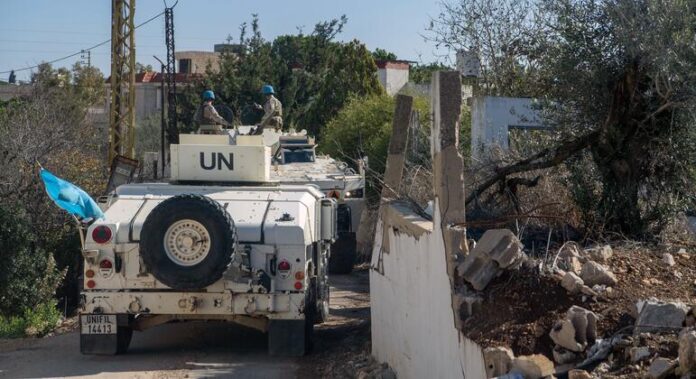
Peacekeepers also continue to observe extensive Israeli ground activities throughout the mission’s area of operations, he said, noting that a UNIFIL convoy was obstructed by two Israeli tanks in Tiri on Wednesday.
One of the tanks aimed its weapon at a UNIFIL vehicle, while soldiers signalled the convoy to halt, forcing the patrol to stop and reverse. The convoy was later allowed to take an alternate route to its intended destination.
“We reiterate once again that UNIFIL peacekeepers must have unrestricted freedom of movement throughout their area of operations, as they are doing their work on behalf of the Security Council,” he said.
Underlining UN commitment
Meanwhile, the UN Deputy Special Coordinator and top humanitarian official in Lebanon, Imran Riza, together with UNIFIL head Major General Diodato Abagnara, held talks with President Joseph Aoun and Speaker of Parliament Nabih Berri in Beirut on Wednesday.
“General Abagnara stressed that UNIFIL remains committed to supporting, in close coordination with the Lebanese Armed Forces, the full implementation of resolution 1701, which continues to be the framework for restoring stability and security in south Lebanon,” the Spokesperson said.
Read more about Resolution 1701 (2006) in our explainer.
Humanitarian update
Turning to humanitarian developments, Mr. Dujarric said UNIFIL facilitated nine humanitarian missions on Wednesday in the western sector of its area of operations.
The UN humanitarian affairs chief Tom Fletcher has also announced an additional $12 million allocation from the Central Emergency Response Fund(CERF) to help hundreds of thousands of people displaced by the conflict.
“The funding will help people access healthcare and protection from gender-based violence, among other critical services,” said Mr. Dujarric.
“It will also help address the growing food insecurity that we are seeing among some of the displaced population in Lebanon.”
Difficult return home
Nearly 50,000 people have returned to their homes in Nabatieh and South Governorates since the announcement of the regional ceasefire, according to the UN humanitarian agency OCHA.
Yet, more than 106,000 remain in collective sites across the country, and many others are seeking shelter elsewhere.
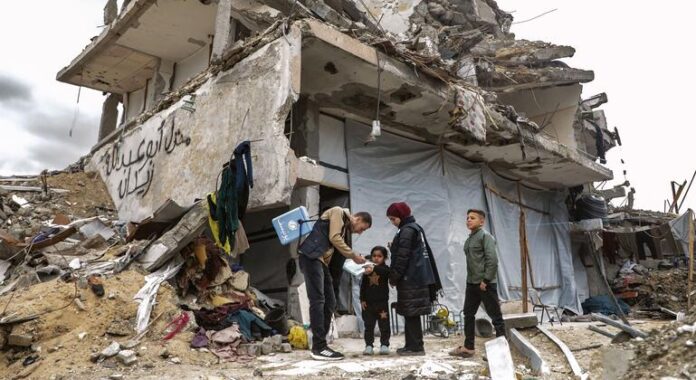
Moreover, OCHA said partners warn that continued insecurity, widespread destruction and limited access to basic services are continuing to prevent many people from returning home.
“During a period supposedly defined by restraint and protection, a child has been killed, on average, every single day for more than eight months,” said UN Children’s Fund (UNICEF) spokesperson James Elder. “That is an absurd and devastating figure.”
Killed while playing
Briefing journalists in Geneva via video from Amman, the UNICEF aid veteran noted that the children “were not killed in a warzone” but rather in their homes, schools while playing football or fishing.
“They were shot, they were bombed, they were struck by quadcopters” operated by the Israeli military, Mr. Elder continued.
The child fatalities are included among the nearly 1,000 Palestinians killed in Gaza and more than 3,100 injured since the ceasefire began, according to the enclave’s health authorities.
“You sneeze near the Orange Line and you may well get shot,” Mr. Elder maintained, referring to the “continual creeping” of Israel’s so-called “Yellow Line” and “Orange Line” boundaries of occupation.
‘Utter lack of accountability’
The uncertainty of these moving boundaries and “an utter lack of accountability” are the reason for such a high number of killings, with the Israeli forces responsible for “the vast, vast majority – 90 per cent plus”, the UNICEF spokesperson said.
The UN and partners have repeatedly warned that the conflict has had a catastrophic humanitarian impact since war erupted in October 2023, in response to Hamas-led terror attacks on Israel.
According to the UN World Health Organization (WHO), no hospital is fully operational in Gaza, while UNICEF warns that water remains a daily uncertainty for 1.1 million children.
“I talk to mothers who have children screaming because they don’t have the clean water to wash [their skin]. Imagine a parent unable to fix that night after night,” Mr. Elder said. “The scale of human suffering in Gaza being inflicted upon Gaza and enabled by others on Palestinian children, it’s almost beyond comparison in our lifetime.”
Today, nearly 1.9 million people have been displaced in Gaza, many repeatedly, while more than 1.2 million have lost their homes.
In an update to the Security Council on Thursday, UN emergency relief chief Tom Fletcher reported that Israeli denial rates for aid missions into Gaza had dropped from 31 per cent before the ceasefire to 11 per cent today.
Nonetheless, Palestinians in Gaza remain “deprived of the basics that you would all demand for your own families: safety, shelter, clean water, healthcare, education”, he stressed.
Mr. Elder echoed that dire assessment, explaining that although some fuel is reaching generators still in working order, the Israeli authorities are not allowing spare parts into the enclave to fix broken machines, nor the oil needed to keep engines running smoothly.
“This is the environment my colleagues on the ground work in, keeping children breathing without a semblance of dignity,” he said.
Other major problems continue to go unresolved in Gaza caused by delays and denials of aid deliveries, not least the massive amount of solid waste still piling up, said Jens Laerke, spokesperson for the UN aid coordination office, OCHA.
“We’ve all heard the stories about the rats, the insects, and so on and so forth, that this causes. So, there is an opportunity, there is a possibility to get rid of all that, but we are not getting the access to it,” he told journalists in Geneva.
More killing in Lebanon
The OCHA spokesperson also condemned the continuing flare-up in Lebanon overnight, with reports of at least 18 people killed in Israeli airstrikes in the south targeting Hezbollah fighters.
“We are seeing the same reports overnight, of course, with enormous concern, frankly…more fighting is not going to help anyone,” Mr. Laerke said, highlighting the high level of humanitarian needs across Lebanon and particularly in the south.
“It is infinitely easier and faster to hurt people and inflict damage than it is to restore people’s livelihoods, get them back to their homes, feed them and so on and so forth. There’s just one or two days of this kind of warfare that translate into months, sometimes years, of humanitarian operations on the ground.”
According to UNICEF, more than 770,000 children are experiencing heightened distress after repeated exposure to violence, loss and displacement.
Elon Musk now holds a title no one has held before. SpaceX went public on Nasdaq on Friday, and the share sale lifted his fortune past $1 trillion, making the 54-year-old the first trillionaire on record. The rocket, satellite, and AI company raised $75 billion, the largest IPO ever completed, and Musk’s ownership stake did the rest. The euphoria did not last long. By the middle of the week, the stock had already handed back a chunk of its gains.
Elon Musk – artistic impression. Image credit: Arthur Ribeiro via Pixabay, free license
Key Takeaways
SpaceX priced its IPO at $135 a share and raised $75 billion, the biggest share sale in history, with Musk’s net worth climbing above $1.1 trillion as trading opened.
The stock jumped roughly 40% in its first three sessions, briefly pushing SpaceX past Amazon and Microsoft, before pulling back on Wednesday.
SpaceX still loses billions each quarter, and analysts question whether its fundamentals can grow into a valuation that touched $2.66 trillion.
Inside the Record IPO
SpaceX sold 555,555,555 shares at $135 each. That priced the company near $1.77 trillion at the open, topping Saudi Aramco’s 2019 listing as the largest debut ever. Shares trade under the ticker SPCX.
Demand ran far ahead of supply. Orders reached roughly $250 billion, nearly four times the shares on offer, and the company trimmed the slice set aside for retail buyers as institutions fought for room.
The cash arrives at a useful moment. SpaceX posted a net loss of $4.9 billion for full-year 2025, then lost another $4.28 billion in the first quarter of 2026 on revenue of $4.69 billion. Its prospectus points the new money toward AI compute, launch vehicles, and satellite constellations.
Most of Musk’s wealth now sits inside the company, where his holding is valued near $866 billion. Add Tesla and his other ventures, and his total net worth tops $1.1 trillion, based on company filings. The figure includes stock that vests over time. Before the sale, Forbes pegged him at about $780 billion, already far ahead of Alphabet co-founder Larry Page in second place.
“The second richest person has been hovering around $300 billion, so about less than one-third of what Musk can potentially be worth tomorrow,” said Matt Durot, deputy editor at Forbes Wealth. “And only one other person, (Oracle founder) Larry Ellison, has ever been worth $400 billion.”
The Rally Cools
The early days were a sprint. Shares opened above the IPO price and kept climbing, rising about 40% through Tuesday’s close. At the peak, SpaceX leapfrogged Amazon and, for a moment, Microsoft, joining the four most valuable companies in the United States. Tuesday’s close put its value at $2.66 trillion.
Then came Wednesday. SpaceX still spends far more than it earns, and a price near $2.66 trillion asks investors to pay for results that may take years to arrive. The doubt building midweek came straight from that gap between the pitch and the books, and it sent the shares lower for the first time since the debut.
“Investors are trading the story, they’re trading the action, they’re trading the excitement, they’re trading Elon Musk, but at some point the rubber meets the road in terms of the fundamentals having to match up with that excitement,” said Peter Boockvar, chief investment officer at One Point BFG Wealth Partners, on CNBC’s “Squawk Box Asia.” “If they can deliver, then the upside is certainly there, but the valuation is so enormous that the company is going to really have to show itself in growing into that valuation,” he added. “I think that that’s going to take at least a couple of years.”
Musk framed the long game himself. In a post on X on Sunday, he wrote that the company “might be able to reach approximately” $1 trillion in revenue by 2030, a target that dwarfs its current sales.
The Elon Premium
Investors have a name for the distance between SpaceX’s books and its market value: the “Elon premium.” It is a wager on the man more than on any spreadsheet.
“Much like Tesla, SpaceX is a bet on Elon Musk,” said Matt Kennedy, senior strategist at Renaissance Capital. “A market cap of $1.5 trillion-$2 trillion would certainly throw all traditional valuation methodologies out the window, and is instead best characterized as the ‘Elon Musk premium.’”
That wager rests partly on hardware that already works. Weeks before the listing, the company’s giant rocket completed a successful Starship V3 test flight that deployed Starlink satellites and survived re-entry, giving the roadshow a timely demonstration. SpaceX also folded in Musk’s AI startup xAI in February, pulling the Grok chatbot and the X platform into the rocket maker in a deal that valued the combined company at $1.25 trillion, the largest merger ever recorded.
SpaceX is also the opening act in a run of giant listings that will test how public markets price the AI era. Two of artificial intelligence’s biggest names, Anthropic and OpenAI, have lined up their own debuts, with both filing paperwork for offerings expected above $1 trillion. The way SpaceX trades from here will color how ordinary investors and pension funds approach those deals, since each one asks the public to fund years of losses on the promise of a later payoff. For a generation of savers, the rocket maker is the first live test of whether that promise is worth the price.
Musk Unfiltered
Few business figures fill as much cultural space as Musk. Public feeling toward extreme wealth has soured, yet he keeps a devoted following without the folksy warmth that made tycoons like Warren Buffett easy to like. Admirers read his no-filter style as the point. Critics see oligarch-scale power, weak governance, and a growing taste for partisan politics.
He was born in Pretoria, South Africa, to a Canadian mother and a South African father, and graduated from the University of Pennsylvania in 1997. He took over as Tesla’s CEO in 2008, betting that electric cars could pair speed with software. Tesla’s rise, and its trillion-dollar-plus market cap, pushed legacy automakers toward EVs after years of dismissing the threat.
“He renewed the world’s respect for American ingenuity in automotive engineering,” said Bob Lutz, a former General Motors vice chairman.
The $44 billion purchase of Twitter in 2022 handed Musk a direct line to hundreds of millions of users and a loud platform on politics, immigration, and speech. He has co-founded five other companies, including tunneling venture The Boring Company and brain-implant maker Neuralink. The whole web has earned its own nickname, the “Muskonomy.”
That concentration of control feeds old worries about conflicts of interest and about tying a company’s fate to one person. SpaceX runs so much of low Earth orbit that the Pentagon has struggled to find a backup, a dependence that surfaced when Musk and the military clashed over how much the government should pay for satellite links on drones. Tesla has faced its own legal fights and shareholder pushback, much of it tied to Musk’s 2018 pay package, once worth $56 billion.
His politics have drawn the loudest fire. After bankrolling Donald Trump’s return to the White House and serving in the administration’s Department of Government Efficiency, Musk became one of the president’s closest corporate allies. The two later fell out over policy and spending, traded public jabs, then cooled the feud. The fight landed as Tesla sales weakened in several markets in 2025, where protests and boycotts hit the carmaker.
Still, many investors weigh his record of turning wild ideas into valuable companies above his behavior. “Elon is the Edison of our time,” JPMorgan Chase CEO Jamie Dimon said during a recent conversation with Musk. Dimon, once a courtroom opponent, told CNBC last year that the two had “hugged it out,” and called Musk “our Einstein.”
The EUROPA consortium will develop an open-source model across all 24 official EU languages
The European Commission has selected a consortium led by Italian company Domyn to build a frontier artificial intelligence model designed for Europe’s full linguistic landscape, turning a long-running debate about technological sovereignty into a concrete public-interest project.
The decision, announced on Friday, gives the EUROPA consortium the central role in the EU’s Frontier AI Grand Challenge, a programme intended to support a large-scale, open-source artificial intelligence model covering all 24 official EU languages.
The Commission said the project was chosen to strengthen Europe’s ability to develop advanced AI on European infrastructure and to make powerful systems more accessible to businesses, researchers and public institutions. Its announcement of the EUROPA selection places language access at the centre of the bloc’s wider attempt to compete with dominant AI developers based largely outside Europe.
A sovereignty project with a language question at its core
The choice of EUROPA is not only an industrial policy move. It is also a test of whether Europe can build advanced systems that reflect its multilingual public sphere rather than treating smaller languages as afterthoughts.
Large AI models are often strongest in English and other high-resource languages, while lower-resource languages risk poorer performance, weaker safety evaluation and reduced access to public services or commercial tools. In the EU, that imbalance has political weight: language equality is tied to citizenship, legal access, education and democratic participation.
By requiring coverage of all 24 official EU languages, the project seeks to connect technological capacity with the Union’s legal and cultural diversity. The model is expected to be openly available, although the practical meaning of openness will depend on future details about weights, training data, documentation, licensing and safety reporting.
Supercomputing as public infrastructure
The Frontier AI Grand Challenge was launched earlier this year with support from the Commission and the EuroHPC Joint Undertaking. The AI-BOOST challenge description says eligible participants had to be EU-established and under EU control, with a track record in large-scale AI and a commitment to European legal frameworks, including the AI Act.
The technical ambition is high. The challenge called for a model with more than 400 billion parameters, a scale associated with advanced general-purpose systems, and offered access to EuroHPC supercomputing resources for one year. That makes the project part of a broader European strategy: using public infrastructure to lower barriers for companies and researchers that cannot match the private computing budgets of the largest global AI firms.
Yet public support also raises public obligations. If EU computing capacity, regulatory credibility and political capital are being used to support frontier AI, the resulting system will face scrutiny over transparency, energy demand, data governance and safety. An open European model may help reduce dependence on external suppliers, but it will not automatically answer questions about bias, copyright, labour displacement or misuse.
Innovation under the AI Act
The timing is significant. The EU is moving from passing the Artificial Intelligence Act to building the institutions and expert structures that will enforce it. As The European Times recently reported, the EU’s new AI Act expert architecture will help shape how powerful general-purpose models are assessed, classified and supervised.
EUROPA’s development will therefore unfold under a regulatory framework that is still becoming operational. That could become an advantage if the project demonstrates that high-performance AI can be built with stronger documentation, multilingual evaluation and rights-aware governance from the start. It could also become a pressure point if political expectations for speed collide with the slower demands of safety, auditability and public trust.
For European policymakers, the central claim is that sovereignty should not mean isolation. The more credible argument is that Europe needs enough capacity to choose its own standards, protect its own public institutions and ensure that citizens are not dependent on systems designed primarily for other markets.
The EUROPA project will now have to prove that this ambition can survive contact with engineering realities. A successful model would not merely be European by origin. It would need to be useful across languages, explainable enough for public confidence, and governed in a way that reflects the rights and diversity it is meant to serve.