Sunday, March 22, 2026
Home Blog Page 52

اعتقال 15 hours of operation

0

اعتقال 15 hours of operation15 days of cooking time. الأشخاص برشق حافلة انتخابية للمعارضة بالحجارة. الاستفزاز، تحدث المرشح لمنصب نائب الرئيس من كتلة المعارضة الرئيسية للتحالف الوطني، أكرم إمام أوغلو، وهو أيضًا Do not remove the water from the water. قامت فرق من قسم شرطة مقاطعة أرضروم بمراجعة لقطات […]

Originally published at Almouwatin.com

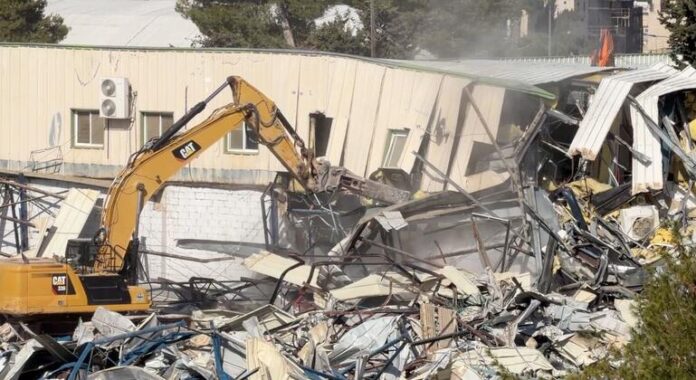
UN strongly condemns demolition of UNRWA headquarters in East Jerusalem

0
UN strongly condemns demolition of UNRWA headquarters in East Jerusalem

Responding to the dramatic development, head of the UN agency for Palestine refugees Philippe Lazzarini described it as an “unprecedented attack” against the UN, whose premises are protected under international law.

The move represents “a new level of open and deliberate defiance of international law, including of the privileges and immunities of the United Nations, by the State of Israel”, the UNRWA Commissioner-General said on X.

Condemnation from Guterres

Secretary-General António Guterres condemned the demolition “in the strongest terms”.

The UN chief has repeatedly and unequivocally stated that the compound remains UN premises and is “inviolable and immune from any form of interference.”

The Secretary-General views as wholly unacceptable the continued escalatory actions against UNRWA,” the statement from his office continued.

Mr. Guterres called on Israel to halt the demolition and restore the compound to the UN “without delay”.

Human rights chief’s ‘outrage’

Echoing those concerns, UN High Commissioner for Human Rights Volker Türk expressed his “outrage” at the incident, which marks a sharp escalation of tensions between the Israeli authorities and UNRWA.

“It compounds what we’ve been seeing for a while; attacking aid groups and UN actors who are trying to help,” said Ravina Shamdasani, spokesperson for the High Commissioner.

On 14 January, Israeli forces entered an UNRWA health centre in East Jerusalem and ordered it to close. At the time of the incident, the agency said its workers were “terrified”. In the coming weeks, water and power supplies to UNRWA facilities are scheduled to be cut, including to buildings used for health care and education.

“This is a direct result of legislation passed by the Israeli parliament in December, which stepped up existing anti-UNRWA laws adopted in 2024,” Mr. Lazzarini said.

Previously, UNRWA premises have been targeted by arsonists amid a “large-scale disinformation campaign” against it by Israel, the agency’s Commissioner-General maintained.

This was despite a ruling last October by the UN’s top court, the International Court of Justice, which restated that Israel was obliged “to facilitate UNRWA’s operations, not hinder or prevent them. The court also stressed that Israel has no jurisdiction over East Jerusalem,” Mr. Lazzarini noted.

“What happens today to UNRWA will happen tomorrow to any other international organisation or diplomatic mission, whether in the Occupied Palestinian Territory or anywhere around the world,” he continued. “International law has come under increasing attack for too long and is risking irrelevancy in the absence of response by Member States.”

Source link

Mozambique floods heighten disease, malnutrition risks – UN agencies

0
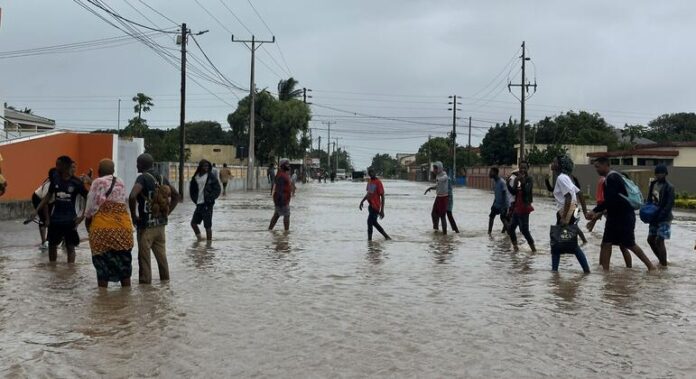
Mozambique floods heighten disease, malnutrition risks – UN agencies

The head of aid coordination office, OCHA, in the country, Paola Emerson, told reporters in Geneva that more than half a million people have been impacted by the floods, triggered by heavy rains in the first weeks of the new year.

“The numbers keep rising as extensive flooding continues and dams keep releasing water to avoid bursting,” she said.

Mozambique’s Gaza province is most affected along with Maputo and Sofala provinces.

‘Melting’ houses

Speaking from Xai-Xai, Gaza’s capital city, Ms. Emerson stressed that 90 per cent of the country’s people live in adobe houses, which are earth-based structures “that basically melt after a few days’ rains”.

Health facilities, roads and critical infrastructure are also heavily impacted. Ms. Emerson said that some 5,000 kilometres of roads have been damaged across nine provinces, including the main road linking the capital Maputo to the rest of the country, which is currently inaccessible, resulting in major supply chain disruptions.

Meanwhile, dams continue to release water even as heavy rains subside.

“From just one dam, up to 10,000 cubic metres-worth of water were being discharged. That is approximately 25 times the amount of water that could be held in the press briefing room you are in today, every second,” Ms. Emerson told journalists, seated in a room with capacity for more than 100 people.

You cannot imagine the strength of this water and the impact it has on people and the infrastructure.

National emergency

The Government of Mozambique has declared a national emergency and has established an emergency operations centre in Gaza province. Xai-Xai, which is near the Limpopo River, has been inundated, prompting evacuations. Ms. Emerson said that authorities have issued alerts for downtown Xai-Xai, “including warnings of crocodile risks in flooded areas”.

“River levels are rising and are reaching urban areas or heavily populated areas,” she said. “The crocodiles that are in the Limpopo River…are able to get into urban or populated areas that are now submerged underwater.

Also speaking from Xai-Xai, the UN Children’s Fund (UNICEF)’s Chief of Communication in Mozambique, Guy Taylor, warned that flooding is “turning unsafe water, disease outbreaks and malnutrition into a deadly threat for children”.

Lethal combination

The combination of waterborne diseases and malnutrition “can often prove lethal,” he said, stressing that even before the floods, four out of every 10 children in Mozambique experienced chronic malnutrition.

“This renewed disruption to food supplies, to health services and to care practices threatens to push the most vulnerable children into a dangerous spiral,” he insisted.

Mr. Taylor added that Mozambique is now entering into its annual cyclone season, creating the risk of a double crisis. “We can prevent disease, deaths and irreversible losses to children, but we need to act fast,” he said.

The UNICEF spokesperson described Mozambique as “a country of children and young people”, with an average age of 17.

“When floods and cyclones strike, as they have repeatedly and with increasing frequency over recent years, it’s the youngest and children who are hit hardest,” he concluded.

Source link

Investing in climate adaptation strengthens European competitiveness

0

DISCLAIMER: Information and opinions reproduced in the articles are the ones of those stating them and it is their own responsibility. Publication in The European Times does not automatically means endorsement of the view, but the right to express it.

DISCLAIMER TRANSLATIONS: All articles in this site are published in English. The translated versions are done through an automated process known as neural translations. If in doubt, always refer to the original article. Thank you for understanding.

Source link

Beyond Interpolation: The Algorithmic Shift from Pixel Cloning to Semantic Hallucination

0

In the history of digital image processing, few advancements have been as mathematically disruptive as the transition from Source link

Source link

Beyond Interpolation: The Algorithmic Shift from Pixel Cloning to Semantic Hallucination

0


In the history of digital image processing, few advancements have been as mathematically disruptive as the transition from

Source link

World News in Brief: Food insecurity in Lebanon, Libya migrants freed, UNHCR tackles multiple emergencies – despite cuts

0
World News in Brief: Food insecurity in Lebanon, Libya migrants freed, UNHCR tackles multiple emergencies – despite cuts

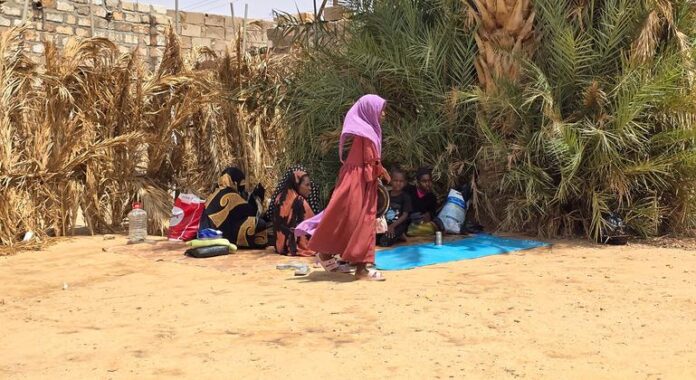
According to the latest UN-backed IPC Food Security Phase Classification report, around 874,000 people are facing crisis or emergency levels of acute food insecurity between November 2025 and March 2026. 

Certain districts and areas have been more severely affected, particularly parts of Baalbek and El Hermel, Akkar, Baabda, Zahle, Saida, Bint Jbeil, Marjayoun, El Nabatieh, Tyre, and refugee communities.

This is the first assessment to include people who arrived from Syria after December 2024, recognising shifting displacement patterns and new vulnerabilities. 

Assistance is essential 

Looking ahead, the situation is expected to worsen rapidly due to a combination of factors, including reduced food assistance, economic pressures, and rising living costs.

Between April and July 2026, food insecurity will rise to 961,000 people, nearly 18 per cent of the population, according to the IPC report. 

“People’s needs remain high, and predictable assistance will be essential to help people meet basic food needs and prevent further deterioration.” said Anne Valand, WFP representative and country director in Lebanon. 

Migrants freed from abusive detention sites in eastern Libya

The UN migration agency (IOM) has deployed emergency teams to eastern Libya to assist hundreds of migrants released from illegal detention sites where they were held in appalling conditions.

Libyan authorities last week closed an unlawful detention facility in Ajdabiya, leading to the release of 195 migrants and the recovery of 21 bodies from a nearby burial site. 

Initial investigations indicate the victims had been held captive and subjected to torture to extort ransom payments from their families.

Buried underground

In a separate operation in Kufra, security forces uncovered an underground detention site three metres below ground. 

A total of 221 migrants and refugees were freed, including women and children, among them a one-month-old baby. At least ten people were transferred to hospital for urgent treatment after being held for prolonged periods in grossly inhumane conditions.

“These shocking cases highlight the severe risks faced by migrants who fall prey to criminal networks operating along migration routes,” said Nicoletta Giordano, IOM’s Chief of Mission in Libya.

IOM teams are providing medical screenings, referring urgent cases to hospitals and distributing warm clothing to survivors. 

The agency welcomed efforts by Libyan authorities to rescue victims and launch investigations, while stressing the need to strengthen protection systems, dismantle trafficking networks and ensure accountability for perpetrators.

UNHCR responds to mounting crises despite funding shortfalls

Despite severe funding shortfalls, the UN refugee agency, UNHCR, responded to a surge of complex emergencies and deepening long-running crises last year, according to its newly released 2025 Impact Report: Response to New Emergencies and Protracted Crises.

Throughout 2025, agency teams provided protection and assistance in some of the world’s most volatile settings. 

They supported people fleeing renewed violence in eastern Democratic Republic of the Congo into Burundi and Uganda, assisted those escaping fresh fighting in and beyond South Sudan, and helped millions of Afghans returning or being forced back from Iran and Pakistan.

Protracted crises also worsened. Ongoing conflict in Sudan, intensified attacks on Ukraine and escalating violence in Colombia triggered repeated displacement, further eroding already fragile living conditions.

Positive response

“In 2025, displacement occurred amid protracted conflict, recurrent disasters, and new outbreaks of violence,” said Ayaki Ito, UNHCR’s Director of Emergency and Programme Support.

“In this environment, UNHCR teams continued to respond to the needs of people forced to flee, even as severe resource constraints limited our capacity.”

Emergency support included clean water for half a million people in Sudan, cash assistance for Afghan and Syrian returnees, and more than a million services for displaced people inside Ukraine and in neighbouring host countries.

UNHCR warned that humanitarian needs are set to rise further in 2026 as conflicts continue to drive displacement affecting nearly 52 million people.

You can find additional background on UNHCR’s emergency response work, here.

 

Source link

Investing in climate adaptation strengthens European competitiveness

0

DISCLAIMER: Information and opinions reproduced in the articles are the ones of those stating them and it is their own responsibility. Publication in The European Times does not automatically means endorsement of the view, but the right to express it.

DISCLAIMER TRANSLATIONS: All articles in this site are published in English. The translated versions are done through an automated process known as neural translations. If in doubt, always refer to the original article. Thank you for understanding.

Source link

Rising hunger and displacement pose growing economic risk, UN tells Davos

0
Rising hunger and displacement pose growing economic risk, UN tells Davos

The UN World Food Programme (WFP) has reported that an estimated 318 million people worldwide now face crisis levels of hunger or worse, with hundreds of thousands already experiencing famine-like conditions.

It cautioned that deep funding shortfalls are forcing it to cut rations and scale back assistance at a time of surging needs.

Current forecasts put WFP’s funding at just under half of its required $13 billion budget for 2026, leaving the agency able to reach about 110 million people – a third of those in need.

Combatting hunger yields dividends

“Hunger drives displacement, conflict, and instability and these not only threaten lives, but disrupt the very markets that businesses depend on,” said Rania Dagash-Kamara, WFP Assistant Executive Director for Partnerships and Innovation.

“The world cannot build stable markets on a foundation of 318 million hungry people.”

Ms. Dagash-Kamara, who is attending the forum, said the private sector has a direct stake in addressing food insecurity, calling on companies to invest in supply chains, technology and innovation that can help stabilize fragile markets and protect workforces.

WFP is urging business leaders in Davos to keep hunger and food security among their top priorities, invest in supply chain systems that strengthen fragile markets, and support food-related technologies that improve efficiency and resilience.

Displaced families in South Kivu, Democratic Republic of the Congo, receive food aid. (file photo)

Migration powers growth and development

The UN International Organization for Migration (IOM) is also taking its case to the annual forum in Switzerland, calling on political and business leaders to rethink migration as a driver of growth rather than a burden.

Migration is one of the most powerful drivers of development when managed responsibly,said IOM Director General Amy Pope.

“Mobility can unlock economic potential, help communities thrive independently, and provide lasting solutions to displacement, while respecting national sovereignty and human rights.”

Partnerships and innovation

IOM said partnerships with private companies and foundations are already helping realise that approach.  

This includes using artificial intelligence to improve health screening and labour market policies, and programmes that support vocational training, entrepreneurship and durable solutions for displaced people.

At Davos, the agency is also highlighting the role of diaspora communities as investors and innovators.

“By using remittances and diaspora capital to support business creation and digital financial access, IOM aims to open new markets and create jobs, while helping communities become more self-reliant,” the agency said.

Other senior UN officials attending the forum include President of the General Assembly Annalena Baerbock; WHO chief Tedros Adhanom Ghebreyesus; Alexander De Croo, Administrator of the UN Development Programme; UN High Commissioner for Refugees Barham Salih; and Rafael Mariano Grossi, Director-General of the International Atomic Energy Agency.

Source link

Yemen: Children are dying and it’s going to get worse, warns aid veteran

0
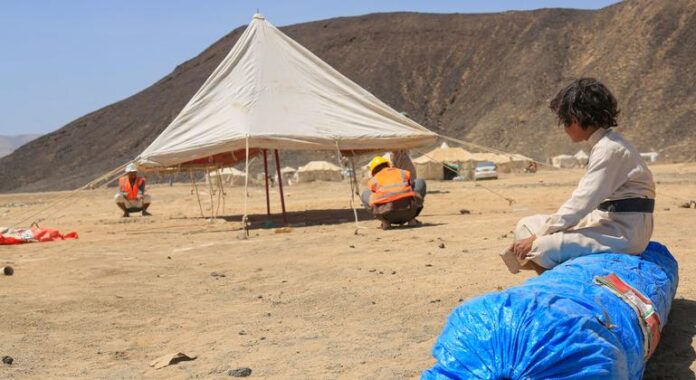
Yemen: Children are dying and it’s going to get worse, warns aid veteran

“The simple narrative is, children are dying and it’s going to get worse,” said Julien Harneis, UN Resident and Humanitarian Coordinator in Yemen. “My fear is that we won’t hear about it until the mortality and the morbidity significantly increases in this next year.”

The alert follows an attempt by forces affiliated with the Southern Transitional Council (STC) to expand their presence in the resource-rich and strategically important eastern governorates of Hadramout and Al Mahra, a move reportedly reversed earlier this month by Government-aligned forces backed by Saudi Arabia.

The latest crisis comes after well over a decade of fighting between Houthi-led forces – who control the capital, Sana’a – and the internationally recognized government in Aden, backed by a Saudi-led military coalition. 

Complex operating environment

“It’s an extraordinarily complicated situation,” Mr. Harneis told journalists in Geneva. “Just in the last month in Aden, we went through a situation where you have the Government of Yemen in charge, then over 48 hours, the Southern Transitional [Council] situation took over the whole of the Government of Yemen areas, including areas they’ve never been in.”

Just four weeks later, however, a delegation from the STC released a statement while in Riyadh, Saudi Arabia, announcing that they had in fact “dissolved” their movement, allowing the Government in Yemen to retake the recently captured areas. “But at the same time, we’ve got demonstrations in Aden saying that, ‘No, we’re not [disbanded], we’re still there,’” Mr. Harneis explained.

Last week, UN Special Envoy for Yemen Hans Grundberg told the Security Council that this latest political and security upheaval underscored how quickly stability could unravel without a credible, inclusive political process to bring a negotiated end to the debilitating war.

Securing a peaceful future for the people of Yemen and providing lifesaving help has also been complicated by the ongoing detention of UN staff and diplomatic workers, among others, by Houthi rebels, who are backed by Iran and control Sana’a. 

Mr. Harneis described the torment for the families of the 69 staff members still being held: “It’s terrible for them; some families haven’t seen their loved ones in five years. They don’t know the conditions of their detention, they don’t know where they are, they don’t know if they’re going to be sentenced to death in the coming days.”

Millions going hungry

Latest UN data shows that more than 20 million Yemenis – about half the population – will face acute food insecurity next month, while tens of thousands could face famine-like conditions.

“We are expecting things to be much worse in 2026,” Mr. Harneis said.

A young boy is carried by his mother thorough a neighbourhood in Al Hawtah, Lahj Governate in Yemen.

The country’s health system is also collapsing. More than 450 facilities have already closed and thousands more are at risk of losing funding. Vaccination programmes are also under threat and only two-thirds of Yemen’s children are fully immunised, largely owing to a lack of access in the north.

“The way that economic and political decisions are playing out…food insecurity is only getting worse across all parts of the country”, the UN aid official maintained.

“We’re going to see a major change where the health system is not going to be supported in the way it has been in the past.”

Despite access restrictions, UN partners reached 3.4 million people with food assistance last year, along with emergency support during floods and disease outbreaks. 

The UN has been working in Yemen since the 1960s, helping to make development gains and protect the country’s most vulnerable people. “And then suddenly in the last couple of years this breakdown…inexplicably,” Mr. Harneis said. “That has a terrifying effect on the humanitarian workers.”

Source link