Wednesday, May 6, 2026
Home Blog Page 524

Resilience of Ukrainians remains high, as UN maps aid and reconstruction needs for 2025

0
Resilience of Ukrainians remains high, as UN maps aid and reconstruction needs for 2025

It has been almost three years since the 24 February 2022 full-scale Russian invasion of Ukraine, which has killed thousands of civilians and destroyed vital infrastructure, putting the economy under enormous strain.

The UN has recorded more than 28,000 civilian casualties and over 10,000 deaths, but acknowledges that the actual toll is very likely to be higher.

As the frontline shifts and hostilities increase, more than 14 million Ukrainians are estimated to be in need of humanitarian assistance. The conflict is responsible for the largest refugee crisis since the Second World War. Over 6.3 million refugees have fled to neighbouring countries and 3.7 million people are internally displaced.

That means nearly one-third of the population has been forced to flee their homes, including more than half of all Ukrainian children. Some 30 per cent of the jobs that existed before the invasion have been erased, and the population has faced tax hikes and funding shortages, not to mention frequent power outages resulting from attacks on energy infrastructure.

Ukraine, Kyiv, was heavily targeted in the early days of the war. (file)” title=”The capital of Ukraine, Kyiv, was heavily targeted in the early days of the war. (file)” loading=”lazy” width=”1170″ height=”530″/>

© UNOCHA/Viktoriia Andriievska

The capital of Ukraine, Kyiv, was heavily targeted in the early days of the war. (file)

UN aid lifeline: Millions supported amidst devastation

Throughout the conflict, the UN has been at the core of relief operations, working closely with Ukrainian authorities, local partner organizations and volunteers to make sure that assistance reaches those who need it, particularly in frontline communities.

In every part of the country, emergency assistance is mobilized in the wake of attacks. UN agencies are helping to demine, remove debris, provide basic services, find shelter for displaced people and provide healthcare, including mental health and psycho-social support. Last year alone, the World Food Programme (WFP) supported 1.6 million Ukrainians each month by providing food and cash assistance, demining agricultural land and supporting feeding programmes in schools and other institutions, whilst the UN humanitarian office reached 2.6 million people with health-related assistance over the course of 2024.

Despite the ongoing bombardments, Ukraine is rebuilding. . Dozens of projects are in the pipeline, focusing on the construction and repair of schools, kindergartens, hospitals, social housing, heating and water systems, and other social infrastructure.

Efforts to rebuild damaged energy infrastructure are not deterred by the continuing attacks. UN agencies and partners are providing over 500 MW of critical power generation and solar capacity, to ensure access to electricity, heating, and water.

There has been a decisive focus on decentralization to ensure that every region, including small towns and villages, is less reliant on electricity supplies from large, centralized power stations, reducing vulnerability to blackouts in the case of an airstrike. 

Whilst the destruction of a large power plant could paralyse a wide area and cut off tens of thousands of people from the grid, a decentralized system with a large number of small, renewable plants is better able to resist an attack: solar panels hit in a bombardment can be replaced within a single day. The UN Development Programme is fostering this new approach, assisting with everything from contract negotiations to training in solar panel installation.

A debris recycling initiative in Ukraine (file)

A debris recycling initiative in Ukraine (file)

‘The future starts as soon as sirens stop’

Despite the large numbers who have left the country, many of those who have stayed are content to remain, according to senior UN officials. For Matthias Schmale, the UN Resident and Humanitarian Coordinator in Ukraine, the willingness of the population to endure and even thrive throughout the conflict is a remarkable sign of their resilience.

Speaking to UN News, Mr. Schmale expressed his hope that the UN’s commitment to support Ukrainians for as long as needed would give them hope for a more dignified future. “I see that people start rebuilding as soon as possible, whether it’s businesses, homes or lives. The future starts as soon as sirens stop. People don’t want to leave.”

The strength of the population is also praised by Kenan Madi, Chief of Field Operations at the Ukraine UNICEF (UN children’s agency) office. “Despite the challenges, despite everything they are going through, they all want to stay in their area, in their villages. They don’t want to leave,” he told UN News in a recent interview. No one is dreaming about leaving. It’s the opposite. Everyone is dreaming about staying. It gives me the assurance that hopefully when this war stops, the Ukrainian population is ready to immediately start rebuilding in a better way and build back better”.

The characterization of Ukrainians as a resilient people goes beyond the anecdotal: a large scale UN-backed 2024 study, based on in-depth interviews with over 7,000 respondents in all of the territories under government control, showed that Ukrainians continue to demonstrate a strong sense of national identity and belonging to their homeland. The findings highlight the strength of Ukraine’s national identity as an important unifying force in the face of the ongoing war.

Solid fuel is delivered to families in Derhachi, Kharkiv region, near the front line.

Solid fuel is delivered to families in Derhachi, Kharkiv region, near the front line.

A costly path to recovery

Nevertheless, the challenges facing the country are enormous, and extremely costly. The full cost of reconstruction and recovery is now estimated to be around $468 billion, according to a joint assessment by the Ukrainian government, World Bank, European Commission and the UN.

With winter temperatures dropping well below freezing, the UN’s humanitarian winter response plan aims to address emergency needs, including providing solid fuel, cash assistance, and water system repairs. Some $500 million is required to fully implement these efforts by March 2025.

In the coming days, UN humanitarian officials will travel to Ukraine to assess the latest situation, ahead of the launch of a fresh humanitarian appeal. Additionally, a broader humanitarian appeal for $2.2 billion is being prepared for 2025 to assist an estimated 12.7 million people.

Source link

More than 5,600 killed in Haiti gang violence in 2024

0
More than 5,600 killed in Haiti gang violence in 2024

These deaths represent an increase of over 1,000 on the total killings for 2023, according to figures verified by OHCHR.  A further 2,212 people were injured and 1,494 kidnapped.

“These figures alone cannot capture the absolute horrors being perpetrated in Haiti but they show the unremitting violence to which people are being subjected,” said the UN High Commissioner for Human Rights, Volker Türk.

Shocking massacre

OHCHR recalled that in one of the most deadly and shocking incidents, at least 207 people were killed in a massacre in early December orchestrated by the leader of the Wharf Jérémie gang in the Cité Soleil area of the capital, Port-au-Prince.

Many of the victims were older people accused of causing the death of the leader’s son through alleged voodoo practices. To erase evidence, gang members mutilated and burned most of the bodies, while others were thrown into the sea.

OHCHR also documented 315 lynchings of gang members and people allegedly associated with gangs, which on some occasions were reportedly facilitated by Haitian police officers.

Additionally, 281 cases of alleged summary executions involving specialized police units occurred during 2024.

Impunity still prevalent

“It has long been clear that impunity for human rights violations and abuses, as well as corruption, remain prevalent in Haiti, constituting some of the main drivers of the multi-dimensional crisis the country faces, along with entrenched economic and social inequalities,” said Mr. Türk. 

“Additional efforts from the authorities, with the support of the international community, are needed to address these root causes.”

The human rights chief stressed that restoring the rule of law must be a priority. He added that to this end, the UN-backed Multinational Security Support Mission (MSS) in Haiti needs the logistical and financial support it requires to successfully implement its mandate.

Furthermore, the Haitian National Police, with the support of the international community, should also strengthen its oversight mechanism to hold accountable police officers reportedly involved in human rights violations.

Implement sanctions and arms embargo

Mr. Türk restated his call for the full implementation of the UN Security Council‘s sanctions regime on Haiti, as well as the arms embargo, which are crucial to preventing the supply of firearms and ammunition to the country.  

Weapons flowing into Haiti often end up in the hands of the criminal gangs, with tragic results: thousands killed, hundreds of thousands displaced, essential infrastructure and services, such as schools and hospitals, disrupted and destroyed,” he said. 

He further noted that deportations of Haitians continue even though the acute insecurity and resulting human rights crisis in their homeland do not allow for safe and dignified return.

The High Commissioner reiterated his call to all States not to forcibly return anyone to Haiti. 

Source link

World News in Brief: Famine spreads in Sudan, deadly attack in Myanmar, Venezuela update

0
World News in Brief: Famine spreads in Sudan, deadly attack in Myanmar, Venezuela update

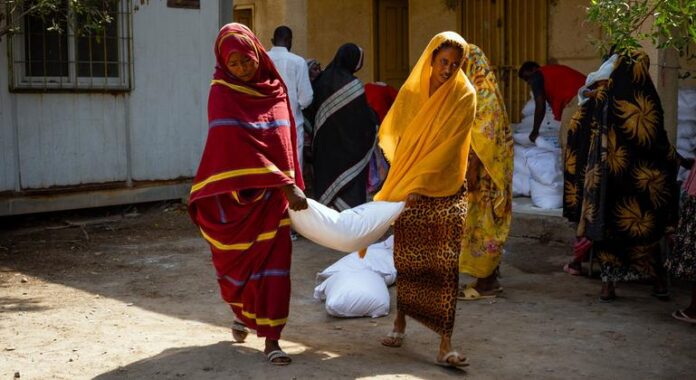
The World Food Programme (WFP) provided lifesaving assistance to 7.8 million people, while the UN Children’s Fund (UNICEF) reached nearly three million children with essential nutrition support. 

This was done in the face of an escalating crisis resulting from the brutal war between rival militaries which erupted in April 2023 between the forces of the military Government and the so-called Rapid Support Forces militia. 

The UN Office for the Coordination of Humanitarian Affairs (OCHA) reports that over 25.6 million people remain acutely food insecure. 

Disruptions to agriculture caused by conflict, mass displacement, heavy rainfall, floods and limited financing have crippled food production for a second consecutive year.

Famine has now spread to five regions according to WFP, leaving some 755,000 people on the brink of starvation.

UN Spokesperson Stéphane Dujarric told correspondents in New York that as the conflict rages on, “families and communities trapped in the middle of it and in hard-to-reach areas are continuing to bear the brunt of the violence and the suffering.”                                 

He said the lack of access to sufficient food and basic services in these hard-to-reach areas inside Sudan is likely to swell while “the risk of destitution and death increases.”  

Immediate and unimpeded humanitarian access is essential, for the UN and aid partners to deliver the assistance required. 

Five million children displaced

Nour, who is internally displaced, is only surviving thanks to Ombaz – a type of animal feed, UNICEF reported. 

The agency said ongoing fighting has displaced around five million children, including one-year-old Samah. Her mother walked for 20 days to reach safety in a refugee camp.

Aid workers have scaled-up efforts under the Famine Prevention Plan launched in April 2024. However, with challenges in access and resource shortages persisting, the UN has urgently called for international support to prevent further catastrophe.

Deep alarm over civilian deaths in Myanmar’s Rakhine state

The UN’s Humanitarian Coordinator in Myanmar, Marcoluigi Corsi, said on Friday that aid workers are deeply alarmed by the spike in civilian casualties in Rakhine state, as the military regime battles multiple insurgencies and armed groups for control across the country.

On Wednesday there was an aerial attack on Kyauk Nima Village in Rakhine state – home to the persecuted Rohingya minority – which reportedly killed over 40 civilians, including women and children, and injured more than 20 people, UN Spokesperson Stéphane Dujarric told reporters.

Abide by international law

Around 500 homes were also allegedly destroyed due to the onslaught.  

Mr. Dujarric reiterated the UN’s call on all parties to the conflict to uphold their obligations under international humanitarian law to protect civilians, including humanitarian workers, as well as hospitals, schools and humanitarian assets. 

“We also stress the need to facilitate unimpeded humanitarian access to the most vulnerable people,” he added.

Guterres strongly condemns detention of Venezuelan opposition figures

As Venezuela’s Nicolas Maduro was sworn in for a third presidential term on Friday, the UN chief said he was continuing to follow events in the country “with great concern.”

Secretary-General António Guterres strongly condemned the detention of opposition politicians, journalists and human rights defenders which has increased after years of repression and economic decline, since the disputed presidential election of 28 July.

According to news reports, the legislative building where Mr. Maduro was sworn in was heavily guarded by security forces as he pushed back on criticism from the United States and other governments who have joined opposition groups in declaring the election stolen.

Nationwide protests at the result led to the arrest of thousands of demonstrators and a fresh wave of arrests and crackdowns. 

Fresh sanctions

The US, Canada, the United Kingdom and the European Union, announced a fresh round of sanctions on Friday on over 20 officials of the Venezuelan Government, accusing them of destroying the country’s democratic institutions and the rule of law. 

Brazil and Colombia were among the countries which rejected the result of the July elections. 

“A peaceful way out of the political crisis requires full respect for human rights, including the right to freedom of expression and to hold opinions without any interference, and to peaceful assembly,” said UN Spokesperson Stéphane Dujarric, briefing journalists.

The UN chief urged the Venezuelan authorities to “guarantee and respect” the rights of all those arbitrarily detained.  

Source link

Rights experts call for immediate release of Abu Zubaydah from Guantánamo

0
Rights experts call for immediate release of Abu Zubaydah from Guantánamo

On Monday the United States military sent 11 long-term detainees from the facility to Oman after reaching agreement with the Government there on relocation and resettlement. 

Only 15 detainees now remain, according to news reports. The prison opened in 2002 and at its peak it held more than 600 prisoners overseen by over 2,000 military and civilian personnel.

Captured in Pakistan

Captured in March 2002 in Faisalabad, Pakistan, following the 11 September 2001 attacks, Abu Zubaydah was transferred to CIA custody and held at multiple secret locations, where he was reportedly tortured, the experts reminded in a press release issued on Wednesday.

Despite being imprisoned for nearly two decades, he remains in Guantánamo Bay without any formal charges having been made.

Release ‘long overdue’

We are exceptionally requesting a Presidential pardon for Mr. Abu Zubaydah, owing to his treatment while in detention and the lack of due process since he was first detained,” the experts stated. “His immediate release and relocation to a third safe country are long overdue.”

The Human Rights Council-appointed experts highlighted Abu Zubaydah’s serious health conditions, which include injuries sustained during torture that have allegedly been exacerbated by the denial of medical attention.

They also noted significant impediments to lawyer-client communication.

Various international and regional human rights mechanisms have examined Abu Zubaydah’s case, establishing that he has suffered multiple human rights violations within the context of the US rendition and secret detention programme, the experts noted.

“In addition to his liberation, we request that Mr. Abu Zubaydah is accorded an enforceable right to compensation and other measures of reparation, in accordance with international law,” the working group members and Special Rapporteurs said.

The experts emphasised the profound psychological and physical trauma he has endured due to torture, cruel, inhuman, and degrading treatment, and enforced disappearance. They reiterated their call for the US Government to immediately release and relocate him to a safe third country.

“We recall the principle of joint responsibility that applies to States when more than one of them was involved in the perpetration of a human rights violation,” the experts said. “Accordingly, we call on States to proactively offer their territory for the prompt relocation of Mr. Abu Zubaydah.”

The experts also expressed concerns about the continued detention of 14 other individuals at Guantánamo Bay, who are in varying stages of legal proceedings and face allegations of ongoing human rights abuses.

Independent rights experts are not UN staff, receive no salary for their work and are independent of any organisation or government.

Source link

Ukraine in grip of third winter of escalating Russian attacks

0
Ukraine in grip of third winter of escalating Russian attacks

In a scheduled update mandated by the Council in Geneva, Nada Al-Nashif said that these attacks had led to the deaths of 574 civilians – an increase of 30 per cent over the previous year.

She noted that Russian bombardment had also damaged key infrastructure such as water, heating and transport services, with several major attacks on Ukraine’s energy infrastructure.

Russia accuses Ukraine of ‘terrorist acts’

The Russian delegation at the Council rejected the Deputy High Commissioner’s allegations and accused Ukrainian forces of carrying out “terrorist acts on homes in various Russian regions”.

The Ukrainian representative condemned ongoing deadly attacks by Russian forces; one on New Year’s Eve involved 100 drones that left two dead and seven injured, including two pregnant women in the capital, Kyiv.

Ms. Al Nashif also warned of “increasing, gross violations of international human rights law and serious violations of humanitarian law, including possible war crimes”.

And she said that Ukrainian prisoners of war, “both men and women, described widespread and systematic torture … severe beatings, electric shocks, strangulation and prolonged solitary confinement. Most reported being subjected to sexual violence, including rape and forced nudity”.

Credible allegations of executions

“I am deeply concerned by a significant increase in credible allegations of executions of Ukrainian military personnel captured by Russian armed forces. Summary executions constitute a war crime. The Office recorded 62 such executions in 19 separate incidents during the reporting period and verified 5 of these incidents…”

Ms. Al Nashif also noted that Russian prisoners of war held by Ukraine reported being subjected to torture, severe beatings, sexual violence and dog attacks, mostly in places of transit before reaching official places of internment.

According to the UN monitoring mission in Ukraine, since February 2022, conflict there has killed more than 12,300 civilians, including more than 650 children, with at least 27,800 injured.

Over 700 medical facilities and 1,500 schools and colleges have also been damaged or destroyed.

Source link

Critical aid blocked in Gaza, as fuel shortages threaten lifesaving services

0
Critical aid blocked in Gaza, as fuel shortages threaten lifesaving services

On Thursday, only 10 out of 21 planned humanitarian movements were facilitated by the Israeli authorities. Seven were denied outright, three were impeded and one was cancelled due to security and logistical challenges, said UN Spokesperson Stéphane Dujarric, at Friday’s media briefing in New York.

OCHA is also deeply concerned about the impact that dwindling fuel supplies are having on essential services in Gaza. Palestinian telecommunication providers are now warning that their services may start to shut down on Saturday due to fuel shortages.

Impact on hospitals

The World Health Organization (WHO) reported on Friday that Al Awda Hospital – the last partially functioning hospital in North Gaza governorate – is critically low on fuel and essential medical supplies.

Parts of the region, namely Beit Lahiya, Beit Hanoun and Jabalya refugee camps, have been besieged for more than three months now and Al Awda has been overwhelmed with patients.

Conditions have only deteriorated following the forced closure of the Kamal Adwan and Indonesian hospitals in the north, due to repeated attacks, raids and forced evacuations.

WHO has been working to access Al Awda to replenish crucial supplies and assess the damage at Kamal Adwan Hospital, which is no longer operational. 

However, damaged roads and insufficient access by the Israeli authorities have made it impossible to safely reach the stricken hospitals.

Mr. Dujarric called for immediate action to be taken to make roads passable and facilitate access to the crippled health facilities.

Escalation of violence in the West Bank

Meanwhile, new reporting from OCHA indicates that during the first week of this year, Israeli forces killed three Palestinians, including a child, and injured 38 others across the West Bank, including East Jerusalem.

During the first week of the year, Israeli settlers also injured 18 Palestinians across the West Bank, including nine in Silwad village in Ramallah governorate. 

Separately, armed Palestinians shot and killed three Israeli settlers and injured eight others near Qalqiliya. 

Already this year, more than 50 Palestinians in the West Bank have been displaced due to home demolitions, the majority in Silwan in East Jerusalem.

In the Jenin refugee camp, security forces with the Palestinian Authority have been clashing with militant factions for more than a month.

OCHA reports that since the operation began, access to the camp has been heavily restricted.

The UN’s Palestine refugee agency, UNRWA, estimates that some 3,400 people remain in the Jenin camp, amid dire conditions whilst more than 2,000 families have been displaced to Jenin city.

OCHA has mobilised partners to respond to the needs of the affected families both inside and outside the camp, according to Mr. Dujarric.

© UNICEF/Diego Ibarra Sánchez

A a 5-year-old walks amongst the ruins of houses in southern Lebanon.

Lebanon: $30 million from UN fund to help war victims

In Lebanon, $30 million was allocated on Friday from the Lebanon Humanitarian Fund to address the devastating impact of the recent conflict.

The UN Humanitarian Coordinator Imran Riza, highlighted the destruction of civilian infrastructure and the crippling of basic services, including healthcare, water and sanitation, amid heavy fighting between Hezbollah and Israeli forces. 

Although a ceasefire is now being observed, the humanitarian toll remains severe.  

The funding will focus on food security, shelter, nutrition, protection, healthcare, water, sanitation and education while localised, community-driven responses will ensure the most vulnerable populations are prioritised. 

Source link

UN Commission notes renewed sense of optimism in Syria during first-ever visit

0
UN Commission notes renewed sense of optimism in Syria during first-ever visit

Commissioner Hanny Megally led the team, which met with officials, including in the Ministries of Justice and Foreign Affairs.

Discussions covered justice for victims and families, the protection of mass graves and evidence, and continued engagement with the Commission, which was established by the UN Human Rights Council in August 2011.

Willingness to engage

Mr. Megally welcomed the willingness of the new authorities to continue engaging with the Commission on future visits.

This marks a significant shift as the former government had denied the Commission access since the start of its mandate.

“We commend the new authorities for improving the protection of mass graves and evidence in detention centres, and encourage them to pursue these efforts further, also by utilizing relevant Syrian civil society organizations and international actors,” he said.

Accountability for abuses

The Commission visited Damascus and surrounding areas, including detention centres that have been a focus of its investigations, as well as mass grave sites.

“Standing in tiny, windowless cells, still filled with stench and marked by unimaginable suffering, was a stark reminder of the harrowing accounts we have documented over nearly 14 years of investigations,” said Mr. Megally.

“These abuses must never be repeated again and those responsible must be held accountable.”

Renewed sense of optimism

In meetings with Syrians, including those returning after years of exile, Mr. Megally noted a renewed sense of optimism and eagerness to participate in a new Syria built on respecting human rights.

The Commission was informed that barriers to civil society engagement, such as the registration of organizations, have eased and it looks forward to the expansion of civic space, which is much needed.

Moreover, discussions with civil society and humanitarian organisations underscored the urgent need for international support to ensure a successful transition. 

In this regard, Mr. Megally emphasized the importance of facilitating efforts toward rebuilding, including the suspension of sectoral sanctions imposed on the former authorities.

Relief and hope

“There is a clear sense of relief among Syrians. After decades of oppressive rule, fear has been lifted, and a new sense of freedom is palpable,” he said, noting that people spoke about holding their heads high for the first time in decades. 

“As someone who investigated massacres in Syria in the 1980’s, I deeply understand how long Syrians have waited for this moment,” he continued.

“Though the time ahead is filled with challenges, we are hopeful that Syrians will come together to build the country to which they have always aspired.”

About the Commission

The Independent International Commission of Inquiry on the Syrian Arab Republic was established to investigate all alleged violations of international human rights law in the country since March 2011, when conflict erupted following a brutal crackdown on pro-democracy protests.

It consists of three Commissioners who are not UN staff and do not receive payment for their work. 

Source link

US: Rights experts urge Senate to reject bill sanctioning the International Criminal Court

0
US: Rights experts urge Senate to reject bill sanctioning the International Criminal Court

The ICC issued arrest warrants in November for Israeli Prime Minister Benjamin Netanyahu and former defence minister Yoav Gallant for alleged war crimes and crimes against humanity in Gaza.

Go here to read our analysis of the decision and the likely next steps, and here for our ICC explainer

Asked by reporters at the regular noon briefing if the UN chief had a view on the Congressional bill, Spokesperson Stéphane Dujarric said that although he would not comment on individual laws, “we do have a principled position…And that is, while it is independent from the Secretariat, the Secretary-General has great respect for the Court and for the work of the International Criminal Court, which is in itself a very important pillar of international justice.”

The experts – Margaret Satterthwaite, Special Rapporteur on the independence of judges and lawyers; Francesca Albanese, Special Rapporteur on the situation of human rights in the Occupied Palestinian Territory, and George Katrougalos, Independent Expert on the promotion of a democratic and equitable international order – outlined their concerns in a statement.

A ‘shocking’ move

They are dismayed by the passage of an Act in the US House of Representatives on Thursday which sanctions the ICC for its decision. The Court also issued an arrest warrant for a former Hamas commander alongside the others.

It is shocking to see a country that considers itself a champion of the rule of law trying to stymie the actions of an independent and impartial tribunal set up by the international community, to thwart accountability,” the experts said.

“Threats against the ICC promote a culture of impunity. They make a mockery of the decades-long quest to place law above force and atrocity,” they warned.

The experts have written to the US authorities about their concerns.

ICC promotes accountability 

The ICC was established under a 1998 treaty known as the Rome Statute. The US is not a party to the statute, along with dozens of other nations, but 125 countries are members of the Court.

It has the mandate to investigate and prosecute individuals for the grave international crimes of genocide, war crimes, and crimes against humanity. It is based in the Hague, in the Netherlands.

The experts recalled that the ICC is the legacy of the Nuremberg trials which brought Nazi leaders to account ​and the commitment ​to never allow ​heinous ​crimes, such as those committed during the Second World War, to go ​​unpunished. 

“The tireless work of brave legal professionals at the ICC is the main driver for accountability. The work of its prosecutors becomes the foundation upon which our efforts to uphold the integrity of the system of international law is resting,” they said.

ICC Prosecutor Karim Khan visits the landfill site in Tarhunah, Libya, where over 250 have been identified across a number of mass graves. (file)

Respect for legal professionals

They called upon all State Parties to the ICC, and all UN Member States in General, to observe and respect international standards as it relates to legal professionals working towards accountability for the most grave international crimes.

International standards provide that lawyers and justice personnel should be able to perform all of their professional functions without intimidation, hindrance, harassment or improper interference; and should not suffer, or be threatened with, prosecution or administrative, economic or other sanctions ​​for any action taken in accordance with recognised professional duties, standards and ethics,” they explained.

‘A blind spot for justice’

They said the bill, titled the ‘Illegitimate Court Counteraction Act’, would take effect 60 days after enactment.

It would sanction any individual working to investigate, arrest, detain or prosecute American citizens or an official from an allied US country, including Israel. Any US funds designated for the ICC would also be rescinded, and any future money for the Court would be prohibited. 

The experts said imposing sanctions on justice personnel for fulfilling their professional responsibilities is “a blatant violation of human rights” that strikes at the core of judicial independence and the rule of law.

“The passage of a bill that creates a blind spot for justice regarding certain countries not only legalises double standards and impunity but irreparably undermines the spirit of universality that the international justice system is built upon,” they said. 

“Such actions erode public trust in the impartiality and integrity of justice and set a dangerous precedent, politicising judicial functions and weakening the global commitment to accountability and fairness,” they added. 

Uphold judicial independence

They warned that if carried out, the sanctions would appear to amount to offences against the administration of justice under Article 70 of the Rome Statute, which punishes efforts to impede or intimidate an official of the Court or to retaliate against them on account of their official duties.  

We urge US lawmakers to uphold the rule of law and the independence of judges and lawyers, and we call on States to respect the Court’s independence as a judicial institution and protect the independence and impartiality of those who work within the Court,” they said.

About UN experts

Special Rapporteurs and Independent Experts receive their mandates from the UN Human Rights Council, which is based in Geneva.

They work on a voluntary basis, are not UN staff and do not receive a salary for their work.

The experts are independent of any government or organisation and serve in their individual capacity. 

Source link

Syria: UN health agency launches $56.4 million appeal to meet critical needs

0
Syria: UN health agency launches $56.4 million appeal to meet critical needs

In addition, the developments since late November, culminating with the overthrow of the Assad regime added new dimensions to the crisis, including population displacements as well as return of Syrian refugees from neighbouring countries.

Since November 2024, over 882,000 Syrians have been displaced amid surging violence, further straining the country’s fragile healthcare system. Attacks on health facilities also escalated, with 37 incidents reported in the past month, according to WHO.  

Over half of Syria’s hospitals are now non-functional, and 141 health facilities in northern Aleppo and Idlib face imminent closure due to funding shortages.

Healthcare under unprecedented strain

The health infrastructure in Syria is severely strained, more than ever,” said Christina Bethke, acting WHO Representative for the country.

“Our teams are currently providing care through mobile clinics, restoring immunization services and integrating mental health support into health facilities, especially for those affected by trauma. This appeal is about safeguarding health and dignity while offering Syrians hope for a safer future.”

Fully funded, WHO’s six-month strategy aims to further strengthen trauma care, deploy ambulances, restore maternal and child health services, enhance disease surveillance, and enable timely patient referrals.

The agency also aims to bolster health system coordination through its hub in Gaziantep, Türkiye, which coordinates assistance to about five million Syrians, including those in hard-to-reach areas.

UNHCR highlights refugee challenges

Meanwhile, the Office of the UN High Commissioner for Refugees (UNHCR) reported significant challenges for displaced populations and returning refugees, particularly for vulnerable groups such as persons with disabilities, women and children.

Those returning from neighbouring countries face severe hardships, with destroyed homes forcing them to live in tents, with extended family members or pay exorbitant rental fees.

Unexploded ordnance (UXO) particularly in agricultural land or homes near former frontline areas pose significant risks. Returnees also cited the need for legal assistance, psychosocial support and school rehabilitation.

In response, UNHCR partners in Aleppo, Hassakeh, Ar-Raqqa and rural Tartous have resumed protection activities, including programmes to keep children engaged, livelihood grants, relief distribution, prevention of sexual violence, and awareness sessions on UXOs and other harmful objects.

Source link

It’s not censorship to stop hateful online content, insists UN rights chief

0
It’s not censorship to stop hateful online content, insists UN rights chief

“Allowing hate speech and harmful content online has real world consequences. Regulating this content is not censorship,” Volker Türk wrote on X.

In a longer LinkedIn post on the same theme, Mr. Türk maintained that labelling efforts to create safe online spaces as “censorship…ignore[s] the fact that unregulated space means some people are silenced – in particular those whose voices are often marginalized. At the same time, allowing hatred online limits free expression and may result in real world harms.”

Meta chief Mark Zuckerberg announced last Tuesday that the company would cease its fact-checking programme in the United States, stating that fact-checkers ran the risk of appearing politically biased, with self-regulation resulting in too much censorship. He called for a return to freer speech on Meta’s platforms, adding that user’s trust had been eroded.

The International Fact-Checking Network (IFCN) has reportedly rejected Mr. Zuckerberg’s “false” argument and warned it could cause harm.

Digital potential

Mr. Türk highlighted that social media platforms have a tremendous ability to shape society positively by connecting people. But they can also fuel conflict, incite hate and threaten people’s safety.

At its best, social media is a place where people with divergent views can exchange, if not always agree,” he said.

The UN human rights chief noted that he would continue to call for “accountability and governance in the digital space, in line with human rights. This safeguards public discourse, builds trust, and protects the dignity of all.”

When asked about the impact of Meta’s recent decisions on the social media policy of the United Nations, a UN spokesperson in Geneva emphasized that the global organization continually monitors and evaluates the online space.

It remains crucial for us to be present with fact-based information,” said Michele Zaccheo, Chief of TV, Radio and Webcast. He added that the UN remained committed to providing evidence-based information on social media platforms.

The World Health Organization (WHO) also reaffirmed its commitment to providing quality, science-based health information, maintaining a presence across various online platforms.

In response to the growing crisis fueled by digital misinformation, the UN Department of Global Communications (DCG) has been actively working to combat false narratives.

This includes developing a code of conduct for information integrity, known as the UN Global Principles for Information Integrity.

Source link