Monday, September 28, 2026
Home Blog Page 539

INTERVIEW: Don’t forget Sudan, UN humanitarian coordinator urges |

0
INTERVIEW: Don’t forget Sudan, UN humanitarian coordinator urges |

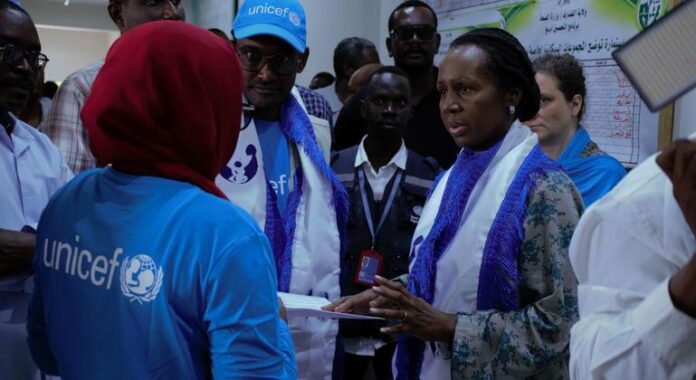
“We appeal to the international community not to forget Sudan,” Clementine Nkweta-Salami, UN Resident and Humanitarian Coordinator for the country, said recently in an exclusive interview with UN News.

The Sudanese Armed Forces (SAF) and former ally the Rapid Support Forces (RSF) have been battling since 15 April 2023. The war has decimated Sudan and sparked the world’s worst displacement crisis. Some 12 million people have been forced to flee their homes for other areas in the country, or across the border.

This year, humanitarians are seeking $4.2 billion to support a staggering 30 million people in Sudan.

Ms. Nkweta-Salami underscored the commitment of the UN and partners to continue assisting war-weary civilians trapped in a dangerous and deadly environment.

The interview has been edited for length and clarity.

Clementine Nkweta-Salami: The humanitarian situation is catastrophic; I think we’ve used that adjective many times now. We are almost two years into the conflict, and we would have hoped to have been able to ensure that we could provide humanitarian assistance comprehensively to those in need.

We’re still struggling. We don’t have access to all the hotspot areas. We are trying our best to make sure that the resources we have can be moved out as quickly as possible using all the modalities that we have available to us.

But the displacement is significant, the needs are enormous, we’ve already had famine identified in some parts of the country, and we’re working against the clock to try and prevent it spreading.

So, all in all, I would say that we still need to make a mammoth effort. We still need support from the international community in terms of resources, and we still need greater facilitation by all the armed groups engaged in this conflict.

UN News: Your focus is on humanitarian operations and getting aid to people, but is there anything you can tell us about the current phase of the fighting and political developments?

Clementine Nkweta-Salami: Humanitarian assistance needs to continue in the absence of a political solution to the conflict, in the absence of a ceasefire. We continue to work with the international community – Member States who are engaged in the political discussions and negotiations – to try and use the discussions to facilitate our work through humanitarian pauses and trying to get the armed groups to agree to routes that we could use which would not be subject to attacks, shelling or bombardment.

In the absence of a political solution, we will continue to forge ahead with the humanitarian response.

The needs of the people are significant. They need health services. They need access to water. They need electricity.  But more importantly, they need access to food, medicines, and shelter. And one of the areas that we believe is critical, and perhaps is not readily as visible, is of course protection.

We have high numbers of gender-based violence. We have children in need of protection, children out of school, and we continue to insist in line with international humanitarian law and human rights law that the protection of civilians be upheld as this conflict continues.

And this is something we haven’t seen, and we continue to push. Civilians are really bearing the brunt of this conflict, and all armed actors need to abide by international humanitarian law and ensure the protection of civilians: those in the cities and those who want to flee.

UN News: This is a good time to remind our audience about how the UN is providing humanitarian assistance to the Sudanese people.

Clementine Nkweta-Salami: We’re trying to bring in assistance across lines – that  is throughout the territory, arriving at Port Sudan and trying to push it to those areas where there is the greatest need. We’re also trying to use the cross-border entry points as well.

We need to use as many of these options [as possible], keep them open, ensure that we have agreements with all the armed groups so that we can use them to bring assistance at scale and as quickly as possible to the highly impacted areas.

We have convoys of food. We also have medicines. We have nutrition supplies. We have supplies to address some of the endemic issues. We’ve had cholera outbreaks. We need to ensure that populations have clean and safe drinking water.

I should also underline that it’s not the UN alone. The UN works with international NGOs, many of whom are able to work in parts of the country where we have no access, where we have no permission to establish a presence, and implement some of our activities.

We also have a large national NGO network – and some of these are female-headed NGOs. They are really at the frontlines, and we are channelling assistance to them, either cash, money or in-kind.

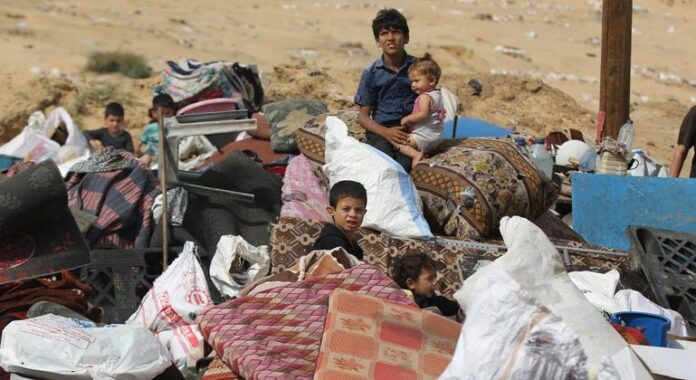
Displaced children in Zamzam camp, where famine was confirmed in August.

UN News: Famine conditions have been confirmed in some areas in Sudan, particularly the Zamzam camp in North Darfur. You mentioned that there’s also the chance of it spreading to other parts of the country. How worrying is this?

Clementine Nkweta-Salami: Very worrying. If you allow me to just perhaps turn to the situation in Darfur. El Fasher remains under siege, with civilian populations trapped for many months, and they face daily shelling, displacement and rapidly deteriorating humanitarian conditions.

Many of the populations have wanted to leave. They’ve been prevented from leaving. Many of them have moved many times, and the situation is very dire.

We are very, very concerned, and I strongly condemn the intensifying deliberate attacks on civilians – particularly those in North Darfur but other parts of Darfur as well, and more recently, the airstrike on the market where we registered a significant loss of life.

I’ve mentioned international humanitarian law before. I think particularly in the Darfurs the protection of civilians is key, and we remind the parties as often as necessary to take all feasible precautions to avoid civilian harm, to provide safe and hindered passage for civilians seeking to flee areas of active conflict.

Now, coming to the actual levels of food insecurity, let me just say that the situation at the Zamzam camp is catastrophic: severe shortages of food, water and medical supplies; the prices of basic goods have skyrocketed, making essential items unaffordable for most families, and Zamzam is a site in which famine conditions were identified last August and re-confirmed in December.

We also had areas in Khartoum at risk of famine, and also in the Kordofans and in the Blue Nile state as well.

UN News: You mentioned attacks, and humanitarians are also under fire. Can you talk about how the insecurity and the fighting affect aid delivery?

Clementine Nkweta-Salami: We have lost an unacceptable number of humanitarian actors during this conflict, and humanitarian actors shouldn’t lose their lives trying to provide support to those in need.

There is conflict in various parts of the country. Khartoum previously was a hot spot, but the Darfurs continue to be a hot spot, more significantly around the border area with Chad, El Fasher and of course Zamzam. We also have hot spots in Nyala and now very recently in the Kordofans where we have seen an uptick in fighting, and also the Blue Nile.

The security situation is impacting our work negatively. But even where there is conflict, humanitarian workers are willing – and do have means and methods of being able to access these locations.
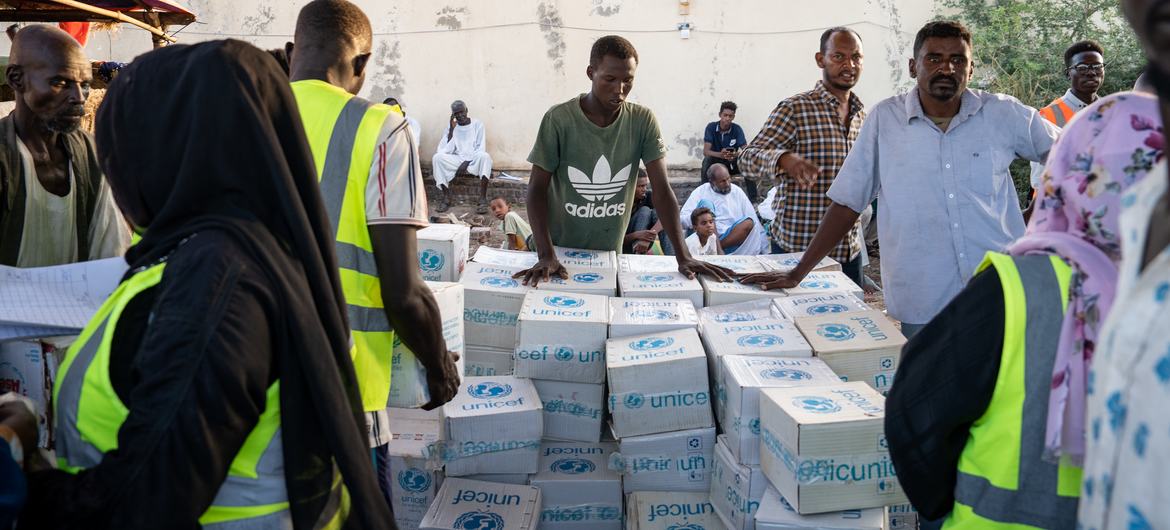
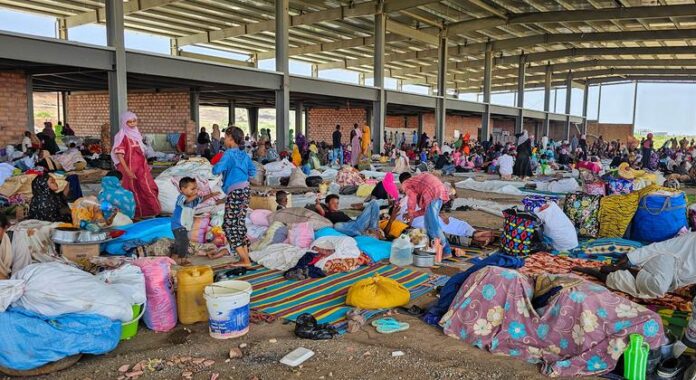
UN humanitarian partners provide emergency assistance at a gathering site in Gedaref State, Sudan.

UN humanitarian partners provide emergency assistance at a gathering site in Gedaref State, Sudan.

UN News: You’ve outlined the challenges, but also the work that the UN and partners are doing to bring aid to people in Sudan. This is taking place against the backdrop of an immense shortfall in funding for humanitarian operations worldwide this year.

Clementine Nkweta-Salami:  Indeed, we are concerned that we will not be able to obtain a level of funding for this crisis that would allow us to address the urgent needs of the population.

We have been informed by some of our donors that there will be reductions in the resources that they will make available to us during the course of this year.

I think it’s important to know that since this crisis began, the humanitarian needs have only grown. We started 2024 with about 24 million people. We ended with about 30 million people.

[Looking at] our Humanitarian Needs and Response Plan, the figures seem to be quite high but when you break them down it’s about 50 cents per person per day.

People are in a dire situation and we appeal to the international community not to forget Sudan, not to forget the men and the women and children of Sudan who find themselves in this very difficult situation at this moment in time.

Source link

EIT Water Info Session: Deep dive into the evaluation process of the Call

0
EIT Water Info Session: Deep dive into the evaluation process of the Call

EIT Water Info Session | Deep dive into the evaluation process of the Call 

The May edition of the EIT Water Info Session will spotlight the timeline, key stages, and qualitative aspects of the evaluation process following the closure of the Call for Proposals for a new Knowledge and Innovation Community (KIC) in the water, marine, and maritime sectors. Tailored for prospective applicants, the session will offer valuable insights into the strategic objectives of the call, the evaluation criteria, and the legal considerations involved.

The online session will open with remarks from Stefan Dobrev, Chair of the EIT Governing Board, and David Tas from EIT, setting the stage for an in-depth presentation by Laura Hanin, the Call’s coordinator, who will walk participants through the evaluation process and selection criteria. Beata Hartwig, EIT Legal Officer, will provide guidance on the legal framework and compliance requirements. The event will wrap up with a Q&A segment, giving attendees the chance to engage directly with the EIT team and get clarity on any outstanding questions.

10:00 – 10:05 Setting the scene — David Tas (Head of Supervision and Monitoring Unit, EIT)
10:05 – 10:20 Welcome address – Stefan Dobrev (EIT Governing Board Chair)
10:20 – 11:00 Evaluation process and Call Criteria — Laura Hanin (EIT Water Call Coordinator) 
11:00 – 11:15 Legal aspects of the EIT Water Call – Beata Hartwig (EIT Legal Officer)
11:15 – 12:00 Questions and Answers 


Register Here

Source link

WHO warns of severe disruptions to health services amid funding cuts

0
WHO warns of severe disruptions to health services amid funding cuts

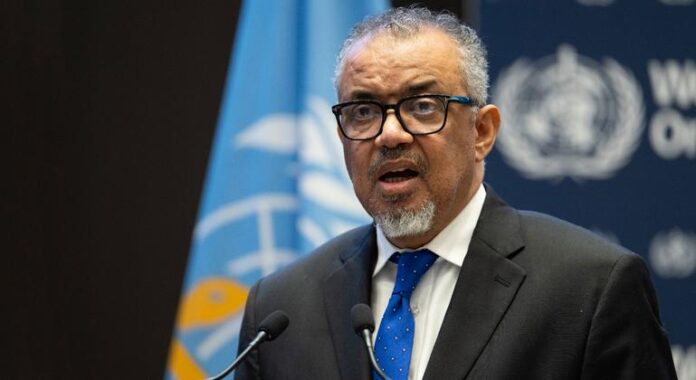
Speaking on Thursday at a press conference in Geneva, Tedros said that in around 25 per cent of countries, some health facilities have had to close completely due to cuts, according to figures from more than 100 countries compiled by WHO.

Severe disruptions

Out-of-pocket payments for health services have led to disruptions to the supply of medicines and other health products, as well as rising job losses in the healthcare sector.

As a result, “countries are revising budgets, cutting costs and strengthening fundraising and partnerships,” said the UN health agency chief.

From aid dependency to self-reliance

Having to revise budgets, cut costs and strengthen partnerships and fundraising, some countries are relying on WHO’s support to transition away from aid dependency towards sustainable self-reliance.

“We are now supporting countries to accelerate that transition,” said Tedros, citing examples of countries such as South Africa and Kenya, who are successfully working towards averting the health impacts of sudden and unplanned cuts.

WHO recommendations

Tedros provided countries with several recommendations on ways to mitigate funding cuts:

  • The world’s poorest populations need prioritising by limiting their exposure to out-of-pocket spending
  • Resist reductions in public health spending and protect health budgets
  • Channel donor funds through national budgets, rather than parallel donation systems
  • Avoid cutting services or closing facilities, and absorb as much of the impact as possible through efficiency gains in health system

New revenue sources

Through short and long-term tools, WHO also encourages countries to generate new sources of revenues.

Immediate measures such as introducing or increasing taxes on products that harm public health is another effective tool to maintain spending on health, he added.

Countries such Colombia and the Gambia, which in recent years have introduced such taxes, have seen revenues increase and consumption fall, said Tedros.

In the longer term, WHO is advocating for social and community-based health insurance policies, where individuals or families can contribute a small amount to a fund which boosts health service financing.

Although not all measures will be right for every country, WHO is “working with affected countries to identify which measures are best for them, and to tailor those measures accordingly.”

Source link

Myanmar: Military strikes persist amid earthquake response efforts

0
Myanmar: Military strikes persist amid earthquake response efforts

“At a moment when the sole focus should be on ensuring humanitarian aid gets to disaster zones, the military is instead launching attacks,” spokesperson Ravini Shamdasani told journalists in Geneva.

Since the 28 March disaster, military forces have reportedly carried out over 120 attacks, she said, and more than half occurred after a declared ceasefire was due to have gone into effect on 2 April.

Devastated areas hit

Most attacks involved aerial and artillery strikes, including in areas impacted by the quake. 

“Numerous strikes have been reported in populated areas, with many appearing to amount to indiscriminate attacks and to breach the principle of proportionality in international humanitarian law,” she added.

Myanmar was already facing political, humanitarian, human rights and economic crisis before the earthquake struck.  

The miliary seized power from the democratically elected government in February 2021 and has been engaged in a brutal civil war with opposition militias.

Aid obstacles, amnesty appeal

Ms. Shamdasani said UN human rights chief Volker Türk is calling on the military to remove any and all obstacles to aid delivery and to cease military operations. 

She noted that areas at the epicentre of the quake in Sagaing, particularly those controlled by opponents of the military, have had to rely on local community responses for search and rescue, and to meet basic needs.

“As the traditionally festive season of Thingyan and the start of a new year begins on Sunday in Myanmar, we call for common efforts to assist those in greatest need,” she added.

In this regard, OHCHR called on the military to announce a full amnesty for detainees it has incarcerated since February 2021, including State Counsellor Aung San Suu Kyi and President U Win Myint.

‘Perfect storm’ for disease

Meanwhile, the UN Children’s Fund (UNICEF) is worried that the earthquake has created “a perfect storm for the emergence of infectious disease outbreaks.”

Eric Ribaira, UNICEF Myanmar’s chief of health said that even before the disaster, the country faced outbreaks of vaccine preventable and communicable diseases such as measles, malaria, dengue and cholera.

“The situation is so much more dangerous now for people, especially children, in these earthquake-affected areas,” he told UN News.

Mr. Ribaira explained that earthquakes spark population displacement which can lead to overcrowded areas, such as temporary shelters, while water and sanitation systems are disrupted causing contaminated water supplies and poor hygiene conditions.

Children may also get respiratory infections from dust and debris from collapsed buildings, he added.

UNICEF is helping to provide clean drinking water and sanitation, as well as necessary supplies so that pregnant women can deliver safely. 

“So far, we have reached about 700 pregnant and lactating women with newborn and clean delivery kits. And we plan to reach much, much more in the coming days,” said Mr. Ribaira.

UNICEF and aid partners have also deployed general medical kits to cover approximately 250,000 people for the next three months, but he stressed that more support is critical.

“The needs are huge, and we must do everything we can to prevent these outbreaks and ensure that women can deliver their babies safely and the general population has urgent medical support when they need it,” he said.

UN mobilizing aid

This week, the UN and partners launched a $275 million appeal as an addendum to a humanitarian plan to reach some 1.1 people in Myanmar.

The earthquake has pushed two million people into reliance on aid. They join nearly 20 million others who already required humanitarian assistance.

UN agencies, partners and Member States have rapidly mobilized aid, including medical care, shelter, safe water, hygiene kits, and food.

To further strengthen efforts on the ground, the UN Central Emergency Response Fund (CERF) has allocated an additional $5 million for earthquake response, which follows an earlier disbursement of $5 million. 

Source link

Sudan faces unprecedented hunger and displacement as war enters third year

0
Sudan faces unprecedented hunger and displacement as war enters third year

As the war enters its third year, UN humanitarians warn that immediate action is essential.

“This is a manmade crisis, driven by conflict – not by drought or floods or earthquakes and because of the obstruction of access to humanitarian assistance by parties to the conflict,” Shaun Hugues, Regional Emergency Coordinator at the UN World Food Programme (WFP), told journalists in New York, via video link from Nairobi.

The brutal war between rival militaries – the Sudanese Armed Forces (SAF) and the paramilitary Rapid Support Forces (RSF) – has already claimed tens of thousands of lives and displaced over 12.4 million people, including more than 3.3 million as refugees in neighbouring countries.

“Tens of thousands more will die in Sudan during a third year of war unless we have the access and resources to reach those in need,” Mr. Hugues warned.

Half the population facing hunger

According to WFP, approximately half of Sudan’s population – 25 million people – is facing extreme levels of hunger, including about five million children and mothers suffering acute malnutrition.

The war, which started on 15 April 2023, has decimated critical infrastructure and led to widespread food shortages, making it the only place in the world currently classified as experiencing famine.

Famine has been confirmed in at least 10 locations in Sudan, including the Zamzam camp, home to 400,000 displaced persons (IDPs). Another 17 areas are at risk in the coming months.

“The scale of what is unfolding in Sudan threatens to dwarf much of what we have seen over previous decades,” Mr. Hugues said.

Women, girls at extreme risk

Women and girls face unprecedented vulnerability, with a sharp increase in maternal deaths and over 80 per cent of hospitals in conflict zones non-operational, leaving many without critical medical care.

Furthermore, cases of conflict-related sexual violence remain hugely underreported, UN Women said, warning that “evidence points to its systematic use as a weapon of war”.

“Women in Sudan are enduring the gravest forms of violence – particularly sexual violence,” said Anna Mutavati, UN Women Regional Director for East and Southern Africa.

“Their strength is extraordinary, but they cannot and should not be left to navigate this crisis alone.”

Fragile gains

Despite challenges, humanitarians are making progress. WFP assistance has tripled since mid-2024, as teams access new areas.

For its part, UN Women has assisted over 15,000 women in some of the worst affected areas, providing critical services and skills trainings. It has also helped set up safe spaces where women and girls can access shelter and protection.

“But these gains are fragile, and they are still just a fraction of the needs,” Mr. Hugues said.

© WFP/Abubakar Garelnabei

A UN convoy carrying food aid travels west from Port Sudan.

Race against time

Along with fighting, physical access is a major challenge.

With rains approaching, many routes will become impassable, complicating aid delivery, he said.

“We need access. We need to be able to quickly move humanitarian assistance to where it is needed, including through front lines, across borders, within contested areas, and without lengthy bureaucratic processes.”

Mr. Hugues also highlighted the urgent need of funding, noting that WFP is already forced to reduce rations by up to half of what is needed in some places.

“Without funding, we are faced with the choice to either cut the number of people receiving assistance or to cut the amount of assistance they receive,” he said, noting that the agency needs an additional $650 million to continue its operations over the next six months.

It also needs $150 million for programmes assisting Sudanese refugees in neighbouring countries.

Sudan needs peace

Mr. Hugues stressed that above all, the Sudanese people need peace.

“We need a ceasefire and an end to hostilities so that they can begin to rebuild their lives,” he said.

Alongside, UN Women underscored the need to ensure women’s voices “are amplified at every peace negotiation table.”

“We urge all stakeholders – governments, donors, the international community – to act decisively. Sudanese women deserve not merely survival, but the dignity to rebuild and thrive,” Ms. Mutavati said.

Source link

Bombardment, deprivation and displacement continue in Gaza

0
Bombardment, deprivation and displacement continue in Gaza

OCHA said dozens of people, including at least eight children, were killed in Gaza City on Wednesday after an Israeli strike hit a residential building. Many others are still missing under the rubble. 

The agency stressed that civilians must be protected and should never be a target.

Medical evacuations and displacement orders

Israel’s total blockade on all commercial and lifesaving relief supplies remains in place, though the World Health Organization (WHO) pointed to some good news as 18 Gazans were medically evacuated for specialized treatment abroad. 

The patients along with nearly 30 companions headed for Norway, Malta, Luxembourg and Romania via the Kerem Shalom crossing in southern Gaza on Wednesday.

WHO noted, however, that some 12,500 patients in the enclave still need to be evacuated.

Access to healthcare facilities has been impacted by displacement orders issued by the Israeli military and the safety of healthcare workers remains at risk.

At least two medical professionals were reported killed as they left their health facility in Gaza City on Monday, according to OCHA.

Today, 12 out of 17 hospitals in the Gaza Strip are partially functional and there is only one field hospital. 

Blockade’s devastating impacts

WHO Director-General Tedros Adhanom Ghebreyesus highlighted the dire health conditions in a media briefing on Thursday.

He said the blockade, which took effect on 2 March, has prevented the entry of all food and medicine. Additionally, 75 per cent of UN missions within Gaza over the past week were denied or impeded.

“This blockade is leaving families hungry, malnourished, without clean water, shelter, and adequate healthcare, and increasing the risk of disease and death,” he said, speaking from WHO Headquarters in Geneva.

He noted that during the recent “precious ceasefire” WHO was able to re-supply the Gaza health system as well as its warehouses. Stocks are now dangerously low and will run out within two to four weeks.

Healthcare under attack

Tedros said that “180,000 doses of routine childhood vaccines – enough to fully protect 60,000 children under the age of two – have not been allowed to enter, leaving newborns and young children at risk.”

Furthermore, it is estimated that since the ceasefire collapsed, almost 1,500 people have been killed, including 500 children, and almost 400,000 people have been displaced again.

“The health system is only functioning partially and is overwhelmed. Meanwhile, healthcare continues to be attacked,” Tedros said, recalling that more than 400 humanitarians have been killed since the Gaza conflict began in October 2023, following the deadly Hamas terror attacks in southern Israel.

Looting on the rise

As supplies inside the Gaza Strip near exhaustion and the situation becomes increasingly dire, there has been an increase in looting in recent days, OCHA said.  

Several incidents were reported in Rafah, and Deir Al-Balah, and Al Zawaida earlier this week.

OCHA once again reiterated the urgency of re-opening crossings to allow the entry of critical supplies. 

Children going hungry

Currently, more than 60,000 children are reportedly suffering from malnutrition at a time when community kitchens are rapidly running out of fuel and supplies.   

Humanitarian partners are also warning of acute water shortages in shelters hosting displaced people. 

“The loss of water – together with the lack of cleaning supplies and cohabitation with livestock – are having a dire public health impact. In March, more than one third of households in Gaza experienced lice infestations,” OCHA said.

This week, humanitarian partners also identified more than a dozen unaccompanied and separated children and are doing everything possible to reunite them with their families. 

Source link

World Parkinson’s Day: Horizon project AI-PROGNOSIS using AI to improve Parkinson’s diagnosis and care

0
World Parkinson’s Day: Horizon project AI-PROGNOSIS using AI to improve Parkinson’s diagnosis and care

Parkinson’s disease affects more than one million people in the EU and this number is expected to double by 2030, primarily due to an aging population. 

To mark World Parkinson’s Day, HaDEA interviewed Prof. Leontios Hadjileontiadis, coordinator of AI-PROGNOSIS, a Horizon Europe research and innovation project aiming to advance Parkinson’s disease diagnosis and care through novel predictive models combined with digital biomarkers from everyday devices, such as smartphones and smartwatches. 

Prof. Hadjileontiadis, tell us more about AI-PROGNOSIS. 

AI-PROGNOSIS is focused on improving Parkinson’s disease diagnosis and care through predictive models driven by artificial intelligence (AI) and digital biomarkers from everyday devices. The project aims to enhance early detection, predict disease progression and optimise treatment responses, thereby personalising patient care. By leveraging data from smartphones and smartwatches, AI-PROGNOSIS offers valuable insights into individual risk and treatment efficacy, ultimately improving the quality of life for those with Parkinson’s disease. 

What can you tell us about your project’s use of AI? Have you encountered any challenges in integrating your solutions in broader healthcare systems?  

The lack of interoperability with legacy electronic health record systems has made integrating AI tools into existing clinical workflows difficult. Many healthcare institutions still use outdated systems not designed to support advanced AI technologies. Building trust and acceptance among healthcare professionals and patients has also been a challenge. There is often scepticism about the accuracy and reliability of AI models and concerns about the potential for AI to replace human roles in healthcare. Overcoming these concerns requires continuous education and demonstration of the AI tools’ benefits and reliability.  

Navigating the complex regulatory landscape for AI in healthcare has added to the challenges. Ensuring that AI tools meet all legal and ethical standards is essential for their adoption and use. Additionally, accessing existing datasets has been difficult due to data ownership and sharing restrictions, which limit the amount of data available for training AI models. Recruiting patients for studies and trials has also been challenging, as it requires significant time and resources to ensure a diverse and representative sample. 

These challenges underscore the importance of a collaborative and adaptive approach in developing and implementing AI solutions in healthcare, ensuring they are both effective and widely accepted. 

Could you elaborate on this collaborative and adaptive approach?  

AI-PROGNOSIS has adopted a comprehensive and inclusive approach to identify the needs of key stakeholders, including patients, healthcare professionals, and researchers. The project emphasises continuous engagement and collaboration with these groups to ensure the tools developed are user-friendly and meet their needs. 

This includes: 

  • Multidisciplinary workshops: AI-PROGNOSIS organises workshops bringing together experts from various fields to discuss and refine project goals and methodologies; 
  • Patient involvement: Patients are actively involved in the design and testing phases, providing valuable feedback on usability and functionality; 
  • Input from health professionals: Regular consultations with doctors and therapists help tailor the AI tools to clinical workflows and practical needs; 
  • Input from the external advisory board: Expert guidance on the ethical implementation, strategic integration, industry perspectives and impactful application of AI-PROGNOSIS output in Parkinson’s disease research and care. 

This collaborative and iterative approach ensures that AI-PROGNOSIS remains aligned with the real-world needs of its stakeholders, enhancing its impact on Parkinson’s diagnosis and care.  

Having consulted with numerous stakeholders, can you give us an example of how this feedback has been used? 

For example, in one of the focus groups that we ran, healthcare professionals shared how challenging it was to be informed about their patients’ changing symptoms across the course of the illness. This insight helped us develop the mAI-Insights application, which allows healthcare professionals to receive frequent updates and alerts about their patients’ symptoms.* 

With the project running until 2027, how important is the EU’s financial support throughout the project life cycle? 

The support of EU funding is crucial for our project. It provides financial resources for extensive research, developing advanced AI models, and integrating digital biomarkers from everyday devices. EU funding under the Horizon Europe programme also facilitates collaboration among multidisciplinary European teams, ensuring that the project benefits from diverse expertise and perspectives. Additionally, this support helps navigate regulatory challenges and promotes the adoption of innovative solutions in healthcare systems. Without EU funding, achieving the project’s ambitious goals and significantly impacting Parkinson’s diagnosis and care would be much more challenging. 


*The project also features two other applications: mAI-Health for persons with suspected Parkinson’s to track their personalised risk and mAI-CARE for persons with diganosed Parkinson’s to track symptoms, disease progression and treatment efficacy. 

Background

Horizon Europe is the research and innovation programme of the EU for the period 2021-2027. The aims of Cluster 1 ‘Health’ include improving and protecting the health and well-being of citizens of all ages by generating new knowledge, developing innovative solutions and integrating where relevant a gender perspective to prevent, diagnose, monitor, treat and cure diseases. Horizon 2020 (H2020) was the EU’s multiannual funding programme between 2014 and 2020.

Source link

Weekly schedule of President António Costa

0
Weekly schedule of President António Costa

Weekly schedule of President António Costa, 14–20 April 2025

Source link

Toy safety: deal on new measures to protect children’s health | News

0
Toy safety: deal on new measures to protect children’s health | News

On Thursday evening, Parliament and Council negotiators reached a provisional agreement on new EU toy safety rules to enhance the protection of children’s health and development. The deal strengthens the role of economic operators in improving toy safety, and clarifies requirements for safety warnings and the digital product passport (DPP). It expands the list of prohibited substances in toys.

Ban on harmful chemicals

In addition to the existing prohibition of carcinogenic, mutagenic, or reproductive toxic (CRM) substances, the agreed text also bans chemicals that pose particular risks to children, such as endocrine disruptors, substances harmful to the respiratory system, and chemicals that are toxic for the skin and other organs. At Parliament’s insistence, the new rules will ban the intended use of per- and polyfluorinated alkyl substances (PFASs) and the most dangerous types of bisphenols. Allergenic fragrances will be banned in toys for children under 36 months and in toys meant to be placed in the mouth.

Safety assessment

Before placing a toy on the market, manufacturers will have to carry out a safety assessment on all potential hazards − chemical, physical, mechanical, and electrical. The assessment will also have to test toys’ flammability, hygiene, and radioactivity, and take children’s specific vulnerabilities into account. For example manufacturers should, where appropriate, ensure that digital toys do not pose risks to children’s mental health − as requested by Parliament negotiators.

Economic operators and online marketplaces

The agreed rules clarify the obligations of economic operators, such as manufacturers, importers, and distributors. This also includes fulfillment service providers (companies responsible for storing, packaging, and dispatching toys). Changes were also introduced to align the agreed text with other legislation, such as the General Product Safety Regulation, the Ecodesign framework and the Digital Services Act.

The text clarifies requirements for online marketplaces, reflecting their growing role in the sale and promotion of toys. For example, marketplaces will have to design their platforms so as to allow sellers to display the CE mark, safety warnings, and a link (such as a QR code) to the digital product passport, to be visible before the purchase is completed.

Digital product passport

All toys sold in the EU will have to bear a clearly visible digital product passport (DPP) showing compliance with the relevant safety rules. The DPP will enhance the traceability of toys and make market surveillance and customs checks simpler and more efficient. It will also offer consumers easy access to safety information and warnings, via a QR code, for example.

Quote

Rapporteur Marion Walsmann (EPP, Germany) said: “Although we already have the safest toys in the world in the European Union, one in five products categorised as dangerous and withdrawn from the market by the EU was a toy. It was therefore very important to revise the 2009 Toy Safety Directive. We are reducing the risks posed by hazardous chemicals in toys and ensuring better labelling, including in online retail. We have also future-proofed the regulation: the Commission will be able to react more quickly to new scientific findings on chemical substances.. The new Toy Safety Regulation sends out a strong signal: for the protection of our children, fair competition and for Europe as a business location.”

Next steps

Parliament and the Council have concluded an “early second reading agreement” (the negotiation took place after Parliament’s first reading was adopted in plenary). The Council is now expected to adopt this agreement formally, and Parliament will then have to endorse the text in plenary, in second reading.

The regulation will enter into force 20 days after its publication in the EU Official Journal. Member states will then have 54 months to comply with the provisions.

Source link

Myanmar: UN seeks additional $240 million to bolster earthquake relief

0
Myanmar: UN seeks additional 0 million to bolster earthquake relief

The 7.7 magnitude earthquake – which struck on March 28 – has claimed over 3,600 lives, injured a further 4,800 people and left 184 still missing.

The disaster has affected more than nine million people across 58 townships, with thousands of buildings, including hospitals and schools, reduced to rubble. Aftershocks continue to rattle the hardest-hit regions, exacerbating an already dire humanitarian crisis.

In response, UN agencies are calling for an additional $241.6 million to aid those in the most affected regions, while also channelling $134 million from the 2025 Humanitarian Needs and Response Plan for Myanmar – which was released in December 2024.

The revised plan identifies around two million newly affected people in urgent need of assistance, adding to the 4.3 million who were already in need before the quake.

Myanmar was already in crisis before the disaster, with nearly 20 million – roughly a third of the population – in need of humanitarian assistance and protection, amid a brutal civil war between the forces of the military junta which seized power in February 2021 and opposition militias.

Heartbreaking destruction

During a visit to Myanmar, UN Special Envoy Julie Bishop met with communities devastated by the quake and urged international support for both immediate relief and long-term reconstruction.

She reiterated the urgent need for a ceasefire to enable humanitarian response and recovery.

“We need to continue to urge for a ceasefire, to stop the killing, stop the conflict so that the humanitarian workers, the search and rescue teams and those involved in rebuilding and reconstruction have the space to operate safely and securely,” she said.

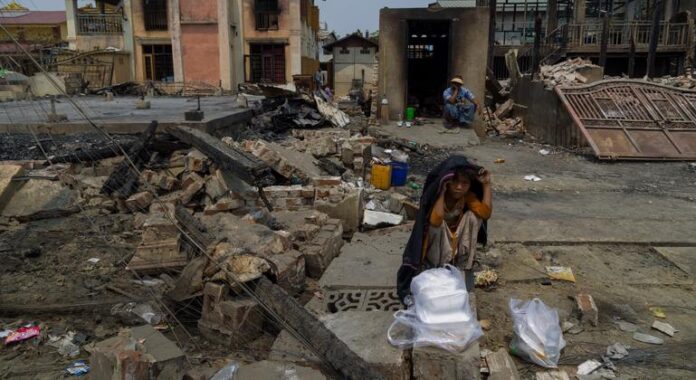
Ms. Bishop described the destruction as “heartbreaking” and praised the resilience of survivors.

“I was particularly struck by those who have lost their homes but are determined to rebuild amid the rubble,” she said, stressing the need for global support.

“The international community has a significant role to play in supporting additional funding during this particular time of need but also using their influence to ensure…that all actors in this conflict put down their arms and focus their efforts on restoring the shattered lives of the people of Myanmar.”

Response overwhelmed

UN agencies report that Myanmar’s vital public services, already strained by conflict and instability, are now overwhelmed.

Myanmar’s remaining health facilities have critical shortages of medical supplies, the UN Children’s Fund (UNICEF) said in a humanitarian bulletin.

More than 193 healthcare centres and 2,311 schools have been damaged or destroyed, while ongoing infrastructure failures have led to food shortages, rising prices, and an increased risk of infectious diseases.

A cluster of acute watery diarrhoea (AWD) cases has already been reported in Sagaing and Mandalay, exacerbated by the destruction of sanitation systems.

Furthermore, extreme heat – reaching 44°C (111°F) – and heavy, off-season rains have worsened conditions for survivors, many of whom remain without shelter.

Fragile infrastructure exposed

The earthquake has also reignited concerns about Myanmar’s fragile infrastructure.

The UN Economic and Social Commission for Asia and the Pacific (ESCAP) warned that rebuilding roads, bridges and key public buildings must be prioritised to prevent future disasters inflicting a similar level of damage.

“This is not optional – it is a social and economic imperative,” the commission said.

Source link