Researchers from Brigham and Women’s Hospital, a founding member of the Mass General Brigham healthcare system, have used artificial intelligence tools to accelerate the understanding of the risk of specific cardiac arrhythmias when various parts of the heart are exposed to different thresholds of radiation as part of a treatment plan for lung cancer. Their results are published in JACC: CardioOncology.
“Radiation exposure to the heart during lung cancer treatment can have very serious and immediate effects on a patient’s cardiovascular health,” said corresponding author Raymond Mak, MD, of the Department of Radiation Oncology at Brigham and Women’s Hospital. “We are hoping to inform not only oncologists and cardiologists, but also patients receiving radiation treatment, about the risks to the heart when treating lung cancer tumors with radiation.”
The emergence of artificial intelligence tools in health care has been groundbreaking and has the potential to positively reshape the continuum of care, including informing treatment plans for patients with cancer. Mass General Brigham, as one of the nation’s top integrated academic health systems and largest innovation enterprises, is leading the way in conducting rigorous research on new and emerging technologies to inform the responsible incorporation of AI into care delivery.
For patients receiving radiation therapy to treat non-small cell lung cancer (NSCLC), arrhythmias or irregular rhythms of the heart can be common. Because of the close proximity of the heart to the lungs and with NSCLC tumors being near or around the heart, the heart can receive collateral damage from radiation dose spillage meant to target the cancer tumors. Prior studies have found that this type of exposure to the heart is associated with general cardiac issues. However, this nuanced study demonstrated that the risk for different types of arrhythmias can vary significantly based on the pathophysiology and cardiac structures that are exposed to different levels of radiation.
In order to classify the types of arrhythmias that are associated with cardiac substructures receiving radiation, researchers conducted a retrospective analysis on 748 patients in Massachusetts, who were treated with radiation for locally advanced NSCLC. The arrhythmia subtypes cataloged included atrial fibrillation, atrial flutter, other supraventricular tachycardia, bradyarrhythmia, and ventricular tachyarrhythmia or asystole.
The team’s statistical analyses indicated that about one out of every six patients experienced at least one grade 3 arrhythmia with a median time of 2.0 years until the first arrhythmia. Grade 3 classifications are considered serious events that likely need intervention or require hospitalization. They also found that almost one-third of patients who experienced arrhythmias also suffered from major adverse cardiac events.
The arrhythmia classes outlined in the study did not entirely encompass the range of heart rhythm issues that are possible, but the authors note that these observations still create a better understanding of the possible pathophysiology pathways and potential avenues for minimizing cardiac toxicity after receiving radiation treatment. Their work also offers a predictive model for dose exposure and the type of expected arrhythmia.
For the future, the researchers believe that radiation oncologists should collaborate with cardiology experts to better understand the mechanisms of heart injuries and their connection to radiation treatment. In addition, they should take advantage of modern radiation treatment to actively sculpt radiation exposure away from the specific cardiac regions that are at high risk for causing arrhythmias. According to Mak, this study, alongside previous research, will help with surveillance, screening, and informing radiation oncologists on which parts of the heart to limit radiation exposure to, and in turn, mitigate complications.
“An interesting part of what we did was leverage artificial intelligence algorithms to segment structures like the pulmonary vein and parts of the conduction system to measure the radiation dose exposure in over 700 patients. This saved us many months of manual work,” said Mak. “So, not only does this work have potential clinical impact, but it also opens the door for using AI in radiation oncology research to streamline discovery and create larger datasets.”
Dutch Hindus are raising awareness about the plight of their fellow believers in Bangladesh. They hold radical Muslims responsible for a recent surge in violence against Hindus in that country. “Strange that our government responds so weakly.”
Hindus in Bangladesh are under attack by Islamists and have no voice, say Dutch Hindu activists. Therefore, they want to make themselves heard: “When you see temples being set on fire and idols being urinated on, it does something to you,” says Nawin Ramcharan (27), an active member of SOHAM, the Hindu advocacy organization in the Netherlands. Ramcharan, along with a few fellow activists, shares his story in an office in The Hague. “We noticed that in the news coverage from and about Bangladesh, there is hardly any mention of the suffering of Hindus.”
What’s going on? This month, the disgraced Prime Minister Sheikh Hasina fled Bangladesh after weeks of student protests that were met with a heavy-handed response. Following Hasina’s departure, chaos erupted. According to Hindu spokespersons, radical Muslims looted Hindu shops, homes, and temples—Hindus make up a minority of 13 million in this densely populated, predominantly Islamic country of 169 million people. According to the Bangladesh Hindu Buddhist Christian Unity Council (BHBCUC), Hindus were attacked in 52 of the 64 districts.
The situation has mostly calmed down now. The elderly economist and Nobel Prize winner Muhammad Yunus (84) has been asked to clean up the mess and guide the transition to a new era. “Yunus is a puppet of the United States, where he lived for a long time,” says Mohnish Sharma (49), director of consulting firm MS Advisory. “The US wants to expand its influence in the region because oil transports to Russia and China pass through this area. According to Hasina, she had to leave because she refused to allow a US military base on St. Martin, a strategically located island in the Bay of Bengal.”
Nawin Ramcharan is “not convinced” by Sharma’s observation that geopolitics played a role in the ousting of the authoritarian Prime Minister Hasina. “But I don’t rule it out either.”
How exactly all of this fits together is unclear. What will surprise many Dutch people the most is the involvement of these Dutch Hindus with developments in Bangladesh, a distant country that is not exactly in the news every day. Glenn Doerga (26), a law lecturer at the Holland University of Applied Sciences, explains: “The Dutch see us as Hindustanis, originating from Suriname. But Hindustanis can be Hindu, Muslim, and sometimes Christian. We Hindus are a religious community, spread worldwide, and we feel solidarity with our fellow believers elsewhere.”
Mohnish Sharma: “Our ancestors come from British India. They were brought to Suriname as contract laborers, but ultimately, our roots are in South Asia.”
The fact that the fate of the Hindus in Bangladesh, whose numbers have significantly decreased over the years, is hardly discussed here is, according to the interlocutors, due to poor lobbying. Sharma: “Hindus in the Netherlands can organize themselves culturally and religiously, but politically, they don’t make a fist. They prefer to fit the image of well-integrated, respectable doctors, lawyers, and accountants. Very different from Muslims, who, for example, through Denk, ask all sorts of questions about Gaza.”
Glenn Doerga: “An interview with me about Bangladesh appeared on TikTok, and a Hindu girl responded: ‘I don’t want to speak out about this because you quickly get labeled as Islamophobic and Hindu nationalist.’ Dutch Hindus are as modest as Indo-Dutch people.”
In India, Bangladesh’s neighboring country with 1.1 billion Hindus, Hindu nationalism became mainstream under Prime Minister Narendra Modi. Indian media extensively reported and expressed outrage over the attacks on their ‘Hindu brothers and sisters’ in Bangladesh, committed by Muslims—a group with which Modi’s India has problematic relations.
Nawin Ramcharan: “Those reports from Indian media were largely dismissed as fake news in the West. Why? Because it’s Muslims who are accused of violence? But when Hamas claims something, it’s readily accepted by editors.” He shows responses from Minister Veldkamp (NSC) of Foreign Affairs to questions from PvdA/GL. “Here, Veldkamp writes: ‘Multiple sources indicate that there is online disinformation about the violence against Hindus. It is therefore difficult to determine the scale of the violence.’ Well, I’ve seen exactly three videos that went viral debunked by Deutsche Welle. Many of the other images were definitely authentic and current.”
At a solidarity rally last week in The Hague, a few dozen people condemned the ‘genocide of Hindus’ in Bangladesh. Minister Veldkamp questions in his response to the House of Representatives whether the violence against Hindus—and also against the small Christian community in Bangladesh—was solely ‘religious in nature.’ After all, many Hindus in Bangladesh supported the party of the disgraced Sheikh Hasina. So, it could just as well be political retribution.
Be that as it may, Dutch Hindu activists continue to raise the alarm. Mohnish Sharma: “The number of Hindus in Bangladesh has dramatically declined in recent decades. Under pressure from the advancing Islam, people converted, or Hindus fled to India. India’s Prime Minister Modi also warns about it: Islam is expansive. The same goes for the Netherlands. Islam has also established itself in all layers of society here. Maybe that’s why we hear and read so little about the misdeeds of Muslims in Bangladesh?”
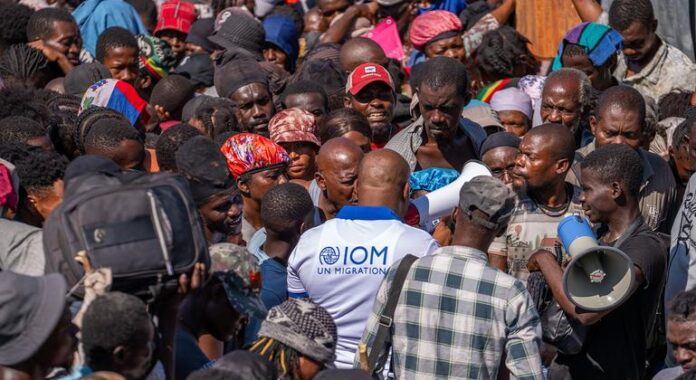
An estimated 10.7 million people have been displaced within Sudan, and a further 2.1 million have sought refuge in neighbouring countries. The fighting has also precipitated an acute hunger crisis, with almost 26 million struggling to secure daily meals.
In an exclusive interview with UN News, Leni Kinzli, Head of Communications at the World Food Programme (WFP) in Sudan, told Abdelmonem Makki that as many as 13 other areas across the war-ravaged country are also at risk of famine.
These are areas with active conflicts such as in Darfur, Kordofan and Khartoum, which are worsening by the day and making assessments very difficult, she said.
“Access to the camps that are inside El Fasher, where fighting continues to intensify day by day between the paramilitary RSF and the SAF, make it extremely difficult to access,” she added.
Catastrophic hunger in Khartoum
She said that some 90,000 are facing catastrophic levels of hunger in the capital Khartoum, which just 18 months ago was a bustling city without concerns over food security.
“Now there are areas in Khartoum where we are hearing that people are just surviving on mixing whatever kind of cereals they have with water and drinking that once per day to survive.”
Ramping up assistance
WFP is ramping up emergency assistance efforts, focusing on those suffering from severe hunger across the country. The agency aims to reach and support up to 8.4 million people by the end of the year.
“We are now aiming to provide around 100,000 hot meals per month and continuing to build off of that to increase the assistance. We have also registered a longer list of financial service providers through which we can provide cash-based assistance,” Ms. Kinzli said.
“[However,] one of the challenges with cash-based assistance since the onset of this crisis has been the liquidity and banking crisis that has also struck Sudan,” she added.
The agency is also helping set up community kitchens and working with local non-governmental organizations (NGOs)
“We are looking at every means to get assistance to people who need it in both in-kind emergency food rations as well as through cash and also working through community kitchens,” she said.
We cannot give up hope
Ms. Kinzli emphasized the world cannot give up hope when it comes to the Sudan crisis, stressing that “we certainly can deliver at the scale required”.
“If we can get assistance to these areas, especially to people who are trapped by conflict and especially to the areas that are at risk of famine, we can prevent many deaths and we can prevent mass starvation and widespread malnutrition,” she said.
At the same time, the warring parties should keep the interests of Sudanese people at heart, she urged.
“No matter what, WFP will continue to do whatever we can, no matter the circumstances, to support and provide assistance to people where they need it the most.”
World Food Programme (WFP) trucks carrying sorghum, pulses, oil and rice destined for 13,000 people at risk of famine in Kereneik, West Darfur, made the crossing on Tuesday evening local time.
WFP reports that it has food and nutrition supplies for around 500,000 people ready to move swiftly through the newly re-opened route.
“The re-opening of the Adre crossing is critical for the effort to prevent famine from spreading across Sudan, and it must now stay in use”, said WFP Executive Director Cindy McCain.
“I want to acknowledge all parties for taking this vital step to help WFP get lifesaving aid to millions of people in desperate need”.
She said agencies urgently need to reach every corner of Sudan with food assistance through humanitarian corridors as well as border crossings: “This is the only way to avoid widespread starvation.”
The Adre crossing from Chad is the most effective and shortest route to deliver humanitarian assistance into Sudan – and particularly the Darfur region – at the scale and speed required to respond to the huge hunger crisis.
Since Adre’s official closure in February, WFP was able to operate just two convoys via the Adre crossing – one in March and one in April and since then needs have only grown, as the rival militaries battle for control of the devastated nation.
UN expert vows to advocate for Afghan human rights following ban on entry
The UN independent human rights expert for Afghanistan has expressed concern over the Taliban’s commitment to end its clampdown on basic rights there, following their announcement that they will not permit his entry into the country.
Special Rapporteur, Richard Bennett, said he has always engaged with the de facto authorities transparently and has been effective in assessing the country’s human rights situation and providing recommendations for improvement where needed.
“As an UN-appointed independent expert, I take my responsibilities very seriously,” Mr. Bennett said. “I urge the Taliban to reverse their decision and reiterate my willingness and availability to travel to Afghanistan.”
Committed to the people
The UN expert says he will continue to engage with the people of Afghanistan “both inside and outside the country, as well as other relevant stakeholders, noting that I have not travelled to Afghanistan for over a year.”
Mr. Bennett also committed to further documenting human rights violations and providing suggestions for improvement.
“I remain committed to the people of Afghanistan and to supporting a stable, inclusive and prosperous country at peace with itself and its neighbours,” he said.
Special Rapporteurs are appointed by the Human Rights Council to serve in their individual capacity, independent of the UN system and national governments. They are not UN employees and do not receive a salary.
Displacement rife across Myanmar
The deteriorating situation in three regions of Myanmar where fighting between military government forces and opposition rebels is intensifying is driving up displacement, the UN Spokesperson warned on Wednesday.
“Reports we are receiving show intensifying hostilities in Rakhine have caused casualties and new displacement, notably in Maungdaw Township, on the border with Bangladesh”, said Stéphane Dujarric.
An estimated 20,000 people were reportedly displaced from three downtown Maungdaw areas on 5 August while more people are reportedly fleeing across the border now.
In northern Shan state, there has been a resurgence of fighting since late June, with an estimated 33,000 people displaced from four townships, he added.
“There are also reports of civilian casualties; homes and other structures have also been destroyed according to the information we’re getting.”
Funding falling short
Torrential monsoon rains since the end of June are aggravating the already dire humanitarian situation with around 393,000 impacted.
The 2024 Humanitarian Needs and Response Plan, which aims to reach some 5.3 million people across the country has only received 23 per cent of the amount requested – just over $225 million.
“Despite the challenges, some 2.1 million people across Myanmar were reached by UN and other humanitarian partners during the first half of this year. They received assistance such as food, health, nutrition, and water and sanitation support”, Mr. Dujarric concluded.
Terrorism and violent extremism continue to injure and kill thousands of innocent people each year. Terrorist attacks, and the violent and hateful ideologies that drive them, are contrary to the fundamental values of our societies and an affront to democracy, human rights, and the rule of law.
On the International Day of Remembrance and Tribute to the Victims of Terrorism, the Council of Europe pays respects to the victims, survivors and families who have been injured, traumatised or lost their lives by heinous acts of terrorism worldwide.
We also pay tribute to those who help support the victims of terrorism, from first responders to law enforcement and the dedicated institutions, professionals, and associations, who provide long-term assistance and care.
The Council of Europe Network of single contact points for the exchange of procedural information regarding the legal standing of victims of terrorism makes it possible for countries to exchange procedural information concerning the legal standing of its citizens who are victims of a terrorist attack. Our guidelines for public and private sector authorities on preparedness and emergency responses to the immediate aftermath of terrorist attacks, provide practical advice on core aspects of national emergency responses.
Find out more about the Council of Europe’s counter-terrorism work.
Without a doubt, many of us, upon opening our Facebook, Instagram, Tiktok, or any other social media account and looking at the saved files section, would find dozens of saved but forgotten links to articles, videos, and other materials. This action can be called “bookmarking”— a process during which we can save various online content and then easily find it in one place. But how does it happen that we save and accumulate so much, yet never return to it?
When examining the act of bookmarking within the context of consciously choosing to save information seen online, it can be linked to a deliberate decision and intention to use the saved link in the future. This indicates that the user wants to systematize and organize information so that it can be easily found and used according to their needs.
However, today, there is a growing risk and trend of accumulating large amounts of information: various social content, website links, or emails that are often stored in an unorganized manner and without a specific purpose. This behavior has already been given a term by psychologists and researchers — “digital hoarding”.
Hoarding as an action is not new to researchers, as there have always been people who hoard books, receipts, and many other physical items. However, these habits are gradually shifting into the digital realm and becoming a new challenge. The constant saving of emails, reels, and articles may seem harmless, but it can lead to uncontrollable behavior and more serious consequences than might appear at first glance.
What drives the hoarding of digital material?
The act of saving certain content and never returning to it is a familiar experience for many, but this is usually not a serious problem. However, the increasingly uncontrollable desire—or the emerging compulsion—to constantly save everything you see online that piques your interest may appears from underlying psychological issues.
Firstly, when a person encounters certain material, they often do not control their decision and choose to save the content. They frequently feel that not saving it will cause anxiety, a sense of discomfort, and doubt that they will need the material in the future, but when the time comes, they may not have access to the necessary information.
The second reason why digital content is often hoarded is emotional attachment. This reason is more closely related to personal files, such as emails or photos, where it is difficult to let go because the person feels a sense of loss.
How to tell if you are a digital hoarder?
Dr. Richard Brown outlines five signs that can help determine whether any of us are digital hoarders. Firstly, it’s the constant accumulation of digital material, such as a full email inbox or disorganized saved files, with the thought that they might be needed. Secondly, you don’t delete unused material that was saved but never reviewed. Thirdly, it’s difficult to find what you need among the abundance of saved files. Fourthly, there is an emotional attachment, making it hard to delete unused files. Fifthly, you save files across multiple platforms or devices to ensure access.
Final Word
While hoarding physical or digital materials may seem harmless and almost a universal behaviour, everyone should carefully consider whether the saved information is necessary and if it will be useful and needed in the future.
August 19 marked World Humanitarian Day, which is an opportunity to celebrate the indispensable and tireless life-saving efforts of aid workers worldwide. When crises erupt and conflicts arise, humanitarians are among the first ones on thespot delivering emergency assistance to those affected. Recent world crises like Russia’s war of aggression in Ukraine and the conflict in the Middle East have sadly shown that all too often it is aid workers who pay the highest price for their efforts. 2023 was the deadliest year on record for aid workers, and 2024 is likely to follow the same tragic trend.
Many aid workers are deployed under the EU’s commitment to providehumanitarian assistance to people hit by human-induced disasters and natural hazards around the globe. It has been delivering on this humanitarian aid commitment for over 30 years, in over 110 countries, reaching millions of people across the globe each year. Indeed, the EU – EU countries and institutions collectively – is among the leading donors of humanitarian aid in the world, with an initial humanitarian budget for 2024 of €1.8 billion.
EU humanitarian aid covers intervention areas such as food and nutrition, shelter, healthcare, water and sanitation, and education in emergencies. It is channelled impartially to affected populations, regardless of their race, ethnic group, religion, gender, age, nationality or political affiliation and focuses on the most vulnerable. A network of EU humanitarian experts in over 40 countries worldwide enables close monitoring of crisis situations and relief operations.
Recent major EU humanitarian aid initiatives include:
Launching EU Humanitarian Aid Bridge flights to channel aid to the most difficult to reach areas. These Air Bridge flights have proven a lifeline to channel aid to Ethiopia during the Tigray crisis, to the Democratic Republic of Congo, as well as to delivering assistance to the people of Gaza more recently.
Developing global stockpiles of aid – the European Humanitarian Response Capacity – hosted in Latin America, the Middle East, Asia, and Europe to be able to send aid faster to crises zones, such as in the aftermath of the earthquake in Türkiye and Syria in 2023.
Moreover, through the biggest ever operation under the Civil Protection Mechanism, the EU has provided Ukraine with 149 000 tonnes of humanitarian aid and coordinated the evacuation of over 3 500 Ukrainian patients to hospitals across Europe.
To help protect local aid workers around the globe, the EU has established the Protect Aid Workers initiative that assists those who have fallen victim to attacks or other security incidents while on duty with legal aid and rapid financial grants. The first of its kind, the mechanism has distributed 25 grants to humanitarian workers in need of support, worth over €240,000, since February 2024. Through the initiative, the EU aims to create a safety net for local aid workers who often have limited resources and cannot rely on the protection of large international organisations.
Mateusz Morawiecki -- Kancelaria Premiera, Public domain, via Wikimedia Commons
Warsaw, Poland – In a significant political maneuver, Poland’s former Prime Minister, Mateusz Morawiecki, is reportedly in contention for the leadership of the European Conservatives and Reformists (ECR) party, as published today by EURACTIV. This coveted role is currently held by Italy’s Prime Minister Giorgia Meloni. The news, initially reported by Euractiv based on insights from Polish media, underscores the shifting dynamics within the European right-wing political landscape.
Earlier reports from the Polish magazine Wprost, as highlighted by Euractiv, suggested that Morawiecki might reach an agreement with Meloni to succeed her as ECR president. However, the latest updates from the Fakt tabloid, as reported by Euractiv, indicate that no definitive decision has been made. A source close to Morawiecki revealed to Fakt, “Negotiations are ongoing. The chances are 50/50. Nothing is settled yet.” The source also noted Meloni’s reluctance to relinquish her position, while the Polish side is actively working to persuade her.
As Euractiv pointed out, neither the ECR nor Morawiecki’s Law and Justice (PiS) party has responded to requests for comments, leaving the political community in anticipation.
Should Morawiecki secure the ECR presidency, it would mark a strategic victory for his party, bolstering its influence on the European right. This move follows PiS’s electoral defeat to a broad centre-left coalition led by former European Council President Donald Tusk (Civic Platform, EPP) last year. For Morawiecki, the ECR leadership could serve as a political refuge if he is not chosen as PiS’s candidate for the Polish presidential election next year.
With Euractiv noting President Andrzej Duda’s completion of his second term in 2025 and his constitutional bar from seeking re-election, PiS is scouting for a new candidate. Morawiecki is reportedly among the contenders, alongside other prominent figures such as MEPs Patryk Jaki and Tobiasz Bocheński, former defense minister Mariusz Błaszczak, and former education minister Przemysław Czarnek. Each potential candidate brings unique political strengths and challenges, with Bocheński emerging as a new favorite of PiS leader Jarosław Kaczyński, while Jaki, Błaszczak, and Czarnek remain polarizing yet popular among PiS supporters.
The announcement of PiS’s presidential candidate is expected at the party congress in September or early October. Meanwhile, the ruling coalition has yet to reveal its candidate, and Prime Minister Donald Tusk has publicly ruled out a presidential bid. Tusk, as highlighted by Euractiv, lost the 2005 presidential election to Lech Kaczyński, the late twin brother of PiS leader Jarosław Kaczyński, and remains a pivotal figure in Poland’s political arena.
As the political chessboard in Europe continues to evolve, Morawiecki’s potential ascension to the ECR presidency could redefine alliances and power dynamics, not only within Poland but across the broader European conservative movement. As reported by Euractiv, the coming months will be crucial in determining the future trajectory of both Morawiecki’s political career and the ECR’s leadership.
Insolvency Crisis – The recent insolvency declaration by the German holding company, FWU AG, has sent ripples across Europe, impacting thousands of policyholders in Austria, Belgium, France, Germany, Italy, Luxembourg, and Spain. This move came alongside a suspension of payment filed by its Luxembourg subsidiary, FWU Life Insurance Lux S.A. (FWU Luxembourg), with the District Court of Luxembourg.
On July 19, 2024, FWU AG declared insolvency due to over-indebtedness to the Local Court of Munich. On the same date, FWU Luxembourg informed its national supervisory body, the Commissariat aux Assurances (CAA), of its inability to meet regulatory capital requirements. In response, the CAA decided to freeze the subsidiary’s assets and suspend outgoing payments to protect policyholders’ interests.
Shortly after, FWU Luxembourg sought a formal suspension of payments, an application accepted by the Luxembourg court on August 2, 2024. Maître Yann Baden was appointed as an administrator to oversee the company’s asset and liability management, with the suspension limited to a six-month period.
Meanwhile, in Austria, FWU Life Insurance Austria AG continues to operate under the Austrian Financial Market Authority (FMA) but has halted new business underwriting. Unlike its Luxembourg counterpart, FWU Austria is not in insolvency proceedings.
What This Means for Policyholders
European policyholders affected by FWU AG’s insolvency face significant uncertainty. To document guidance and coordinate cross-border responses, the European Insurance and Occupational Pensions Authority (EIOPA) stepped in. EIOPA, while not widely known by the general public, plays a crucial role in ensuring fair treatment and collaboration among national regulators. It provides a framework to protect policyholder interests during financial crises.
EIOPA advises affected policyholders to thoroughly read their insurance contracts and seek professional advice from insurers, intermediaries, or consumer associations. The appointed administrator is exploring solutions for FWU Luxembourg, potentially involving restructuring or liquidation.
Efforts in Supervision and Coordination
National regulatory bodies across Europe are working collaboratively to manage the impact of FWU’s situation. EIOPA’s role, though non-interventionist, facilitates effective cooperation between these authorities through supervision and information exchange. Regulatory bodies involved in this effort include:
Austria: Finanzmarktaufsicht (FMA)
Belgium: L’Autorité des services et marchés financiers (FSMA)
France: L’Autorité de contrôle prudentiel et de résolution (ACPR)
Germany: Bundesanstalt für Finanzdienstleistungsaufsicht (BaFin)
Italy: Istituto per la vigilanza sulle assicurazioni (IVASS)
Luxembourg: Commissariat aux Assurances (CAA)
Spain: Dirección General de Seguros y Fondos de Pensiones (DGSFP)
EIOPA serves mainly as a coordinator, supporting national efforts and fostering fairness in how the policyholders are treated across various jurisdictions.
On 28 November 2023, just after 6 a.m., a SWAT team of around 175 policemen wearing black masks, helmets, and bullet proof vests, simultaneously descended on eight separate houses and apartments in and around Paris but also in Nice, brandishing semi-automatic rifles.
These searched places which were located in various pleasant and attractive environments for vacation were used by practitioners of yoga connected with MISA yoga schools in Romania for informal spiritual and meditation retreats. They included IT experts, engineers, designers, artists, medical doctors, psychologists, teachers, university and high school students, and so on.
On that fateful morning, most of them were still in bed and were awakened by the crash of doors being violently broken down, very loud noises and shouting.
The first objective of the operation was to arrest, interrogate, detain and indict people supposed to be involved in “trafficking in human beings”, “forcible confinement”, money laundering and “abuse of vulnerability” in organized gang.
The second goal was to rescue “their victims” and to obtain their declarations as elements of evidence but no woman interrogated in the framework of the SWAT operation on 28 November 2023 has ever filed any complaint against anybody.
The report of Human Rights Without Frontiers (HRWF) that follows is based on testimonies of over 20 Romanian yoga practitioners who happened to travel on their own accord and by their own means to various places used for yoga and meditation retreats in France where they were suddenly targeted by simultaneous police raids. They were put in police custody (garde à vue) for hearings and interrogations and released after two days and two nights or more without further ado.
The search warrant at the origin of the abuse of the police
Such a nationwide operation was launched on the basis of a search warrant reporting extremely serious suspicions: human trafficking from Romania, kidnapping, sexual and financial exploitation of these victims, abuse of vulnerability and money laundering. All this in an organized gang.
This was the backdrop to this police operation experienced by dozens of Romanian nationals.
Most of them did not speak the language of the country but had chosen to combine the pleasant with the useful in France: to practice yoga and meditation in villas or apartments kindly and freely put at their disposal by their owners or tenants who were mainly yoga practitioners of Romanian origin and to enjoy picturesque natural or other environments.
The allegations of the search warrant were perceived by all the actors involved in its execution as an authentic criminal case founded on a preliminary investigation. In their eyes, all that remained to be done was to document and close this case, after gathering evidence to be discovered on site, while at this stage the file was still empty. This prejudice, well established in people’s minds, would bias all procedures at all levels and disregard the presumption of innocence.
Intrusion by police forces with break-in
The massive special police intervention forces expected to find criminals and victims, poor young Romanian women exploited as prostitutes and their so-called protectors.
It was in this state of mind that the heavily armed intervention brigades acted like lightning, by surprise and with destructive violence in the places to be searched as if they were to expect strong resistance, even armed, of gangsters. There was no resistance from the people staying there. The owners or co-owners or official tenants of the premises were not present at the time of the raid, except Sorin Turc, a violinist who played with the Monaco orchestra.
The police forces violently broke down the entrance doors and the various bedroom doors while the people present were proposing them to use their keys. They searched everything, made a mess everywhere, confiscated their personal computers, their cell phones and even their cash.
The Romanian yoga practitioners, mostly women, were wondering what was happening, who these aggressors were and what they wanted. The explanations from the police were very brief and were not necessarily understood.
One person had 1200 EUR confiscated. A couple driving from Romania were left without cash after police took all of their holiday money – EUR 4,500. No receipts were given to the dispossessed people that HRWF interviewed.
A Romanian woman who knew some French testified to HRWF that she had heard agents say after taking around EUR 10,000 in cash from several people that they had “enough”. A connection may perhaps be made with statements made in the press by some investigating authorities saying they “discovered” large sums of cash in several homes that were searched. No doubt it was then to give the impression that the accusation of money laundering was credible in this affair of national proportions.
During the searches in the targeted villas and apartments, the guests had to remain in night clothes or were often not given the privacy required to change. Others were gathered outside in the cold morning wearing only scanty clothing.
In face of the disorder and the damage caused by the search and the psychological violence of the police, the reaction of the retreating residents was stupor, psychological shock, fear and even terror, lasting and indelible trauma for some.
The first task of the police force was to identify and “release victims”. Their second task was to collect their testimonies in order to arrest their exploiters.
Amazement of the law enforcement: the sites targeted by the raids were not clandestine and financially exploited places of prostitution. No one among the yoga practitioners, neither woman nor man, declared themselves to be victims of anything or by anyone. However, it mattered little to the police at this stage of the operation. The next phase would take place in the police stations after handcuffing the people to be transferred by bus.
The fabrication of victims against their will at all costs
Indeed, a controversial theory in human trafficking cases is that such “victims” refuse to be considered as such because of their psychological vulnerability and their habituation to their state of subjection. Some even talk about brainwashing and Stockholm syndrome. Hence this need to “convince” them, including through psychological pressure, that they were victims even if they do not always realize it. This psychological-judicial drift which leads to the fabrication of false victims is spreading more and more in democratic states of Europe and America.
In Argentina, a very similar case, even in its details, to that in France ultimately resulted in the innocence of a yoga group, its octogenarian founder and its leaders. They had been accused, arrested and imprisoned for months for alleged human trafficking, abuse of weakness, sexual exploitation and money laundering.
The manufacturing of victims against their will which was inspired by a certain controversial branch of feminism, the abolitionists, was at the origin of that drift. These activists who campaign for a total ban on the commodification of sexual services consider that all prostitutes are de facto victims, even if they are free-lance and declare it is their choice. In Argentina, lawyers, psychologists and magistrates have begun to successfully fight against this very worrying phenomenon of victim fabrication which is spreading in other contexts than prostitution.
Biased interrogations in police stations in inhumane detention conditions
Considering that the allegations mentioned in the search warrant would lead to a trial, the presumption of innocence was never present in the minds of the police officers in the police stations. Their only goal was to extract incriminating testimonies concerning other people. To this end, they did not hesitate to take advantage of the situation of distress and vulnerability of the alleged victims from whom they wanted to extract incriminating declarations against other people and they threatened them to extend their police custody beyond the legal 48 hours, which actually happened in several cases.
The interviewees clearly told HRWF that they were put under pressure to say things that were not true so that their statements could match the contents of the warrant and make it possible to prosecute other people.
Furthermore, their conditions of detention were truly inhumane and humiliating. They practically had to beg the officers to be able to go to the toilet, even in urgent cases, and it was at their discretion. They also had to beg for a small glass of water and only got some food on the second day of their detention. Not enough mattresses and blankets in collective cells. Lack of hygiene. No heating in November. This was the treatment reserved for people transferred with handcuffs to police stations although there was no allegation of illegal activities against them and they only had to testify.
Failing assistance from lawyers and interpreters
In many cases, the Romanian yoga practitioners were unable to count on the assistance of a lawyer during their interrogation. The reason given was that there had been too many arrests and not enough lawyers available. When they received the requested legal assistance, they wrongly believed, due to not having been correctly informed, that it was to defend them but in fact their mission was only to monitor the legality of their interrogation.
Often, they had the clear impression that their counsels were more on the side of the police when they told them they were involved in a very serious criminal case, that their recourse to the right to silence would be interpreted negatively and could lead to prolonged custody or more.
The issue concerning the interpreters constitutes another weak point of the procedure. Many interviewees highlighted their incompetence and inability in accurately translating their responses to questions. The interpreters were also perceived as believing they were dealing with victims or criminals and as aligning themselves with the attitude of the police.
In addition, a number of yoga practitioners were not asked to check and sign the minutes of their interrogation; others were required to sign them although they were not translated to them or were just roughly and poorly translated verbally in Romanian. None of HRWF’s interviewees received a copy of the document.
However, this phase of the procedure is of crucial importance. If the minutes and their translation contain errors that cannot be rectified, this can have dramatic implications in trials and lead to serious injustices.
In some cases, a few people with sufficient knowledge of the French language have had biased reports corrected but what about all the others?
Upon their release from police custody, the interrogated persons were thrown onto the street, often in the evening, without telephone and without money even though they naively expected an apology…
Conclusions
In short, this is the situation experienced by dozens of ordinary Romanian nationals who were neither actors nor victims of human trafficking or kidnapping, who had not been involved in money laundering or criminal organization.
On the other hand, they were the real “collateral” victims of excessive and disproportionate police action organized by the French judicial authorities. They had the misfortune of being in the wrong place at the wrong time.
These Romanian victims remain traumatized by this experience and prefer to delete it from their memory. HRWF thanks those who despite everything had the courage to bring up these painful memories for the purposes of its investigation.
Back home, these people who were arrested in France and summoned in handcuffs to be questioned in police stations were no longer contacted by the French authorities. They believe that French justice will never spontaneously return the money and equipment that was stolen from them. They should be entitled to file a complaint as victims of French justice in order to recover their property but they prefer to forget this traumatic experience and turn the page.
This HRWF investigation highlights serious procedural flaws, illegal fabrication of victims for the purposes of prosecuting others, biased interrogation methods, inhumane treatment and serious dysfunctions of the judiciary and police in France in the context of police custody of citizens from other EU member states and beyond.