Wednesday, September 30, 2026
Home Blog Page 566

New EU actions to boost European car sector

0
New EU actions to boost European car sector

The European Commission has presented an Action Plan for a thriving car industry that creates jobs, drives growth, and protects the environment. The Plan includes funding worth €1.8 billion to create a secure and competitive supply chain for battery raw materials.

Source link

Investing in people for a competitive EU

0
New EU actions to boost European car sector

The Union of Skills focuses on delivering higher levels of basic skills, providing lifelong opportunities for adults to regularly upskill and reskill, making recruitment across the EU easier for businesses, and attracting and retaining the skills and talents needed in the EU.

Source link

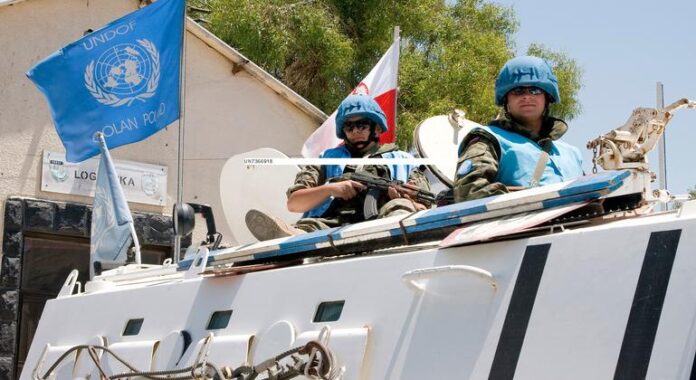
UN envoy strongly condemns continuing Israeli attacks inside Syria

0
UN envoy strongly condemns continuing Israeli attacks inside Syria

Geir Pedersen said in a statement that “such actions are unacceptable and risk further destabilising an already fragile situation, heightening regional tension and undermining efforts toward de-escalation and a sustainable political transition.”

The condemnation follows a recent wave of airstrikes and ground raids targeting southern Syria which the Israeli Government says are necessary for national security and to keep weapons out of the hands of armed groups hostile to Israel.

Airstrikes, incursions

The latest Israeli raid occurred on Monday night targeting a weapons storage facility near the coastal city of Latakia. Several hours later Israeli forces conducted operations in two towns in southern Syria blowing up warehouses, before withdrawing, according to news reports.

A week ago, Israeli Prime Minister Benjamin Netanyahu called for the “complete demilitarisation” of swathes of southern Syria of the “forces of the new regime”, which ousted former dictator Bashar Assad in December.

In response, Syria’s transitional leader Ahmad al-Sharaa reportedly said at the meeting of Arab States in Cairo on Tuesday focused on Gaza reconstruction that Syria is committed to the ceasefire deal of 1974, accusing Israel of violating Syrians’ rights for decades.

Special envoy Pedersen called on Israel to “cease violations, uphold its international obligations and refrain from unilateral measures that exacerbate conflict.”

He called for all parties to conflict across the region to respect Syria’s sovereignty, unity, independence and territorial integrity.

“Constructive dialogue and strict adherence to international agreements and international law are essential for security,” he added.

Aid trucks

Meanwhile, UN aid coordination office, OCHA, has welcomed the extension by the caretaker authorities for the UN to continue to deliver humanitarian assistance through the Bab al-Salam and Al-Ra’ee crossing for an additional six months,

Bab Al-Salam and Al-Ra’ee provide direct routes to Aleppo, where some four million people need assistance, UN Spokesperson Stéphane Dujarric said on Tuesday.

Since the start of the year, more than 520 trucks carrying UN aid – including food, health and other critical supplies – have crossed from Türkiye through these two border points, as well as through Bab al-Hawa – a substantial increase compared to the same period last year.

“This afternoon, nearly two dozen trucks carrying 300 metric tons of WFP food – enough for 174,000 people – as well as agricultural supplies from the Food and Agriculture Organization, crossed from Türkiye to Syria through Bab Al-Hawa,” Mr. Dujarric said.

Source link

Press briefing – Eurogroup meeting of 10 March 2025

0
Press briefing – Eurogroup meeting of 10 March 2025

Press briefing ahead of the Eurogroup meeting will take place on 7 March 2025 at 11.00. 

Source link

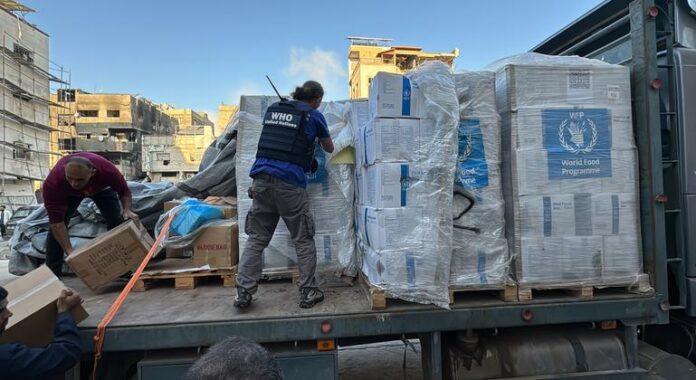
Food prices soar as Israel blocks aid into Gaza

0
Food prices soar as Israel blocks aid into Gaza

That’s according to the UN aid coordination office, OCHA, which said on Monday that the Kerem Shalom, Erez and Zikim crossing closures means that vital humanitarian assistance, including thousands of tents, can’t be delivered to civilians in need.

Phase one of the ceasefire mediated by Egypt, Qatar and the US expired on Saturday, with Hamas calling on Israel to move on to the next agreed phase – but Israel is calling instead for a continuation of phase one through the end of the Holy Month of Ramadan in line with a proposal from the top US envoy to the region.

January’s ceasefire deal has seen the release of 33 Israeli hostages who’ve been held captive since the 7 October terror attacks, with around 1,900 Palestinian prisoners exchanged.

“The ceasefire has provided the opportunity to distribute food, to distribute water, as well as shelter assistance and medical aid, allowing nearly everyone in Gaza to receive food parcels,” said UN Spokesperson Stéphane Dujarric, briefing reporters in New York.

“Our humanitarian partners tell us that following the closure of the crossings into Gaza yesterday, flour and vegetable prices increased more than 100 per cent. Partners are currently assessing the stocks that are currently available,” he added.

Ceasefire, ‘a critical lifeline’: UNICEF    

The UN children’s agency, UNICEF, warned that the stoppage of aid deliveries into Gaza will quickly lead to devastating consequences for children and families who are simply struggling to survive.

“The aid restrictions announced yesterday will severely compromise lifesaving operations for civilians,” said Edouard Beigbeder, UNICEF Regional Director for the Middle East. “It is imperative that the ceasefire – a critical lifeline for children – remains in place, and that aid is allowed to flow freely so we can continue to scale up the humanitarian response.”

The agency said that between 19 January and last Friday, almost 1,000 UNICEF trucks had crossed into the enclave carrying clean water, medical supplies, vaccines, therapeutic food and other materials.

Since the start of the ceasefire on 19 January, UNICEF and partners have provided warm clothing to 150,000 children in Gaza and increased daily water distribution for nearly half a million people living in more remote areas, Mr. Dujarric said.

Nearly 250,000 children and thousands of pregnant and breast-feeding mothers have received nutritional supplements since the ceasefire took effect.

Over the past two weeks, in Rafah, Khan Younis and Deir al Balah, aid partners have distributed vegetable seed kits for gardening to try and encourage more diverse diets.

Around 1,500 water distribution points are now operating across Gaza – double the number operational at the start of the ceasefire. “However, partners tell us that pipes and spare parts for maintenance are urgently needed,” said Mr. Dujarric.

Classrooms open

Across Gaza, more than 100 public schools have reopened, allowing around 100,000 students back into the classroom.

In Gaza City and North Gaza, UN partners will use tents to ensure children can continue learning, with some wood pallets recycled into school furniture.

OCHA teams visited a displacement site in Khan Younis on Monday where around 1,200 people are staying. These communities have not been allowed to return to their homes, which are located in the buffer zone.

OCHA is working to mobilise assistance to meet their needs.

Meanwhile in the occupied West Bank, OCHA reports that ongoing operation by Israeli forces continues to drive humanitarian needs in northern areas. Humanitarian partners continue to face movement restrictions.

Source link

Speech by President António Costa at the Emergency summit of the League of Arab States on Gaza

0
Press briefing – Eurogroup meeting of 10 March 2025

Speech by President António Costa at the Emergency summit of the League of Arab States on Gaza

Source link

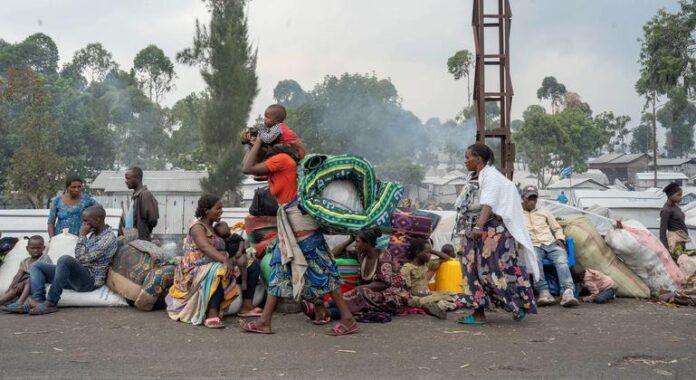
Almost 80,000 flee DR Congo amid fighting, sexual violence: UNHCR

0
Almost 80,000 flee DR Congo amid fighting, sexual violence: UNHCR

“Near the frontlines, sexual violence and human rights abuses remain rampant, as is the looting and destruction of civilian homes and businesses,” said Patrick Eba, Deputy Director of UNHCR’s Division of International Protection.

Speaking in Geneva, Mr. Eba told journalists that that North and South Kivu provinces remain unstable, with “hundreds of thousands of people on the move”.

Close to 80,000 people have fled armed clashes between Congolese Government forces and Rwanda-backed M23 rebels into neighbouring countries and some 61,000 have arrived in Burundi since January, Mr. Eba stressed.

60 rape victims a day

A staggering 895 cases of rape were reported to humanitarian actors in the last two weeks of February alone, the UN refugee agency official continued – an average of more than 60 a day.

The UNHCR official highlighted other risks faced by civilians, including the dangers posed by explosive remnants of war to children and farmers trying to tend their fields. On Monday, the UN humanitarian affairs coordination office (OCHA) reported that armed men had raided at least two hospitals in North Kivu’s capital Goma, abducting dozens of patients.

The fighting has also impeded humanitarian access to people on the move. The UN World Food Programme (WFP) has had to pause its aid operations in conflict-affected areas but was resuming emergency food assistance “in some parts of North Kivu” according to a post on social media platform X on Tuesday morning, aiming to reach over 210,000 people.

M23 forced evictions

Inside North and South Kivu, “significant” population movements have continued, in line with reported M23 orders issued to internally displaced people (IDPs) to leave the camps around Goma, UNHCR’s Mr. Eba said.

“Today, only around 17,000 people are left residing in IDP sites, schools and churches around Goma, while an estimated 414,000 of their neighbours have been on the move for the past four weeks, encouraged by the de facto authorities to return to their villages of origin,” he explained.

Given the widespread insecurity in eastern DRC, “many more” people may need to cross borders in search of safety, Mr. Eba warned.

UNHCR’s position regarding returns to the area is that “Congolese nationals fleeing the conflict, as well as those who are outside the country, who originate from the areas affected by the conflict, may need refugee protection under international and regional legal frameworks,” he said.

The UNHCR official emphasized the importance of “informed decision-making” for any voluntary returns to conflict-affected areas.

Exempt from funding freeze

Asked about the impact of the United States’ humanitarian funding freeze on operations in the country, UNHCR spokesperson Eujin Byun confirmed that the agency had received a waiver lifting the 90-day suspension for “a few emergency countries, including DRC”.

Assistance for the current crisis that was spawned by a decades-long conflict in the mineral-rich region had “always been underfunded”, she said, expressing hope that UNHCR will be able to “continue to support this emergency”.

There are over one million Congolese refugees across Africa, mainly in neighbouring countries. Uganda hosts more than half of that total, while Burundi has seen most new arrivals since January’s flash M23 offensive. Prior to the current crisis, some 6.7 million people were internally displaced within the DRC.


Source link

Speech by President António Costa at the Emergency summit of the League of Arab States on Gaza

0
Press briefing – Eurogroup meeting of 10 March 2025

European Council President António Costa travelled to Cairo for the Emergency summit of the League of Arab States on Gaza on 4 March 2025. In his speech, President Costa reaffirmed the EU’s full commitment to contributing to peace in the Middle East, supporting the two-state solution in accordance with relevant UN resolutions, and backing the efforts of the Arab States and the Palestinian Authority. The European Union firmly rejects any attempt at demographic or territorial changes in Gaza, in other parts of the world, or anywhere else.

Source link

Almost 80,000 flee DR Congo amid fighting, sexual violence: UNHCR

0
Almost 80,000 flee DR Congo amid fighting, sexual violence: UNHCR

“Near the frontlines, sexual violence and human rights abuses remain rampant, as is the looting and destruction of civilian homes and businesses,” said Patrick Eba, Deputy Director of UNHCR’s Division of International Protection.

Speaking in Geneva, Mr. Eba told journalists that that North and South Kivu provinces remain unstable, with “hundreds of thousands of people on the move”.

Close to 80,000 people have fled armed clashes between Congolese Government forces and Rwanda-backed M23 rebels into neighbouring countries and some 61,000 have arrived in Burundi since January, Mr. Eba stressed.

60 rape victims a day

A staggering 895 cases of rape were reported to humanitarian actors in the last two weeks of February alone, the UN refugee agency official continued – an average of more than 60 a day.

The UNHCR official highlighted other risks faced by civilians, including the dangers posed by explosive remnants of war to children and farmers trying to tend their fields. On Monday, the UN humanitarian affairs coordination office (OCHA) reported that armed men had raided at least two hospitals in North Kivu’s capital Goma, abducting dozens of patients.

The fighting has also impeded humanitarian access to people on the move. The UN World Food Programme (WFP) has had to pause its aid operations in conflict-affected areas but was resuming emergency food assistance “in some parts of North Kivu” according to a post on social media platform X on Tuesday morning, aiming to reach over 210,000 people.

M23 forced evictions

Inside North and South Kivu, “significant” population movements have continued, in line with reported M23 orders issued to internally displaced people (IDPs) to leave the camps around Goma, UNHCR’s Mr. Eba said.

“Today, only around 17,000 people are left residing in IDP sites, schools and churches around Goma, while an estimated 414,000 of their neighbours have been on the move for the past four weeks, encouraged by the de facto authorities to return to their villages of origin,” he explained.

Given the widespread insecurity in eastern DRC, “many more” people may need to cross borders in search of safety, Mr. Eba warned.

UNHCR’s position regarding returns to the area is that “Congolese nationals fleeing the conflict, as well as those who are outside the country, who originate from the areas affected by the conflict, may need refugee protection under international and regional legal frameworks,” he said.

The UNHCR official emphasized the importance of “informed decision-making” for any voluntary returns to conflict-affected areas.

Exempt from funding freeze

Asked about the impact of the United States’ humanitarian funding freeze on operations in the country, UNHCR spokesperson Eujin Byun confirmed that the agency had received a waiver lifting the 90-day suspension for “a few emergency countries, including DRC”.

Assistance for the current crisis that was spawned by a decades-long conflict in the mineral-rich region had “always been underfunded”, she said, expressing hope that UNHCR will be able to “continue to support this emergency”.

There are over one million Congolese refugees across Africa, mainly in neighbouring countries. Uganda hosts more than half of that total, while Burundi has seen most new arrivals since January’s flash M23 offensive. Prior to the current crisis, some 6.7 million people were internally displaced within the DRC.


Source link

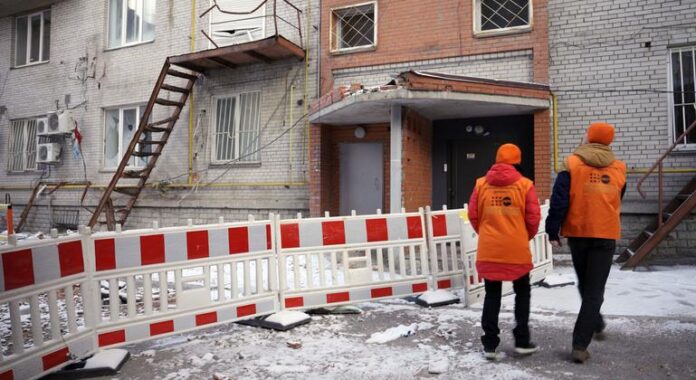
US cuts mean ‘essential’ UN mental health teams in Ukraine risk closure

0
US cuts mean ‘essential’ UN mental health teams in Ukraine risk closure

A young mother, five children in tow, steps off a train in the central Ukrainian city of Dnipro, holding a small bag. She is fleeing Russian attacks in the Zaporizhzhia region, she is also escaping a violent partner, a man who once beat her so severely she suffered a miscarriage.

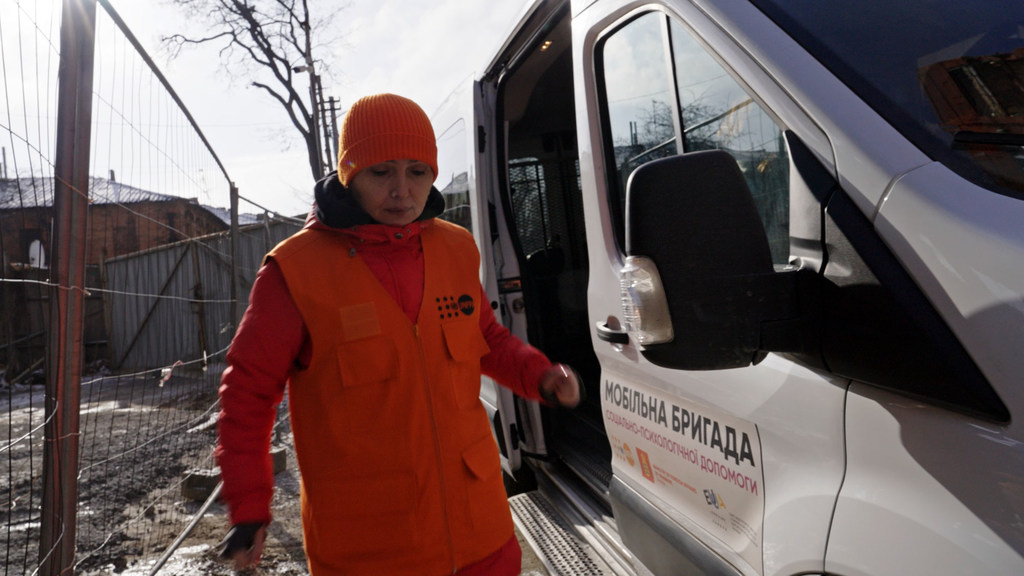
She needs urgent medical attention, legal assistance and a safe place for her children. “We met her at the train station,” says Tetiana, a psychologist with a mobile team since 2022. “We also organized a medical escort and lawyers to help with her documents and referrals.”

Trauma, distress and surging domestic abuse

Tetiana’s unit is one of 87 UNFPA psychosocial support teams, on call for emergency interventions. She can also refer survivors for longer-term assistance, job training and access to legal aid. These resources remain critical for survivors of abuse long after the initial danger has passed – especially in a country where three years of war have caused widespread trauma and deep psychological distress.

Since Russia’s full-scale invasion three years ago, reports of intimate partner violence, domestic abuse, sexual violence and other forms of gender-based violence have surged more than threefold in Ukraine. An estimated 2.4 million people – mostly women and girls – are in urgent need of gender-based violence prevention and response services. “Even after finding some physical safety in Dnipro, many struggle with lingering panic attacks, nightmares and depressive symptoms,” says Tetiana.

UNFPA’s mobile psychosocial support teams are often the first to respond to cases of gender-based violence after the police.

Almost two thirds of households in Ukraine report dealing with some form of anxiety, depression or extreme stress, thwarting people’s ability to find work or care for family members. Financial hardship, mass job losses, deaths of loved ones and fears of future attacks are only intensifying their distress. Without proper counselling and care, the cycle of trauma can also be passed down to future generations, risking long-term and wider-spread harm to the community

Surviving is just the beginning

Roman joined the team in Dnipro as a social worker in April 2022, arranging coordination with social services and public organizations. “We have built a response system for people’s safety and support,” he said, explaining that they are often the first to respond to cases of gender-based violence, after the police. “We are an ambulance of sorts for gender-based violence incidents.”

These services are vital, especially for women without stable income or housing, as the war has put many at risk of economic exploitation or renewed violence.

“Many people think surviving the initial threat is the end of the story,” added Tetiana. “But the real healing only starts once they are physically safe. Without psychosocial support, it’s difficult for them to recover from trauma or prevent further harm.”

Tetiana has worked as a psychologist with UNFPA’s mobile psychosocial support team in Dnipro since early 2022.

Tetiana has worked as a psychologist with UNFPA’s mobile psychosocial support team in Dnipro since early 2022.

In crisis settings, the risk of violence against women and girls escalates – including conflict-related sexual violence – and the demand for protection and response services spikes. Yet, as displaced women often lack social networks to turn to and are stigmatized if they report abuse, the police can request the mobile team’s support on-site to coordinate further interventions, such as safe housing or counselling.

Health workers under fire

It’s a situation fraught with danger, and response workers themselves can come under fire. “When we arrive at the sites of attacks or in cases of violence. We don’t have time to slow down,” explained Roman. “We switch on immediately and start providing services. It’s like our own reactions are on hold. Only later, when we look back and discuss it, do we realize how difficult it actually was.”

Since February 2022, the World Health Organization has confirmed over 2,200 attacks on healthcare facilities, services and personnel in Ukraine by the Russian Federation. Last year, over 300 of these affected medical facilities – a threefold increase on 2023.

While his work is critical, Roman said it takes a toll. “With each shelling, it builds up – one after the other. Depending on the severity of the damage, you feel it differently each time. But for the most part, we stay focused on what must be done, putting our feelings aside on the spot. Then, once the immediate crisis is handled, we turn to our own support networks and process it all.”

Why these services must endure

Since 2022, more than 50 of UNFPA’s mobile psychosocial teams have been funded by the US Government, and play an indispensable role in helping Ukraine’s most vulnerable. “The city services function, but they lack the same impact and reach. That’s why the mobile teams are essential, especially in times of war, as we navigate the wave of displaced people,” said Tetiana.

Women are fundamental to the resilience of Ukraine’s families, workforce and larger community, but they have endured immense suffering over years of conflict. Ensuring they are supported throughout their personal recovery will be crucial to safeguarding Ukraine’s long-term recovery.

With uncertainty now surrounding funding for humanitarian work around the world, the continuity of this vital work is under threat. 640,000 women and girls will be affected by cuts to psychosocial support, gender-based violence services, safe spaces, and economic empowerment programs. Protection for refugees and crisis-affected communities will be diminished.

Essential health services to prevent and respond to gender-based violence, support to women-led organizations, and programmes promoting women’s economic empowerment are all at risk of closure – gravely endangering the safety and well-being of millions of people.

Source link