Monday, September 28, 2026
Home Blog Page 593

EU sends emergency energy assistance to Ireland following storm Éowyn

0
EU sends emergency energy assistance to Ireland following storm Éowyn

Following Ireland’s request for assistance relating to power outages caused by the record-breaking storm Éowyn, the EU Civil Protection Mechanism has been activated. The EU has immediately mobilised 13 power generators from the Commission’s own strategic reserve, rescEU, hosted in Poland. 4 power generators offered by Denmark via the Mechanism will also soon reach Ireland and help provide electricity on the ground.

The EU also activated the Copernicus Emergency Management Service and has provided analytical support to the national authorities.

The EU’s Emergency Response Coordination Centre continues to closely monitor the situation and remains in constant contact with the national authorities, ensuring that additional assistance can be promptly channelled if needed.

EU Commissioner for Preparedness, Crisis Management and Equality, Hadja Lahbib, said: “Extreme weather events, like storm Éowyn, increasingly put Europe’s disaster resilience to the test. But they also demonstrate the growing strength of our joint preparedness and solidarity efforts. Our thoughts are with all those affected and with the first responders in Ireland who are doing their best to bring life back to normal. I thank Denmark for their prompt offer of assistance, and Poland for their excellent collaboration in hosting and delivering the rescEU power generators to Ireland. We are in this together.”

Source link

Stay in control of your personal data. Happy Data Protection day 2025!

0
Stay in control of your personal data. Happy Data Protection day 2025!

If someone asked you to answer 100 questions about your personal life to sell the answers, would you agree? Most likely not.
It can be difficult  to keep in control over your personal data and to keep it safe. From online shopping and browsing to social media, with every click, share and login-in you leave behind a digital trail. The GDPR ensures that your data can only be used in ways you agree to and that you can access any information about yourself.
But do people actually know how to protect their data? We asked passers-by on the streets of Brussels.
Happy Data Protection Day!

Sorry, your browser doesn’t support embedded videos.

Source link

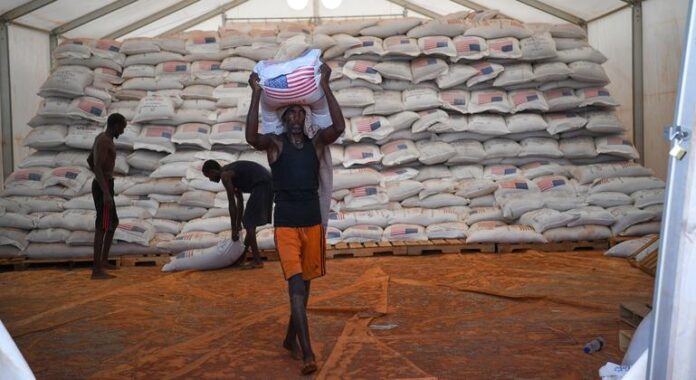
Guterres calls on US to exempt development and humanitarian funds from aid ‘pause’

0
Guterres calls on US to exempt development and humanitarian funds from aid ‘pause’

President Trump’s executive order a week ago called for all foreign aid to be re-evaluated to ensure that it complies which his new foreign policy priorities.

The immediate scope of the order was not clear but on Friday, according to news reports, the US Secretary of State Marco Rubio issued an order putting any new funding on hold, pending review.

The State Department directive reportedly clarifies that funding for existing programmes is also suspended until it has been reviewed.

The only exceptions were reportedly for military assistance to Israel and Egypt and emergency food aid.

Concern over aid freeze

“The Secretary-General notes with concern the announcement of a pause in US foreign assistance,” said the statement issued on behalf of António Guterres by his Spokesperson.

“The Secretary-General calls for additional exemptions to be considered to ensure the continued delivery of critical development and humanitarian activities for the most vulnerable communities around the world, whose lives and livelihoods depend on this support.

The statement added the Mr. Guterres was looking forward to engaging with the Trump administration on how “much needed development support” can be provided to citizens in the developing world who face the severest challenges.

“The United States is one of the largest aid providers and it is vital that we work constructively to jointly shape a strategic path forward,” the statement continued.

The US Government is the largest single donor of aid in the world, disbursing around $72 billion in assistance during 2023. It also reportedly provided more than 40 per cent of all humanitarian aid accounted for by the UN during 2024.

Source link

‘We have a duty to stand against intolerance’: UN human rights chief

0
‘We have a duty to stand against intolerance’: UN human rights chief

Marking Holocaust Remembrance Day on Monday, UN High Commissioner for Human Rights, Volker Türk, said the essence of commemorations was to acknowledge the past but they “must also examine the present and look to the future”.

‘Hateful rhetoric’ reverberating

Underlying the rise of hateful rhetoric, with rising antisemitism on the streets and online, the UN rights chief said that “discrimination and dehumanisation are winning out over solidarity and compassion; diversity is viewed as a threat rather than something to be treasured; and many leaders are undermining and weakening the rule of law”.

Reminding us that everyone has a “duty to stand against intolerance”, Mr. Türk shared his fear the world is “sleepwalking into a grim future where human rights and dignity are denied, stripped away or forgotten”.

Listen back to the story of Eva Lavi, the youngest survivor to be saved from the Nazis by the German industrialist Oskar Schindler: 

Call to condemn antisemitism

In a powerful video-message, Mr. Türk urged the global community to remain vigilant in the face of rising intolerance and discrimination. The call comes as a reminder of the horrors of the Holocaust and the lessons it teaches.

Echoing the words of Holocaust survivor Elie Wiesel, who famously said, “silence encourages the tormentor,” he emphasized the importance of speaking out against all forms of hatred, particularly antisemitism.

“We must condemn it in all its forms, alongside bigotry, intolerance, and hatred,” Mr. Türk advocated, urging people to take action.

Education is key

The central theme of this year’s Holocaust Remembrance is the ongoing battle for dignity and human rights.

In a call to expose disinformation and resist efforts to foster division, hatred and fear, Mr. Türk said that diversity must be celebrated, and Holocaust stories must be retold as a crucial safeguard against prejudice and racism.

“Holocaust education remains one of the best vaccines against dehumanization,” he added, calling for a just and dignified future for all.

Ceremony at UN Headquarters

On Monday, the UN Secretary-General, António Guterres, is due to deliver remarks to the General Assembly, at the annual ceremony of remembrance at UN Headquarters.

The ceremony is scheduled to start at 11 AM New York time and will honour the victims, also paying tribute to the dwindling band of survivors, some of whom will share their testimonies along with invited speakers.

You can follow live here. 

Source link

Foreign Affairs Council: Press remarks by High Representative Kaja Kallas after the meeting

0
Stay in control of your personal data. Happy Data Protection day 2025!

Foreign Affairs Council: Press remarks by High Representative Kaja Kallas after the meeting

Source link

‘Hold fast to our common humanity’: UN marks 80 years since death camps were liberated

0
‘Hold fast to our common humanity’: UN marks 80 years since death camps were liberated

More than 15 months on from the 7 October terror attacks by Hamas in Israel, António Guterres said the UN will continue doing its “utmost to ensure it leads to the release of all hostages – since the beginning we have asked for the unconditional and immediate release of all hostages – and to a permanent ceasefire in Gaza”.

Every year on the day the concentration camps were liberated in 1945, the world unites to honor the memory of the six million Jews who perished at the hands of the Nazis and their collaborators, a commemoration that also extends to the Roma and Sinti communities, people with disabilities, LGBTIQ+ individuals, and all others who suffered from the systemic violence, torture, and genocide of the Nazi regime.

Lessons must never be forgotten

In the presence of Israel’s President Isaac Herzog in the General Assembly Hall, the Secretary-General underscored the need for remembrance and emphasized that the lessons of the Holocaust must never be forgotten.

This year’s commemoration marks a milestone: 80 years since the Holocaust’s end, and 80 years of efforts to preserve the memory of its victims.

Underlying the courage of survivors in sharing their stories to ensuring that the horrors of Auschwitz-Birkenau and other concentration camps are never erased from history, Mr. Guterres added that the responsibility to ensure this history is never forgotten “belongs to every one of us”. “Remembrance is not only a moral act – remembrance is a call to action”, he said.

Combat hatred

As part of the United Nations’ ongoing efforts to combat hate speech, the commemoration highlighted the importance of educating future generations about the atrocities committed during the Holocaust.

Highlighting the acclaimed writer Primo Levi’s words – an Auschwitz survivor, who urged humanity to “carve the knowledge into our hearts” – Mr. Guterres called on everyone to “speak-up against hate”, stand-up for the human rights of all, and “make those rights a reality”.

Defend human rights

The UN is committed to the Universal Declaration of Human Rights, which was established in the wake of the Holocaust. In 1948, nations around the world united to affirm the inherent dignity and equality of all people, a direct response to the horrors of Nazi ideology.

Reminding that the document is a “pure expression of our shared humanity”, the UN chief said that “in dark times it remains a shining light”.

“Today, our world is fractured and dangerous”, Mr. Guterres warned once more – “80 years since the Holocaust’s end, antisemitism is still with us – fuelled by the same lies and loathing that made the Nazi genocide possible. And it is rising.”

Efforts to combat the growing tide of Holocaust denial, discrimination, and hate are also central to the United Nations, which has recently launched an Action Plan on Antisemitism to enhance its efforts to educate, promote truth, and resist efforts to distort historical facts.

Calling for widespread condemnation of antisemitism “wherever and whenever it appears”, Mr. Guterres said that promoting education, combating lies and speaking the truth are key – and that in days of division, all must “hold fast to our common humanity”.

“We will never forget. And we will never waver in that fight”, the UN chief concluded, leaving the podium to the survivors who were there to share their memories.

Prayer for peace

Israel’s President Isaac Herzog told the commemoration that “it is time to acknowledge challenging our right to exist is not diplomacy, it is plain antisemitism.”

He said 80 years after the Holocaust, he stood in the General Assembly “with deep faith and hope. Our nation rose from the flames of the crematorium not to live forever by the sword, but to build, to repair, to add light, to heal.”

He added that he hoped peace agreements could be reached between Israel and its neighbours across the region “with all peoples of the Middle East, Israelis, Palestinians and all others”, living peacefully side by side.

On this historic day, we must commit to joining hands to defeat darkness and hatred and work together to ensure building of a shared future. This is the vow we must share. All of us. The family of nations – that what happened once will never happen again.”

Roma survivor

Dumitru Miclescu, Roma survivor of the Holocaust, flew from Budapest to participate at the ceremony in General Assembly Hall on Monday.

Dumitru Miclescu addresses the Holocaust Remembrance for Dignity and Human Rights ceremony in observance of the International Day of Commemoration in memory of the victims of the Holocaust.

Supported by his niece Izabela Tiberiade, he told his story: “I am here not just for myself, but for all the Roma who suffered during the Holocaust and did not have the chance to be heard.”

A survivor of the terror camps in Transnistria, he was forced into trains and deported when he was just an eight-year-old boy in Romania, along with his family.

Building a world without racism

“I will never forget those moments when we were gathered into the trains. Many people died on the trains before we even arrived. Those who reached the concentration camps suffered even more: forced labor, starvation, disease, and constant terror. Death was a daily presence,” he said.

Acknowledging the lack of support for the few Roma who survived and returned home, Mr. Miclescu said that being at the UN was “an important step toward recognizing history” but there was still much to be done.

“Allow me to say to all the young people listening to my story: I ask you to learn about your history. I hope you will build a world without racism,” he concluded.

Never forget

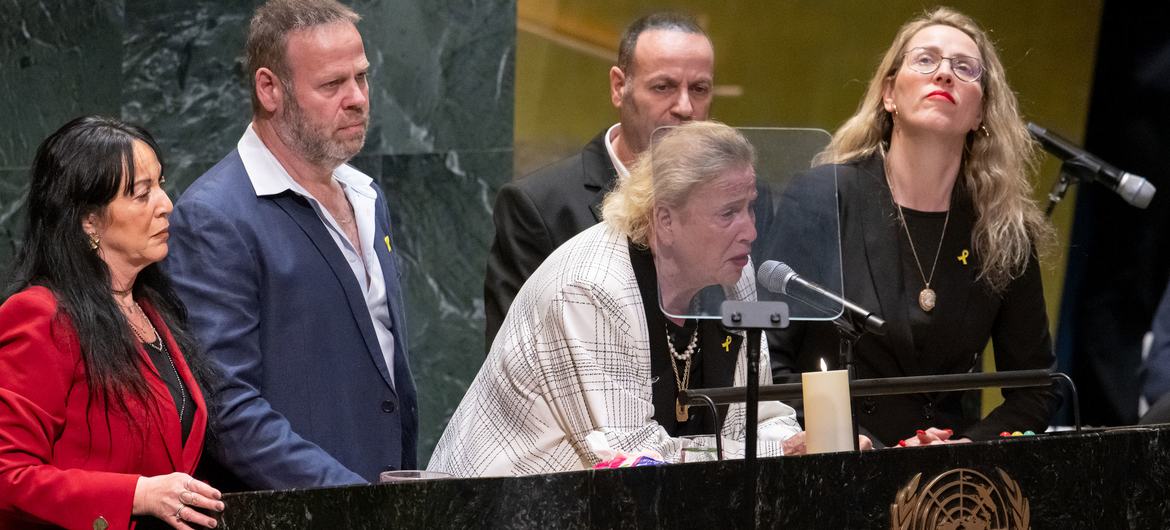
Marianne Muller who was just a baby during the Holocaust, also took the podium to share her family’s story. Accompanied by her four children and grandchildren, she said: “they are my personal answer to Hitler”.

Stressing that antisemitism is rising all over the world, Ms. Muller called on the world to remember that the Holocaust and its horrors “all happened only 80 years ago.”

Marianne Muller addresses the Holocaust Remembrance for Dignity and Human Rights ceremony in observance of the International Day of Commemoration in memory of the victims of the Holocaust.

Marianne Muller addresses the Holocaust Remembrance for Dignity and Human Rights ceremony in observance of the International Day of Commemoration in memory of the victims of the Holocaust.

‘Don’t be neutral towards human suffering’

At a ceremony in Geneva, Nazi death camp survivor Ivan Lefkovits shared harrowing testimony of his experiences on Monday to mark Holocaust Remembrance Day, with a timeless message for present and future generations: “Don’t be neutral, especially not towards human suffering.”

Recalling the murder of his father and brother, both victims of Hitler’s mission to wipe out Jews, 88-year-old Mr. Lefkovits noted that many European countries subscribed to the Nazi leader’s views.

Mr. Lefkovits was seven years old when he was sent to Ravensbruck concentration camp in November 1944; he spent the last months of the war in Bergen-Belsen camp, where he almost died from starvation and thirst.

Today he urges younger generations to study history “not necessarily to learn, but to understand” why the Holocaust happened.

Source link

DR Congo: Battle for Goma continues as ‘volatile’ crisis unfolds

0
DR Congo: Battle for Goma continues as ‘volatile’ crisis unfolds

In a briefing on Monday, Mr. Lacroix told journalists in New York that some staff from the UN’s Stabilization Mission in the Democratic Republic of the Congo (MONUSCO) was forced to seek shelter for a few hours due to the ongoing conflict.

He explained that this had “limited their ability to have the full level of information that they would have gotten if they had not been sheltering”, making it difficult to assess the fast-evolving situation.

Mr. Lacroix said that peacekeepers remain in their positions but noted that safety was “paramount” for non-essential personnel and their dependents, who have been relocated away from Goma.

He confirmed that MONUSCO personnel would continue to deliver on their mandate to the best of their ability, including protecting civilians and disarming combatants in accordance with international humanitarian law.

“The fate of the millions of civilians living in Goma or having been displaced is really the priority, along with the safety and security of UN personnel,” Mr. Lacroix said.

Humanitarian catastrophe

Bruno Lemarquis, UN Deputy Special Representative, Resident Coordinator and Humanitarian Coordinator in the DRC, briefed the press from the ground and painted a grim picture of the humanitarian crisis.

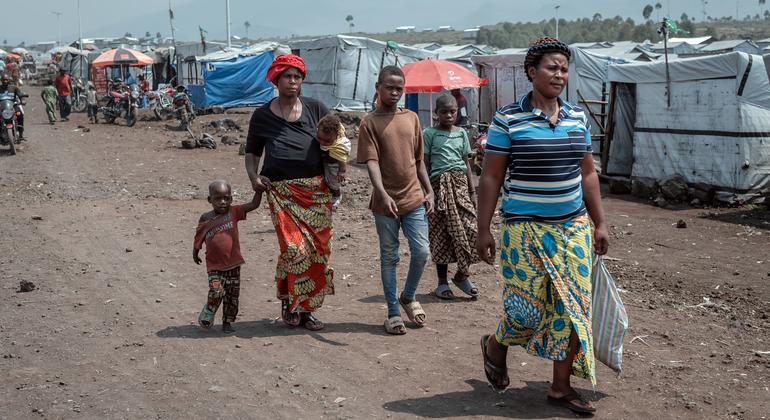
“What is unfolding in Goma is coming on top of already one of the most protracted, complex, serious humanitarian crises on Earth, with close to 6.5 million displaced people in the country, including close to three million displaced people in North Kivu,” he said.

He described scenes of mass displacement and violence: “Civilians are taking the brunt of the escalating hostilities”, with heavy artillery fire “directed at the city centre” including a maternity hospital.

“For example, several shells struck the Charity Maternity Hospital in central Goma, killing and injuring civilians, including newborn and pregnant women,” he emphasised.

“[Hospitals] are struggling to manage the influx of wounded people,” he said, noting that basic services, including water, electricity and internet, are severely disrupted.

Mr. Lemarquis called for temporary humanitarian pauses to facilitate the safe evacuation of civilians and ensure aid delivery. “We must act now to prevent further loss of life and alleviate the suffering of the people of Goma,” he urged.

Rwanda’s role

Responding to questions about Rwanda’s involvement, Mr. Lacroix confirmed the presence of Rwandan troops supporting M23 in Goma, citing significant troop numbers.

He condemned the killing of peacekeepers, noting that three had died, including two from South Africa and one from Uruguay, with 12 others injured.

The Under-Secretary-General reiterated the UN’s call for all parties, including Rwanda, to respect the safety and security of UN personnel.

Regarding Rwanda’s role as a leading troop-contributing country to UN missions, Mr. Lacroix stated, “At this moment, we have to focus on the emergency, with saving as many lives as possible, and trying to bring about the cessation of hostilities.”

Diplomatic efforts

Mr Lacroix reaffirmed the UN’s commitment to supporting regional peace initiatives, welcoming the East African Community’s plan for a summit on 28 January and an African Union Peace and Security Council session on Tuesday.

Both officials stressed the urgency of international engagement, with Mr. Lemarquis highlighting a recent $70 million allocation from the Central Emergency Response Fund to support humanitarian efforts.

The press conference concluded with a stark message from Mr. Lacroix: “I urge the international community to intensify its engagement to prevent the bloodshed and to support the humanitarian response. We must act now.”

Source link

Syria: Rights probe reveals systematic torture and detention of Assad regime

0
Syria: Rights probe reveals systematic torture and detention of Assad regime

The findings from the Independent International Commission of Inquiry on Syria detail crimes against humanity and war crimes that left a legacy of trauma for countless Syrians, representing some of the worst violations of international law committed during more than a decade of brutal conflict.

“We stand at a critical juncture. The caretaker government and future Syrian authorities can now ensure these crimes are never repeated,” said Paulo Sérgio Pinheiro, Chair of the Commission.

“We hope our findings from almost 14 years of investigations will help end impunity for these patterns of abuse.”

The report, titled Web of Agony: Arbitrary Detention, Torture and Ill-Treatment in the Syrian Arab Republic, draws on over 2,000 testimonies, including accounts from more than 550 survivors of torture.

Torture chambers, mass graves

The fall of the Assad regime last month and subsequent release of prisoners have been pivotal for many Syrians, but for tens of thousands of families, the agony persists. The discovery of mass graves has deepened fears for those whose loved ones remain missing.

In December and January, Commission teams visited several grave sites and former detention facilities, including Sednaya Military Prison and branches of the former intelligence services in Damascus.

While significant amounts of evidence and documentation had been destroyed, some materials were preserved, offering a glimmer of hope for families seeking answers.

“For Syrians who did not find their loved ones among the freed, this evidence, alongside testimonies of freed detainees, may be their best hope to uncover the truth about missing relatives,” said Commissioner Lynn Welchman.

“We commend the new authorities for their commitment to protecting mass graves and evidence and encourage further efforts, with the support of relevant Syrian civil society and international actors.”

The report outlines harrowing accounts of abuse, including severe beatings, electric shocks, rape, mutilation and prolonged psychological and physical torture.

Survivors and witnesses described dire prison conditions including malnutrition, disease and injuries left untreated. Some detainees were executed, while others succumbed to their injuries in overcrowded, unsanitary cells.

A path to justice

Having gained access to Syria for the first time since 2011, the Commission plans to expand its investigations with unprecedented access to sites and survivors who no longer fear reprisals.

The report emphasises the importance of safeguarding evidence and archives, calling for coordinated efforts with Syrian civil society and international actors.

“Cases brought before national courts outside Syria, relying on the principle of universal jurisdiction, have led to important convictions of mid- and lower-level perpetrators of war crimes and crimes against humanity,” said Commissioner Hanny Megally.

“We now hope to see credible national justice initiatives, in which survivors and families can play a central role. We stand ready to assist alongside Syrian human rights and family associations and our UN partners.”

Independent investigators

The Independent International Commission of Inquiry on the Syrian Arab Republic was established in August 2011 by the UN Human Rights Council, with a mandate to investigate all alleged violations of international human rights law since March 2011.

The Council also tasked the Commission with establishing the facts and circumstances surrounding alleged crimes and identifying those responsible, in an effort to hold them accountable.

UN High Commissioner for Refugees Filippo Grandi (left) visits the Immigration and Passports Office at Jdaidet Yabous border crossing between Lebanon and Syria.

Global action for returnees

The UN High Commissioner for Refugees Filippo Grandi concluded a visit to Syria on Monday, calling for urgent international support to aid those returning home.

Since September, over 500,000 refugees have made the journey, but they face overwhelming challenges: destroyed homes, shattered infrastructure and widespread poverty, according to the UN refugee agency, UNHCR.

The agency is working with Syrian caretaker authorities and neighbouring countries to support returns, provide legal aid, transportation and cash assistance.

Families returning to cities like Aleppo described harsh realities, such as limited access to electricity and water, emphasising the urgent need for investment in healthcare, education and employment.

Act now

“This is a pivotal moment,” Mr. Grandi said.

“The world must act now to support Syria’s recovery. Cooperation between neighbouring countries, donors and the Syrian caretaker authorities is essential to bring much-needed peace and stability to Syria and the entire region.”

UNHCR estimates that 27 per cent of Syrian refugees in neighbouring countries, including Lebanon, Jordan and Iraq, plan to return home within the next year – an increase from less than two per cent before the collapse of the regime.

Source link

Criminals operating an illegal financial service to launder millions of euros busted | Eurojust

0
Criminals operating an illegal financial service to launder millions of euros busted | Eurojust

Investigations into the group began in 2023 when border police in Spain noticed suspicious trips from their airports transporting large sums of money. The trips to Cyprus by members of the criminal group were used to deliver criminal profits, which were then laundered. Authorities stopped the criminals from travelling and seized more than EUR 1.8 million.

The authorities discovered that the group was running a sophisticated money laundering service for other criminal organisations. The group acted as a financial service to transfer criminal profits internationally. Cryptocurrencies were used to move cash profits between criminal organisations. To dispose of the cash profits, money was transported on commercial flights, mainly to Cyprus, and by public transport to neighbouring countries of Spain. The group was able to carry out four to six money laundering transactions per week. 

Running this financial service required a professionally structured organisation consisting of at least 52 members, operating mostly from Spain and Cyprus. The group worked with contacts outside of their organisation to liaise with clients and receive the cash to be laundered. Their contacts are linked to several commercial companies around the world. 

As the financial service was used throughout Europe, authorities had to work together to stop the criminal group. An international investigation was launched by setting up a joint investigation team (JIT) at Eurojust between Spanish, Cypriot and German authorities, Eurojust and Europol. Through the JIT, information from tax and judicial authorities was exchanged that led to the takedown of the criminal group. Europol supported this international operation with experts specialised in financial crime, fighting high-risk criminal networks, unravelling money laundering structures, and tracing cryptocurrency flows.

A series of actions were carried out to stop the financial service. In October 2024, actions were carried out in Spain, France and Cyprus to dismantle the criminal group. This was followed by actions in November 2024 that targeted actors working with the criminal group. A total of 91 searches were carried out, 77 in Spain, 1 in France and 13 in Cyprus. Twenty suspects were arrested in Spain, one in France and two in Slovenia. Authorities seized a total of EUR 8 million in cash, 2 million in bank accounts and froze EUR 27 million in cryptocurrency. Investigations into the group and its financial service continue.

The following authorities were involved in the actions:

  • Spain: Investigating Judge no 2 of El Prat de Llobregat; Public Prosecution Office of Barcelona; Guardia Civil Special Central Unit 3, Destabilizing Threat Group-UCO
  • Cyprus: Attorney General’s Office; MOKAS (Unit for Combating Money Laundering); Criminal Investigation Department (CID) (in collaboration with other police departments)
  • Germany: Public Prosecutor’s Office, Landshut; Customs Investigation Office, München
  • France: Judicial Court of Marseille, Interregional Specialised Jurisdiction against organised crime (JIRS) ; National Anti-Fraud Office (ONAF), Marseille/Nice. 

Source link

Commemorating the victims of the Holocaust

0
Commemorating the victims of the Holocaust

On International Holocaust Remembrance Day, we remember the unprecedented horrors of the Holocaust. This year marks 80 years since the liberation of the Auschwitz-Birkenau concentration camp. EU leaders condemn the recent rise in anti-semitism, vowing to combat all forms of discrimination.

Source link