Monday, September 28, 2026
Home Blog Page 592

DR Congo crisis: ‘The violence must end now’, UN Security Council told

0
DR Congo crisis: ‘The violence must end now’, UN Security Council told

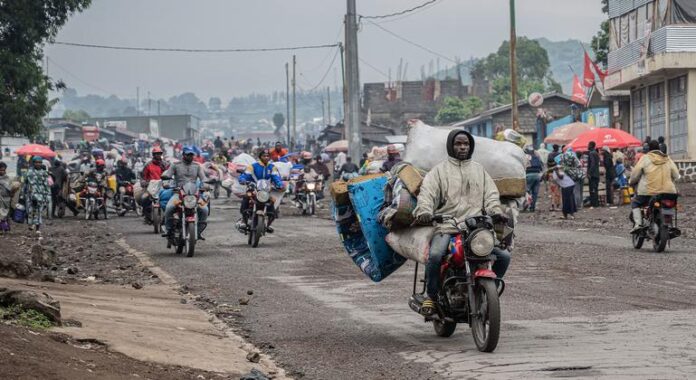
Vivian van de Perre, Deputy Head of the UN Stabilization Mission in the DRC (MONUSCO), provided a detailed briefing from Goma, highlighting the dire humanitarian situation and the need for “urgent and coordinated international action” to stop the fighting between Rwanda-backed M23 rebels and Congolese forces – as they battle for control of the city.

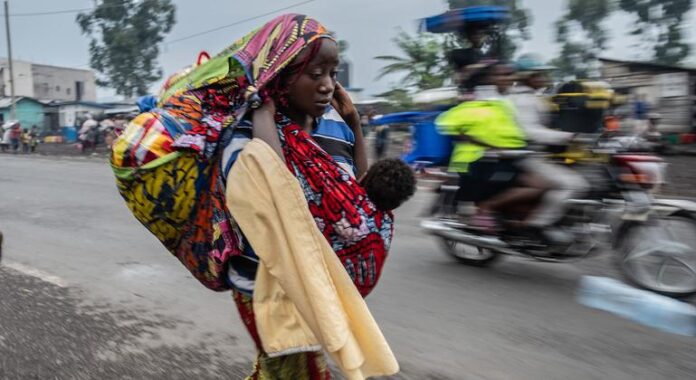
She reported that the recent clashes have led to massive displacement, with over 178,000 people fleeing Kalehe territory after the M23 took control of Minova.

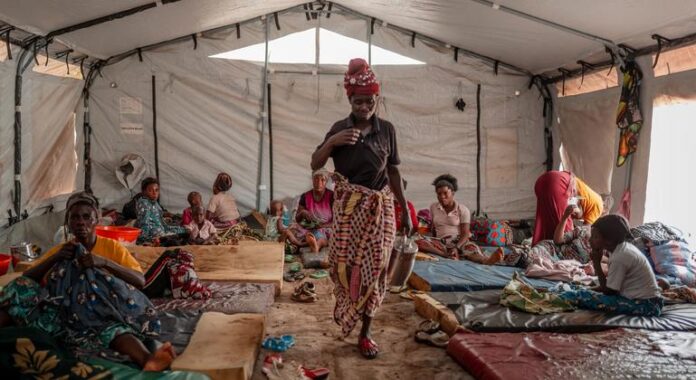
More than 34,000 of those on the run have sought refuge in already overcrowded IDP sites in and around Goma, exacerbating the humanitarian crisis and overwhelming the city’s infrastructure.

Rebels and Rwandan troops joint attack

“Despite the appeals from Member States during the Security Council meeting on 26 January, the M23/RDF [Rwanda Defence Force] launched an attack on Goma, using heavy direct and indirect fire,” Ms. van de Perre stated.

“These attacks have resulted in numerous civilian casualties, further displacement, and significant trauma among the population.”

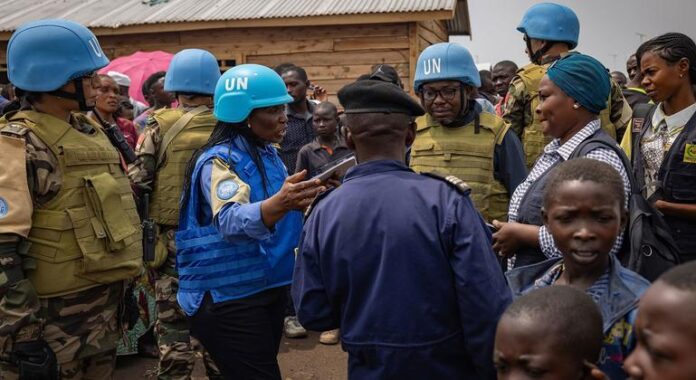
She emphasised the critical role of MONUSCO in providing refuge and protection, noting that the mission has received a large number of people seeking safety, including officials and armed elements who have surrendered.

“MONUSCO’s bases are not able to accommodate the large number of surrendering elements and civilians seeking refuge,” she said. “The Uruguayan Battalion (URUBATT) alone has taken in approximately 1,200 Congolese soldiers and over a thousand civilians, placing immense pressure on resources.”

UN bases ‘not safe’

The situation is further complicated by damage to water tanks, compromising the security of UN personnel and property.

“Our bases are not safe: two mortars have hit MONUSCO bases and compounds in the last three days, as well as numerous bullets,” Ms. van de Perre reported.

“Installations of [formed police unit] staff in Jambar camp have been destroyed and burnt.”

Casualty evacuation efforts remain a significant challenge, with peacekeepers injured during the fighting in Sake.

Despite the closure of Goma airport, MONUSCO continues to facilitate medical evacuations with the help of SAMIDRC – the Southern African Development Community mission in DRC.

Evacuation of injured ‘blue helmets’

“We continue to do our utmost to ensure timely evacuation of injured peacekeepers and other casualties to our level 3 hospital in Goma despite continued challenges,” Ms. van de Perre said.

The M23 and Rwandan forces’ capture of Goma’s international airport and their advance from multiple directions have heightened the risk of weapons proliferation, as combatants blend into the civilian population, the Deputy UN Special Representative continued.

The mass influx of IDPs, separation of families, and escape of prisoners from Goma prison have increased the vulnerability of women and children to sexual and gender-based violence.

Ms. van de Perre called on all parties to guarantee the protection of life and access to basic services, and to prevent sexual violence.

“The degree of suffering that the population here in Goma and its environs is enduring is truly unimaginable,” she said.

“Let us please draw on our humanity and do our utmost to bring an immediate end to such levels of violence and suffering.”

In light of the ongoing conflict, Ms. van de Perre urged the establishment of humanitarian corridors between Goma, Minova and Bukavu, and the reopening of critical airports and border points.

Political solution must be found

She emphasised that military action cannot resolve the conflict and called for a resumption of the Luanda Process under the auspices of the Angolan Government to ensure de-escalation and “avert the looming threat of a third Congo war.”

The briefing concluded with a call for urgent and coordinated international action to address the crisis in Goma. Despite the challenges, MONUSCO remains a vital lifeline for vulnerable groups, but its effectiveness is being severely tested by the ongoing violence and logistical difficulties.

“The protection of civilians and the pursuit of a peaceful resolution must be prioritised to end the suffering in Goma,” MONUSCO’s deputy head stressed.

Source link

INERATEC’s e-fuel demo plant in Frankfurt gets €70 million from EIB, EU-Commission and Breakthrough energy

0
INERATEC’s e-fuel demo plant in Frankfurt gets €70 million from EIB, EU-Commission and Breakthrough energy
  • The Capital injection will finance development of Europe’s first large-scale e-Fuel plant in Frankfurt and further research and development of INERATEC`s e-Fuels.
  • INERATEC`s e-fuels will support compliance with EU regulation requirements to add synthetic aviation fuel to kerosene to decarbonize aviation
  • Financing includes a €30million grant by Breakthrough Energy Catalyst, their first in Germany, underpinning the maturity of INERATEC’S technology 

The European Investment Bank (EIB) and Breakthrough Energy Catalyst are providing a €70 million funding package through the EU-Catalyst Partnership to INERATEC, a Germany based e-fuel company. The EIB is providing a €40 million venture-debt-loan, backed by the EU`s InvestEU-program, while Breakthrough Energy Catalyst is awarding a grant of €30 million. The package will support the financing of INERATEC’s carbon neutral e-fuel production plant in Frankfurt, as well as further research and development. The Frankfurt plant is set to be Europe`s largest when opening in 2025.

Long term market growth expected for e-SAF and e-Fuels

E-fuel production uses CO2 and hydrogen to produce synthetic fuels and chemicals that are carbon neutral or close to carbon neutral when used. They have significant potential in hard-to-decarbonize sectors such as aviation, where commercial demand is underpinned by clear regulation. Therefore, long-term market growth can be expected.

The EU’s ReFuelEU Aviation regulation requires that aviation fuel suppliers provide jet-fuel with 1.2 per cent minimum synthetic fuel content by 2030, rising to 35 per cent in 2050. Based in Karlsruhe, Germany, INERATEC is well placed for this growing market, offering an efficient, scalable modular design.

INERATEC’S Frankfurt plant will produce up to 2,500 tons of e-fuels and e-chemicals, including e-sustainable aviation fuel (e-SAF). The plant will also incorporate an upgrading facility, enabling the e-crude oil to be refined into certifiable, ready-to-use sustainable aviation fuel on site. The fuel will support compliance with the EU’s synthetic aviation fuel mandate.

INERATEC’s Frankfurt plant to show e-Fuel production is possible at scale

EIB-Vice-President Nicola Beer said: “E-fuels are a crucial part of achieving a competitive net-zero economy, particularly in the mobility and transport sector. Game-changing technologies like Ineratec’s play a vital role in this transition. Together with the European Commission and Breakthrough Energy, through the EIB’s venture debt product, we are supporting an innovative startup in scaling up production and advancing research to make e-fuels a viable, sustainable alternative to fossil fuels.”

INERATEC CEO Tim Boeltken said: “INERATEC’S Frankfurt production plant will show that e-fuel production is no longer a technological concept but a scalable reality. Reliable production of certifiable e-SAF is possible in the near-term – at commercial scale, that will be a breakthrough for sustainable aviation. This investment from EIB and Breakthrough Energy Catalyst is a sign of confidence in the INERATEC technology and approach.”

Mario Fernandez, Head of Breakthrough Energy Catalyst, adds: “We are delighted to be working with INERATEC. This ground-breaking project will bring us a decisive step closer to the decarbonisation of aviation.”

The financing reinforces EIB position as the ‘The Climate Bank’, a priority in the EIB Group’s 2024-2027 Strategic Roadmap, and supports the objectives of the European Commission’s RefuelEU aviation regulations.

Background information

The European Investment Bank (ElB) is the long-term lending institution of the European Union, owned by its Member States. It finances investments that contribute to EU policy objectives. EIB projects bolster competitiveness, drive innovation, promote sustainable development, enhance social and territorial cohesion, and support a just and swift transition to climate neutrality.

The InvestEU programme provides the European Union with crucial long-term funding by leveraging substantial private and public funds in support of a sustainable recovery. It also helps mobilise private investments for the European Union’s policy priorities, such as the European Green Deal and the digital transition. The InvestEU programme brings together under one roof the multitude of EU financial instruments currently available to support investment in the European Union, making funding for investment projects in Europe simpler, more efficient and more flexible. The programme consists of three components: the InvestEU Fund, the InvestEU Advisory Hub and the InvestEU Portal. The InvestEU Fund is implemented through financial partners that will invest in projects using the EU budget guarantee of €26.2 billion. The entire budget guarantee will back the investment projects of the implementing partners, increase their risk-bearing capacity and thus mobilise at least €372 billion in additional investment.

EIB venture debt is a quasi-equity investment product suitable for early and growth stage ventures, combining a long-term loan with an instrument linking the return to the performance of the company. Since 2015, the EIB has invested €6 billion in Venture Debt, backing over 200 companies and realising over 50 exits. With the backing of InvestEU, the EIB aims to support European ventures and scale-ups in the cleantech, deep-tech and life sciences sectors.

INERATEC is committed to defossilizing and decarbonizing the world. The company produces e-Fuels and e-chemicals: carbon-neutral fossil fuel substitutes for use in the aviation, shipping and chemical industries. Its modular, scalable plants use renewable hydrogen and biogenic CO2 to produce synthetic kerosene, gasoline, diesel, waxes, methanol or natural gas. It is building what will be the world’s largest e-fuels plant to date, in Frankfurt, which will produce up to 2,500 tonnes of ultra-low-carbon aviation fuel per year. The company is based in Karlsruhe, Germany and backed by diverse international investors.

Breakthrough Energy is committed to accelerating the world’s journey to a clean energy future. The organization funds breakthrough technologies, advocates for climate-smart policies, and mobilizes partners around the world to take effective action, accelerating progress at every stage.

Breakthrough Energy Catalyst is a novel platform that funds and invests in first-of-a-kind commercial projects for emerging climate technologies. By investing in these opportunities, Catalyst seeks to accelerate the adoption of these technologies worldwide and reduce their costs.

Catalyst currently focuses on five technology areas: clean hydrogen, sustainable aviation fuel, direct air capture, long-duration energy storage, and manufacturing decarbonization. In addition to capital, Catalyst leverages the team’s energy-infrastructure-investing and project-development expertise to work with innovators on advancing their projects from the development stage to funding and ultimately, to construction. Learn more about Breakthrough Energy and Catalyst at breakthroughenergy.org.

Source link

DR Congo crisis: A public health ‘nightmare’ is unfolding, warns WHO

0
DR Congo crisis: A public health ‘nightmare’ is unfolding, warns WHO

The internet also remains down in the provincial capital and only mobile phone networks are functioning, with M23 fighters apparently in control of “a significant portion of the city” after intense clashes with the Congolese army, UN agencies reported on Wednesday.

Aid teams from the UN World Health Organization (WHO) “cannot move freely to support the hospitals, even ambulances cannot run. It’s a situation that in public health is a nightmare,” said Dr Boureima Hama Sambo, WHO Representive in DRC.

‘Vulnerable people need us’

Speaking to UN News, Dr Sambo added: “We just hope that the situation will return to normal for the Government … vulnerable people really need us.”

Conditions in provincial capital Goma remain “dire”, he added, with no running water, electricity cut and civilians trapped – including health professionals.

Echoing those concerns, a senior UN peacekeeping official warned that the level of suffering among those caught up in the violence was “unimaginable”.

Vivian van de Perre, Deputy Special Representative for Protection and Operations in the UN Stabilization Mission in the Democratic Republic of the Congo (MONUSCO) told the Security Council late Tuesday that there was a need for “urgent and coordinated international action” to stop the fighting between Rwanda-backed M23 rebels and Congolese forces as they battled for control of Goma.

Massive displacement and fear

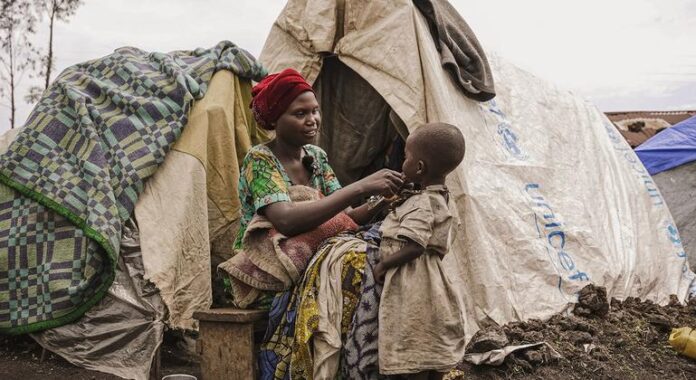
Before M23 fighters closed in on Goma, more than 700,000 internally displaced people lived around the provincial capital. But hundreds of thousands fled in anticipation of clashes between the Rwanda-backed rebels and DRC troops, prompting renewed alarm about the further spread of deadly disease.

“When you have as many as 700,000 people living in camps, you can imagine the human suffering,” the WHO official told UN News, pointing to “a lot of ongoing [disease] outbreaks” in North and South Kivu – two mineral-rich regions close to the Rwanda border, where dozens of armed groups have held sway for decades.

Disease ever-present

Repeated mass displacement in DRC has created ideal conditions for the spread of many endemic diseases in camps and surrounding communities in the Kivus, including cholera (more than 22,000 cases and 60 deaths in 2024), measles (close to 12,000 cases and 115 deaths) and malaria, as well as chronic child malnutrition. 

In August last year, WHO Director General Tedros Adhanom Ghebreyesus also declared the mpox outbreak a public health emergency of international concern.

Despite a “robust” initial response to the mpox threat by WHO and national partners that has been coordinated from Kinshasa and field offices in Goma and South Kivu, Dr Sambo warned that mpox patients had fled at least one camp’s treatment centre and were now living now in host communities and with families.

“So, we are there’s a fear for the disease to be spreading widely in communities, but at this point we cannot say because we have not been able to get there and assess what’s happening right now.”

Child separations on the rise: UNICEF

Children’s agency UNICEF‘s Representative in DRC, Jean Francois Basse, described the situation in Goma as “extremely grave,” further complicating an already dire humanitarian crisis. 

He highlighted the severe hardships faced by the displaced population, including exposure to traumatic events, hunger, thirst, and exhaustion. 

Beyond the health risks, he said there has been a surge in the number of children separated from their parents, making them vulnerable to kidnapping, recruitment by armed groups, and sexual violence.

The agency is urgently calling for $22 million to continue providing life-saving support, including clean water, proper sanitation, medical supplies, treatment for severely malnourished children, and protection services.

Mr. Basse emphasised the need for parties to the conflict to halt the military escalation, which is exacerbating the suffering of children and worsening the already appalling humanitarian conditions.

Source link

UNAIDS welcomes US decision to keep funding life-saving HIV treatment

0
UNAIDS welcomes US decision to keep funding life-saving HIV treatment

The move from the UN agency dedicated to ending the disease came in response to an immediate 90-day funding pause for all foreign assistance laid out in an executive order by President Trump, including the US President’s Emergency Plan for AIDS Relief (PEPFAR).

PEPFAR is the world’s leading HIV initiative which directly supports more than 20 million people living with HIV, representing two-thirds of all people receiving HIV treatment globally.

The waiver approves the continuation or resumption of “life-saving humanitarian assistance,” which applies to core life-saving medicine and medical services, including HIV treatment, as well as supplies necessary to deliver such aid.

‘Critical role’

“UNAIDS welcomes this waiver from the US Government which ensures that millions of people living with HIV can continue to receive life-saving HIV medication during the assessment of US foreign development assistance,” said UNAIDS Executive Director, Winnie Byanyima.

“This urgent decision recognises PEPFAR’s critical role in the AIDS response and restores hope to people living with HIV.”

The funding pause of development assistance for “assessment of programmatic efficiencies and consistency with United States foreign policy,” was one of the first major foreign policy decisions of the new administration.

UNAIDS will continue efforts to ensure that all people living with or affected by HIV are served and that other key components of PEPFAR’s life-saving efforts, including service delivery and services for HIV prevention, care, and support for orphans and vulnerable children, are continued.

Immediate impact

Earlier, the UN World Health Organization (WHO) expressed deep concern about the implications of the funding pause for HIV programmes in low and middle-income countries.

These programmes provide access to life-saving HIV therapy to more than 30 million people worldwide. Globally, 39.9 million people were living with HIV at the end of 2023.

“Such measures, if prolonged, could lead to rises in new infections and deaths, reversing decades of progress and potentially taking the world back to the 1980s and 1990s when millions died of HIV every year globally, including many in the US,” said WHO in a statement issued before the Secretary of State’s emergency waiver was announced.

More than 26 million lives saved

PEPFAR has been a flagship initiative of the global HIV response since its establishment over 20 years ago, WHO stressed.

Any funding pause for PEPFAR would have a direct impact on millions of lives that depend on the predictable supply of safe and effective antiretroviral treatment.

PEPFAR works in over 50 countries around the world and has saved more than 26 million lives over the past two decades. Currently, PEPFAR is providing HIV treatment for more than 20 million people living with HIV globally, including 566,000 children under 15 years of age.

Growing self-reliance

WHO said that over the past year, PEPFAR and partners – including WHO – “have been working on sustainability plans with countries for greater country ownership and reduced donor support up to and beyond 2030.”

A sudden and prolonged stop to programmes would hamper a managed transition and puts the lives of millions at risk.

The agency said it would remain committed to supporting PEPFAR and other partners, as well as national governments, in managing change processes effectively to minimise the impact on people living with HIV.

Source link

Steering the EU towards greater sustainable competitiveness

0
Steering the EU towards greater sustainable competitiveness


A new framework to rekindle economic productivity and secure the EU’s competitive edge has been presented by the European Commission. The Competitiveness Compass builds on the recommendations set out in Mario Draghi’s report on the future of European competitiveness. It will steer the EU’s work on competitiveness over the next five years and translate the report’s recommendations into concrete actions for the EU’s future prosperity.  

The EU enjoys a strong system of rights and values, a Single Market, top-notch infrastructure and a skilled workforce, but the Compass recognises that more must be done to ensure Europe keeps pace with other major economies in a challenging and increasingly competitive world. While all the time looking to secure the EU’s climate neutrality, it sets a path for Europe to become the place where future technologies and clean products are invented, manufactured, and put on the market. 

The Compass identifies 3 core areas of action: 

  • Innovation – The EU must close the innovation gap by creating an environment where innovative start-ups, effective industrial leadership and the diffusion of technologies across businesses thrive. Concrete initiatives from the Commission include ‘Apply AI’ and ‘AI Gigafactories’ to drive industrial adoption of AI; action plans for advanced materials, quantum, biotech, robotics and space technologies; and an EU Start-up and Scale-up Strategy that will address the obstacles that are preventing new companies from emerging and scaling up. 
  • Decarbonisation and competitiveness – The EU will help bring down high and volatile energy prices through an Affordable Energy Action Plan. It will set out a competitiveness-driven approach to decarbonisation through its upcoming Clean Industrial Deal, while an Industrial Decarbonisation Accelerator Act will extend accelerated permitting to sectors in transition. It will also launch action plans for energy intensive sectors, such as steel, metals, and chemicals. 
  • Security and resilience – The EU will reduce dependencies and increase its resilience and security by continuing to build effective trade partnerships with economies around the world. Through a new range of Clean Trade and Investment Partnerships it will help secure a supply of raw materials, clean energy, sustainable transport fuels, and clean tech from across the world. It will also review public procurement rules to introduce a European preference in public procurement for critical sectors and technologies 

Underpinning these actions will be five cross-cutting activities: 

  • Simplification by drastically reducing the regulatory and administrative burden on firms 
  • Lowering barriers to the Single Market through its Horizon Single Market Strategy 
  • Financing competitiveness by establishing a European Savings and Investment Union 
  • Promoting skills and quality jobs through a Union of Skills  
  • Better coordination of policies at EU and national level by introducing a Competitiveness Coordination Tool 

The Competitiveness Compass is the first major initiative of the Commission in the 2024-2029 mandate. 

For more information 

Strengthening European competitiveness 

Draghi report 

Communication – A Competitiveness Compass for the EU 

A factsheet on the Competitiveness Compass 

Press release: An EU Compass to regain competitiveness and secure sustainable prosperity 


Source link

Business taxation: María José Garde re-elected as chair of the code of conduct group

0
Business taxation: María José Garde re-elected as chair of the code of conduct group

Business taxation: María José Garde re-elected as chair of the code of conduct group.

Source link

DR CONGO CRISIS: Updates as top UN official tells emergency Security Council meeting ‘we are trapped’

0
DR CONGO CRISIS: Updates as top UN official tells emergency Security Council meeting ‘we are trapped’

Intensifying hostilities in eastern Democratic Republic of the Congo involving the non-state armed group M23 have caused further mass displacement in the mineral-rich region, with fears that the regional capital Goma could come under attack, UN agencies warned on Friday.

Source link

DR Congo emergency: Next 24 hours are critical, warn UN agencies

0
DR Congo emergency: Next 24 hours are critical, warn UN agencies

Dead bodies lie in the streets, hospitals are overwhelmed and there has been an uptick in reports of sexual violence, rape and looting.

“Roads are blocked, ports are closed and those crossing Lake Kivu risk their lives in makeshift boats,” said Shelley Thakral, spokesperson for the UN World Food Programme (WFP) – one of many UN agencies on the ground striving to provide assistance and protection wherever possible. “I spoke just moments ago to an activist In Goma and he told me, ‘We’re here, we’re hiding. We don’t know who will come to help us.’”

The UN aid coordination office, OCHA, echoed the humanitarian community’s deep concerns about the spiralling violence across the resource-rich region that has uprooted some 300,000 people from camps around Goma in a matter of days.

Aid targeted

“Our colleagues in the DRC report heavy, small arms fire and mortar fire across the city and the presence of many dead bodies in the streets,” said OCHA spokesperson Jens Laerke. “We have reports of rapes committed by fighters, looting of property, including of a humanitarian warehouse and humanitarian and health facilities being hit.”

The emergency has left hospitals in Goma reportedly overwhelmed by the influx of wounded people, electricity and water supplies “compromised” and internet services cut off on Monday. “Goma is still offline this morning,” Mr. Laerke told journalists in Geneva.

The development came amid urgent calls from the international community including the Security Council in New York, where ambassadors on Monday demanded an immediate halt to the M23 rebel offensive and called for the group to withdraw from territories it has seized.

The ambassadors reiterated their support for the UN peacekeeping force in the DR Congo, MONUSCO, and paid tribute to blue helmets who have lost their lives from South Africa, Malawi and Uruguay in recent days.

The Council also condemned the presence of “external forces” in eastern DRC – amid reports Rwandan troops are heavily involved in the offensive – and called for all parties to adhere to the ceasefire and return to diplomatic talks.

Years of crisis

Before the latest escalation in violence in eastern DRC’s Kivus, some 5.1 million people had already been displaced by years of insecurity in the mineral-rich region and forced to live in overcrowded camps with little food and no security.

UN agencies and partners continue to monitor the highly unstable situation which has forced WFP to temporarily pause food assistance activities in around Goma. “The airport and major access roads within the region have been cut off…Depending on the duration of violence, the supply of food into the city could be severely hampered,” said WFP’s Ms. Thakral.

“This is a huge test for Congolese trapped by fighting in Goma and surrounding areas…the next 24 hours will be critical as people start to run low on supplies and will need to see what they can find to survive.”

Disease fears

The highly mobile nature of the emergency has prompted additional fears that existing diseases may spread quickly among uprooted populations, although preventive measures were taken before the latest escalation, the UN World Health Organization (WHO) said. 

For the moment the immediate concern is to help victims of the violence.

“There are currently hundreds of people in hospital, most admitted with gunshot and shrapnel wounds, with secondary infections becoming a health risk,” said Dr Adelheid Marschang, Emergency Response Coordinator for the DRC.

She noted that before Goma airport closed on Saturday, WHO had sent critical medical supplies for trauma and emergency care, infection prevention, cholera and more.

The UN agency’s response to the crisis has also included providing tents for hospitals to cope with the increasing number of injured. It has medical hubs in North and South Kivu, in the cities of Goma and Bukavu to support health care needs in eastern DRC.

Last year the provinces of North and South Kivu reported high numbers of cholera, measles and malaria cases and deaths, Dr. Marschang said, warning of a “heightened risk for spillover of cholera” into neighbouring countries and provinces.

The area was also the epicentre of an outbreak of a new strain of mpox, declared a public health emergency of international concern in August 2024. Dr. Marschang warned that the new wave of displacement will make it increasingly hard to track and treat the disease.

Amid the lethal violence, hospitals and health workers themselves are in danger, the WHO official said, with “reports of health workers being shot at and patients including babies being caught in crossfire”.

“Attacks on healthcare violate the rules of war. Healthcare must be protected at all times,” she insisted.

Sexual violence alert

WHO and other UN agencies and partners said that they are especially worried about the increasing risk to women and girls from violence, including rape.

“Pregnant women are at risk, with very high maternal death rates, even before the violence escalated,” WHO said.

“Sadly, hospitals and health workers are in danger.  We are hearing reports of health workers being shot at, and patients, including babies, being caught in the crossfire.  WHO reminds everyone that attacks on healthcare violate the rules of war.  Health care must be protected at all times.”

Echoing those concerns, WFP’s Ms. Thakral reported that mobile teams and mobile clinics are at work amid reports that women had been raped multiple times while searching for firewood or after leaving the perimeter of their camp.

Other reports indicated “an increase in rape along the pathways that some of the conflict partners are now taking into South Kivu,” she said, underscoring the agency’s efforts “to have some solutions to follow the populations as they move”.

Source link

DR CONGO CRISIS: Live updates for 28 January as Security Council meets

0
DR CONGO CRISIS: Live updates for 28 January as Security Council meets

DR CONGO CRISIS: Live updates for 28 January as Security Council meets

Source link

Stay in control of your personal data. Happy Data Protection day 2025!

0
Stay in control of your personal data. Happy Data Protection day 2025!

If someone asked you to answer 100 questions about your personal life to sell the answers, would you agree? Most likely not.

It can be difficult  to keep in control over your personal data and to keep it safe. From online shopping and browsing to social media, with every click, share and login-in you leave behind a digital trail. The GDPR ensures that your data can only be used in ways you agree to and that you can access any information about yourself.

But do people actually know how to protect their data? 
We asked passers-by on the streets of Brussels.

Happy Data Protection Day!

Source link