
The Council adopted a decision on the partial suspension of the visa facilitation agreement with Georgia.
Statement by the members of the European Council on the occasion of International Holocaust Remembrance Day

The members of the European Council issued a statement on the occasion of the International Holocaust Remembrance Day, that this year marks the 80th anniversary of the liberation of the German Nazi concentration and extermination camp of Auschwitz-Birkenau.
Saints and liars: The story of American aid workers who helped Jewish refugees escape the Holocaust

A new book on their work underlines the chaos of the time, and the difficult decisions they had to make, knowing that for every person they saved, many more would be killed.
Saints and Liars, by Debórah Dwork, the Director of the Center for the Study of the Holocaust, Genocide, and Crimes Against Humanity at the City University of New York Graduate Center, tells the stories of rescue workers in five key cities as the situation on the ground grew increasingly dire.
At the launch ahead of the International Day of Commemoration in memory of the victims of the Holocaust marked annually on 27 January, Tracey Petersen, the manager of the UN Holocaust Education Outreach Programme, interviewed Debórah Dwork at UN Headquarters, and began by asking her about the book’s title.
This interview has been edited for clarity and length
Debórah Dwork: I called it Saints and Liars because that’s what these people were. They did amazing things, in a non-religious sense. They did miraculous things. They saved people either by helping them to move on, get to sea, find a safe harbour, or by feeding, clothing and sheltering them.
And at the same time, nearly all of them lied. They broke rules and played fast and loose with the truth in order to accomplish their goals.
Tracey Petersen: Why did you write this book?
Debórah Dwork (r) author of Saints and Liars.
Debórah Dwork: I wanted to tell the story of Americans who went to Europe when everyone who was worried about danger was trying to go in the opposite direction. Their first idea was relief activities, but their mandate morphed to trying to effect rescue. I wanted to know who they were and what prompted them.
We start in Prague, 1939, before the war was declared and well before the United States entered the war. What prompted Waitstill and Martha Sharp? They were a pair of married Unitarians sent to Czechoslovakia by their church.
The situation grew worse and worse for political opponents of the Nazi regime and for Jews. And yet the Sharps stayed on to help and began to engage in illegal activities in the hope of saving lives.
Tracey Petersen: Did the outside world in general know what was happening in Czechoslovakia at that time?
Debórah Dwork: The loss of the Sudetenland region was part of the Munich Pact, an agreement signed by the major leaders of Europe, who gave away a whole chunk of Czechoslovakia without a single shot being fired.
As you can imagine, this was the stuff of headlines, and it was the Munich Pact which first galvanized the Unitarian leadership in Boston to say “we’ve got to do something: the Germans have taken Sudetenland. Refugees are fleeing into Prague. They need help. They need clothing. They need shelter. They need medical care. They need food”.
Tracey Petersen: How dangerous was the work of these American aid workers?
Debórah Dwork: Waitstill Sharp said that Yankees like to skate on thin ice. Just one of the ways in which his work endangered him was that he did illegal currency transactions, because raising money to pay for the rescue activities was very difficult. But if the regime had learned about this he would have been at least imprisoned and probably tortured.
Tracey Petersen: Why did refugees go to Shanghai and where were they coming from?
Debórah Dwork: Even before the war, Jews and political dissidents in Germany and Nazi-occupied Austria and Czechoslovakia sought desperately to leave Europe and to get to some place of safety.
As it happened, Shanghai was just such a place because no visa was required for them to land there. So, by the time war did break out in January, in September 1939, some 20,000 refugees had collected in Shanghai, which had been under Japanese rule since 1937.
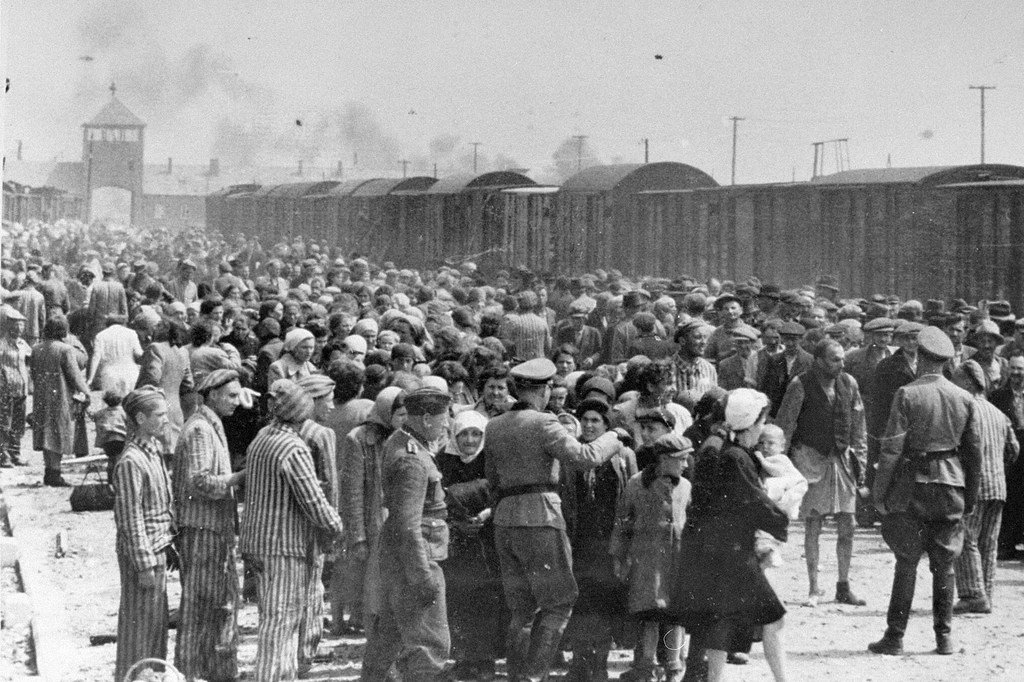
Jews from Subcarpathian Rus are subjected to a selection process on a ramp at Auschwitz-Birkenau, Poland.
The US State Department and American Jewish Joint Distribution Committee (JDC) sent Laura Margolis to Shanghai to help them move on to their next destination, but the war intervened, and she ended up staying in a city under occupation with very few resources to help them meet their needs. They needed medical care, food and shelter. The children needed education. Somehow, she had to try to meet the needs of this community that was cut off from the rest of the world
Tracey Petersen: The numbers are staggering. You had women, children, refugees, incredible terror, anxiety, being turned down for visas… did the aid workers reflect on whether they were possibly being swayed by their emotions and maybe helping some people when they should have been helping others? Is there any sense of their turmoil?
Debórah Dwork: Definitely. There were thousands upon thousands of people who needed help. When you wake up in the morning, whose case are you going to attend to? What were the criteria?
The Unitarians did have specific criteria: they wanted to rescue people who would help to reestablish democratic governments after the war was over. Of course, they were mostly male, mostly middle class or upper middle class. Mostly well-educated. That was the idea. But life on the ground had its own dynamic. And in Prague Martha and Waitstill ended up helping all manner of people.
The Quakers, by contrast, had no such calculus. Their goal was to help everyone who required help. This was a sharp and distinct difference between the Unitarians agenda and the Quakers agenda. In fact, they annoyed each other with the Unitarians saying the Quakers had no principles, and the Quakers saying the Unitarians had no principles.
Tracey Petersen: In many ways these stories reveal that a successful rescue is sometimes just a question of luck and timing.
Debórah Dwork: We all know the degree to which the unpredictable and the irrational affect our lives. Luck, timing, fortuitous circumstances, passion, sympathies, antipathies. But when we think about the past, we strip those factors away. We think things happened for a reason. Sometimes they did happen for a reason, but sometimes they happened by accident.
Let’s hope that we can learn from these events and say action is possible, activities are possible, initiative is possible.
Statement by the High Representative / Vice President Kaja Kallas and Commissioner for Enlargement Marta Kos on the sham presidential election in Belarus
Statement by the High Representative / Vice President Kaja Kallas and Commissioner for Enlargement Marta Kos on the sham presidential election in Belarus
DR Congo emergency: Fears that regional capital Goma faces attack
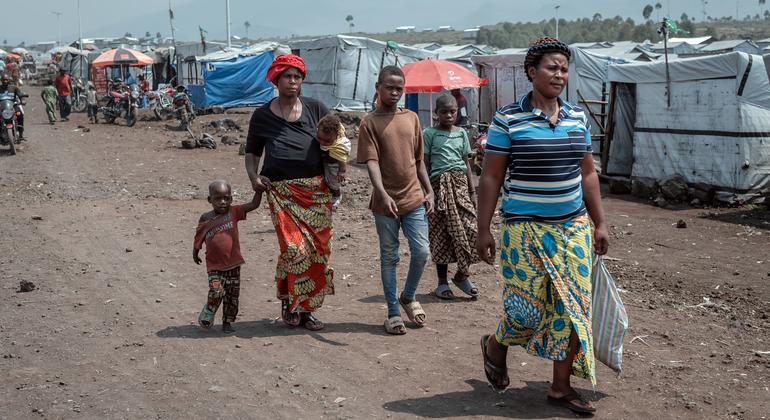
“We are deeply alarmed at the heightened risk of an attack by the M23 armed group on Goma, the capital of North Kivu, in the eastern Democratic Republic of Congo…Any such attack on Goma risks catastrophic impacts on hundreds of thousands of civilians, putting them at heightened exposure to human rights violations and abuses,” said Ravina Shamdasani, spokesperson for the UN human rights office, OHCHR.
“The High Commissioner has flagged many times that sexual violence is a key component – a very horrific component – of this conflict,” Ms. Shamdasani added. “Armed groups abduct, hold captive and subject women and girls to sexual slavery and many of them have been killed after being raped.”
Since the UN peacekeeping Mission, MONUSCO, withdrew from South Kivu in June 2024, peacekeepers have defended key positions in North Kivu, including Goma and Sake, where clashes between the M23, the Congolese Armed Forces and many other armed groups have continued.
Hundreds of thousands newly displaced
Some 400,000 people have been displaced in North and South Kivu since the beginning of this year alone, according to the UN refugee agency, UNHCR.
Highlighting the humanitarian crisis that continues to unfold largely unseen by the outside world, UNHCR spokesperson Matt Saltmarsh reported that “bombs have fallen” on camps for people uprooted by the violence in South and North Kivu.
These attacks include one on 20 January, when explosions at Kitalaga site in South Kivu killed two children.
On 21 January, five makeshift shelters were destroyed in Nzuolo, near Goma, while on Wednesday, Bushagara site – also near Goma – was “heavily impacted, causing panic and new waves of forced displacement”, Mr. Saltmarsh told journalists in Geneva.
He noted that heavy bombardments from clashes involving the M23 rebels forced families to flee various displacement sites on the periphery of Goma and try to seek safety within Goma: “UNHCR staff remain on the ground in Goma, assisting the displaced civilians wherever they can and wherever they get access,” he said.
“But as you can understand, the access at the moment is extremely challenging.”
Guterres warning
The development came as the UN Secretary-General on Thursday expressed alarm over a renewed offensive by M23 rebels in eastern DRC and the “devastating toll” on civilians.
In a statement issued by his Spokesperson, António Guterres noted the Rwandan-backed rebels’ reported seizure of Sake, in South Kivu, “which increases the threat” to the regional capital Goma – all of which is “heightening the threat of a regional war”. Rwanda denies any direct involvement with M23 fighters.
“The Secretary-General calls on the M23 to immediately cease its offensive, withdraw from all occupied areas and abide by the 31 July 2024 ceasefire agreement,” the UN chief’s statement continued.
Echoing the Secretary-General’s concerns, OHCHR spokesperson Ms. Shamdasani reiterated UN chief Volker Türk’s appeal “to all States with influence on the parties to impress on them the urgent need for an immediate cessation of hostilities”.
M23 is well funded and “as the High Commissioner has said previously, any role played by Rwanda in supporting the M23 in North Kivu – and by any other country supporting armed groups active in the DRC – must end,” she insisted. “The people in the DRC are exhausted by violence, exhausted by conflict, exhausted by the horrors of their daily life. And this must not be allowed to worsen further.”
Stark options
Asked to explain the dangers faced by those sheltering in camps, UNHCR’s Mr. Saltmarsh replied that their “options are stark and extremely limited…What you will receive in terms of aid is extremely limited – that depends very much on whether agencies like UNHCR and our partners in the UN and NGOs are able to access those sites.
“If they are, we can bring in a minimum of assistance, otherwise, civilians will be in areas that are now occupied by the armed groups. We don’t have access to those areas, so it’s very difficult to for us to say what conditions are like there.”
South and North Kivu Provinces already host 4.6 million internally displaced people. UNHCR has warned that human rights violations, including looting, injuries, murders, kidnappings and arbitrary arrests of displaced people mistaken for rebels have escalated.
“Hospitals are nearing capacity with injured civilians,” Mr. Saltmarsh said. “Vulnerable women, children, and the elderly are living in overcrowded and precarious conditions with limited access to food, water, and essential services.”
World News in Brief: More UN staffers detained in Yemen, education hit by climate crisis, Nigeria aid plan
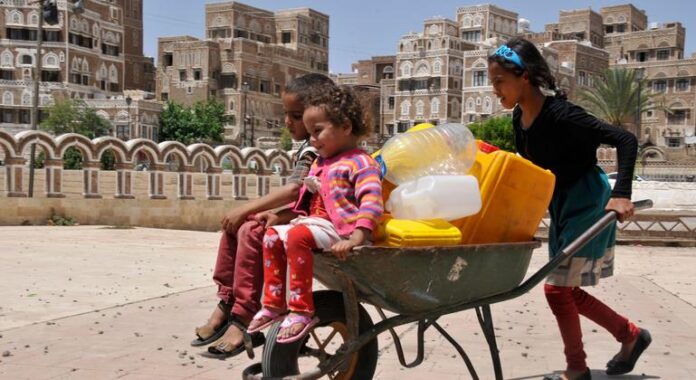
The de facto rulers of much of the country, including the capital Sana’a, released the crew of a merchant ship who had been held for more than a year, earlier this week.
The move raised hopes that more than 60 staff from the UN, international organizations and diplomatic missions already being held by the Houthis over the past year, might be released.
Friday’s safety measure announced by Julien Harneis, UN Resident and Humanitarian Coordinator for Yemen, comes as the organization faces mounting security challenges in its operations in the region.
The Houthis and the internationally-recognized Government have been fighting for control of the country in what has become a wider regional proxy war, for over a decade.
Security measure
“Yesterday, the de facto authorities in Sana’a detained additional UN personnel working in areas under their control,” Mr. Harneis said.
“To ensure the security and safety of all its staff, the United Nations has suspended all official movements into and within areas under the de facto authorities’ control…this measure will remain in place until further notice.”
Deputy Spokesperson Farhan Haq elaborated on the response later on Friday, highlighting the UN’s ongoing efforts: “Our officials in Yemen are actively engaging with senior representatives of the de facto authorities, demanding the immediate and unconditional release of all UN personnel and partners.”
The detentions mark a troubling escalation for humanitarian operations in Yemen, where access and security remain critical concerns.
The UN continues to emphasise the importance of upholding the safety and neutrality of its personnel to ensure lifesaving aid reaches those in need.
Nearly 250 million children’s schooling disrupted by climate crises in 2024
At least 242 million students in 85 countries had their schooling disrupted by extreme climate events in 2024, the UN Children’s Fund, UNICEF, has warned.
Heatwaves, tropical cyclones, storms, floods and droughts are among of the dangers that have made the global learning crisis worse, new UNICEF analysis has shown.
Coinciding with the International Day of Education, the UN agency released data showing that at least one in seven students had their schooling disrupted because of climate hazards in 2024.
Multiple closures
Of the 85 countries affected, 23 experienced multiple rounds of school closures and 74 per cent of all those affected students live in low and lower-middle-income countries.
South Asia was the most affected region in 2024 with 128 million students impacted by climate-related school disruptions. East Asia and the Pacific region followed, impacting 50 million students.
In 2024, heatwaves were the most significant climate hazard to affect schooling, concerning around 171 million students.
Nigeria humanitarian response plan aims to help 3.6 million people: OCHA
To Nigeria, where UN aid teams have launched a humanitarian appeal which again focuses on the northeastern states of Borno, Adamawa and Yobe – the Bay states -where conflict, climate shocks and economic instability continue to blight communities’ wellbeing.
OCHA, the UN aid coordination office, said that the target this year is to reach 3.6 million people in the northeast with health services, food, water, sanitation and hygiene.
Nutrition for children is also part of the $910 million appeal, along with support for protection, education and other basic services.
Funding challenge
To absorb declining global funding, OCHA insisted that the Nigeria plan aims to make scarce resources go further, by supporting those delivering assistance locally more directly – and by shifting to cash and voucher assistance where possible.
A key part of the aid appeal includes prevention work to lessen the impact of floods and disease outbreaks.
Guterres welcomes start of ceasefire in Gaza as UN ramps up food deliveries
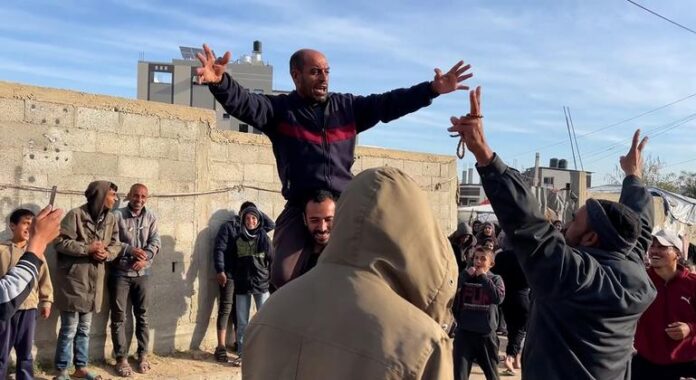
“We stand ready to support this implementation and scale up the delivery of sustained humanitarian relief to the countless Palestinians who continue to suffer,” the UN chief said in a social media post.
He added: “It is imperative that this ceasefire removes the significant security and political obstacles to delivering aid.”
According to news reports, three Israeli hostages held by Hamas were released and transferred by the Red Cross back to Israel, as the first phase of the ceasefire deal took effect. Reports suggest that later on Sunday, Israel is expected to release some 90 Palestinian prisoners.
Brokered last week by the Qatar, Egypt and the United States, the three-phase ceasefire comes 15 months after Hamas militants attacked Israel on 7 October 2023. Some 1,200 people were killed and 250 were taken as hostages, with around 100 still being held.
Israel launched the military campaign following the Hamas-led attacks on its territory.
More than 46,000 Palestinians have been killed since the conflict began, according to Gaza’s health authorities,
The Gaza strip has since been devastated and its two million inhabitants left in dire need of food and other necessities.
The ceasefire and the implementation of the first phase was hailed by the United Nations as a crucial step toward peace and toward alleviating the immense suffering endured by the Palestinian population.
In a separate statement, UN Emergency Relief Coordinator Tom Fletcher highlighted the entry of humanitarian aid into Gaza following the ceasefire.
“As the ceasefire entered into force today, humanitarian aid moved into Gaza as part of a prepared surge to increase our support to survivors. More than 630 trucks with humanitarian aid entered Gaza today, with at least 300 of them going to the north.”
He acknowledged the challenges faced in delivering aid, stressing the importance of safety for civilians and aid workers.
Mr. Fletcher, who heads up the UN Office for the Coordination of Humanitarian Affairs (OCHA) expressed gratitude towards UN teams and partners, emphasizing their courage and creativity in preparing for this moment.
“I urgently call on countries with influence over the parties to ensure that this lifesaving aid reaches those who need it most,” he said.
Shadi Jomaa Abu Sheha inside what’s left of his home in north of Nuseirat, Gaza.
What’s left of ‘home’
In the early morning hours after the ceasefire went into effect, many displaced Palestinians began gradually returning to see what is left of their homes.
Shadi Jumaa Abu Sheha returned to Nuseirat in central Gaza, only to find the dwelling he had built mostly with his own hands “is no longer a home, it is a ruin.”
He was accompanied by a UN News correspondent in Gaza as he assessed the extent of the damage, which had left some of the rooms in ruins, their interiors now open to the weather.
Still, Shadi was relieved that “the bloodshed has stopped”, telling our correspondent: “This is an indescribable feeling. Thank God we survived this war unharmed. But I cannot describe the extent of the destruction…I do not know what to say.”
Safe humanitarian access needed
For its part, the UN World Food Programme (WFP) acted swiftly, with convoys entering Gaza early on Sunday from Egypt and via Ashdod, Israel.
The ceasefire has allowed the agency to bring in urgently needed food supplies at an unprecedented scale, aiming to stave off starvation in the war-torn region, the agency said in a press release.
WFP Executive Director Cindy McCain emphasized the critical nature of this initiative, noting that the agency’s goal is to deliver at least 150 truckloads of food into Gaza daily.
“After 15 months of war, we need all border crossings to stay open and function efficiently, effectively and reliably. And we need humanitarian teams to be able to move freely and safely across Gaza to reach those in need.”
Health challenges ahead
Meanwhile, the World Health Organization (WHO) expressed its support for the ceasefire and highlighted the monumental health challenges that lie ahead.
The conflict has left a devastating toll: more than 46,600 people killed, over 110,000 injured, and a health system in disarray, the agency said in a press release.
WHO underscored the urgent need for billions in investment to restore the health infrastructure, calling for the unwavering commitment of donors and the international community.
The UN health agency and its partners plan to implement a 60-day plan focusing on trauma and emergency care, primary health care, child health, and other critical areas.
“WHO calls on all parties to uphold their commitment to fully implement the ceasefire agreement and to continue working towards a political solution to address the protracted crisis in the occupied Palestinian territory, which is essential for lasting peace.” the agency said.
Focus on women and girls
UN Women has also welcomed the ceasefire and hostage release agreement, expressing hope that all parties will honor their commitments to pave the way for lasting peace for women and girls in Palestine, Israel, and the region.
“The news of the ceasefire brings relief for the 1 million women and girls who have lived under continued bombardment, without safety in Gaza for the last 470 days,” the agency said in a statement.
The agency highlighted the urgent need for humanitarian relief and reaffirmed its commitment to working alongside women’s organizations and the families of Gaza to advocate for inclusive recovery efforts, rights, safety, and dignity.
While these efforts mark a significant step forward, the road to recovery is fraught with challenges, UN Women said, urging all parties to uphold the ceasefire and facilitate the safe and efficient delivery of aid.
Yemen: Statement by the Spokesperson on the latest Houthi arbitrary detentions of UN personnel in Yemen
Yemen: Statement by the Spokesperson on the latest Houthi arbitrary detentions of UN personnel in Yemen
