Monday, September 28, 2026
Home Blog Page 595

World News in Brief: Sudan famine latest, weekend attacks in Ukraine, Tanzania Marburg virus update

0
World News in Brief: Sudan famine latest, weekend attacks in Ukraine, Tanzania Marburg virus update

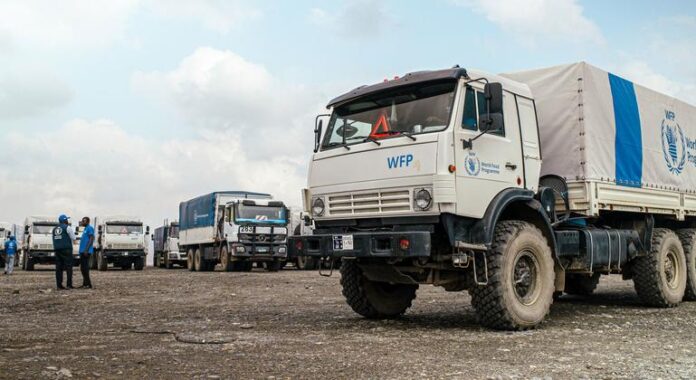
In an alert on Monday, the World Food Programme (WFP) said that the trucks will be the first from the UN agency to reach Wad Madani in over a year, since conflict spread there at the end of 2023.

But “they must arrive safely”, the WFP insisted.

Battlefield development

That comes after the Sudanese Armed Forces – the national army – reportedly reclaimed Wad Madani from the paramilitary Rapid Support Forces, who they’ve been battling for control of the country since April 2023.

The conflict has involved the use of heavy artillery, fighter jets and drones. 

It has killed at least 29,600 people and caused one of the world’s biggest displacement crises across the region, with around 11.5 million uprooted inside the country, 3.2 million refugees, and famine declared in parts of northeast Sudan.

The UN Food and Agriculture Organization (FAO) has also demanded urgent action from the international community to address the worsening famine. 

Wave of attacks on Ukrainian cities met with swift humanitarian response

The UN aid coordination office, OCHA, said on Monday that further civilian casualties were sustained in Ukraine over the weekend following attacks in the densely populated cities of Kyiv, Kryvyi Rih and Zaporizhzhia.

According to local authorities “the hostilities also disrupted basic services and damaged civilian infrastructure,” said UN Deputy Spokesperson Farhan Haq, at the regular daily briefing in New York. 

Dozens more were reportedly killed and injured in front-line areas in Donetsk, Kharkiv and Sumy regions.

Swift response

“Humanitarian workers swiftly responded wherever security permitted,” Mr. Haq added.  

Aid was provided to civilians who had come under attack in Kyiv, Kryvyi Rih and Zaporizhzhia. Humanitarians provided building materials to cover shattered windows, plus psychological and legal support to affected residents.  

Aid Coordinator for Ukraine, Matthias Schmale, on Friday allocated $70 million from the UN’s Ukraine Humanitarian Fund – which provides aid on the ground – to support the 2025 Needs and Response Plan. 

“The funds will aid newly displaced people, provide essential services in frontline areas, and strengthen local organizations, including those supporting women’s rights, people with disabilities, and marginalized communities,” Mr Haq said. 

Last week, two inter-agency convoys delivered essential aid to front-line areas including Pokrov in Dnipropetrovska and communities in Kherson. Both regions have been heavily impacted by the fighting.

Supplies included food, medicine, hygiene kits, blankets, and solar lamps for residents, many of whom are older or have disabilities. 

Marburg virus alert: WHO’s Tedros advises against travel restrictions

The head of the UN World Health Organization (WHO) has advised against travel restrictions linked to the Marburg virus outbreak in Tanzania.

WHO Director-General Tedros Adhanom Ghebreyesus said that “considering the low global risk and the strong capabilities of the Tanzanian Government”, the UN agency’s assessment was that there should not be restrictions on trade and travel to the East African nation.

The WHO chief met Tanzania’s President Samia Suluhu Hassan on Monday to assess the situation and support ongoing efforts. 

Confirmed case

Tedros’s comments came as Tanzania confirmed an outbreak of Marburg disease in northwestern Kagera region with one case confirmed. 

At least nine suspected cases have already been reported and eight people have died. 

Healthworkers were among those affected, and patients presented with similar symptoms including high fever, back pain, diarrhoea and vomiting with blood.

This is the second reported outbreak of the disease in Kagera – the first was almost two years ago, in March 2023, in which a total of nine cases and six deaths were reported. 

Previously, the WHO has said that animal carriers of the disease such as fruit bats remain in the area.

Tedros said that following the outbreak, the Tanzanian authorities had scaled up their response by enhancing case detection, setting up treatment centres and a mobile laboratory to test samples. National response teams have also been deployed.

To support Tanzania’s response, the WHO has released $3 million from its emergencies fund.  

Source link

His Majesty the King of the Netherlands visits Europol

0
His Majesty the King of the Netherlands visits Europol

His Majesty the King of the Netherlands visited Europol today, where he gained insight into the Agency’s efforts to support EU Member States in tackling serious and organised crime, and terrorism.Europol’s Executive Director Catherine De Bolle welcomed His Majesty to the organisation’s headquarters as Europol recently marked 25 years of fostering law enforcement cooperation across Europe and beyond. Becoming fully…

Source link

Human rights expert welcomes clemency for Indigenous activist Leonard Peltier

0
Human rights expert welcomes clemency for Indigenous activist Leonard Peltier

The Executive Grant of Clemency, signed on Sunday just hours before Mr. Biden left office, commutes Mr. Peltier’s life sentences to home confinement, allowing him to receive proper medical care and reconnect with his community, the Special Rapporteur said in a statement.

The Human Rights Council-appointed expert Albert Barume praised the decision, describing it as “an important gesture by the United States toward the country’s Indigenous Peoples”.

Decades of advocacy

Mr. Peltier is a member of the Chippewa and Lakota Nations, who was convicted of murder in 1977, in connection with the deaths of two FBI agents during a confrontation with Indigenous activists at Pine Ridge reservation. He received two life sentences following his trial after being extradited to the US from Canada in December 1976.

“Over the years, Mr. Peltier has maintained his innocence, and concerns have been raised about the fairness of his trial and about his legal representation,” the Special Rapporteur said.

His trial raised serious concerns about due process, with international human rights bodies, including the UN Working Group on Arbitrary Detention, calling for his release.

In its 2022 findings, the UN Working Group determined that Mr. Peltier’s detention constituted arbitrary imprisonment.

Previous UN Special Rapporteurs, including a 2012 report on Indigenous rights in the US, had called for clemency for Mr. Peltier, framing his case as emblematic of the systemic injustices faced by Native Americans.

“Mr. Peltier has also suffered from serious health conditions, which prison authorities have been unable to properly address,” Mr. Barume noted.

Step toward reconciliation

“Although this clemency cannot restore the decades of life he has lost, it provides an opportunity for him to receive proper medical care and reconnect with his People,” said the independent expert.

Mr. Barume underscored that while the clemency decision does not absolve Mr. Peltier’s conviction, it represents a critical acknowledgment of past wrongs.

“States have a duty to ensure due process for all defendants at every stage of criminal proceedings, including parole hearings, as required by international law”, he said.

The decision also aligns with broader calls for reconciliation with Indigenous Peoples in the US, including addressing historical injustices such as forced removals, cultural erasure and disproportionate incarceration rates.

Mr. Peltier’s early life reflects this history: forcibly removed from his family at age nine and placed in a government-run boarding school, he endured the systemic severance of Indigenous children from their culture.

His case has since become a symbol of the need for justice and reconciliation.

Looking ahead

While Mr. Peltier’s clemency has been celebrated by advocates, it also underscores the need for continued reforms to ensure fairness and equity in the US justice system.

The decision “highlights the importance of addressing systemic issues within the criminal justice system, ensuring that all individuals, regardless of their background, are afforded their fundamental rights”, Mr. Barume affirmed.

As Mr. Peltier transitions to home confinement, the Special Rapporteur called for the clemency decision to be a turning point in efforts to address historical and ongoing injustices.

Special Rapporteurs and other independent rights experts are not UN staff, receive no salary and are independent of any government or organization.

Source link

UN regrets US exit from global cooperation on health, climate change agreement

0
UN regrets US exit from global cooperation on health, climate change agreement

“The WHO regrets the announcement that the United States of America intends to withdraw from the Organization…We hope the United States will reconsider,” said WHO spokesperson Tarik Jasarevic, hours after the new President signed an executive order at the White House, bringing US involvement in the UN agency to an end in 12 months.

The US joined WHO in 1948 after a joint resolution was passed by both chambers of Congress. The resolution requires the country to provide one year’s notice to leave the organization.

President Trump took steps to withdraw from the WHO in 2020 during his first term – but the move was reversed by the Biden administration.

Responding to journalists’ questions in Geneva, Mr. Jasarevic insisted that WHO “plays a crucial role in protecting the health and security of the world’s people, including Americans, by addressing the root causes of disease, building stronger health systems, and detecting, preventing and responding to health emergencies, including disease outbreaks, often in dangerous places where others cannot go.”

Asked about the impact of the US withdrawal, Mr. Jasarevic pointed out that he saw the executive order “this morning like everyone else” and that further analysis will be needed. He confirmed that the US was WHO’s largest single donor, accounting for 18 per cent of the agency’s budget in 2023.

Also in Geneva, UN humanitarian affairs office (OCHA) spokesperson Jens Laerke highlighted the UN health agency’s importance, saying that “the world lives longer, healthier, perhaps a little bit happier because of WHO”.

“WHO is in places where others cannot go,” Mr. Laerke said, including Gaza, Yemen, Afghanistan and Sudan. “It is an indispensable part of the international humanitarian system,” he insisted.

Climate shock

From the UN World Meteorological Organization (WMO), spokesperson Clare Nullis reacted to President Trump’s vow to quit the universally adopted 2015 Paris Agreement – marking an immediate return to the policies of his first presidential term, which ended in January 2021.

The need for all countries to respect the accord was “pretty obvious”, she said, given that 2024 “was the hottest year on record”, at about 1.55°C above the pre-industrial era. “It is the defining challenge of our time,” she insisted.

In the wake of the recent devastating and deadly massive wildfires that ripped through Los Angeles, the WMO spokesperson also noted that the US had suffered the bulk of global economic losses from weather, climate and water-related hazards.

“It has sustained 403 weather and climate disasters since 1980 where overall damages/costs reached or exceeded $1 billion. The total cost of these 403 events exceeds $2.915 trillion, according to US figures,” Ms. Nullis said.

Her comments echoed those of the UN Spokesperson’s Office late on Monday which responded to journalists’ questions insisting that “the transformation envisaged in the Paris Agreement is already underway”, with a renewable “energy revolution” offering opportunities for jobs and prosperity.

“The Secretary-General remains confident that cities, states and businesses within the United States – along with other countries – will continue to demonstrate vision and leadership by working for the low-carbon, resilient economic growth that will create quality jobs and markets for 21st century prosperity,” the statement continued.

“It is crucial that the United States remains a leader on environmental issues,” it concluded. 

Source link

DR Congo emergency: Fears that regional capital Goma faces attack

0
DR Congo emergency: Fears that regional capital Goma faces attack

“We are deeply alarmed at the heightened risk of an attack by the M23 armed group on Goma, the capital of North Kivu, in the eastern Democratic Republic of Congo…Any such attack on Goma risks catastrophic impacts on hundreds of thousands of civilians, putting them at heightened exposure to human rights violations and abuses,” said Ravina Shamdasani, spokesperson for the UN human rights office, OHCHR.

“The High Commissioner has flagged many times that sexual violence is a key component – a very horrific component – of this conflict,” Ms. Shamdasani added. “Armed groups abduct, hold captive and subject women and girls to sexual slavery and many of them have been killed after being raped.”

Since the UN peacekeeping Mission, MONUSCO, withdrew from South Kivu in June 2024, peacekeepers have defended key positions in North Kivu, including Goma and Sake, where clashes between the M23, the Congolese Armed Forces and many other armed groups have continued.

Hundreds of thousands newly displaced

Some 400,000 people have been displaced in North and South Kivu since the beginning of this year alone, according to the UN refugee agency, UNHCR.

Highlighting the humanitarian crisis that continues to unfold largely unseen by the outside world, UNHCR spokesperson Matt Saltmarsh reported that “bombs have fallen” on camps for people uprooted by the violence in South and North Kivu.

These attacks include one on 20 January, when explosions at Kitalaga site in South Kivu killed two children. 

On 21 January, five makeshift shelters were destroyed in Nzuolo, near Goma, while on Wednesday, Bushagara site – also near Goma – was “heavily impacted, causing panic and new waves of forced displacement”, Mr. Saltmarsh told journalists in Geneva.

He noted that heavy bombardments from clashes involving the M23 rebels forced families to flee various displacement sites on the periphery of Goma and try to seek safety within Goma: “UNHCR staff remain on the ground in Goma, assisting the displaced civilians wherever they can and wherever they get access,” he said. 

“But as you can understand, the access at the moment is extremely challenging.”

Guterres warning

The development came as the UN Secretary-General on Thursday expressed alarm over a renewed offensive by M23 rebels in eastern DRC and the “devastating toll” on civilians.

In a statement issued by his Spokesperson, António Guterres noted the Rwandan-backed rebels’ reported seizure of Sake, in South Kivu, “which increases the threat” to the regional capital Goma – all of which is “heightening the threat of a regional war”. Rwanda denies any direct involvement with M23 fighters.

“The Secretary-General calls on the M23 to immediately cease its offensive, withdraw from all occupied areas and abide by the 31 July 2024 ceasefire agreement,” the UN chief’s statement continued.

Echoing the Secretary-General’s concerns, OHCHR spokesperson Ms. Shamdasani reiterated UN chief Volker Türk’s appeal “to all States with influence on the parties to impress on them the urgent need for an immediate cessation of hostilities”. 

M23 is well funded and “as the High Commissioner has said previously, any role played by Rwanda in supporting the M23 in North Kivu – and by any other country supporting armed groups active in the DRC – must end,” she insisted. “The people in the DRC are exhausted by violence, exhausted by conflict, exhausted by the horrors of their daily life. And this must not be allowed to worsen further.”

Stark options 

Asked to explain the dangers faced by those sheltering in camps, UNHCR’s Mr. Saltmarsh replied that their “options are stark and extremely limited…What you will receive in terms of aid is extremely limited – that depends very much on whether agencies like UNHCR and our partners in the UN and NGOs are able to access those sites. 

“If they are, we can bring in a minimum of assistance, otherwise, civilians will be in areas that are now occupied by the armed groups. We don’t have access to those areas, so it’s very difficult to for us to say what conditions are like there.”

South and North Kivu Provinces already host 4.6 million internally displaced people. UNHCR has warned that human rights violations, including looting, injuries, murders, kidnappings and arbitrary arrests of displaced people mistaken for rebels have escalated.

“Hospitals are nearing capacity with injured civilians,” Mr. Saltmarsh said. “Vulnerable women, children, and the elderly are living in overcrowded and precarious conditions with limited access to food, water, and essential services.”

Source link

Democratic Republic of the Congo: Statement by the High Representative on behalf of the EU on the latest escalation in eastern DRC

0
Democratic Republic of the Congo: Statement by the High Representative on behalf of the EU on the latest escalation in eastern DRC

The EU issued a statement expressing deep concern about the continued escalation of the conflict in eastern Democratic Republic of the Congo (DRC), aggravated by the renewed offensive of the M23 supported by the Rwandan Armed Forces.

Source link

Aid surging into Gaza ‘at scale’ but massive needs remain: OCHA, WHO

0
Aid surging into Gaza ‘at scale’ but massive needs remain: OCHA, WHO

On day three of the ceasefire which entered into force on Sunday 19 January, the UN aid coordination office, OCHA, welcomed the “surge” in lifesaving humanitarian assistance into the enclave, after 15 months of devastating Israeli bombardment.

Aid trucks began entering Gaza “a few minutes after the deal entered into force on Sunday,” said OCHA spokesperson Jens Laerke. “Up to now – these two first days of entry – there [have] been no reports of looting or attacks against aid workers.”

Hundreds of trucks

More than 900 aid trucks entered the Gaza Strip on Monday, as the truce held between Israel and Palestinian militants Hamas, according to the Israel authorities and the ceasefire’s guarantors, the US, Qatar and Egypt.

While the conflict raged, prompted by Hamas-led terror attacks on Israel on 7 October 2023, the aid lifeline to Gaza dwindled to as little as 50 trucks per day.

“At long last, aid at scale is entering,” said Mr. Laerke. “At long last, more hostages were released and can be reunited with their families and at long last, women and minors were freed from detention. It’s a tremendous hope, fragile but vital; this deal must hold.”

Addressing physical and mental scars

Immediate priorities for Gazans include “getting food in, opening bakeries, getting healthcare, restocking hospitals, repairing water networks, repairing shelter, family reunification,” the OCHA spokesperson told journalists in Geneva. “A lot of the things that we have done throughout, but nowhere near at the scale needed. And that is what we hope and work towards to be able to do now.”

UN humanitarians have long maintained that the entire population of Gaza – more than two million people – depends on such essentials. They include children, who account for about half of the Strip’s population, “with many surviving on just one meal a day”, OCHA said in an update.

“We have to – and we will – maximize delivery through this opening. Hunger is widespread, people are homeless; disease, injuries are rampant. Children are separated and there’s a cloud of deep psychological trauma hanging over Gaza that needs to be dealt with.”

Health emergency continues

Urgent health needs must also be addressed across Gaza where one in two hospitals are not functional, others are only partially functional and the majority of health facilities have sustained damage, according to the UN World Health Organization (WHO).

“The idea is as quickly as possible to try to provide health facilities to people of Gaza, focusing on emergency care, maternal and child health and other areas,” said WHO spokesperson Tarik Jasarevic.

He added: “We should not forget other areas and that’s 12,000 patients still need to be evacuated outside Gaza. We need to make sure that those people can go and receive medical care they need.

“We’ve been talking to 25,000 people [who] have sustained life changing injuries. These people need rehabilitation services that are not available right now.”

The head of communications for the UN agency that serves Palestine refugees, UNRWA told UN News in an interview on Tuesday they are committed to staying and delivering in Gaza. Listen below.

Source link

UN rights office raises alarm over escalating violence in occupied West Bank

0
UN rights office raises alarm over escalating violence in occupied West Bank

OHCHR spokesperson Thameen Al-Kheetan added that the Israeli military operation in and around the Jenin refugee camp had involved “disproportionate” use of force, including airstrikes and shootings that reportedly targeted unarmed residents.

“The deadly Israeli operations in recent days raise serious concerns about unnecessary or disproportionate use of force, including methods and means developed for war fighting, in violation of international human rights law, norms and standards applicable to law enforcement operations.”

OHCHR verified that at least 12 Palestinians – most reportedly unarmed – have been killed since Tuesday and a further 40 injured. Those injured include a doctor and two nurses, according to the Palestinian Red Crescent.

Obligation to protect civilians

Mr. Al-Kheetan reiterated that Israel, as the occupying power, has a responsibility under international law to protect civilians living under occupation.

He stressed the need for investigations into alleged unlawful killings, warning that a lack of accountability risks perpetuating violence.

“All killings in a law enforcement context must be thoroughly and independently investigated and those responsible for unlawful killings must be held to account,” he said.

“By persistently failing, over the years, to hold accountable members of its security forces responsible for unlawful killings, Israel is not only violating its obligations under international law, but risks encouraging the recurrence of such killings,” he warned.

Impact on communities

The ongoing violence has displaced over 3,000 families in Jenin, and essential services such as water and electricity have been severely disrupted for weeks.

The Israeli military has closed off major entrances to Palestinian cities, including Hebron, restricting movement, and paralyzing daily life. Thirteen new iron gates have reportedly been installed at other towns’ entrances across the West Bank.

Briefing the Security Council on Thursday, UN Emergency Relief Coordinator Tom Fletcher also warned of record-high levels of casualties, displacement and access restrictions, since October 2023.

Settler violence and settlement expansion

Beyond military operations, there has been an uptick in settler attacks on Palestinian villages and the stoning of vehicles, in which several Palestinians have been injured.

Houses and vehicles have been set on fire, according to the OHCHR spokesperson.

He also voiced concern over some Israeli officials’ repeated comments about plans for further settlement expansion – in breach of international law.

“We call for an immediate end to the violence in the West Bank. We also call on all parties, including third States with influence, to do everything in their power to ensure peace is achieved in the region,” Mr. Al-Kheetan stated.

He reiterated High Commissioner Volker Türk’s call for Israel to halt settlement expansion and evacuate all settlements as required by international law.

“We call on all parties, including third States with influence, to do everything in their power to ensure peace is achieved in the region,” Mr. Al-Kheetan urged.

Relief efforts continue in Gaza

Meanwhile, in Gaza, the UN alongside humanitarian partners continues to support communities in need across the Gaza Strip.

On Thursday, 339 trucks carrying vital aid entered the enclave, according to aid coordination office, OCHA, with assistance focused on food, water and hygiene supplies.

Since the ceasefire took effect six days ago, more than 200,000 food parcels have been distributed to 130 sites, with aid reaching families in areas like Jabalya, in North Gaza governorate, that had been besieged for months.

The UN Children’s Fund (UNICEF) has also provided water trucking and hygiene kits to 5,000 people in Jabalya.

Gaza humanitarian update from Roos Bollen, UNICEF Communication Specialist, in Al Mawasi:

Returns to North Gaza

Humanitarian partners further reported that hundreds of displaced residents sheltering in Gaza City have begun returning to North Gaza governorate, while others in Deir al Balah and Khan Younis remain in makeshift displacement sites, with plans to move north.

A rapid assessment conducted by the UN and partners at 13 sites in central and southern Gaza found that while displaced families had received some assistance – including food, water, and sanitation services – they still face critical shortages of drinking water, hygiene kits, blankets and clothing.

Starting next week, humanitarian partners expect significant population movements between southern and northern Gaza and are preparing to address the urgent needs of displaced families try to return to mostly shattered homes.  

OCHA emphasised that while aid efforts are expanding, more resources are urgently needed.

Situation in southern Lebanon

In the wider Middle East region, the United Nations urged Israel and Lebanon to fulfil their commitments to the cessation of hostilities’ agreement of last November, amid reports that Israeli troops will remain in Lebanon past Sunday.

“[We urge both parties to] avoid further action that could raise tensions and further delay the return of residents on both sides to their towns and villages,” UN Deputy Spokesperson Farhan Haq told journalists at the regular press briefing in New York.

As per the agreement, Israel is required to withdraw from southern Lebanon once Hezbollah has withdrawn its armed presence there, within 60 days.

“We continue to call for the full implementation of Security Council resolution 1701 [which ended the 2006 war between Israel and Hezbollah] as a comprehensive path towards longer term peace, security, and stability on both sides of the Blue Line,” Mr. Haq said.

He added that the UN, including the UN Special Coordinator for Lebanon and the UN Interim Force in Lebanon (UNIFIL), remains “absolutely committed” to supporting the parties to uphold the cessation of hostilities and their obligations under resolution 1701.

Source link

Forward look: 27 January – 9 February 2025

0
Democratic Republic of the Congo: Statement by the High Representative on behalf of the EU on the latest escalation in eastern DRC

Overview of the main subjects to be discussed at meetings of the Council of the EU over the next two weeks and upcoming media events.

Source link

World News in Brief: Hostilities in northeast Syria, response plan in Mali, Uyghur deportations in Thailand

0
World News in Brief: Hostilities in northeast Syria, response plan in Mali, Uyghur deportations in Thailand

Between 16 and 18 January, at least three civilians were killed and 14 injured in shelling and other attacks impacting Manbij, Ain al-Arab and other villages near the Tishreen Dam in the eastern Aleppo region.

UN partners also reported that shops in the main market were damaged when an improvised bomb detonated inside a car in Manbij.

These incidents have forced people from their homes and obstructed aid access, OCHA reported after sending a mission to the city on Monday.

The mission visited the Manbij National Hospital and met with local officials, the Syrian Arab Red Crescent and local non-governmental organizations to identify and address the issues at stake, according to Farhan Haq, the Deputy Spokesperson for the UN Secretary-General.

OCHA and the UN Children’s Fund (UNICEF) also completed a monitoring mission on Monday to the Ain Al Bayda water station in eastern Aleppo.

Deadly remains

UN partners have recorded 69 explosive ordnance incidents over the first two weeks of January due to contamination, in which 45 people were killed and 60 others wounded.

“Since 26 November, a total of 134 new areas with explosive remnants of war have been identified by partners across five governorates – Idlib, Aleppo, Hama, Deir-ez-Zor and Latakia,” said Mr. Haq.

As people continue to move and return to their communities, UN partners are calling for increased and flexible funding for mine action, including risk education and emergency clearance.                   

Meanwhile, with water and sanitation services suspended in many displacement camps due to funding gaps affecting more than 635,000 people, OCHA asked for increased funding to ensure the continuation of its services.

$770 million response plan launched in Mali

On Tuesday, the UN in collaboration with Mali’s transitional authorities, launched a $770 million humanitarian needs and response plan in the capital Bamako to support millions of people across the country this year.

© UNFPA Mali/Amadou Maiga

Two girls at the Barigondaga displacement site in Mali.

The plan aims to address the urgent needs of 4.7 million people affected by conflict, displacement, health emergencies and climate shocks, according to the Deputy Spokesperson.

Mostly women and children

Nearly 80 per cent of the people to be reached with aid are women and children who are in need of food, water, healthcare and protection support.

Last year, UN partners mobilised nearly 40 per cent of what was required – just over $270 million – enabling lifesaving assistance and protection to reach 1.8 million people.

The Acting UN Humanitarian Coordinator on the ground, Khassim Diagne, said it is urgent that the entire humanitarian community and donors renew their commitment to addressing essential needs in the region.

UN rights experts urge Thailand to halt Uyghur deportations

Independent UN human rights experts have called on Thailand to immediately stop the deportation of 48 Uyghurs to China, citing serious concerns over potential torture and inhumane treatment.

“The treatment of the Uyghur minority in China is well-documented,” the Human Rights Council-appointed experts stated. “We are concerned they are at risk of suffering irreparable harm.”

The experts emphasised the international prohibition on refoulement, which forbids returning individuals to countries where they face real risks of torture or cruel treatment. They urged Thailand to provide urgent medical care to the mostly Muslim Uyghurs being held.

The 48 individuals are part of a larger group of around 350 Uyghurs detained in Thailand since 2014 after crossing the border irregularly. They have reportedly been held incommunicado for over a decade, without access to legal representation, family members or UN officials.

No return

“It is our view that these persons should not be returned to China,” the experts said. “They must be provided with access to asylum procedures and humanitarian assistance, including medical and psycho-social support.”

The experts highlighted that 23 of the 48 Uyghurs held suffer from severe health conditions, including diabetes, kidney dysfunction and paralysis. “It is essential they receive appropriate medical care,” the experts added.

Thai authorities were reminded of their obligation to treat all detainees humanely and with dignity, ensuring access to legal representation, medical assistance and the ability to communicate with lawyers and family members.

The plea underscores the urgent need for Thailand to uphold international human rights standards and protect the Uyghur detainees from potential harm.

Special Rapporteurs and other experts are not UN staff, receive no salary for their work and are fully independent of any government or organization. 

Source link