Monday, September 28, 2026
Home Blog Page 596

We celebrate the International Day of Education

0
We celebrate the International Day of Education

On this International Day of Education, we celebrate teachers who help empower young people to thrive in a rapidly changing world. This year’s theme, “AI and education: Preserving human agency in a world of automation”, marks the importance of education in navigating new technological developments.

Source link

Q&A session – Teacher Academies call 2025: Presentations are now available!

0

On 16 January 2025, the European Education and Culture Executive Agency (EACEA) organised an online Q&A session to inform participants about the The Teacher Academies 2025 call for proposals under Erasmus+ Key Action 2.

The presentations of the Q&A session are now available on the event page.

Source link

World News in Brief: Gaza aid surge, El Fasher update, aid to Somalia, justice in Belarus

0
World News in Brief: Gaza aid surge, El Fasher update, aid to Somalia, justice in Belarus

Aid coordination office OCHA said the UN and our partners are dispatching supplies to designated emergency shelters and distribution centres across the Strip.

“We are distributing food parcels and flour and working to re-open bakeries,” said UN Deputy Spokesperson Farhan Haq.

More than 50,000 food parcels

On Monday and Tuesday, colleagues from the UN Palestine refugee agency, UNRWA, distributed 118 trucks of more than 53,000 food parcels to communities in Khan Younis and to its shelters in Deir Al-Balah.

Reproductive health agency UNFPA said 20 trucks carrying critical supplies, including for safe births, emergency obstetric care, postpartum kits, contraceptives and winter items, were offloaded in Deir Al-Balah on Tuesday.

Twenty more trucks carrying UNFPA assistance are entering northern Gaza on Wednesday.

The UN Office for Project Services (UNOPS) is distributing fuel to ensure critical services such as healthcare and water pumping and desalination can run on back-up generators in the absence of electricity.

The UN and its partners are also supporting infrastructure repairs, including to water wells and desalination plants.

“Our humanitarian partners are carrying out rapid assessments in newly accessible areas to identify people’s most urgent needs, including water, hygiene, sanitation and healthcare,” Mr. Haq added.

They are also stepping up disease surveillance efforts, setting up trauma stabilisation points for emergency care and mobilising specialised health teams.

Sudan: Civilians in peril ahead of ‘likely imminent attack’ by RSF militia

The UN rights office, OHCHR, expressed deep concern on Wednesday over a likely offensive against the Darfuri city of El Fasher, in Sudan, which has been besieged for months by the so-called Rapid Support Forces (RSF) which are battling government troops for control of the country.

OHCHR spokesperson Seif Magango said the RSF had issued a statement on Monday with an ultimatum to the national army and affiliates to leave the city by Wednesday afternoon. Government forces were defiant in face of the order.

“We renew our call on both parties to de-escalate tensions around the city and to take urgent steps to ensure its civilian population is protected, consistent with their obligations under international law,” said Mr. Magango.

“The people of El Fasher have suffered so much already from many months of senseless violence and brutal violations and abuses, particularly in the course of the prolonged siege of their city. This must stop.”

Drone attacks

Aid coordination office OCHA also voiced deep concern on Wednesday over a series of reported drone attacks on civilians and critical civilian infrastructure in the northern, eastern and central areas of Sudan.

An attack Wednesday reportedly targeted the um Dabakir power station around Kosti, south of the capital, Khartoum. This follows another reported strike on a power station in Northern state earlier this week.

OCHA said that major cuts to water and power risk depriving people of access to critical health services and safe water supplies. 

Parties to the fighting, under international law, have a clear obligation not to attack objects indispensable to the survival of the civilian population.

Somalia: Aid partners seek $1.42 billion to help 4.6 million people

A joint appeal was launched on Wednesday for $1.4 billion by the UN, aid partners and the country’s authorities to help millions who need lifesaving humanitarian support and protection.

“Recurrent shocks, food insecurity and malnutrition remain widespread across Somalia,” warned George Conway, the top UN aid official there.

In a statement in support of the aid appeal to help 4.6 million people of the nearly six million in need, Mr. Conway said that this year’s humanitarian needs and response plan will provide lifesaving assistance, particularly to vulnerable groups such as women, children and the elderly.

The UN official explained that the situation in Somalia improved slightly in 2024 compared to previous years when “widespread conflict, devastating droughts and flooding” were the norm.

The improvements last year were the result of investments in early warning systems, community preparedness and improved cooperation between humanitarians and the authorities, Mr. Conway explained.

UN rights experts alarmed by Belarus trials in absentia

A group of independent UN human rights experts on Wednesday raised the alarm over Belarus’s increasing use of in absentia trials, which lack basic fair trial guarantees.

These trials can lead to severe penalties, including lengthy prison sentences, property confiscation and even the death penalty.

“We have received numerous reports of individuals prosecuted in absentia in Belarus who learn of their prosecution by chance, are unaware of the charges and grounds for their conviction and are completely deprived of a legal defence,” the Human Rights Council-appointed experts stated.

They highlighted that some individuals have unsuccessfully tried to participate remotely or obtain copies of the verdicts.

Belarusian legislation on in absentia trials disregards fair trial guarantees provided by the International Covenant on Civil and Political Rights, which Belarus has ratified. The experts urged the authorities to honour their international obligations.

Civil society reports indicate a dramatic rise in such trials against Belarusians abroad, with 110 cases in 2024 compared to 18 in 2023.

Punishment for dissent

Since the disputed 2020 presidential elections, many Belarusians have fled due to government repression.

“Nevertheless, the Belarusian authorities continue to target these individuals, even in exile,” the experts noted, referencing a 2023 decree that restricts access to identity and travel documents for Belarusians abroad.

Over 100 people, including political opposition members, civil society activists and human rights defenders, have been convicted in absentia since 2022.

Those prosecuted are not notified of proceedings, cannot choose their defence lawyers and cannot participate remotely. Judgements are not public and only brief verdict information is accessible online.

“Convictions in absentia inevitably lead to violations of various human rights,” the experts warned, citing rights to fair trials, freedom of expression and adequate living standards. Sentences include long prison terms, heavy fines and potentially the death penalty.

Special Rapporteurs and other independent rights experts are not UN staff, receive no salary and are independent of any government or organization.

Source link

Global education must integrate AI, centred on humanity

0
Global education must integrate AI, centred on humanity

His message highlighted the dual nature of technological advances such as Artificial Intelligence (AI), which offer immense potential – but also pose considerable risks.

“Education is an essential building block for every person to reach their full potential, and for societies and economies to grow and flourish”, Mr. Guterres said.

AI promise and risks

The UN chief stressed that AI and other tech innovations can significantly aid students and teachers by providing wider access to information and advanced learning tools.

“But the tremendous rewards are matched by some daunting risks. As AI-driven systems become more powerful, human intention and machine-driven impacts can easily misalign”, he added.

This year, the UN education and culture agency, UNESCO, is dedicating the Day to the opportunities and challenges of AI. 

Director-General Audrey Azoulay called for more investment in training both teachers and students so it can be used responsibly.

“AI offers major opportunities, provided that its deployment in schools is guided by clear ethical principles. To reach its full potential, this technology must complement the human and social dimensions of learning, rather than replace them.”, Mr. Azoulay said.

Human rights at the heart of AI

Stressing that this year’s day reminds us that unlocking the AI’s potential “depends on keeping human agency – and human rights – at the heart of this rapidly evolving technology”, the UN Secretary-General called for guarantees that all users have the right tools and knowledge to “use this technology smartly, safely and ethically”.

UNESCO’s Competency Frameworks to support learners and teachers as they incorporate AI into their learning, and the recently adopted Global Digital Compact, are expected to help ensure humanity retains control over the development and governance of AI.

Concluding his message, Mr. Guterres called for a commitment to “keeping humanity at the centre of education systems, everywhere”.

Divisions over AI

As AI becomes more integrated into education, countries remain divided on its use. According to UNESCO’s latest data, in high-income nations, over two-thirds of secondary school students are already leveraging generative AI tools to support their schoolwork.

However, a significant challenge remains with education professionals still lacking clear guidelines.

A UNESCO survey conducted in May 2023, covering 450 educational institutions, revealed that only 10 per cent of schools and universities have an official framework for AI use.

Simultaneously, an increasing number of countries are imposing restrictions on new technologies in the classroom. New data from UNESCO indicates that nearly 40 per cent of nations now have laws or policies banning mobile phones in schools, a notable rise from 24 per cent in July 2023.

For more insights, listen to the UN Special Rapporteur on the Right to Education, Farida Shaheed, who recently discussed the role of AI in schools and the challenges it brings in an interview with UN News.

Access to education

The International Day reminds us that access to high-quality education is a human right that not only greatly benefits individuals but also uplifts entire communities.

Millions of children, however, remain out of school due to a variety of factors including gender, location, social background or conflict.

Despite decades of educational progress and international commitments, according to UNESCO’s latest data, 250 million children and youth remain out of school worldwide.

Safe and inclusive

In a recent study, UNESCO reported that almost one in three learners has been physically attacked at least once during the school year and one in ten experiences cyberbullying.

With too many children across the world experiencing violence in and around schools, the impacts can be devastating – affecting the well-being, education outcomes and quality of life of students.

Watch youngsters here explain what they need to make schools safer.

Source link

‘We must be there for them now,’ says UN relief chief, highlighting plight of Gaza’s children

0
‘We must be there for them now,’ says UN relief chief, highlighting plight of Gaza’s children

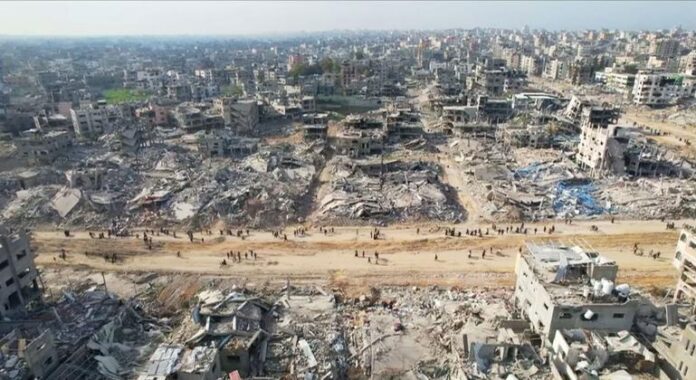
“Today marks one of the rare times we are able to highlight positive developments, albeit amid catastrophic humanitarian needs in Gaza,” Mr. Fletcher began.

He noted that the recent ceasefire has provided a much-needed reprieve from relentless hostilities, allowing for a surge in life-saving humanitarian aid.

Mr. Fletcher expressed gratitude to the mediators – Egypt, Qatar, and the United States – for their efforts in upholding the ceasefire. “We can save more lives if all parties continue to honour the deal,” he said.

Starved and frozen to death

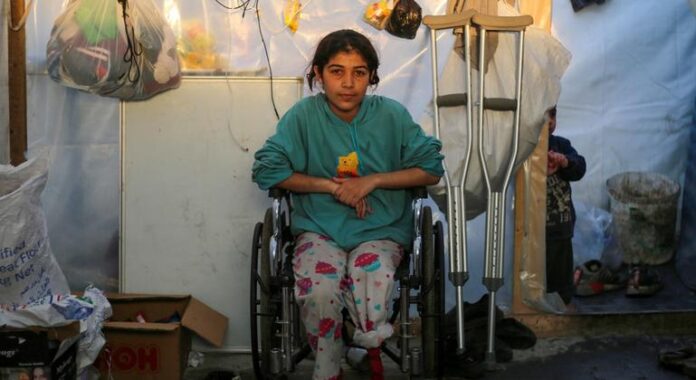
However, Mr. Fletcher did not shy away from detailing the harrowing experiences of Palestinian children over the past 15 months. “Children have been killed, starved, and frozen to death.

“They have been maimed, orphaned, or separated from their family,” he stated, adding that over 17,000 children are currently without their families in Gaza.

The situation for pregnant women and new mothers is equally dire, with an estimated 150,000 in desperate need of health services. “Some children died before their first breath – perishing with their mothers in childbirth,” Mr. Fletcher lamented.

Education has also been severely impacted, with many children losing their schools and struggling to access necessary care for chronic illnesses. “Many have faced sexual violence,” Mr. Fletcher revealed, highlighting the additional indignity faced by girls who lack access to menstrual care.

A generation traumatised

According to UNICEF, one million children in Gaza are in need of mental health and psycho-social support for depression, anxiety, and suicidal thoughts. “A generation has been traumatised,” Mr. Fletcher declared.

Despite these challenges, the ceasefire has allowed humanitarian organizations to step up their response. “Safe, unobstructed humanitarian access, alongside the absence of hostilities and the almost complete cessation of criminal looting, have significantly improved our ability to operate,” Mr. Fletcher reported.

Tom Fletcher (on screen), Under-Secretary-General for Humanitarian Affairs and Emergency Relief Coordinator, briefs members of the UN Security Council on the situation in the Middle East, including the Palestinian question.

The UN and partners have increased the flow of supplies, scaled up storage capacity, and repaired critical infrastructure. “We are getting supplies to designated emergency shelters and distribution centres across the Gaza Strip,” Mr. Fletcher said.

Efforts include delivering food parcels, reopening bakeries, and distributing fuel to ensure essential services can run on back-up generators.

Mr. Fletcher emphasized the collective effort required to sustain these operations. “All of Gaza – more than 2 million people – depends on our humanitarian support,” he stressed, calling for regular replenishment of aid stocks by Member States and the private sector.

West Bank fighting, settler attacks

Turning to the West Bank, Mr. Fletcher highlighted the record-high levels of casualties, displacement, and access restrictions since October 2023.

“Israeli settlers have attacked Palestinian villages, setting homes and properties on fire,” he reported, noting the increased movement restrictions impeding access to basic services.

The situation in Jenin is particularly concerning, with recent Israeli military operations causing further destruction and displacement. “This follows the weeks-long operation by the Palestinian Authority, which triggered the displacement of some 2,000 families,” Mr. Fletcher added.

Three asks

In his closing remarks, Mr. Fletcher made three urgent appeals to the Security Council: to ensure the ceasefire is maintained, to uphold international law across the Occupied Palestinian Territory, and to secure funding for humanitarian operations.

“Our 2025 Flash Appeal requires $4.07 billion to meet the needs of three million people in Gaza and the West Bank,” he stated, emphasizing that nearly 90 per cent of the funds are needed for Gaza.

“The children of Gaza are not collateral damage. They are as deserving as children everywhere of security, education, hope,” Mr. Fletcher concluded. “We must be there for them now.”

Source link

Afghanistan: ICC seeks arrest warrants for Taliban leaders over gender-based persecution

0
Afghanistan: ICC seeks arrest warrants for Taliban leaders over gender-based persecution

On Thursday, ICC Prosecutor Karim Khan applied for arrest warrants for two senior Taliban officials: Supreme Leader Haibatullah Akhundzada and Supreme Court Chief Justice Abdul Hakim Haqqani.

They are accused of crimes against humanity on the grounds of gender-based persecution under the Rome Statute of the court, which sets out the duty of every State signatory to exercise its criminal jurisdiction over those responsible for international crimes.

“These applications recognise that Afghan women and girls as well as the LGBTQI+ community are facing an unprecedented, unconscionable and ongoing persecution by the Taliban,” Mr. Khan said in a statement.

Since reclaiming power in Afghanistan in 2021, the Taliban have implemented a series of oppressive measures that have systematically stripped women of their rights, including barring them from employment, public spaces and education beyond the age of 12.

The ICC Prosecutor emphasised that these acts constitute severe deprivations of fundamental rights, including physical autonomy, freedom of expression and access to education – rights protected under international law.

Landmark decision against impunity

This marks the first time the ICC has issued arrest warrant applications concerning Afghan.

Mr. Khan said the filings are supported by diverse evidence, including expert testimony, forensic reports and numerous decrees issued by the de facto authorities.

The ICC’s Afghanistan team, under the supervision of Deputy Prosecutor Nazhat Shameem Khan and Special Adviser on Gender and Discriminatory Crimes Lisa Davis, has played a critical role in investigating these allegations, the prosecutor continued.

These severe deprivations of fundamental rights were committed in connection with other Rome Statute crimes, Mr. Khan explained.

“Perceived resistance or opposition to the Taliban was, and is, brutally repressed through the commission of crimes including murder, imprisonment, torture, rape and other forms of sexual violence, enforced disappearance, and other inhumane acts,” he said.

He underscored that the Taliban’s interpretation of Sharia – the Islamic legal system derived from the Quran – cannot be used to justify such violations of fundamental human rights.

Victims’ resilience

“In making these applications, I wish to acknowledge the remarkable courage and resilience of Afghan victims and witnesses who cooperated with my Office’s investigations,” Mr. Khan noted.

“We remain unwavering in our commitment to ensure that they are not forgotten, and to demonstrate through our work, through the effective and impartial application of international law,” he affirmed, underscoring that “all lives have equal value.”

The Prosecutor also expressed gratitude to Afghan civil society and international partners for their support.

Next steps

The ICC’s Pre-Trial Chamber will now determine whether these applications for arrest warrants establish reasonable grounds to believe that the named individuals committed the alleged crimes.

“If the judges issue the warrants, my Office will work closely with the Registrar in all efforts to arrest the individuals,” said Mr. Khan, also announcing that further applications against other senior Taliban leaders are forthcoming.

“Afghan victims and survivors have suffered injustice for too long,” he stressed. 

Source link

‘Racial justice demands collective action’, says UN rights chief, ushering in new decade for African diaspora

0
‘Racial justice demands collective action’, says UN rights chief, ushering in new decade for African diaspora

The new decade of action starting in January, will build on the progress of the past 10 years to advance the human rights of the diaspora worldwide.

“Racial justice demands collective action,” Mr. Türk said.

“To secure the full rights and freedoms of people of African descent, States and all of us must effectively confront the legacies of enslavement and colonialism, dismantle systemic racism and deliver reparatory justice. We need bold action to deliver real change,” the High Commissioner added.

As coordinator for the International Decade, he said another important objective is the elaboration and adoption of a draft UN declaration on the respect, protection and fulfilment of the human rights of people of African descent.

Countries change course

During the first ten years of action – despite persistent challenges – more than 30 countries changed their laws and policies to tackle racial discrimination and address specific issues faced by people of African descent – in some cases for the first time.

This included the creation of the Permanent Forum on People of African Descent, as well as International Days to celebrate the contributions of the diaspora, including women and girls.

Strong leadership, political will and increased financial and human resources are crucial to deliver on the ultimate goals of recognition, justice and development for people of African descent.

It is also essential to ensure their meaningful participation in policies and decisions affecting Africans’ lives.

The UN rights office, OHCHR, will continue working to foster concrete and meaningful action, including support for the High Commissioner’s Agenda towards transformative change for racial justice and equality, as well as the eight UN human rights anti-racism mechanisms.

Source link

Europol-supported action leads to arrest of 7 human traffickers

0
Europol-supported action leads to arrest of 7 human traffickers

A violent human trafficking ring in Germany and Hungary has been halted by authorities, with the support of Europol. The suspects lured poor women from Hungary by seducing them with the false promise of good work opportunities abroad before taking them to Germany and forcing them into prostitution.

Source link

91 new EU-funded projects to deliver innovative research on sustainable food, bioeconomy, natural resources, agriculture, and environment 

0
91 new EU-funded projects to deliver innovative research on sustainable food, bioeconomy, natural resources, agriculture, and environment 

The 91 new projects are funded through the EU Horizon Europe framework programme for research and innovation, under Cluster 6 “Food, bioeconomy, natural resources, agriculture and environment”. They will be working on delivering the commitments outlined in the EU Green Deal. Namely, to help curb environmental degradation, reverse biodiversity decline, better manage natural resources whilst ensuring food and water security.    

The projects have signed their Grant Agreements with the European Commission. Some of them have already begun their research while others will commence shortly.

What will the selected projects do?   

Biodiversity and ecosystems services   

Projects are expected to help manage the protected area networks and improve species and habitats’ status with a special focus on pollinators. Also, projects will work on integrating biodiversity, ecosystem services and natural capital into public and business decision-making. They will help advance transformative change to tackle societal challenges by using nature-based solutions.  

Other projects are expected to improve practices in agriculture, forestry, fisheries and aquaculture to help biodiversity. Projects will use advanced digital technologies and engage society to better connect biodiversity research at EU and global levels.   

See projects funded under this call   

Fair, healthy and environment-friendly food systems from primary production to consumption   

Projects are expected to contribute to preventing and reducing food waste, develop new healthy and sustainable food products and processes, and tackle food fraud. Projects will develop smart tools for healthy and sustainable food provision and analyse the impact of alternative protein sources.  

Several projects will use citizens’ science to foster the transition to sustainable food systems. In addition, projects will address food security, climate change adaptation and fair-trade food systems in Africa.   

See projects funded under this call   

Circular economy and bioeconomy sectors    

Projects should boost the transition to a circular economy through innovative solutions and sustainable practices in EU regions and cities and in different sectors – including tourism, furniture and textiles.  

Other funded projects will be working on solutions for programmed biodegradation of bio-based materials and products. Several projects will explore organisms capable of thriving in extreme environments to source novel enzymes, drugs, and chemicals for industrial application.  

See projects funded under this call   

Clean environment and zero pollution    

Projects are expected to help remove pollution caused by human activities from fresh and marine waters, soils, and air. Some EU-funded projects will analyse the environmental impacts of food systems and develop techniques to recover and recycle fertilising chemicals to deliver alternative products with reduced environmental impact.  

See projects funded under this call    

Land, oceans and water for climate action   

Projects funded under this call will explore the socio-economic and environmental aspects of agriculture on peatlands and work on improving irrigation practices and technologies in agriculture. Also, projects will develop ocean models to analyse the climate impact in different regions.  

Other projects are expected to contribute to the climate-smart use of wood in the construction sector to support the New European Bauhaus. In addition, projects should contribute to the EU-China international cooperation to improve biodiversity monitoring infrastructures and improve synergies between mitigation, adaptation, and conservation.   

See projects funded under this call   

Resilient, inclusive, healthy, and green rural, coastal and urban communities    

Projects funded under this call should boost participation and empower local communities of the Arctic in environmental decision-making. The projects will also analyse the impact of the COVID 19 pandemic on rural communities to better understand the behavioural drivers behind people’s lifestyle choices.  

Some of the EU-funded projects will leverage the New European Bauhaus values to reconnect and engage citizens with nature and sustainable food for their well-being and for improved biodiversity.  

See projects funded under this call   

Innovative governance, environmental observations and digital solutions in support of the Green Deal   

The projects should develop EU advisory and thematic networks on forestry, biodiversity, organic farming, and sustainable livestock systems. They will analyse the role of media and marketing in fostering healthy and sustainable consumption practices. Other projects will provide support to the European Partnership for a climate-neutral, sustainable and productive Blue Economy. In addition, they are expected to deliver innovative applications to support the European Green Deal, building on meteorological satellite data.  

See projects funded under this call   

Number of projects per call for proposals 

Horizon Europe Cluster 6 “Food, bioeconomy, natural resources, agriculture and environment” – 2024 calls    Number of funded projects  

EU grant amount  

(in €)  

Biodiversity and ecosystem services    14   76.542.281,25  
Fair, healthy and environmentally friendly food systems, from primary production to consumption    21   93418470,8  
Circular economy and bioeconomy sectors    17   70.437.447,13  
Clean environment and zero pollution    6   37.653.372,26  
Land, ocean and water for climate action    12   74.497.327,95  
Resilient, inclusive, healthy, and green rural, coastal and urban communities    4   15.494.258,81  
Innovative governance, environmental observations, and digital solutions in support of the Green Deal    17   132.938.731,85  
Total    91   500.981.890,05  

How were the projects selected?   

All projects were selected in seven competitive calls for proposals, which opened on 17 October 2023. In total, 733 proposals were submitted by the calls’ deadline in February 2024.   

The selected projects received the highest marks in a peer evaluation run by the European Research Executive Agency with the help of independent experts.   

Further information   

For updates on these projects — as well as another innovative research — follow REA on X and LinkedIn and subscribe to the Horizon Europe’s Cluster 6: ‘Food, bioeconomy, natural resources, agriculture and environment’ newsletter for updates straight into your inbox!   


Source link

LIFE is looking rosy for the pink waters of Natura 2000 site Atanasovsko lake

0
LIFE is looking rosy for the pink waters of Natura 2000 site Atanasovsko lake

From the latest must-have kitchen ingredients to up-market facial scrubs, Bulgaria’s Lake Atanasovsko has long been prized by trend-setters in search of the latest sustainable consumer products. 

Separated from the Black Sea by a narrow strip of land, the famous complex of pink lagoons and salt marshes also attracts thousands of health-conscious visitors who bathe in health-giving pools of natural lye and black mud.  

But it is the lurid pink waters which make Lake Atanasovsko a mecca for nature-lovers, photographers and artists. The lagoon gets its colour from algae which produce red carotenoids, and is home to more than 300 bird species — including the rare Great Bittern — making it one of the most important Natura 2000 sites in Europe (7200 ha). The lake also lies on the Via Pontica migration route used by thousands of pelicans, eagles, harriers, storks and other species on their way to Africa and back. 

Covering more than 1 400  ha but just 30 cm deep, the lagoons are highly saline. For more than a century, locals have created salt pans producing salt using traditional methods, that not only is environmentally friendly, but creates suitable conditions for nesting of high number of bird species. Thanks to the Lagoon of LIFE project, co-funded by the EU LIFE programme, Atanasovsko Lake faces a rosier future. 

Among the impressive results posted by Lagoon for LIFE when it closed in 2024 were: 3 large earth dykes totalling 5 800 m repaired; water and oxygen levels, pH balance, pollution control and salinity all improved; 220 ha of coastal lagoon and 700 ha of the lake restored; nesting sites created on 7 ha; 17 640 m of dykes restored and 14 330 m of saltwater channels cleaned; 0.3 ha of eelgrass restored; 13 ha of wetlands created; 50 000 to 60 000 m3 of sediment dredged; 0.1 ha of moisture-loving trees planted; and the first sighting of a Crane (Grus grus) for more than six years. 

‘The secret of doing business in a protected area like Lake Atanasovsko is to maintain a balance between the use of natural resources and the conservation of nature,’ says Diyana Kostovska from the Bulgarian Biodiversity Foundation, which coordinated the project. 

‘Doing business better’ was key. Together with its business partners, the project created a range of sustainable ‘products with a cause’ including sea salt chocolate, melted and gourmet sea salt, green salt made from plants, traditional Bulgarian spices, jams and candles — as well as prints and original works by local artists. The lake was the location for the surreal BIO Sphere art project, and for the award-winning documentary film ‘Salty People’ and even has its own annual festival. ‘There is no other natural area like this in Bulgaria that celebrates its own birthday!’ laughs Diyana.  

It’s this delicate relationship between humans and nature — the so-called ‘man-lake symbiosis’ — which enables wildlife to thrive. Just before the project closed in September 2024, Greater Flamingo chicks hatched on the lake for the first time. 

‘The flamingo only nests in safe areas, free from predators and human disturbance,’ explains project conservation officer Spas Uzunov. ‘That they were able to raise chicks here for the first time is a great achievement. The number of flamingoes has risen 30-fold since the project started in 2018.’ 

Lagoon of LIFE is the latest EU-funded LIFE project aiming to restore and conserve Lake Atanasovsko. It builds on earlier work by LIFE for the Bourgas Lake (2010-2014) and Salt of LIFE (2012-2018). The project also supports the EU Directives on Water, Birds and Habitats, as well contributing to the European Green Deal and EU Nature Restoration Law. 

Source link