Covering the period of September to November 2024, the report describes intensified Russian attacks on populated areas, deliberate strikes on energy infrastructure, and efforts to restrict fundamental rights.
“Behind each of the facts and figures in this report are stories of loss and human suffering, showing the devastating impact of the war across Ukraine,” said Danielle Bell, Head of the HRMMU.
“September marked the highest monthly toll since July 2022, with my team documenting 574 civilian deaths and 3,032 injured over the three months,” she gravely noted.
Rising civilian casualties and suffering
93 per cent of the casualties recorded occurred in Government-controlled areas, particularly in Donetsk, Kharkiv, and Kherson, where military activity remains intense.
Modified aerial bombs, which can now glide tens of kilometres into large cities like Kharkiv and Sumy before exploding, have exacerbated the devastation.
The bombardment of Zaporizhzhia on 7 November alone killed nine civilians and injured 42, while short-range drones killed 67 and injured 528.
Russian forces have also resumed large-scale aerial attacks on Ukraine’s critical energy infrastructure.
On 17 and 28 November, strikes further diminished Ukraine‘s energy capacity as winter approached, disrupting electricity, water, heating, and transportation systems in multiple regions.
Continued ill-treatment of POWS
The report details continued executions, torture, and ill-treatment of POWs.
Since August 2024, there has been a notable increase in credible allegations of executions of Ukrainian POWs, with at least 62 victims in 19 incidents.
Independent verification of these killings has confirmed the deaths of 15 Ukrainian POWs.
Interviews with 42 recently released POWs, including 11 women, revealed that all of them had experienced torture, including beatings, being subjected to electric shock, and prolonged solitary confinement.
Sexual violence, against both women and men, was also prevalent.
On the other hand, while the report acknowledges mistreatment of Russian POWs, particularly during their initial detention by Ukrainian authorities, it is noted that these instances appeared more isolated compared to the widespread torture of Ukrainian prisoners.
Russia’s strengthened control over occupied territories
Furthermore, Russia has imposed its laws over occupied regions, in violation of its obligations under international humanitarian law, including the requirement for residents to obtain Russian citizenship to keep their property rights.
Homes that were forcibly abandoned have been confiscated, making it nearly impossible for displaced residents to return.
The Russian authorities have also introduced a new cultural policy aimed at “integrating” children from occupied territories into Russian society.
This policy includes mandatory military training for children, including lessons on grenades, small arms, and anti-tank grenade launchers.
Religious freedom has also been restricted by both governments.
In Crimea, Jehovah’s Witnesses face persecution under Russia’s anti-extremism laws, while a Muslim group has been disbanded for alleged “extremist” activities.
On the other hand, new legal provisions regarding religious organizations entered into force in territory controlled by the Government of Ukraine, limiting freedom of belief and religious expression.
The path forward
As the war continues to devastate Ukraine, the report calls for the critical upholding of international humanitarian and human rights law.
“The armed attack on Ukraine has continued unabated for almost three years. Amidst so much suffering, it is imperative to intensify efforts to uphold international humanitarian and human rights law,” said Ms. Bell.
As winter sets in and the war shows no end in sight, the urgency of these efforts becomes even greater.
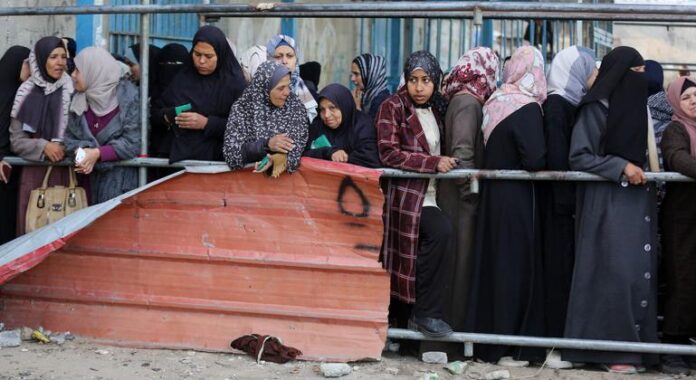
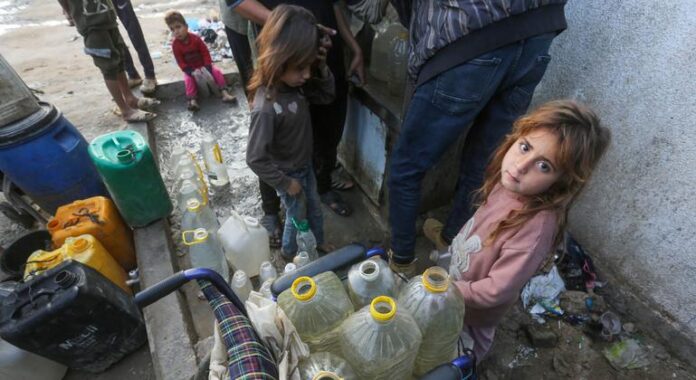
Around 90 per cent of the population across the Gaza Strip have been displaced from their homes, forced to move to avoid Israeli military operations. Many have been displaced repeatedly, some 10 times or more.
Much of Gaza is rubble, while Israeli airstrikes and military operations have damaged or destroyed around 60 per cent of buildings, including homes, schools and hospitals. The relentless bombing campaign has pushed healthcare to the brink, the solid waste system has collapsed, causing serious environmental and health risks, and the water system has been drastically cut.
UN News’s correspondent in Gaza has been speaking to displaced civilians sheltering in Nuseirat, central Gaza, who are hoping to return to what is left of their homes and rebuild their lives.
Despite the critical humanitarian conditions, um Mohammed Hanoun is determined to go back to the Al-Karama neighborhood in northern Gaza with her family, even though she received news that her house had been destroyed in a drone attack.
Um Mohamed Hanoun, displaced from Al-Karama neighborhood in Gaza City to central Gaza areas.
“My plan is to remove the rubble, set up a tent on my land, and live there,” she said. “All I care about is seeing my home. I hope that Gaza will be rebuilt to the way it was, and that our lives will return to what they were.”
‘We deserve a better life than this’
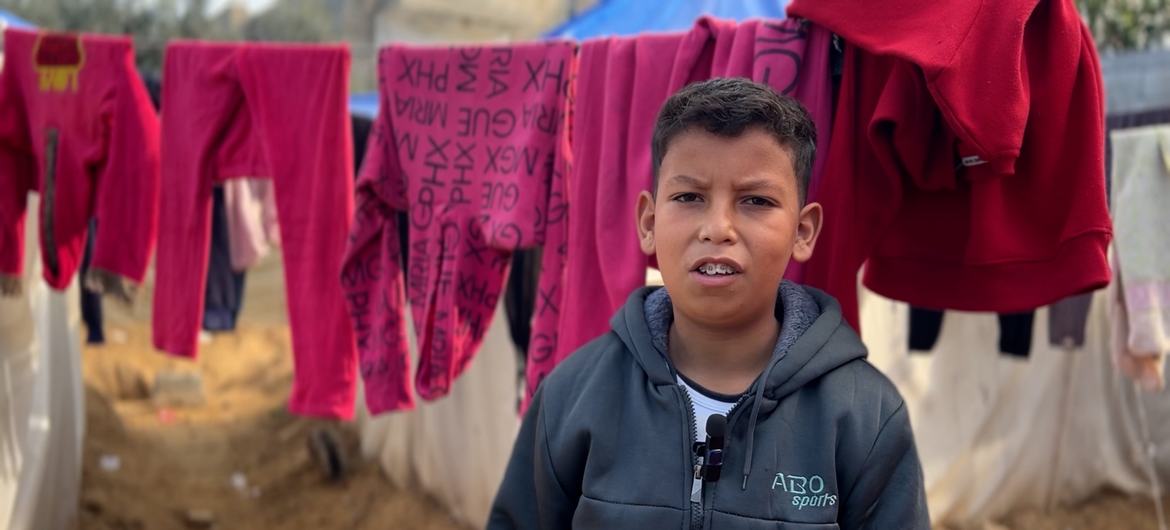
“I want to go back to Gaza City for one reason, and that’s to see my father,” says Sami Abu Tahoun, a child displaced from Gaza City, after receiving news of the ceasefire agreement – which on Thursday was still in doubt as the Israeli war cabinet failed to vote on the deal.
Sami Abu Tahoun, displaced from Gaza City.
The youngster says that he had not seen his father since the conflict forced them to leave Gaza City, in the northern party of the Strip. “When we left our home, I lost something essential in life, my father. When my mother asked me to pray, I refused. I wanted to wait until I could pray with my father.”
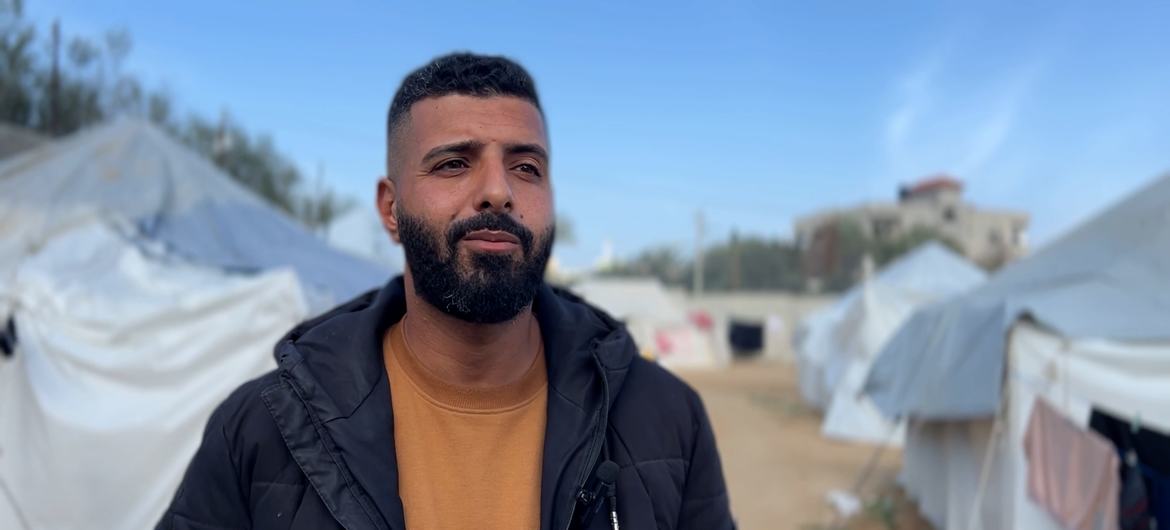
Ayman Abu Ridhwan, displaced from Gaza City to central Gaza Strip.
‘Enough death and destruction’
“We want to think now about our future. Enough death and destruction,” says Ayman Abu Radwan, a Palestinian man who, like Sami, had to leave his home in Gaza City for central Gaza for a tattered tent.
“We are tired. We have endured the full heat of summer, and the frost and cold of winter. Children are dying. Every night, I am woken up by the cries of a two-week old baby shivering from the cold. I hope that our conditions will improve. We deserve a better life than this.”
Even if a halt in the hostilities allows Gazans to return home, and for the Strip to be rebuilt, the mental suffering will continue, according to Mohammed al-Quqa, who was displaced from al-Shati refugee camp west of Gaza City.
“The greatest suffering will be the psychological situation. The war has been long, and our families, our children, have witnessed things they should never have seen.”
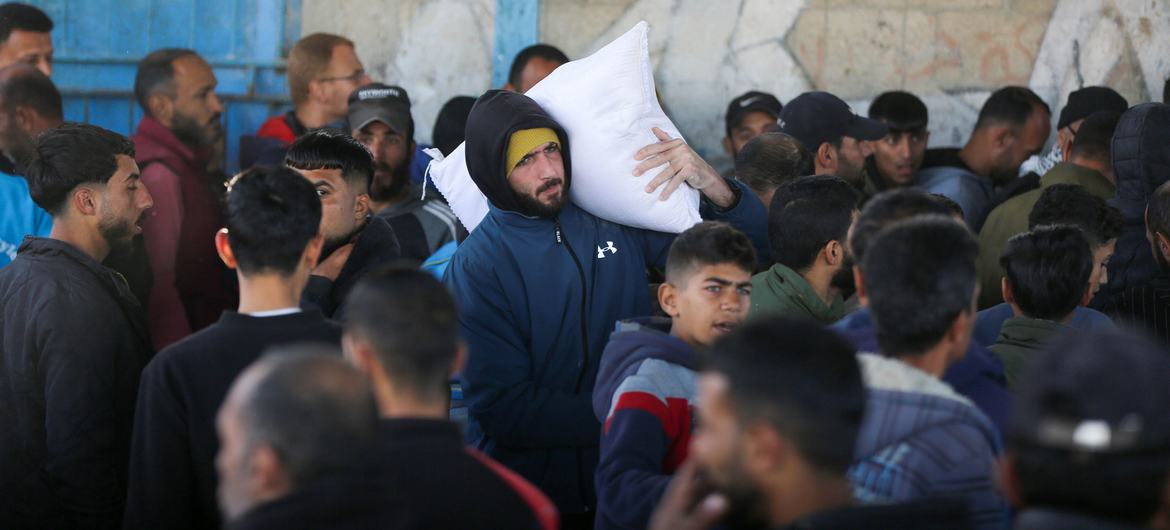
A man carries food aid distributed by the UN in Gaza.
UN humanitarians poised to deliver surge of aid
If the ceasefire agreement comes into effect on Sunday, there is widespread anticipation that aid coming into the Strip will significantly increase – in line with the reported terms of the deal.
Throughout the conflict, humanitarian convoys containing desperately needed supplies have repeatedly been delayed or denied entry at Israeli military checkpoints (in December, 70 per cent of coordinated aid missions were denied).
On Thursday, The World Food Programme (WFP) announced that it has 80,000 tons of food is waiting outside Gaza or on its way in, enough to feed more than one million people.
However, the UN agency also underscored the importance of humanitarian teams and supplies enjoying unrestricted movement to reach those in need.
UNRWA focuses on essential healthcare
The healthcare system in Gaza has been shattered as a result of persistent Israeli bombardments, and more than 12,000 people are awaiting medical evacuation.
On Wednesday the World Health Organization (WHO) and its partners succeeded in evacuating 12 patients to hospitals in Europe, but the agency is calling for many more countries to receive specialized treatment, as and when the ceasefire takes hold.
Aid workers have been operating under perilous conditions: almost 900 have reportedly been killed since October 2023, including 265 staff from the UN refugee agency for Palestine refugees, UNRWA.
Despite the risks, more than 1,000 UNRWA workers – the vast majority of them local staff – continue to operate health centres, temporary clinics and medical points across Gaza, providing more than 16,000 health consultations per day.
“The target is to get between 500 and 600 trucks in per day over the coming weeks,” said Dr Rik Peeperkorn, WHO representative in the occupied Palestinian territories (OPT).
This would represent “a huge increase” from the 40 to 50 lorries reaching Gaza in recent months and be similar to the level of aid reaching Gaza before war erupted on 7 October 2023, drastically reducing relief deliveries.
Massive challenge
Speaking from Jerusalem, the WHO medic described the ceasefire announcement as “a sign of hope” but warned that the challenge is massive and daunting, because of chronic and severe shortages of food, fuel and medical supplies.
Plans are in place for deliveries to begin on Sunday, the veteran humanitarian said, adding: “We have ordered temporary prefabricated clinics and hospitals which we will integrate into the existing facilities…integrating existing health facilities as part of that, to expand some needed bed capacity, address urgent health needs and health service delivery.”
Humanitarians have repeatedly warned that the crisis in Gaza for civilians has reached catastrophic levels.
More than 46,000 people have been killed, according to the authorities and more 110,000 have been injured – often with life-changing injuries – since the conflict began in October 2023.
Disease is spreading and the risk of famine remains high – needs that it is critical to address, Dr Peeperkorn said, especially when more than 12,000 patients – a third of them children – still await evacuation for specialized care.
Slow progress on evacuations
But the pace of evacuations has been painfully slow. Of 1,200 requests submitted between November and December 2024, only 29 were approved, a rate of just 2.4 per cent, according to WHO.
The WHO and other agencies have stressed the immediate need to provide food, water and medical supplies, but also fuel and spare parts for hospital generators.
Gaza’s healthcare system has been shattered, with only half of its 36 hospitals currently operational. Critical health infrastructure continues to be targeted, according to the UN health agency, which pointed to 664 healthcare attacks since October that have caused deaths among civilians and medical workers, also damaging vital health facilities.
Despite the dire conditions, WHO aims to implement an ambitious 60-day emergency health response plan, once a ceasefire kicks in.
This includes scaling up existing health efforts, setting up temporary medical clinics and restoring essential healthcare services. Efforts will also focus on combating malnutrition, bolstering disease surveillance and providing medical supplies to areas that have been difficult to access until now.
$10 billion needed for health
According to WHO, more than $10 billion is required to restore Gaza’s shattered healthcare system, and substantial international support will be essential to avoid further loss of life and prevent a complete breakdown of the region’s health infrastructure.
In addition to addressing the immediate health needs, there is also a pressing requirement for broader humanitarian aid. Food, clean water and shelter are fundamental priorities, alongside other crucial medicines and medical equipment which remain in desperately short supply.
For the moment, international agencies continue to work under difficult and dangerous conditions, hoping that the ceasefire will offer a lifeline to those trapped in the besieged enclave.
When Dr. Martin Luther King Jr. and his wife, Coretta Scott King, visited UN Headquarters in the 1960s to protest the Viet Nam conflict, the civil rights leader likened the anti-war movement to the struggle for equality for Black people in the US, declaring then what has today become a rallying cry in the continuing battle against racism.
On 15 April 1967, a delegation led by Dr. King held a meeting with the legendary Ralph Bunche and other top UN officials. Mr. Bunche was the first African American to receive the Nobel Peace Prize, and Dr. King was the second.
Watch our report from the archives about UN legend Mr. Bunche, here.
During the meeting, Dr. King presented a petition, calling for an immediate and peaceful solution to the Vietnam conflict (1961-1975). Earlier that day, he had marched alongside 125,000 protesters in what was the first of many mass marches in opposition to the war.
Watch UN Video’s Stories from the UN Archive episode on the world-renowned civil rights advocate below:
‘No justice without peace, no peace without justice’
Outside UN Headquarters in the spring of 1967, Dr. King read aloud the petition, which even today, echoes calls for peace in ongoing wars around the world.
“From towns and villages, cities, campuses and farms, we have come in tens of thousands to march and rally at the United Nations in New York and at the birthplace of the world organization in San Francisco on the 15th day of April 1967,” he said. “We the participants in today’s unprecedented national peace demonstration, although of many national origins, faiths and shades of political opinion, are united in our conviction of the imperative need for an immediate, peaceful solution to an illegal and unjustifiable war.”
“We are determined that the killing be stopped and that a nuclear holocaust be avoided,” he said. “We rally at the United Nations in order to reaffirm our support of the principles of peace, universality, equal rights and self-determination of peoples embodied in the Charter and acclaimed by mankind, but violated by the United States.”
In terms of the priority of the peace movement and the civil rights movement, Dr. King said “from a content point of view, the issues are inextricably tied together”.
“In the final analysis, there can be no peace without justice, and there can be no justice without peace,” he said.
Dr. King speaks to the press at UN Headquarters in New York in 1967. (file)
Inspiring future generations
The civil rights leader continued to advocate for peace throughout the last year of his life before he was assassinated in 1968, exactly one year after he visited UN Headquarters. His anti-war activism reinforced the connection between the conflict abroad and injustice at home in the US.
Dr. King’s lifetime efforts, from the March to Montgomery to his iconic I Have a Dream speech in Washington, have inspired future generations, including his own granddaughter. Earlier this year, 15-year-old activist Yolanda Renee King addressed an audience in the General Assembly Hall at a special commemoration of the International Day of Remembrance of Victims of Slavery and the Transatlantic Slave Trade, marked annually on 25 March.
“I stand before you today as a proud descendant of enslaved people who resisted slavery and racism like my grandparents, Dr. Martin Luther King Jr. and Coretta Scott King,” she said from the green marbled podium in the Assembly Hall.
“My parents, Martin Luther King III and Arndrea Waters King, have also dedicated their lives to putting an end to racism and all forms of bigotry and discrimination,” said the author of the children’s book We Dream a World, which pays tribute to her celebrated grandparents.
“Like them, I am committed to the fight against racial injustice and to carrying on the legacy of my grandparents who championed social justice and equality,” Ms. King said, calling on young people around the world to take action.
“We must connect via the internet and organise across national boundaries around the world. This will open up new possibilities for global campaigns to advance human rights and social justice in all nations. I hope that my family’s legacy of social justice advocacy will inspire my generation to action and to confront issues affecting our world.”
Watch her full statement below:
Stories from the UN Archive
UN News is showcasing epic moments across UN history, cultivated from the UN Audiovisual Library’s 49,400 hours of video and 18,000 hours of audio recordings.
Catch up on UN Video’s Stories from the UN Archive playlist here and our accompanying series here.
On 20 and 26 December 2024, the City Court of Tbilisi held hearings to decide whether Georgia should extradite Mihai Stoian and his wife Adina arrested in August 2024 on the Turkish-Georgian border on the basis of an Interpol arrest warrant issued on France’s request.
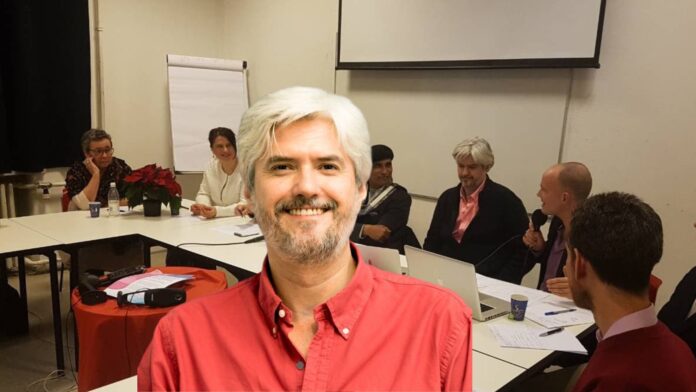
A few days after mid-December, I happened to be in Tbilisi for The European Times to cover the unstable political situation and the demonstrations in the country following the contested results of the parliamentary elections and the subsequent election of a new contested pro-Kremlin president by the new parliament. On this occasion, I published two articles titled “GEORGIA: Election of an ex-footballer as the new president booed by demonstrators” and “GEORGIA: Police violence in Tbilisi while President Zurabishvili calls for quick EU actions”. I also used the opportunity of being in Tbilisi to meet state and non-state actors as well as lawyers involved in the case of the Stoians and to collect some unpublished information about the couple. A member of their family was also in Tbilisi.
At the end of the second hearing taking place after my departure from Georgia, the court found that a third hearing was necessary to try to solve a crucial issue: the interpretation of the debates and the translation of printed or written court documents in Romanian, as strongly required by Mihai, his wife and their lawyers instead of the English language imposed until then by the judicial authorities.
The court considered that Mihai and his wife were sufficiently fluent in English due to their international activities but their counter-argument was that the legal and judicial language used during the proceedings and interpreted in English was foreign to him and was putting them at risk of failing to understand the implications of what they might have to accept and to sign.
The double translation of complex issues, first by the interpreter Georgian-English and second by themselves in their own language (Romanian) was de facto opening the door to inaccuracies and misunderstandings at both levels of understanding and could lead to a miscarriage of justice they would be the victims of, they argued.
The context of the arrest of Mihai Stoian and his wife
On 28 November 2023, a SWAT team of around 175 policemen wearing black masks, helmets, and bullet proof vests, simultaneously descended at 6am on eight separate houses and apartments in and around Paris but also in Nice where Romanian yoga practitioners had decided to go into spiritual retreat. The police forces were then brandishing semi-automatic rifles, shouting, making very loud noises, crashing doors and putting everything upside down.
Most of those Romanian yoga practitioners who were there had chosen to combine the pleasant with the useful in France: yoga and meditation in villas or apartments kindly and freely put at their disposal by their owners or tenants who were also mainly yoga practitioners of Romanian origin and at the same time to enjoy picturesque natural or other environments.
They were IT experts, engineers, designers, artists, medical doctors, psychologists, teachers, university and high school students, and so on.
Around 50 yoga practitioners of all ages were taken to police stations for interrogation, most of them being kept in custody for two days and sometimes more. In November 2024, I published in The European Times an article titled “Police raids on Romanian yoga centers in France, one year later”.
The November 2023 raids were not an operation against a terrorist or armed group or a drug cartel. They were raids targeting eight private places mainly used by peaceful Romanian yoga practitioners but the police suspected these places to be used under cover for illegal activities: trafficking in human beings, sexual exploitation and forcible confinement.This was the official charge against Gregorian Bivolaru, the founder of the Romanian MISA yoga group, and some others who were put in pretrial detention in France in the aftermath of the raids.
The arrest warrant against the Stoians channeled from Paris to Tbilisi through Interpol included the same charges although they were not in France at the time of the police raids or before and had never had any yoga activity in France. In the French media, they were repeatedly painted as a criminal, without any evidence, but who is Mihai Stoian?
Family and social background
Mihai Stoian was born on 27 January 1969 in Bucharest in an atheistic society. It was then under the rule of Ceaucescu, the Communist President of Romania to be toppled 20 years later.
His mother, G. Stoian, was an accountant. His father, Zaharia Stoian, was born in 1938 in a peasants’ family of 11 children in the village of Comosteni, Dolj county. His father attended the Faculty of Mathematics in Bucharest in 1962 and was admitted for his doctoral thesis in 1966. Later on, he taught as a professor of mathematics at the same university as well as at the Bucharest Polytechnic University between 1962 and 2009. Due to his experience, he was proposed to teach at the Faculty of Electronics in Kinshasa (Zaire), where he stayed for two years (1974-1976).
In the 90s, after the collapse of Ceaucescu’s regime, he started practicing yoga together with his two sons, Mihai and Jan, and participated in the courses of the MISA Yoga School. At some time, he was a Hatha Yoga instructor in Ploiesti. After 14 years of practice he got retired as he had done from his teaching career in his capacity of Professor of Mathematics in various universities.
Studies and professional activity of Mihai Stoian
In his early life Mihai Stoian studied at the Polytechnic University of Bucharest, founded in 1818 and affiliated with the European Association for International Education (EAIE). He graduated in 1993 with a degree in nuclear physics and nuclear technology.
Mihai Stoian received the Romanian Academy Award for his scientific activity in 2001, which included the publication of eight papers in the field of formal languages and optimization methods for interactive algorithms.
While working as a researcher he also taught “Microprocessor Fundamentals” at the Faculty of Electronics and Telecommunications of the Polytechnic University of Bucharest (1999-2002).
Mihai Stoian’s involvement in yoga
In 1989 he heard about the MISA yoga movement (Movement for Spiritual Integration into the Absolute) and met later on Gregorian ,, the spiritual leader of MISA, who officially founded it in 1990. Before the COVID, about 30,000 practitioners were following his teachings throughout the world.
After his university graduation in 1993, he co-founded and ran Soteria Didact, a non-profit organization specialized in the production of yoga teaching material (1994-1996). After that, he co-founded and ran the Ganesha Publishing House, for the printing of alternative works on personal development (1996-2001).
In 2001 he got married in an Orthodox church with Adina, another yoga practitioner in MISA. Together, they created a counseling program and service for couples and individuals in matters related to love and intimacy.
In 2002, Mihai Stoian and his wife moved to Denmark and from 2003 he became the senior teacher of the Natha Yoga Center, a non-profit organization dedicated to personal development.
In 2006, the teaching methods of Mihai Stoian attracted the attention of ATMAN, the International Federation for Yoga and Meditation, he collaborated with from time to time. ATMAN Federation was officially registered in 2004 in the UK by teachers of yoga and personal development.
From 2009 until his arrest in Georgia in August 2024 Mihai Stoian participated in the Yoga and Personal Development Program of ATMAN Federation, providing consultation and teaching materials.
Besides yoga courses, he provided series of lectures on topics such as Science of Success, Stress Mastery, Quantum Science, Keys for Couple Relationship and Nature of Consciousness.
Mihai Stoian and his wife are opposed to their extradition to France, saying they were not involved in any yoga activity there and in any illegal activity as mentioned in the Interpol arrest warrant, had nothing to do with the massive police raids on yoga centers on 28 November 2023 which led to several arrests and pretrial detention cases, and no yoga practitioner had filed a complaint against him or his wife.
The measure, issued by the de facto Ministry of Economy on 26 December, enforces a two-year-old decree prohibiting women from working with both national and international NGOs.
In his statement, Mr. Türk emphasised the devastating impact on the delivery of critical humanitarian aid in Afghanistan the decree will have, where more than half the population lives in poverty.
NGOs, he noted, are essential to the survival of millions of Afghans, offering life-saving support to women, men and children alike.
“This is absolutely the wrong path,” Mr. Türk said, urging the de facto authorities to reconsider what he described as a “deeply discriminatory decree.”
Women’s rights under siege
Since coming to power, Afghanistan’s de facto authorities have restricted the rights of women and girls, barring them from education, work, healthcare, and movement.
These measures, including the latest crackdown on NGO employment, effectively erase women from public life, undermining Afghanistan’s prospects for progress.
Mr. Türk emphasised that “no country can progress – politically, economically or socially – while excluding half of its population from public life.”
A plea to rethink the path forward
The High Commissioner called on Afghanistan’s leaders to rethink their course, not just for the sake of women and girls but for the future of the nation as a whole.
He also highlighted the broader implications of these policies for the global community, noting that restricting women’s participation in public life exacerbates poverty and hampers efforts to build a stable and resilient society.
“For the future of Afghanistan, the de facto authorities must change course,” Mr. Türk concluded.
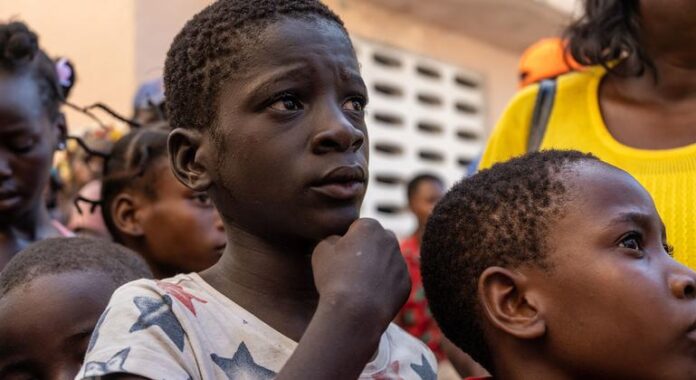
“It is a horrific time to be a child in Haiti, with violence upending lives and forcing more children and families from their homes,” said UNICEF Executive Director Catherine Russell.
“Children desperately need safety, protection and access to essential services. We cannot look away,” she emphasised.
Children caught in crossfire
Decades of political instability, poverty and inequality have enabled the rise of armed groups and the impact on children has been devastating.
Reports indicate a 70 per cent surge in child recruitment over the past year, with minors making up as much as 50 per cent of their ranks. This recruitment violates international law and constitutes a grave violation of children’s rights.
Meanwhile, the displacement crisis has left children especially vulnerable to violence, including sexual violence, exploitation and abuse.
Incidents of sexual violence against children have increased by 1,000 per cent in the last year, the agency said.
Access to basic services such as education, healthcare, clean water and sanitation has been severely disrupted, leaving children at heightened risk of malnutrition and disease.
Nearly 6,000 people are enduring famine-like conditions, and unsanitary displacement sites have created fertile ground for cholera outbreaks. The country has recorded nearly 88,000 suspected cases of the disease, which disproportionately affects children.
A young child whose family fled violence sits in a makeshift shelter in Port-au-Prince.
Worsening urban crisis
The crisis is particularly acute in the metropolitan area of the capital Port-au-Prince, where violence and instability are rampant.
By December, attempted sieges of residential neighbourhoods forced approximately 40,000 people to flee their homes in just two weeks.
UNICEF estimates that three million children nationwide need humanitarian assistance, with 1.2 million children in immediate danger across the city.
Call for action
UNICEF is urging all parties to immediately cease hostilities and end violations of children’s rights, including recruitment by armed groups and all forms of sexual violence.
The agency has also called for unimpeded access for humanitarian workers to reach those in need, including displaced populations.
“Children in Haiti are bearing the brunt of a crisis they did not create,” Ms. Russell said. “They rely on the Haitian Government and international community to take urgent action to protect their lives and safeguard their futures,” she emphasised.
In November, following several failed attempts, politicians of all stripes approved a bill to overhaul legislation that has been in effect since 1887, reflecting a deep-rooted practice that violates the rights of children and adolescents: according to the United Nations Children’s Fund (UNICEF). one in five girls aged between 14 and 18 is in a union.
“This approval has been possible because we have gathered the consensus of all political parties, highlights Senator Clara López. “It not only implies prohibition but also a robust public policy that reflects changing customs and raises awareness among the population about the great harm done to children and adolescents with marriages and unions”.
Courtesy Leonardo Vargas/Press Senate of Colombia
Activists celebrate the elimination of child marriage in the Colombian Parliament.
Advancing children’s rights
“We want to congratulate Colombia on the magnificent news,” says Bibiana Aido Almagro, the head of UN Women in Colombia.
“These practices severely affect the rights to life, health, education, and integrity of women and girls and negatively impact their development.”
Andrea Tague Montaña, gender and development officer at UNICEF in Colombia, agrees that the decision is a positive move.
“Child marriages and early unions are understood as harmful practices that not only lead to gender violence but also cause the victims, especially girls, to fall into poverty,” she warns. “They reinforce discrimination and the idea that the best thing that can happen to them is to marry and have children”.
By entering into an unequal power relationship with older partners, explains Ms. Montaña, girls have few opportunities to decide if they want to have sexual relations, how many children they want to have, or what kind of life they want to lead.
“They enter scenarios where, in many cases, they start fulfilling adult women’s roles. Child labour, domestic work, and caregiving become their almost daily tasks,” adds the UNICEF official.
“These are girls who stop studying, who lose their rights by entering an early union. It is important to call on society to stop normalizing early unions; this is a violation of rights. Girls do not stop being girls because they are living with a man”.
The bill also establishes actions to strengthen national public policy on childhood and adolescence, including measures to restore the rights of children and adolescents affected by underage marriages and unions, with a special emphasis on remote rural areas – ensuring that indigenous peoples and other vulnerable communities can take part.
The new law comes into effect once it is signed by President Gustavo Petro.
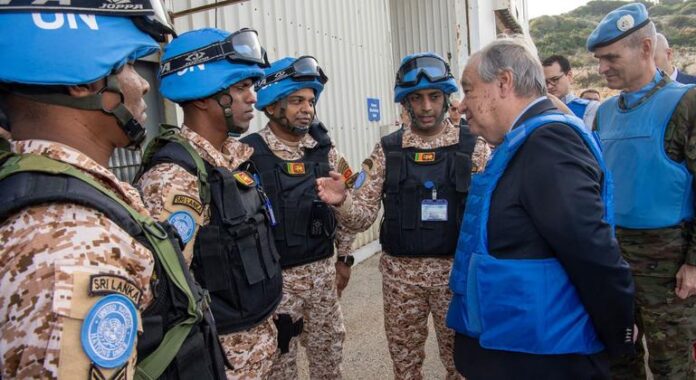
His itinerary included a trip to Naqoura in the south – where the UN Interim Force in Lebanon (UNIFIL) is headquartered – and he expressed his gratitude for the courage and determination of peacekeepers operating in one of the most challenging environments, where a fragile ceasefire between Hezbollah militants and Israeli forces across the Blue Line of separation is largely holding.
Frontline of peace
Mr. Guterres’ visit to Naqoura was marked by a tour of UNIFIL positions that had been targeted by Israeli forces last year. Go here to read our explainer recapping the mission’s long history and role in keeping the peace.
Addressing the assembled leadership of the UN mission, he emphasized the critical role of peacekeepers, stating: “You are not just on the Blue Line of Lebanon but on the frontline of peace. The UNIFIL mission is the most challenging environment for peacekeepers anywhere.”
The Secretary-General highlighted ongoing violations of UN Security Council Resolution 1701 by the Israel Defense Forces (IDF), which continue to occupy areas within UNIFIL’s operational zone and conduct military operations in Lebanese territory.
These actions, he noted, pose significant risks to the safety and security of the peacekeepers. The UN chief also pointed out that since 27 November, UNIFIL’s ‘blue helmets’ had uncovered over 100 weapons caches belonging to Hezbollah and other armed groups.
Support for the national army
During his visit, Guterres met with the general leading the Lebanese Armed Forces in southern Lebanon.
He reiterated that the UN presence is temporary and emphasized the importance of supporting the Lebanese military. “UNIFIL is here to do everything possible to support the Lebanese Armed Forces,” he said, underscoring the collaborative efforts to maintain peace and stability in the region.
Diplomacy in Beirut
After returning to the capital Beirut in the afternoon, the Secretary-General had discussions with French President Emmanuel Macron, who was also visiting the Lebanese capital.
They covered a wide range of regional developments, reflecting the international community’s ongoing interest in Lebanon’s stability and security.
In the evening, Mr. Guterres, along with UN Special Coordinator in Lebanon Jeanine Hennis-Plasschaert and UNIFIL Force Commander General Aroldo Lázaro, attended a working dinner hosted by Lebanon’s caretaker Prime Minister Najib Mikati.
This provided an opportunity for further dialogue on the challenges facing Lebanon and the role of the international community in addressing them.
UN Secretary-General António Guterres (right) is welcomed by Lebanese Foreign Minister Abdallah Bou Habib at Beirut airport.
Looking ahead
The Secretary-General’s visit will continue on Saturday, with a full day of meetings in Beirut.
He is scheduled to meet President Joseph Aoun, Prime Minister-designate Nawaf Salam, and Speaker of the Parliament Nabih Berri.
These meetings are expected to focus on Lebanon’s political and economic situation, as well as the ongoing efforts to support the country’s recovery and stability.
The UN chief’s visit to Lebanon comes at a critical time, as the country grapples with political instability, economic challenges, and security threats.
His presence underscores the United Nations’ commitment to supporting Lebanon and its people, as well as the vital role of UN peacekeepers in maintaining peace and security in the region.
Regina De Dominicis – who also heads the agency’s Europe and Central Asia Regional Office – issued her plea for action after another small boat sank off the coast of the southern Italian island of Lampedusa on New Year’s Eve.
“Among the seven survivors is an eight-year-old child whose mother is among those unaccounted for. The boat reportedly sank as it approached the shore,” she said.
The deaths follow another deadly incident off the island earlier in December which left an 11-year-old girl as the sole survivor.
2,200 deaths in the Mediterranean
“The death toll and number of missing persons in the Mediterranean in 2024 have now surpassed 2,200, with nearly 1,700 lives lost on the central Mediterranean route alone,” said Ms. De Dominicis.
“This includes hundreds of children, who make up one in five of all people migrating through the Mediterranean. The majority are fleeing violent conflict and poverty.”
The UN children’s agency is calling on all governments to use the Migration and Asylum Pact to prioritise safeguarding children, which includes ensuring safe, legal pathways for protection and family reunification.
The Pact also demands the establishing of coordinated search and rescue operations, safe disembarkation, community-based reception, and access to asylum services.
“We also urge increased investment in essential services for children and families arriving via dangerous migration routes, including psychosocial support, legal aid, healthcare, and education,” she continued.
“Governments must address the root causes of migration and support the integration of families into host communities, ensuring children’s rights are protected at every stage of their journey.”
Just days ahead of the inauguration of Venezuela President Nicolas Maduro, top independent rights investigators have urged the country’s authorities to allow peaceful protests to go ahead “without fear of reprisal”.
The appeal from the Fact-Finding Mission on Venezuela, which reports to the Human Rights Council in Geneva, follows the violent repression of demonstrators after last July’s Presidential elections that returned Mr. Maduro to power.
“We remind security forces responsible for maintaining public order that they should adhere to the strictest international standards on the use of force,” said Marta Valiñas, Chair of the Fact-Finding Mission.
Echoing her statement, fellow human rights expert Francisco Cox warned that Venezuela’s “repressive apparatus remains fully operational”.
Mr. Cox said that in the five months to last December, the authorities had detained at least 56 political opposition activists, 10 journalists and one human rights defender.
‘Criminal responsibility’
“Those who order arbitrary detentions and the imposition of torture or other ill-treatment, as well as those who carry them out, bear individual criminal responsibility,” he said.
According to the Venezuela Public Prosecutor’s Office, around 1,300 of the more than 2,500 individuals detained during the post-electoral security round-up were released – although the Fact-Finding Mission noted that these figures could not be corroborated.
The Mission’s experts said that according to the non-governmental organization Foro Penal, “1,849 people remain in detention for political reasons, facing multiple irregularities and restrictions affecting their rights to food, health, and access to essential legal guarantees in ongoing legal processes”.
New Security Council members take their seats
Five elected members of the Security Council officially began two-year terms on Thursday, with five others leaving the world’s premier body for peace and security.
The incoming members are Denmark, Greece, Pakistan, Panama and Somalia, selected to serve by the UN General Assembly last June.
The outgoing members are Ecuador, Japan, Malta, Mozambique and Switzerland. There are 10 elected members of the Council who serve alongside the five permanent members – China, France, Russia, the United Kingdom and the United States.
The flags of the countries who will serve during 2025 and 2026 were installed during a special ceremony outside the chamber.
The Security Council president for the month of January, Algeria’s Ambassador Amar Bendjama, thanked the outgoing members and warmly welcomed the newcomers, describing it as an “immense privilege” to serve as well as “a huge responsibility”.
“The world is facing many challenges that are threatening international peace and security. The situation in the Middle East is highly concerning,” he said.
He urged all Council members to work tirelessly and effectively “and to uphold the values of multilateralism”.
UN Assistant Secretary-General Khaled Khiarifrom the UN political and peacebuilding affairs department said membership of the Council was a “solemn responsibility” and reflected the trust placed on them by the larger membership and organisation.
He praised the increasingly prominent role being played by elected members to reshape the working methods of the Council.