Monday, September 28, 2026
Home Blog Page 597

A decade of conflict: ‘Almost 40 million Yemenis have waited far too long’

0
A decade of conflict: ‘Almost 40 million Yemenis have waited far too long’

Special Envoy Hans Grundberg highlighted the alarming trend of escalation provoked by Yemen’s Houthi forces who began attacking international shipping in the Red Sea last year in support of Hamas operations in Gaza, provoking retaliatory strikes by multiple states, including the United States, United Kingdom and Israel.

These strikes, combined with attacks on Yemen’s Red Sea ports and Sana’a International Airport, have severely damaged civilian infrastructure and disrupted humanitarian operations in recent months. 

Such actions have far-reaching repercussions, UN Emergency Relief Coordinator Joyce Msuya underscored, noting that essential infrastructure that is crucial to humanitarian relief efforts “must be spared” as impairing their operations “causes direct and immense civilian hardship and suffering.”

Dire humanitarian consequences

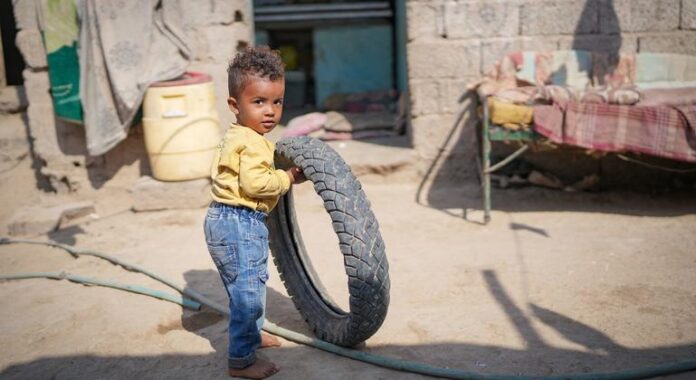
The humanitarian impact of the conflict has left almost half of Yemen’s population – over 17 million people – unable to meet their basic food needs.

This is due in part to a severe decline in port operations. Yemenis rely on imports for over two-thirds of their food – mainly through Hudaydah on the Red Sea – and 90 per cent of their medical supplies.

Due to the uptick in fighting since the Houthis (formally known as Ansar Allah) became embroiled in the Gaza conflict, shipments via ports have dropped to 30 per cent of full capacity.

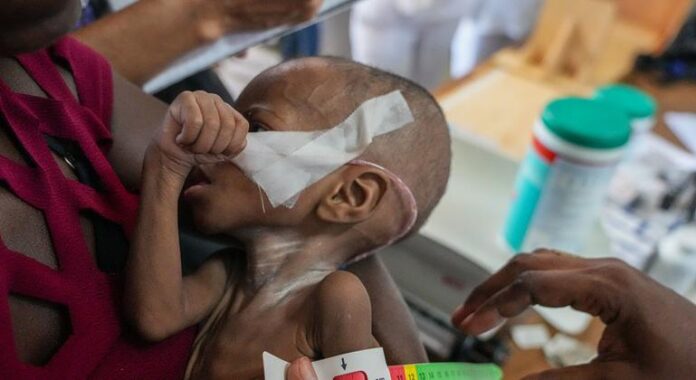
Meanwhile, Cholera outbreaks and malnutrition disproportionately affect women, children and marginalised groups.

Pathway to peace

Both senior officials emphasised the need for urgent and unified action. “Regional stability requires, in part, achieving peace in Yemen,” said Mr. Grundberg.

He stressed the importance of a nationwide ceasefire and tangible commitments from all parties to address Yemen’s economic challenges, including unifying the central bank and resuming oil exports.

His office has launched a series of political dialogues, prioritising the meaningful participation of women and youth, to build an inclusive vision for Yemen’s future.

“These efforts are critical in laying the foundation for a broader political process,” he stated. 

He also called for the immediate release of those arbitrarily detained, underscoring the profound suffering of individuals and families involved.

Calls for immediate action

Ms. Msuya urged the Security Council to ensure respect for international humanitarian law, protect critical infrastructure and fully fund humanitarian operations.

She expressed cautious optimism, reporting “modest but sustained progress” in facilitating humanitarian access, including the first crossing of frontlines in the contested southern city of Ta’iz since 2016. 

“The unity of this Council and its consistent messaging to the parties on the importance of a negotiated settlement will be pivotal in the months ahead,” Mr. Grundberg said. 

A lasting political resolution remains the most viable way to end the suffering in Yemen, the senior UN officials stressed.

Source link

Syria crisis: ‘Key priority’ is preserving evidence of crimes, say UN investigators

0
Syria crisis: ‘Key priority’ is preserving evidence of crimes, say UN investigators

The head of the International, Impartial and Independent Mechanism Investigating Serious Crimes in Syria (IIIM), Robert Petit, told reporters in Geneva that with an “interlocking series of crime scenes” across the country now accessible, there is the possibility of accessing evidence and “finally” establishing the fate of tens of thousands who had been “illegally arrested, detained and suffered years of violence inside the prison system”, almost 14 years after the start of a brutal state crackdown against Arab Spring protesters.

Golan communities face evacuation orders

Meanwhile, UN humanitarians warned that Syria’s humanitarian crisis is worsening, with fighting in the northeast, including in the occupied Golan Heights. “There have been orders issued by the Israeli forces to some villages for people to vacate, and that people have resisted leaving,” reported the UN refugee agency, UNHCR.

Asked if there was anything new that he’d learned since the fall of the Assad regime just days ago, Mr. Petit underscored the IIIM’s eight years of investigative experience and said that what had struck him the most was seeing “the horror of the impact of the crimes on victims coming out of detention centres and on families”.

Established in 2016 by the General Assembly, the IIIM is mandated to collect, preserve and analyze evidence to support competent jurisdictions in investigating and prosecuting international crimes committed in Syria from March 2011 onwards. These may include war crimes, crimes against humanity and genocide.

Engaging with new Syrian authority

Mr. Petit stressed that the previous Syrian Government had never recognized the IIIM’s legitimacy and failed to engage with the mechanism, despite many attempts. While preparing for future accountability processes, the IIIM has collected evidence from many sources, accumulating 283 terabytes of data which could be used to support current and future jurisdictions. Over the years it had received over 400 requests for assistance from 16 different jurisdictions and was able to support more than half of them with evidence and analysis.

With new opportunities emerging amid the fast-moving political situation, “in the past week, we have received at least four different requests for assistance from jurisdictions”, Mr. Petit said. “If a jurisdiction had for some years now, an open file on the crimes committed by agents of the regime with no possibility of gathering evidence, that file was probably put on the side for a while, but now it has been reactivated.”

Investigators in demand

The UN investigator said that he expects “increased demand” for the IIIM’s support. However, the destruction of potential evidence during the Syrian rebels’ flash offensive – while “quite understandable” given the fast-evolving situation – were a major concern.

The UN investigator spoke of “papers strewn all over the floor, people leaving with computers, hard drives burned and smashed”, and stressed the need for a concerted preservation effort “from everyone”, with the IIIM playing its part in this process.

The mechanism has “reiterated through a communication to the Syrian missions” in Geneva and New York its “willingness to engage and to go to Syria to fulfill our mandate”.

“We are awaiting a response. And as soon as that response is forthcoming, we will deploy,” Mr. Petit insisted.

He also noted, with hope, “a stated awareness from the transitional authorities, and from Syrian civil society actors of the need to preserve evidence.”

“When you’re talking about a government, a state apparatus, who for 14 years used every aspect of that apparatus to commit crimes, you will have a massive amount of documentation left behind.”

Several national and international actors have offered to help the transitional authorities to preserve evidence, Mr. Petit said, expressing hope that these efforts will continue. The situation “varies from governorate to governorate” and part of the country “is still very much under an armed conflict,” he warned.

“It’s a very delicate and fluid situation.”

Asked about reports that Syrians have accused the UN of arriving too late to help them, Mr. Petit said, “if the crime has been committed, it’s already too late, right? It’s always too late”.

He stressed that now, the call to the international community has been heard. “You’ve seen statements from the UN, multiple international actors, multiple states, regional bodies” amid a level of access which was not possible just 13 days ago. 

“Now that we have access, I think there is a real expression of commitment to helping Syria rebuild. And we’re certainly hoping to be part of that,” he concluded.

Meanwhile, the UN refugee agency, UNHCR, warned that Syria faces a deepening humanitarian crisis amid ongoing fighting in the northeast and in the occupied Golan Heights. In recent days Israeli forces have advanced beyond the zone established by the May 1974 Agreement on Disengagement for the first time in 50 years and have reportedly carried out more than 500 airstrikes since the overthrow of the Assad regime.

Israeli military in spotlight

Rema Jamous Imseis, UN Refugee Agency (UNHCR) Director for the Middle East and North Africa, said that in the Golan, “there have been orders issued by the Israeli forces to some villages for people to vacate, and that people have resisted leaving”.

The UNHCR official stressed the “massive humanitarian needs” in the country, with 90 per cent of the population living below the poverty line, and the need for donors to also support “early recovery and reconstruction” so that Syria can absorb an expected influx of returning citizens and move towards self-sufficiency.

Both inbound and outbound population movements across the borders with Lebanon, Türkiye and Jordan have been observed amid the current “dynamic, fluid situation,” Ms. Imseis said. Next year, UNHCR expects to see as many as one million Syrians return to their country between January and June.

Ms. Imseis warned against any forced returns, highlighting a “non-returns advisory” issued by the agency on Monday and calling on host countries to respect the rights of asylum-seekers and the principle of non-refoulement.

“It’s simply too early to see how safe it’s going to be,” she said. “We need to respect the right of voluntary, safe and dignified returns for Syrians…And people simply cannot, after 14 years of displacement, pack a bag overnight and return to a country that has been devastated by conflict.”

The task of documenting Syria’s disappeared – who are believed to number more than 130,000 – is carried out principally by three bodies at the UN:

Source link

EEAS: High Representative Kaja Kallas announces senior nominations

0
EEAS: High Representative Kaja Kallas announces senior nominations

EEAS: High Representative Kaja Kallas announces senior nominations

Source link

UN stands with Ukrainians for the long-term, insists UN aid chief

0
UN stands with Ukrainians for the long-term, insists UN aid chief

In a joint appeal from Kyiv, the UN’s emergency relief chief Tom Fletcher and Filippo Grandi, UN High Commissioner for Refugees, said that millions of civilians inside Ukraine and abroad depend on the international community’s support, amid ongoing Russian attacks.

“The Ukrainian people have shown incredible courage over these years and we have to respond by showing a real, genuine, sustained international engagement, we have to respond with heart,” said Mr. Fletcher. “We will be here with the Ukrainian people for as long as it takes to meet these needs and to support them…We must not forget those Ukrainians who are in the occupied territories whose needs are extreme. And we must continue to be creative and brave about getting our support to those who most need it.”

Millions in need

The appeals are designed to support critical assistance to some six million people inside Ukraine – where overall needs are more than twice that number – and abroad, where more than 6.8 million Ukrainian refugees live.

Some $2.62 billion is designated for response teams inside the country, while UNHCR has requested $690 million in 2025 and $1.2 billion for 2025-2026 to assist governments hosting refugees in 11 countries.

“The objective, of course, is not to make sure that these people are refugees forever,” said Filippo Grandi, UN High Commissioner for Refugees. “The objective is for this to create the conditions for these people to return to Ukraine. This is what Ukraine needs and this is what the majority of the refugees want.”

Daily bombing

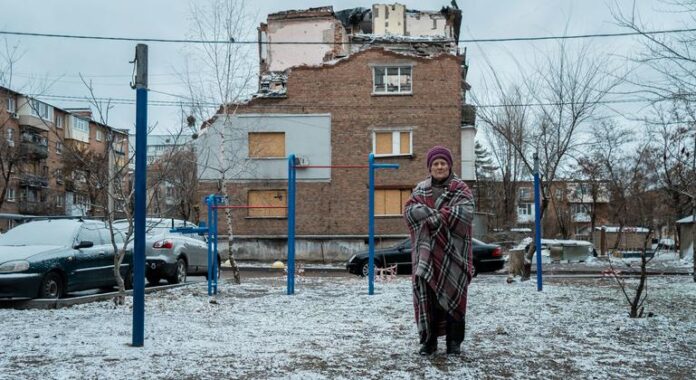
Speaking to journalists on his sixth visit to Ukraine, the refugee agency chief highlighted the unrelenting impact of bomb blasts on the frontline, day in, day out. Communities there continue to suffer destruction and deprivation in the cold of winter, he said.

“Here, Kyiv is a big city, but when you go out there in a small town, you see how people’s lives are completely devastated; almost everybody had to leave their houses.

“Very few people have access to heating in the bitter cold…This targeting by the Russian Federation of energy infrastructure, which is, of course, affecting civilian lives directly, is something that has to stop.”

Matthias Schmale, UN Resident and Humanitarian Coordinator in Ukraine, emphasized that national NGO partners and the UN continue to deliver aid and evacuate the most vulnerable individuals, wherever access allows: “Inevitably, a big part of the needs are along the frontline,” he said.

“We are supporting in particular people who have chosen to stay near the frontline and amongst those, particularly people with disabilities and older people who find it difficult to move.”

Source link

UN chief hails ‘peacemaker, human rights champion’, former President Jimmy Carter

0
UN chief hails ‘peacemaker, human rights champion’, former President Jimmy Carter

The Democratic Party icon lived longer than any president in US history, serving one term between 1977 and 1981, going on burnish his reputation on the international stage by being awarded the Nobel Peace Prize, and establishing a major hub for diplomacy and conflict resolution in the form of the Carter Center – which advocates for democracy and human rights around the world.

After suffering an undisclosed illness, he elected to stop medical treatment last year, choosing instead to receive hospice care at home. President Joe Biden and First Lady Jill Biden led the tributes, saying that the world had “lost an extraordinary leader, statesman and humanitarian.”

In his statement Mr. Guterres highlighted President Carter’s leadership while in office and overall contributions to international peace and security, “including the landmark Camp David Accords” – the 1978 peace treaty between Egypt and Israel which remains in force.

The Secretary-General also noted the gains made through the Strategic Arms Limitation Talks which led to the 1979 SALT II Treaty between the US and the Soviet Union – limiting nuclear proliferation – together with the Panama Canal Treaties which enabled ownership of the key waterway linking the Pacific and Atlantic to return to Panama in 1999.

After leaving office, President Carter turned his attention to addressing global challenges of inequality, human rights, inadequate housing and other social justice issues.

“President Carter’s commitment to international peace and human rights also found full expression after he left the presidency,” said the UN chief.

“He played a key role in conflict mediation, election monitoring, the promotion of democracy, and disease prevention and eradication,” Mr. Guterres added.

A friend of the UN

“These and other efforts earned him the Nobel Peace Prize in 2002 and helped advance the work of the United Nations.”

President Carter, together with former South African President Nelson Mandela, founded The Elders group, to advance the human rights and peace agenda.

Mr. Guterres said President Carter would be remembered “for his solidarity with the vulnerable, his abiding grace, and his unrelenting faith in the common good and our common humanity.”

He extended his deepest condolences to the Carter family and all citizens of the United States.

He concluded by saying the former president’s “legacy as a peacemaker, human rights champion and humanitarian will endure.”

President Carter is survived by his four children, 11 grandchildren and 14 great-grandchildren. He lost his wife of 77 years, Rosalynn, in November last year.

Source link

WHO launches $1.5 billion appeal to tackle global health crises

0
WHO launches .5 billion appeal to tackle global health crises

In response, the World Health Organization (WHO) is calling for $1.5 billion through its 2025 Health Emergency Appeal, to deliver life-saving health interventions worldwide.

The appeal, unveiled on Thursday by WHO Director-General Tedros Adhanom Ghebreyesus, outlines the urgent priorities for addressing 42 ongoing health emergencies, including 17 requiring immediate and coordinated action.

“Conflicts, outbreaks, climate-related disasters, and other emergencies are no longer isolated or occasional – they are relentless, overlapping, and intensifying,” said Tedros.

“This appeal is not just about providing resources; it is about enabling WHO to save lives, protect the right to health and offer hope where there is often none,” he added.

A world in crisis

The appeal comes at a time when WHO has recorded unprecedented levels of attacks on health care infrastructure.

In 2024 alone, there were 1,515 attacks on health facilities across 15 countries, resulting in hundreds of deaths and severely disrupting critical services.

WHO’s response extends across some of the world’s most fragile settings, including the Democratic Republic of Congo, the Occupied Palestinian Territory, Sudan and Ukraine.

In these regions, WHO provides emergency medical care, supports vaccination campaigns to prevent disease outbreaks, offers mental health services for trauma-affected communities and addresses malnutrition and maternal health needs.

In Ukraine, WHO has installed modular clinics to replace destroyed health facilities, ensuring that displaced populations continue to receive essential care.

In Gaza, over one million polio vaccines were administered in 2024 despite significant logistical and security challenges, preventing a catastrophic outbreak among children.

Building resilience

Beyond immediate relief, the organization focuses on empowering “communities to protect themselves, prioritise equity, and build a legacy of preparedness,” explained Tedros.

By addressing root causes and ensuring access to health care even in the most challenging environments, WHO seeks to break the cycle of vulnerability and build a stronger foundation for global health security.

Supporting the Health Emergency Appeal is not only about addressing immediate crises but also about safeguarding the future of global health.

Protecting health, saving lives

Tedros framed the appeal as a call to global solidarity, urging donors to act decisively.

In 2024, funding for the health sector in humanitarian responses met only 40 percent of identified needs, forcing difficult decisions about who could be reached.

Without immediate financial support, millions will remain at risk and the world’s most vulnerable populations will bear the brunt of this shortfall.

The Appeal is an investment in equity, resilience and the shared principle that health is a fundamental human right.

With the funds raised, WHO aims to continue its vital work on the frontlines, from delivering critical care in conflict zones to addressing the health impacts of climate disasters, ensuring that no one is left behind. 

Source link

World News in Brief: Hostilities in northeast Syria, response plan in Mali, Uyghur deportations in Thailand

0
World News in Brief: Hostilities in northeast Syria, response plan in Mali, Uyghur deportations in Thailand

Between 16 and 18 January, at least three civilians were killed and 14 injured in shelling and other attacks impacting Manbij, Ain al-Arab and other villages near the Tishreen Dam in the eastern Aleppo region.

UN partners also reported that shops in the main market were damaged when an improvised bomb detonated inside a car in Manbij.

These incidents have forced people from their homes and obstructed aid access, OCHA reported after sending a mission to the city on Monday.

The mission visited the Manbij National Hospital and met with local officials, the Syrian Arab Red Crescent and local non-governmental organizations to identify and address the issues at stake, according to Farhan Haq, the Deputy Spokesperson for the UN Secretary-General.

OCHA and the UN Children’s Fund (UNICEF) also completed a monitoring mission on Monday to the Ain Al Bayda water station in eastern Aleppo.

Deadly remains

UN partners have recorded 69 explosive ordnance incidents over the first two weeks of January due to contamination, in which 45 people were killed and 60 others wounded.

“Since 26 November, a total of 134 new areas with explosive remnants of war have been identified by partners across five governorates – Idlib, Aleppo, Hama, Deir-ez-Zor and Latakia,” said Mr. Haq.

As people continue to move and return to their communities, UN partners are calling for increased and flexible funding for mine action, including risk education and emergency clearance.                   

Meanwhile, with water and sanitation services suspended in many displacement camps due to funding gaps affecting more than 635,000 people, OCHA asked for increased funding to ensure the continuation of its services.

$770 million response plan launched in Mali

On Tuesday, the UN in collaboration with Mali’s transitional authorities, launched a $770 million humanitarian needs and response plan in the capital Bamako to support millions of people across the country this year.

© UNFPA Mali/Amadou Maiga

Two girls at the Barigondaga displacement site in Mali.

The plan aims to address the urgent needs of 4.7 million people affected by conflict, displacement, health emergencies and climate shocks, according to the Deputy Spokesperson.

Mostly women and children

Nearly 80 per cent of the people to be reached with aid are women and children who are in need of food, water, healthcare and protection support.

Last year, UN partners mobilised nearly 40 per cent of what was required – just over $270 million – enabling lifesaving assistance and protection to reach 1.8 million people.

The Acting UN Humanitarian Coordinator on the ground, Khassim Diagne, said it is urgent that the entire humanitarian community and donors renew their commitment to addressing essential needs in the region.

UN rights experts urge Thailand to halt Uyghur deportations

Independent UN human rights experts have called on Thailand to immediately stop the deportation of 48 Uyghurs to China, citing serious concerns over potential torture and inhumane treatment.

“The treatment of the Uyghur minority in China is well-documented,” the Human Rights Council-appointed experts stated. “We are concerned they are at risk of suffering irreparable harm.”

The experts emphasised the international prohibition on refoulement, which forbids returning individuals to countries where they face real risks of torture or cruel treatment. They urged Thailand to provide urgent medical care to the mostly Muslim Uyghurs being held.

The 48 individuals are part of a larger group of around 350 Uyghurs detained in Thailand since 2014 after crossing the border irregularly. They have reportedly been held incommunicado for over a decade, without access to legal representation, family members or UN officials.

No return

“It is our view that these persons should not be returned to China,” the experts said. “They must be provided with access to asylum procedures and humanitarian assistance, including medical and psycho-social support.”

The experts highlighted that 23 of the 48 Uyghurs held suffer from severe health conditions, including diabetes, kidney dysfunction and paralysis. “It is essential they receive appropriate medical care,” the experts added.

Thai authorities were reminded of their obligation to treat all detainees humanely and with dignity, ensuring access to legal representation, medical assistance and the ability to communicate with lawyers and family members.

The plea underscores the urgent need for Thailand to uphold international human rights standards and protect the Uyghur detainees from potential harm.

Special Rapporteurs and other experts are not UN staff, receive no salary for their work and are fully independent of any government or organization. 

Source link

UN rights expert calls for end to Russia’s crackdown on lawyers

0
UN rights expert calls for end to Russia’s crackdown on lawyers

Mariana Katzarova, Special Rapporteur on the situation of human rights in the Russian Federation, urged Russian authorities to release lawyers Vadim Kobzev, Alexei Liptser and Igor Sergunin, who were sentenced on 17 January to prison terms on “extremism” charges.

Their trial, held in the Petushki district court of the Vladimir region, was criticized as a sham.

“This week, when we mark the International Day of the Endangered Lawyer, the Russian Government continues reprisals against lawyers for carrying out their professional duties,” Ms. Katzarova said.

She called for the immediate release of three lawyers, and for the verdict against them to be annulled.

Chilling effect

The sentencing of Mr. Kobzev, Mr. Liptser and Mr. Sergunin serves as a “chilling warning” to lawyers considering politically sensitive cases in Russia, Ms. Katzarova said, describing the charges as baseless under international law.

“The term ‘extremism’ has no foundation in international law and constitutes a violation of human rights when used to trigger criminal liability,” she said.

The trial took place behind closed doors, although around 50 people were allowed into the courtroom as the verdict was handed down, including journalists and lawyers, according to a news release issued by the Special Rapporteur.

Five others, four of them journalists, were arbitrarily detained, apparently to prevent them from attending the hearing. They were later released.

“The persecution of lawyers and journalists is part of an alarming pattern of targeted repression and State control that is silencing independent media and the legal profession throughout Russia,” Ms. Katzarova added.

Escalating repressions

The Special Rapporteur’s 2024 report to the UN Human Rights Council documented continuing attacks on the legal profession in Russia.

“Lawyers have been imprisoned, prosecuted, disbarred and intimidated simply for carrying out their professional duties,” Ms. Katzarova said.

She noted “widespread use” of vague legal definitions and unpredictable, often abusive, interpretations, as well as closed trials which have allowed Russian authorities to misuse and instrumentalise counter-extremism, counter-terrorism and national security legislation to stifle critics, ban anti-war speech, imprison legitimate political opponents and punish and endanger their defence lawyers.

“This practice must end,” she added.

Independent expert

The mandate of the Special Rapporteur was established by the Human Rights Council in October 2022, and subsequently extended.

Ms. Katzarova was appointed as the Special Rapporteur by the Council in April 2023 and assumed her function on 1 May 2023. She is not a UN staff member, does not draw a salary, and serves in her individual capacity, independent of the UN Secretariat.

Source link

World News in Brief: Security Council Libya resolution, cyclone recovery in Mozambique, Marburg virus in Tanzania, counter-terrorism laws in Türkiye

0
World News in Brief: Security Council Libya resolution, cyclone recovery in Mozambique, Marburg virus in Tanzania, counter-terrorism laws in Türkiye

The resolution authored by the United Kingdom was passed by 14 votes with none against – permanent Council member Russia abstained.

It introduces new provisions concerning the arms embargo and assets freeze measures imposed in 2011 following the overthrow of long-term ruler Muammar Gaddafi.

It also establishes a new listing criterion targetting individuals and entities involved in the illicit exploitation of crude oil or refined petrol in Libya.

Background

The Council’s 2014 resolution allowed Member States to inspect vessels at sea suspected of smuggling petrol products from Libya. The most recent renewal of this authorisation was in October 2023, extending it until February 1, 2025 – and the PoE’s mandate until February 15, 2025.

On December 5, the PoE briefed the sanctions committee on its final report, highlighting an increase in diesel fuel smuggling. The report recommended a new designation criterion to address this.

The PoE also suggested measures to accommodate a request from the Libyan Investment Authority (LIA) to reinvest its frozen assets, which have depreciated under the current freeze.

Tropical cyclone recovery underway in Mozambique, says OCHA

UN aid teams in northern Mozambique are doing their utmost to provide help to communities hit by two deadly cyclones in a month.

Tropical cyclone Chido – which devastated the French territory of Mayotte in the Indian Ocean leaving thousands feared dead – hit Cabo Delgado province on 15 December, killing 120 people and injuring more than 800, after smashing into Mecufi district and Nampula province.

Wind gusts exceeded 200 kilometres per hour and left a high number of houses either partially or completely destroyed. In all, some 400,000 people were affected.

A second storm, Dikeledi, hit Nampula on Monday, killing three.

Concern over food supplies

Paola Emerson of the UN aid coordination office, OCHA, told UN News that 12 more named storms are predicted until April alone. She said that “food is the main concern” for people as three million are already food insecure across Mozambique:

“All month long, UN humanitarians have been providing assistance complementing government efforts. As of Saturday, the World Food Programme and its partners had reached more than 190,000 people in five districts with one week food rations,” she said.

“A vaccination campaign to deal with cholera was launched on 6 January and it has reached 86 per cent of the nearly 200,000 people that were targeted.”

To date, Ms. Emerson said that 109,000 people have received shelter and non-food items, including tarpaulins, blankets, ground mats and cookware, while 60,000 have received urgent medical care and disease prevention.

The UN aid official said that about 50,000 people were affected by the Dikeledi storm and more than 7,000 homes were destroyed, along with 82 classrooms and 142 acres of agricultural land.

WHO prepares to support Tanzanian Government in Marburg virus response

Following reports of suspected viral haemorrhagic fever cases in Tanzania, the World Health Organization (WHO) has ramped up its readiness to assist the Government in investigating and responding to the situation.

In a press release on Thursday the UN health agency said national health authorities have dispatched a team of experts to the Kagera region, where the cases of Marburg virus have been reported.

WHO is mobilising technical expertise and logistical supplies to support these efforts. Early notification of the investigation’s outcome is crucial for a swift response.

“We stand ready to support the government in its efforts to investigate and ensure that measures are in place for an effective and rapid response,” said Dr. Matshidiso Moeti, WHO Regional Director for Africa.

“With the existing national capacities built from response to previous health emergencies, we are able to swiftly scale up efforts to protect communities as well as play our advocacy role for international support and solidarity.”

At this time, WHO does not recommend any travel or trade restrictions with Tanzania.

Previous outbreak

Tanzania previously faced an outbreak of Marburg virus in March 2023, also in the Kagera region. The outbreak was controlled and declared over in less than two months due to strong measures.

Marburg virus disease, a highly virulent illness causing haemorrhagic fever, belongs to the same family as Ebola.

Symptoms begin abruptly with high fever, severe headache, and malaise, potentially progressing to severe haemorrhagic symptoms within seven days. The virus spreads through direct contact with bodily fluids of infected individuals, surfaces and materials.

There is no licensed treatment or vaccine for Marburg virus disease. Supportive care, including rehydration and symptom treatment, improves survival rates.

Previous outbreaks have occurred in Angola, the Democratic Republic of the Congo (DRC), Ghana, Kenya, Equatorial Guinea, Rwanda, South Africa, and Uganda.

Türkiye: Expert dismayed over misuse of counter terrorism laws targetting human rights defenders

Special Rapporteur on human rights defenders Mary Lawlor expressed grave concern on Thursday over the continued detention of nine prominent Turkish human rights defenders and lawyers, all of whom were arbitrarily arrested and sentenced under counter-terrorism charges.

The UN Human Rights Council-appointed independent expert said she found “alarming” the process of silencing “human rights defenders and peaceful voices who are critical of government policies, sentencing them to lengthy prison terms.”

“This is contrary to Türkiye’s international human rights obligations,” she emphasised. 

The detainees include eight members of the Progressive Lawyers’ Association (ÇHD), known for defending victims of police violence and torture.

Arrested between 2018 and 2019, they all faced charges such as “membership of a terrorist organisation,” with two of them also charged with “propaganda for a terrorist organisation.”

Prison sentences

Some of the sentences reached 13 years in prison and were later upheld by the Supreme Court in 2020.

Another member, Oya Aslan, was separately convicted in 2022, with her 11-year sentence confirmed by the Supreme Court in 2024.

Meanwhile, lawyer Turan Canpolat, held since 2016, was sentenced to 10 years based on a coerced testimony later taken back.

All are held in high-security, closed prisons. Mr. Canpolat, in particular, endured three years of solitary confinement without disciplinary orders, which Ms. Lawlor described as “extremely disturbing.”

The Special Rapporteur – who is not UN staff and receives no salary for her work – has called on Türkiye to uphold fair trial standards and ensure that detainees’ appeals receive impartial hearings. 

She has raised the issue twice with the Government since 2020 but remains dismayed by Türkiye’s failure to stop criminalising human rights defenders. 

She will remain in contact with the Turkish authorities, she said. 

Source link

New EU rules to improve cross-border access to EU health data

0
New EU rules to improve cross-border access to EU health data

You will have faster and easier access to electronic health data, regardless of whether you are in your home country or another EU country, thanks to a new EU law. It will also allow certain data to be used for research and innovation, for the benefit of European patients.

Source link