Iranian authorities executed at least 31 women in 2024, according to a report by Iran Human Rights (IHR) published on Monday, January 6. This is the highest number since the non-governmental organization began recording the use of the death penalty in the Islamic Republic of Iran in 2008.
This was warned by AFP.
“The execution of women in Iran reveals the brutal and inhumane nature of the death penalty and shows the extent to which gender discrimination and inequality are entrenched in the Iranian justice system,” said Mahmoud Amiri-Moghaddam, director of IHR.
The IHR, which is based in Norway, recorded 241 women executed between 2010 and 2024, including 114 for murder and 107 for drug-related crimes. “Many of the women executed for murder were victims of domestic violence or sexual abuse, acting out of desperation,” IHR said.
The Islamic law of revenge practiced in Iran, known as qisas, states that a murder must be “paid for” by the loss of another life, unless the victim’s family forgives or accepts compensation.
This rule means that “the Iranian judicial system rarely considers the presence of domestic violence as a mitigating circumstance,” according to Iran Human Rights.
Human rights activists are generally concerned about the rising number of executions in Iran, suspecting that Islamic authorities are using the death penalty to instill fear in society, especially after the protests of 2022-2023.
Illustrative Photo by Peyvand Pezeshki : https://www.pexels.com/photo/ghazvin-grand-bazaar-27309612/
Researchers at the California Institute of Technology are trying to calculate the speed of human thought. And the number they come up with is a slightly disconcerting 10 bits of information per second.
But what are we talking about here? Your mind might (surprisingly slowly, it turns out) assume that we are talking about “bits” like computer ones. In computer language, a bit can have one of two values, often represented by a binary digit—1 or 0. But that doesn’t correspond to the amount of information being transmitted, sometimes called a “shannon,” after Claude Shannon, who in turn is called the “father of information theory.”
“To understand the concept of information, it is essential to distinguish it from that of data. Here is an example. We have a friend who has just given birth, and we send her a message to ask her about the sex of the newborn. From our perspective, there is an equal chance that the baby will be a boy or a girl. Therefore, her response will send us exactly 1 shannon. To respond, she will probably send us a sentence made up of several characters, each represented by several bits. We will therefore receive several dozen bits of data for 1 shannon,” explains Vincent Gripon, associate professor at Télécom Bretagne.
“Our brain is used to this fact. It has been estimated that one hundred million bits of data per second are transmitted from the visual cortex to the deep regions of our neocortex. Most of this data is completely useless to us and, moreover, carries very little information.”
Scientists studying information theory have tried to quantify the information of various systems, including how much information is transmitted in each syllable of language and how much information there is in the entire observable universe. In doing so, they stumbled upon a little mystery: Our brains are constantly bombarded with sensory data at an incredible rate, estimated at 109 bits per second, yet our conscious thoughts process information at a much slower rate.
As you might expect, human thought is difficult to quantify. In an attempt to do so, the authors of a new study looked at the tasks people perform and the amount of information they process during them. One such task is manual text typing.
“A good typist can type up to 120 words per minute. If each word is considered to be 5 characters, this typing speed corresponds to 10 keystrokes per second. How many bits of information does that represent? We considered counting the keys on the keyboard and taking the logarithm of that number to get the entropy of a single character, but that would be a bit of a stretch,” the team wrote in their paper.
“The English language contains ordered internal structures that make the stream of characters highly predictable. In fact, the entropy of the English language is only ∼1 bit per character. Expert typists rely on all this redundancy to type faster: If they were forced to type a random sequence of characters, their speed would drop sharply.”
Based on this, they were able to calculate that the speed of thought that a typist is working with when typing a random sequence of characters is about… 10 bits per second. Looking at other tasks—from playing Tetris to solving a Rubik’s Cube under controlled conditions to listening to English—the team estimated that most of these tasks are performed at a similarly, surprisingly low speed.
“That’s an extremely low number,” says Markus Meister, a co-author of the paper. “At any given moment, we extract only 10 bits of the trillions that our senses take in, and we use them to perceive the world around us and make decisions. This raises a paradox: what does the brain do to filter all this information?”
While our brains are dealing with the avalanche of sensory data, our conscious thoughts seem to operate at a much slower speed. The team notes that this could have implications for, for example, the creation of brain-computer interfaces. While brain-computer interfaces may one day emerge that can speed up human brain activity, we may be limited by the speed of our own cognitive capacity.
More generally, this raises a number of questions, such as why our nervous system can process thousands of elements in parallel, while our conscious thought moves at such a slow pace.
“How can humans cope with only 10 bits/sec? The intuitive answer here is that cognition at such a slow rate is sufficient for survival,” the team writes. “More precisely, our ancestors chose an ecological niche in which the world was slow enough to make survival possible. In fact, the 10 bits/sec are only needed in the worst-case scenarios, and most of the time our environment changes at a much slower rate.”
While it’s an interesting estimate of the speed of information in human thought, the team emphasizes that it raises more of a question and, rather than providing answers, offering an opportunity for further research in the future.
“In particular, our peripheral nervous system is capable of absorbing information from the environment at a much higher rate, on the order of gigabits/sec,” the team writes. “This defines a paradox: the vast gap between the tiny information throughput of human behavior and the vast information inputs on which that behavior is based. This enormous ratio—about 100,000,000—remains largely unexplained.”
Illustrative Photo by Pixabay: https://www.pexels.com/photo/light-trails-on-highway-at-night-315938/
The Ministry of Education of the new administration in Syria has introduced changes to the curriculum for all levels of education, from the first grade of primary school to the end of secondary school. The theory of evolution has been removed from the science curriculum, and literary works such as the story of Queen Zenobia of Palmyra have been removed on the grounds that they are “fantasy.” Minister Nazir al-Qadri explained that the changes affect the Islamic education subject: “We have changed some of the false information adopted by the former Assad regime in the Islamic education curriculum, such as explaining some verses of the Quran in an incorrect way.” For example, the phrase that a martyr is “a person who sacrifices his soul in defense of his homeland” has been replaced with “a person who sacrifices his soul in the name of Allah.” The changes include changing the phrase “the path of goodness” to “the path of Islam,” and “those who are cursed and misguided” to “Jews and Christians,” an extremely conservative interpretation of a verse from the Quran.
Journalist and activist Shiar Khalil criticized the amendments in a Facebook post, arguing that “education based on extremist ideologies can lead to the creation of people with ideas that threaten regional and international security.” He added: “The change in the curriculum under the supervision of Hay’at Tahrir al-Sham is not only an educational danger, but rather a long-term threat to the social fabric and future of Syria.” Other critics said: “The current government is an official government and has no right to make these changes to the curriculum in accordance with the new constitution.”
Amid the backlash, the ministry has tried to downplay the changes, saying that “… the curricula in all schools in Syria remain unchanged until specialized committees are formed to review them.” Nazir al-Qadri announced in a statement posted on the Telegram app that “… the curricula in all Syrian schools are still in effect until specialized committees are formed to review and audit the curricula.” He added: “We only ordered to delete anything related to the glorification of the defunct Assad regime, and we put pictures of the Syrian revolution flag in all textbooks instead of Assad’s.” In an interview with Reuters last month, al-Qadri said that Islam and Christianity would continue to be taught as subjects in schools and that primary schools would remain mixed for boys and girls. Middle classes would remain segregated, as they have been. In addition, religious studies – Islam and Christianity – will be returned to the secondary school leaving certificate, he announced.
Illustrative Photo by Ivan Hassib: https://www.pexels.com/photo/moving-vehicles-on-the-road-under-blue-sky-3743622/
If you’re a proud cat owner, you’ve probably already encountered this scenario: you’re cozying up on the couch or in bed, and your furry friend immediately climbs on top of you and starts napping. But why exactly is your body the preferred sleeping spot? Let’s take a look at the reasons behind this adorable (and sometimes uncomfortable) feline behavior.
1. Heat is irresistible
Cats are true “heat lovers”. Their normal body temperature range is around 38–39°C, which makes them sensitive to the cold. Your body radiates constant heat, making it the perfect “cat heater”.
Especially during the cold seasons, this desire for warmth becomes even stronger. You are their mobile radiator!
2. Your scent soothes them
Cats have an extremely sensitive sense of smell and recognize your scent. It brings them a sense of security and comfort. When they are on you, they literally immerse themselves in your familiar scent, which acts as a “cat’s lullaby.”
3. Territorial behavior
Cats are territorial animals and love to mark what they consider “theirs.” When they lie on you, they leave their pheromones – a way of declaring that you are part of their territory.
This is a kind of compliment: “You are mine and I love you.”
4. Proof of affection
Contrary to the opinion that cats are cold and distant, they are actually very affectionate towards their owners. Sleeping on you is an expression of trust and love.
This behavior is usually observed in cats that feel completely safe and comfortable in your presence.
5. Heartbeat
Cats love rhythmic sounds, and your heartbeat is one of them. It calms them and reminds them of the time when they were kittens, snuggled up next to their mother.
This explains why they often prefer to sleep on your chest, where they can hear the rhythmic beating.
6. Comfort and Viewpoint
Cats love high, protected places from which they can observe everything. Your body – be it your chest, legs or belly – is comfortable and offers them an ideal vantage point to control “their territory”.
What does this mean for you?
If your cat likes to sleep on you, it’s a great sign that she trusts you completely. You are her source of warmth, comfort and security.
What to do if it’s uncomfortable?
Although the behavior is endearing, it can sometimes be annoying – for example, when you wake up with a numb hand or a heavy feeling in your chest. Here’s what you can do:
• Provide alternatives: Arrange a cozy bed near you. Add a soft blanket or something with your scent to make it inviting.
• Restrict access to the bed: If you want to sleep peacefully, you can train your cat to use his own bed.
• Encourage daytime play: A tired cat is less likely to climb on you for a nap. Sleeping on you isn’t just comfortable for your cat—it’s a way for her to express her love. Your presence is her home, and your warmth is her sanctuary. So the next time your cat snuggles up to you, remember—she’s saying “I love you” in her own language.
Illustrative Photo by Pixabay: https://www.pexels.com/photo/close-up-photo-of-cute-sleeping-cat-416160/
Women’s tendency to drink alcohol without moderation is stimulated by a hormone – estrogen. This is shown by the results of a study published in the peer-reviewed, open access, scientific journal “Natural Communications”.
Specifically, estrogen causes women to “subject” themselves to alcohol in advance or to consume large amounts of alcohol without moderation in the first half hour after it is offered, the results show.
This study provides the first explanation for gender-related differences in alcohol drinking, says senior researcher Kristen Plyle, an associate professor of pharmacology at Cornell University School of Medicine in New York.
“Estrogen has a very powerful effect on many behaviors, especially in women,” Plyle says, adding, “So it makes sense that it would modulate binge drinking.”
During the pandemic lockdowns, women have increased their consumption of hard alcohol more than men, recent studies show. Women also have more alcohol-related hospital visits than men.
For the study, the researchers fed lab mice alcohol while monitoring the mice’s estrogen levels.
They found that when female mice had high levels of estrogen in their blood, they drank more than when their estrogen levels were low.
Binge drinking was also associated with increased activity in an area of the brain’s limbic system that has previously been linked to drinking behavior, the researchers added.
“When a woman takes the first sip from a bottle of alcohol, these neurons go crazy,” says Plail. “And if she’s in a high-estrogen state, they go even crazier.”
This extra boost in neural activity means that the mice drink even more, especially in the first 30 minutes after it’s given, the researchers found.
The team also notes that estrogen directly excites these neurons—a surprising finding, considering that the hormone usually influences behavior through a process that takes hours to change gene activity, rather than by targeting brain cells directly.
“We think this is the first time anyone has shown that estrogen, produced by the ovaries, can use such a rapid mechanism to control behavior,” Plail says.
The researchers plan to study whether the same system can regulate drinking in men. “The whole infrastructure is there in men: the estrogen receptors and the basic organization of the circuit,” Plail says.
The only difference is the source of the estrogen, the researchers explain – estrogen in men is created by the conversion of the male hormone testosterone into a female hormone.
These results could also point to a way to treat alcoholism by suppressing either estrogen levels or estrogen’s effect on brain cells, the researchers conclude.
Illustrative Photo by Toni Cuenca: https://www.pexels.com/photo/lemonade-on-brown-surface-616836/
In a bold initiative to bolster media freedom and pluralism across the European Union, the European Commission has launched a call for proposals for a European Festival of Journalism and Media Freedom. This three-edition festival, backed by a €3 million budget, is poised to become a cornerstone in fostering dialogue among journalists, media outlets, civil society organizations, and media professionals.
Bridging Media Freedom Gaps: The Vision Behind the Festival
The festival is designed as a forum to address critical challenges facing the media sector, including legislative complexities, disinformation, journalist safety, and economic sustainability. It also aims to raise awareness about the indispensable role of journalists in democracies and the obstacles they face, such as threats to press freedom within EU member states.
One of the highlights will be discussions surrounding the European Media Freedom Act (EMFA), which entered into force in May 2024. The act represents a watershed moment in EU media legislation, focusing on editorial independence, media ownership transparency, and protection against unwarranted content removal by major online platforms.
Call for Proposals: Who Can Apply?
The Commission has invited media organizations, NGOs, editors, publishers, universities, and research centers to submit proposals by the deadline of March 1, 2025. The successful applicant will be responsible for organizing three annual editions of the festival and creating a platform to facilitate contributions and discussions. Each edition will culminate in actionable policy recommendations and best practices aimed at strengthening media pluralism and freedom in line with the Commission’s 2024-2029 Political Guidelines.
The Festival’s Broader Context
This festival builds upon the EU’s robust commitment to media freedom and pluralism, as enshrined in Article 11 of the EU’s Charter of Fundamental Rights. It aligns with the Commission’s strategic initiatives, including the European Democracy Action Plan and the Rule of Law Mechanism.
European Media Freedom Act: A Game-Changer
The EMFA, which draws from the revised Audiovisual Media Services Directive, offers a comprehensive framework to safeguard media independence. It includes:
Editorial Independence: Protecting journalistic sources and banning spyware use.
Transparency: Ensuring public disclosure of media ownership.
Public Media Safeguards: Establishing financial sustainability and governance protections for public broadcasters.
Content Moderation: Preventing arbitrary content removal by large online platforms.
Market Integrity: Requiring impact assessments for media market consolidations.
These measures underscore the EU’s determination to address challenges like Strategic Lawsuits Against Public Participation (SLAPPs), digital monopolization, and economic vulnerabilities in the media industry.
Supporting Journalists and Media Professionals
The European Commission’s focus on media extends beyond legislative efforts. It has allocated significant direct funding for projects aimed at monitoring media freedom, defending journalists, and supporting collaborative initiatives. For example:
The Media Pluralism Monitor, developed by the Centre for Media Pluralism and Media Freedom (CMPF), evaluates risks to media pluralism across Europe.
The Creative Europe Programme, with a €2.5 billion budget, fosters cross-border media collaboration and innovation.
In parallel, recovery plans such as the COVID-19 state aid framework and the REACT-EU program have provided financial relief to media outlets struggling under economic pressures.
Addressing Persistent Challenges
Despite these strides, the EU’s 2024 Rule of Law Report highlighted persistent challenges:
Limited financial stability of public service broadcasters.
Insufficient transparency in media ownership.
Unequal distribution of state advertising funds.
Gaps in journalist safety protections.
The festival aims to tackle these concerns head-on, offering a platform for diverse stakeholders to engage in dialogue and develop actionable solutions.
A Crucial Step for Media Freedom
The European Festival of Journalism and Media Freedom represents a critical step in reinforcing the role of media as the cornerstone of democracy. By fostering collaboration, dialogue, and awareness, the EU is not only addressing current challenges but also paving the way for a resilient and pluralistic media landscape in the future.
As the March 2025 deadline approaches, the call for proposals is expected to attract a wide array of applicants eager to contribute to this vital mission. With its ambitious scope and substantial backing, the festival promises to make a significant impact on media freedom and pluralism in Europe.
Worth €3 million, this festival is aimed at reinforcing dialogue, cooperation and partnership among journalists, media outlets, civil society organisations and media professionals in the European Union.
The festival will support discussions on the legislation related to media freedom, disinformation, safety of journalists and economic challenges of the sector. It will also help to raise awareness of the crucial and challenging work of journalists, as well as of threats to press freedom in the EU. The festival will provide the possibility to exchange views about the effects of the European Media Freedom Act.
The Commission is calling on interested media organisations, NGOs, editors, publishers, as well as universities and research centres to submit their proposals. The successful applicant will be expected to organise three annual editions of the festival, as well as establish and manage a platform for contributions and discussions.
The deadline for applications is 31 March 2025. Find more details on this call for proposals, including further information on eligibility and important dates.
The festival will contribute to delivering the objectives set out in the Commission’s Political Guidelines 2024−2029, with each edition concluding with a set of policy recommendations, key learning and best practices.
It also cited rising cases of respiratory illnesses, compounded by inadequate heating, overcrowded camps and damaged infrastructure.
“There is continuous significant rise in influenza-like illnesses (ILI) and severe acute respiratory infections (SARI), since the beginning of winter with subsequent rise in hospital visits and heightened public health concerns,” the Health Cluster said.
Led by WHO, the Health Cluster coordinates the efforts of over 900 partners globally to address health needs in humanitarian emergencies, providing expertise, capacity-building and technical guidance to ensure effective and life-saving responses in crisis-affected regions.
Worsening conditions
Harsh winter conditions in northwest Syria continue to exacerbate the existing health vulnerabilities, especially among the internally displaced, who often reside in makeshift shelters and overcrowded camps that lack adequate insulation and heating, it added.
Public health officials also warned of heightened risks, including hypothermia, as temperatures fall.
To address these issues, health partners emphasized the need for targeted interventions, including better insulated shelters, heating and access to essential medical supplies.
Humanitarian response
The UN and partners have also intensified efforts to improve healthcare access.
As of Wednesday, 750 trucks carrying aid from seven UN agencies, including WHO and UN Children’s Fund (UNICEF), crossed into northwest Syria through Bab Al-Hawa and Bab Al-Salam crossings, with 37 trucks arriving this week.
These shipments include vital medical supplies, food and other humanitarian aid.
WHO has supported 37 health facilities and 14 health cluster partners with 510 trauma supply kits, enabling treatment for over 90,000 individuals.
The UN Population Fund (UNFPA) has also delivered health kits and material to shore up sexual and reproductive health services. Mobile mental health units continue to deliver psychological support to vulnerable populations, including children and IDPs, in isolated areas.
To address critical shortages, health partners such as the WATAN foundation have deployed three mobile blood banks, collecting 210 blood units through donation campaigns. Other partners are also extending support to hospitals in Aleppo, focusing on pediatric care and trauma services.
Ongoing challenges
Despite these efforts, the health crisis in northwest Syria remains dire.
Recent landmine explosions in Idlib, Aleppo and Hama have caused fatalities and injuries, further straining the health system. On 24 December, three explosions killed a man in Idlib and injured others in Aleppo, including a child.
Funding shortages are another critical concern.
The Health Cluster requires $22 million over the next three months to sustain essential healthcare services for 450,000 people. Severe underfunding has left 140 health facilities at risk, including general and specialized hospitals, primary health centers and dialysis units.
“There is a common language between me and the buildings. In every house I try to preserve. I feel that the city is grateful to me, and I am grateful to the city because it has taught me a lot”, says Yemeni engineer Harbia Al-Himiary, describing her relationship with the Yemeni capital.
Ms. Al-Himiary has been striving since childhood to achieve her dream of preserving the heritage of Sana’a, and ensuring “the continuity of our history, one of the greatest civilizations.”
As a project officer in the Cultural Heritage Unit of the Historic Cities Authority in Old Sana’a, she is currently working on a UN-backed project to restore dozens of historic buildings in Sana’a and across Yemen.
Harbiya al-Hamiry, a Yemeni heritage engineer who embarked on a mission to revive Yemen’s historical buildings.
‘There is no difference between a male and female engineer’
“There is no difference between a man or a woman when it comes to preserving this historic city,” she insists, stressing the respect between all members of the team, as well as the residents of the neighbourhoods in which they work. “It is true that we face challenges and difficulties but, by working as a team, we go beyond it. Now there are a number of female engineers in the project, proving every day that they are competitive in this field, all contributing to the preservation of this jewel.”
On every project that she has worked on, Ms. Al-Himiary has tried to find opportunities for women and girls. “For example, when I was based in the old town of Zabid, we trained a number of girls in traditional building crafts, such as woodwork, wood decorations, stucco decorations, and carpentry. The more opportunities for training we opened up, the more we found an equal turnout of boys and girls. In some trades, girls outnumbered the boys.”
Harbiya al-Hamiry, a Yemeni heritage engineer walking around Old Sana’a.
When she asked one of the girls why she was training in traditional carpentry, she told Ms. Al-Humairi that, by restoring the wooden decorations in her home, she was both exercising her rights as one of the owners of the house, and preserving her, and her family’s, privacy.
“My advice to any girl is to choose the field she likes, because as long as she loves that field, she will definitely succeed in it,” declares the engineer. “With patience, diligence and perseverance, you will surely succeed in achieving the ambition you desire.”
Heritage conservation engineer Harbia Al Himiary (middle)
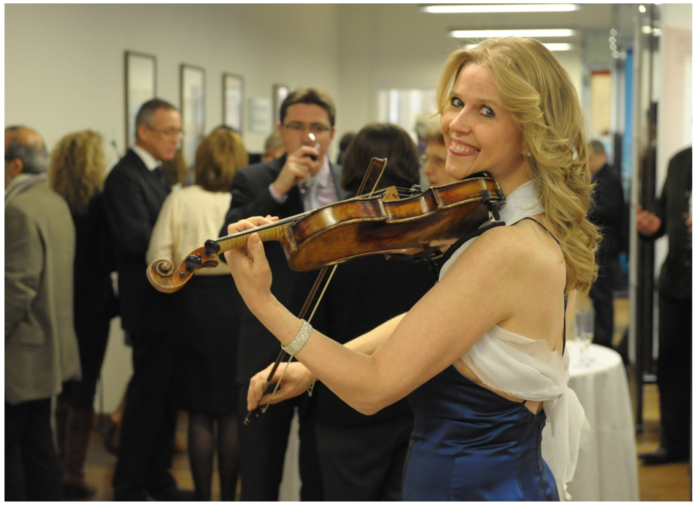
In the world of violinists, where talent and passion meet, Ilona Raasch stands as a shining example of artistic excellence and versatility. This Hamburg-based concert violinist captivates audiences across continents with her ability to weave emotion into every note. From classical masterpieces to electrifying contemporary pieces on her E-violin, Raasch’s artistry knows no bounds, making her a sought-after performer for a diverse range of events.
A Musical Journey Rooted in Passion
Ilona Raasch’s journey with the violin began at the tender age of six. Her natural talent was honed through rigorous training, including a masterclass with the esteemed Professor Söregi in Hungary and formal studies at the prestigious Hamburg University of Music. These formative years laid the groundwork for her multifaceted career, spanning solo performances, orchestral collaborations, and teaching.
Raasch’s orchestral experience is as varied as it is impressive. She has performed with ensembles such as the London Chamber Orchestra, the Mozart Orchestra, and the Philharmonie der Nationen under the baton of Justus Frantz. As a concertmaster of the Chamber Orchestra Quickborn, she showcased her leadership and soloist abilities, winning the admiration of peers and audiences alike.
A Performer for All Occasions
What sets Ilona Raasch apart is her adaptability and dedication to crafting memorable experiences for her listeners. Whether performing at grand hotels like the Atlantic Hotel in Hamburg or in intimate settings such as weddings and corporate events, her repertoire spans classical, jazz, pop, and even rock. From Bach’s ethereal “Ave Maria” to Gershwin’s jazzy “Summertime,” her performances resonate with elegance and emotion.
Her mastery of the E-violin introduces a thrilling modern dimension to her music, reminiscent of artists like David Garrett. Pieces such as “Smooth Criminal” transport audiences into uncharted musical territories, blending tradition with innovation.
Raasch’s impact extends beyond entertainment to significant global platforms. She has performed at events for human rights at the United Nations, among other prominent venues, using her music to lend a voice to important causes. These performances underline her belief in the transformative power of music to inspire and unite people across cultures and ideologies.
A Legacy of Excellence
Raasch’s resume boasts collaborations with luminaries like James Last and appearances on major television networks, including ARD, ZDF, and NDR. Her work has graced cinematic projects and high-profile galas, underscoring her ability to transcend genres and mediums. Audience testimonials highlight her unique capacity to bring warmth and vitality to any occasion, leaving a lasting impression.
A Visionary Musician Teaching the Next Generation
Beyond the stage, Raasch dedicates her time to teaching violin in Hamburg. Her commitment to nurturing talent reflects her belief in music’s transformative power, inspiring both children and adults to pursue their musical dreams.
Ilona Raasch’s blend of technical brilliance, emotional depth, and genre-spanning repertoire cements her place as a trailblazer in the world of violin music. Her performances are not merely concerts but heartfelt experiences that linger long after the final note.
For those seeking a touch of musical magic, Ilona Raasch is more than a violinist; she is an artist who plays directly to the soul.