Sunday, September 20, 2026
Home Blog Page 1122

MEPs want to end golden passports schemes | News European Parliament

0
MEPs want to end golden passports schemes | News | European Parliament
The EU should end so-called golden passports which allow rich people to obtain EU citizenship in exchange for investment. MEPs vote on the proposal during the March plenary.

A new report calls for the EU to ban the sale of citizenship by investment schemes and to regulate residence by investment  schemes. The schemes confer EU citizenship or resident status on non-EU nationals in exchange for financial investments.

Report author Sophie in ‘t Veld (Renew Europe, the Netherlands) said: “The bar for what counts as an investment has been too low for too long. EU residency should only be awarded to people who are investing in the real economy and who can be trusted to be legitimate investors without criminal backgrounds.”

These schemes are characterised by having minimal to no requirements of physical presence and offer a fast track to residency or citizenship status in an EU country compared with the obstacles of seeking international protection, legal migration or naturalisation through conventional channels. Once granted their new status of residency or citizenship, the beneficiaries of the schemes immediately start enjoying freedom of movement within the Schengen area.

The report produced by Parliament’s civil liberties committee calls the schemes “objectionable from an ethical, legal and economic point of view”.

Three countries currently have citizenship by investment schemes: Malta, Bulgaria (where the government has tabled legislation to end it) and Cyprus (only processing applications submitted before November 2020). Twelve EU countries currently operate residence by investment schemes. The minimum investment levels range from €60,000 to €1,250,000.

A study has estimated that more than 130,000 people have obtained residence or citizenship in EU countries via these schemes with the total investment estimated at €21.4 billion from 2011 to 2019.

Red carpet for shady people

The report says that the existence of passport-for-cash schemes affects all EU countries because a decision by one member state to grant citizenship for investment automatically gives rights in relation to other countries. These rights include freedom of movement, the right to vote and stand as a candidate in local and European elections and right to access the single market for economic activities.

The schemes can affect other EU countries because of the risks of corruption, money laundering, security threats, tax avoidance, pressure on the real estate sector and an erosion of the integrity of the internal market.

Meanwhile, EU countries do not always consult the available EU databases or exchange information on the outcome of such checks and procedures, according to the committee report. It expresses concern that some countries were reported to have accepted applicants for citizenship who did not meet the security requirements.

In ‘t Veld said: “A lack of scrutiny meant that the red carpet was rolled out for corruption and money laundering. Shady people paid large sums of money to obtain access to the EU. Communities have not benefited from these sums, but instead suffered from corruption. Journalists investigating some of the people coming in have sometimes faced grave consequences. In more ways than one, the whole of Europe bears the burden of practices that marginally benefit some governments.”

The European Commission launched infringement procedures against Cyprus and Malta in 2020 concerning their citizenship by investment schemes and the report calls on the Commission to advance those procedures.

Gas or cash?

The Russian invasion of Ukraine has further catapulted the schemes into the spotlight in recent weeks.

Parliament President Roberta Metsola tweeted. on 25 February: “The Kremlin has long thought it could buy its way into Europe. It is time to close any loopholes, end the dangerous phenomenon of so-called golden passports that provide a backdoor to European citizenship and ensure that Russian cash does not become the next Russian gas.”

In a resolution adopted on 1 March, MEPs demanded that EU countries with such schemes review all beneficiaries and revoke those attributed to rich Russians, especially the ones linked to sanctioned people and companies.

MEPs will debate the report on Monday and vote on it the following day.

“A Polaroid picture helped reveal the eye cancer that cost our son his eye”

0
“A Polaroid picture helped reveal the eye cancer that cost our son his eye”
A mum and dad are urging other parents to look out for the tell-tale signs of eye cancer after their 14-month-old son lost his eye through retinoblastoma, a rare eye cancer that typically affects children under the age of six.  

Dad Tom Pughe-Morgan, from Brighton, spotted an unusual white glow in his then eight-month-old son Elijah’s eye – a common sign of eye cancer which is often only seen in certain light.   

Mum Annabel Byrne said, “Tom first spotted the white glow in the Summer of 2020. Later, I took a video of Elijah climbing up the stairs and Tom said, ‘There’s the white glow I’ve been talking about. I’m worried because I can see it really clearly’”.

The parents were unaware of the signs and symptoms of retinoblastoma, and findings from a recent *survey on behalf of the Childhood Eye Cancer Trust found that only 19% of parents surveyed felt they knew the symptoms of the cancer, and a decline in parents being concerned about their child’s eyes.

Annabel said, “I saw a TikTok video of influencer Jarrett Stod removing his artificial eye and explaining that he’d had retinoblastoma. You never think something like that will happen to your child”.

Elijah with a white glow

In January 2021, a month after seeing the TikTok video, Annabel had the sudden urge to find her old Polaroid camera.

Annabel explained, “I was so keen to find it, I was going crazy as I just really wanted the camera to work. I rushed to get the last film in the shop and then rushed out again when I realised it needed batteries. Everyone in my house was looking at me like ‘What’s going on?’”.

“The first photo I took on the Polaroid you could see the white glow in Elijah’s pupil so clearly, and although Tom had told me that he had seen a glow, I didn’t realise something was wrong until then. The white glow really alarmed me because it was so clear and everything else in the picture was so dark apart from the glow, and after talking to a family friend, I took Elijah to hospital the next day.”

The polaroid photo that prompted the hospital trip

“Elijah looked up at me as he ran around the ward and I could see his eye glow in the light. When the doctor examined him, he said, ‘I’m really sorry, but I think your son has retinoblastoma’. He explained that someone from the children’s ward would see him ASAP. I calmly replied ‘Ok, lovely thank you’, because I didn’t know what retinoblastoma was.”

It wasn’t until the specialist The Sussex Eye Hospital mentioned about Elijah going to Great Ormond Street Hospital for Children (GOSH) that Annabel realised the severity of the situation.

Annabel explained, “I remember the word ‘cancer’ and that’s it. I just felt so numb and floppy and had to leave. My whole world stopped; I couldn’t even process it. I rang Tom and said, ‘Elijah has cancer’ – he didn’t believe me at first but then immediately left work to come to the hospital. I was holding onto my 14-month-old boy who hadn’t a clue, smiling away. I was his comfort and I needed to step up. It was by far the hardest moment I’ve had to deal with, and I had to keep our family together and strong.”

Annabel adds, “We both felt so bad. I felt bad for not listening for the past six months and Tom felt bad for not doing anything, but we didn’t even mention it. We knew that he was being seen now and that’s all that mattered.”

Two days later, on the 6th January 2021, the family went to Moorfields Eye Hospital where Elijah was diagnosed with retinoblastoma. Elijah’s MRI revealed that the cancer luckily hadn’t spread outside of his eye, but the parents were faced with the decision of either Elijah having chemotherapy, or having his eye removed.

Elijah with his mum, Annabel

Annabel explains, “If Elijah had gone through chemotherapy there was a chance he would still need his eye removed or the cancer spreading. While parents who choose chemotherapy are so strong, Tom and I looked at each other and we just knew that having his eye removed was the right thing to do for Elijah.”

The morning of Elijah’s operation at the Royal London Hospital on the 13th January 2021, Annabel felt emotional and tried to hold back the tears.

Elijah in hospital with his dad, Tom

Annabel said, “I’d never been so scared when we went to collect him – I scooped him up and didn’t want to let go. Tom and I are both very grateful for each other, we were each other’s backbone.”

“The day after the operation, Elijah was happier but wanted lots of cuddles – he bounced back to normal within a week. He was given an artificial eye – which he is amazing with! Elijah is now at an age where he is aware and likes to play with it. When I catch him, he always giggles because he knows he’s being cheeky. We have a box of all the artificial eyes he’s had so far; he loves looking through them and explaining they are his ‘old eyes’. It’s so nice to see him be that way.”

Elijah after his operation

After Elijah had his eye removed, he attended an event hosted by influencer Olivia Deane, who had also had retinoblastoma.

Annabel explained, “Olivia is an inspiration; she gave me that spark of confidence to not care what people think. I wanted to come across as a strong mum and not care about other’s opinions, but I did care. You just want to protect your children at all costs, and you don’t want people saying nasty things. My confidence around it is definitely growing.”

Olivia Deane with Elijah at her awareness event

Elijah now gets seen for a check-up at the Royal London Hospital every six months, but he was able to ring the bell for being cancer-free on the 4th January 2022 – exactly a year after he received his diagnosis.

Annabel said, “Tom and I were thrilled because it’s such a lovely thing to do, especially as it was a year anniversary. We helped him ring it and it was a lovely atmosphere.”

“Elijah is the most amazing, funniest, bravest, cheekiest, gorgeous, polite little boy! He loves animals, being outside and horse riding. As he has one eye you just want to protect it, but I don’t wrap him up in cotton wool. I want him to go out and be himself. I believe he can do anything a child with two eyes can do.”

Elijah and his dad, Tom

In a message to other parents, Annabel said, “Trust your gut. If you’re worried, book a doctor’s appointment. It’s a few hours out your day that could save your child’s life.”

The Childhood Eye Cancer Trust (CHECT) are urging parents and healthcare professionals to be aware of the most common possible symptoms of eye cancer – a white glow in the eye in flash photo or other certain lighting conditions and a squint. 

Patrick Tonks, Chief Executive of CHECT said: “Retinoblastoma is rare, with around one baby or young child being diagnosed in the UK each week. Symptoms can be quite subtle, and children often seem well in themselves which can make it hard to diagnose. In just under half of all cases, such as in Elijah’s case, a child has to have an eye removed as part of their treatment.”

Patrick adds, “We are extremely grateful that in Elijah’s case, his symptoms were recognised, and A&E made an urgent referral so that he could undergo treatment.”

Elijah’s Great Great aunt, Ash, is very kindly shaving her hair for CHECT.

Annabel explained, “I’m so happy Ash chose to do this for CHECT as they’ve helped our family hugely – not only financially, but mentally, and offering help whenever it was needed. Thank you Ash”

“We also want to thank all the health professionals who helped with diagnosing and treating Elijah”.     

For more information on the signs, symptoms, and treatment of retinoblastoma, please visit chect.org.uk.  

– ENDS –

NOTES TO EDITORS

The Childhood Eye Cancer Trust (CHECT) is a UK charity dedicated to helping people affected by retinoblastoma. It:

  • Provides ongoing support and information to families and individuals.
  • Funds research into the prevention and treatment of retinoblastoma.
  • Raises awareness among health professionals and the public.
  • Influences policy to improve services for patients.

Retinoblastoma is a rare and aggressive form of eye cancer that affects babies and young children, mainly under the age of six. Around 50 cases are diagnosed a year in the UK – or one child a week. It represents 3% of all childhood cancers and 10% of cancers in babies under the age of one in the UK.

Around 98% of children survive retinoblastoma in the UK but early diagnosis is crucial in order to save a child’s eyes, sight and life. The most common symptoms are a white glow in a child’s eye or pupil in dim lighting or when a photo is taken using a flash, and a squint.

CHECT has been a registered charity since 1987 and was formerly known as the Retinoblastoma Society.

*1,026 parents took part in the online survey, conducted by MMR Research Worldwide in January 2022. All parents had at least one child aged between 0-6 years

For more information on CHECT or retinoblastoma (also known as Rb), including signs and symptoms, diagnosis and treatment options, please visit www.chect.org.uk.

Media enquiries:

For all media enquiries please contact:

Isabella Greenwood (Communications Manager)

Email: isabella.greenwood@chect.org.uk

Press release distributed by Pressat on behalf of Childhood Eye Cancer Trust, on Friday 4 March, 2022. For more information subscribe and follow https://pressat.co.uk/

Bulgaria has authorized the implementation of a humanitarian flight to pick up Russian citizens

0

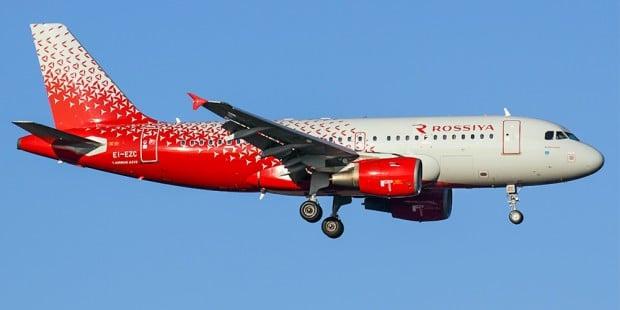
On its national holiday, Bulgaria allowed the implementation of a humanitarian flight for the repatriation of Russian citizens to the territory of the Russian Federation. The flight took place on March 3, 2022 on the route Moscow / Sheremetyevo – Sofia – Moscow / Sheremetyevo by the Russian air carrier “Rossiya Airlines”. The requested aircraft type is Boeing 737-800 (B738).

The relevant EC services were informed about the actions taken by the Bulgarian side and about the exceptionally granted operational permission from the General Aviation Administration.

The permit is issued according to item 3 of art. 3d of Council Regulation (EU) 2022/334 of 28.02.2022 amending Council Regulation (EU) № 833/2014 concerning restrictive measures in view of Russia’s actions destabilizing the situation in Ukraine.

The flight must be performed under the following conditions:

– The incoming flight on the section Moscow – Sofia should be empty positioning.

– The return repatriation flight must carry on board only citizens and residents of the Russian Federation, without a return flight or connecting flights outside the Russian Federation.

– The flight is not included in the reservation systems and tickets cannot be sold for it.

– All passengers who have been repatriated by flight should be identified by the local consulate.

4500-year-old Temple of the Sun discovered in Egypt

0

The find still requires research and confirmation, but scientists are already calling it the largest discovery in recent decades.

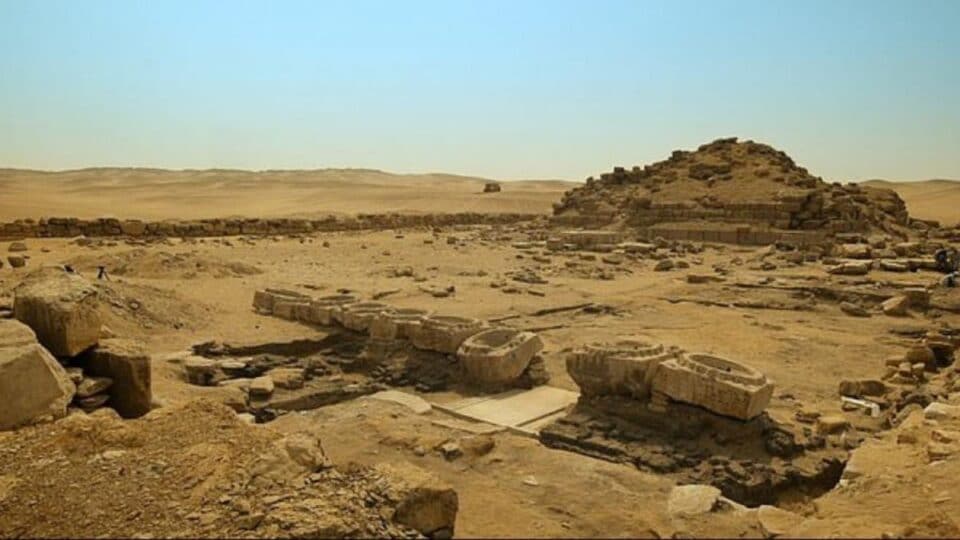
An international team of archaeologists excavating the Egyptian desert in Abu Gorab in 2021, south of Cairo, have uncovered ancient ruins that they believe are one of six known lost temples of the Sun.

According to scholars, these temples were built about 4,500 years ago during the lifetime of the Pharaohs of the Fifth Dynasty as their final resting places to ensure that the pharaohs are resurrected as gods in the afterlife.

Experts are aware of six such buildings, but only two of them have been found. However, it is likely that the new find may turn out to be the third temple.

Initially, experts excavating north of the Egyptian archaeological site of Abusir discovered the remains of a likely Temple of the Sun, built for Pharaoh Nyuserra, who ruled for about 30 years in the 25th century BC. But further excavations revealed an older foundation made of mud bricks, indicating that a building had already existed at this site.

Experts then found the base of a white limestone column about half a meter deep and many beer jugs for ritual offerings, which, combined with the newly discovered architecture, is important evidence for the theory of the Temple of the Sun.

For whom and when exactly this old original temple was built remains a mystery. Although scientists believe that, most likely, it was a ruler of the same period.

Recall that the pharaohs of the Fifth Dynasty ruled for about 150 years from the beginning of the 25th century BC to the middle of the 24th century BC. Only a small number of these rulers had their own temples of the Sun, created in the name of the sun god Ra on the western bank of the Nile, writes The Sun.

Scientists have yet to complete the excavations and carry out the necessary research, but they already call the new find the largest archaeological discovery of Egypt in recent decades.

Sintra – the Masonic charm of Portugal

0

“The most beautiful place in Portugal.”

Sintra is one of the most beautiful cities in all of Portugal. It offers an abundance of various tourist attractions to its visitors and has established itself as one of the most popular day trips from the capital Lisbon. The distance between the two cities is about 30 km. Sintra is a charming Portuguese jewel and it is no coincidence that Hans Christian Andresen describes it as “the most beautiful place in Portugal”.

Archaeological finds indicate that this area has been inhabited since the early Paleolithic. It hides in itself a unique nature, shown architecture and a great deal of mystery. Sintra is part of the cultural and historical heritage of UNESCO and there is definitely a reason for that. The city is so different from the rest of Portugal that it can not fail to fascinate and captivate you in an instant.

Colorful architectural beauty – Pena Palace

One of the most interesting and arguably most visited landmarks in Sintra, and in all of Portugal, is the Pena Palace. This majestic architectural jewel was built in 1842 by Ferdinand II – uncle of the Bulgarian king Ferdinand. The first thing that impresses every visitor to the palace is its unique appearance. It is a mixture of many styles, including those typical of North Africa. The colorful, displayed palace rises on a high hill above the city of Sintra, on the site where it is believed that in the twelfth century there was a chapel of the Virgin Mary. Over the years, the small chapel was enlarged, but was severely damaged by lightning in the tenth century and almost destroyed by the great earthquake in 1755. The palace is equipped with two gates, one called the arch of the lizard, and the other is equipped with a movable bridge. The palace also has a magnificent clock tower, the construction of which was completed in 1843.

In front of the main entrance of Pena is the so-called “Queen’s Terrace”, which, in addition to revealing a phenomenal view of the park, is also the place where you can fully enjoy the exterior architecture of the palace. The most photographed place here is the front door, where you can see different styles and many preserved and restored elements of the old monastery. The most impressive figure on it is the newt, which symbolizes the creation of the world. The interior of the palace is as interesting as its exterior.

One of the most beautiful rooms is undoubtedly the Indian room. It is definitely the absolute pinnacle of lavish decoration, which some would even compare to light kitsch. The park to the palace is another place worth visiting. It is nearly 200 hectares and has a variety of vegetation, beautiful statues and fountains. The highest point in it is Cruz Alta, from where you can enjoy an exceptional view of the capital Lisbon. When you visit Pena Palace it is important to know that very often there are various discounts when buying tickets online.

The fortress of the Moors

Another place that definitely deserves your attention is the so-called Moorish fortress. It is located directly opposite the Pena Palace and many people liken it to a miniature copy of the Great Wall of China. The fortress was built by the Moors in the IX century, with a view of the sea and the whole area for better observation for defense. Over the years, it gradually declined due to the Crusades, suffered devastating fires and earthquakes, to almost complete destruction. Nowadays, the Moorish fortress has been restored and is open to the public.

The hidden Masonic greatness

One of the most interesting places in Sintra, however, remains the mansion “Quinta de Regaleira”. This is a mystical place, a mixture of many styles, but with a predominant Gothic touch. It was built in the 19th century and arouses mixed feelings in its visitors – excitement, admiration and even a little fear. The building of the manor is surrounded by interesting gardens, which are quite complex labyrinths, statues with mysterious symbols, in some places pagan, other religious.

Definitely this place arouses interest and curiosity, as it is believed to be associated with the Freemasons. In 1840, the wonderful mansion was bought by Baroness de Regaleira, daughter of Alphonse Allen, a wealthy merchant from Porto, and perhaps a Mason, who knows. That’s where his name comes from. The mansion is also called the “Millionaire Monteiro’s Mansion” because Antonio Monteiro, an extravagant millionaire, bought it at auction in 1893. He hired the architect Luigi Manini, who turned the building into a real architectural jewel – a mixture of Gothic, Romantic, Renaissance and Masonic. style. It is believed that he left a lot of hidden messages and symbols throughout the estate. The project was completed in 1911.

The interior of the building is just as impressive as its appearance. There is a huge fireplace in the dining room, which depicts many hunting scenes. One of the most beautiful rooms, however, is the Hall of Kings. Its ceiling is richly decorated with 20 kings and four queens of Portugal, as well as various characters from the glorious Portuguese history.

In the park to the yard there is a small chapel, which is decorated with scenes from the life of Christ. There are many Templar symbols on it as well.

The palace is as beautiful as it is mysterious. The most exciting and mysterious place here is the Well of Enlightenment, which has long been without water and is believed to have been used for various rituals and ceremonies. It is believed that this is where the Freemasons dedicated themselves to their brotherhood. One of the beliefs is that when the traveler descends into the well, with each step he is enveloped in deeper darkness and only the compass at the bottom, drawn above the waist of the Knights Templar, which always points to the east, reminds him that man always strives for light.

Another mysterious well near this one contains nine platforms, which is believed to symbolize the Nine Circles of Hell according to Dante. In addition to these strange places, there are many others in the gardens that are believed to be the work of Masonic art and genius. It is no coincidence that the whole mansion is called the “Palace of Mysteries”.

Free time

If you have some free time left after visiting these majestic mystical places, don’t forget to enjoy the local specialties in a restaurant in the very center of the city. In addition to places to relax and eat, there are many souvenir shops where you can buy various local products. The most popular are cork souvenirs, such as notebooks, cards, purses, bags and more.

Abramovich donates the money from Chelsea to Ukraine

0

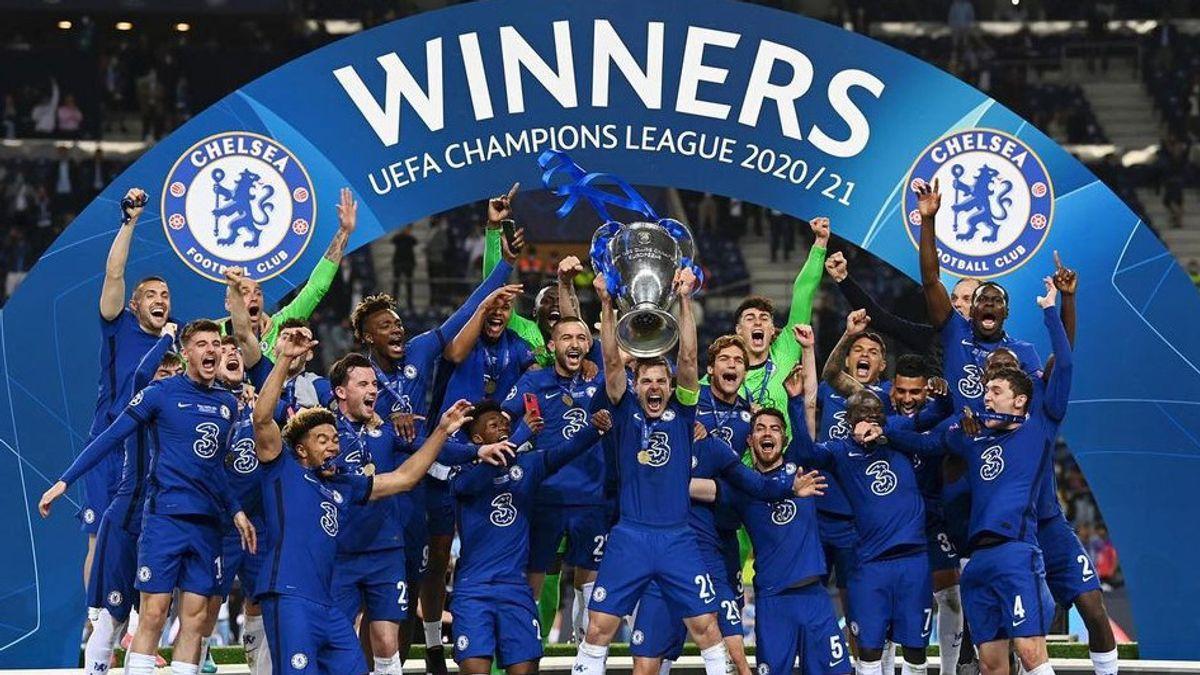
Chelsea’s Russian owner Roman Abramovich has officially announced that he will sell the English club. A few days ago, the billionaire resigned from the management of the “blues” from London, and now, through a message on the team’s website, he announced his intention to terminate the ownership of the team after nearly 20 years at the helm.

The oligarch began investing in Chelsea in 2003, when he bought Sofia for 190 million euros, and under his rule won all major trophies in world football, including two Champions Leagues, the Europa League (twice), the UEFA Super Cup (twice) ), The FA Cup (five times), the Premier League (five times) and the League Cup (three times).

“I want to comment on the speculations in the media that have emerged in the last few days and related to my ownership of Chelsea Football Club. As I have already said, I have always made decisions, putting the interests of the club first. In the current situation, I decided that I should sell the club, because it is best for Chelsea, the employees, the fans, as well as the sponsors and partners”, reads the position of Abramovich.

“The sale of the club will not be rushed and I will also not want to be repaid any loans. It was never just a business investment for me, but most of all a passion for the game and the club. I have also instructed my team to set up a foundation that will receive all proceeds from the sale and donate to charity – for the benefit of all those affected by the war in Ukraine. This includes the funds that are currently needed, as well as those for recovery from the consequences in the long run in time, “the statement continued.

Abramovich added that it was not easy to make that decision and it hurts him to part with Chelsea in this way, but again points out that this is the best for the club.

I hope to be able to visit Stamford Bridge one last time to say goodbye to all of you personally. It was a real privilege to be part of Chelsea and I am proud of all our achievements together. Chelsea and the fans of the club will always be in my heart. Thank you “, the billionaire concludes.

According to unofficial information, the value of the club is currently over 3 billion euros.

More countries also asked for EU membership because of the crisis in Ukraine

0

On Tuesday, Ukrainian President Volodymyr Zelensky, whose country was attacked by Russia a week ago, called on the European Union to accept Ukraine immediately.

Earlier on Thursday, another former Soviet republic, Georgia, also applied for EU membership, AFP reported.

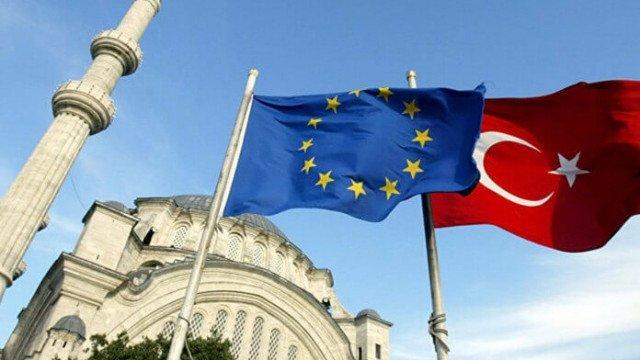
Turkey praises the European Union’s efforts to include Ukraine in the bloc, President Recep Tayyip Erdogan said, and called on Brussels to be equally sensitive to Turkey’s accession process.

Asked about Ukraine’s bid for EU membership at a press conference in Ankara, Erdogan said Turkey, a candidate for EU membership for decades, would support any NATO and EU enlargement.

“We appreciate Ukraine’s efforts to join the EU. But I ask EU members why Turkey’s EU membership worries you?” he said.

He called on the bloc to show “the same sensitivity” it showed to Kyiv’s bid for Turkey’s membership, and criticized member states for “not being sincere”.

“Will you put Turkey on your agenda when someone attacks us too?” He said.

On Monday, Ukrainian President Volodymyr Zelensky called for Ukraine’s “immediate accession” to the EU.

“We call on the European Union to join Ukraine immediately under a new special procedure,” Zelensky told the nation.

Turkey is a candidate for EU accession, but accession talks are stalled due to a number of problematic issues. Turkey has been applying for EU membership since 1987, and accession talks began in 2005. But negotiations stalled in 2007 due to objections from Cyprus, as well as resistance from Germany and France.

On Tuesday, the European Parliament adopted a resolution calling for an EU bid for Ukraine a day after eight bloc countries – Bulgaria, the Czech Republic, Estonia, Latvia, Lithuania, Poland, Slovenia and Slovakia – voiced support for Zelensky’s call.

Erdogan also reiterated his call for “both Russia and Ukraine to cease fire as soon as possible,” Erdogan said, urging Moscow and Kyiv to “make a good contribution to world peace.”

Erdogan reiterated that Turkey, which has the second largest army in the alliance, supports NATO enlargement.

With war on its doorstep, Moldova is officially applying for EU membership

It has taken 30 years for Moldova to reach maturity, but it is now ready to take responsibility for its own future, President Maya Sandu said

The Republic of Moldova is officially applying to join the European Union. President Maya Sandu signed the document on March 3rd, the government said in its Telegram channel, specifically open to communication with citizens and the media during the country’s state of emergency due to the situation in neighboring Ukraine.

“It took Moldova 30 years to reach maturity, but today the country is ready to take responsibility for its own future,” Sandu said before picking up the signed document in front of television cameras, Reuters reported.

“We want to live in peace, prosperity, be part of the free world. While some decisions take time, others must be made quickly and decisively, taking advantage of the opportunities that come with a changing world,” she said.

The application will be sent to Brussels in the coming days, she said.

In 2014, Moldova signed an association agreement with the EU. However, it does not contain any guarantees for further integration, AFP notes.

Remarks by Vice-President Maroš Šefčovič at the press conference following the informal meeting of the General Affairs Council

0
Remarks by Vice-President Maroš Šefčovič at the press conference following the informal meeting of the General Affairs Council

European Commission Speech Arles, 04 Mar 2022 Bonjour, tout d’abord, permettez-moi de souligner combien j’apprécie que la présidence française ait adapté le programme de notre réunion ministérielle informel…

5300 years have passed since the first ear surgery

0

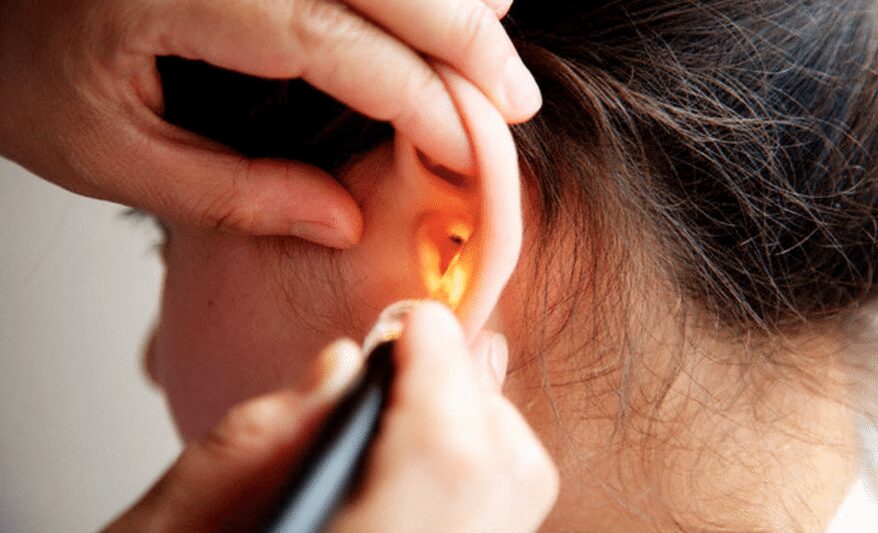
Found evidence of the first ever operation on the ear, made 5300 years ago

Researchers from the University of Valladolid in Spain and the Spanish National Research Council in Italy published an article in Scientific Reports. They found evidence of the earliest human ear surgery, in the region of Burgos, in a place most likely used by ancient people as a burial site.

Previous research has shown that the site was used for this burial for 800 years between 3800 and 3000 BC.

The scientists analyzed the skull found in Burgos and found that it had traces of a skull operation. Not only were doctors able to perform ear surgery, but the woman who had the operation survived it, even though she lived only a few months after that.

The skull of a woman between the ages of 35 and 50 is 5,300 years old, making it the earliest example of ear surgery. In modern science, this procedure is called a mastoidectomy. It is performed to clean a suspected infected area. Failure to manage the problem can cause many people to become deaf or have serious infections that can lead to death.

A flint tool was also found on the same grave of the patient. It showed signs of having been heated several times, which means it may have been used as a cauterizing tool to stop bleeding.

In the woman’s skull, scientists found signs of bone growth in the holes, suggesting that the operation may have been successful, albeit not for long.

Five Ukrainian dioceses have officially stopped mentioning Russian Patriarch Kirill

0

On March 1, five Ukrainian dioceses of the Ukrainian Orthodox Church (Moscow Patriarchate) in eastern Ukraine officially refused to mention Moscow Patriarch Kirill during a service. The decisions are published on their official websites. These are the dioceses of Sumy, Rivne, Mukachevo, Vladimir-Volyn and Zhytomyr, which have suffered greatly from the aggression of Putin’s army.

This is supposed to be with the consent of Metropolitan Onufriy of Kiev.

Earlier yesterday, several dozen clerics from the Sumy diocese sent a letter to their bishop announcing their decision that their pastoral conscience no longer allowed them to mention the Russian patriarch as their superior. Today the Sumy miter. Eulogius, who was known for his strong pro-Russian positions, joined them. Its decision reads: “Condemning Russia’s bloody aggression against the Ukrainian state and the Ukrainian people, taking into account the address of our clergy and laity on February 28, 2022, I bless the end of the prayerful mention of the Moscow Patriarch in Sumy temples and monasteries. Diocese of the Ukrainian Orthodox Church ”.

Here is the full text of the address:

“On February 24, 2022, the armed forces of the Russian Federation insidiously invaded the territory of Ukraine without declaring war. The Sumy diocese, which covers part of the Sumy region, is border, and that is why one of the most terrible blows of the Russian army fell on the territory of our diocese. Residential areas are being attacked, innocent civilians are being killed.

In this terrible moment of trials, we express our full support for our homeland, Ukraine. We offer prayers for the Ukrainian authorities, for the armed forces of Ukraine and for all those who stood up today in defense of Ukraine with weapons in their hands. We are ready to provide the Ukrainian army with all possible assistance. We also support the suffering civilian population and call on all our parishioners to support with acts of mercy all the victims: those who were left homeless; those in need of food and sustenance; those in need of medical care. Everything we do for our neighbors, we do for Christ Himself, fulfilling His commandment to love.

On the first day of the war, His Beatitude Metropolitan Onufriy of Kiev and all of Ukraine issued an appeal to the flock, and also recorded a video address in which he unequivocally condemned the aggressive actions of the Russian Federation, fully supported the Ukrainian armed forces and called on the Russian leadership to stop this bloody madness. . We fully sympathize with His Beatitude and sincerely thank Him for these important addresses filled with pastoral wisdom and responsibility.

At the same time, we are forced to admit with particular sorrow that in these terrible days, His Holiness Patriarch Kirill of Moscow and All Russia did not condemn in any way the aggressive actions of the Russian authorities. In his address of February 24, 2022, Patriarch Kirill only called on “all parties to the conflict to do everything possible to avoid civilian casualties.” So the war itself is not condemned here. The insidious invasion of Ukraine by the Russian army has not only not been condemned, but has not even been named.

On Sunday, February 27, during a service in the Cathedral of Christ the Savior, Pat. Cyril read a prayer for Ukraine, in which he called what is happening in our country internal “quarrels and conflicts.” And in a speech after the Liturgy Patr. Cyril literally said: “God, do not allow the current political situation in fraternal Ukraine, which is close to us, to be used for the evil forces that have always fought against the unity of Russia and the Russian Church to take over.” Again, these words do not condemn the aggression committed against our country. Moreover, these words give reason to think that the patriarch fully approves of forcing Ukraine to relinquish state sovereignty and forcibly join Russia.

Despite the fact that His Holiness Patriarch Kirill has been saying for many years that Ukraine is an area of ​​his pastoral responsibility, today we do not see any attempts on his part to protect the suffering people of Ukraine.

In this difficult situation, guided by the dictates of our pastoral conscience, we decided to stop mentioning the Moscow Patriarch of Worship. This decision was dictated by the demands of our flock, which, alas, no longer wants to hear the name of the patr. Cyril in our temples.

We especially want to emphasize that this step does not contain any canonical violations. According to the prescriptions of the church canons, the priest is obliged to mention only his ruling bishop. We continue to mention at the services His Beatitude Onuphrius, Metropolitan of Kyiv and All Ukraine, and His Eminence Eulogius, Metropolitan of Sumy and Akhtyr. We remain part of the Ukrainian Orthodox Church. It is known that there are parishes in the Ukrainian Orthodox Church that have not mentioned the name of the Moscow Patriarch for many years, and no one accuses them of that.

We address this appeal primarily to our fellow clergy, the clergy of the Diocese of Sumy:

Dear fathers! Think and join us!

We would especially like to address our ruling Bishop, Metropolitan Eulogius of Sumy and Akhtyr:

Your Eminence, dear Bishop Eulogius!

We would like to inform you that we, the undersigned clergy of the Sumy Diocese, condemning the criminal and brutal war started by the Russian Federation against Ukraine and the Ukrainian people and its real support by Patriarch Kirill of Moscow and All Russia, henceforth stop mentioning the name of the Moscow Patriarch. worship services.

At the same time, we remain faithful to the Ukrainian Orthodox Church and express our love and full support for our Primate, His Beatitude Metropolitan of Kyiv and All Ukraine Onufriy. We also express our love and support for our suffering people, our valiant soldiers, our Ukraine. “

The laconic message on the social network of the famous Ukrainian bishop Jonah (Cherepanov), abbot of the Holy Trinity Monastery in Kyiv, also received a strong response today. Ep. Jonah is the vicar of the Kiev diocese, known for his missionary work among Ukrainian youth, heads the Synod’s Department for Youth Work of the UOC (MP), and is very popular in Russia:

“For my friends from Russia.

Yes, we have a war. Russia invaded Ukraine. Civilians are dying, children are being killed, our temples are being burned. We did not wait for any “liberators”, nor did we call them. The people are unanimous and united in their attitude to this terrible aggression. I don’t know what else to say. “That’s the truth.”

No Ukrainian bishop or priest has supported the Russian invasion, and all official church statements speak unequivocally of war and brutal aggression against the Ukrainian Christian people.