Sunday, September 20, 2026
Home Blog Page 1123

Solar geoengineering: Why do some scientists want to “dark” the Sun ?

0

Why do some scientists want to “dark” the Sun

Why do some scientists want to “dark” the Sun, while others sound the alarm

An open letter was published from 46 scientists and experts in which they said that the idea of ​​”darkening” the Sun to combat climate change is very dangerous, as it could damage crops and cause the Amazon to dry out. Hi-Tech is investigating how the idea to reduce solar radiation came about and what risks this may entail.

Spraying an aerosol that reflects light, or creating special reflectors that block some of the solar radiation, is not science fiction, but real projects in the field of solar geoengineering.

How do scientists want to manage solar radiation?

Adherents of the idea of ​​solar geoengineering propose to reflect part of the solar energy back into space in order to reduce the temperature of the Earth and prevent climate change. The idea is that the temperature of our planet is rising due to an increase in the amount of greenhouse gases that absorb energy.

In April 2019, the book Climate Engineering and the Law was published in the United States, edited by renowned climate regulation expert Michael Gerrard. In it, he noted that there are “passive” techniques for influencing the climate, such as capturing carbon dioxide. Such approaches are relatively safe, as they will not have global consequences. But projects in the field of solar geoengineering and other global ideas need to be specifically regulated, he noted.

There are three methods by which they want to “darken” the Sun

• Increase the reflectivity of clouds or the Earth’s surface to reflect more heat into space.

• Create cosmic reflectors that will block some of the light before it reaches Earth.

• Spray stratospheric aerosol to reflect sunlight before it hits the Earth.

Adherents of the idea of ​​solar geoengineering propose to reflect part of the solar energy back into space in order to reduce the temperature of the Earth and prevent climate change. The idea is that the temperature of our planet is rising due to an increase in the amount of greenhouse gases that absorb energy.

Is solar geoengineering safe or dangerous?

• Short-term consequences:

So far, there is no definitive answer to this question. If you change the reflectivity of the atmosphere, then, according to scientists, there is a risk of global climate imbalance. This means that in one part of the planet the situation will get better, but in another it will worsen radically, for example, the distribution of monsoons will change or drought will worsen in Africa and Asia. If this happens, then about 2 million people could be left without food and water.

• Long term effects:

It is also unknown how, over time, the climate will react to the consequences of solar geoengineering. In the event that the distribution of the reflective aerosol stops, a “termination shock” can occur. The researchers found that if this happens, then the global temperature can increase dramatically, and this will lead to massive death of ecosystems.

In addition, solar geoengineering will not help us solve the problem of global warming, but, at best, put it on pause, since the concentration of greenhouse gases in the atmosphere will not change.

Are there real examples and projects on solar geoengineering?

• Cloud brightening:

Yes, one of the most popular projects with the United States is the “lightening” of sea clouds. The bottom line is that the brightest white clouds reflect more sunlight back into space. Therefore, the researchers proposed seeding the clouds with sea salt and other substances. Special technologies are being developed to spray and send seawater particles into the sky.

• Project of Bill Gates with a balloon and an aerosol can:

An experiment aimed at combating global warming will be conducted by specialists from Harvard University. To use for this they are going to a balloon and an aerosol can. Microsoft founder Bill Gates will financially support the project.

The researchers plan to launch meteorological balloons that release small particles of calcium carbonate into the stratosphere. These fragments, the authors suggest, will reflect the sun’s rays, sending them back into space. All this should reduce the average temperature of water and air. Based on the results of each stage, it is proposed to carry out special checks by appointed independent commissions in order to make sure that the technology does not harm the atmosphere.

All this should reduce the average temperature of water and air. Based on the results of each stage, it is proposed to carry out special checks by appointed independent commissions in order to make sure that the technology does not harm the atmosphere.

Why doesn’t everyone support solar geoenergy?

Geoengineering is already being controlled at the global level: in 2010, the ban on geoengineering projects was adopted by the parties to the UN Convention on Biological Diversity, and since then it has been updated every two years. True, this is not a treaty or a protocol, but only a decision – a document of a lower level.

However, there are still many loopholes in international law that could potentially be exploited. Therefore, opponents of geoengineering are turning to the world scientific community. At the end of January 2022, a group of 46 scientists and management experts created an open letter explaining why, in their opinion, such technologies are extremely dangerous.

The authors noted that the risks of solar geoengineering are not yet well understood and may never be fully known. The impact of solar geoengineering will vary by region, and there is uncertainty about the impact on weather patterns, agriculture, and the provision of basic food and water needs.

It is not yet known whether geoengineering will become a salvation in the future, but it is definitely not worth resorting to such measures just because humanity has no other choice. Geoengineering methods require more independent and well-controlled research so that researchers can better weigh the benefits of their application against the risks that humanity takes on by interfering with the Earth’s climate.
Disappearance of mammoths in Siberia

0

Scientists have established the cause of the disappearance of mammoths in Siberia

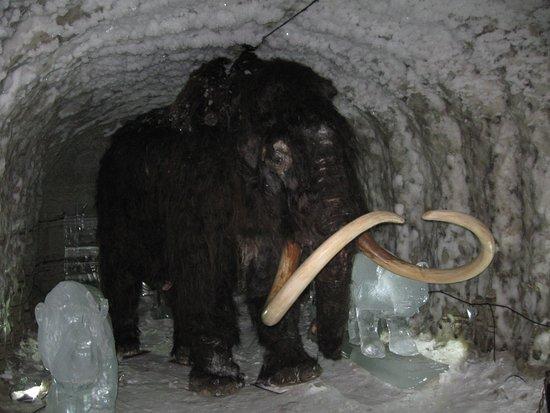
An extensive study based on soil DNA has shown that climate change was not the cause of the extinction of woolly mammoths in Siberia. The article was published in the journal Nature.

The animal and its ancestors lived on Earth for more than five million years, having gone through more than one ice age during this time. For several thousand years, they lived next to the first people who hunted them, used their meat for food, and built dwellings from bones and tusks, made harpoons, arrowheads and works of art. Even the oldest known musical instrument, the 30,000-year-old flute, is made of mammoth bone. Therefore, one of the hypotheses of the extinction of mammoths suggests that they were exterminated by people.

The results of a project carried out by scientists from ten countries led by Eske Villerslev, professor at St. John’s College, Cambridge University and director of the Center for Geogenetics of the Lundbeck Foundation at the University of Copenhagen, prove that this is not the case.

For twenty years, the authors collected soil samples in the Arctic, in places where the remains of mammoths were found, and painstakingly extracted DNA from them for analysis of plant and animal remains, including urine, feces and skin cells. The use of advanced sequencing technologies allowed them to recreate the habitats of extinct animals from these samples.

“Scientists have been arguing for a hundred years about why mammoths became extinct. People have been accused of the fact that animals that have experienced climate change for millions of years, next to the people who hunted them, did not live long,” – quoted in a press release from the College St. John’s words by Professor Villerslev.

The researchers proved that the problem was not so much climate change as its speed. The huge animals were unable to adapt quickly enough when the landscape changed dramatically, forests and swamps took the place of pastures, and food began to be scarce.

The authors combined detailed maps based on DNA analysis with a map of the distribution of populations of woolly mammoths and showed that over time, the size of animals and their genetic diversity was reduced, making survival even more difficult.

“When the climate became more humid and the glaciers began to melt, this led to the formation of lakes, rivers and marshes. The ecosystem changed, the biomass of vegetation was reduced, and it could no longer support mammoth herds. We showed that climate change, especially rainfall, directly affects replacing vegetation. According to our models, people did not influence them at all. Moreover, there were many animals around that were easier to hunt than a giant woolly mammoth, “explains Willerslev.

Within the framework of the project, scientists for the first time sequenced the DNA of 1,500 Arctic plants of the Pleistocene epoch and proved that the “mammoth” tundra steppe was a unique ecosystem, unlike anything that exists today. The study covers 50 thousand years of evolutionary history of this ecosystem and shows how its change caused the disappearance of not only the woolly mammoth, but the entire megafauna of the region.

CEC president urges Patriarch Kirill to raise his voice against Ukraine war

0
CEC president urges Patriarch Kirill to raise his voice against Ukraine war

President of the Conference of European Churches (CEC) Rev. Christian Krieger has urged Patriarch Kirill of Moscow and All Russia to raise his voice clearly against Russian aggression in Ukraine and contribute toward efforts to end the war and realise peace.

“Religious and political leaders around the world, as well as the faithful of different churches are waiting for you to recognise the aggression, call on the political leadership of your country to end the war and return to the path of diplomatic dialogue and international order,” reads CEC president’s letter to Patriarch Kirill, issued on 4 March 2022. “We call on you to affirm the value of all human lives, including the lives of Ukrainian citizens who are under attack.”

Krieger went on to say that like millions of Christians around the world, he is appalled by the aggression of the Russian armed forces against Ukraine, civilians and thousands of people fleeing the country. “At the same time, I am disheartened by your daunting silence on the unprovoked war that your country declared against another country, which is home to millions of Christians, including Orthodox Christians that belong to your flock,” he added.

“As churches, our horizon is beyond national interests. I firmly believe that the Gospel of our Lord Jesus Christ carries a message of peace for all humankind that calls for a deep respect for the dignity of every human being. This message is rooted in the mercy of the Triune God and the forgiveness God offers by the gift of Himself to anyone who comes to him. This message calls Christians, churches and church leaders like us, to be artisans of peace and reconciliation,” he said.

“I pray that you raise your voice to put an end to the war. I pray for the victims of this war and all those who are working to realise peace,” concluded Krieger.

Having reported the above, CEC is also the target of criticism, as some of their churches and members also attack minority religious movements or at least just even keep them totally aside from any interfaith or dialogue, therefore, some human rights activists say it would help CEC spreading their message of FoRB, to actually start a campaign to accept in the dialogue other non-traditional movements.

Learn more: CEC president calls for peace in Ukraine at the European Regional Pre-Assembly

Learn more: Ukraine: CEC together with global Christian organisations condemns assault, calls for peace, invites to prayer

Nine habits that have a negative effect on our psyche

0

1. We justify ourselves

In psychological language, this is called “rationalization” and is a protective mechanism by which we justify contradictory behaviors and feelings, with seemingly logical explanations, in order to avoid unpleasant feelings and responsibility.

2. We seek approval

It is usually due to low self-esteem and is characterized by the following behaviors:

– we are afraid to say “no”

-we change our point of view according to our interlocutor

– we accept the disagreement personally

– we do not protect our rights

3. We complain

An unhealthy complaint involves constantly discussing the same problem without making a decision. Thus we enter a vicious circle in which nothing changes and we have the feeling that the situation is hopeless and there is no way out.

4. We suppress our feelings

When we try to hide our emotions and not talk about them, it can often lead to physical symptoms such as headaches, digestive problems, high blood pressure, muscle tension and more.

5. “Toxic” friends

We see people who often oppress us, do not support us or are not interested in our development. In the long run, this affects our self-esteem and faith in our own abilities.

6. We are not left alone

This habit makes us dependent on others and deprives us of the development of our own individuality. When we are alone with ourselves, we have the opportunity to self-reflect and work on our personal progress.

7. We go too far with technology

Undoubtedly, our daily life is subject to the use of computers, telephones, televisions, video games. In this way, however, we completely abandon reality. This is a factor for the emergence of difficulties in our relationships with others, coping with life situations, adequate perception of the world around us.

8. We do not play sports

Without a healthy body there is no healthy spirit and vice versa. The meaning of training should not be our appearance, because it is a temporary motivation that makes sports a boring and boring obligation. As we progress in training, we gain more self-control, release tension, support our health and tone.

9. Lack of sleep

Sleep comes before sports and nutrition. It plays an extremely important role in the proper functioning of the body, including our psyche. We must keep in mind that missed sleep and the effects of insomnia do not “catch up”. That is why it is important to be consistent, going to bed on time and taking at least 7 hours.

Previously top-secret documents on Japan’s preparation for an attack on the USSR published

0

The Federal Security Service of the Russian Federation has published documents that tell about Japan’s preparations for an attack on the Soviet Union during World War II. Previously, these materials had a top-secret status.

The publication is timed to coincide with the 73rd anniversary of the completion of the Tokyo Trial – the International Military Tribunal for the Far East over the main Japanese war criminals.

Including the reports of interrogations of six high-ranking Japanese war criminals are presented.

On November 12, 1948, the International Military Tribunal (MWT) for the Far East (Tokyo Trial) over the main Japanese war criminals ended. The Tokyo trial, which began on May 3, 1946, was longer than the MWT in Nuremberg over the main Nazi criminals (November 20, 1945 – October 1, 1946).

The MWT for the Far East was formed by the order of the commander-in-chief of the Allied forces in the Far East, General Douglas MacArthur, dated January 19, 1946, in accordance with the decision of the Potstdam Conference of the leaders of the Big Three – the USSR, the USA and Great Britain, which determined: “All war criminals, including those who committed atrocities against the captives, must be severely punished. “

The IMT verdict for the Far East reflected, among other things, the facts of horrific, inhuman crimes committed by Japanese soldiers against prisoners of war. Thus, the chapter of the verdict “War crimes under the conventions” contained a section “Vivisection and cannibalism”, in which the following examples were given:

– “They found the dismembered corpses of prisoners of war. Prisoners of war were killed, and before that they were tortured, their legs and arms were cut off ”;

“By the end of the Pacific War, the Japanese army and navy had sunk to cannibalism, eating parts of the bodies of allied prisoners of war they illegally killed. This practice took place not without the knowledge and consent of the command of the Japanese army … Even officers in the rank of general and rear admiral took part in this. The meat of killed prisoners or soup made from such meat was served to the table of the Japanese of a rank below the officer … “.

* * *

On October 18, 1956, Deputy Minister of Internal Affairs, Lieutenant General Semyon Perevertkin, sent to the Central Committee of the CPSU and the Council of Ministers of the USSR Memorandum No. 6683 / p and a certificate “On the number of Japanese army prisoners of war taken prisoner by Soviet troops in 1945”. According to the document, the Red Army units captured 639,776 soldiers of the Japanese Imperial Army, of which 609,448 were Japanese and 30,328 Chinese, Koreans, Mongols, etc. Among the Japanese prisoners of war there were 163 generals, 26,573 officers and 582,172 non-commissioned officers and privates.

Based on the experience gained by the Smersh counterintelligence agencies in Germany and other countries of Eastern and Central Europe in the search for Nazi criminals and their accomplices, special task forces were created in the Smersh counterintelligence departments of Zabaikalsky, 1 of the 1st and 2nd Far Eastern fronts to identify among the Japanese prisoners of war persons who have committed war crimes.

On February 13, 1946, Colonel-General Viktor Abakumov, the head of the Smersh GUKR of the NKO of the USSR, sent to the Council of People’s Commissars of the USSR a memorandum addressed to Joseph Stalin and Vyacheslav Molotov, number 990 / A, about the testimony of the Japanese detained during the defeat of the Kwantung Army, who testified about Japan’s plans to unleash a war against the USSR with the use of bacteriological weapons.

Mental health community joins WHO/Europe for 2-day consultation on reform

0

WHO/Europe recently connected mental health representatives from over half of the WHO European Region’s 53 Member States to ignite action on mental health. A 2-day consultation working towards comprehensive reform of the Region’s mental health systems involved more than 150 attendees from as far afield as the United Kingdom in the west to Kyrgyzstan in the east.

Participants consulted virtually over topics ranging from the use of digital mental health services to plans on reforming mental health care financing. Panellists emphasized the need to improve mental health literacy and to listen to people with lived experience of mental health conditions. Mr Nikolay Negay, a mental health consultant for the WHO Country Office in Kazakhstan, stressed the powerful effects of stigma on mental health and development.

Mental health has been a rallying point for countries in the Region in recent years, particularly in the wake of the COVID-19 pandemic, which revealed numerous gaps in mental health systems. In 2021, WHO/Europe answered these calls with a plan for comprehensive mental health reform in national health systems over the next 5 years. This consultation was an initial foray into the process of turning that plan into action.

Taking action

The consultation tested the Pan-European Mental Health Coalition, the expansive collaboration WHO/Europe launched to enact the European Framework for Action on Mental Health 2021–2025. The Framework was enthusiastically endorsed by all Member States at the 71st session of the WHO Regional Committee for Europe in September 2021.

Over the course of the 2 days, over 30 panellists discussed how to implement the Framework’s 3 core themes: transforming mental health services; integrating mental health into emergency preparedness, response and recovery; and promoting mental health for all ages.

The Coalition will hold its first official meeting in the first week of May 2022, with plans to develop and pilot 3 of its 6 work packages by the year’s end. Related work in 2022 will include the launch of a new programme addressing the mental health of children and adolescents at the WHO Athens Quality of Care Office in March, a youth forum on mental health in Albania in June, and a series of events on transforming mental health services in the Western Balkans and the northern Mediterranean in June and September 2022.

“What was conceptualized more than 2 years ago when we were designing the European Programme of Work – making mental health a flagship of this office – is now materializing into a network for sharing experiences and resources,” said Dr Hans Henri P. Kluge, WHO Regional Director for Europe, in his opening statement.

Meanwhile, mental health advocate Mr Neil Kelders urged attendees to remind themselves of what they could do and take action, because “if you change nothing, nothing changes”.

On the problem of social efficiency

0

Social efficiency and the system of criteria to be introduced in research, analysis and implementation of various programs and projects with a social focus:

Speaking of efficiency, as a key concept for any socio-economic activity, traditionally the emphasis is placed on economic efficiency, the manifestation of which is in the dependence “costs-effects (benefits)”. And as any public activity is carried out with increasingly limited resources, the approach should be like an economic activity. Moreover, it is considered “any targeted activity in which limited resources are allocated and combined between alternatives, while maximizing the effect or minimizing costs”. The relationship between the costs and benefits of a resource or combination of resources to achieve a given, predefined goal and on this basis the rationalization of management decisions comes to the fore. In this sense, the cost-effectiveness relationship can be used as a planning method; decision-making tool and environment for historical documentation of decisions taken ‘.

This fundamental principle, which characterizes economic efficiency, is one side of studying the efficiency of activity. But each activity is social in nature and determines the need for measurability of social effects. On this basis, in recent years there has been increasing talk of so-called social efficiency. Unlike economic efficiency, social efficiency is not so direct, it is a more complex category and it is difficult to express it one-dimensionally.

How will we measure social efficiency?

In foreign research practice, some experience has been gained in measuring social efficiency within the forecast assessment of the social consequences of scientific and technical projects, economic and social programs. Thus, in the United States, in the early seventies, an independent line of research was established in the field of social impact assessment (SIA-Social Impact Assessment), or more precisely the integral social consequences of various projects and development programs. Business and political circles in the United States realize that any technological breakthrough brings “unplanned” losses of an environmental, social, psychological nature, which eventually turn into an indirect economic loss. In the field of scientific and technical development – both at the level of companies and at the level of national programs, the whole methodology for planning and management is being restructured. And if earlier it was oriented only towards the purely economic criteria for efficiency, now the social, psychological and other consequences of the implementation of scientific and technical projects are already being taken into account at the stage of decision-making for their development and implementation. Thus, there is a need for a comprehensive assessment of the various categories of impact of technology on society.

The assessment of the social impact of scientific and technical projects and programs in the United States has become a separate direction, after the Environmental Policy Act of 1969 established a mandatory procedure for assessing their environmental impacts.

All state projects that can have a significant impact on the environment are subject to environmental expertise, as well as the projects of private companies and companies requiring a special state sanction.

An impressive example of the use of increased environmental requirements in the implementation of economic development programs in the United States is the organization of the development and implementation of the project for the oil pipeline through Alaska in the mid-seventies.

The planning of the project was carried out during the whole period of construction, operation and dismantling of the oil pipeline after the depletion of the field.

It should be noted that the whole complex multi-level mechanism for managing the program is formed and operates on the basis of US business law and special legislative decrees and agreements.

This determines the specifics of the form of this management mechanism, in which its individual parts and elements, represented by government agencies, owner companies, specialized companies, are interconnected in a single organizational system of bilateral and multilateral agreements and contracts. From the standpoint of the long-term interests of the nation, the project is recognized as highly effective and correct.

For a long time, the very formulation of the problem of social efficiency has been considered debatable in sociology and economics. So far, there is no unambiguous and generally accepted definition of the term “social efficiency”. There are enough monographic works in which the authors try to study the social effectiveness of different types of activities, including management. First of all, most authors develop the concept of social efficiency, the criteria and methods for its evaluation in relation to the goals of social production – on the problem of social efficiency effective is what leads to a result, to an effect (in Latin effectus – action, performance, and afficio – act, perform) – effective, means effective.

Singing the same song for hundreds of thousands of years

0

Some East African birds have been singing the same song for hundreds of thousands of years

Scientists were able to establish this through field research.

A new study by biologists from the University of California at Berkeley and the University of Missouri at Springfield documents the songs of East African Cinnyris sunbirds that have hardly changed for more than 500,000 years, and possibly even a million years. Their songs are almost indistinguishable from the songs of relatives from whom they have long been separated.

The surprisingly static nature of their songs may be due to the lack of change in these birds’ habitats, which are persistent montane forests isolated from other populations of the same or similar species for tens of thousands of years or more. The coloration of the birds’ feathers has also changed little, making their plumage almost indistinguishable from each other, although some are separate but closely related species.

“If you isolate people, their dialects change quite often; you will be able to tell after a while where someone came from. And the songs were interpreted in the same way. Our work shows that this does not necessarily apply to birds. Even traits that should be highly labile, such as singing or plumage, can have long periods of stagnation,” Rauri Bowie, lead author of the study.

Bowie says the idea that birdsong changes easily probably came from studies of Northern Hemisphere birds, which have repeatedly experienced changing environmental conditions as glaciers have come and gone over the past tens of thousands of years. Environmental change causes changes in plumage, birdsong, mating behavior and more.

But the mountaintop environment in the tropics, especially in East Africa—from Mount Kenya to Mount Kilimanjaro in southern Tanzania through Malawi to Mozambique—has undergone little geological change over the same time period. Thus, the birds studied by the researchers had no incentive to change either their colorful plumage or their often intricate songs.

“Song is considered to be one of the most important insulating barriers before mating, one of the key ways birds tell each other apart. The fact that the trait we have studied can remain unchanged for hundreds and thousands of years is simply remarkable. This discovery reflects how much the field study of tropical systems has to offer the scientific community and the curious observer.” – Rauri Bowie

Bowie, along with colleague Jay McEntee, began their research almost 15 years ago. Between 2007 and 2011 they recorded the songs of 123 individual birds from six different bloodlines of East African sunbirds.

The researchers developed a statistical method to distinguish between gradual changes and bursts of rapid change in traits such as bird song, and found that song differences do not appear to correlate with how long individual populations have been separated, as estimated based on genetic data. differences in their DNA. In particular, two populations of long-separated species had nearly identical songs, while two other similar species that had been separated for less time had very different songs.

“What surprised me the most in doing this study was how similar these learned songs of isolated populations within species were, and how obvious were the differences in songs where they were found.

When we recorded the song Cinnyris Fuelleborni, which we call the Füleborn sun bird, we thought that there must be another bird nearby that sang at the same time. We looked directly at the singing bird, watched it move its beak, and could not believe how different its song was from the very similar-looking Moro sun bird, Cinnyris moreaui, which we had just recorded elsewhere,” says McEntee.

On the other hand, the songs of Cinnyris Fuelleborni from the Ikokoto populations in Tanzania and the Namuli populations in Mozambique are almost identical despite being separated by hundreds of kilometers and hundreds of thousands of years.

Based on this study, biologists argue that characteristics such as learned song and plumage do not drift in isolated populations. On the contrary, they develop in impulses, remaining with small changes for a long period. Sometimes hundreds of thousands of years.

Scientists have restored the face of a Bronze Age woman who was buried with jewelry

0

The researchers made a three-dimensional reconstruction of the face of a woman who lived during the Bronze Age. It is reported by Live Science.

Scientists have made a three-dimensional reconstruction of the face of a woman who was buried with a silver diadem in Spain during the Bronze Age. Earlier this year, researchers announced that they had found the remains of a woman and a man buried together in a huge ceramic vessel on the grounds of the ancient palace. The analysis showed that the man died several years earlier than the woman. After she passed away, her remains were laid next to him. Now, using a partial skull and tombstone decorations, a scientific illustrator has digitally recreated the woman’s face.

“The biggest problem with facial reconstruction was that the top of her skull was missing,” explains Joana Bruno, a freelance scientific illustrator who created digital reconstructions and collaborated with archaeologists at the Autonomous University of Barcelona in an interview with Live Science. “Fortunately, archaeologists have found the tiara, which gives an idea of ​​the size of her head.”

The personality of the woman in the tiara has intrigued scientists since archaeologists unearthed her remains in 2014. Her luxurious burial accessories – including a diadem, necklaces, silver rings, bracelets and earrings, as well as a silver-framed bracelet of excellent quality – indicate that this powerful woman had more power and was in a higher status than the man with whom she was found. This is indicated both by the fact that she lived much longer than him, and by the fact that she was buried with a huge amount of jewelry, scientists note.

Video: https://youtu.be/QFX_KNoBDD4

Satoshi Nakamoto ranks in the top 20 billionaires

0

Satoshi Nakamoto, the creator of Bitcoin, is now among the richest people in the world thanks to the recent jump in the price of the leading digital asset.

The value of Bitcoin (BTC) jumped to over $ 67.00 during the recent rise of the crypto market, before returning to its current value of about $ 62,000. According to the current exchange rate and the approximate number of coins Satoshi holds, he will be among the 20 richest people in the world.

Satoshi Nakamoto’s BTC funds put him in the ranking of the 20 richest

According to a report by Whale Alert, the creator of “digital gold” is estimated to own about 1 million BTC, although some schools estimate that the tokens he owns are about 750,000 BTC, while others estimate that they are more than 1 million. that, the general consensus is that Satoshi Nakamoto has 1 million BTC.

Thus, this means that the current jump in prices would push the wealth of the innovator to about $ 60-61 billion, which puts him in the top 20 on the list of billionaires on Forbes. This means that he will be above the Chinese Zhang Yiming, although his wealth will still be much less than that of Rob Walton of Walmart.

In particular, Satoshi Nakamoto is still a long way from the richest man in the world, Elon Musk, who is valued at about $ 230 billion. Before the founder of crypto technology can overtake the founder of Tesla, the value of BTC must rise to at least $ 215,000.

However, Nakamoto could become one of the 10 richest people in the world if the value of the digital asset reaches $ 100,000.

The identity of the creator of Bitcoin remains a mystery, as many people speculate that he / she may have died, as this may be the only explanation for why not a single cent of his or her funds have been spent.

Although this is largely speculation, it should be noted that Nakamoto may still be alive.

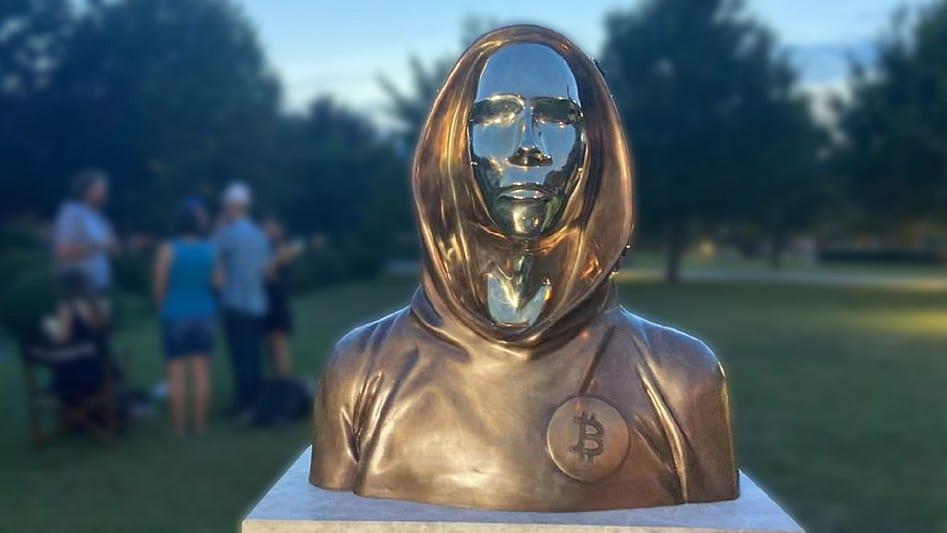
A bronze image of the legendary creator of Bitcoin, Satoshi Nakamoto, has already been exhibited to visitors of Graphisoft Park in Budapest.

At the opening ceremony on September 16th, András Dörfi, co-founder of the statue project and editor of the crypto news site Kripto Akademia, spoke to a crowd of journalists and Hungarians before revealing Satoshi’s brilliant face. The work shows the upper half of a figure with an impersonal face wearing a sweatshirt with the Bitcoin logo (BTC).

“Whoever he is, Bitcoin creates value, and especially the technology behind Bitcoin, the blockchain, creates value,” Durfi said.

Debrecen Barnabas, CEO of the Hungarian crypto exchange Shinrai, also spoke at the ceremony, adding:

Satoshi Nakamoto has created independent money, free of intermediaries, which gives people the opportunity for financial sovereignty […] We erected this statue to remind ourselves that courage is a virtue. We must continue with the big dreams.

First announced in May, the statue, created by sculptors Gergeli Rika and Tamas Gilli, was deliberately designed with a mirror face, ostensibly to express the idea of ​​”we are all Satoshi”. Mr. Coin, Kripto Akademia, the Hungarian Blockchain Association are among the supporters of the Satoshi Statue project.

The statue of Satoshi will be in the park near a monument to Apple co-founder Steve Jobs and other notable figures. Although there has long been speculation about Satoshi’s identity and appearance, no one has successfully identified the creator of Bitcoin.