
Researchers from Linköping University and the Princess Máxima Center in the Netherlands have discovered how the so called
How childhood liver tumor cells acquire different features
Somalia: Humanitarian aid cuts leave millions of children vulnerable to hunger
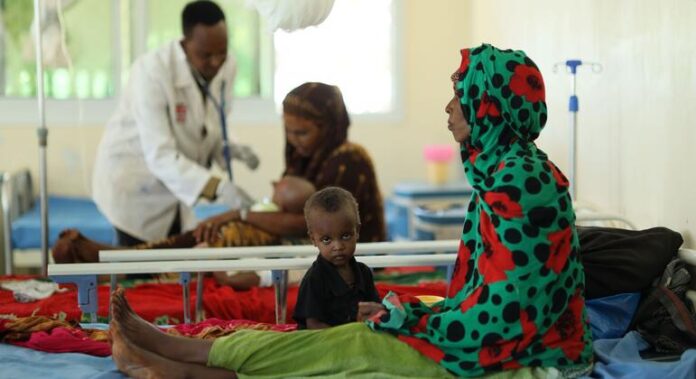
Hajio is one of many experiencing the brunt of these cuts. She lived a relatively prosperous life – she had a home and her children went to school. But all her cattle died because of the drought, and she had to flee her home area for help.
She hurried to the town of Burhakaba in southwest Somalia because she had heard support would be available there. Yet upon arrival, she received only some clothes and tomatoes from one of the country’s poorest communities living nearby.
“She received nothing from the international community,” stressed UN Children’s Fund (UNICEF) spokesperson James Elder, briefing journalists in Geneva on Friday.
Malnourished children
Due to unprecedented cuts in humanitarian aid, over 200 health and nutrition facilities have already closed in Somalia – and according to the most severe predictions, the number could jump to 618.
The consequences have been immediate and very serious. Compared to last year, Somalia has seen a 32 per cent increase in children admitted to stabilisation centres with severe acute malnutrition and complications.
This is not because more children are getting sick, but because they can no longer access preventive and community-based nutrition services previously available to them.
“Fewer facilities mean longer journeys for mums and their babies; longer journeys mean later treatment; later treatment means more severe illness and a greater risk of preventable death,” warned Mr. Elder.
Nearly one million children under five, adolescent girls and women risk losing access to nutrition services in the country.
Bad timing
These funding cuts come as Somalia’s humanitarian needs are spiking dramatically.
This year, nearly 1.9 million children are projected to be affected by malnutrition, including almost half a million with the deadly “severe acute” form.
The country has been plunged into civil war for decades at a time, leading to mass displacement and extreme food insecurity for millions.
The ongoing US-Iran war is also complicating matters by raising the costs of fuel and fertiliser, and the worsening climate crisis is threatening to further disrupt food provisions.
The country is currently navigating severe droughts in the north, while also preparing to undergo extreme flooding caused by the stronger-than-ever El Niño weather pattern (Read our El Niño explainer here).
“It is a brutal contradiction: the resources to protect vulnerable children are being cut at precisely the moment when the pressures pushing Somalia’s children into crisis are intensifying,” Mr. Elder underscored.
Preventable crisis
The UN has been an active partner in Somalia, distributing cholera vaccinations to over a million people, supporting education programmes for over 100,000 young students, and rehabilitating children recruited into armed groups – often by force.
“We have the programmes. We have the partners. What is missing is the funding,” underscored Mr. Elder.
Between 2021 and 2025, UNICEF supported more than 2.25 million children with severe acute malnutrition, with a cure rate of 97.6 per cent in 2025.
But the agency is unlikely to keep up these results under these new constraints.
“Years of generous donor investment in children’s futures is being undone far faster than they were built,” warned Mr. Elder.
“Protecting children is not a discretionary expense. Preventing suffering is not an inefficiency. And dismantling effective aid at the moment of greatest need is not a saving: it is a decision to pay more later, in money, in security, in lost development and, for some children – in lives.”
Map reveals wiring in the human eye for best vision
A new study provides an exquisitely detailed map of the circuitry of the fovea, the minute structure in
France Steps Up Channel Interceptions Amid Rights Concerns
New police tactics have sharply reduced crossings from northern France, but humanitarian groups warn that more confrontations on beaches could expose migra…
New police tactics have sharply reduced crossings from northern France, but humanitarian groups warn that more confrontations on beaches could expose migrants and asylum seekers to greater danger.
French police are using more forceful tactics to stop small boats leaving for the United Kingdom, as new figures show a significant fall in Channel crossings. Video published on Friday, 21 August shows officers confronting people on a northern French beach, using incapacitant spray and cutting an inflatable boat.
The operation highlights a central tension in Europe’s evolving migration policy: governments say stronger enforcement is disrupting smuggling networks and saving lives, while humanitarian organisations warn that pressure at the shoreline can push already dangerous journeys into still riskier forms.
Confrontation on the French coast
The footage shows a group of people wearing lifejackets attempting to protect a dinghy as French officers move towards it. Some members of the group appear to throw objects at police. Officers respond with incapacitant spray before one officer cuts the inflatable vessel, preventing its use.
The incident comes as France expands efforts to stop departures before overcrowded boats reach the Channel.
French authorities prevented 185 small-boat crossing events between 27 April and 2 August, involving more than 4,300 attempted journeys. Officials said 61% of recorded small-boat events during that period were stopped.
The definition of a prevented “event” is wider than a boat filled with passengers being stopped at the waterline. It can include vessels prevented from departing, maritime equipment discovered by authorities and arrests of people suspected of facilitating crossings.
Britain’s official small-boat statistics also warn that prevention figures are based on provisional French operational data and can later be revised.
For the week ending 16 August, official figures recorded 405 people reaching Britain in three boats, while French authorities reported preventing 270 people and 16 crossing events.
A £660 million enforcement partnership
The changing tactics follow the new UK-France agreement, which increased British funding for French border enforcement, surveillance, intelligence and anti-smuggling operations.
Under the programme, two specialist French units were deployed to northern France, bringing 125 officers and reservists into operations aimed at stopping launches and pursuing smuggling networks.
The British government has presented the fall in crossings as evidence that cooperation is producing results.
Home Secretary Shabana Mahmood has argued that the partnership is stopping crossings before they happen and disrupting the business model of criminal groups organising the journeys. Border officials have also stressed the difficult circumstances in which French officers operate, where interventions can become dangerous both for police and for people trying to enter overloaded boats.
The decline is significant. Almost 15,900 people had crossed the Channel in small boats this year by the latest figures cited on Friday, around 43% fewer than at the same point in 2025.
But fewer boats do not necessarily mean that every part of the route has become safer.
Smugglers respond with larger boats
Smuggling networks have adapted to enforcement by carrying increasing numbers of people in individual vessels.
Recent crossings have involved boats carrying well over 100 passengers, increasing the consequences of an engine failure, fire, collision or sudden deterioration in weather.
The trend creates a new problem: fewer successful launches can still result in large numbers of arrivals if each vessel carries far more people.
It also illustrates a recurring challenge in border enforcement. Measures that close one route or method can lead organised networks to change their behaviour rather than disappear.
That concern is increasingly recognised at European level.
The European Commission has called for action across the entire Channel migration route rather than focusing exclusively on French beaches. Measures include cooperation with countries of origin and transit, action against smuggling networks, stronger border management, intelligence sharing and efforts to disrupt the supply of boats and engines.
The Commission has also stressed that the Channel route remains dangerous and continues to cause deaths at sea.
Humanitarian groups warn of escalating danger
The harder policing strategy has generated concern among organisations working with refugees and migrants around Calais, Dunkirk and Grande-Synthe.
Humanitarian association Utopia 56 has documented confrontations between police and people attempting crossings and argues that intense pressure during embarkation can generate panic and encourage people to take greater risks.
The humanitarian problem extends beyond policing.
The UN Refugee Agency in France has repeatedly highlighted difficult conditions for refugees and migrants on the northern French coast.
People travelling through the area come from countries affected by war, persecution and widespread violence, including Sudan, Eritrea, Afghanistan, Ethiopia and Somalia.
UNHCR has called for better access to asylum information and legal assistance in France, together with more safe and legal pathways, including family reunification.
Its research in Calais and Dunkirk has found that many people seeking to reach Britain cite international protection, family connections, employment prospects and knowledge of English among their reasons.
Women, children and families can face particular risks from smugglers, exploitation and inadequate access to services.
Border control and protection cannot be separated
European governments face a legitimate challenge in dismantling criminal networks that profit from unsafe crossings. Boats carrying dozens or even hundreds of people through one of the world’s busiest shipping lanes create an obvious danger.
But the people aboard those boats are not a single category.
Mixed migration movements include people escaping conflict and persecution alongside those moving for other reasons. Some may qualify for refugee protection; others may not.
That distinction can only be established through functioning asylum and immigration procedures.
The EU’s approach therefore faces a broader measure of success than the number of boats stopped on beaches. Enforcement must also be judged by whether it reduces deaths, weakens organised criminal groups and preserves meaningful access to protection for people entitled to it.
UNHCR has supported cooperation aimed at reducing dangerous Channel journeys while stressing that border arrangements need to remain compatible with refugee and human-rights law and preserve access to asylum.
The latest images from northern France show how difficult that balance has become.
The reduction in crossings demonstrates that intensified enforcement can change migration patterns. The emergence of larger boats and increasingly tense beach confrontations shows the other side of the equation: when routes become harder to use, people smugglers adapt.
For France, Britain and the European Union, the question is therefore not simply how many boats can be stopped. It is whether a system built around deterrence can also reduce the dangers that drive — and accompany — the journeys themselves.
DR Congo Ebola outbreak spreading exponentially, UN responders warn
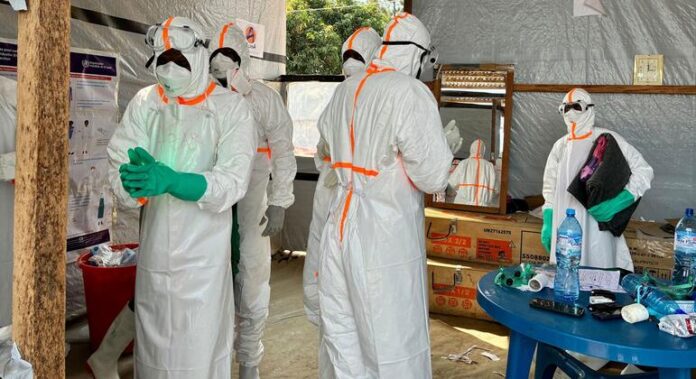
Key points
“We’re only covered for the next weeks, and very soon funding will run out,” said Julien Harneis, UN Senior Ebola Coordinator. “Every delay in funding and implementation makes this epidemic more deadly, more difficult to stop and more expensive. So, we need that international support immediately.”
Since the outbreak was declared on 15 May, 5,290 people have been infected 2,516 have died, according to latest health authority data published on Friday.
Of the total confirmed number of cases, 1,152 people have recovered and nearly 840 people remain in isolation or hospitalized. The fatality rate is 47.6 per cent and contact follow-up is 82.9 per cent.
Deadly progression
Briefing journalists from the Ebola epicentre in Bunia, Ituri province, Mr. Harneis warned that the disease is “growing exponentially”, with half of all deaths occurring in just the last 20 days.
“The epidemic is spreading to an area that is bigger than France. And the outbreak is growing faster and wider than the Ebola response,” he stressed, as “brutal” operating conditions continue to impede the progress of frontline workers.
Three months into the outbreak, 160 healthcare workers have contracted Ebola and 43 of them have died. “And then when we do respond, apart from the threat from the virus, healthcare workers and frontline workers have been attacked by youths, ambulances have been burned and stoned and the healthcare facilities have been attacked,” Mr. Harneis explained.
“Conditions on the ground are extremely difficult, but we will continue deploying all the humanitarian and medical assistance needed until the job is done,” the veteran aid official said.
“Last week, I was trying to get into an Ebola hotspot, and it took three hours to drive 60 kilometres (37 miles),” he added.
Another key obstacle to the response is the lack of basic social services in the six eastern, provinces where the virus is spreading (Ituri, North Kivu, South Kivu, Haut-Uélé, Tshopo, and Bas-Uélé), a direct result of decades of violence in the resource-rich area.
Gaps in government-run, coordinated healthcare services and a limited number of banks have created further problems.
“In this area, the banking system barely functions,” Mr. Harneis explained. “We’re unable to bring in the amount of money that is required to pay the workers, which has led to great unhappiness amongst frontline workers.”
A woman walks through a camp for displaced people in Ituri Province in the eastern DR Congo.
US aid boost
And although the United States has contributed $80 million to the DRC Government to boost bed capacity and safe burial practices, among other support, cuts to aid work – especially in the last two years – have reduced the capacity of humanitarian organizations by more than 30 per cent, he added.
Despite these challenges, multiple specialist UN agencies continue to work alongside the DRC authorities to push back Ebola. They include the World Health Organization, the World Food Programme, the UN Children’s Fund (UNICEF), the UN migration agency (IOM) and partners including Médecins Sans Frontières.
“It’s a disease, it’s an invisible threat which comes into your community and suddenly people start falling sick around you and your loved ones die,” Mr. Harneis said. “And that generates a lot of fear in any community.”
NASA Calls Off the Mission to Raise Swift Spacecraft’s Orbit
NASA ends the Swift rescue attempt The Neil Gehrels Swift Observatory is now expected to re-enter and burn
Carpatho-Ukraine: the one-day state of the interwar period
Carpatho-Ukraine or Carpathian Ukraine was an autonomous region within the Second Czechoslovak Republic and short-l…
Carpatho-Ukraine or Carpathian Ukraine was an autonomous region within the Second Czechoslovak Republic and short-lived state: Proclaimed as Carpathian Ukraine 30 December 1938, Proclamation of Independene on 15 March 1939, abolished same day – on 15 March 1939.
It was created in December 1938 and renamed from Subcarpathian Rus’, whose full administrative and political autonomy had been confirmed by constitutional law of 22 November 1938.
20 years earlier, by the 1920 Treaty of Trianon, the region, which had historically belonged to Hungary, had been detached from the Kingdom of Hungary and attached to newly created Czechoslovakia. Subsequently Hungary had sought revision of the Treaty of Trianon and the restoration of her historical borders.
On 2 November 1938 the First Vienna Award separated territories from Czechoslovakia, including southern Carpathian Rus’, that were mostly Hungarian-populated and returned them to Hungary.
After the breakup of the Second Czechoslovak Republic, Carpatho-Ukraine on 15 March 1939 proclaimed itself an independent republic, headed by President Avgustyn Voloshyn. However, Nazi Germany sided with Hungary against Ukrainian independence, and the short-lived state was invaded by the Kingdom of Hungary.
Proclamation of Independence
Slovak and Ukrainian nationalism grew more intense. On 10 March, the Hlinka Guard and Volksdeutsche demonstrated, demanding independence from Czecho-Slovakia. In the evening of 13 March, Slovak leader Jozef Tiso and Ďurčanský met Adolf Hitler, Joachim von Ribbentrop, and Generals Walther von Brauchitsch and Wilhelm Keitel in Berlin.
Hitler made it absolutely clear: Slovakia could either declare independence immediately and associate itself with the Reich, or he would allow the Hungarians to take over the country – whom Ribbentrop reported were massing at the border. During the afternoon and night of 14 March, the Slovak parliament proclaimed independence from Czecho-Slovakia, and at 05:00 on 15 March 1939, Hitler declared the unrest in Czecho-Slovakia to be a threat to German national security. He sent his troops into Bohemia and Moravia, meeting virtually no resistance.
Following the Slovak proclamation of independence on March 14 and the Nazis’ seizure of Czech lands on 15 March, Carpatho-Ukraine declared its independence as the Republic of Carpatho-Ukraine, with the Reverend Avgustyn Voloshyn as head of state. Voloshin was now supported by the population of Subcarpathia. The First Constitutional Law of Carpatho-Ukraine of 15 March 1939 defined the new country as follows:
Carpatho-Ukraine is an independent state
The name of the state is: Carpatho-Ukraine
Carpatho-Ukraine is a republic, headed by a president elected by the Soim of Carpatho-Ukraine
The state language of Carpatho-Ukraine is the Ukrainian language
The colors of the national flag of the Carpatho-Ukraine are blue and yellow, blue on top and yellow on the bottom
The state emblem of Carpatho-Ukraine is as follows: a bear on a red field on the sinister side, four blue and three yellow stripes on the dexter side, as well as the trident of Saint Volodymyr the Great
The national anthem of Carpatho-Ukraine is “Ukraine has not perished”
This act comes valid immediately after its promulgation
The proclaimed Carpatho-Ukrainian government was headed by President Avgustyn Voloshyn, Prime Minister Julian Révaý, Minister of Defence Stepan Klochurak, and Minister of Internal Affairs Yuriy Perevuznyk. The head of the Soim was Avhustyn Shtephan, his deputies were Fedir Révaý and Stepan Rosokha. The Slovak declaration of independence caused law and order to break down immediately. The Hungarians had learned that the Germans would not object to a Hungarian takeover of Carpatho-Ukraine on the same day.
Hungarian invasion
The Chief of General Staff of Hungary Henrik Werth asked for at least a week to prepare for the invasion, but the Royal Council gave him only 12 hours to occupy Carpathian Ruthenia before the declaration of Slovak independence. Responsible for preparation to the assault was appointed chief of Munkacs garrison Lajos Béldi who commanded 1st Mountain Brigade, while Lieutenant General Ferenc Szombathelyi (commander of the 8th Corps in Kassa) was placed in charge of the Carpathian Group as an expeditionary force.
The available Hungarian forces consisted of an infantry regiment, two cavalry regiments, three infantry battalions on bicycles, one motorized battalion, two border guard battalions, one artillery battalion and two armored trains. These forces were counting for more than two World War II divisions. They were supported by Fiat CR.32 fighter aircraft amounting to one squadron. In addition to regular units, Hungarians were also aided by several irregular formations such as the Rongyos Gárda and black-shirt guards of István Fenczik, who has been accused earlier as a Magyaron by the Voloshyn Cabinet.
The Hungarian Border Guard units stationed around Munkács, after throwing back the attacking Czecho-Slovak units on 14 March 1939, pressed forward in turn, and took the town of Őrhegyalja (today Pidhoriany as part of Mukachevo).
On 15 March 1939, the Hungarian Army regular troops invaded Carpatho-Ukraine and by nightfall reached Szolyva. The Carpatho-Ukrainian irregular troops, the Carpathian Sich, without additional support, were quickly routed. The greatest battle between the Hungarian army and several hundred Ukrainian soldiers (armed with light machine guns, rifles, hand grenades and pistols) took place near Khust. About 230 Ukrainians died in the battle.
Czecho-Slovak resistance in Carpatho-Ukraine was negligible, and the advancing Hungarian troops did not have to face a well-organized and centralized resistance. The Hungarian Army also had the advantage of the First Vienna Award, which made it possible for the Hungarians to take possession of the area where the Czechs had built permanent fortifications to defend against Hungary.
On 16 March 1939, Hungary formally annexed the territory. Prime Minister Yulian Révaý had resisted the Hungarians until then. In the night to 17 March, the last Czecho-Slovak troops left Khust and retreated to Romanian borders. They and the one-day president of Carpatho-Ukraine, Voloshyn, fled to Romania.
The Royal Hungarian Army continued its advance and reached the Polish border on 17 March. Members of the Carpathian Sich from Galicia who were Polish citizens were captured by Hungarian forces and transported to Polish authorities for illegally crossing the border. Simultaneously, units of Border Protection Corps (KOP) of Poland were instructed by Marshal Edward Rydz-Śmigły to prevent any other armed Carpathian Sich members from entering Poland by shooting them or, upon surrender, disarming them and push them back to the Hungarian side. The last organized resistance in the Carpathian Mountains ended on 18 March.
Contemporary historical research indicate that some of the captured members of the Sicz were killed by Polish soldiers. The number of victims remains disputed. Although figures of 500 to 600 casualties are present in Ukrainian historiography, archival studies indicate these estimates rely on unverified testimonies rather than primary sources. However, a study by historian Oleksandr Pahiria based mainly on Polish, Hungarian and Ukrainian archival materials points to documentary evidence confirming at least 43 victims in one of the Polish reports concerning the executions at the Veretskyi Pass. At the same time, the report itself is probably not an authentic document from that period, and the actual number of victims may have been higher. Archaeological excavations conducted by the “Dolia” memorial society between 2008 and 2011, recovered the remains of 17 individuals at sites near Verbiazh and Zhupany associated with the executions, but did not confirmed estimates of 500–600 victims.
The invasion campaign was a success, but it also proved that the Hungarian Army was not yet ready for full war. The handicaps imposed by the Trianon Treaty were clearly visible, but the morale and nationalist spirit of the soldiers and the civilian populations were high, which was also important in building a strong national army.
Illustration: Map of the Subcarpathian Rus (1919–1938), an autonomous region of the first Czechoslovak Republic; later Carpathian Ukraine (1938–1939), an autonomous region of the second Czechoslovak Republic, briefly an independent state, in March 1939. Remark: The map shows the border between the autonomous regions of the First Czechoslovak Republic Slovakia and Subcarpathian Rus (1920/1921) along the Uzh River. The border between the Second Czechoslovak Republic and the Soviet Union from 1945 onwards is marked with red dots. The border between Hungary and Czechoslovakia between 1939 and 1945 is not shown.
Source: Wikipedia, the free encyclopedia.
The Lakota Way and Eastern Orthodox Christianity (similarities and a few differences in ‘creation spirituality’ and cosmology) [3]
By Jamie Moran COMMENT 3 1, I have written about Sophia more often during the nearly two years in brokenness than at any other time in my life. Brokenness…
By Jamie Moran
COMMENT 3
1, I have written about Sophia more often during the nearly two years in brokenness than at any other time in my life. Brokenness has brought me to a deepening love and respect for the Sacred Feminine Mystery. It is not that my vision of the feminine has altered. It has expanded. It has deepened. It may be that losing Myfanwy has sharpened my appreciation of how much I have lost. Neither the world, nor the home, we shared is the same without her. Both places are profoundly different. The hole is not just in me. It is in the world and in my home. Yet brokenness has meant opening a channel of prayer to the Mother of God. Tradition asks her to save us, to be a refuge for us, and this now makes a total, and new, sense to me.
I met Sophia at a crisis point in my middle 30s. She rescued me from a fight I was not mature enough to conduct effectively. She put me on my own road of creativity, as I had been on for several years soon after meeting Myfanwy in my early 20s. She told me, ‘we want to hear from you.’ From that moment onward, I took up the cudgels and got stuck into my own work, the novel [winter of 1976/77] and the spiritual-psychology writings that resulted in two books and many essays.
Sophiology is not Esoteric Gnosticism, or the Perennial Philosophy. Sophia inspires knowledge of the hidden God, and the secret Creator-creation linkages spanning the whole of creation. Her wisdom is essential to art and science, healing, ceremony, and much else culturally diverse. Her responding to God, out of joy in God’s creative action and sorrow for alienated humanity, runs the gamut from the spiritual to the material, with the visionary and the psychic in between. Wherever alignment with God, attunement to God, is the challenge, she is the mediation that makes it possible. Her mediation, in many forms, is in direct experiencing.
Sophia opposes Lucifer= the Sacred Woman against the evil angel, the evil spirit [called “the evil one” in the Lord’s Prayer sung in the Liturgy]. Tradition identifies Lucifer with the masculine Morning Star. Sophia’s ‘Wisdom’ is the wisdom of love, indeed the wisdom of Eros in loving ‘intercourse’ with the soul of the creation. That soul is not just Uncreated or created, but something mysteriously in between, liminal, impossible to pin down in its ontology.
A mediator, a bridge, a relational space, the beauty and inherent goodness of the creation as ‘seen’ by God. The Vision of the creation in God. The creation as House of God. The the creation as cup of the Wine of God [joy] and the daily bread of God [sweat and tears]. The creation as God’s poem, God’s song.
The primal ‘She’ stands in immediate and close connection to the ‘He’ of God. The ‘he’ of humanity has no such direct link with God. The ‘he’ of humanity is born of woman, of God acting through woman. St Paul admits this in one of his letters.
Sophia= the ‘primal’ is feminine more than masculine. There is no basis for ‘patriarchy’ of any ilk in the Lakota Way and Shamanism, in Judaism, in Eastern Orthodox Christianity. One of the chief errors in Western Christianity, Western Rationality, Western Moralism and Legalism, is the rejection and desecration of the Sacred Feminine.
Wohpe the Beautiful One, the Beautiful Star, the mediating peace bringer, was one of my pet names for Myfanwy.
2, The whole point of ‘creation spirituality’ or a ‘spiritual cosmology’ is to bear witness to the reality that the universe, nature, the earth, the embodied state, is a vast inter-locking, active network of communication. The communication is moving among all persons, creatures, things. This communicational nature of being at the Beginning awaits the End when ‘being will become communion.’
The creation opens its secrets to personal love, but they remain hidden from abstract thought. The I—thou relationship to nature befriends it, not seeking to tame it, control it, exploit it. When you treat nature through I—It, nature shows you only its outer mechanical and material aspect. When you treat nature through I—Thou, nature will reveal to you its inner energetic and magical aspect. Zen= ‘If you meet a fellow poet on the road, shown him your poem. If you meet a fellow swordsman on the road, show him your sword.’
Francis Bacon made a huge Freudian slip when he said nature was loathe to surrender her secrets. Therefore, nature had to be raped to force her secrets into the open. This is a truth about Western science that Mary Shelly warned of in her prophetic story ‘Frankenstein’, where the monster is the scientist, not the hideous beast cobbled together and animated by electricity. The sleep of reason does not breed monsters. The over extension of reason – a kind of madness as is seen in the mad scientist Dr. Frankenstein — breeds the worst monsters, and many of these are yet to come.
The communicational creation is a web of personally loving family relationships. Everybody and Everything is related by kinship. Creation is a family of persons, creatures, things, who are relatives. Mitakuye Oyasin – ‘all my relations’ – recognizes this.
Personhood [the hypostasis] differs from ‘individuality.’ Personhood is not definable as a discrete entity, self-sufficient and self-enclosed. As Martin Buber makes clear in ‘I and Thou’, Personhood lives in relation to the Other Person. God is a Communion of Three Persons sharing one Divine Nature. This nature cannot be divided, parcelled up, split off. Its unity is unbreakable. The circle is the symbol of the inviolate unity of the divine. That the creation is designed basically as a continuous circle, not a box constructed from straight lines, means that the divine unity makes possible the unity of all created. The poet and philosopher Samuel Taylor Coleridge saw this unity in nature, contrary to British Empiricism and its close ally British Associationism, the dominant worldviews of his day [late 1700 to early 1800 AD]. Coleridge carried forward work Goethe had done on the difference between ‘organic form’ and ‘mechanical form.’ The mechanical form is an imprint from which exact copies can be made. The organic form is the Gestalt that, as a simultaneous Whole, guides the parts to assemble together according to the prior holistic design. No two growths of such a Whole are ever going to be identical.
In the Fallen condition, we feel isolated, cut off, and everything seems just an individual being whose nature is distant from all the other individual natures. This sense of division into separate natures is the Primary Ignorance of Buddhism. If we were unfallen, we would recognize the stream, the coyote, the tree, as relations, and speak with them. Even now we hear their whispers and are unsettled. Our paranoia runs riot. Yet these whispers are the sighs of a pronoia we have lost. We guard our lonely citadel of individuality for dear life. Nothing gets in, nothing comes out. No surprise we wilt on the vine. We need the sap of the vine, but we can only access it if we will share it. In trying to secure ‘a ground of being’ for our individuality in isolation, we lose any grounding of being. We despair to be adrift in a universe with no voices, no faces, no hearts.
In the West, the personhood has been lost, becoming more and more identified with the individual ego, its will to success [and fear of failure], fuelled by the lust for ‘power over the other’, and its cognitive, abstract mind which uses selective attention to navigate its path through the jungle of competing egos. The rise of the ego in the West since 1500 AD, or earlier, is intimately linked to the rise of capitalism. The West has become one of the most ego-ized cultures in world history.
The apophatic approach might mistakenly lead the Western mind to think of God as a cold, blank, abstract “Nothingness” or an impersonal cosmic energy that can be used for good or ill whilst it is neutral [‘the Force’ in the Star Wars films]. The ultimate is the Hypostatic Reality of Personhood. Hypostasis= that which stands under, the bottom of everything. God is boundless, yet this means God’s Love, Person to person, is boundless.
Indigenous spirituality is an asceticism of everyday life. To ‘walk in a sacred manner’, you do what helps creation, you eschew what doesn’t help, or harms. Self-control is necessary. An old mountain man I met at Wilmer Mesteth’s house told me he had prayed with the Oglala Lakota for years. He smiled ruefully, and added, “If you want to pray with Indians, be prepared to suffer.” Wilmer ran four-hour sessions in the Sweat Lodge. I knew what the old man meant.
The spiritual cosmology of the Lakota Way, and the Eastern Orthodox Christian Way, and many other sacred cosmologies round the world, meet a raw need in the West. For many Westerners – and those influenced by the West — the cosmos, nature and the earth, is an empty void you can shout into, and from which you will get no reply, creating a deathly fear of our human aloneness in a vast machine that cares nothing for us. If this ‘infernal machine’ [the “dark Satanic mills” of Wiilliam Blake] does not care for us, then we feel, why should we care for it? Use it for what we can get out of it, before it spits us out. That is the increasingly pervasive unconscious premise in the broken culture of ‘progress’ all over the globe.
To love God is to love God’s creation. St Isaac of Syria, in Homily 81, describes a ‘merciful heart’ as one “on fire for the whole of creation”, including humanity, animals, and even demons, causing the person to shed tears and offer prayers for all beings. This profound compassion is driven by a “vehement mercy” that cannot tolerate suffering in any part of creation. Such a heart is on fire with divine love for all created.
St Maximos says that humanity was created at the ‘intersection’ of all realities, all kinds of being and nature, all ‘worlds’ invisible and visible, intangible and tangible [spiritual, material, intelligible, animal, elemental]. The human task — our ‘soul work’ – is to lovingly and creatively gather up all the diverse aspects of the creation, heal their divisions, and as the priesthood of the creation applicable to women and men, offer them back to God in thanksgiving.
Salvation, for St Maximos, is not about going to heaven. It is the transfiguration of the creation in the Uncreated Light of the Logos and the kindling of the creation in the Holy Fire of the Spirit. Enlightenment and Ecstasy will permanently dwell in all created. For this End means ‘God will be all in all.’
[9] The Mystery of the Darkness
1, The darkness of the night comes from a primordial darkness known as Han. This darkness is not evil. What is it then? It is akin to the primordial chaos in Genesis, the darkness of the unformed waters over which the Holy Spirit hovers. It also is reminiscent of the ‘uncarved block’ in Zen Buddhism.
This plunges into another Western bias. In standard Western legalistic theology, darkness is instantly equated with moral evil, sin, and the demonic.
In both Lakota metaphysics and Eastern Christian mystical theology, the primordial darkness is not evil. Rather, it is the state of ‘uncooked’, unformed, pregnant potential. Han is parallel with the Genesis unformed deep over which the Holy Spirit broods, and the Uncarved Block [Pu] of Zen.
In the Lakota creation story, Han existed before there was light, or any separation of day from night, or sky from earth, or land from sea. Han is the nothingness that is the matrix of being. Han is a condition of absolute quiet, total stillness, rest, and hidden potential. Han is potentiality before it is actualized in any way, in any form, or any movement. Han is pure potential.
Han is dark not because it is wickedness, but because the Light and Energy of creation has not started working yet. There is a ‘pause.’ Maybe this signifies the acknowledgement of a certain ‘loss’ in creating. Once you carve the uncarved block into a bowl or a crane, you gain an object but lose the ‘infinite possibilities.’ Han is the cosmos before it was carved. Perhaps the ‘big bang’ of physics set that carving in motion.
The darkness is deep. The first two verses of Genesis= “The earth was without form, and void; and darkness was on the face of the deep. And the Spirit of God was hovering over the face of the waters.”
In Hebrew the primordial sea is the ‘Tehom.’ It is not a demonic entity. It is the ‘raw material’ of creation. It is the chaotic soup out of which God speaks the creative structuring of his Words, and into which he pours the creative power of his Spirit.
There is a certain analogy with the ‘Divine Darkness.’ God so far transcends the human mind that divinity appears as a dark, thick, impenetrable cloud.
Han seems an aspect of Sophia, an aspect that matches the apophatic mystery of God.
To understand why Han is not evil, it is necessary to note how the Lakota cycle time. The counterpart to Han is not a warring angel of light, but the Dawn [Anpao].Every night, the world dips back into Han so that creation can rest, regenerate, and dream. Without the dark, seeds cannot gestate underground, and humans cannot heal in sleep. Han is the necessary, passive, feminine rest that balances the active, intense, masculine light of the Sun.
Before a Word can be spoken, there must be silence.
Before an Action can be undertaken, there must be stillness.
This is the way in which a channel to God is kept open, in Speaking and in Action.
Han is nothing evil. Han invokes the presence of the Creator’s unexpressed, latent power, waiting for the dynamic moment when the movement of the Spirit, and the coming of the Light, will set creation going.
There is a holy dark, of God beyond the creation, and of the creation in its infinite potentiality before it is made.
2, Jewishly, there are several different ‘dark’-nesses.
[1] There is the divine darkness that signifies the unknowability of God – the Apophatic Way, or Cloud of Unknowing. This is what Moses confronted on Mount Sinae. Exodus 20, 21= Moses “drew near to the thick darkness where God was.” Here, darkness is the ultimate sign of intellectual humility and reverence of heart for the ungraspable Mystery. In Hebrew this is ‘yirah’, the awe of God. Yirah is not the instinctive, biologically based fear of threat, ‘pachad.’ Such instinctual fear can be amplified in panic, trauma, terror of harm. Nor is yirah the neurotic anxiety that, as Anita Harmon told me once, is a ‘sickness of imagination’ where we fill the future with all manner of terrible and fearful eventualities, as if they were inevitable and nothing good will ever happen. In Existential Angst, we can sustain ‘awakening’ to the edge we are on in existence, then resolve its suspense by action. But in the sickness of the imagination, we are flooded [or flood ourselves] with imagined disasters and horrors whilst remaining passive in the face of the flood. We are swirled up into the flood and feel we can do nothing other than impotently suffer the hideous and debilitating inundation. It is necessary to shut down this avalanche of negative imaginings. Existential Angst, in sharp contrast, breaks us out of comfortable ruts, and forces to be free and choose— and take responsibility.
[2] There is the primordial dark of unformed creation or unformed potentiality of creation, at the start of Genesis. It is the ‘stuff’ of creation, awaiting the Word to shape its being and the Light to illumine its nature. The Holy Spirit will give it life, motion, its dynamic energy, and kinetic purpose.
[3] There is a darkness of evasion, feigning ignorance of one’s own sin= the hiding we do from the Light that exposes our heart in intent and deed. As soon as the tragedy of the Fall occurs, Adam & Eve hide from God [Genesis, 3, 8]. So, the darkness of sin is hiding, the ‘dirty secret’ we cover over and bury and hide our own eyes from. This is what Sartre meant when he said the Freudian personal unconscious is our ‘bad faith’, our hiding from our past deeds, refusing responsibility for them, and thus likely to never correct them. The darkness of sin is the illusion of a defended place where no light can get in. It is the person defending themselves from looking at what they have done, and in that process creating a shadow where the gaze of God, the gaze of other people, and even one’s own gaze, supposedly cannot reach. Such ‘hiding in the dark’ is born of shame, guilt, and the fear of exposure. While the first darkness is holy mystery, this darkness is a self-imposed prison of isolation. What we hide away in this manner can undermine the sincerity, truth, honesty, of all our relationships, and it can block the authenticity, courage, and generosity, of all our actions. We don’t ‘look people straight in the face’ but avert our eyes. The defended against turmoil, the repressed, tends to return, as Freud claimed. We act it out unconsciously. The same defensiveness can be erected to ‘dissociate’ our conscious awareness from early damage, hurt, wounding. This too festers in the dark, becoming an unconscious premise of existence’s paranoia, not its pronoia. The world is against us, nothing good will happen, there is no providence. The worst affect of dissociated hurt is that it blocks off our vulnerability, forcing us to build a facade of ‘tough guy’ inviolability. This invulnerability is itself very brittle and prone to easily crack. Vulnerability is crucial to the pathos and passion of living from the heart. Still, both with ‘failure to hit the mark’ [sin in Hebrew & Greek] and early injury, there may be a time when the person just cannot ‘deal with it’, and so defences can be protective, a kindness. Readiness to face and engage with the darkest gates in existence is key. If we are not ready, the encounter can destroy us. Yet the paradox is also that certain floorboards falling in beneath our feet could never be prepared for. You have to go through that long dark valley to know what it is. Those who have not been affected by the experience cannot imagine, intuit, foresee, just how awful it really is.
[4] The ‘undercover’ God= there is an existential darkness in this world within which God ‘hides.’ This is sometimes the dark clouds of the storm that herald God’s storm-like entry into history, to strengthen the oppressed and overturn the oppressors. This is a threat to the haughty but a comfort to the broken. Psalm 18, 11= “God made darkness His hiding place, His canopy around Him.” Similarly, God answers the pained questions of Job in his innocent suffering out of the whirlwind. This darkness can also mean the reality that space grants perception of pattern, but in going through time we go blind= we can neither see the future nor discern a pattern in the events that succeed each other over time. Moreover, this dark that hides God hides not so much God’s majesty, glory, or omnipotence, but rather God’s secret actions in history that happen in a providential manner we cannot understand. This providence is at work in our suffering, our deepest pain in the heart, our tragedies and disasters, just as it works in the good things we receive from God’s grace. There is a holy trouble wherein the Holy Spirit is actively at work. “God toils in the sign of the Abysmal.”
[5] The Easter Saturday Liturgy refers to another existential darkness when it speaks of ‘the secret wisdom of God hidden in hell.’ This is the darkness of Redemption by going through hell, not avoiding it, and emerging on the other side of hell in Resurrection. Hades or Schoel, and Hell, are the deepest dread and most final defeat of the human venture. Christ’s Descent into Hades and Hell undermines these powers at root in the human heart, bringing forth Life from Death and Love from Hell. ‘By death he overcame death’ and by ‘refusing the throne of the world he became the world’s true king.’
[6] Finally there is the darkness Christ embraced on the Cross, the ultimate darkness in human existence, the fear of final abandonment by God. ‘Father, why have you forsaken me?’ As a child, we take the Father’s love for granted. As an adult, it is tested to breaking point. In its deepest breaking point, we come to spiritual despair. The Messianic Event, and its Power, takes us through despair.
Lakota tradition honours the first four kinds of darkness. The Incommensurate Darkness is the unsearchable Wakan Tanka. The primordial darkness is Han. The Evasive Darkness of sin is Iktomi and Double-Faced Woman. They operate through masks, deception, hidden motives, that seek destruction as the way to get the ‘last laugh’ on those destroyed. This is malice and malevolence, not prankster mischief. The Existential-Historical Storm Darkness is Wakinyan Tanka of the West. The Wakinyans wrap themselves in black storm clouds, lightning, and destructive winds. To an outsider, they look terrifying and destructive, yet to the Lakota, they are deeply loved because their dark storms bring the rain that cleanses the earth, smites evil, and protects life. The Wakinyans come fearfully but bring restoration and healing to the world.
Darkness is not the enemy of God. Darkness is often the very condition wherein God accomplishes his most holy and revolutionary work.
Indigenous Peoples do not embrace darknesses five and six, because their tradition is not focused on the Messianic Mystery. But the leap from the fourth darkness into the further two darknesses is not far to go. After what has befallen all the tribal peoples in modernity [1500-1900 AD], the fifth and sixth darknesses, kicking off from the fourth darkness, make sense. The continuity becomes more obvious.
For just as the Jews in the concentration camps, and Christ on the Cross, cried out to the Absent God, so too all indigenous peoples, and markedly the Red Indians of the American North, experienced the ‘darkest’ Gold, the God who failed them, as this God failed his chosen the Jews, and as this God failed his Son on the Cross. What Father allows the defeat of Goodness and Beauty in the cause of sacrificial love? What sacrifice is this?
The really deep pain in the really deep heart is the absence of God at precisely the most terrible point where his help is needed. What Fatherhood is this?
[10] The Seventh Darkness
In modernity and post-modernity, all light has failed, secular and sacred. This has engendered a new darkness. Nothing is trusted, nothing is respected, nothing is believed, nothing is ventured. ‘The centre cannot hold’, and we all dread ‘what beast is slouching toward Bethlehem to be born.’ The Common has disappeared, thus people cannot unite round a shared life, a shared interest, a shared suffering and a shared joy. What it means to be human is no longer shared. Fragmentation, factionalism, clashes of different kinds of selfishness or absence of love predominate. As my friend Dougald Hine puts it, we are living in the ruins.
Heraclitus said the Logos is the common, and he added, ‘stick to the common.’ This seems impossible, at such a dire time.
This darkness of the defeat, the retreat, the absence, of any and all light is ever encroaching and will become pervasive.
There is a paradox of this time when the light, secular and sacred, departs the world. It is now the time of the Spirit, God’s secret agent. The darkness can extinguish the Light, but it cannot extinguish the Fire.
In this darkness, Fire is kindled.
The Fire Jesus Christ the Messiah came to kindle, and he wished it had been kindled already in his time, is being kindled in this time. The Fire is bringing the Messianic Age. The future End is coming to the past and the present, here and now.
The Fire next time is this time. It has already been kindled. In its time, the Fire will spread.
(end)
On the Latin Dogma of the Immaculate Conception (2)
By Archbishop Nathanael (Lvov) Let us examine this Latin teaching from an Orthodox perspective. Here is what the greatest Orthodox theologian, St. John of…
By Archbishop Nathanael (Lvov)
Let us examine this Latin teaching from an Orthodox perspective.
Here is what the greatest Orthodox theologian, St. John of Damascus, says about the Most Holy Theotokos:
“When God desired to bring man from non-existence to existence, He expanded the heavens, established the earth, and enclosed the sea within bounds. But when in this world mankind was subjected to corruption through sin, the merciful God, not desiring that the work of His hands should be completely destroyed, created another, better heaven, earth, and sea, where He Who was previously incomprehensible to the created world deigned to be contained for the re-creation of the human race. This new heaven, earth, and sea is the Blessed and Most Glorious Virgin.”3
The ark in which Noah was saved from the Great Flood also foreshadowed the Most Holy Theotokos. “Noah built the ark to escape the flood, and Christ, who is our peace, prepared Mary for Himself to redeem the human race. The ark took a hundred years to build, and long did humanity prepare for the birth of the Most Pure Virgin. The ark was made of incorruptible wood, and Mary was filled with nothing but virtue. It floated unharmed above the waters of the flood; she did not suffer the shipwreck of sin. Through the ark, the chosen were saved from the flood. Through Mary, all who heed the calls of grace are saved. From Noah, who emerged from the ark, the human race received a new beginning, and from Christ, born of Mary, new life was imparted to humanity.” The burning bush is also an image of the Mother of God: “Loose your sandals from your feet,” God said to Moses at the burning bush, “for the place whereon you stand is holy ground. This is a clear transformation of the perfect purity of the Mother of God, to whom nothing impure can approach” (John of Damascus, Ibid.).
The idea of the burning bush as an image of the Mother of God is developed by Saint Gregory of Nyssa.
Saint Epiphanius of Cyprus writes: “The first promise of a Redeemer, given to fallen man, already contained a prophecy about the Most Holy Virgin. ‘And I will put enmity,’ says the Lord to the deceiver, ‘between you and the woman, and between your seed and her seed: he shall crush your head, and you shall bruise his heel.’” All divinely wise commentators see in these words of God the first good news of the future Redeemer of the human race. Whom then should we understand by the woman whose seed the future Redeemer is called, if not the Most Holy Virgin Mary, His Most Pure Mother? This promised woman is certainly not Eve. All these words apply only to Mary and Her most adored Son, and refer to Eve only as a transformation of Her. The future Redeemer is called the Seed of the Woman, not the man. Clearly, this does not refer to an ordinary woman, but to one who will give birth without a husband. Just as Adam was the image of our Lord Jesus Christ, so Eve was the image of His Most Pure Mother. If Eve was called the “mother of the living,” it was only as an image of Mary, for Eve was called the mother of the living after she heard the saying, “Dust thou art, and unto dust shalt thou return.” It is astonishing how, after such a definition, such a name was given to her. For from Eve came the human race—the dying race—while from Mary came life in the world, for She gave birth to Eternal Life and, therefore, truly became the Mother of the living. And Eve was so named only because she prefigured Mary.”8
Saint Irenaeus of Lyons also emphasizes this idea. “Just as Eve was deceived into turning away from God, so Mary was bowed to obedience to God, so that the Virgin Mary might be the intercessor for the virgin Eve.”9
All these thoughts of the holy fathers, which could be multiplied almost ad infinitum, are vividly and inspiredly echoed in the hymns of the Church relating to the Mother of God. In these hymns, the Church calls the Virgin Mary Most Holy, Most Pure, Most Immaculate, Higher than the heavens, More Honorable than the Cherubim and Incomparably More Glorious than the Seraphim, and attributes to Her all the prophecies that point to Her imperfection in sin.
And yet, the Church rejects the dogma of the Immaculate Conception—that is, the dogma that the Mother of God, from Her birth, is impervious to original sin. This dogma, not the term “Immaculate Conception,” is precisely what the Church rejects, for this term first appeared in the East in the celebration of December 9th, which, before the establishment of the incorrect dogma in the West, was called “the Feast of the Immaculate Conception of the Most Holy Theotokos by Righteous Anna.”
To understand this problem, let us first consider what original sin is.
According to the Roman Catholic view, original sin consists of God’s removal from the first humans of the gift of “original righteousness” (justitia originalis), which they possessed before the Fall. This gift was taken from them after they sinned, but, by exception to the general law, was bestowed upon the soul of the Virgin Mary upon her incarnation. Therefore, the Virgin Mary is perfectly analogous to Eve before the Fall, who possessed the gift of justitia originalis.
According to the Orthodox view, original sin is the corruption of human nature by sin, rendering it incapable of fulfilling God’s plan, God’s design for man as the crown of creation of the entire visible world. God created the visible world (or rather, the world perceptible in one way or another to the five bodily senses and therefore accessible to external experience), a world subject to constant change, morally irresponsible, a material world, in order to accommodate within it a spiritual being, created in the image of God, who, being morally responsible, would impart moral value to the entire visible world and, being immutable due to his moral purity, would grant eternity to the world he inhabited.
By sin, man violated this divine plan for him, abused the gift of freedom inseparable from moral responsibility, and inclined toward evil.
However, not entirely. Expelled from Paradise, man began to repent. But to do so, he had to lose another of his godlike qualities—immutability. In order to be saved, to be reformed, man who had committed sin ceased to be God-like and immutable. His entire spiritual and physical nature, like the rest of the material world, became changeable and, therefore, subject to death.
The material world lost its crowning glory, that which had given it moral meaning and immortality—eternity.
All people, being descendants of Adam and Eve, by nature possess only what Adam and Eve possessed, and, consequently, in their place in Paradise, they too would have sinned. Therefore, by their human spiritual and physical nature, all people are enslaved to sin and, consequently, must change and be subject to death.
Everyone, even the most righteous people of the Old Testament, committed one sin or another and therefore became inevitably subject to change and death. This corruption of human nature, which renders it incapable of eternal life and, consequently, of fulfilling God’s plan for the material world, this essential distortion of the human being, resulting from the sin of our first parents, is original sin, according to the teaching of the Orthodox Church.
The existence of original sin, that is, the distortion of human nature, explains the futility of all attempts by ancient prophets and philosophers to bring redemption to humanity. A principle independent of Adam and Eve was needed to ground human salvation. Such a principle was brought by Christ—the Son of God, born of the Immaculate Virgin.
Immaculate in what sense?
In that She committed no personal sin, not a single sinful act.
Saint Athanasius the Great testifies that She “knew no sin.” Saint Demetrius of Rostov speaks of the same thing in his Sermon on the Nativity of the Most Holy Theotokos: “He knew not a single sin in His entire life, and He alone says: I ran without iniquity.”
This is also taught in the Epistle of the Patriarchs (1672 and 1723), which is the voice of the entire Orthodox Church: “…The first man… fell in paradise… and… from here the original sin was spread in succession to all descendants, so that there is not a single one of those born according to the flesh who is free from that burden… …Burden… we do not call sin itself, such as impiety-hatred and everything else that comes from the evil human heart… and not from nature… but the inclination to sin… many of the forefathers, prophets, and especially the Mother of God the Word and the Ever-Virgin Mary, were not involved in sins.”10 However, despite all her holiness and immaculateness, the Most Holy Virgin Mary in no way ceases to be entirely the daughter of Adam. She possessed nothing in her nature that Adam did not possess, and Adam possessed in his nature everything that she possessed. And this is the basis of original sin.
All holy thinkers and writers not only do not ignore, but tirelessly emphasize, the organic, complete descent of the Virgin Mary from Adam. This is also evidenced by the genealogies in the Gospels (from which, according to Church Tradition, the Evangelist Matthew traces the genealogy of the Holy Virgin Mary’s relative and betrothed Joseph, and the Evangelist Luke traces the genealogy of the Most Holy Virgin Herself, through Her father Joachim, who also bore the second name Heli).
The Church remembers and cherishes the unity of the human race, the descent of all of us, including the Most Holy Virgin, from a single forefather, not only in body but especially in soul, rightly seeing in this the guarantee of our common consubstantiality, the foundation of ancient and new conciliarity—catholicity—on which the entire economy of our salvation is built. And the teaching of the special “introduction” (infusio) of the soul of the Most Holy Virgin into Her body, descended solely from Adam, on which the Latin dogma of 1854 is based, is in no way consistent with this original ecclesiastical concept.
Being entirely a daughter of Adam in both soul and body, the Virgin Mary, although personally without sin, was nevertheless not “privilegedly exempt from original sin,” as the Roman dogma asserts, for if people could be saved by this means, then the Lord would certainly have granted this “privilege” to all others as well, for there is no partiality in Him.
But this could not be done. God could not save people, or even a single person, by the mechanical, unjust means of exemption from the general law.11
Thanks to Her supreme personal righteousness, the Most Holy Virgin Mary did not sin, but She could have sinned. Her will was not bound by any “immunity” from sin, any special “state of primeval holiness, innocence and righteousness,” as the Roman dogma teaches, thinking to exalt, but in fact to diminish – mechanizing Her feat.
The Virgin Mary, by Her feat, in which Her parents and Her parents’ parents participate – the entire genealogy cited in the Gospel and the spiritual environment that was around Her, all the generations of the creators of the Holy of Holies in which She lived, the writers of the holy books that nourished Her soul (let us remember that, according to Church Tradition, at the moment of the Annunciation, the Most Holy Virgin Mary read the prophecy of Isaiah), all those who saved and preserved these books, those who gave examples of, albeit partial, but still very high holiness and righteousness in the Old Testament – in a word, the feat of all that was best in humanity, the Virgin Mary, remaining a participant in original sin (for it is inseparable from the Old Testament nature of man, and She, with all Her highest holiness, was of the Old Testament nature and could not be otherwise, because it was precisely the Old Testament nature that He came to renew and (Christ regenerated), She rendered original sin within Herself fruitless and thereby shamed the devil.
Original sin corrupted human nature, but not completely. Even after the Fall, some goodness remained in human nature. This is why the repentance of Adam and Eve, the examples of great holiness in the Old Testament, and, finally, the appearance of the Blessed Virgin Mary became possible.
All of God’s work on humanity during the Old Testament period of history was aimed at preserving, directing, and crystallizing this best that remained in human nature. This work of God—the most important, the most essential in human history, compared to which the noisy processes of history are insignificant—took place in the silence of the chosen branch of the chosen people, in a chaste silence, inaccessible to any idle or malicious observation. And this work of God was crowned with the appearance of the Blessed Virgin Mary.
The Virgin Mary never succumbed to a single sinful act in her life. Despite all the devil’s temptations, her will never once sided with evil, and therefore the devil could not exploit original sin in her.
The question may arise: why then was the appearance of Christ the Savior necessary if a human being, partaking of original sin, could resist and not be tempted by sinful acts?
Precisely because, remaining immaculate, the Virgin Mary continued to be an Old Testament being, bearing within herself all the disastrous consequences of sin: the guilt of change, death, and hell. Her nature remained Adamic. She still contained nothing that was not in Adam. But, as we have already said, by Her feat and the feat of all the best that was in all of humanity, with the help of the grace of God – but not an exceptional grace, but a grace such as God is always ready to give to all people – with the help of this grace of God, She remained immaculate.
And as soon as such an immaculate Person matured within humanity, the possibility and necessity immediately arose for the Son of God to appear in the world. In the sense in which we have explained the doctrine of God’s omnipotence, the Son of God could not fail to come into the world immediately, as soon as a pure vessel capable of receiving Him was revealed. Salvation could not fail to appear immediately, as soon as a human person appeared, not personally guilty of being doomed to destruction, in no way deserving of destruction. This is the meaning of the pre-chosenness of the Most Holy Virgin Mary from the beginning of time in the Eternal Council of God. Foreseeing the fall of mankind and the terrible distortion of human nature resulting from this fall, the Lord foresees, however, that despite this seemingly irreparable and extreme distortion, it is not hopeless. He foresees that it will be possible, through a careful and careful process, to nurture, cultivate, and cultivate within the depths of the human race an Immaculate Flower that will be able to receive the Son of God. But this Flower must necessarily be the flower of the human race, grown in inseparable unity with all human nature, and not in isolation from it, not in privileged exclusion, not from a different nature.
For the salvation of human nature, distorted by the sin of Adam and Eve and powerless to overcome sin in the nature inherited from those same Adam and Eve, Christ comes, bringing with Him a different principle, not Adam’s—a Divine one, as the perfect God and the perfect Man. By incarnating a new Divine principle into the human world, Christ opened up the possibility for every person unwilling to be enslaved by sin to unite with Him and thereby be saved, not through their own human righteousness, but through His Divine holiness.
Who could more fully utilize this opportunity revealed by Christ than His Most Holy Mother, one with Him in bodily nature and unsullied by a single personal sin?
She unites with Christ, the Son of God, in the closest union, embodying Him, and thereby becomes the first person after Christ to enter the Church, the Divine-human organism that unites us with God through Christ, the Son of God.
Sin hinders the realization of this unity of all people with God in the Church. A person who commits sin, who is in sin, cannot unite with Christ, for it is impossible to bring sin into union with Him. The Most Holy Virgin Mary, being without personal sin, most fully realizes union with Christ, and therefore the Church attributes to Her all that Scripture and the writings of the Holy Fathers say about the Church. After Her union with Christ at His conception, the Virgin Mary becomes the most complete fulfillment of the Church.
In the process of gradual union with God, deification, about which St. Dionysius the Areopagite speaks in detail—a process to which all godlike creation, that is, angels and humans, are called—the Virgin Mary leads all. She is the most deified of all creation, and therefore we “follow God and resort to Her, as to an indestructible wall and intercession.” Therefore, even the highest angelic ranks pray to Her as their Mistress. Here is what Saint Dionysius writes about this: “Since the heavenly hierarchy is so arranged that lower spiritual beings receive enlightenment from the higher, the Most Holy Virgin, having risen above all other created beings, also became for the Angels a ladder of ascent to the highest perfection. For in Her they contemplate new mysteries and from Her receive greater illumination.”12
* * *
Thus, we reject the exclusion of the Virgin Mary from the universal pre-Christian subordination to original sin, but we confess Her as the highest of all creation, more honorable than the Cherubim and beyond compare more glorious than the Seraphim, the Life-giving Light for both Angels and men.
But if we reject the Roman dogma of 1854 regarding the Immaculate Conception of the Virgin Mary, then what does the term “Immaculate Conception,” which existed in our Typicon until the second half of the 19th century, mean? To answer this question, we must remember that the word “immaculate,” being complex, can have two meanings. One is the one in which we call the Most Holy Theotokos Immaculate. In this sense, the word “immaculate” is synonymous with the word “holy”—most immaculate, most holy. But the word “immaculate” can also be used to indicate that a given phenomenon is free from blemish. In this case, the word “immaculate” will not be the same as the word “holy.” For example: such-and-such a person is not blemished, but neither is he holy.
The act of conception is usually associated with greater or lesser sinfulness. Sin has penetrated no area of human life as deeply as this area of ancestry.
But this is not necessarily so—not inevitably so. The area of ancestry itself is ontologically free of sinfulness. In itself, this area can be as neutral as any other bodily area. Therefore, the Church could sanctify ancestral life in the Sacrament of Marriage. If sin were ontologically inherent in this area, then the Sacrament of Marriage could not exist. Sin can never be sanctified by anything.
If marriage is lawful, that is, not associated with the violation of any moral principles for one’s own sake, if it is concluded not against God, but with God’s blessing, then in such a marriage its entire area can become sinless, pure, and immaculate.
This can be said to an even greater extent of God-blessed marriages in the Old Testament, where the union of marriage and the birth of children were associated with a profound religious feeling: the desire to serve the future Messiah, Christ, through their children, in their own flesh and blood.
Many pious marriages in the Old Testament were so pure from sin. And the marriages of Joachim and Anna—the parents of the Virgin Mary—and Zachariah and Elizabeth—the parents of St. John the Baptist—were especially pure.
These marriages were immaculate, and so were the conceptions of both the Blessed Virgin Mary and St. John the Baptist. Both of these events are celebrated by the Church. Since they are immaculate, free from sin, they can be glorified by the Church. And since they mark the beginning of great and saving events—the birth into the world of the Most Blessed Mother of God and the greatest of all those born of women, the Prophet, Forerunner, and Baptist John—they are glorified and celebrated solemnly.
The Holy Church teaches this: “Many mothers conceive children, but few are those whose conception is glorified and celebrated by the Holy Church of God. Only three such mothers were found, in whose wombs the conception that took place astonished the world: Saint Righteous Anna, Saint Elizabeth, and the Most Holy Virgin Mary. Saint Righteous Anna conceived the Mother of God, Elizabeth conceived the Forerunner, and the Virgin Mary conceived Christ our Savior. All these conceptions were announced by heavenly messengers; they were accomplished by the grace of God, but God also required the consent of those conceiving.”13 In the Service of the Most Blessed Conception of the Virgin Mary on December 9, in contrast to the scholastic and often reverent discussions of this Roman dogma, we see a chaste, truly reverent glorification of the holy event, which marks the shining of the first rays of That Dawn of the Mysterious Day, the appearance of which signified the imminent ascent of the Sun – Christ:
“From the root of David and Jesse, Anna now begins to blossom the Divine Staff, which has sprouted the mysterious flower of Christ, the Creator of all.”14 “The prophetic prophecies are now being fulfilled: for the holy mountain is being established in the womb; the divine ladder is being planted; the great throne of the king is being prepared; the place where God enters is being adorned; the burning bush begins to germinate; the myrrh-giving sanctuary is already flowing forth, stretching forth rivers of barrenness to the godly Anna, whom we bless by faith.” 15.
We see here joy over the conception of the Most Holy Virgin Mary and the glorification of Saint Anne, who became the mother of the Mother of God, and we see here no scholastic contrivances or conjectures.
The conception of Saint John the Baptist is similarly glorified—as the beginning, as the dawn of the joyful appearance of Christ’s Forerunner in the world. And since the birth of the Blessed Virgin Mary is a greater event than the birth of St. John the Baptist, the beginning of birth—the conception of the Virgin Mary—is a greater celebration than the conception of St. John.
The Roman Catholic Church’s implementation of the dogma of the Immaculate Conception, in addition to being an error in this dogma itself, is also associated with a sin against conciliarity, that is, catholicity within the Roman Catholic Church itself. Such prominent Catholic church leaders as St. Bernard of Clairvaux, Thomas Aquinas, Bonaventure, and Peter Lombard clearly and unequivocally objected and rebelled against the doctrine of the Immaculate Conception.
The obligation “for all the faithful” to believe in the dogma of the Immaculate Conception condemns all these theologians. Apparently understanding this, Pope Pius IX, when proclaiming the dogma of the Immaculate Conception, did not, as the Universal Church invariably does, add anathema to those who believe differently. But according to the entire meaning of the Church’s conscience regarding the truths proclaimed by the Church, such an omission is merely a diplomatic ploy. In essence, of course, anathematization—the separation, the exclusion of all who believe wrongly—inevitably accompanies every ecclesiastical definition of truth.
And the Church has never feared this.
When the Church proclaimed as an indisputable truth the consubstantiality of the Son of God with God the Father, it did not hesitate to pronounce anathema on all who thought and held different views, whether they lived before or after the proclamation of this dogma. And at the same time, the Church was not afraid that its fathers and teachers would fall under the anathema it proclaimed, although the ante-Nicene Holy Fathers and expressions that outwardly contradict the Nicene definition are encountered quite often.
But there, these were truly mere expressions, whereas here, in the case of the dogma of the Immaculate Conception, the greatest teachers of the Western Church clearly and essentially rebelled against a specific doctrine. The Pope threatened anathema to anyone who would call the denial of the Immaculate Conception heresy, and then, suddenly, by a single act of the Bishop of Rome, even without a council, even a conventional one, this teaching was proclaimed as binding dogma, despite the contemporary faith of significant parts of the Latin world—for example, the powerful Dominican Order, which was so unwilling to accept the new teaching until the very moment of its official proclamation that even the Feast of the Immaculate Conception was called the Feast of the Blessed Conception by the Dominicans.
* * *
Is the question of the conception of the Blessed Virgin Mary closely connected with the very important question of the origin of the human soul? Are human souls created each time by a special, new creative act of God at the moment of birth (so-called creationism), or do souls originate from parents, just as a child’s body originates from them (traditionalism)?
The Roman Catholic Church, in formulating the dogma of the Immaculate Conception, has apparently adopted the creationist viewpoint, for it affirms the creation of the Virgin Mary’s soul without original sin by a special creative act of God, and its introduction, already in this sinless state, into her body, born of Joachim and Anna.
Orthodox theology, with its living memory of the conciliar consubstantiality of the human race, will, of course, always stand for traditionalism.
Saint Macarius the Great clearly states: “Earthly parents give birth to children from their own nature, both their bodies and souls.”16 The dogmatic definition attributed to Saint Athanasius the Great (according to many researchers, written on the basis of the works of Saint Athanasius the Great by Fulgentius, Bishop of Ruspius), placed at the beginning of the Psalter precisely so that every Orthodox Christian would be familiar with it, says the following about Christ the Savior: “…God from the essence of the Father, born before the ages; and Man is from the essence of the Mother, born in time. …The Perfect Man from the rational soul and human flesh”17. That is, here is clearly expressed the teaching that Christ was born as Man from the Mother both in soul and body. Furthermore, in his discourse “Against Apollinaris,” Saint Athanasius the Great writes: “God the Word of Nazareth, who existed before the ages, became Man, born of the Virgin Mary and the Holy Spirit in Bethlehem of Judea, as it is written, of the seed of David, Abraham, and Adam, receiving from the Virgin all that God had originally formed and created in the composition of man, except sin, as the Apostle says: ‘In likeness, in every way, except sin’ (cf. Heb. 4:15).” 18
Furthermore, in the same book and in the same chapter, Saint Athanasius writes: “The Lord clearly showed that He has flesh, blood, bones, and a soul that is troubled and distressed. But let no one say that this is part of the nature of God. “And this (that is, flesh, blood, bones, and soul) became by nature proper to God when the Word deigned to accept human birth from the Virgin and to restore His creation, weakened by sin, corruption, and death, within Himself in a renewed image.”
Only in light of such a conception—not merely of the flesh, but of the entire unity of both soul and body—of the human race does the teaching of Saints Basil the Great, Gregory of Nyssa, Athanasius the Great, and Dionysius the Areopagite on the consubstantiality of people become understandable, as does the ecclesiastical expression “human race,” the placement of the genealogy of Jesus Christ in the Gospel, the blessing and glorification of the fathers and forefathers of Christ in the weeks preceding the feast of the Nativity of Christ, our responsibility for Adam’s sin, and the possibility of the restoration of human nature in Christ the Savior.
Under the assumption that God continually creates the human soul anew, the possibility of anything sinful appearing in the human soul becomes completely incomprehensible. God creates only that which is very good19, and not that which is damaged by the seal of sin.
The creationist concept of the origin of the human soul contradicts the Church’s teaching on God’s Sabbath observance on the seventh day, which, according to Church teaching, lasts from the days of the creation until now, to be replaced by the eighth day after the Second Coming of Christ.
Even the very expression in the Bible and theology—”such and such a person was born of such and such parents”—can only mean a complete birth of soul and body, because the Bible and theology, when speaking of man, always mean the complete person, not just the body.
Nevertheless, the Church has never pronounced a final, decisive word on this issue, and some Holy Fathers hold a different opinion. Archpriest S. Bulgakov, in his book “The Burning Bush,” rightly writes: “It is inappropriate, immodest, and even naive to ask whether it was sufficient for God to breathe a living soul into Adam’s body once and thereby reflect His image in him, or whether this was repeated many times. After all, both are already contained in the single creative act of creating man.”
Let us add to this that the entire human being, both soul and body, received the Divine command: be fruitful and multiply, and fill the earth.20
Archpriest S. Bulgakov further adds: “The assertion of radical creationism about the complete independence of the created soul from the body it engenders would lead to a complete denial of heredity and genealogy, the unity and connection of the entire human race, original sin, and the entire Old Testament dispensation, including the Savior’s genealogy. For the meaning of the latter would be reduced, at most, to the preparation of the Savior’s body alone, divorced from any spiritual connection. Creationism in this sense is a crude and naive occasionalism and atomism in understanding human destinies: each person arises separately, has their own destiny, and is separated from their peers through their origin by virtue of a new creative act. If consistently applied, this teaching ruptures all Christology and soteriology, like the doctrine of a single Adam—the Old and the New.
Since creationism is prepared to embrace a pre-established relationship between the spirit created by God and the body born of parents, it effectively surrenders its position and represents only a form of traditionalism.
Of course, Christian traditionalism cannot conceive of the origin of both the human soul and body solely through the power of heredity, without the creative, guiding power of God. If not a hair falls from a person’s head without the will of God, then, of course, we must imagine that the birth of a person, both spiritual and physical, occurs under the constant influence of God’s guiding hand. And perhaps it is true: in the birth of a new soul, God’s guiding power is more directly manifested than in the birth of the body, because in the beginning, at the creation of the first man, the body was created by God (assa) from the dust of the earth, while the spirit of man was created (bara) from nothing by the word of the Lord, in the image and likeness of God. But in any case, the meaning of traditionalism is that it affirms a consubstantial, and therefore conciliar, catholic, succession between parents and children, and that, unlike the soul of the first man, created from nothing, the souls of all subsequent people, like their bodies, are created by God from the souls and bodies of their parents, and not from nothing. And the Mother of God, having received her soul and body from her blessed parents, was united in a catholic, conciliar manner with them, and through them with the entire line of her ancestors, including Adam and Eve, and, consequently, with the entire human race, for whom, precisely for this reason, she became the saving Ark, their glory and adornment.
This is what the Orthodox Church believes and confesses.
Notes:
3 St. John of Damascus. Sermon on the Nativity of the Most Holy Theotokos // Christian Reading. 1841. P. 395.
4 St. John of Damascus // The Greatness of the Most Holy Theotokos. P. 20.
5 Ex. 3:5. – Ed.
6 Cf.: Gen. 3:15. – Ed.
7 Gen. 3:19. – Ed.
8 St. Epiphanius. Against Heresies. Book III, Chapter 18.
9 St. Irenaeus of Lyons. Against Heresies. Book 5, Chapter 19.
10 Cf.: Epistle of the Patriarchs of the Eastern Catholic Church on the Orthodox Faith (1723). Article 6 // Dogmatic Epistles of Orthodox Hierarchs of the 17th-19th Centuries on the Orthodox Faith. [Sergiev Posad], 1995. Pp. 153–154. – Ed.
11 Here we touch on the topic of the possibility or impossibility of God doing this or that. Let us touch on this briefly: we confess God as Almighty in the sense that there is no external force that could limit Him. But He is limited by Himself, by His Divine nature: He cannot do anything contrary to Himself, for example, sin, untruth, injustice, nonsense, etc.
12 Dionysius, St. // The Greatness of the Most Holy Theotokos. P. 22.
13 Synaxarion on the Conception of the Honorable and Glorious Prophet, Forerunner, and Baptist John. September 23.
14 Menaion. December 9. Matins. Canon. Song 5, Troparion 1. – Ed.
15 Ibid. Vespers. At “Lord, I have cried,” Stichera 3. – Ed.
16 Venerable Macarius of Egypt. Spiritual Homilies, Epistle, and Homilies. Homily 30:1. – Ed.
17 The Symbol, also known as the Confession of our holy father Athanasius, Patriarch of Alexandria. About Christ // Psalter. Moscow, 1996. Page 2 reversed. – 3. – Ed.
18 Saint Athanasius the Great. Against Apollinaris. Book 1, Chapter 5. – Ed.
19 Cf.: Gen. 1:31. – Ed.
20 Cf.: Gen. 1:28. – Ed.
Source in Russian: Reader on Comparative Theology: Textbook for the 3rd year of the Theological Seminary / [Ed. by nun Juliana (Samsonova)]. – Moscow: Publishing House of the Moscow Representation of the Holy Trinity-St. Sergius Lavra, 2005. – 846 p. / Archbishop Nathanael (Lvov). On the Latin Dogma of the Immaculate Conception. p. 672-692.
Colombia earthquake: 1.2 million need aid as some communities remain out of reach
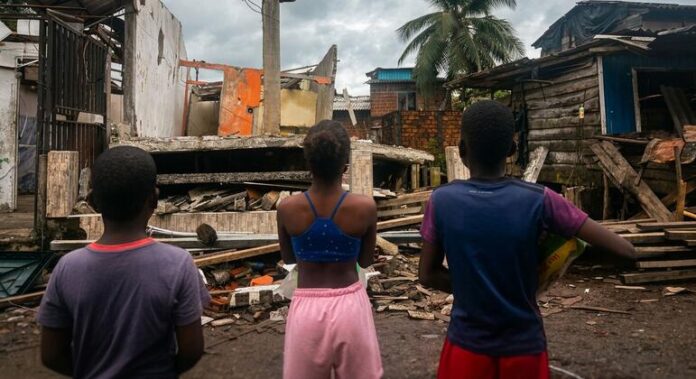
Humanitarian partners are seeking $135 million to respond to needs created by the 7.4-magnitude earthquake, which struck on 10 August, according to a new addendum to the UN’s 2026 Humanitarian Response Plan for Colombia.
The response aims to reach 671,000 people, initially concentrating on the hardest-hit departments of Risaralda, Valle del Cauca, Chocó and Caldas.
Speaking from Quibdó, the capital of Chocó and one of the areas worst affected, Jean-Philippe Antolin, a humanitarian response and recovery specialist with the UN migration agency (IOM), said the full extent of the disaster was still emerging.
“There are communities that haven’t been accessed yet, or have only been accessed once,” he told reporters at UN Headquarters in New York.
“Pretty much everything is still urgent.”
Fearing collapse
Latest government figures cited by UN agencies indicate that more than 300 people have been killed, 426 remain missing and more than 4,500 have been injured across 472 municipalities in 15 departments.
More than 134,000 homes have been damaged and nearly 30,000 destroyed, while at least 413 roads have been affected, complicating access to some communities.
For many families, even homes that remain standing cannot yet be considered safe.
“From outside, some might not look affected. But if you go inside, you will see cracks everywhere,” Mr. Antolin said.
“People are sleeping outside for fear of the roof collapsing over their heads.”
He said structural assessments were urgently needed so families could then start returning safely.
IOM has identified at least 71 temporary collective accommodation sites housing around 4,700 people across Valle del Cauca, Risaralda, Chocó and Caldas. Others are staying with relatives, renting accommodation or living in improvised spaces.
Mr. Antolin warned that formal shelters should not become “magnets” for assistance while families staying elsewhere go without help.
Rain aids disease spread
Recent heavy rains in several earthquake-affected areas, including Pereira, Buenaventura and Quibdó, are worsening conditions for families in temporary or improvised shelters.
“The rain is also making it easier for vector-borne diseases to spread, such as dengue,” Mr. Antolin warned.
In Chocó, overflowing water sources and exposure to contaminated water are also increasing the risk of diarrhoeal and respiratory illnesses.
Across affected areas, at least 50 hospitals have suffered severe damage, while disruptions to electricity, water, oxygen, medical supplies and transport are piling more pressure on health services.
Rural impact still unclear
Beyond the immediate emergency, the impact on rural livelihoods remains largely unknown.
The Food and Agriculture Organization (FAO) said there was a “critical information gap” over damage to crops, livestock, artisanal fishing, irrigation systems and harvests.
Many affected rural, riverine and coastal communities depend heavily on family farming and artisanal fishing, but the full extent of the destruction has yet to be established.
FAO also warned that the earthquake coincided with crop planting and harvesting in some areas, meaning the loss of a production cycle could leave families with fewer resources for the next season.
UN response scales up
UN agencies are expanding assistance as needs continue to emerge:
- IOM has launched a $30 million appeal covering shelter, accommodation sites, water and sanitation, health, protection and recovery over the next six months.
- The World Food Programme (WFP) has begun delivering emergency food assistance in Pereira and Quibdó and is preparing to expand to other affected areas, while seeking $23 million to assist around 100,000 people.
- The UN sexual and reproductive health agency (UNFPA) is deploying mobile teams in Chocó to support survivors of gender-based violence and pregnant women, while providing hygiene and maternal supplies.
- The UN Children’s Fund (UNICEF) is providing water, sanitation and hygiene support to affected families and working with national authorities on child protection.
- UN relief chief Tom Fletcher has released $5 million from the Central Emergency Response Fund (CERF) to support the Government-led response.
Although recovery efforts are beginning, Mr. Antolin stressed that immediate humanitarian needs remain acute.
“Recovery starts from day one,” he said. “But it takes time. It’s been only ten days.”
