
Last year, a UCLA-led team accomplished something scientists have been trying to do for 50 years. They made
An old jeweler’s trick could unlock next-generation nuclear clocks
بيان البطريرك الصربي بورفيري بمناسبة القتل الجماعي في مدرسة بلغراد

 بمناسبة القتل الجماعي بمناسبة يد زميل قاصر في مدرسة ابتدائية في بلغراد التي وقعت هذا الصباح، أدلى بطريرك صربيا بورفيري بالبيان التالي: بألم لا يطاق أستمع إلى أخبار كارثة لم يحدث مثلها في شعبنا وفي وطننا، وحدثت اليوم في مدرسة ابتدائية في بلغراد. أصلي إلى المسيح المخلص من أجل الأطفال المصابين والعاملين في المدرسة. […]
Originally published at Almouwatin.com
EU demands respect after Trump’s Greenland tariff threat

Extraordinary Brussels summit underscores Europe’s red lines on sovereignty and economic coercion, while raising fresh questions about the future tone of transatlantic ties.
EU leaders used an extraordinary summit in Brussels to send a blunt message to US President Donald Trump: Europe expects “cordial and respectful” dealings, especially after a crisis in which Trump threatened punitive tariffs linked to Greenland. The immediate confrontation eased after a NATO-brokered Arctic security framework was announced, but European officials signalled they are ready to defend sovereignty and markets—potentially with the EU’s powerful Anti-Coercion Instrument.
Speaking after the emergency meeting, European Council President António Costa framed the issue as one of principle and method. “We believe that relationships between partners and allies should be managed in a cordial and respectful way,” he said, warning the EU would defend its interests “against any form of coercion,” according to a report by Euronews.
European Commission President Ursula von der Leyen struck a similar note, presenting unity as the bloc’s main leverage. She said the EU had been “successful” in pushing back against territorial claims by being “firm, non-escalatory and most importantly very united,” Euronews reported. At the same time, she urged Europeans to strengthen economic resilience, diversify supply chains and reduce vulnerabilities in key sectors.
A five-day crisis, then a fragile pause
The episode—described by European diplomats as a near-brink moment—was defused when Trump backtracked and opted for a longer-term arrangement on Arctic security brokered by NATO Secretary General Mark Rutte. Yet details of that framework have not been released, feeding suspicion in several capitals that the political clash could reappear in another form.
Leaders privately worried that a rapid escalation—tariffs met with countermeasures—could cause wider economic damage and complicate coordination on security priorities, including continued efforts to end Russia’s war against Ukraine. The relief in Brussels, however, came with a message: deterrence matters, and so do predictable rules between allies.
Greenland’s sovereignty and the people at the centre
Danish Prime Minister Mette Frederiksen drew the clearest line. Denmark is prepared to discuss matters related to Greenland with Washington, she said, but sovereignty is “off the table”—a “red line”—and “our democratic rules cannot be discussed,” according to Euronews.
Greenland is an autonomous part of the Kingdom of Denmark with self-government established under the Self-Government Act framework. Any discussion about the island’s future also inevitably raises questions of democratic legitimacy and self-determination—especially for Greenlanders themselves, whose political agency can be sidelined when great-power competition dominates the headlines.
For EU officials, that is not a rhetorical point. If territorial questions are even hinted at through economic pressure, it touches core European norms: sovereignty, the rule of law, and the right of peoples to decide their own future without coercion.
The Anti-Coercion Instrument: Europe’s sharpest trade deterrent
Before Trump’s reversal, the Commission began preparing potential responses in case tariff threats moved from rhetoric to action. Among the options discussed was using the EU’s Anti-Coercion Instrument, which entered into force in late 2023 and is designed to deter and—if needed—counter third-country “economic coercion.”
The tool is intentionally broad. It can, in principle, target multiple areas at once—from trade in goods and services to investment flows, public procurement and intellectual property—while still operating within defined EU procedures and a “last resort” logic.
The European Times has previously explored how this mechanism is meant to work in practice and why it matters for Europe’s economic security in an earlier explainer on the Anti-Coercion Instrument. The same debate is now returning in real time: how to remain non-escalatory, but credible, when pressure tactics appear at the edge of allied diplomacy.
What this crisis reveals about the transatlantic relationship
At its core, the Brussels summit was less about tariffs alone and more about trust. EU leaders signalled they want to preserve transatlantic cooperation, but not at the cost of normalising threats—territorial or economic—against a member state and its autonomous territory.
The crisis has also revived a longer-running discussion in Europe: strategic resilience. Von der Leyen’s call to diversify supply chains and reinforce “economic power” fits a broader EU shift toward reducing single-point dependencies, alongside debates on industrial policy, defence cooperation, and the balance between openness and protection.
As The European Times has reported in other contexts, Europe’s push to deepen its own capacity—whether in security or industrial policy—has become a recurring theme in Brussels. (See, for example, our coverage on strengthening defence cooperation in European politics.)
Blockchain Is Changing Online Gaming Security

From “trust us” to “verify it”: what provably fair cryptography and smart contracts mean for players—and for Europe’s regulators.
For years, online gambling has asked players to accept a simple bargain: deposit money, play, and trust that the unseen software is fair. Blockchain-based systems are starting to replace that trust with something more concrete—cryptographic proof. The change is not a miracle cure for gambling’s risks, and it does not remove the house edge. But it can make fairness easier to verify, payouts faster to settle, and account checks less intrusive for many users—while creating new security and regulatory challenges across Europe.
The “trust problem” in traditional online casinos
Most online casinos run on centralised servers. The operator controls the game code, the random number generator, and the records of each spin, deal, or roll. Regulators can audit licensed operators, but for players the system still functions like a black box: you see the outcome, not the underlying calculation.
This is why disputes about fairness rarely feel resolvable from the user side. Even when the stated house edge is transparent, a player typically cannot prove that a specific outcome was not manipulated after the bet was placed.
Provably fair systems: fairness you can check yourself
“Provably fair” gaming tries to address that gap by letting players verify results round by round. A common approach uses a commit-and-reveal method: the server commits to a secret value (a “server seed”) by publishing a cryptographic hash, and the player contributes their own “client seed.” A nonce (a counter) ensures each round is unique.
After the round, the server reveals the original seed. Anyone can recompute the hash and confirm it matches the published commitment. If it matches, the operator cannot credibly claim the result was changed after the bet, because the commitment was already locked in.
These systems rely on established cryptographic properties: secure hash functions are designed so that finding two different inputs with the same hash (a “collision”) is computationally infeasible for practical attackers, which is central to why commitments work in the first place. You can read NIST’s overview of hash-function security properties here, and the U.S. federal standard defining SHA-256 and related algorithms here.
Smart contracts: reducing counterparty risk, not eliminating it
Blockchains such as Ethereum introduced another step: smart contracts—programs deployed on a blockchain that execute as written. In theory, a game can encode rules and payout logic into immutable code and settle automatically when conditions are met. That can reduce some forms of counterparty risk, such as arbitrary payment delays or unclear withdrawal rules.
Ethereum’s developer documentation describes smart contracts as code that can define and automatically enforce rules on-chain here. In practice, however, “on-chain” does not automatically mean “safe.” Contracts can contain vulnerabilities, some systems use upgradeable contracts or administrative controls, and front-end interfaces can still be compromised. The security benefit is real—but it depends on design, audits, and governance.
Randomness on a deterministic ledger: the hardest engineering problem
There is a reason many gambling platforms still keep critical pieces off-chain: blockchains are deterministic. That makes “true randomness” difficult when real money is at stake. Several approaches exist, including multi-party commit-and-reveal schemes, oracle networks, and verifiable random functions (VRFs).
One widely used option in decentralised applications is VRF-based randomness, which supplies random values together with a cryptographic proof that the value was generated correctly. Chainlink’s documentation explains how VRF provides on-chain verifiable randomness here.
Speed and privacy: fewer frictions, different trade-offs
Crypto transactions can settle faster than many traditional payment rails. For users, that can mean quicker deposits and withdrawals and fewer bank-related delays. But “privacy” is more complicated: blockchain transfers are recorded on public ledgers, so transaction trails can remain visible indefinitely. The trade-off is often less document collection at the start, but more traceability on-chain.
In Europe, this intersects with anti-money laundering (AML) rules. The EU’s AML framework has been strengthened through the directly applicable Regulation (EU) 2024/1624, which reinforces customer-due-diligence expectations across the financial system. Separately, the EU’s Markets in Crypto-Assets framework—MiCA (Regulation (EU) 2023/1114)—sets harmonised rules for many crypto-asset activities, with oversight roles explained by EU authorities such as ESMA.
Europe’s regulatory reality: gambling is national, but the pressure is cross-border
At EU level, there is no single, sector-specific law for online gambling. The European Commission notes that Member States remain autonomous in how they organise gambling services, within Treaty principles and Court of Justice case law here. The Commission also summarises core legal principles and case law relevant to cross-border gambling restrictions here.
This matters for blockchain-based gaming because the technology is inherently borderless. Licensing, consumer protection, advertising rules, and responsible-gaming safeguards are still largely national—yet payment methods, wallets, and platforms can operate across jurisdictions in seconds.
As The European Times has reported in a separate context, EU institutions are steadily building more detailed rulebooks around crypto-related risks and supervision. That broader regulatory direction will shape how blockchain-based gaming security tools are treated, even when gambling rules remain national.
What has actually changed—and what has not
Strip away the marketing and three practical changes stand out:
- Verifiable fairness for certain game types, where players can independently confirm how outcomes were determined.
- Faster settlement in many cases, depending on the chain and the platform’s design.
- Lower onboarding friction for some users, though AML/KYC duties still apply in many scenarios—especially for larger sums.
What has not changed is just as important. Gambling can still cause harm. A provably fair game can still be addictive. Smart contracts can still be exploited if poorly built. And transparent code does not automatically mean fair business practices in customer support, marketing, or responsible-gaming enforcement.
The next test: trust by mathematics, accountability by law
Blockchain tools can improve transparency in an industry that has often depended on blind trust. For consumers, that is a meaningful security upgrade. For regulators, it creates a more complex target: part software, part finance, part consumer protection, often operating across borders.
The long-term outcome in Europe is likely to depend on whether operators can prove not only cryptographic fairness, but also robust safeguards—clear licensing, effective responsible-gaming tools, strong contract security, and compliance with Europe’s evolving AML and crypto-asset rules.
‘Dangerous nostalgia’ poses threat to multilateralism, deputy UN chief tells Danish MPs

 The founding document of the UN “is our moral compass,” she said, calling for a renewed commitment to multilateralism anchored in solidarity, international law and human dignity. She highlighted the need to invest in peace – which the Security Council and the General Assembly have both affirmed […]
Originally published at Almouwatin.com
“Screen” means that the water is in the air. لقد قامت الدول بالفعل بإنهاء البرامج

 بعد الأزمة المالية العالمية في عام 2008، قدمت حوالي عشر دول أوروبية ما يسمى بـ “التأشيرات الذهبية” للأجانب الذين يستثمرون في بطلب للحصول على الجنسية بعد فترة زمنية معينة. بعد ظهور الاتحاد الأوروبي، أصبح الحد الأدنى من بات الاستثمار عمليًا: يبدأ الحد الأدنى للاستثمار عند 50,000 يورو في لاتفيا، […]
Originally published at Almouwatin.com
World News in Brief: Winter attacks in Ukraine, looming food aid cuts in Nigeria, drought in Kenya
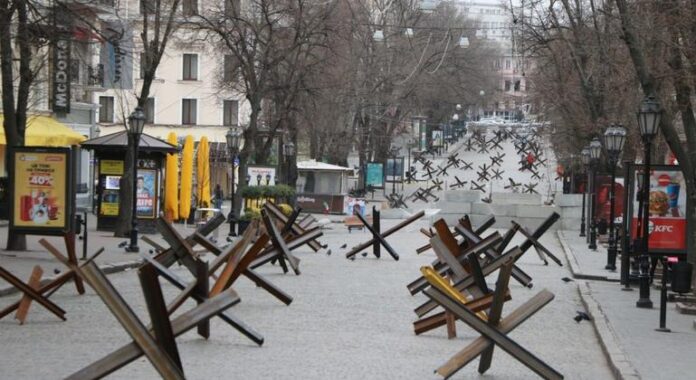
They include attacks in Odesa region on Wednesday that killed a 17-year-old boy, according to UN child rights agency UNICEF which called for an “end to attacks on civilian areas and the infrastructure children rely on.”
The UN Office for the Coordination of Humanitarian Affairs (OCHA) reported that attacks on the southeastern city of Kryvyi Rih on Wednesday had recommenced on Thursday.
Aid deliveries
“Teams delivered shelter materials to cover damaged homes and provided protection services to the affected residents,” OCHA said in a tweet, stressing that “the cold weather is worsening the needs, requiring urgent aid.”
Russia continues to target energy infrastructure in Ukraine, knocking out heat, electricity and water supply, UN human rights chief Volker Türk said on Tuesday.
“Civilians are bearing the brunt of these attacks. They can only be described as cruel. They must stop,” he said.
Nigeria: Looming food aid cuts put one million at risk
More than a million people in northeast Nigeria could lose emergency food and nutrition assistance unless funding can be found “within weeks”, the World Food Programme (WFP) warned on Thursday.
Nigeria is facing one of the worst hunger crises in recent times, with nearly 35 million people projected to face acute and severe food insecurity during the lean season.
They include roughly 15,000 people in Borno state who risk falling into catastrophic hunger, which is one step away from famine. These are the worst levels of hunger recorded in a decade, WFP said.
The crisis is unfolding amid renewed violence in the north which has devastated rural communities, displaced families and destroyed food reserves.
‘Catastrophic’ consequences
“Now is not the time to stop food assistance,” said David Stevenson, WFP’s Nigeria Country Director.
He warned of “catastrophic humanitarian, security and economic consequences” for Nigeria’s most vulnerable people, who had been forced to flee their homes in search of food and shelter.
WFP is urgently seeking $129 million to sustain its operations in the northeast over the next six months, warning that this work could shut down unless funds are received.
People living in Turkana in northern Kenya are dealing with the impact of drought.
Kenya drought impacts over two million people
More than two million people in Kenya are facing worsening food insecurity in the wake of the October to December 2025 rainy season – among the driest on record, the World Health Organization (WHO) said on Thursday.
The prolonged drought has led to rising malnutrition rates, increased risk of disease outbreaks and disrupted access to essential health services.
Regional drought
The impacts are also being felt in neighbouring Somalia, Tanzania and Uganda, where millions more people are at risk due to similar weather patterns and water shortages.
In Kenya, 10 counties are currently experiencing drought conditions, one of which is in the “alarm” phase. Furthermore, another 13 counties in the Arid and Semi-Arid Lands (ASAL) regions are showing signs of drought stress.
While severe, the emergency was part of a known seasonal risk, WHO said. The UN agency has supported the Kenyan authorities including by providing cholera kits, pneumonia kits and essential supplies, as well as pre-positioning equipment in high-risk counties before the drought intensified.
WHO stressed the need to mobilize urgently to ensure both people and livestock have access to adequate food supply and safe water, and to prevent the situation from worsening.
The Technology Behind Modern Vehicle Parts
Your car is no longer just a machine. It is a rolling supercomputer. The parts inside it are
Gaza: War Crimes Investigation Pledges to Continue Work for Justice and Accountability

“The Peace Council was established in accordance with a draft that was submitted to the Security Council that was voted on and accepted,” said Srinivasan Muralidhar, chairman of the commission of inquiry on the occupied Palestinian territory, including East Jerusalem and Israel. “As a commission of inquiry, we consider […]
Originally published at Almouwatin.com
Yellow Tent in Milan as Volunteer Ministers Mark 50 Years Worldwide, 20+ in Italy
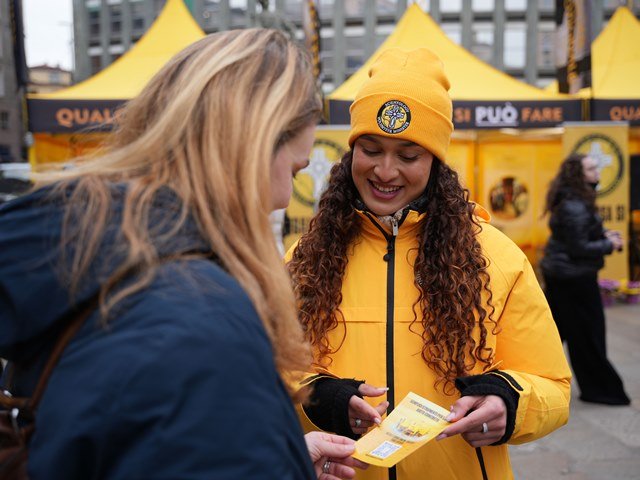
KINGNEWSWIRE // Press Release // Scientology Volunteer Ministers Bring the Yellow Tent to Milan, Highlighting Practical Help and More Than Two Decades of Italian Relief Work
Pop-up “Yellow Tent” initiative expands community support in Lombardy while celebrating nearly five decades of international outreach since the programme’s creation in the mid‑1970s.
MILAN, Italy — 22 January 2026 — Scientology Volunteer Ministers have brought their distinctive Yellow Tent to Milan as a public point of practical support—offering listening, proven problem-solving tools and guidance for everyday challenges, from communication difficulties to conflict resolution and personal emergencies, as reported by Gazzetta della Lombardia. Deployed internationally in major cities and in the aftermath of crises, the Yellow Tent provides an approachable space where residents speak directly with trained volunteers and learn simple, structured methods that work immediately in daily life.
Volunteer Ministers receive training through “Tools for Life” modules drawn from The Scientology Handbook, covering communication, study methods, assisting those in stress or trauma, and practical steps for resolving disputes and organizing effectively. These tools provide volunteers with a clear pathway for helping both neighbors and disaster survivors through the global Volunteer Ministers disaster response network.
The Church of Scientology created the Volunteer Ministers programme as a religious social service in the mid‑1970s. Since then, Volunteer Ministers have brought practical help to hundreds of disaster sites worldwide, working alongside government agencies, NGOs and community partners.
More Than Two Decades Serving Italy
As evidenced in many media reports and their own websited, Scientology Volunteer Ministers have served Italy for more than two decades through major emergencies and community recovery—working alongside civil-protection teams and municipal services. Our Italian Volunteer Ministers formed Pro.Civi.Co.S (Civil Protection Volunteers of the Scientology Community) after 9/11 as the programme expanded internationally, entering Italy’s National Civil Protection registry very shortly after.
Ivan Arjona-Pelado, Scientology’s representative to the EU and UN explained that “Italian Volunteer Ministers also joined international relief for the 2004 South Asian tsunami, demonstrating our established capacity well before 2006. This strong foundation continues through our earthquake, flood and recovery efforts across Italy”:
- Abruzzo (L’Aquila), 2009 earthquake: Extended support after the 6 April 2009 earthquake, assisting displaced residents alongside other relief groups during this major national emergency.
- Emilia-Romagna, 2012 earthquakes: Operations in affected areas like Medolla during the May 2012 sequence, providing shelter assistance, logistics and aid distribution.
- Sardinia, 2013 floods (Cyclone Cleopatra): Coordinated relief through our Churches and Missions after the severe November 2013 flooding.
- Central Italy, 2016 earthquake: Rapid response teams from Pro.Civi.Co.S after the 24 August 2016 earthquake.
- COVID-19 civic support (2020 onward): Sanitisation, local assistance and our multi-year blood donation partnership with AVIS, featured alongside WHO’s Italian blood donor stories.
- Marche, 2022 floods: Support for communities hit by the September 2022 Marche floods.
- Emilia-Romagna, 2023 floods: Deployments clearing mud and debris after the May 2023 Emilia-Romagna disaster.
- Tuscany, 2023 (Campi Bisenzio): Responding at civil-protection request, removing debris and helping residents salvage belongings, earning thanks from the mayor.
Milan: Emergency Readiness Meets Neighborhood Support
In Milan, Volunteer Ministers combine emergency readiness with regular community service—from pandemic assistance to weekly clean-ups and neighborhood improvements. Our northern Italy teams, including those honored in Verona (“Scientology Volunteer Ministers of Verona Honored”), maintain these ongoing public service efforts.
Sandro Oneda, president of our Italian Volunteer Ministers coordinating association, emphasizes: helping through regular blood donation is “a civic duty that aligns perfectly with our mission“.
Strengthening Europe Through Practical Help
Ivan Arjona, Scientology’s representative to the European Union, OSCE, Council of Europe and United Nations, explains the Milan Yellow Tent’s importance:
“Across Europe, social cohesion grows when citizens deliver practical help—especially where institutions face pressure and daily problems feel overwhelming. Volunteer Ministers embody this: community resilience builds when people have tools to help each other with competence, respect and human dignity.”
The Volunteer Ministers Mission
L. Ron Hubbard created the Volunteer Ministers programme in the mid-1970s with a clear purpose: practical assistance and the conviction that “Something can be done about it.” Today we serve hundreds of nations, delivering help at hundreds of disaster sites alongside government agencies, civil protection and NGOs through Scientology.org and VolunteerMinisters.org.
The Milan Yellow Tent continues this mission—celebrating over five decades worldwide and more than two decades strengthening Italian communities through emergency response and everyday support.
The Church of Scientology, its churches, missions, groups and members are present across the European continent. Scientology Europe reports a continent-wide presence through more than 140 churches, missions and affiliated groups in at least 27 European nations, alongside thousands of community-based social betterment and reform initiatives focused on education, prevention and neighbourhood-level support, inspired by the work of Scientology founder L. Ron Hubbard.
Within Europe’s diverse national frameworks for religion, the Church’s recognitions continue to expand, with administrative and judicial authorities in Spain, Portugal, Sweden, the Netherlands, Italy, Germany Slovakia and others, as well as the European Court of Human Rights, having addressed and acknowledged Scientology communities as protected by the national and international provisions of Freedom of Religion or belief.
