Joint donor statement on the situation in and around El Fasher, Sudan, by 29 donors
‘Humanitarian work, a moral obligation’: Retired doctor returns to face the ‘silent threat’ in Gaza
After a successful career that lasted 43 years, during which he worked in Saudi Arabia, for the Palestinian Ministry of Health and then the UN Children’s Fund (UNICEF), Dr. Awadallah decided to retire at the end of 2021.
But, that was short-lived. As the crisis in Gaza escalated and polio reappeared, he decided to return to the field. Doing so was not just a job assignment. As he describes it, it’s a “message of loyalty” to his profession, to the children of Gaza and to the institution that gave him so much.
Dr. Awadallah’s return was driven by a “deep inner sense of responsibility and belonging”.
“I felt that my long experience and field knowledge could make a difference in these critical times,” he told UN News.
‘The Silent Threat to Gaza’
Dr. Awadallah’s story was the focus of the film The Silent Threat to Gaza, produced by UNICEF in conjunction with World Humanitarian Day, observed annually on 19 August. The organization emphasises that the film is a powerful testament to the resilience of humanitarian workers who are facing the dangers of conflict.
Named in May on Time Magazine’s TIME100 Health List for leading “a heroic vaccination campaign” that reached 600,000 children in Gaza, Dr. Awadallah was one of the lead subjects of the 32-minute documentary. The film follows him and his colleague Fairuz Abu Warda, who, during short periods of last year’s ceasefire, delivered lifesaving vaccines to children across the Gaza Strip.
Watch the full document here:
UNICEF said their courage underscores a fundamental fact that when humanitarian principles are adhered to, workers are protected and given safe and timely access, lives can be saved even in the most fragile environments. The UN agency stressed that the courage of humanitarian workers, such as Dr. Awadallah and Ms. Warda, reinforces the urgent need for principled action and international accountability.
Dr. Awadallah told UN News how exhaustion, hunger and fear were part of their daily routine under constant bombardment from the air and sea.
However, their priority was to keep vaccinations effective and reach every child, he said, remembering the moments when he would see his colleagues collapse from exhaustion and then immediately return to work.
A living testimony to willpower
Dr. Awadallah points out that every scene in the vaccination campaign, from the smile of a child to the insistence of the teams to reach the farthest house despite the security difficulties and the danger of moving, reminded him that “humanitarian work cannot be retired.”
Children received the polio vaccine as part of a Gaza-wide campaign. (file)
“I provide humanitarian work, and even if I retire, it does not apply to humanitarian work,” he said.
“The Silent Threat to Gaza was not just a film or a depiction of events, but a living testimony to the strength of will and the power of hope.”
He believes that every shot in the film was “a message to the world that despite the wounds, despite the death and the difficulty of life, Gaza is able to rise up and protect its children”.
Despite the risks to their lives, Dr. Awadallah and his fellow humanitarian workers in Gaza continue their work under constant bombardment.
Protecting humanitarian workers is ‘not a luxury’
“Fear knows no way to their hearts,” he said. “We hear the explosion and then we go to do our work. We are moving towards our goal and we are used to it.”
He said more than 350 medical personnel have been killed, hundreds injured and more than 1,300 arrested.
He appealed to the world that the protection of those who lend a helping hand “is not a luxury, but a prerequisite for ensuring that life and hope reach those in need”, and that it is a “humanitarian duty” that is as important as the provision of assistance itself.
Dr. Younis Awadallah administers a polio vaccine in Gaza.
Spreading hope
After decades of experience, Dr. Awadallah said he has learned that human beings have an incredible resilience beyond imagination.
“Resilience is not the absence of pain and suffering, but the ability to persevere and rise despite tragedies,” he said. “I saw mothers smiling and laughing at their children despite the bleeding and pain. I saw patients facing the pain with a smile and hope.”
Their role as humanitarian workers goes beyond providing treatment and material assistance to include “promoting and instilling hope in people’s hearts, supporting them psychologically and maintaining their strength in the face of problems”, he said.
Not just a profession
On World Humanitarian Day, Dr. Awadallah pays tribute to all those who choose to walk towards danger rather than away from it.
I believe in this business
“We are throwing ourselves into perdition for the sake of others,” he said.
Humanitarian workers in Gaza and everywhere in the world – regardless of their specialties – “are witnesses that mercy knows no boundaries and that human solidarity can flourish even during wars or amid the rubble”, he added.
He said he hopes he would be able to reunite with his family soon.
“My message today is that humanitarian work is not just a profession, but a moral and humanitarian obligation. I left my family and haven’t seen them for two years because I believe in this business.”
Atawey Secures €22M to accelerate European Expansion of Hydrogen Mobility Infrastructure
Atawey, an InnoEnergy portfolio company since 2014, continues its remarkable growth trajectory with a €22 million fundraising round to industrialize and scale its hydrogen refueling infrastructure across Europe.
Atawey, French hydrogen mobility frontrunner, has closed a strategic €22 million equity investment round to fuel its European expansion and scale up its hydrogen refueling station deployments. This new capital injection strengthens Atawey’s role as a trusted infrastructure partner in the energy transition and as a key player in building Europe’s hydrogen mobility ecosystem.
The funding round was led by long-time investor Starquest, alongside ARMOR GROUP, an industrial consortium, and the French State through the France 2030 plan, with support from the Auvergne-Rhône-Alpes Regional Industry Future Fund. Crucially, the round also includes the participation of historical investors who have supported Atawey’s vision over the long term: InnoEnergy, Groupe IDEC, EIFFAGE, CADS, and Imagine H2.
Since joining the InnoEnergy portfolio in 2014, Atawey has evolved from a pioneering clean-tech startup into a fast-scaling industrial leader. With 51 stations deployed, two production facilities, 150 employees, and a 113% revenue increase in 2024 (reaching €18 million), the company is now on track to achieve profitability by the end of 2025.
Scaling with Resilience in a Complex Market
Despite turbulence and slower-than-expected growth across the hydrogen sector, Atawey has shown operational resilience and strong commercial traction, supported by a clear strategic model: modular, turnkey solutions, an integrated service offering, and a strong customer-centric approach. The company currently holds €30 million in confirmed order potential, with key clients including HYmpulsion, Brétéché – Groupe Avia Picoty, Hynamics, and GCK Energy.
This capital raise will accelerate Atawey’s strategic roadmap:
- Achieve positive EBITDA by the end of 2025
- Expand European footprint, with initial deployments in Italy, Spain, and the Benelux
- Deliver scalable, regulation-ready hydrogen refueling stations for heavy-duty mobility and industrial applications
This fundraising is a major milestone. It allows us to scale up fast while staying true to our core: customer intimacy, technological excellence, and deep commitment to decarbonization
Jean-Michel Amaré, President and Co-founder of Atawey
Atawey will now focus on:
- Strengthening production capabilities in Chambéry and Grenoble
- Expanding integrated services such as maintenance, training (via the Atawey Academy), and ecosystem development
- Delivering safe, high-performance, customizable solutions designed and manufactured in France
By combining technological innovation, sovereign industrial capacity, and deep market understanding, Atawey positions itself at the heart of Europe’s hydrogen infrastructure – enabling a future of low-carbon, resilient, and competitive mobility.
Syria: Violence in Alawite areas may be war crimes, say rights investigators
Many of the victims were Alawite, a minority community in Syria, which the former ruling Assad family belonged to.
Some community members are believed to have been killed in March by forces or individuals loyal to the country’s new leadership, the National Transitional Authority, which is headed by interim President Ahmed Al-Sharaa.
In response to the “arrest operation” launched on 6 March, fighters loyal to toppled President Bashar al-Assad responded by capturing, killing and injuring hundreds of interim government forces, the commissioners said.
Looting was also widespread, while homes were set alight, leaving tens of thousands of civilians displaced, the commissioners continued.
In total, approximately 1,400 people were reported killed in the ensuing massacres, predominantly civilians.
“The vast majority were adult men, but victims included approximately 100 women, the elderly and the disabled, as well as children,” the UN Commission of Inquiry on Syria said.
Still a target
It also warned that the Alawite community which formed former Mr. al-Assad’s power base is still being targeted today. Alawites make up about 10 per cent of the majority Sunni country.
According to the commissioners’ latest report, the victims killed in March were murdered and tortured, while the bodies of the dead were also mutilated.
They added that some acts were filmed and published on social media, along with footage of civilians being abused and humiliated.
Chair of the UN panel, Paulo Pinheiro, condemned the scale and brutality of the violence which reportedly involved Alawite men being identified and singled out before being led away to be shot and killed in multiple majority Alawite villages and neighbourhoods.
“Bodies were left in the streets for days, with families prevented from conducting burials in accordance with religious rites, while others were buried in mass graves without proper documentation,” the commissioners’ report stated.
Meanwhile, hospitals became overwhelmed “as corpses piled up”.
Eye-witnesses
The Commission’s latest report is based on extensive investigations, including more than 200 interviews with victims and witnesses, including in Latakia and Tartus.
The investigators also visited three mass grave sites and met senior Syrian government officials.
Today, Alawite communities still live in fear and face ongoing abductions of women, arbitrary arrests, enforced disappearances and looting and occupation of their property, investigators noted.
Protection must be a priority
They should be protected by the new authorities in charge of Syria, commissioners insisted.
“The affected communities need to see urgent action to increase their protection. Beyond referral of suspected perpetrators to criminal justice, individuals suspected of involvement in violations during the March events should be immediately removed from active duties pending investigation,” said Commissioner Lynn Welchman.
Additionally, screening processes need to be expanded so that known or suspected perpetrators of grave violations in the past are not recruited into the ranks of the interim government security forces, she maintained.
After 14 years of civil war which ended last December when opposition forces including Hayat Tahrir al-Sham (HTS) – led by interim Prsident al-Sharaa – the swept into Damascus, forcing out Mr. al-Assad, lasting damage has been done to Syria’s unity.
“The extreme violence that occurred has deepened existing rifts between communities, contributing to a climate of fear and insecurity amongst many Syrians throughout the country,” the Commissioners said.
“We call on the interim authorities to continue to pursue accountability for all perpetrators, regardless of affiliation or rank,” Mr. Pinheiro continued. “While dozens of alleged perpetrators of violations have reportedly since been arrested, the scale of the violence documented in our report warrants expanding such efforts.”
The UN warns of a sharp increase in sexual violence during the conflict
According to the Secretary General’s report on sexual violence related to conflictsStates and non -state actors were responsible for violations in 21 countries, with the largest figures recorded in the Central African Republic (car), the Democratic Republic of Congo (DRC), Haiti, Somalia and South Sudan.
Women and girls represented 92% of victims, but men, boys, people with various sexual orientations and gender identities, racial and ethnic minorities – with some disabled people – were also targeted, aged one to 75.
“” These alarming figures do not reflect the global scale and the prevalence of these crimes, ” THE Office of the special representative on sexual violence in conflict said.
Numerous attacks have been accompanied by extreme physical violence, including summary executions, while stigma and harmful social reactions have often pushed survivors and children born in wartime in deep social and economic marginalization.
Violence of detention
The report underlined a disturbing increase in sexual violence in detention, often used as a tool for torture, humiliation and extraction of information. While men and boys were the most affected, women and girls were also targeted.
Non -state armed groups have carried out such crimes to tighten control over the territory and resources and to impose extremist ideologies. The widespread availability of light weapons, mass movement and food insecurity has been cited as factors that have further increased risks.
The report also noted that the parties to conflict have frequently blocked or restricted humanitarian access to survivors. “” The gravity and unprecedented magnitude of the destruction of health establishments and attacks, harassment and threats against front -line service providers have seriously hampered access to vital assistance for survivors“Said Pramila Patten, the special representative of sexual violence in conflicts.
Lack of legal compliance
The report lists 63 state and non -state actors suspected in a credible manner of or to be responsible for models of sexual violence in armed conflicts on Security adviceThe agenda.
While compliance with international humanitarian law has remained low, several parties have made official commitments to combat crimes.
The report recommended that the Security Council concern the committees to target the persistent authors, noting that sexual and sexual violence is now explicitly sanctionable under the regime of the fight against terrorism of the Council against Da’esh and Al-Qaida.
New registrations
The recently listed groups include the resistration for a state of law (red) Tabara in the DRC for a flagrant mass rape in 2024, and in Libya, two actors of the State – the deterrent for the fight against organized crime and terrorism (DACOC) and the Department of the Fight against Illegal Migration (DCIM) – as well as the non -state internal security agency.
Hamas was listed on the basis of information verified by the UN in 2024, indicating reasonable grounds to believe that certain hostages taken to Gaza have been subjected to different forms of sexual violence during their time in captivity, and clear and convincing information that sexual violence also occurred during the attacks of October 7, 2023 in at least six locations.
Israel, Russia, “in opinion”
For the first time, the report also appoints the parties “in opinion” for a potential registration in the next annual report.
Due to “important concerns” concerning the diagrams of sexual violence perpetrated by the Israeli armed forces and security and the Russian forces and affiliates, “” “These parties have been put into opinion for potential registration during the next reference period», The creation office said.
Call to responsibility, access
The report urged all parties to adopt clear orders prohibiting sexual violence, guaranteeing responsibility and granting unhindered access to the United Nations for monitoring and providing services.
“The promise expressed by the Security Council through its six resolutions dedicated to sexual violence related to conflicts is prevention,” said Patten.
“” We owe the survivors more than solidarity; We owe them a life of dignity and an effective and decisive action to prevent and eradicate these crimes.“”
Originally published at Almouwatin.com
Syria: UNICEF calls for safe access to children in Sweida as needs mount
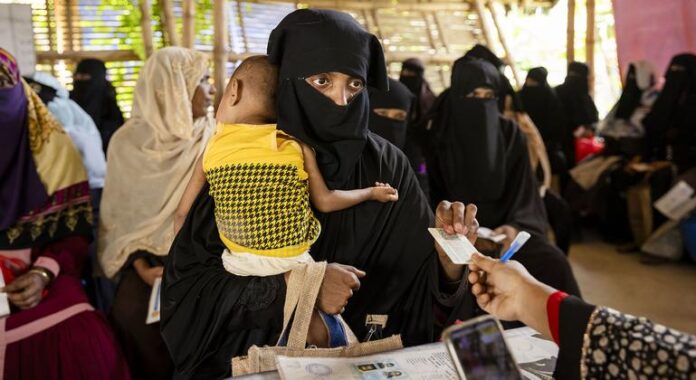
Deadly sectarian clashes erupted in the southern governorate, also known as As-Sweida, in July and early August and children and families continue to feel the impact.
At least 22 children reportedly were killed and another 21 injured in the violence, which caused significant damage to civilian infrastructure. More than 190,000 people, mainly women and children, were forced to flee their homes.
Essential services also were disrupted. At least five health centres were reportedly struck, with two doctors killed, while ambulances were obstructed or attacked.
‘A welcome step’
UNICEF Syria Deputy Representative Zeinab Adam described the situation as “tragic and deeply alarming.”
“Given the ongoing needs of children and families affected, the increased efforts by the interim authorities to facilitate access to those in need have been a welcome step,” she said.
UNICEF was part of the UN’s first inter-agency convoy to Sweida which arrived at the end of July.
Ms. Adam said the agency “delivered life-saving supplies and carried out a rapid on-the-ground assessment to ensure a faster, stronger response to the growing crisis.” said.
Food and medicine shortages
The fighting caused critical damage to vital infrastructure, water, electricity and fuel. Furthermore, food, medicine and other essentials remain scarce due to continued insecurity and access constraints.
In response, UNICEF has deployed 14 mobile health and nutrition teams. Teams have also provided life-saving health and nutrition supplies to more than 4,000 children and women, as well as safe drinking water and fuel for water pumping stations benefiting more than 30,000 people.
Appeal for access
“To ensure an effective response, it is critical that both humanitarian actors and commercial goods have unhindered access to the most affected communities,” said Ms. Adam.
“This will enable the immediate provision of basic social services, including food, water, and other essential supplies, to those in urgent need.”
She added that “facilitating this access is not only vital for life-saving interventions but also for restoring a minimum level of stability and protection in these communities.”
Meanwhile, UNICEF remains on the ground in Sweida and will continue to advocate for children there and across Syria.
Why Overload.su is a must-have for online ticketing and event platforms
Ticketing platforms are incredibly complex and prone to crashes. Overload.su’s realistic stress testing is the only way to
EU Civil Protection Mechanism responds to multiple wildfires across the continent
During the past week, Greece, Spain, Bulgaria, Montenegro and Albania activated the EU Civil Protection Mechanism to help deal with forest fires – many of which are occurring simultaneously across Europe.
Yesterday Spain activated the EU Civil Protection Mechanism for the first time ever for forest fires. The European Commission has quickly mobilised 2 rescEU planes stationed in France, expected to be deployed today.
Greece activated the Mechanism on 12 August. In response, the 2 Swedish rescEU planes currently in Bulgaria are expected to be deployed. Prepositioned firefighters from Czechia, Moldova and Romania also took part in the efforts to put out the fires.
In Bulgaria 6 countries – Czechia, Slovakia, France, Hungary, Romania, Sweden – mobilised aircraft via the Mechanism including the rescEU planes stationed in Sweden.
In Albania, the Commission mobilised rescEU aerial assets from Croatia, Bulgaria, Italy and Czechia and Slovakia.
In Montenegro, the Commission mobilised rescEU assets stationed in Czechia, Croatia and Italy. Serbia, Hungary and Bosnia and Herzegovina also deployed aircraft means as part of bilateral offers, and Austria offered ground firefighting teams.
The EU Civil Protection Mechanism has already been activated 16 times during the current fire season, as countries in Europe battle a heat wave accompanied by a high number of catastrophic wildfires around the continent. The number of activations for 2025 is already equal to the total activations for wildfires for 2024 during the whole fire season.
Copernicus was also activated for the fires in Greece, Spain and Bulgaria.
Underground Water Leak Detection: Techniques Used by Plumbers
Detecting underground water leaks is an essential aspect of maintaining the integrity of any property. While water is