Bosnia and Herzegovina: Statement by the Spokesperson on the criminal conviction in appeal of Republika Srpska President Milorad Dodik Source link
Urban Mobility Explained (UMX) Open Call
EIT Urban Mobility invites organisations and experts to submit proposals to its Urban Mobility Explained (UMX) Open Call, designed to accelerate the development and delivery of high-quality, sustainable professional training and support services that close the urban mobility knowledge gap.
This Call focuses on a series of specific activity areas aimed at enhancing the skills and capabilities of mobility professionals and organisations, particularly at the local/city level, to achieve systemic transformations for more liveable cities. The Call supports proposals that offer high-quality, impact-oriented, and financially sustainable learning experiences, leveraging EIT Urban Mobility’s network and expertise in various learning formats.
We are seeking proposals that align with the strategic objectives of EIT Urban Mobility’s Academy, fostering innovation and entrepreneurship through a lifelong learning approach, and demonstrating potential for replication and scaling up. Emphasis is placed on courses that comply with EIT Label certification where applicable.
Proposals may be submitted by individual applicants or multi-participant consortia.
The following seven types of activities are eligible under this Call:
- CHA1: Face-to-face course(s) development and commercialisation
- CHA2: Face-to-face course(s) complying with the EIT Label, design and delivery
- CHA3: Face-to-Face course(s) complying with the EIT Label, development and commercialisation
- CHA4: Replicating, scaling-up, remodelling, sale of successful commercial courses and training programmes
- CHA5: Replicating, scaling-up, remodelling, delivery of successful EIT Label courses
- CHA6: Upgrading, scaling-up, remodelling of non-UMX commercial courses or repurposing non-UMX commercial courses to UMX audiences
- CHA7: Training operations support services and delivery for custom course pathways
The Urban Mobility Explained (UMX) Open Call supports activities that demonstrate clear alignment with the strategic objectives of EIT Urban Mobility’s education and training portfolio, ensure compliance with the EIT Label requirements where applicable, and show strong potential for long-term impact, scalability, and financial sustainability.
EIT funding allocation
The total indicative EIT funding allocated to this Call is between approximately € 2-4 million. The maximum EIT funding per proposal is € 700 000.
Who can apply?
This Call for Proposals is open to all legal entities established in the Member States of the European Union, and/or in Third countries associated with Horizon Europe. These legal entities may be small and medium enterprises (SMEs), universities, research and technology organisations, cities or large businesses, among others.
This Call is open to multi-participant proposals and mono-participant proposals.
In the case of mono-participant proposals or multi-participant proposals involving exclusively entities from the same country, EIT Urban Mobility considers that:
- the pan-European dimension can be achieved by bringing participants from different countries onto the courses and exposing them to educational content that includes examples and case studies from different European countries. The instructors/ teaching staff are also expected to come from different European countries. In addition, a course in a specific city/region/country is internationalised/replicated in a different city/region/country. As such, these applicants are expected to deliver the first few sessions in a given market, and once the quality of the course has been demonstrated, it should be opened up to other markets, involving other players/partners, if needed.
- the knowledge triangle is integrated by involving the cities and industry partners, not only in identifying educational needs but also in designing and developing education courses in conjunction with academia. City and industry partners may also be recipients of education programmes.
For information on special cases, including Switzerland and Hungarian universities, please refer to section 2.1 of the Call Manual.
Info Webinar
EIT Urban Mobility will host an online information session on 15 July 2025, 11.00 – 12.30 CEST. To register for the webinar, please visit this website.
Urban Mobility Explained (UMX) Open Call
EIT Urban Mobility invites organisations and experts to submit proposals to its Urban Mobility Explained (UMX) Open Call, designed to accelerate the development and delivery of high-quality, sustainable professional training and support services that close the urban mobility knowledge gap.
This Call focuses on a series of specific activity areas aimed at enhancing the skills and capabilities of mobility professionals and organisations, particularly at the local/city level, to achieve systemic transformations for more liveable cities. The Call supports proposals that offer high-quality, impact-oriented, and financially sustainable learning experiences, leveraging EIT Urban Mobility’s network and expertise in various learning formats.
We are seeking proposals that align with the strategic objectives of EIT Urban Mobility’s Academy, fostering innovation and entrepreneurship through a lifelong learning approach, and demonstrating potential for replication and scaling up. Emphasis is placed on courses that comply with EIT Label certification where applicable.
Proposals may be submitted by individual applicants or multi-participant consortia.
The following seven types of activities are eligible under this Call:
- CHA1: Face-to-face course(s) development and commercialisation
- CHA2: Face-to-face course(s) complying with the EIT Label, design and delivery
- CHA3: Face-to-Face course(s) complying with the EIT Label, development and commercialisation
- CHA4: Replicating, scaling-up, remodelling, sale of successful commercial courses and training programmes
- CHA5: Replicating, scaling-up, remodelling, delivery of successful EIT Label courses
- CHA6: Upgrading, scaling-up, remodelling of non-UMX commercial courses or repurposing non-UMX commercial courses to UMX audiences
- CHA7: Training operations support services and delivery for custom course pathways
The Urban Mobility Explained (UMX) Open Call supports activities that demonstrate clear alignment with the strategic objectives of EIT Urban Mobility’s education and training portfolio, ensure compliance with the EIT Label requirements where applicable, and show strong potential for long-term impact, scalability, and financial sustainability.
EIT funding allocation
The total indicative EIT funding allocated to this Call is between approximately € 2-4 million. The maximum EIT funding per proposal is € 700 000.
Who can apply?
This Call for Proposals is open to all legal entities established in the Member States of the European Union, and/or in Third countries associated with Horizon Europe. These legal entities may be small and medium enterprises (SMEs), universities, research and technology organisations, cities or large businesses, among others.
This Call is open to multi-participant proposals and mono-participant proposals.
In the case of mono-participant proposals or multi-participant proposals involving exclusively entities from the same country, EIT Urban Mobility considers that:
- the pan-European dimension can be achieved by bringing participants from different countries onto the courses and exposing them to educational content that includes examples and case studies from different European countries. The instructors/ teaching staff are also expected to come from different European countries. In addition, a course in a specific city/region/country is internationalised/replicated in a different city/region/country. As such, these applicants are expected to deliver the first few sessions in a given market, and once the quality of the course has been demonstrated, it should be opened up to other markets, involving other players/partners, if needed.
- the knowledge triangle is integrated by involving the cities and industry partners, not only in identifying educational needs but also in designing and developing education courses in conjunction with academia. City and industry partners may also be recipients of education programmes.
For information on special cases, including Switzerland and Hungarian universities, please refer to section 2.1 of the Call Manual.
Info Webinar
EIT Urban Mobility will host an online information session on 15 July 2025, 11.00 – 12.30 CEST. To register for the webinar, please visit this website.
Haiti: More than 1,500 killed between April and June
Between the beginning of April and the end of June, armed violence in Haiti has killed 1,520 people and injured 609 more, according to a new report on human rights in Haiti which was released on Friday.
These numbers are similar to those from the first quarter of 2025 when 1,617 people were killed and 580 were injured.
“Gang attacks in the Artibonite and Centre departments, and in the capital, continue to cause serious human rights violations and exacerbate an already dire humanitarian crisis,” said Ulrika Richardson, the UN Resident and Humanitarian Coordinator in Haiti.
Gang influence expanding
President Jovenel Moïse’s assassination in 2021 triggered widespread gang violence in the capital of Port-au-Prince. Today, the UN estimates that gangs control at least 85 per cent of the city. In the past few months, many have begun to expand their influence in the Centre and Artibonite departments.
In June alone, 45,000 people were displaced in Centre and Artibonite, meaning that the total number of displaced people across these two departments totals over 240,000, according to the International Organization for Migration (IOM).
Between April and June, security forces were able to slow down the gang’s expansion in the capital, but the UN office in Haiti, BINUH. noted that the situation still remains exceptionally volatile.
Additionally, gangs have continued to expand into Artibonite and Centre, in some instances even beginning to establish sketches of governance to consolidate territorial gains.
In Mirebalais, for example, two gangs who control the entry and exit points of this town, organized street cleaning and house painting campaigns. However, because the residents of Mirebalais have largely fled, these gangs reportedly had to recruit residents from their controlled territory in the capital.
As many gangs expand their territory, they have committed human rights violations, according to the UN, including extrajudicial killings, child exploitations, trafficking, murder and gang rape.
Gang rape is now the predominant form of sexual violence, accounting for 85 per cent of all documented cases. In mid-May, two women in Cité Soleil were brutally gang raped before being shot dead and burned in what appeared to be a perverse act of gang “justice” for entering an off-limits neighbourhood.
“Gang members continued to resort to murders, gang rapes, and kidnappings to maintain their control over populations living in areas under their influence,” BINUH said.
People killed and bodies burned with impunity
The UN has long warned that gangs are not the only groups committing human rights abuses and violations in Haiti — government security forces and local self-defence groups have also committed violations.
Of the 1,520 people killed and 609 injured between April and June, most were in the capital or the Centre and Artibonite departments, with 24 per cent of them killed or injured by gangs.
One particularly gruesome incident took place at the end of May when members of one gang in Port-au-Prince slashed the throats of 15 men between the ages of 70 and 80. The gang portrayed this as a “sacrifice” for a voodoo ceremony and burned the bodies of the elderly men at the end.
Security operations against gangs accounted for 64 per cent of the deaths and injuries during this period, with 73 documented cases of summary executions and one-third of the deaths occurring as a result of explosive drones.
One public prosecutor in Miragoâne killed 27 individuals whom he alleged were gang members between April and June, bringing the total number of executions he has committed with impunity to 83 since 2022.
Self-defence groups, which have formed as a reaction against the gangs and security force’s inability to contain them, were responsible for 12 per cent of those killed and injured. These groups have been especially active in Port-au-Prince and the Artibonite department.
In late May, one of the self-defence groups attacked the town of Petit -Rivière, using machetes to kill over 55 people — mostly farmers — who they accused of supporting a gang. These farmers were killed while attending a religious ceremony and their bodies were burned.
Respect human rights
The humanitarian situation in Haiti is increasingly dire, with over 1.3 million people displaced and half of the population facing food insecurity.
With the humanitarian response plan only 8 per cent funded, the UN Office for the Coordination of Humanitarian Affairs (OCHA) is calling on the international community to step up financial support.
The report also urged the international community to continue to increase support for Haiti’s fight against gangs.
“The report calls on the Haitian government, with the support of the international community, to strengthen the fight against gangs while strictly respecting human rights and standards on the use of force,” the UN Mission in Haiti said.
Gaza: Nearly 1,400 Palestinians killed while seeking food, as UN warns airdrops are no solution
Between 30 and 31 July alone, 105 Palestinians were killed and at least 680 more injured along the convoy routes in the Zikim area in North Gaza, southern Khan Younis, and in the vicinity of the GHF sites in Middle Gaza and Rafah, the office (OHCHR) said in a press release issued on Friday
In total, since 27 May, at least 1,373 Palestinians have been killed while seeking food; 859 in the vicinity of the GHF sites and 514 along the routes of food convoys.
OHCHR noted that most of the killings were committed by the Israeli military, and that while it is aware of the presence of other armed elements in the same areas, it does not have information indicating their involvement in the killings.
“[The office] has no information that these Palestinians were directly participating in hostilities or posed any threat to Israeli security forces or other individuals. Each person killed or injured had been desperately struggling for survival, not only for themselves, but also for their families and dependents,” it said.
Uphold international law
The office emphasized that intentionally directing attacks against civilians not taking direct part in hostilities and intentionally using starvation of civilians as a method of warfare by depriving them of objects indispensable to their survival, including willfully impeding relief supplies, are war crimes.
“If part of a systematic or widespread attack on the civilian population, these may also constitute crimes against humanity,” OHCHR added, noting that the cumulative impact of these incidents and humanitarian access restrictions.
“Each of these killings must be promptly and independently investigated, and those responsible held to account. Urgent measures must be put in place to prevent recurrence,” it said.
Airdrops not effective
Meanwhile, the UN Relief and Works Agency for Palestine Refugees (UNRWA), underscored the need to open road crossings to supply aid at scale across the Gaza Strip.
“Airdrops are at least 100 times more costly than trucks. Trucks carry twice as much aid as planes,” UNRWA Commissioner-General Philippe Lazzarini said on social media.
“If there is political will to allow airdrops – which are highly costly, insufficient and inefficient, there should be similar political will to open the road crossings,” he stressed.
Mr. Lazzarini further noted that UNRWA has 6,000 trucks loaded with aid stuck outside Gaza waiting permission to enter.
During the ceasefire earlier this year, UNRWA and other UN agencies were able to bring in 500 to 600 trucks of aid each day.
“Aid reached the entire population of Gaza in safety and dignity. It succeeded to reverse the deepening starvation without any aid diversion,” the UNRWA head said.
“Let us go back to what works and let us do our job.”
Lines of hunger in Gaza: “the food is not sufficient”
Earning a living has become a daily struggle, and hundreds of men, women and children are held in endless queues, under the burning sun, outside the few community kitchens that only serve lentil soup.
Community cuisine in the west of Gaza reveals a panorama of painful scenes in the midst of suffering displaced people, from their cries to help and their urgent calls in the world, demanding the end of their tragedy and their relief.
Community cooking workers are busy preparing the lentil soup while plastic bowls and empty plates are stacked behind an iron fence, while waiting for a small amount that many may not be able to obtain a sip.
After a bitter fight, Ziad al-Ghariz, an elderly person in Gaza, managed to obtain a cup of lens soup. He sat on the ground and started taking slow sips. He said UN News that he had not tasted bread for 10 consecutive days.
“We are starving here”
“I eat the lentil soup distributed by community cuisine,” he said. “I can’t afford me at all. I don’t have the money for that, so I try to get what the kitchen is distributing. The inhabitants of Gaza are hungry. “
Young Mohammed Nayfeh says he spent four hours waiting for a meal for his family.
“I’ve been standing here for four hours, and I can’t have food in the crowd and the sun,” he said. “We die. We need support. We need food and drinks. Where is the world? We are dying here. Every day, we only eat lenses. There is no flour, no food, no drink. We are hungry. “
A group of displaced Palestinians meeting in front of a local community cuisine in the west of the city of Gaza.
Burn in the sun or be trapped
“Either we burn in the sun, or we are trampled under the feet”
Umm Muhammad, a displaced person from the Shujaiya district, described the macabre scene around them.
“There is no water, no food, no bread,” she said. “The bitterness of the situation forces us to come here. At the end, we come back without anything. We come back either burned under the sun or trampled under the foot due to overcrowding, and we return empty -handed. And no one listens. »»
Hussam al-Qamari, who was also moved from Shujaiya, said the situation was no longer acceptable.
“We die and our children die of hunger,” she said. “So many things happen to the inhabitants of Gaza. Much of what’s going on is unacceptable. An old man like me has been held here since morning, wearing a bowl so that his children have breakfast, and they still haven’t eaten. ”
Um Muhammad, who fled the district of Shujaiya in the east of Gaza City to its western areas, is waiting to take food.
Classrooms with queues for lenses
According to the latest conclusions of the United Nations Agency for Relief and Works for Palestinian refugees (UNRWA), one in five children from Gaza City suffers from malnutrition, the cases increasing daily.
The image of this little girl standing behind an iron fence, holding her empty bowl while waiting for a small lens soup, sums up this horrible tragedy, for which children pay the heaviest price.
Bassam Abu Odeh, a person moved by Beit Hanoun, called.
“We invite all the free people in the world and peace lovers to help us provide food and water until this famine is imposed by the occupation ends. The trucks authorized in the region by the occupation are not even a drop in the ocean of needs. We have no one, but God. “
A Gaza girl waiting to fill her lentil container.
“Food is not enough”
Umm Rami, a displaced person in the Zeitoun district, said that the necessities of life were missing in Gaza, calling the world to look at the inhabitants of the compassion band.
“I came here to get a small amount of food to feed my children.” It is our reality now: we come to community kitchens for food, having lived once with dignity and respect in our own houses. »»
She said food is not enough.
“We have reached a point where we line up for food and water. As you can see, children’s lives now revolves around water and food lines. Food is not enough. We only have God. The world must look at us and everyone must arouse their conscience. ”
Undeniable risk of famine
According to a warning issued by the integrated classification of the food security phase (IPC), Gaza faces a serious risk of famine, as indicators of food consumption and nutrition have reached their worst levels since the start of the current conflict.
The alert underlines that two of the three famine thresholds were observed in certain parts of the Gaza Strip, with the World Food Program (Wfp) and the United Nations Children’s Fund (Unicef) Warning that time is launching a complete humanitarian response.
The UN Secretary General said that the alert confirms that Gaza is on the brink of famine. He said that the facts are undeniable and that the Palestinians of Gaza suffer from a humanitarian disaster of epic proportions.
“It is not a warning, but a reality that takes place before our eyes,” he said.
He underlined the need for help to help to become an “ocean”, with food, water, drugs and fuel flowing without obstacle.
“This nightmare must end,” he said.
Death looking for food
The United Nations Office for Humanitarian Affairs Coordination (Ochha) said that day after the start of the tactical breaks announced by the Israeli authorities in Gaza, “we continue to see losses among those looking for help and more death by hunger and malnutrition. »»
The United Nations office said that parents continue to fight to save their hungry children. Desperate and hungry people continue to unload small truck aids who manage to leave the crossings.
Although the United Nations and its partners benefit from each opportunity to support those who need it during unilateral tactical breaks, the conditions for providing aid and supplies are far from adequate, according to OCHA.
Originally published at Almouwatin.com
Nanofibers yield stronger, tougher carbon fiber composites
Researchers at the U.S. Department of Energy’s Oak Ridge National Laboratory have developed an innovative new technique using
Gaza: ‘No one should ever be forced to risk their life to find food,’ says UN humanitarian agency
The months-long deprivation of most life-sustaining basic goods has led to a deepening of the crisis. More than 100 people were killed, and hundreds of others injured, along food convoy routes and near Israeli-militarised distribution hubs in the past two days alone.
As one in three people currently going days without food, OCHA reiterated that no one should ever be forced to risk their life to get something to eat.
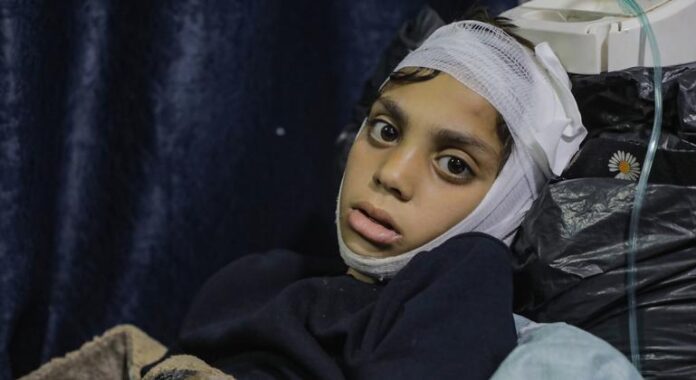
Ted Chaiban, Deputy Director of UN children’s agency UNICEF, who is fresh from a visit to Gaza, noted that “the marks of deep suffering and hunger were visible on the face of families and children.”
He was briefing journalists in New York about his five-day visit in Gaza, the West Bank and Israel.
Grave risk of famine
“Gaza now faces a grave risk of famine,” he said, briefing journalists in New York about his five-day mission to the enclave, the West Bank and Israel.
“This is something that has been building up, but we now have two indicators that have exceeded the famine threshold.”
The crisis can only be addressed through unrestricted flow of aid into Gaza, with commercial supplies also allowed to enter to help address people’s needs.
Nearly a week since the Israeli announcement to allow the scale up of aid and tactical pauses to allow safe passage of UN convoys, OCHA reported that the aid that has entered Gaza so far remains insufficient, while UN convoys continue to face impediments and danger along the routes provided by the Israeli authorities.
“Civilians must always be protected and community-level aid delivery at scale must be facilitated, not obstructed,” said OCHA.
Starved, bombed and displaced
“The children I met are not victims of a natural disaster. They are being starved, bombed, and displaced,” Mr. Chaiban said. He noted that more than 18,000 boys and girls have been killed since the beginning of the war, “an average of 28 children a day, the size of a classroom, gone.”
While in Gaza, Mr. Chaiban met with the families of the 10 children killed and 19 injured by an Israeli airstrike as they were queuing for food with their mothers and fathers at a UNICEF-supported nutrition clinic in Deir Al-Balah.
Discussion with Israeli authorities
Engaging with Israeli authorities in Jerusalem and Tel Aviv, UNICEF “pressed for a review of [Israel’s] military rules of engagement to protect civilians and children,” Mr. Chaiban said.
Simultaneously, UNICEF also called for more humanitarian aid and commercial traffic to come in to stabilise the situation and reduce the desperation of the population.
“Children should not be getting killed waiting in line at a nutrition centre or collecting water, and people should not be so desperate as to have to rush a convoy,” he said.
“What is happening on the ground is inhumane.” Mr. Chaiban said, hoping for a sustained ceasefire and a political way forward.