As indicated in the public statement of 27 March 2024, the quarterly liquidity assessment of bonds will continue to be published by ESMA. Further details are provided on the relevant webpages of the calculations.
Bonds quarterly liquidity assessment
ESMA has published the latest quarterly liquidity assessment for bonds available for trading on EU trading venues. For this period, there are currently 1,346 liquid bonds subject to MiFID II transparency requirements.
ESMA’s liquidity assessment for bonds is based on a quarterly assessment of quantitative liquidity criteria, which includes the daily average trading activity (trades and notional amount) and the percentage of days traded per quarter. ESMA updates the bond market liquidity assessments quarterly. However, additional data and corrections submitted to ESMA may result in further updates within each quarter, published in ESMA’s Financial Instruments Transparency System (FITRS), which shall be applicable the day following publication.
DISCLAIMER: Information and opinions reproduced in the articles are the ones of those stating them and it is their own responsibility. Publication in The European Times does not automatically means endorsement of the view, but the right to express it.
DISCLAIMER TRANSLATIONS: All articles in this site are published in English. The translated versions are done through an automated process known as neural translations. If in doubt, always refer to the original article. Thank you for understanding.
Briefing ambassadors in the Security adviceMiroslav Jenča, general deputy secretary for Europe in the Department of Political Affairs and Peace (DPPA), renewed the call to an immediate ceasefire and a return to diplomacy to end devastation.
“The Ukrainian people have endured almost three and a half years of horrors, death, devastation and unimaginable destruction. They need relief from this nightmare, “he said.
He stressed that diplomacy, not fighting, has to degenerate in the coming days and weeks.
“Diplomacy that leads to real, tangible, verifiable and lasting results that would be felt by people who have suffered for a long time,” he added, reiterating that the UN remains ready to support all the efforts to a just and lasting peace online with the Charter of the United Nations and international law.
Mr. Jenča described the “brutal” scale of the latest attacks.
Overnight, between July 30 and 31, a large -scale Russian aerial assault against Kyiv killed at least 31 people – including five children – and injured 159 others, including 16 children. He marked the greatest number of injuries to children in one night in the capital since the start of the invasion in February 2022.
Strikes have damaged 27 locations in four kyiv districts, including a school, a nursery school, a wing at the pediatric hospital and a university building.
“An entire section of a building would also have been destroyed, leaving a lot trapped under the Fire rubble,” said Jenča.
The humanitarian workers, including the United Nations agencies and local partners, responded quickly, offering refuge kits, emergency psychosocial support and legal advice to affected families.
Strike beyond Kyiv
Beyond kyiv, attacks have been reported in at least seven regions-Vinnytsia, Donetsk, Dnipropetrovsk, Zhytomyr, Zaporizhzhia, Cherkasy and Chernihiv-with a total of at least 120 civilian victims in one night.
In Donetsk, two people were said to have been killed and 10 injured; In Kharkiv, a person was killed and seven injured. Additional victims were confirmed in Sumy, Kherson and Zaporizhzhia.
In Kamianske, an attack in the hospital left three dead – including a pregnant woman – and 22 injured, many of whom are medical staff. In Novoplatonivka, in the Kharkiv region, six were killed while waiting for humanitarian aid.
“These horrible continues attacks are simply unacceptable,” said Jenča.
The United Nations Human Rights Office, Ohchrreports that since the start of the large -scale invasion of Thorugh in June of this year, more than 13,580 civilians – including 716 children – have been killed and more than 34,000 injured.
Victims in Russia
Jenča also noted civilian victims in Russia.
Between July 25 and 29, the Russian authorities reported attacks in the Belgorod, Bryansk, Kursk, Leningrad and Rostov regions, causing at least six deaths and multiple injuries.
Although the UN cannot verify these reports, Mr. Jenča has expressed his concern and reiterated that “attacks on civilians and civil infrastructures are prohibited under international law and must stop immediately – wherever they perform”.
Abuse against prisoners of war
He also detailed new allegations of abuse against Ukrainian prisoners of war (prisoners of war).
According to OHCHR interviews with nearly 140 recently released prisoners of war, “almost all … said they had been subjected to torture or ill -treatment”, including blows, electric shocks and suffocation.
The OHCHR has also documented credible reports of 106 executions from Ukrainian soldiers in police custody.
The team went to Sweida City, as well as two districts – Shahba and Salkhad – where they met with local community representatives and partners, in addition to visiting displacement sites and reception centres.
Members also conducted assessments in the three districts of the governorate, where hundreds of people have been killed, and some 175,000 people displaced, in recent sectarian violence amid Syria’s ongoing political transition since the fall of the Assad regime last December.
A senior UN official told the Security Council earlier this week that a fragile ceasefire is “largely holding”.
OCHA said a fifth humanitarian aid convoy organized by the Syrian Arab Red Crescent also arrived in Sweida on Thursday. It was the largest so far, with 40 trucks.
The convoy, which included UN assistance, delivered medical supplies, flour, fuel, canned goods, hygiene kits and shelter materials, among other assistance.
On Wednesday, the Syrian Arab Red Crescent also delivered four tankers carrying more than 120,000 litres of fuel.
Haiti: Armed groups expand activities
Armed groups in Haiti are expanding their presence and activities in the Artibonite region which has sparked waves of displacement, according to OCHA.
Last Monday, violence linked to armed groups flared in the town of Liancourt, where a vehicle and several homes were set on fire. This followed a week of violent clashes.
As of 19 July, nearly 15,000 people have been displaced across four communes in Artibonite. They are staying with host families, many of whom were already finding it hard to meet basic needs.
OCHA said response efforts are underway, led by local humanitarian partners. They have distributed hygiene kits to more than 500 displaced households and host communities, as well as hundreds of hot meals.
2017 lightning flash in US Great Plains sets new world record
A lightning flash in a notorious storm hotspot in the United States nearly a decade ago has been certified as the longest on record, the World Meteorological Organization (WMO) announced on Thursday.
The megaflash – an incredible 829 kilometres long (515 miles) – occurred during a major storm in the Great Plains in October 2017 and was some 61 kilometres greater than the previous record, also set in the same region.
It extended from eastern Texas to near Kansas City, equivalent to the distance between Paris and Venice in Europe: a journey that would take roughly eight to nine hours by car, or at least 90 minutes by plane.
Value of early warning systems
The flash was not identified in the original 2017 analysis of the storm but was discovered through re-examination.
WMO’s Committee on Weather and Climate Extremes recognized the new record with the help of the latest satellite technologies and the findings were published in the Bulletin of the American Meteorological Society.
“Lightning is a source of wonder but also a major hazard that claims many lives around the world every year and is therefore one of the priorities for the international Early Warnings for All initiative,” said WMO Secretary-General Celeste Saulo.
Launched in 2022, the initiative aims to ensure that everyone on the planet is protected from hazardous weather, water, or climate events through early warning systems by the end of 2027.
Universities, academic consortia, and education-focused innovators – this call is for you!
The Master School and Fellowship Open Call is designed to accelerate the development and delivery of high-quality learning experiences that build the skills and capabilities needed for sustainable urban mobility.
This Call focuses on a series of specific activity areas aimed at meeting the objectives of the EIT Urban Mobility Master School and the EIT Urban Mobility Innovation & Entrepreneurship (I&E) Fellowship. The Call supports proposals that contribute to closing the knowledge gap within urban mobility by offering high-quality, challenge-based, intersectoral, and international education.
We are seeking proposals that align with the key objectives of the Master School and I&E Fellowship, including fostering innovation and entrepreneurship skills, increasing student and graduate volumes, strengthening links to industry and cities, and supporting startup creation through EIT-labelled programmes.
Who can apply?
This Call is open to organisations from the Member States of the European Union, and Third Countries associated with Horizon Europe. This Call is open to multi-participant proposals or mono-participant proposals.
In the case of mono-participant proposals, it is considered that the pan-European dimension is achieved through the network and truly international experience required from all our Master School and Fellowship programmes with compulsory mobility requirements embedded in the curriculum. Our programmes bring together students and teaching staff from the whole of Europe and beyond, attracting the best talent globally. In addition to this, universities who become partners in the Master School are required to sign the Master School Agreement, thereby becoming part of the consortium of partners jointly supporting the delivery of the EIT Urban Mobility Master School and offering the programmes. A similar agreement will be in place for the EIT Urban Mobility I&E Fellowship, which universities selected to take part will be required to join.
In case of multi-participant proposals, as a minimum requirement, proposals must be composed of at least two independent legal entities established in two different EU Member States and/or Third countries associated to Horizon Europe.
For information on special cases, including Switzerland and Hungarian universities please refer to section 2.1 of the Call Manual.
Info Webinar
EIT Urban Mobility will host an online information session on 9 July 2025, 12.00 – 13.30 CEST. To register for the webinar, please visit this website.
The deprivation of several months of most basic goods in the suspension of life has resulted in an approval of the crisis. More than 100 people have been killed and hundreds of others injured along the Israeli-Israelis food convoy and distribution centers in the past two days.
As one in three people are currently spending days without food, Ochha reiterated that no one should never be forced to risk their life to eat something.
Ted Chaiban, deputy director of the United Nations Agency for Children UnicefWho is fresh for a visit to Gaza, noted that “the brands of deep suffering and hunger were visible on the face of families and children”.
He informed journalists in New York about his five -day visit to Gaza, the West Bank and Israel.
“Gaza is now risking a serious risk of famine,” he said, informs journalists in New York about her five-day mission in the enclave, the West Bank and Israel.
“This is something that has accumulated, but we now have two indicators that have exceeded the famine threshold. »»
The crisis can only be addressed by the unrestricted help flow in Gaza, commercial supplies is also authorized to enter to help meet the needs of people.
Almost a week for the Israeli announcement to allow the scaling of aid and tactical breaks to allow the sure passage of the UN convoys, the OCHA has reported that the aid that has entered Gaza so far remains insufficient, while UN convoys continue to cope with obstacles and a danger along the routes provided by the Israeli authorities.
“Civilians must always be protected and the delivery of aid to the large -scale community level must be facilitated, not obstructed,” said OCHA.
Hungry, bombed and moved
“The children I met are not victims of a natural disaster. They are hungry, bombed and moved, “said Chaiban. He noted that more than 18,000 boys and girls have been killed since the start of the war, “an average of 28 children a day, the size of a classroom, disappeared. »»
During his stay in Gaza, Mr. Chaiban met the families of the 10 children killed and 19 injured by an Israeli air strike while they were line up for food with their mothers and fathers in a nutrition clinic supported by UNICEF in Deir al-Balah.
Discussion with Israeli authorities
Commit to the Israeli authorities in Jerusalem and Tel Aviv, Unicef “has pressed a review of [Israel’s] The rules of military engagement to protect civilians and children, ”said Chaiban.
Simultaneously, UNICEF also called for more humanitarian aid and trade traffic to stabilize the situation and reduce the despair of the population.
“Children should not be killed by queuing in a nutrition center or by collecting water, and people should not be so desperate as rushing a convoy,” he said.
“What’s going on on the field is inhuman. Mr. Chaiban said, hoping for a sustained ceasefire and a political path to follow.
“The Caribbean are particularly vulnerable to the natural risks and disturbances of the supply chain, which can result in an increase in food prices”, ” saidBrian Bogart. chief Wfp for the region.
“It is deeply concerned that many people find it difficult to afford the food they need,” he said.
The rise in food prices is a major concern for the region, food inflation constantly exceeding overall inflation rates, local production efforts called into question by increasing operational costs.
In 2025, 30% of the Caribbean said they had eaten less than usual, a trend notably triggered by the increase in food costs and the global geopolitical factors.
As the region is significantly based on imported agricultural inputs, “the strengthening and diversification of supply chains and commercial roads in the region are essential,” said Bogart.
He added that in a region particularly affected by climatic disasters, “these efforts will help make food more accessible and affordable while supporting faster recovery in times of crisis. »»
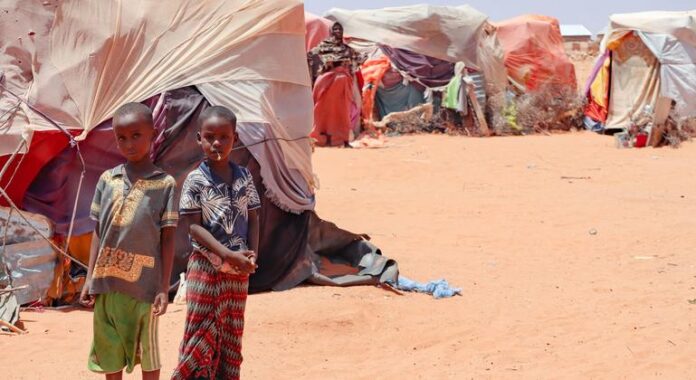
A girl moves a container full of water on a site for people displaced in Dolow, Somalia. (deposit)
The United Nations Migration Agency highlights the deepening of the climate crisis and movements in Somalia
Climatic shocks and mass trips caused by conflicts have uprooted some 3.6 million people in Somalia, according to the International Organization for Migration (Iom).
Almost half of the population was affected by the climate crisis, added the United Nations Agency.
Deputy Director General of OIM UGOCHI Daniels concluded A four -day visit to Somalia this week when she expressed her solidarity for communities which continue to endure incessant droughts, floods and conflicts.
Daniels also noted that communities find solutions to resist the worst impact of the climate crisis, but they need international support from the Green Climate Fund urgently.
The IOM is active through Somalia in travel sites and in rural and other fragile areas. His work includes promoting land restoration and “environmental peacebuilding”, which aims to reduce tensions on shared resources.
Another IOM initiative encourages Somalians to invest in their own development by providing additional funding.
Last year, the communities contributed more than half a million dollars to projects such as solar energy, access to drinking water and small-scale agriculture-investments all equaled more than $ 2 million in IOM.
World Breastfeeding Week: Investing in health systems and policies for the benefit of moms and babies
This Friday (August 1) marks the start of the World Breastfeeding Week and this year’s theme calls for investing in health systems as well as policies, laws and programs that prioritize women, babies and breastfeeding.
The World Health Organization (WHO)) said Investing in the support of breastfeeding is one of the most powerful tools that political decision-makers must improve public health, strengthen savings and guarantee the well-being of future generations.
The United Nations agency explained that breastfeeding protects children’s health and improves survival, especially during the first months of life. For infants, breast milk is more than food: it also offers protection against many common diseases such as diarrhea, pneumonia and infections.
Mothers also benefit from breastfeeding reduces the risk of postpartum hemorrhage, as well as breast and ovary cancers, heart disease and type 2 diabetes.
Who urges governments to allocate dedicated funding for breastfeeding, including the return of new mothers, as well as maternity protection as a leave paid after childbirth.
The United Nations Security Council meets on Friday afternoon to discuss the current crisis in Ukraine, where recent attacks have killed dozens or injured. A senior United Nations Political Affairs officials should inform the situation. Follow our cover live from UN Newsin coordination with Cover of United Nations MeetingsFor real -time updates and key developments in the room. UN News Application Users can Follow the cover here.
Development brands An important step for a region that carries almost 65% of the world HIV burden and has long depends imports antiretroviral drugs and test kits. But it can start to change.
THE Human immunodeficiency virus (HIV) weakens the body’s immune system, reducing its ability to combat infections and certain cancers. Without a timely intervention, it can progress to acquired immunodeficiency syndrome (AIDS), the most advanced infection stage.
In 2023, the Kenya -based pharmaceutical company, Universal Corporation LTD, became the first African manufacturer to receive the World Health Organization (WHO) Prequalification to produce tenofovir disoproxil fumarate, lamivudine and the dolutegravir (TLD) – front -line antiretroviral therapy for HIV.
From now on, in a big step forward, the Global Fund-a global partnership funding HIV, tuberculosis and malaria responses-is accompanied by this HIV treatment produced locally for Mozambique, which makes it the first time that the Afro-Fabrocked TLD has been deployed via this channel.
“” The supply of first -line African HIV treatment by the Mozambique Global Fund is a big step to strengthen supply chain systems in Africa, »» said Meg Doherty, Director of World HIV Programs.
“” This will contribute to better health results for people living with HIV who need uninterrupted medication supplies.“”
Who says that the realization is part of a broader thrust to strengthen local production capacity and improve access to essential health technologies across Africa.
The United Nations agency is associated with global countries, manufacturers and health organizations – including the Global and Unitaid Fund – to extend quality African manufacturing.
“The local production of health products provided by quality is an urgent priority,” said Rogerio Gaspar, director of regulation and prequalification.
“” With each African manufacturer that meets prequalification standards, we get closer to a more independent, resilient and fair health system.“”
Progress, but structural gaps remain
Despite the milestone, which warned that production alone is not enough. To guarantee long -term sustainability, the agency calls for advanced market commitments, fair supply policies and continuous technical support.
Which also underlines diagnoses as a critical gap. With the movement of donors’ financing, many countries are under pressure to maintain HIV testing test programs, which are the first time for prevention and treatment.
Quick HIV tests produced locally will contribute to increasing affordability and approaching vulnerabilities and delays in the supply chain – Who director Meg Doherty
“” Having quick tests on HIV products locally helps increase affordability and more broadly approach vulnerabilities and delays in the supply chain in access to diagnostics“Said Dr. Doherty.
Support the impact in the middle of the financing strain
As part of its directives, the United Nations health agency also encourages countries to adopt rapid HIV rapid tests, in particular as the first test in national algorithms, which can considerably reduce costs while maintaining services.
Although the last update marks tangible progress, more action is necessary.
“The local TLD is a major step towards this objective,” said, “but more action is necessary. »»