

Weekly schedule of President António Costa, 29 September – 5 October 2025.
The Prime Minister of Barbados calls for the defense of the world order based on rules

She warned that the truth, confidence and equity were crashed under the weight of war, inequality and climate crisis.
“Countries of different sizes, capacities and cultures can only survive in the world in which we live if we maintain a system based on rules,” said Mister Mottley in her address to the United Nations General Assembly.
“The jungle law does not guarantee any of us a future or a habitable planet.”
She said that the “crisis of truth” undermines the institutions which once favored order and prosperity, eroding confidence between citizens and governments, and transforming news, science and the law in Tawdry.
“When we lose the shared truth, our countries and our global society lose their center of gravity,” she warned.
Conflicts and crisis
Regarding the proliferation of war, Prime Minister Mottley reiterated the need for peace in Ukraine, but also pressed governments not to ignore suffering elsewhere.
“The world should not ignore the horror in Sudan and … he must not ignore the horror in Gaza,” she said. She called for the release of hostages, while denouncing disproportionate attacks against the Palestinians.
She highlighted the need for urgent humanitarian funding, saying that $ 66 million was necessary for Gaza children and $ 200 million for Sudan in the next three months – largely for food, water and health.
Climate change
On climate change, Ms. Mottley urged managers to act with honesty and emergency.
She praised the opinions of the International Court affirming the obligations of the States to limit emissions and proposed a compulsory global framework on methane to slow down the increase in temperature.
“The fossil fuels industry is not the enemy-it is the emissions,” she said, urging the political desire to unlock $ 1.3 billion of dollars per year by 2035 to finance the green transition.
The Barbadian leader criticized the chronic under-funding of climate financing and the loss and damage fund “roughly undercapitalized”.
Met Mottley also linked the climate and development program to the central issue of global governance. She warned that debates may become “performative exercises” unless resources and a functional system rooted in equity.
“If we have to be protected by a rules based on rules, we have to go to the plate and provide funds to fill the gap to provide the results we want,” she said.
Ms. Mottley also discussed the UN reform, insisting Security advice must reflect the multipolar world today.
“You cannot really ask us to introduce yourself for family photos and votes when you need it, then exclude us from the decision -making of the family. As if you were adults and we are the children. »»
The message of a Palestinian girl
Prime Minister Mottley ended with the image of a young Palestinian aged six or seven seven, walking through the rubble in Gaza with hollow eyes and her sister on his shoulders.
“It was clear that she was suffering a lot, but she admitted that it was she who should bring the burden to put them in safety,” she said.
Calling the scene “the ultimate image of hope and resilience”, Ms. Mottley urged managers to draw the strength.
“If a six -year -old child can go beyond physical and emotional pain and always find hope that there is a better time in front of her, then we, with much more and with an obligation towards many others, must invoke this same will. The world needs more than ever. »»
Originally published at Almouwatin.com
The United Nations Security Council blocks Chinese-Russian resolution on Iranian sanctions

China and Russia submitted the project which received four votes in favor, nine against and two abstentions.
The text sought to extend the Complete full action plan (JCPOA) for six months until next April, as well as the Council Resolution 2231 (2015) who approved it. He also encouraged the continuous commitment between Iran and the International Atomic Energy Agency (Aiea).
Snapback ‘sanctions’
Rejection means that the sanctions that have been raised under the agreement will be reinvested from Saturday evening.
Development comes a month after three European countries which signed the agreement-France, Germany and the United Kingdom-informed the Council of what they have described as “non-performances” and Iran violations, thus triggering the so-called “Snapback mechanism”.
The representative of China deeply regretted that the resolution was not adopted and called to maintain regional peace and stability.
“A break in the Iranian nuclear issue could trigger a new regional security crisis which goes against the common interests of the international community,” he said.
Ambassador Barbara Woodward explained why the United Kingdom voted no, saying that “as this council knows, Iran challenges the global non-proliferation regime”. In addition, his nuclear escalation has been detailed in more than 60 AIEA reports over the past six years.
“Iran’s actions mean that IAEA is unable to confirm that the Iranian nuclear program is exclusively peaceful,” she said.
“Among the steps that Iran has taken is the accumulation of a high stock of uranium which has no credible civil justification and is unprecedented for a state without nuclear weapons program.”
The assistant representative of the United States, Dorothy Shea, was delighted that the Council rejected what it called “this last effort of the Federation of Russia and China”, qualifying the text “a hollow effort to relieve Iran of all responsibility for its significant non-performance of its nuclear commitments”.
Dmitry Polyanskiy, the deputy representative of Russia, addressed the nations who refused to support the project.
“Now there are certainly no more illusions,” he said. “These countries have definitively demonstrated that all their insurance on their emphasis on the arrival of a diplomatic resolution to the question of the Iranian nuclear program during all these years, were a simple noise.”
Originally published at Almouwatin.com
World News in Brief: new statement on MNT and mental health, Khartoum Shelter Crisis, WFP Lifeline in Ukraine, Sud-Soudan Update

The text, negotiated over five months, will take place before the General Assembly for approval in a few weeks.
It was adopted at a high -level meeting at the UN headquarters on Thursday, where heads of state, government leaders and health ministers highlighted the urgency of coordinated action.
MNTs like heart and pulmonary diseases, cancer and diabetes are the largest killers in the world.
More than 40 million premature deaths per year
They made 43 million lives in 2021, including 18 million people under the age of 70. Mental health problems affect more than a billion people worldwide.
The declaration sets specific objectives for 2030: 150 million less tobacco users, 150 million additional people under hypertension control and 150 million with access to mental health care.
It also widens the concentration to include oral health, child cancer, kidney disease and liver and rare conditions, while fighting on environmental risks such as air pollution, dangerous cooking fuels and dangerous chemicals.
The reinforced measures deal with electronic cigarettes, the marketing of junk food for children and the elimination of trans fats. Lessons of COVID 19 The pandemic is also integrated, as well as recognition of digital damage linked to social media, excessive screen time and disinformation.
People living with MNTs and mental health problems must be at the heart of our response, said the World Health Organization (WHO).
Sudan: Khartoum Retailees faces a refuge crisis, warns the OIM
The current war between rival soldiers in Sudan has left large devastated areas and people who return homeless homelessness and only limited access to water and food.
Advocacy for more support
In a call to international support, the United Nations Migration Agency, Iomsaid that two in three people returning to the capital are now living in shelters needing urgent compensation.
The United Nations Children’s Fund (Unicef), on the other hand, reported that the war had uprooted more than five million children. Many young people face acute hunger and disease epidemics, while millions still live in areas affected by conflicts.
To help, the United Nations agency provides vital support for health, nutrition, education and protection.
The humanitarian workers of Darfur said that the civilians of El Fasher, the besieged state capital, continue to undergo implacable attacks, acute hunger and cholera.
UN spokesperson Stéphane Dujarric added on Friday that civilians are faced with daily threats of bombing, air strikes and drone attacks, with ferocious clashes reported in northern Darfur districts in recent weeks.
The clashes have moved millions and left half of the population of Sudan insecure – nearly 25 million people. Famine was also officially declared in northern Darfur and southern Kordofan.
Ukraine: WFP food boxes offer a rescue buoy for front -line communities
Despite the large -scale Russian invasion in Ukraine, the United Nations aid teams and their partners still manage to support front -line communities, the World Food Program (Wfpsaid on Friday.
The United Nations agency said it has delivered more than a quarter of a million food boxes in eight front -line regions in Ukraine last month.
The boxes “continue to be a life buoy for people” on the front line, said WFP.
He thanked the EU and Norway to support the assistance operation that distributes basic in places where the markets are closed or the prices of food is very high.
Partnership for homeless
In a related development, the United Nations refugee agency, Hcrannounced a partnership of $ 5 million with Saudi Arabia to support vulnerable Ukrainians forced to leave their homes due to the war.
The agreement was signed on the sidelines of the high -level week of the General Assembly in New York and followed the donation of $ 10 million in the Kingdom for Ukraine in 2024.
The United Nations Refugee Agency said that the support of Saudi Arabia would guarantee that families are protected against severe winter weather conditions in Ukraine as temperatures drop.
The UN alarms on the human rights crisis in the worsening of South Sudan
On Friday, the High Commissioner of the United Nations Human Rights, Volker Türk, expressed a deep concern in the face of rapid worsening of human rights in South Sudan, citing that nearly 2,000 civilians were killed this year in the midst of political tensions and violence.
According to his office, OhchrAt least 1,854 were killed, 1,693 injured, 423 kidnapped and 169 subject to sexual violence in civil conflicts from January to September.
The United Nations Mission in South Sudan (Inexpensive) reports that the first quarter of the year has experienced the highest civilian victims of a three -month period since 2020, the second quarter showing a strong increase in victims from 144 to 438 compared to last year, driven by conventional conflict parties and other armed groups.
Community violence has also increased, with an increase of 33% of incidents, in particular due to intra-communal clashes between Dinka subclans in Warrap attacks and reprisals involving armed groups of Murle, Dinka Bor and Lou Nuer.
“Men, women and children were killed, injured and moved, and houses, schools, health centers and other destroyed infrastructure, with devastating consequences on civilians. This is unacceptable and must stop, “said Türk.
One exhorts a fair trial
The legal proceedings began on Monday in the capital Juba, during the trial of the first vice-president Riek Machar and other higher members of the popular liberation movement of Sudan.
They are faced with accusations of murder, betrayal, crimes against humanity and other related offenses linked to a fatal attack earlier this year on a basis of the national army, in which more than 250 soldiers were killed by forces faithful to Mr. Machar.
“It is imperative that the ongoing legal proceedings against the first vice-president Riek Machar and his co-accusation fully comply with international human rights standards,” said the head of the United Nations.
Originally published at Almouwatin.com
The first Li of China calls for solidarity, peace and economic prosperity shared in the UN address
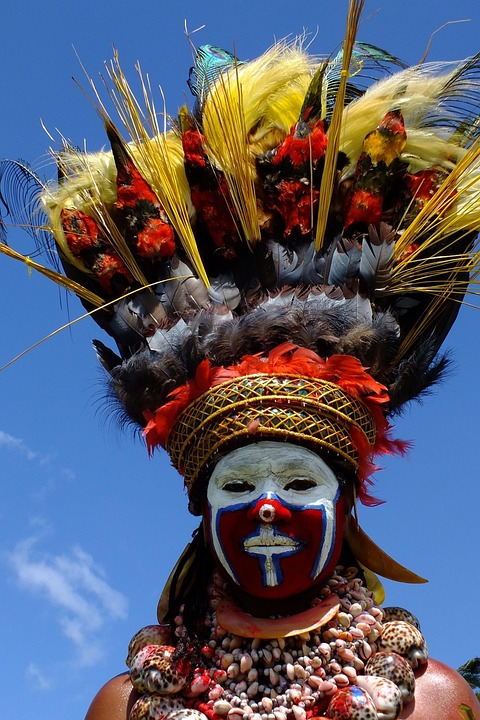
“Solidarity raises everyone, while the division drags everything,” said Mr. Li to the General Assembly, warning that unilateralism and protectionism were undergoing international order built over the decades.
Humanity, he said, “has arrived at a crossroads again. »»
Prime Minister Li recalled the defeat of fascism and the United Nations Foundation eight decades, affirming that the lessons of history demanded a renewal of commitment to peace, equity and justice.
“When he could dictate the law, the division and the regression of global risks,” he said, urging that all the countries, “large or small, are treated as equals. »»
China, said Mr. Li, is committed to being a “faithful defender of world peace and security”.
He underlined Beijing’s contributions to the United Nations peacekeeping – the second largest budgetary contributor and the greatest contributor to troops among Security advice Permanent members-and its role in promoting political solutions to conflicts, notably Ukraine and the Israeli-Palestine crisis.
On the world economy, the Chinese chief said that slow growth was aggravated by “pricing increases and erection of walls and barriers”. He highlighted the expansion and the constant role of his country as a engine of global development, contributing to around 30% of economic growth in recent years, and noted that the country had lowered the prices – while remaining the second largest importer in the world for 16 consecutive years.
Reject “civilizational superiority”
China would continue to continue “cooperation on high quality belts and roads” with more than 150 countries, he said, while opening its broader economy in the world.
Mr. Li also urged further exchanges between societies and warned against “civilizational superiority or circles based on ideology”, which, according to him, said confrontation.
With regard to global challenges, Mr. Li called for a stronger collective action on climate change and emerging technologies.
He said that China had built the largest renewable energy system in the world and advanced a low carbon content development. It has also urged rapid progress on international rules for artificial intelligence, reiterating the Beijing call for a “global IA cooperation organization”.
As part of his United Nations commitment, Prime Minister Li announced that China would present lunar soil samples picked up by its last robotic explorer on the other side of the moon – the very first collected – in the United Nations.
He also declared that China would associate with the UN to establish a global development center in South-South China-Un, with $ 10 million in initial funding, and a global sustainable development center in Shanghai in cooperation with the United Nations Development Program (Predict).
“We have to join the principles of people centered on people, technology for the benefits of good and fair,” said Mr. Li.
By concluding his speech, Mr. Li reaffirmed China’s support for reforms to make the UN “more efficient and representative”.
Originally published at Almouwatin.com
Live security advice: resolution to avoid the “snapback” of the UN sanctions against Iran fails

The UN Security advice voted for an effort by China and Russia to extend the sanctions to Iran for six months under nuclear agreement – officially known as the Complete Complete Action Plan. The so-called “snapback” mechanism remains in force which will see sanctions reimposed in Tehran this weekend, after the end of the JCPOA. Follow our cover live below; UN applications users can go here.
Originally published at Almouwatin.com
World News in Brief: New declaration on NCDs and mental health, Khartoum shelter crisis, WFP lifeline in Ukraine, South Sudan rights update
The text, negotiated over five months, will go before the General Assembly for approval in just a few weeks’ time.
It was adopted at a high-level meeting at UN Headquarters late on Thursday, where heads of State, government leaders and health ministers stressed the urgency of coordinated action.
NCDs such as heart and lung disease, cancer and diabetes are the world’s biggest killers.
Over 40 million premature deaths annually
They claimed 43 million lives in 2021, including 18 million people under 70. Mental health conditions affect more than a billion people worldwide.
The declaration sets specific targets for 2030: 150 million fewer tobacco users, 150 million more people with hypertension under control, and 150 million with access to mental health care.
It also broadens focus to include oral health, childhood cancer, kidney and liver disease, and rare conditions, while tackling environmental risks such as air pollution, unsafe cooking fuels and hazardous chemicals.
Strengthened measures address e-cigarettes, junk food marketing to children and the elimination of trans fats. Lessons from the COVID-19 pandemic are also built in, along with recognition of digital harms linked to social media, excessive screen time and misinformation.
People living with NCDs and mental health conditions must be at the heart of our response, said the World Health Organization (WHO).
Sudan: Khartoum returnees face a shelter crisis, warns IOM
The ongoing war between rival militaries in Sudan has left vast areas devastated and people returning to their homes without adequate shelter and only limited access to water and food.
Plea for more support
In an appeal for international support, the UN migration agency, IOM, said that two in every three people going back to the capital now live in shelters in need of urgent repair.
The UN Children’s Fund (UNICEF), meanwhile, reported that the war has uprooted more than five million children. Many youngsters face acute hunger and disease outbreaks, while millions still live in conflict-affected areas.
To help, the UN agency is providing life-saving support for health, nutrition, education and protection.
UN humanitarians in Darfur said that civilians in El Fasher, the besieged state capital, continue to endure relentless attacks, acute hunger and cholera.
UN Spokesperson Stéphane Dujarric added on Friday that civilians face daily threats from shelling, air strikes and drone attacks, with fierce clashes reported in north-eastern districts of North Darfur in recent weeks.
Clashes have displaced millions and left half the population of Sudan acutely food insecure – nearly 25 million people. Famine has also been officially declared in North Darfur and South Kordofan.
Ukraine: WFP food boxes provide lifeline for frontline communities
Despite the ongoing full-scale Russian invasion in Ukraine, UN aid teams and their partners are still managing to support frontline communities, the World Food Programme (WFP) said on Friday.
The UN agency reported delivering more than a quarter of a million food boxes across eight frontline regions in Ukraine last month.
The boxes “continue to be a lifeline for people” on the frontline, WFP said.
It thanked the EU and Norway for supporting the aid operation which distributes basic foodstuffs in places where markets are closed or food prices are very high.
Partnership for the homeless
In a related development, the UN refugee agency, UNHCR, announced a $5 million partnership with Saudi Arabia to support vulnerable Ukrainians forced to leave their homes because of the war.
The agreement was signed on the margins of the High-Level Week of the General Assembly in New York and follows the kingdom’s $10 million donation for Ukraine in 2024.
The UN refugee agency said Saudi Arabia’s support would ensure that families are protected against harsh winter weather conditions in Ukraine as temperatures drop.
UN raises alarm over South Sudan’s worsening human rights crisis
On Friday, UN High Commissioner for Human Rights Volker Türk voiced deep concern over the rapidly worsening human rights situation in South Sudan, citing that nearly 2,000 civilians have been killed this year amid rising political tensions and violence.
According to his office, OHCHR, at least 1,854 have been killed, 1,693 injured, 423 abducted, and 169 subjected to sexual violence in civil conflict from January to September.
The UN Mission in South Sudan (UNMISS) reports that the first quarter of the year saw the highest civilian casualties in a three-month period since 2020, with the second quarter showing a sharp rise in victims from 144 to 438 compared to last year, driven by conventional conflict parties and other armed groups.
Communal violence has also surged, with a 33 per cent rise in incidents, particularly due to intra-communal clashes among Dinka sub-clans in Warrap State and retaliatory attacks involving Murle, Dinka Bor, and Lou Nuer armed groups.
“Men, women and children have been killed, injured and displaced, and homes, schools, health centres and other infrastructure destroyed, with devastating consequences on civilians. This is unconscionable and must stop,” said Mr. Türk.
UN urges fair trial
Court proceedings got underway on Monday in the capital Juba, in the trial of First Vice President Riek Machar and other senior members of the Sudan People’s Liberation Movement-in-Opposition.
They face charges of murder, treason, crimes against humanity, and other related offences related to a deadly attack earlier this year on a national army base, in which over 250 soldiers were allegedly killed by forces loyal to Mr. Machar.
“It is imperative that the ongoing judicial proceedings against First Vice President Riek Machar and his co-accused fully comply with international human rights standards,” said the UN rights chief.
The Pakistani Prime Minister warns against regional tensions, calls for ceasefire in Gaza

“Our world is more complex today than ever,” said Sharif, citing the intensification of conflicts, violations of international law and a climate crisis which “threatens our very survival”.
Multilateralism, he argued, was “no longer an option-this is the need for the time”.
Prime Minister Sharif said his country faced an “uninsured assault” by India earlier this year.
The armed forces of Pakistan had rejected the attack with “astonishing professionalism, a bravery and a meaning”, slaughtering several Indian planes, he added. He congratulated US President Donald Trump to get a ceasefire.
Dialogue with India
At the same time, Mr. Sharif also offered a dialogue.
“Pakistan is ready for a composite, complete and focused dialogue with India on all outstanding questions,” he said, warning that disputes over cashmere and water resources have remained volatile.
The alleged suspension of India in the Indus water Treaty, he added, “represents an act of war”.
Mr. Sharif promised a support for the Kashmiris, saying that Pakistan “would arguely” defend “their rights and repeat calls to an unleanished plebiscite.
“One day soon, Inshallah [God willing]The tyranny of India in cashmere will stop. They will gain its fundamental right to self-determination by an impartial plebiscite under the auspices of the United Nations, “he said.
Call to ceasefire in Gaza
In the Middle East, the Pakistani chief condemned what he called “the genocidal assault” of Israel in Gaza, describing the fate of Palestinian children as “one of the most heartbreaking tragedies of our time”.
He called for an immediate ceasefire and reaffirmed Pakistan’s support for an independent Palestinian state inside the before 1967 borders, with Jerusalem as the capital.
“Palestine can no longer remain under Israeli obstacles. He must be released, “he said.
The Pakistani leader has also addressed wider global problems, in particular the continuous invasion of Ukraine by Russia, where he expressed his support for a peaceful resolution in accordance with the Charter of the United Nations.
On terrorism, he recalled the sacrifices of Pakistan, saying that the country had lost 90,000 lives and 150 billion dollars to extremist violence for two decades.
Sharif also described climate change as an existential challenge, highlighting recent catastrophic floods that have moved millions and caused tens of billions of losses. Although he is responsible for “less than one percent of global programs”.
Pakistan wore a disproportionate burden, he said, calling it “not equity, not equality, not justice”.
By completing his speech, Mr. Sharif promised that Pakistan would continue to defend “peace, justice and development” thanks to multilateral cooperation.
“That this 80th anniversary does not just commemorate history,” he said. “Let’s make history and trace a future for the next eight years, with these United Nations as a sustainable hope to seek the global good.”
Originally published at Almouwatin.com
The intensification of the threat is looming as large as the UN highlights the growing nuclear arsenals in the world

September 26 Brand International Day which highlights the current scourge of the nuclear arms race – an opportunity for the international community to reaffirm its commitment to nuclear disarmament.
Disarmament commitments, however, have not yet been honored.
“” Nuclear weapons continue to threaten our worldSaid the UN Cabinet chief COURTENAY CATRAYDeliver a statement on behalf of the UN chief António Guterres: “And despite decades of promises, the threat accelerates and evolves.”
Recalling the devastation room caused by the atomic bombing of Japan in 1945 by the United States, it invoked the Hibakusha, The survivors of the disasters of Hiroshima and Nagasaki 80 years ago, who “have” transformed their suffering into a call to peace. “”
(Read our background on today’s conference)
“Somnambuole” in proliferation
However, he warned that we “sleepy” in a more complex, unpredictable and even more dangerous nuclear arms race.
“New technologies and new areas of conflict have erased the margin of error,” said Mr. Catéray, referring to cyberspace and space, and technologies such as hypersonic missiles and drones on the high seas which multiply the risks of climbing and bad calculation.
“” It is not only a weapon crisis. It is a crisis in memory, responsibility and courage. “”
New independent panel
To counter emerging threats, Mr. Detray announced the formation of an independent scientific panel by the UN to assess the effects of nuclear war and ensure that the “collective response to nuclear risk is based on rigorous scientific evidence.
Pointing to the Nuclear non-proliferation treaty (NPT), a legally binding international agreement which aims to prevent the spread of nuclear weapons, he declared that there were no “good” conditions of disarmament and that this “will never happen if we expect”.
“” Disarmament is not the award of peace – it is the foundation of peace, ” He stressed.
Countries “must honor their commitments”
Mr. Cetray said that nuclear states should resume dialogue, implement measures to strengthen confidence and ensure that nuclear war remains in human hands – and not systems focused on artificial intelligence.
Addressing the plenary, he added that “states parties must also honor their commitments under the TNP”.
In addition, he called on all states to ratify the Complete nuclear test treatywhich prohibits nuclear tests, and urged the United States and Russia to negotiate and reduce their nuclear arsenals.
“These steps alone will not build a world without nuclear weapons. But without them, we abandon our future to fear – and write the promise of peace. ”
Potential of nuclear technology to “serve humanity”
President of the General Assembly Annalena Baerbock warned against the “complex” dangers posed by nuclear weapons, including the risk that they fall into the hands of terrorists or the rise of AI on the battlefield.
She pointed out that the treaties were not enough – unless the states are up to par – and have urged a “no first use” policy, as well as to pass arms race resources to climate action.
Ms. Baerbock encouraged the international community to think about how technology Can “serve humanity constructively and safely”, as in the treatment of cancer and environmental surveillance.
Listen to a story of survival in this The lid is on podcast:
Originally published at Almouwatin.com
Netanyahu greets the “superb return” of Israel after the attack on October 7, promises to “finish work”
“Last year, I was standing on this podium and I showed this card. This shows the curse of the Iranian terrorist axis, “he said.
“This axis threatens peace from all over the world. He threatened the stability of our region and the very existence of my country, Israel. ”
Recalling the attacks led by Hamas against October 7, 2023, when militants burst into Israel by committing “unspeakable wilderness acts”, Mr. Netanyahu accused Iran and his allies in the region of tightening “a node of death around our throat”.
But last year had transformed the balance of powers, he added.
“Paralyzed” enemy axis
“We hammered the Houthis, including yesterday. We have crushed most of the Hamas terrorist machine. We have paralyzed Hezbollah, eliminating most of its leaders and a large part of its arsenal of weapons … and, above all, we have devastated the programs of atomic weapons and ballistic missiles from Iran. “
He described the War of Israel at 12 days with Iran as a turning point, declaring: “[US] President [Donald] Trump and I promised to prevent Iran from developing nuclear weapons. And we held this promise.
Netanyahu warned that vigilance was essential and “we must not allow Iran to rebuild its military nuclear capacities,” he said, urging the sanctions against the country to be reinstated.
Turning again to Gaza, Prime Minister Netanyahu is committed to eradicating the remaining forces of Hamas. “The last remains of Hamas are locked in the city of Gaza. They swear to repeat the atrocities of October 7 again and again. This is why Israel must end the work. »»
Address to the hostages
He said that his words were broadcast live in Gaza and spoke to hostages held there: “It is Prime Minister Netanyahu who speaks to you live from the United Nations. We have not forgotten you. Not even a second … We will not rest until we bring you back to home. »»
Netanyahu said that the decision of the leaders of France, Great Britain, Australia, Canada and other countries in recent days to recognize a Palestinian state was “a mark of shame” which has rewarded “the wildest terrorists of the earth”.
He insisted that Israel “will not allow you to push a terrorist state into our throat”, adding that it is not alone: ”My opposition to a Palestinian state is not simply my policy or the policy of my government. It is the policy of the State and the inhabitants of the State of Israel, “he said.
“The rise of Israel did not mean that attempts to destroy us would end,” he added.
“It meant that we could fight against these attempts. And that’s exactly what Israel has done since October 7. ”
Originally published at Almouwatin.com
