Sunday, April 26, 2026
Home Blog Page 318

World News in Brief: Houthi-Israel tensions, Sudan cholera cases rise, deadly attacks in Ukraine

0
World News in Brief: US strikes on Yemen, Gaza aid update, debt burden weighs on developing world

These strikes occurred while the UN Mission to support the Hudaydah Agreement – established in 2018 to support the ceasefire between the Government of Yemen and the Houthis – was patrolling at locations to the northern parts of the Port. 

The Secretary-General also expressed deep concern about the continuing missile and drone strikes conducted by the Houthis against Israel. 

Risk of further escalation

Concerned about the risk of further escalation, the UN recalled that international law, together with international humanitarian law, must be respected by all parties at all times, including the obligations to respect and protect civilian infrastructure. 

“The Secretary-General remains profoundly concerned about the risk of further escalation in the region,” said Mr. Dujarric. 

As the UN Chief reiterated his call for “all involved to cease all military actions and exercise maximum restraint,” he also renewed his call for the immediate and unconditional release of all UN and other personnel arbitrarily detained by the Houthi authorities. 

Sudan: Crisis worsens as cholera and floods drive needs higher  

The humanitarian crisis in Sudan continues to deepen as cholera spreads, flooding displaces communities, and thousands of people return to areas with little to no support, according to the UN Office for the Coordination of Humanitarian Affairs (OCHA).

In the locality of Tawila, in North Darfur State, over 1,300 confirmed cases of cholera in just one week were reported on Sunday by an association of Sudanese doctors. 

While local and international partners have set up cholera treatment centres, the current capacity is far from sufficient to cope with the rising caseload.  

As Tawila hosts several hundred thousand displaced people, partners on the ground have been struggling to keep pace with the growing needs, notably as such needs are set to increase as the upcoming rainy season sets in. 

Vulnerable returnees 

Across Sudan, people returning to their communities face serious challenges, including the lack of essential services and the threat posed by explosive remnants of war. 

In White Nile State, some residents have begun returning after being displaced for a year. Yet, an assessment by OCHA and its partners last week found that health, water, sanitation and hygiene support is urgently needed, even more so ahead of the rainy season.

Similarly, in eastern Sudan, OCHA warns that many families returning to Kassala State are struggling to cope with the impact of heavy rains and flooding, as heavy rains destroyed more than 280 homes in the village of Tirik earlier in July. 

Additionally, as insecurity continues to impede the work of humanitarians, challenges faced by returnee families often lead them to return to displacement sites, undermining the sustainability of return efforts. 

In this context, OCHA called for increased international support to meet soaring needs across Sudan. 

Ukraine: At least 20 civilians reportedly killed in recent attacks  

In Ukraine, attacks over the weekend and into Monday reportedly killed over 20 civilians and injured more than 100 others, including several children, according to authorities.

The strikes affected the capital Kyiv, as well as western and front-line regions, damaging homes, schools, and a health facility.

In Kyiv, a kindergarten, metro stations, shops and residential buildings were hit. 

The Ivano-Frankivsk region in western Ukraine which hosts many displaced people and had previously been less affected by hostilities, suffered the largest attack since the full-scale Russian invasion in February 2022.  

Frontline regions  

Meanwhile, in areas near the frontlines in the Donetsk, Dnipro and Kherson regions, hostilities caused civilian casualties and further damage to schools, a health facility, and apartment buildings. Odesa, Kharkiv, Sumy and other regions also reported that homes and shops were destroyed.  

With support from UN agencies, and coordinating with local authorities and first respondents, humanitarian organizations on the ground continue to provide shelter materials, non-food items, legal aid, psychosocial support and assistance for children across the country.  

Source link

The Security Council, in unanimous vote, pushes nations to resolve peacefully disputes

0

THE textSponsored by Pakistan and adopted unanimously, reiterated that all states “will settle their international disputes by peaceful means by dialogue, diplomatic commitment and cooperation so that international peace and security and justice are not in danger.”

He also reiterated that nations must “refrain from their international threat or the use of force against territorial integrity or political independence of any state, or in any other way incompatible with the objectives of the United Nations”.

Emphasizing the need to prevent the disputes from occurring and of Esserdier, the resolution also called on the Member States to take “the necessary measures for the effective implementation of Security advice Resolutions for peaceful dispute settlement. »»

Preventive mediation and diplomacy

The text has encouraged the Secretary -General to ensure that the United Nations can “lead and support mediation and preventive diplomacy efforts”, while continuing to deploy his good offices.

He also took note “with appreciation” of the UN work Mediation support unit (MSU) and urged the secretariat to ensure the availability of “well -trained, experienced, independent, impartial and geographically and linguistically diverse mediation experts at all levels”.

The MSU is the Focal point of the UN at the level of the system on expertise and the support of mediation, providing tailor -made operational support to the world -scale peace and dialogue processes.

Participation of women and young people

The resolution also stressed the importance of integrating the inclusive approaches to the peaceful dispute resolution; Ensure the complete, equal and significant participation of women and the significant participation of young people in conflict prevention and dispute resolution efforts.

He also highlighted the role of regional and sub-regional organizations in the complement of the United Nations efforts, calling for an improvement in information sharing and cooperation.

The Council also requested that the Secretary General presents “concrete recommendations to further strengthen the peaceful dispute settlement mechanisms” within one year, in parallel with the plans of an open debate to examine progress.

Originally published at Almouwatin.com

Sudan: The UN increases the response plan because humanitarian needs need Tawila spiral

0

More than 380,000 people are currently inappropriate and the plan aims to increase aid for communities over the next three months.

It focuses on food, health care, water, sanitation, shelter and protection, and requires $ 120 million for the implementation, according to the United Nations Humanitarian Coordination Office (Ochha).

Propagation of diseases

The health situation in northern Darfur has also deteriorated, with humanitarian partners on the ground warning that cases of cholera, measles, malaria and trauma increase to El Fasher and other travel camps in the region.

As insecurity has forced the more than 32 health establishments in the region to be closed, the lack of rapid diagnostic tests and the widespread internet breakdown in the El Fasher region also seriously hinders the surveillance of diseases.

Critical shortages of surgical supplies, drugs and essential vaccines “push the health system at the edge, leaving thousands of people without access to the care they need to stay alive,” said UN spokesperson Stéphane Dujarric during his daily New York press briefing.

Mortal civilian toll

The trip continues to make a fatal assessment on civilians looking for security, with markets in southern Darfur, net price increases due to floods and seasonal rivers cutting the channels of Chad and the state of the North.

Meanwhile, the UN remains “deeply concerned about the escalation of violence in the Kordofan region”, said Dujarric, after five civilians were killed and that several other injured in drone strikes on the fuel markets of Al Fula and Abu Zabad in the state of Western Kordofan.

The UN called for an immediate cessation of hostilities, the protection of civilians and humanitarian staff, unhindered access through conflict lines and borders, and increased international support to meet the humanitarian needs in a spiral through Sudan.

Originally published at Almouwatin.com

The UN moving the American withdrawal of the educational and cultural agency

0

“I deeply regret President Donald Trump’s decision to withdraw the United States from America again Unesco“Said Audrey Azoulay, managing director of the agency based in Paris, in a statement.

In New York, the United Nations spokesperson Stéphane Dujarric, said that the secretary general joined Ms. Azoulay “by deeply regretting the decision of the United States. »»

The United States first withdrew from Unesco in 1984 under President Ronald Reagan and did not join for two decades. Fourteen years after the start of the school year, the first Trump administration withdrew from the organization in 2017, but the decision was canceled by President Joseph Biden in 2023.

Ms. Azoulay stressed that “this decision contradicts the fundamental principles of multilateralism”, and she stressed that this decision would affect UNESCO partners in the United States, including communities in search of site registration.

A White House press release on withdrawal said that the decision had been made to protect UNESCO’s American work of work to advance the “divine social and cultural causes”.

The press release also said that the organization is focused on the UN Sustainable development objectives (ODD), which he described as “a globalist and ideological program for international development in contradiction with our first foreign policy in America”.

The declaration also specifically cited UNESCO’s decision to admit the state of Palestine as a member state as a problematic, unlike American policy and to fuel the “anti-Israeli rhetoric of the United Nations”.

In her statement, Ms. Azoulay denied these affirmations that UNESCO is “anti-Israeli”, highlighting the work of the organization in the education of the Holocaust and the fight against anti-Semitism.

“UNESCO is the only United Nations agency responsible for these questions, and its work was unanimously by major specialized organizations,” she said, including American organizations such as United States Holocaust Memorial Museum in Washington, DC.

Diversification of funding in preparation

Ms. Azoulay stressed that this announcement was planned and that the organization has prepared accordingly, highlighting the main structural reforms in recent years, including the diversification of funding sources.

“The downward trend in the United States’s financial contribution has been offset,” she said. Although the United States now represents eight percent of the organization’s budget, UNESCO’s budget has regularly increased thanks to donations from Member States and Private contributors, they have doubled since 2018.

“Today, the organization is better protected in financial terms,” she said.

Continuous American partnerships

“The UNESCO’s objective is to welcome all the nations of the world, and the United States of America are and will always be welcome,” said Azoulay.

The organization will continue to work with its American partners in the private, academic and non -profit sectors, and it will continue discussions with the American government.

Originally published at Almouwatin.com

“ Betting on young people ” to achieve the digital potential of Africa, says the deputy chief of the UN

0

In 2024, only 34% of women and 45% of men on the continent used the Internet, against global averages of 65 and 70%. Meanwhile, 98% of Africans under the age of 18 do not finish school with STEM basic skills (science, technology, engineering and mathematics), reflecting long-term underinvestment in education.

This slow progression of digital integration and STEM education hinders Africa’s ability to achieve Sustainable development objectives (SDD) By 2030, the report noted. The “digital division” strikes the most harsh marginalized groups, including women and rural communities.

“Africa is a vast and populated continent, rich in natural endowments and talents. However, a large part of this potential remains underused, “said Philitarmon Yang, the President of the general assembly in a message to Reunion.

Youth potential

Deputy secretary general Amina Mohammed told delegates that Africa should “bet on young people”.

By 2050, there will be more than 850 million young people in Africa.

“It is an incredible opportunity. Carrying out this potential means investing in Stem education now.

But current systems do not sufficiently support young innovators – three -quarters of young Africans have insecurity, lacking basic protections.

This lack of social protection is part of a broader difference in labor rights, noted the report. In 2023, only 19% of people in Africa had access to at least one form of social protection, such as social security or health insurance – against 53% worldwide.

“Strong social protection does not only concern safety nets. It is a question of creating stability that allows companies to take risks, innovate and grow, “said Ms. Mohammed.

Approaches to people at the origin of people

The report calls on governments and partners to adopt an approach that promotes people who promotes digital and technological innovation while being decent work, rights and intellectual property.

“Resilience cannot be carried out without governance that places people at the center of the design and implementation of policies,” says the report.

The speakers have also stressed that African expertise must guide the solutions.

“We reaffirm our collective determination to guarantee that the development of Africa is led by its own people, based on knowledge, innovation and social justice,” said Ahmadou Lamin Samateh, Minister of Health of Gambia, speaking on behalf of the African group.

Power of partnerships

In his message, Mr. Yang said that no African country could reach a complete digital integration alone; Regional cooperation and multilateral support are essential.

“” [Digital tools] can offer a path to the future … [but] No country can fill these shortcomings alone … Multilateral cooperation with the United Nations of its center has obtained eight decades of unprecedented human progress, “he said.

Ms. Mohammed stressed the possibilities “when we get things correctly”.

“The choice is ours – we can continue business as usual and watch the 2030 agenda Eliminate or we can support systemic transformation. »»

Originally published at Almouwatin.com

Deeply plunging into the international seabed authority: why this now matters

0

At a time when the international community seeks to regulate the rich tapestry of ocean floors on the planet while countries and companies accelerate towards high seas extraction opportunities, here is what you need to know about Isa and why it is important now:

What is he doing?

ISA manages the mineral resources of the seabed beyond the national jurisdiction, which covers 54% of the oceans of the world, for “the common benefit of all humanity”.

Created by the United Nations Convention on the Law of the Sea in 1994, ISA aims to guarantee that all economic activities in the deep foundations, including mining, are regulated and managed in responsibility.

Mandated to guarantee the effective protection of the marine environment against the harmful effects which can result from the activities linked to the deep magnitude, its work also contribute At 2030 agenda for sustainable development.

The seabed contain a rich fauna and a range of minerals of rare earths.

Why does that count now?

As the only international body in the world which focuses on the deep region beyond national borders, ISA aims to respond to urgent concerns, plastic waste litter the oceans to the race to secure the minerals of rare earth to quench the insatiable thirst of the world for lithium batteries and a range of technological articles.

What types of rare earth minerals are on the bottom of the ocean? Cobalt, copper, gold, lanthane, neodymia, nickel, silver, yttrium and zinc to name only a few.

Currently, countries can continue operating on the high seas in their own territorial waters or “exclusive economic zones”. But, under international law, the seabed Deep does not belong to any country or business, the secretary general of the ISA, Leticia Carvalho, wrote in a recent editorial.

“This is our common heritage,” she said.

An active volcano on the bottom of the ocean.

What is the mining code project?

Currently, nations are looking for more and more sources of rare earth minerals to meet the demand for renewable energy technologies and elements such as mobile phones and computers. The high seas contains a plethora of supplies. This is where the mining code project comes into play.

During its 30th session, ISA members work on a code project that would protect the marine environment and strengthen the foundations to ensure that all activities in the in -depth sea region are carried out in a responsible manner and in accordance with the principles of environmental sustainability as well as for all humanity.

A food container seen based at 4,947 m on the slopes of an underwater canyon near the northern Mariana Islands in the Pacific Ocean.

Attack the “paradox of missing plastics”

Plastic pollution is another part of the problem. To solve this problem and other urgent problems, ISA members adopted a global research program in July 2020, serving as a maritime scientific research plan with six strategic priorities that include knowledge of knowledge on the high seas, promoting data sharing and providing information on ecosystems in high sea, promotion of data sharing and information on information on Scientific landscape of plastics on the high seas.

This last growing world challenge has potential consequences for the sustainable use of the oceans. In 2019, the plastic industry produced more than 450 million tonnes of plastic, a figure that should increase in the coming decades and should increase pressure on marine and species. However, part of the plastics entering the oceans remains unrecovered, a phenomenon known as “paradox of missing plastics”.

Some researchers suggest that the deep sea can act as a well for plastic debris, where their prolonged persistence could present risks for these environments.

Gland’s verses were one of the many types of fauna observed in the deep sea around the Northern Mariaes Islands in the Pacific Ocean.

The new world biobank on the high seas

Isa has also just started filling her new bioffelk, spear in June on the margins of United Nations Ocean Conference In Nice, France. The Biobank initiative (DBI) on the high seas (DBI) aims to improve access to organic samples on the high seas and to genetic data collected in the International Seab Foundation area.

Designed to promote research on the high seas and inclusive scientific collaboration, in particular for the development of states, the initiative will establish a global repository of organic samples and will develop standard operational procedures to improve the quality, sharing and use of data by stakeholders.

“The DBI is ISA’s response to an increasing need to advance research, share data, strengthen capacity and facilitate access to in -depth knowledge, in particular for developing states,” said the head of the Carvalho authority. “We aim to create standardized and fair paths for scientific collaboration, the empowerment of countries and institutions to explore, understand and protect the most distant ecosystems from the ocean.”

The International Marine Fund authority has become a central institution of global ocean architecture, reflecting a course towards responsible and sustainable use.

Diving ‘Deepdata’

The richness of data and information collected by ISA has been essential to shape environmental management plans. Each byte of data collected by high seas exploration adds new critical information on life in the ocean and helps decision -making.

When launching the Deepdata database in 2019, ISA made the largest and complete global framework for environmental data and information on the deep region for the first time.

How many data has exactly been collected? In May 2023, Deepdata contained more than 10 teraoctets, almost equivalent to 6.9 million Instagram downloads. Widely used worldwide, it has experienced around 2.4 million visitors in 2022 only and more than 160 quotes in scientific publications.

Learn more about Isa here.

  • The International Marine Fund Authority (ISA) has 170 members
  • Isa is an autonomous intergovernmental organization established by the UN
  • The members meet each year to resolve the pressing problems
  • THE 30th session ends with the meeting of the ISA assembly from July 21 to 25 in Kingston, Jamaica,

Originally published at Almouwatin.com

People dying from lack of aid every day in Gaza: WFP official

0
People dying from lack of aid every day in Gaza: WFP official

Ross Smith, director of emergency preparedness and response, briefed journalists in New York in the wake of a deadly incident on Sunday in which dozens of civilians were killed and injured while waiting to access food as a WFP convoy was entering northern Gaza.

“Yesterday’s incident is one of the greatest tragedies we’ve seen for our operations in Gaza and elsewhere while we’re trying to work,” he said, speaking from Rome.

“And it’s completely avoidable, and it’s an absolute tragedy,” he added.

Famine conditions and malnutrition

Gaza’s population stands at roughly 2.1 million and earlier this year, food security experts warned that one in five people faces starvation.

Mr. Smith said WFP assessments show that a quarter of the population is facing famine-like conditions. Almost 100,000 women and children are suffering from severe acute malnutrition and need treatment as soon as possible.

Pointing to reports, he said “people are dying from lack of humanitarian assistance every day, and we are seeing this escalate day by day.” 

He stressed that food assistance, and humanitarian assistance more broadly, are “the only solution at the moment” for Gaza.

Minimum operating conditions

Mr. Smith said humanitarians have a set of minimum operating conditions that need to be in place for them to work effectively.

These include crossing points into Gaza, “proper routing” inside the enclave so that teams can move independently, and the entry of more than 100 trucks of aid a day.

“We also need to have no armed actors near food distribution points, near our convoys, and near the movement of those convoys from one place to another,” he continued, while underscoring the need to reach people where they are and not in otherwise predetermined locations.

“And I would say above all that we have had agreements in principle on these things, but we have not had adherence to these in practice in Gaza itself. And this is really where the breakdown is, and it’s where we see incidents like (yesterday) take place,” he said.

Ceasefire now

Mr. Smith also highlighted the critical need for a ceasefire “so that we can move effectively.”

In response to a journalist’s question, he said WFP moved more than 200 trucks of assistance per day into Gaza during the ceasefire earlier this year. Since mid-May, it has been able to move less than 10 per cent of what is needed.

He said the UN agency has enough stocks pre-positioned outside Gaza to supply the entire population for two months “if we can get a ceasefire and if we can move.” 

Source link

“ Peace is a choice ”: the UN urges diplomacy while the wars spread from Gazara to Ukraine

0

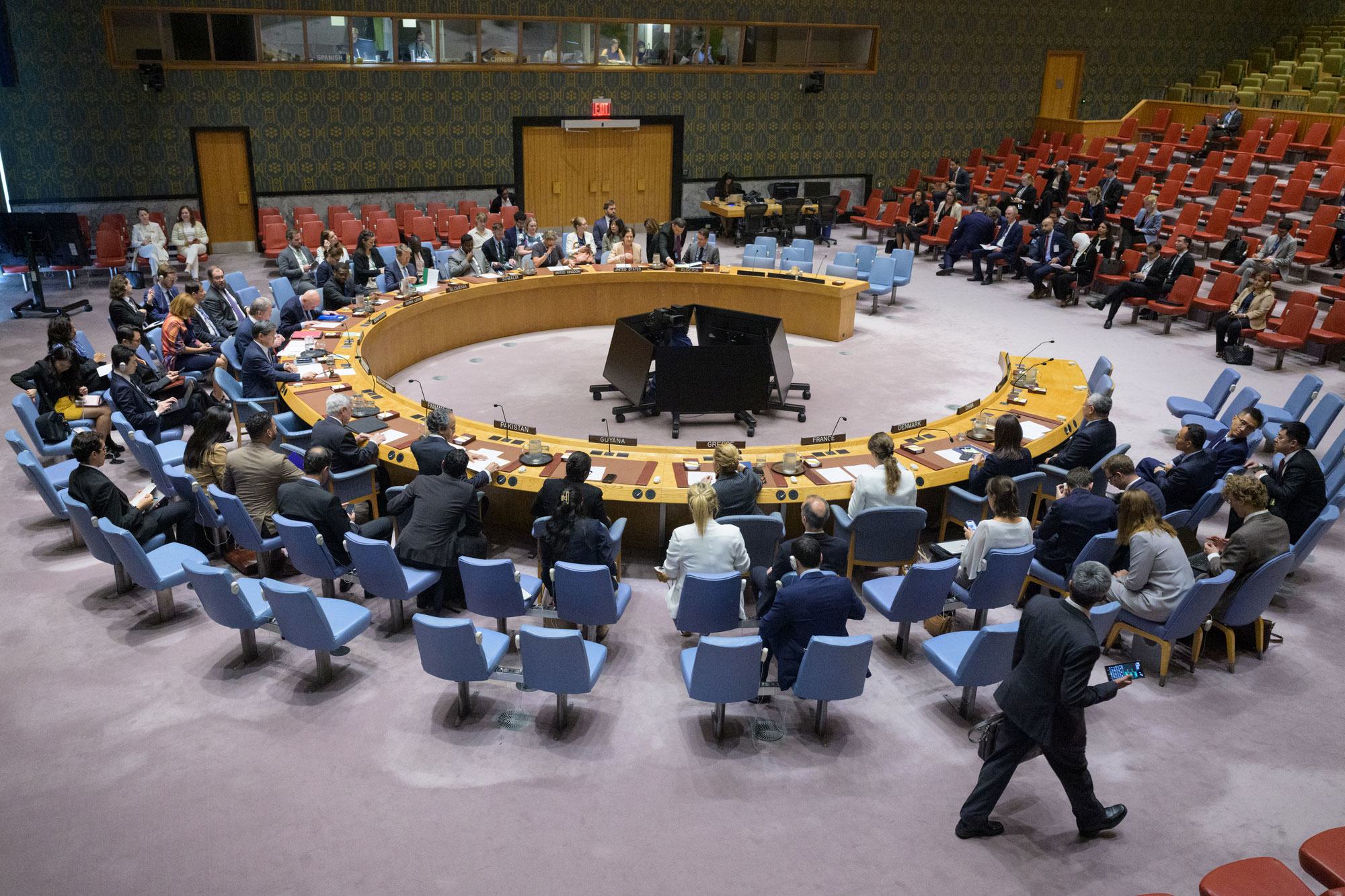
It is the only lasting path to global security, it said ministers to a high -level open debate in Security advice Tuesday.

The secretary general stressed that the Charter of the United NationsTools – negotiation, mediation, conciliation, arbitration and more – remain a life buoy when tensions increaseThe grievances are transformed and the states trust themselves.

These tools are more necessary than ever, he stressed, because the rage of conflicts and international law are violated with impunity.

“” The cost is amazing – measured in human life, broken communities and lost future. We do not need to seek further than the horror spectacle in Gaza – with a level of death and destruction without parallel lately. »»

The risk of famine and aid operations is refused space and security to operate. UN premises, such as the United Nations Office for Project Services (UNOTS) and the World Health Organization (WHO)) main warehouse,, were affected Despite the informed parties of their locations.

“These premises are inviolable and must be protected by international humanitarian law – without exception,” reiterated Mr. Guterres.

Peace is a choice-do it

From Gaza to Ukraine, from the Sahel to Sudan, Haiti and Myanmar, “the conflict is in rage, international law is trampled on, and hunger and movement are at record levels,” he continued, adding that terrorism, violent extremism and transnational crime also remain “persistent buttocks” which push security within reach.

“” Peace is a choice. And the world expects the Security Council to help countries make this choice.“”

Mr. Guterres underlined the obligation of the foundation of the UN Charter in Article 2.3 that “all members will settle their international disputes by peaceful means”, and Chapter VIwhich allows the Security Council to support “negotiation, investigation, mediation, conciliation, arbitration, judicial regulations, recourse to regional agencies or arrangements, or other peaceful means of their choice”.

Action 16 of last year Pact for the future Exhort the States to remedy preventive diplomacy, he said, congratulating Pakistan-the chairman of the Council for July-for having deposited a resolution encouraging a more complete use of these tools, which was adopted unanimously at the meeting.

Secretary General António Guterres addresses the high -level open debate of the Security Council.

P5 must overcome the divisions

The members of the Security Council-“in particular its permanent members”-must overcome the divisions, said the secretary general, reminding them that even during the Cold War, the dialogue of the Council underpinned peacekeeping missions and humanitarian access, and helped to prevent a third world war.

He urged members to keep the canals open, build a consensus and make the body “more representative” of today’s geopolitical realities with more inclusive, transparent and responsible working methods.

Mr. Guterres also urged more in-depth cooperation with regional and sub-regional organizations.

Mediation can work even in the middle of the war, he said, noting the third anniversary of the Black Sea initiative and a related memorandum with Russia which allowed cereal movements during the conflict in Ukraine.

Renew commitment to multilateralism

States must honor their obligations under the Charter; International human rights, refugees and humanitarian law and the principles of sovereignty, territorial integrity and political independence, said Mr. Guterres.

“” As we mark the 80th anniversary of our organization and the charter which gave it life and form, we must renew our commitment to the multilateral peace spirit by diplomacy“He said.

“” I can’t wait to work with you to achieve the international peace and security that the inhabitants of the world need and deserve.“”

Open debate of the Security Council

An event signature of the Pakistani presidency, the open debate on Tuesday was chaired by the Deputy Prime Minister and Minister of Foreign Affairs Mohammad Ishaq Dar.

The session aimed to assess the effectiveness of existing mechanisms for the settlement of Pacific disputes, to examine best practices and to explore new strategies to fight against prolonged conflicts.

He also sought to strengthen cooperation with regional organizations, strengthen capacity building and the mobilization of resources and align future efforts with the vision of conflict prevention described in the Pact for the future.

Originally published at Almouwatin.com

The deadly floods show a faster and wider need, says the United Nations agency

0

The United Nations World Meteorological Organization (Wmo) said on Monday that more intense showers and glacier lighting floods are becoming more and more frequent, with deadly consequences for communities caught.

“” Sudden floods are not new, but their frequency and intensity increase in many regions due to rapid urbanization, the change of land use and a changing climate“Said Stefan Uhlenbrook, Director of Hydrology, Water and the Cryosphere of the OMM.

Each additional degree of warming Celsius allows air to contain about 7% additional water vapor.

“” This increases the risk of more extreme precipitation events. At the same time, the risks of flooding in glaciers increase due to improved ice melting in a warmer climate“, He added.

Thousands of lives lost each year

Sudden floods and floods make thousands of lives each year and cause Billions of dollars of damage. In 2020, serious floods across South Asia killed more than 6,500 people and caused $ 105 billion in economic losses.

Two years later, Catastrophic floods in Pakistan Leave more than 1,700 dead, 33 million people affected and losses exceeding $ 40 billion, reversing years of development winnings.

This year, the assault continued. In July, South Asia, East Asia and the United States have seen a series of fatal events, monsoon rains with glacial lake and sudden floods.

Each year, extreme weather conditions and climatic events have a huge number of lives and economies worldwide.

Asia coil of the MOSSON Assault

In India and Pakistan, the heavy monsoon rains broke the transport links, washed the houses and launched landslides. Pakistan has declared the state of emergency In its most affected areas, the deployment of military helicopters for rescue missions after the forecasters warned against the risk of exceptional flood along the upper Jhelum river.

The Republic of Korea has undergone record showers between July 16 and 20, with precipitation greater than 115 mm per hour in certain places. At least 18 people were killed and more than 13,000 were evacuated.

In southern China, the authorities published sudden floods and landslide alerts on July 21, just a day after Typhoon Wipha beaten Hong Kong, highlighting the composed risks of sequential storms.

Texas flash flood hits night

Overnight on July 4, a A sudden deluge transformed Texas Hill Country into a disaster zonekilling more than 100 people and leaving dozens missing. In a few hours, 10-18 inches (25–46 cm) of rain overwhelmed the Guadalupe river basin, sending the river up 26 feet (8 meters) in just 45 minutes.

The 1-day precipitation totals of the Imerg Multi-Satellite precipitation product of NASA show strong precipitation on the center of Texas on July 4, 2025.

Many victims were young girls in a summer camp, took the current while flood waters tear the dormitories around 4 am. Although the National Weather Service US has expressed warnings in advance, local sirens were missing and the final alerts came when most were sleeping.

The glacier test floods the rise

Not all floods are caused by rain.

In the Rasuwa district in Nepal, a sudden explosion of a supraglacial lake – formed on the surface of a glacier – swept the hydroelectric power plants, a major bridge and commercial roads on July 7. At least 11 people were killed and more than a dozen would have disappeared.

Scientists from the International Center for Integrated Mountain Development (ICimod), a WMO partner, for example Floods of glacial origin in the Hindu region of Kush-Himalaya occur much more often two decades agoWhen you could hit every five to 10 years.

In May and June 2025 only, three ice lighting floods hit Nepal, Afghanistan and Pakistan, with two others in Nepal on July 7. If warming continues, the risk of these floods could triple at the end of the century.

After a flood that swept a high altitude village in Nepal.

Fill the warning difference

WMO intensifies efforts to improve flood forecasts thanks to its global real-time initiative and guidance platform, now used in more than 70 countries.

The system incorporates satellite data, radar and high -resolution weather models to signal threats of hours in advance and develops in an interoperable framework on the world led by the country.

A World Bank study in 2022 estimated that 1.81 billion people – almost a quarter of the world’s population – are directly exposed to flooding events of 1 in 100 years, 89% living in low and intermediate income countries.

The UN The first warnings for all The initiative aims to guarantee that everyone, everywhere, is protected by early alert systems by 2027.

Originally published at Almouwatin.com

Live security advice: high -level debate on peaceful dispute regulations

0

The United Nations Security Council meets today for a high -level open debate on Promote international peace and security through multilateralism and peaceful dispute resolutionChaired by the Pakistani Deputy Prime Minister and Minister of Foreign Affairs Mohammad Ishaq Dar. The UN Secretary General, António Guterres, should arise as more than 80 Member States join discussions on strengthening diplomacy and conflict prevention mechanisms. UN NewsIn coordination with the coverage of UN meetings, brings you live updates. UN applications users can follow here.

Originally published at Almouwatin.com