Sunday, April 26, 2026
Home Blog Page 319

World Brain Day: EU projects helping to protect brain health

0
World Brain Day: EU projects helping to protect brain health

On World Brain Day, we highlight the need for targeted interventions to promote and protect brain health at every stage of life. Around 165 million Europeans live with brain disorders. Discover what EU-funded projects are doing to understand, prevent and address neurological disorders.

Source link

World Brain Day: EU projects helping to protect brain health

0
World Brain Day: EU projects helping to protect brain health

On World Brain Day, we highlight the need for targeted interventions to promote and protect brain health at every stage of life. Around 165 million Europeans live with brain disorders. Discover what EU-funded projects are doing to understand, prevent and address neurological disorders. Source link

Source link

Alleged perpetrator of sending thousands of threatening emails to schools in Czech Republic, Slovakia and Latvia apprehended | Eurojust

0
Alleged perpetrator of sending thousands of threatening emails to schools in Czech Republic, Slovakia and Latvia apprehended | Eurojust

Eurojust has assisted the authorities in the Czech Republic, Slovakia and Latvia with the apprehension of the alleged perpetrator who was responsible for sending thousands of emails in September last year threatening schools with explosions. The mass threats, which were also sent to other educational institutions and leisure centres, caused major public concern and led to the suspension of classes at the beginning of the school year.

Eurojust supported the national authorities involved by setting up a joint investigation team (JIT) dedicated to the case, as well as providing additional cross-border judicial support.

The alleged perpetrator also used the social network Telegram to spread his threats. He was apprehended in the Ukrainian city of Dnipro last week but was released pending potential further steps to be taken by the authorities.

Alleged perpatrator aprehended.
© Dnipropetrovsk Regional Prosecutor’s Office

Given the mass scale of the threats at the same time across three countries, the police authorities involved coordinated their investigations, assisted by the setting up of the JIT. The joint investigative efforts, using the cybercrime expertise of the police, led to the identification of an alleged perpetrator, operating from the Ukrainian city of Dnipro.

With the participation of Czech and Slovak police officers, a joint action took place in Dnipro last week, during which the alleged perpetrator was apprehended and one individual was questioned. Furthermore, two locations were searched, which led to the seizure of computer equipment.

Thanks to the good and close cooperation of all the authorities concerned, the operation was successfully carried out under extremely difficult circumstances, very close to the frontline of the war in Ukraine, with Ukrainian, Czech and Slovak officers exposed to heavy risks.

Eurojust offered support not only through the establishment of the JIT but also by organising a coordination meeting to prepare for the joint action day in Ukraine. The operation was carried out at the request of and by the following authorities:

  • Czech Republic: High Public Prosecutor’s Office in Prague; National Counterterrorism, Extremism and Cybercrime Agency (NCTEKK)
  • Latvia: Rīga Pārdaugava Prosecution Office; 1st Unit of Cybercrime Enforcement Department of the Central Criminal Police Department of the State Police
  • Slovakia: General Prosecutor´s Office of the Slovak Republic; Police Department West, Anti-Crime Unit, Bureau for Combating Organized Crime of the Presidium of the Police Corps (Police ACU); Counter Terrorism Centre, Presidium of the Police Corps
  • Ukraine: Dnipropetrovsk regional Prosecutor’s Office; Main Department of National Police in Dnipropetrovsk region; Division for Combating Cybercrime in Dnipropetrovsk region of the Cyber Police Department of National Police of Ukraine

Source link

Alleged perpetrator of sending thousands of threatening emails to schools in Czech Republic, Slovakia and Latvia apprehended | Eurojust

0
World Brain Day: EU projects helping to protect brain health

Eurojust has assisted the authorities in the Czech Republic, Slovakia and Latvia with the apprehension of the alleged perpetrator who was responsible for sending thousands of emails in September last year threatening schools with explosions. The mass threats, which were also sent to other educational institutions and leisure centres, caused major public concern and led […]

Source link

Gaza: UN staff are now vanishing hunger, exhaustion; Who has held

0

“” Doctors, nurses, journalists, humanitarian workers, including UNRWA The staff, hungryVanish due to hunger and exhaustion while exercising their tasks “,” said Juliette Touma, director of communications with the United Nations Agency for Refugees in Palestine, UNRWA.

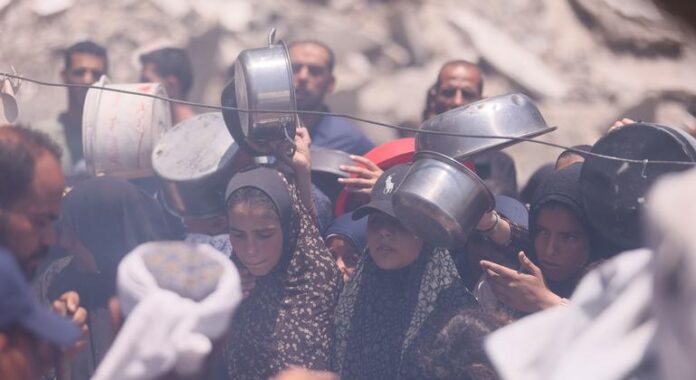
Speaking of Amman, she pointed out that the search for food “has become as deadly as the bombing”.

Development intervenes as a United Nations Human Rights Office, Ohchrannounced Tuesday that more than 1,000 Palestinians were now killed by the Israeli army while he was trying to make food in Gaza since the so-called Gaza Humanitarian Foundation (GHF) began to operate on May 27.

“As of July 21, we recorded 1,054 people killed in Gaza while trying to get food,” said spokesperson for the Ohchr Thameen al-Kheetan; “766 of them were killed in the vicinity of the GHF sites and 288 near the UN and other convoys of help from humanitarian organizations.”

Mr. Al-Kheetan noted that the conclusion came from “multiple reliable sources in the field, including medical teams, humanitarian organizations and human rights. It is still in the process of verifying our strict methodology. ”

The huts of the foundation are supported by the United States and the Israeli authorities and began to operate in southern Gaza on May 27, bypassing the UN and the other established NGOs.

Help relief is not a job for mercenaries

“The so-called GHF distribution program is a sadistic death screed,” said Touma of UNRWA. “The elite shooters open fire at random on the crowds, as if they were given a license to kill. »»

Quoting a declaration by UNRWA Head Philippe Lazzarini, Ms. Touma described the “massive hunting of people in total impunity” program.

“This cannot be our new standard. Humanitarian aid is not the work of mercenaries “,” She added.

UNRWA’s spokesman insisted that the UN and its humanitarian partners have the expertise, experience and resources available to provide safe, dignified and scale assistance.

“We have proven it repeatedly during the last cease-fire,” she said.

Living conditions in the band have reached a new level because the prices of basic products have increased by around 4,000%. For the inhabitants of Gaza who have lost their house and have been moved several times, they have no income and find themselves completely deprived of essentials.

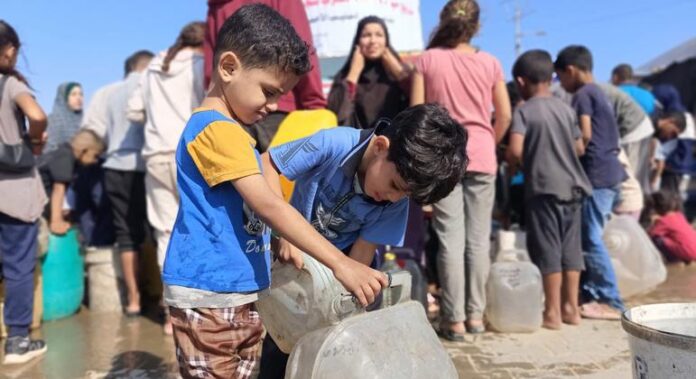
A child expects food in Gaza.

$ 200 for a bag of flour

Ms. Touma underlined the testimony of a colleague on the field who had to walk for hours to buy a bag of lenses and flour, paying nearly $ 200 for that.

The United Nations World Food Program on Monday (Wfp) said a quarter of the Gaza population faces famine type conditions. Nearly 100,000 women and children suffer from acute serious malnutrition and need treatment as soon as possible.

Vital everyday items such as layers are rare and expensive, at around $ 3 each. Mothers resorted to the use of plastic bags instead, while a father “said he had to cut one of his last shirts to give his daughter sanitary pads,” said Touma.

“We, at UNRWA, have stocks of hygiene supplies, including layers for babies and for adults waiting outside the doors of Gaza,” said Touma, insisting that the agency has 6000 trucks loaded with food, drugs and hygiene supplies pending in Egypt and Jordan to be authorized to enter the Enclave.

Urgent ceasefire call

She reiterated UN calls to “an agreement that would bring a cease-fire, which would release hostages, which would cause a standard flow of humanitarian supplies to Gaza under the leadership of the United Nations, including UNRWA.”

Humanitarian operations in the enclave are pushed into a “constantly disputed space”, said the World Health Organization (WHO) Tarik Jašarević spokesperson.

The information journalists in Geneva sentenced three attacks on Monday in a building in the building which of the staff of Deir al-Balah, in the center of Gaza, as well as the “ill-treatment of those who are housed there and the destruction of his main warehouse”.

“The staff and their families, including the children, were exposed to a serious danger and traumatized after air strikes caused a fire and significant damage,” said Mr. Jašarević, adding that the Israeli soldiers entered the premises, “forcing women and children to evacuate” to the coastal shelter of Al Mawasi.

Detected under the threat of a weapon

The WHO spokesman said that the staff and family members were “bound, stripped, interviewed on the spot and projected under the threat of a weapon”. Two staff members and two family members were detained and while three were released later, a WHO staff member remains in detention for unknown reasons for the organization.

Jašarević called for the release of the detainee staff member and insisted that “no one should be held without accusations and without regular procedures”.

The last evacuation order for the region had an impact on several premises and compromised its presence on the ground, “paralyzing efforts to support a collapsed health system,” added Mr. Jašarević and “repel the more out of reach of more than two million people”.

On Monday, the Israeli military operation in Deir Al-Balah also caused an explosion and fire inside the warehouse of which is the principal, which is located in the evacuation zone of the central city of Gazan-“part of a systematic destruction model of health facilities,” said the agency spokesperson.

According to the Gaza health authorities, since the start of the war in October 2023, 1,500 health workers have been killed in the strip. Some 94% of all health establishments have been damaged and half of Gaza hospitals are “not at all functional,” said Jašarević.

“The possibility of preventing loss of lives and reversing immense damage to the health system is more out of reach every day,” he said.

Visa refusal

By highlighting other challenges in the humanitarian operation in Gaza, the WHO spokesman underlined an increase in the refusal of visas by the Israeli authorities for emergency medical teams seeking to enter the band since the last ceasefire between Israel and Hamas on March 18.

He said 58 international employees for emergency medical teams, including critical surgeons and doctors have been denied access.

Ms. Touma de l’UNRWA underlined the fact that since the agency’s general commissioner was denied the entrance to Gaza in March 2024, he was not authorized to return to the strip. He also did not receive a visa from Israel to enter the occupied West Bank, including East Jerusalem, for more than a year.

UNRWA spokesperson also deplored the lack of access to international media at the enclave.

“It is certainly time, if not a long time, for international media to go precisely to Gaza to examine the facts and help report first-hand information on the horrors that the inhabitants of Gaza live,” she said.

Originally published at Almouwatin.com
Consumer goods you can carry in your suitcase

0
Consumer goods you can carry in your suitcase


Despite freedom of movement of goods within the EU, there are certain rules on taking certain consumer goods from one EU country to another. Failure to comply with set allowances, which can vary from country to country, could result in the confiscation of your goods, a fine or even criminal prosecution. 

Travelling in the EU 

The good news is that if you are travelling in the EU, you can carry any meat or dairy products with you as long as they are for your own personal consumption. The same goes for cut flowers, fruit or vegetables as long as they have been grown in an EU country and are free from pests or disease. These rules also apply when you carry meat, dairy or plant products in your luggage, or if you order them online or have them sent by mail.  

There are, however, limits on powdered baby milk (less than 10 kg), baby food, foods required for medical reasons, and special pet feed. 

When it comes to alcohol and tobacco, you are entitled to transport such products, provided they are for your own use and not for resale. Each EU country can set their own guideline values for the quantities that you can bring in. However, these values cannot be lower than the guidelines levels established at EU-level: 800 cigarettes, 1kg of tobacco, 10 litres of spirits, 20 litres of fortified wine, 90 litres of wine and 110 litres of beer. 

There are no EU-wide rules on travelling with cash between EU countries. You should, however, always check before you travel with the local customs authorities, if local rules exist in the country of departure, transit and arrival. 

If you have a problem with faulty goods, faulty digital content or a faulty digital service bought in any EU country while abroad, the European Consumer Centre in your country can help. For more detailed information about your rights under national law, check the specific rules on legal guarantees and commercial warranties for the country where you made your purchase. 

Travelling to the EU from a non-EU country 

If you are travelling to the EU from a non-EU country, you are not allowed to bring any meat or dairy products with you. You can, however, bring a limited quantity of fruit and vegetables as well as eggs, egg products and honey. Restricted quantities of fish or fish products are also allowed. Most EU countries have strict rules on carrying endangered animals or plants, and in some cases, you may need a permit.  

You can also bring into the EU certain goods free of VAT and excise duties with you if they are not for resale and you respect the set limits. For example, you can bring in4 litres of still wine and 16 litres of beer. In addition, you can bring 1 litre of spirits over 22 % vol. (such as vodka or gin) or 1 litre of undenatured alcohol (ethyl alcohol) of 80% vol. or 2 litres of fortified (for example sherry or port) or sparkling wine. As for tobacco, you should check the limits indicated by the customs authorities in the EU country you are travelling to.  

For other goods, including perfume, you may carry up to a value of €300 per traveller or €430 for travellers by air and sea. Some EU countries apply a lower limit of €150 for travellers under 15. And if you’re motoring around the EU, you can carry 10 litres (maximum) of fuel in a portable container, in addition to the fuel contained in your fuel tank.  

If you plan to enter or leave the EU with €10 000 in cash (or its equivalent in other currencies) you must declare it to the customs authorities in the EU country you are entering or leaving, using the EU cash declaration form. If you do not submit a cash declaration or the cash declaration is incorrect or incomplete, you will be subject to penalties. 

For more information 

What can you take with you when travelling in the EU? 

Shopping in the EU

EU cash declaration form 

National customs websites 

Passenger rights in the EU 

Health insurance while travelling in the EU 

Travelling with your pets in the EU 

European Consumer Centres Network

Source link

Consumer goods you can carry in your suitcase

0
World Brain Day: EU projects helping to protect brain health


Despite freedom of movement of goods within the EU, there are certain rules on taking certain consumer goods from one EU country to another. Failure to comply with set allowances, which can vary from country to country, could result in the confiscation of your goods, a fine or even criminal prosecution. 

Travelling in the EU 

The good news is that if you are travelling in the EU, you can carry any meat or dairy products with you as long as they are for your own personal consumption. The same goes for cut flowers, fruit or vegetables as long as they have been grown in an EU country and are free from pests or disease. These rules also apply when you carry meat, dairy or plant products in your luggage, or if you order them online or have them sent by mail.  

There are, however, limits on powdered baby milk (less than 10 kg), baby food, foods required for medical reasons, and special pet feed. 

When it comes to alcohol and tobacco, you are entitled to transport such products, provided they are for your own use and not for resale. Each EU country can set their own guideline values for the quantities that you can bring in. However, these values cannot be lower than the guidelines levels established at EU-level: 800 cigarettes, 1kg of tobacco, 10 litres of spirits, 20 litres of fortified wine, 90 litres of wine and 110 litres of beer. 

There are no EU-wide rules on travelling with cash between EU countries. You should, however, always check before you travel with the local customs authorities, if local rules exist in the country of departure, transit and arrival. 

If you have a problem with faulty goods, faulty digital content or a faulty digital service bought in any EU country while abroad, the European Consumer Centre in your country can help. For more detailed information about your rights under national law, check the specific rules on legal guarantees and commercial warranties for the country where you made your purchase. 

Travelling to the EU from a non-EU country 

If you are travelling to the EU from a non-EU country, you are not allowed to bring any meat or dairy products with you. You can, however, bring a limited quantity of fruit and vegetables as well as eggs, egg products and honey. Restricted quantities of fish or fish products are also allowed. Most EU countries have strict rules on carrying endangered animals or plants, and in some cases, you may need a permit.  

You can also bring into the EU certain goods free of VAT and excise duties with you if they are not for resale and you respect the set limits. For example, you can bring in4 litres of still wine and 16 litres of beer. In addition, you can bring 1 litre of spirits over 22 % vol. (such as vodka or gin) or 1 litre of undenatured alcohol (ethyl alcohol) of 80% vol. or 2 litres of fortified (for example sherry or port) or sparkling wine. As for tobacco, you should check the limits indicated by the customs authorities in the EU country you are travelling to.  

For other goods, including perfume, you may carry up to a value of €300 per traveller or €430 for travellers by air and sea. Some EU countries apply a lower limit of €150 for travellers under 15. And if you’re motoring around the EU, you can carry 10 litres (maximum) of fuel in a portable container, in addition to the fuel contained in your fuel tank.  

If you plan to enter or leave the EU with €10 000 in cash (or its equivalent in other currencies) you must declare it to the customs authorities in the EU country you are entering or leaving, using the EU cash declaration form. If you do not submit a cash declaration or the cash declaration is incorrect or incomplete, you will be subject to penalties. 

For more information 

What can you take with you when travelling in the EU? 

Shopping in the EU

EU cash declaration form 

National customs websites 

Passenger rights in the EU 

Health insurance while travelling in the EU 

Travelling with your pets in the EU 

European Consumer Centres Network

Source link

Deadly floods show need for faster, wider warnings, UN agency says

0
Deadly floods show need for faster, wider warnings, UN agency says

The UN World Meteorological Organization (WMO) said on Monday that more intense downpours and glacier outburst floods are becoming increasingly frequent, with deadly consequences for communities caught off guard.

Flash floods are not new, but their frequency and intensity are increasing in many regions due to rapid urbanization, land-use change and a changing climate,” said Stefan Uhlenbrook, WMO Director of Hydrology, Water and Cryosphere.

Each additional degree Celsius of warming enables the air to hold about 7 per cent more water vapour.

This is increasing the risk of more extreme rainfall events. At the same time, glacier-related flood hazards are increasing due to enhanced ice melting in a warmer climate,” he added.

Thousands of lives lost every year

Floods and flash floods claim thousands of lives each year and cause billions of dollars in damage. In 2020, severe flooding across South Asia killed more than 6,500 people and caused $105 billion in economic losses.

Two years later, catastrophic floods in Pakistan left over 1,700 people dead, 33 million affected and losses exceeding $40 billion, reversing years of development gains.

This year, the onslaught has continued. In July alone, South Asia, East Asia and the United States have seen a string of deadly events, from monsoon rains to glacial lake bursts and sudden flash floods.

Each year, extreme weather and climate events take a massive toll on lives and economies worldwide.

Asia reels from monsoon onslaught

In India and Pakistan, heavy monsoon rains have severed transport links, washed away homes and triggered landslides. Pakistan declared a state of emergency in its worst-hit areas, deploying military helicopters for rescue missions after forecasters warned of exceptional flood risk along the upper Jhelum River.

The Republic of Korea suffered record-breaking downpours between 16-20 July, with rainfall exceeding 115 mm per hour in some locations. At least 18 people were killed and more than 13,000 were evacuated.

In southern China, authorities issued flash flood and landslide alerts on 21 July, just a day after Typhoon Wipha battered Hong Kong, underscoring the compound risks of sequential storms.

Texas flash flood strikes overnight

Overnight 3 into 4 July, a sudden deluge turned Texas Hill Country into a disaster zone, killing more than 100 people and leaving dozens missing. In a few hours, 10-18 inches (25–46 cm) of rain swamped the Guadalupe River basin, sending the river surging 26 feet (8 metres) in just 45 minutes.

1-day precipitation totals from NASA’s IMERG multi-satellite precipitation product show heavy rainfall over central Texas on July 4, 2025.

1-day precipitation totals from NASA’s IMERG multi-satellite precipitation product show heavy rainfall over central Texas on July 4, 2025.

Many of the victims were young girls at a summer camp, caught unaware as floodwaters tore through sleeping quarters around 4 AM. Although the US National Weather Service issued warnings ahead of time, local sirens were lacking and the final alerts came when most were asleep.

Glacier outburst floods surge

Not all floods this month were caused by rain.

In Nepal’s Rasuwa district, a sudden outburst from a supraglacial lake – formed on a glacier’s surface – swept away hydropower plants, a major bridge and trade routes on 7 July. At least 11 people were killed and more than a dozen are reported missing.

Scientists at the International Centre for Integrated Mountain Development (ICIMOD), a WMO partner, say glacial-origin floods in the Hindu Kush-Himalaya region are occurring far more often than two decades ago, when one might strike every five to 10 years.

In May and June 2025 alone, three glacial outburst floods hit Nepal, Afghanistan and Pakistan, with two more in Nepal on 7 July. If warming continues, the risk of such floods could triple by the century’s end.

Aftermath of a flood that swept through a high-altitude village in Nepal.

Aftermath of a flood that swept through a high-altitude village in Nepal.

Closing the warning gap

The WMO is stepping up efforts to improve flood forecasting through its global initiative and real-time guidance platform, now used in over 70 countries.

The system integrates satellite data, radar and high-resolution weather models to flag threats hours in advance and is being expanded into a country-led, globally interoperable framework.

A 2022 World Bank study estimated that 1.81 billion people – nearly a quarter of the world’s population – are directly exposed to 1-in-100-year flood events, with 89 per cent living in low- and middle-income countries.

The UN’s Early Warnings for All initiative aims to ensure that everyone, everywhere, is protected by early warning systems by 2027.

Source link

Galileo to be the first GNSS to offer authentication service worldwide with launch of OSNMA

0
Galileo to be the first GNSS to offer authentication service worldwide with launch of OSNMA

EUSPA today announced the forthcoming official launch of the Galileo Open Service – Navigation Message Authentication (OSNMA), a new authentication mechanism that lets OS users verify the authenticity of the data used for the GNSS positioning and timing on 24 July.

Coming at a time when attacks on GNSS signals, such as spoofing, are on the rise, OSNMA provides a critical layer of protection. Spoofing involves the transmission of counterfeit satellite signals that deceive GNSS receivers, potentially resulting in false and unreliable positioning. These events can affect critical applications in transportation, finance, telecommunications, information technology, energy, utilities, manufacturing, health services, emergency services and law enforcement, in which GNSS, and in particular Galileo, is used. In sectors such as aviation or maritime, this can lead to serious safety risks.

The Galileo OSNMA mitigates these threats by allowing users to confirm that the data they receive is genuinely from Galileo and has not been tampered with. It works by embedding cryptographic data, or a digital signature, into the navigation message (I/NAV) broadcast on the E1-B signal.
Because the OSNMA is transmitted in the Galileo Open Service signal, which is already used in most devices, receivers only need to implement the protocol and download the certified public keys from the European GNSS Service Centre (GSC) website. OSNMA service relies as well on the implementation of dedicated logic on the receiver side to guarantee the end-to-end authentication process. The service does not require the storage and management of secret keys on the user side, which facilitates the adoption in different communities. Importantly, the OSNMA mechanism does not alter Galileo’s existing signal structure, ensuring that Open Service navigation performance remains unaffected.

While OSNMA does not prevent spoofing or jamming, it makes spoofing significantly harder by authenticating the data and making the Galileo signal unpredictable and harder to replicate. It also enhances the system’s resilience, giving users an important tool in detecting and responding to threats.

“Stakeholders have clearly articulated a need for more robust GNSS services. The Galileo OSNMA delivers this robustness and, in doing so, provides enhanced security in positioning and timing solutions.“ Rodrigo DA COSTA, EUSPA Executive Director

“The OSNMA Initial Service declaration has been authorised by the EU Space SAB following independent security checks and cooperation with the Programme to define risk mitigation measures. The cooperation between the SAB, the Commission and EUSPA was instrumental to getting through this very important milestone.” Philippe BERTRAND, EU Space Security Accreditation Chair

The launch of Galileo OSNMA marks another milestone in the EU’s commitment to secure and reliable space-based services.

The OSNMA declaration of service follows an extensive testing phase in which GNSS manufacturers, integrators, and application developers assessed the service across diverse scenarios using the Signal in Space (SiS). With this launch, Galileo becomes the first GNSS in the world to offer authentication globally as part of its Open Service — a major step in reinforcing Europe’s leadership in secure satellite navigation.

The OSNMA is provided by EUSPA, the operational service provider for Galileo.

Source link

Galileo to be the first GNSS to offer authentication service worldwide with launch of OSNMA

0
Galileo to be the first GNSS to offer authentication service worldwide with launch of OSNMA

Coming at a time when attacks on GNSS signals, such as spoofing, are on the rise, OSNMA provides a critical layer of protection. Spoofing involves the transmission of counterfeit satellite signals that deceive GNSS receivers, potentially resulting in false and unreliable positioning. These events can affect critical applications in transportation, finance, telecommunications, information technology, energy, utilities, manufacturing, health services, emergency services and law enforcement, in which GNSS, and in particular Galileo, is used. In sectors such as aviation or maritime, this can lead to serious safety risks.

The Galileo OSNMA mitigates these threats by allowing users to confirm that the data they receive is genuinely from Galileo and has not been tampered with. It works by embedding cryptographic data, or a digital signature, into the navigation message (I/NAV) broadcast on the E1-B signal.
Because the OSNMA is transmitted in the Galileo Open Service signal, which is already used in most devices, receivers only need to implement the protocol and download the certified public keys from the European GNSS Service Centre (GSC) website. OSNMA service relies as well on the implementation of dedicated logic on the receiver side to guarantee the end-to-end authentication process. The service does not require the storage and management of secret keys on the user side, which facilitates the adoption in different communities. Importantly, the OSNMA mechanism does not alter Galileo’s existing signal structure, ensuring that Open Service navigation performance remains unaffected.

While OSNMA does not prevent spoofing or jamming, it makes spoofing significantly harder by authenticating the data and making the Galileo signal unpredictable and harder to replicate. It also enhances the system’s resilience, giving users an important tool in detecting and responding to threats.

“Stakeholders have clearly articulated a need for more robust GNSS services. The Galileo OSNMA delivers this robustness and, in doing so, provides enhanced security in positioning and timing solutions.“ Rodrigo DA COSTA, EUSPA Executive Director

“The OSNMA Initial Service declaration has been authorised by the EU Space SAB following independent security checks and cooperation with the Programme to define risk mitigation measures. The cooperation between the SAB, the Commission and EUSPA was instrumental to getting through this very important milestone.” Philippe BERTRAND, EU Space Security Accreditation Chair

The launch of Galileo OSNMA marks another milestone in the EU’s commitment to secure and reliable space-based services.

The OSNMA declaration of service follows an extensive testing phase in which GNSS manufacturers, integrators, and application developers assessed the service across diverse scenarios using the Signal in Space (SiS). With this launch, Galileo becomes the first GNSS in the world to offer authentication globally as part of its Open Service — a major step in reinforcing Europe’s leadership in secure satellite navigation.

The OSNMA is provided by EUSPA, the operational service provider for Galileo.

Source link