Sunday, May 3, 2026
Home Blog Page 424

Council and Parliament secure deal to harmonise collection of population statistics

0
Council and Parliament secure deal to harmonise collection of population statistics

The Council has reached a provisional agreement with the European Parliament on a new regulation to ensure complete, coherent and comparable European statistics on population and housing.

Source link

World News in Brief: Sudan aid update, child migrant deaths at sea, nursing shortages, invasive pest scourge

0
World News in Brief: Sudan famine latest, weekend attacks in Ukraine, Tanzania Marburg virus update

Port Sudan – the main entry point for humanitarian supplies and personnel into the country – came under attack for the ninth consecutive day. As the UN’s main humanitarian hub in Sudan, drone strikes on the coastal city have gravely impacted aid delivery.

Nonetheless, UN Humanitarian Air Service (UNHAS) flights were able to resume on 8 May, providing a continuation of a key humanitarian lifeline as the war between rival militaries for control of Sudan continues, UN Spokesperson Stéphane Dujarric confirmed.

Targeting of civilian infrastructure has sparked panic and displacement. The International Organization for Migration (IOM) reported last week that 600 people were displaced within Port Sudan alone because of the attacks.

Catastrophic situation in North Darfur

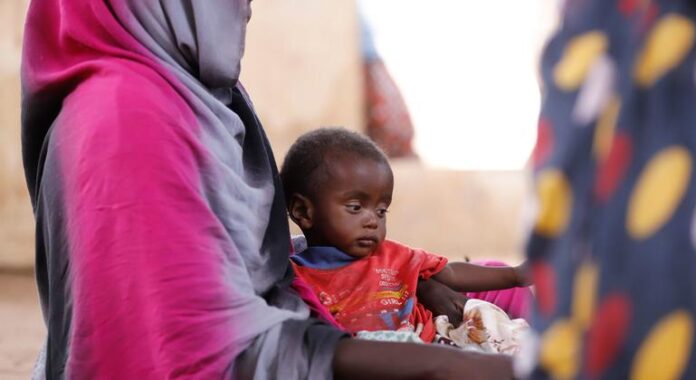
The UN Humanitarian Coordinator for Sudan, Clementine Nkweta-Salami, warned on Sunday that the situation in the North Darfur camps of Abou Shouk “is catastrophic.”

Although the UN and its partners continue to scale up their humanitarian response, both camps remain, in effect, cut off from aid.

Ms Nkweta-Salami issued an urgent call for a ceasefire and humanitarian pauses to allow life-saving deliveries to resume.

Call for action after deaths of migrant children at sea

Two young children, aged 3 and 4, have died from dehydration aboard a rubber dinghy found adrift in the central Mediterranean, the UN Children’s Fund (UNICEF) said on Monday.

The vessel, which departed Libya carrying 62 migrants including several children, had reportedly been stranded for days after its engine failed.

Refugees and migrants in a wooden boat are rescued near the Italian island of Lampedusa in the Mediterranean Sea.

According to survivors, the children had died nearly a day before rescuers arrived.

One additional passenger is believed to have drowned earlier in the journey. Many others onboard suffered severe chemical burns caused by contact with a mixture of seawater and spilled fuel – injuries which require urgent medical attention.

All surviving passengers were eventually rescued and transferred to Lampedusa by the Italian coast guard.

‘Devastating reminder’

Regina De Dominicis, UNICEF Regional Director for Europe and Central Asia, called the incident “another devastating reminder” of the deadly risks migrants face.

She stressed the need for coordinated search and rescue missions, and greater investment in support services for migrant families.

“The central Mediterranean remains one of the most dangerous migration routes in the world,” Ms. De Dominicis said. “Without immediate action, more lives will continue to be lost.”

UNICEF continues to call on governments to meet their obligations under international law and protect vulnerable children seeking safety.

Nursing workforce grows, but deep inequalities persist worldwide

The number of nurses around the world has increased in recent years, but a new UN report published on Monday shows that many countries and regions still face serious shortages, highlighting ongoing inequalities in access to nursing care.

Low-income countries are particularly affected, struggling with too few nurses to meet the needs of their growing populations, said the UN World Health Organization (WHO) which crunched the data.

Poor prospects at home

While these countries are training new nurses at a faster rate than wealthier nations, challenges such as rapid population growth and limited job opportunities are making it hard to close the gap, WHO added.

These imbalances in where nurses are working mean that millions still don’t have access to basic health services.

This is holding back efforts to achieve universal health coverage, protect global health, and meet international development goals linked to health.

“We cannot ignore the inequalities that mark the global nursing landscape,” said WHO Director-General Tedros Adhanom Ghebreyesus.

WHO is urging governments to create more nursing jobs and ensure they are fairly distributed, especially in communities where healthcare services are lacking.

Plant pests continue to threaten global food supplies

Protecting crops from pests is key to ensuring everyone has enough to eat, said the head of the UN Food and Agriculture Organization (FAO) on Monday, who stressed that access to food is a basic human right.

Each year, around 40 per cent of the world’s crops are lost to plant pests and diseases, causing over $220 billion in economic damage.

Invasive pests turn up the heat

Migratory pests like locusts and armyworms are among the biggest threats, especially in regions already hit hard by conflict and climate change.

Countries in the Near East and North Africa – including Algeria, Libya and Tunisia – are currently dealing with a serious outbreak of desert locusts that began in the Sahel.

These insects destroy crops and pastureland, putting food supplies for both people and animals at risk, and threatening the survival of farming communities.

“No country can face these challenges alone,” said FAO Director-General QU Dongyu, at a high-level conference in Italy marking the International Day of Plant Health.

He called for greater international cooperation and more funding to tackle cross-border pests and diseases.

Source link

International Nurses Day: EU projects help empower nurses through training

0
International Nurses Day: EU projects help empower nurses through training

Nurses around the world play a crucial role in ensuring patients’ recovery and wellbeing. On International Nurses Day, discover some of the EU’s projects dedicated to empowering nurses and other healthcare professionals through education and training.

Source link

EU projects help empower nurses through training

0
EU projects help empower nurses through training

DISCLAIMER: Information and opinions reproduced in the articles are the ones of those stating them and it is their own responsibility. Publication in The European Times does not automatically means endorsement of the view, but the right to express it.

DISCLAIMER TRANSLATIONS: All articles in this site are published in English. The translated versions are done through an automated process known as neural translations. If in doubt, always refer to the original article. Thank you for understanding.

Source link

New rules help consumers save energy and money in ‘standby mode’

0
New rules help consumers save energy and money in ‘standby mode’

New limits on energy use in standby mode have come into effect. The limits now apply to electrical appliances such as Wi-fi, wireless speakers, and motor-operated blinds. The new rules will help reduce energy bills and save enough energy to power more than 1 million electric cars by 2030.

Source link

New rules help consumers save energy and money in ‘standby mode’

0
New rules help consumers save energy and money in ‘standby mode’

New limits on energy use in standby mode have come into effect. The limits now apply to electrical appliances such as Wi-fi, wireless speakers, and motor-operated blinds. The new rules will help reduce energy bills and save enough energy to power more than 1 million electric cars by 2030. Source link

Source link

Climate change takes increasingly extreme toll on African countries

0
Climate change takes increasingly extreme toll on African countries

Extreme weather and climate change impacts are hitting every single aspect of socio-economic development in Africa and exacerbating hunger, insecurity and displacement,” the UN World Meteorological Organization (WMO) said on Monday.

WMO said that average surface temperature across Africa in 2024 was approximately 0.86°C above the 1991–2020 average.

North Africa recorded the highest temperature – 1.28°C above the 1991-2020 average; it is the fastest-warming sub-region of Africa.

Marine heat spike

Sea surface temperatures were also the highest on record. “Particularly large increases in sea surface temperatures have been observed in the Atlantic Ocean and Mediterranean Sea,” WMO said.
Data shows that almost the entire ocean area around Africa was affected by marine heatwaves of strong, severe or extreme intensity last year and especially the tropical Atlantic.

Head of WMO, Celeste Saulo, warned that climate change is an urgent and escalating problem across the African continent “with some countries grappling with exceptional flooding caused by excessive rainfall and others enduring persistent droughts and water scarcity”.

El Niño influence

Highlighting Africa’s particular vulnerability to our warming planet – caused mainly by rich nations burning fossil fuels – the UN agency said that floods, heatwaves and droughts forced 700,000 people out of their homes across the continent last year.

WMO also noted that the El Niño phenomenon was active from 2023 into early 2024 and “played major roles in rainfall patterns” across Africa.

In northern Nigeria alone, 230 people died in floods last September that swept across the capital of Borno state, Maiduguri, displacing 600,000, severely damaging hospitals and contaminating water in displacement camps.

Regionally, rising waters caused by torrential rains ravaged West Africa and impacted a staggering four million people. 

Conversely, Malawi, Zambia and Zimbabwe suffered the worst drought in at least two decades, with cereal harvests in Zambia and Zimbabwe 43 per cent and 50 per cent below the five-year average, respectively.

Heat shock

Heatwaves are also a growing threat to health and development and Africa, WMO said, noting that the past decade has also been the warmest on record. Depending on the dataset, 2024 was the warmest or second-warmest year.

Blistering temperatures already impact children’s education, with schools closing in March 2024 in South Sudan as temperatures reached 45°C. Worldwide, at least 242 million pupils missed school because of extreme weather in 2024, many of them in sub-Saharan Africa, according to the UN Children’s Fund, UNICEF.

Beyond education, rising temperatures across the continent are making Africa more water-scarce and food-insecure, with North African countries the hardest-hit.

South Sudan focus

Erratic weather patterns across Africa are also hindering farming, driving food insecurity and displacing people who have already had to flee war already, WMO explained.

Last October, for example, flooding affected 300,000 people in South Sudan – a hefty figure for a nation of 13 million, scarred by years of civil strife and where infrastructure is poor.

The disaster wiped out cattle, adding up to between 30 and 34 million farm animals – roughly two per inhabitant – and stagnant water fuelled diseases. Families who had been self-sufficient had to seek help once again.

“When someone slides back into being fed, it affects their dignity,” said Meshack Malo, South Sudan Country Representative for the UN Food and Agriculture Organization (FAO).

At the forefront of climate change, the troubled East African country is already dealing with a crippling economic crisis, mass displacement made worse by the war in neighbouring Sudan, as well as escalating tensions at home and pervasive violence.

Fighting in Sudan has derailed the South Sudanese economy, which relies on oil exports for 90 per cent of its national revenue, reports indicate.

Destructive cycle

When South Sudan is not hit by floods, it is plagued by drought.

“This cyclic change between floods and drought, makes the country affected almost a good part of the year,” said Mr. Malo.  

Flooding has worsened and become more intense and frequent in recent years.

“That means that any short rain then can easily trigger the flooding, because water and the soil remain quite saturated,” Mr. Malo added. “So that intensity and frequency makes this situation worse.”

With road access disrupted for aid trucks, UN agencies such as the World Food Programme (WFP) must airlift food assistance – a costly, impractical solution, as humanitarian funding dwindles.

Pushing back  

In the South Sudanese town of Kapoeta, the FAO has helped to reduce the number of dry months from six to two, by harvesting and storing water to protect crops at risk from climate change.  

“The impact of drought is no longer felt as much,” FAO’s Mr. Malo said, speaking to UN News from the capital, Juba.

Worth its salt

In countries that lack water resources for crop irrigation, climate resilience and adaptation are critical, Dr. Ernest Afiesimama of the WMO Regional Office for Africa in Addis Ababa, told journalists.

And while desalination – the process of removing salt from seawater – may be a solution for some, for many African nations it is not viable.

Rather than turning to desalination as a panacea, investing in adaptation measures including early warning systems for action and preparedness is urgently needed, environmental scientists say.  “Considering the challenges in sub-Saharan Africa, [desalination] presents a complex economic, environmental and social challenge, and there is a question about its long-term sustainability and equity,” said Dr. Dawit Solomon, Contributor at Accelerating Impacts of CGIAR Climate Research for Africa (AICCRA).  

“Africa is facing a high climate change bill. Imagine the continent which is struggling economically and then facing this additional risk multiplier,” Dr. Salomon added.

Source link

Ukraine: Council approves conclusions assessing cohesion policy’s action for Ukrainian refugees in Europe

0
Council and Parliament secure deal to harmonise collection of population statistics

Council approves conclusions assessing cohesion policy’s action for Ukrainian refugees in Europe.

Source link

Ukraine: Council approves conclusions assessing cohesion policy’s action for Ukrainian refugees in Europe

0
Ukraine: Council approves conclusions assessing cohesion policy’s action for Ukrainian refugees in Europe

Council approves conclusions assessing cohesion policy’s action for Ukrainian refugees in Europe. Source link

Source link

A Call to Prayer, Vocations, and Christian Service

0
A Call to Prayer, Vocations, and Christian Service

VATICAN CITY — As reported by Thaddeus Jones for Vatican News, on Good Shepherd Sunday , Pope Leo XIV stood before an estimated 100,000 pilgrims gathered in St. Peter’s Square to lead the recitation of the Regina Caeli , delivering a heartfelt message that emphasized prayer for vocations , a life of service , and the importance of walking together “in love and truth.”

The occasion marked both the World Day of Prayer for Vocations and the closing day of the Jubilee pilgrimage of musicians and entertainers , bringing together people from over 90 countries . From the central loggia of St. Peter’s Basilica, Pope Leo greeted the faithful with warmth and joy, describing the Sunday Gospel — which presents Jesus as the Good Shepherd — as a “gift from God” on the first Good Shepherd Sunday of his pontificate.

‘A Gift from God’: Good Shepherd Sunday

Reflecting on the Gospel reading, the Pope said it was deeply meaningful that this Sunday, dedicated to Christ the Shepherd, coincided with his early days as Bishop of Rome.

“Jesus reveals himself as the true Shepherd who knows and loves his sheep and gives his life for them,” he said. “This image reminds us of the mission of every shepherd in the Church — to serve, to guide, and to lay down one’s life for others.”

He encouraged priests, religious, and lay faithful alike to reflect on how they are called to be shepherds in their own vocations — whether in marriage, ministry, or consecrated life.

A Renewed Appeal for Vocations

Turning to the theme of vocations, Pope Leo reminded the crowd that the Church has a “great need” for priests and those consecrated to religious life. He urged communities to offer young people discerning a vocation the support, encouragement, and spiritual accompaniment they need to respond generously to God’s call.

“We must all play our part,” he said, “by creating environments where vocations can grow — places of listening, acceptance, and witness.” He also thanked the many laypeople, families, and parish communities who help nurture these calls.

His words echoed the message of Pope Francis for this year’s World Day of Prayer for Vocations, which emphasized the importance of welcoming and accompanying young people on their journey of discernment.

“Let us ask the Lord to help us live in service to one another,” the Pope said, “so we may be capable of helping each other walk in love and truth.”

Encouraging Words for Young People

Addressing young people directly, Pope Leo offered a powerful encouragement:

“Do not be afraid! Accept the invitation of the Church and of Christ the Lord!”

He reminded them that Mary, whose entire life was a response to God’s call, is the perfect model of faithfulness and courage in saying “yes” to the unknown.

“May the Virgin Mary, whose entire life was a response to the Lord’s call, always accompany us in following Jesus,” he concluded.

Jubilee of Music and Popular Entertainment

Earlier in the day, Pope Leo greeted participants in the Jubilee of Bands and Popular Entertainment , thanking them for their music and performances that “enliven the feast of Christ the Good Shepherd.”

He praised their role in bringing joy and beauty to the liturgical celebrations and affirmed the importance of art and culture in evangelization.

“You remind us that beauty is a path to holiness,” he told the jubilant crowd.

A Message for the Whole Church

In his brief but moving address, Pope Leo XIV issued a call not only to future priests and religious, but to all the faithful — to live lives rooted in service, humility, and mutual support.

As the Regina Caeli echoed across St. Peter’s Square, the Holy Father left the faithful with a challenge: to become more attentive to the needs of others, more open to God’s voice, and more willing to walk together in love — just as the Good Shepherd leads His flock.


Related Reading:
🔗 Pope Leo XIV at Regina Coeli: Never again war! (11/05/2025)
🔗 Pilgrims from 90 countries gather for Jubilee of Bands and Popular Entertainment (10/05/2025)

Source link