
El 12 de junio de 2025, el presidente del Consejo Europeo, António Costa, participó en la celebración del 40.º aniversario de la firma del Tratado de Adhesión de España a la CEE en Madrid. En su discurso, destacó la transformación democrática de España, su contribución vital a la UE y la perdurable fuerza de la […]
Yemen in Breaking Point while the UN envoy urges the action to put an end to suffering

Speaking by videoconference, UN Special Envoy for Yemen Hans Grundberg said the country remains trapped in a political, humanitarian and prolonged development crisis.
“” Yemen is much more than confinement of a threat“He said.” The cost of inaction is high. »»
Mr. Grundberg highlighted the urgent need for progress towards a sustainable political solution, calling for all parties to show the desire to go beyond the current dead end.
Meanwhile, more than 17 million people, almost half of the Yemen population, are estimated at acute malnutrition.
Without sustained humanitarian support, six million more could face food insecurity levels, said Joyce Msuya, deputy secretary of the United Nations humanitarian wing (Ochha), speaking on behalf of the humanitarian affairs chief Tom Fletcher.
Economic tests
“” Yemeni citizens continue to marry the impact of an economy in free fall“Said Mr. Grundberg, calling for more international support to mitigate the humanitarian and economic difficulties they face.
Although it works in extremely difficult conditions, humanitarian efforts in Yemen continue, but the UN’s response remains limited and far from responding to the need for need, according to Ochha.
However, there are signs of progress. “There is a real range to progress in the economy,” said special envoy Hans Grundberg, indicating the reopening last May of a key route between Aden and Sanaa, closed for almost seven years, which has restored a faster and more direct path for civilians and commercial traffic.
“With confidence and good tools, there is still hope,” said the emergency coordinator in an emergency Joyce Msuya.
Fragile fronts
Marking a year since arbitrary detention by the Houthi rebels – or Ansar Allah – dozens of humanitarian workers, representatives of civil society and diplomatic staff, Mr. Grundberg has urged Security advice Members to use their “powerful voices” to exert maximum pressure on the group for the unconditional release of detainees.
While attacks on expedition to the Red Sea And countermeasures by Western forces have greatly decreased since an agreement to cease hostilities between the United States and Houthi leaders, the group has launched several recent attacks targeting Israel, in solidarity with the Palestinian cause in Gaza.
With multiple front lines still fragile and the risk of renewed battles still present, the UN continues to work on a roadmap to help Yemen to go beyond its divisions, to guarantee a complete ceasefire, to implement critical economic measures and to advance an inclusive political process.
Originally published at Almouwatin.com
Famine tracks two counties of South Sudan while fragile peace is threatened

The warning comes in the midst of increased violence and a worsening of food security which has 11 counties out of 13 in the state faced with levels of emergency hunger and 32,000 of these inhabitants faced with catastrophic hunger conditions, almost three times of previous estimates.
“” We see the devastating impact conflict on food security in South Sudan”Said Mary -llen McGroartyDirector of country of the world gastronomic program (Wfp) South Sudan.
“Conflicts are not content to destroy houses and means of subsistence, it Declies communities, cuts access to markets and sends prices for foodstuffs in the top“Said Ms. McGroarty.
Hunger at the country scale
In total, 7.7 million people through South Sudan will face acute food insecurity, representing more than half of the entire population. In addition, 2.3 million children in South Sudan faced malnutrition, an increase of 2.1 million at the start of the year.
Fao expects these figures to increase as the country is preparing to enter the lighter and humid season, which will further decrease food supplies and potentially aggravate the trip.
The agency noted that the counties in which violence was largely absent has experienced improvements in food insecurity due to the increase in agricultural production and humanitarian efforts. However, hunger continues.
Despite such challenges in progress, Meshack MaloThe country representing FAO in South Sudan, said these results are proof of “peace dividends”.
Conflict
South Sudan, the youngest country in the world, acquired its independence in 2011 and immediately fell into a brutal and devastating civil war which finally ended in 2018 thanks to a peace agreement between political rivals which was largely held.
However, recent political tensions and an increase in violent attacks, in particular in the state of the upper Nile, threaten to disentangle The peace agreement and plunging the nation into conflict.
“” South Sudan cannot afford to enter conflicts at this stage. He will already plunge vulnerable communities into severe food insecurityLeading to general hunger, “said Meshack Malo, representative of the FAO country in South Sudan.
Humanitarian difficulties
FAO has said that humanitarian access should be improved in order to treat hunger worsening.
The FAO report also stressed that strengthening peace and capacity is the only lasting solution for food insecurity in South Sudan.
“Long-term peace is essential, but at the moment, it is essential that our teams are able to access and distribute foods safely to families taken in conflict in the Haut-Nile, to bring them back from the edge and prevent famine,” said McGroarty.
Originally published at Almouwatin.com
World News in Brief: ‘Indifference and impunity’ in Sudan, ICC judges speak out against sanctions, respiratory diseases overlooked in Europe

Tom Fletcher noted that over 30 million people require humanitarian assistance. Moreover, with famine declared in multiple places and over 14.6 million people displaced, Sudan represents the largest humanitarian crisis in the world.
“Again and again, the international community has said that we will protect the people of Sudan. The people of Sudan should ask us if, when and how we will start to deliver on that promise,” the relief chief said.
When will the international community fully fund aid efforts in Sudan?
When will accountability for the violence in Sudan happen?
He called on the international community to stop acting with ‘indifference and impunity’ towards Sudan,
Health system ‘smashed to pieces’
Since the conflict in Sudan broke out in April 2022, civilian infrastructure across the country has been damaged or destroyed, including health facilities and water and sanitation systems.
The health system in particular has been “smashed to pieces,” according to Mr. Fletcher, leading to increasingly dire measles and cholera outbreaks.
The cholera outbreak, which began in July 2024 and is now confirmed in 13 of Sudan’s 18 states, has infected more than 74,000 people in total and killed 1,826.
“I have seen first-hand the devastation caused by the cholera outbreak in Khartoum, where the health system has been devastated by conflict and is struggling to cope with the tremendous demand on health facilities,” Dr. Shible Sahbni, WHO representative in Sudan.
The World Health Organization (WHO), in partnership with the Sudanese Ministry of Health, is launching a 10-day cholera vaccination campaign in Khartoum State.
The campaign will aim to reach 2.6 million people in an effort to contain the cholera outbreak in the state.
“The vaccines will help stop cholera in its tracks as we strengthen other response interventions,” said Dr. Sahbni.
ICC judges express support for colleagues sanctioned by US
Judges at the International Criminal Court (ICC) expressed solidarity with their colleagues who have recently been sanctioned by the United States Government, describing the move as “coercive measures aimed at undermining the independence of the judiciary.”
“The Judges stand united and will continue to exercise their functions independently, impartially and conscientiously, fulfilling the demands of the rule of law,” they said in a statement on Thursday.
The US announced sanctions on 6 June against four judges from Benin, Peru, Slovenia and Uganda. The justices are currently overseeing a 2020 case which alleges war crimes in Afghanistan committed by the US and Afghan armies and the 2024 ICC arrest warrants issued for sitting Israeli Prime Minister Benjamin Netanyahu and former Defence Minister Yoav Gallant.
The International Court of Justice
The UN Human Rights Chief Volter Türk previously said that he was “deeply disturbed” by these sanctions, arguing that they corroded international governance and justice.
No improper influence
The ICC is an independent judicial body established under the Rome Statute, adopted in 1998. Although not part of the United Nations, the ICC works closely with it under a cooperative framework.
In the statement, the Judges said that they decide, and will continue to decide, cases based on facts and without regard to threats, restrictions or improper influence issued “from any quarter or for any reason.”
“The Judges reaffirm that they are equal in the performance of their functions and that they will always uphold the principle of equality before the law.”
Over 80 Million Europeans suffering from overlooked chronic respiratory diseases
Chronic respiratory diseases such as asthma are vastly underestimated, underdiagnosed and poorly managed in Europe – affecting 80 million people and costing $21 billion a year, the UN World Health Organization (WHO) said on Thursday.
A new report by WHO Europe and the European Respiratory Society highlights how smoking and air pollution are driving the growing crisis.
“We take 22,000 breaths a day, yet respiratory health remains one of the most neglected areas in global health,” said Professor Silke Ryan, President of the European Respiratory Society.
6th leading cause of death
Data analysis shows that chronic respiratory illnesses are the sixth leading cause of death in Europe. They are often misdiagnosed owing to weak diagnostic systems, limited training and inadequate health data.
Although effective treatments are available, asthma-related deaths remain high among young people, while chronic obstructive pulmonary disease is responsible for eight in 10 respiratory disease deaths.
As preparations begin for the 2025 UN High-Level Meeting on non-communicable diseases, WHO Europe urged governments to prioritize chronic respiratory disease, set measurable targets and tackle root causes like tobacco and air pollution.
The global push to put an end to plastic pollution is gaining ground in Nice

Far from the cameras and the brass band of Third conference of the United Nations Ocean In progress in the French coastal city, they have expressed a shared determination to finalize this year a world treaty which could, for the first time, regulate plastics throughout their life cycle.
“There is a renewed commitment to conclude the treaty in August,” said Jyoti Mathur-Filipp, who attended the meeting and directs negotiations of the treaty UN News. “This is a problem too urgent to be left for the future. »»
Hosted by Inger Andersen, the head of the United Nations Environmental Program (Dive), the informal rally has marked a calm but significant diplomatic moment – a sign that after two years of deliberations, the political momentum could finally catch up with the scientific alarm.
With a round of remaining talks – scheduled from August 5 to 14 in Geneva – negotiators are now under pressure to issue the first legally binding treaty aimed at fighting plastic pollution through production, consumption and waste.
A crisis accelerating at sight
Plastic waste has infiltrated almost all Earth ecosystems, and more and more in the form of microplastics – the human body. Without urgent action, the quantity of plastic entering the ocean each year could reach 37 million tonnes by 2040, according to UN estimates.
“We are suffocating with plastic,” said Ms. Mathur-Filipp. “If we do not do something to fight plastic pollution, we will no longer have a single ecosystem, whether terrestrial or sailor. »»
The economic assessment is no less amazing. Between 2016 and 2040, the expected cost of plastic damage could reach 281 billions of dollars. “It costs the economy a lot,” said the Indian native. “In tourism, in cleaning the beach, for lack of fish for fishermen, coastal damage, damage to wetlands.”
Jyoti Mathur-Filipp, Executive Secretary of the Intergovernmental Negotiation Committee (INC) on plastic pollution.
The last section in Geneva
The processing process was launched in 2022, at the request of the United Nations Environment AssemblyThe highest decision -making organization in the world on environmental issues, took place every two years in Nairobi Kenya. Since then, the intergovernmental negotiation committee (INC) has met five times in less than two years – an unusually rapid calendar according to United Nations standards.
“We had five sessions very quickly from December 2022 to December 2024,” said Ms. Mathur-Filipp, who is an executive secretary of the inc. She hopes that the next session in August in Geneva will mark the conclusion of the treaty.
A key breakthrough came six months ago During the last series of talks in Busan, South Korea, where the delegates produced a 22 -page “text of the chair”, describing the basic structure of the treaty.
“It contains 32 or 33 articles, with names of articles, so that countries can now start to see what this treaty will look like,” she said. “They started talking with articles for negotiations … and that is why I hope there would be a conclusion.”
A treaty with teeth – and flexibility
Although the treaty project is still under negotiation, it includes measures that would target the entire life cycle of plastic – from upstream production to downstream waste. It reflects both the compulsory and voluntary provisions, in accordance with the United Nations original mandate.
The current project also includes the institutional architecture of a typical multilateral treaty: the ratification process, governance rules and proposed implementation organizations.
“He has a goal. He has a preamble, “said Ms. Mathur-Filipp. “It looks like a treaty. »»
If everything goes as planned, the final text will be submitted to a diplomatic conference – later this year or at the beginning of 2026 – where governments can officially adopt it and start the ratification process.
Unequal charges, global issues
Although plastic pollution is a global problem, some countries – in particular small developing states of the island – carry a disproportionate burden.
“It is a fact that small developing states of the island are not those that use plastic as much as what flows on their banks and, therefore, they become responsible for cleaning the beach, which is not their fact,” said Mathur-Filipp. “They are unfairly affected.”
It is estimated that 18 to 20% of world plastic waste ends in the ocean.
Mission of a diplomat
Before directing the Inc, Ms. Mathur-Filipp worked at the UN Biological Diversity Conventionwhere she helped shape the landmark Kunming-Montreal global biodiversityThe 2022 agreement to protect 30% of the planet’s land and oceanas by 2030. The challenge of managing rapid negotiations and with high issues is familiar land.
“I was not tired enough, so now I do this,” she said.
While the Mediterranean UNOC3 Host City plays its role in the creation of Elan, all eyes will turn, in the coming weeks, in Geneva. The result in August could determine if the world takes a decisive step towards reducing the plastic crisis – or allows it to deepen, without control.
Originally published at Almouwatin.com
The UN chief “ deeply saddened ” while Air India Crash makes lives of more than 200 on board

The plane-a Boeing 787-8 Dreamliner-collapsed in a medical college about one mile from the city’s main airport, would kill five students and injured around 50 people who were hospitalized.
The complete extent of the deaths and injuries on the ground has not yet been established, but a British-Indian passenger on the plane miraculously survived the accident, saying that it would have told journalists that there had been a loud noise about 30 seconds after takeoff.
Sincere condolences
In a declaration published by his spokesperson, Secretary General António Guterres extended its sincere condolences to the families of the victims and the people and the government of India, and to other countries that have lost citizens during the disaster.
He wished a quick and complete recovery to all the injured as a result of the tragedy.
According to reports, there were 169 Indian nationals, 53 British, seven from Portugal and a Canadian on the flight.
Officials of the accident site said that the jet had continued to slip after the landing of the accident, dragging along the ground before igniting. Hundreds of police and emergency police remain on the scene, painting through the wreckage of survivors.
The President of the United Nations General Assembly, Phillémon Yang, said in an article on social networks that his thoughts were with all the victims and those affected by the disaster, adding: “that they find strength and comfort during this difficult period.”
Originally published at Almouwatin.com
Gaza Live: United Nations General Assembly to vote on the resolution requiring the immediate, unconditional and permanent ceasefire

The general meeting is in emergency session in New York and should soon vote on a resolution requiring an immediate ceasefire and the release of all hostages. The President of the Assembly, Phillémon Yang, said that with the paralyzed Security Council, it was time for the Member States to act and end the horrors in Gaza. While famine is looming through the strip, mass victims continue to be reported with desperate civilians trying to access food at Israel and distribution sites supported by the United States. Application users can follow our live cover here.
Originally published at Almouwatin.com
Yemen at breaking point as UN envoy urges action to end suffering
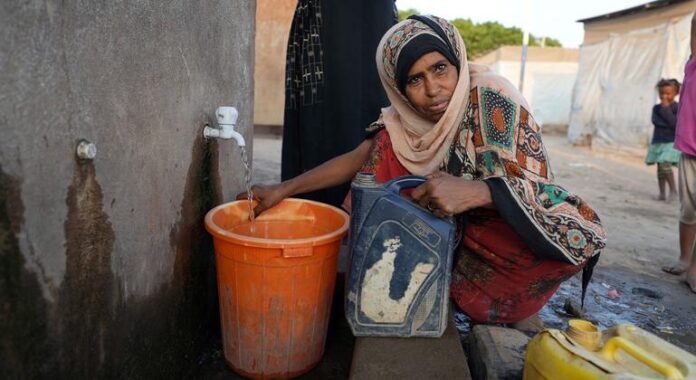
Speaking via videoconference, UN Special Envoy for Yemen Hans Grundberg said the country remains trapped in a prolonged political, humanitarian and development crisis.
“Yemen is so much more than the containment of a threat,” he said. “The cost of inaction is high.”
Mr. Grundberg stressed the urgent need for progress towards a sustainable political solution, calling on all parties to show the will to move beyond the current deadlock.
Meanwhile, over 17 million people, nearly half of Yemen’s population, are estimated to be suffering acute malnutrition.
Without sustained humanitarian support, six million more could face emergency levels of food insecurity, said Joyce Msuya, Assistant Secretary-General of UN humanitarian wing (OCHA), speaking on behalf of Humanitarian Affairs chief Tom Fletcher.
Economic hardships
“Yemeni citizens continue to shoulder the impact of an economy in freefall,” said Mr. Grundberg, calling for more international support to alleviate the humanitarian and economic hardships they face.
Despite operating under extremely difficult conditions, humanitarian efforts in Yemen continue, but the UN’s response remains constrained and far from meeting the scale of need, according to OCHA.
Still, there are signs of progress. “There is real scope to make progress on the economy,” said Special Envoy Hans Grundberg, pointing to the reopening last May of a key road between Aden and Sana’a, closed for nearly seven years, which has restored a faster and more direct route for civilians and commercial traffic.
“With trust and the right tools, there remains hope,” said Deputy Emergency Relief Coordinator Joyce Msuya.
Fragile frontlines
Marking one year since the arbitrary detention by Houthi rebels – or Ansar Allah – of dozens of aid workers, civil society representatives and diplomatic personnel, Mr Grundberg urged Security Council members to use their “powerful voices” to exert maximum pressure on the group for the unconditional release of the detainees.
While attacks on shipping in the Red Sea and counter measures by Western forces have largely abated since a cessation of hostilities agreement between the United States and the Houthi leadership, the group has launched several recent attacks targeting Israel, in solidarity with the Palestinian cause in Gaza.
With multiple frontlines still fragile and the risk of renewed fighting ever-present, the UN continues to work on a roadmap to help Yemen move beyond its divisions, secure a comprehensive ceasefire, implement critical economic measures and advance an inclusive political process.
Schengen: Council approves declaration to commemorate 40th anniversary and renew its commitment for the common travel area

The Council approves a declaration to mark the 40th anniversary of the signing of the Schengen Agreement.
Council and Parliament agree on simplified and more efficient handling of chemical assessment data

DISCLAIMER: Information and opinions reproduced in the articles are the ones of those stating them and it is their own responsibility. Publication in The European Times does not automatically means endorsement of the view, but the right to express it.
DISCLAIMER TRANSLATIONS: All articles in this site are published in English. The translated versions are done through an automated process known as neural translations. If in doubt, always refer to the original article. Thank you for understanding.
